Our readers keep the lights on and my smoothie glass nicely filled. As an Amazon Associate, I earn from qualifying purchases.
Specs are compiled from manufacturer listings and verified buyer reviews and can change over time — please confirm the key details on the product page before buying.
Your ankles ache after a long day on your feet, but you do not have to wrestle with knee-high compression stockings to find relief. Low-cut compression socks made specifically for the ankle deliver support right where it hurts without covering your whole calf. This guide breaks down six of the best options, explains what compression level actually matters for ankle pain, and helps you pick the pair that fits your daily routine without the jargon.
I’m Mohammad Maruf — the founder and writer behind WellFizz. This guide is built by comparing the manufacturers’ published specifications and the patterns across verified customer reviews, so you get each pick’s real strengths and trade-offs instead of marketing spin.
After digging through specs and real buyer feedback, these are the top six models you should know about if you are shopping for the best compression socks for ankle support that actually fit under your sneakers and stay put all day.
Quick Picks
- TechWare Pro Plantar Fasciitis Socks — Top Performer
- NEENCA Professional Copper Compression Socks — Premium Build
- Dr. Motion 6 Pairs Womens Low Cut Ankle Cushioned Breathable Compression Socks — Best Overall
- Iseasoo Copper Ankle Compression Socks — Great Value
- FITRELL Ankle Compression Socks — Active Pick
- DHSO 7 Pairs Cushioned Ankle Compression Socks — Budget Champion
How To Choose The Best Compression Socks For Ankle Support
Picking the right ankle-support compression sock is different from buying a generic athletic sock. The goal here is targeted pressure around your arch and ankle, not full-leg circulation. Here are the three factors that make or break a pair.
Compression Level (mmHg) — What it means for your ankle
Compression socks are measured in millimeters of mercury (mmHg — a unit of pressure). For everyday ankle support, a mild compression of 15–20 mmHg is the balance: noticeable enough to reduce swelling after standing all day, but not so tight that you struggle to pull them on. Higher levels like 20–30 mmHg are typically for medical recovery or post-injury, and they can be very hard to get on, as buyers report of the NEENCA pair. For general ankle fatigue, stick with the lower end of the range.
Fabric and Fit — Copper vs. Cotton vs. Nylon
Cotton blends feel soft and breathable, but they can stretch out over time. Nylon and spandex blends (like those in the TechWare Pro socks) hold their shape wash after wash and wick moisture better for athletic use. Copper-infused fibers are a marketing feature — some owners mention they help with warmth and odor, but the real benefit is durability, not a medical effect. The most important fit detail is that the heel pocket hits your actual heel. A misaligned heel causes bunching, which hurts.
Height and Cushioning — Low cut vs. No-show vs. Quarter
Most ankle-support compression socks sit just above the ankle bone (low cut or quarter height). A no-show style (hidden below the shoe line) provides less support because it cannot grip the ankle as securely. Cushioned soles add comfort if you walk or stand a lot, but thick cushioning can make your shoes feel tight. A half-cushion design, like the Dr. Motion socks use, balances support with fit inside normal sneakers.
Quick Comparison
| Model | Best For | Compression Level | Fabric Core | Pairs in Pack | Amazon |
|---|---|---|---|---|---|
| TechWare Pro | Athletic & targeted foot relief | Graduated (not specified in mmHg) | 80% Nylon / 20% Spandex | 1 Pair | Amazon |
| NEENCA Professional Copper | Medical recovery & high compression | 20-30 mmHg | 24% Copper Fiber / Nylon / Spandex | 1 Pair | Amazon |
| Dr. Motion Women’s Low Cut | Everyday cushioned comfort | Mild (not specified in mmHg) | Moisture-wicking fabric blend | 6 Pairs | Amazon |
| Iseasoo Copper | Balanced daily wear & durability | 15-20 mmHg | 85% Cotton / 8% Copper Fiber / 7% Spandex | 5 Pairs (pack) | Amazon |
| FITRELL Cushioned | Active walking & swelling reduction | Not specified in mmHg | Cotton blend (cushioned) | 5 or 6 Pairs | Amazon |
| DHSO Cushioned Ankle | Budget multi-pack for women | Mild (not specified in mmHg) | Cotton blend (cushioned) | 7 Pairs | Amazon |
In‑Depth Reviews
1. TechWare Pro Plantar Fasciitis Socks

A thin, sturdy sleeve that feels like a brace without the bulk of one.
This sock stands out because it uses graduated compression in a lightweight stretch fabric made of 80% durable nylon and 20% spandex, so it stays snug without turning into a wrestling match to put on. The design is split into left and right feet for an anatomically correct fit — a detail most ankle socks skip. Customers note the ankle support is excellent for activities like tap dancing or running, with one reviewer noting they help with “ankles were not sore after class.” Outside of sports, it also targets plantar fasciitis pain by bracing the arch area, making it a dual-purpose pick for anyone who deals with both heel and ankle soreness.
Unlike the cushioned FITRELL socks, the TechWare Pro goes thin and precise. The trade-off is that the closed-toe design can feel tight on wider feet after several hours — one buyer with size 11-11.5 women’s mentioned the pinky toe digs in over time. If your feet are on the narrow side, this is a near-perfect support garment that lasts over a year of daily use without shrinking, based on buyer reports.
It comes in four sizes (Small through X-Large) and one pair per pack, which is note if you are comparing it against the multi-pack value of the Iseasoo or Dr. Motion options.
Standout Strengths
- Anatomically correct left/right foot design for natural fit
- Graduated compression with relaxed top makes dressing easier than the NEENCA 20-30 mmHg pair
- Buyers confirm excellent durability — still supportive after 1+ year of regular use
Fair Warning
- Single pair per pack, pricier to stock up
- Toe area can cause discomfort on wide feet over long wear
- Heel placement may sit slightly off for very small feet (size 6 and under)
Reach for it if: you want a durable, brace-like ankle sock for active sports or plantar fasciitis relief and you have a narrow-to-medium foot width.
Think twice if: you need a budget-friendly multi-pack or you have wide feet that need extra toe room.
2. NEENCA Professional Copper Compression Socks
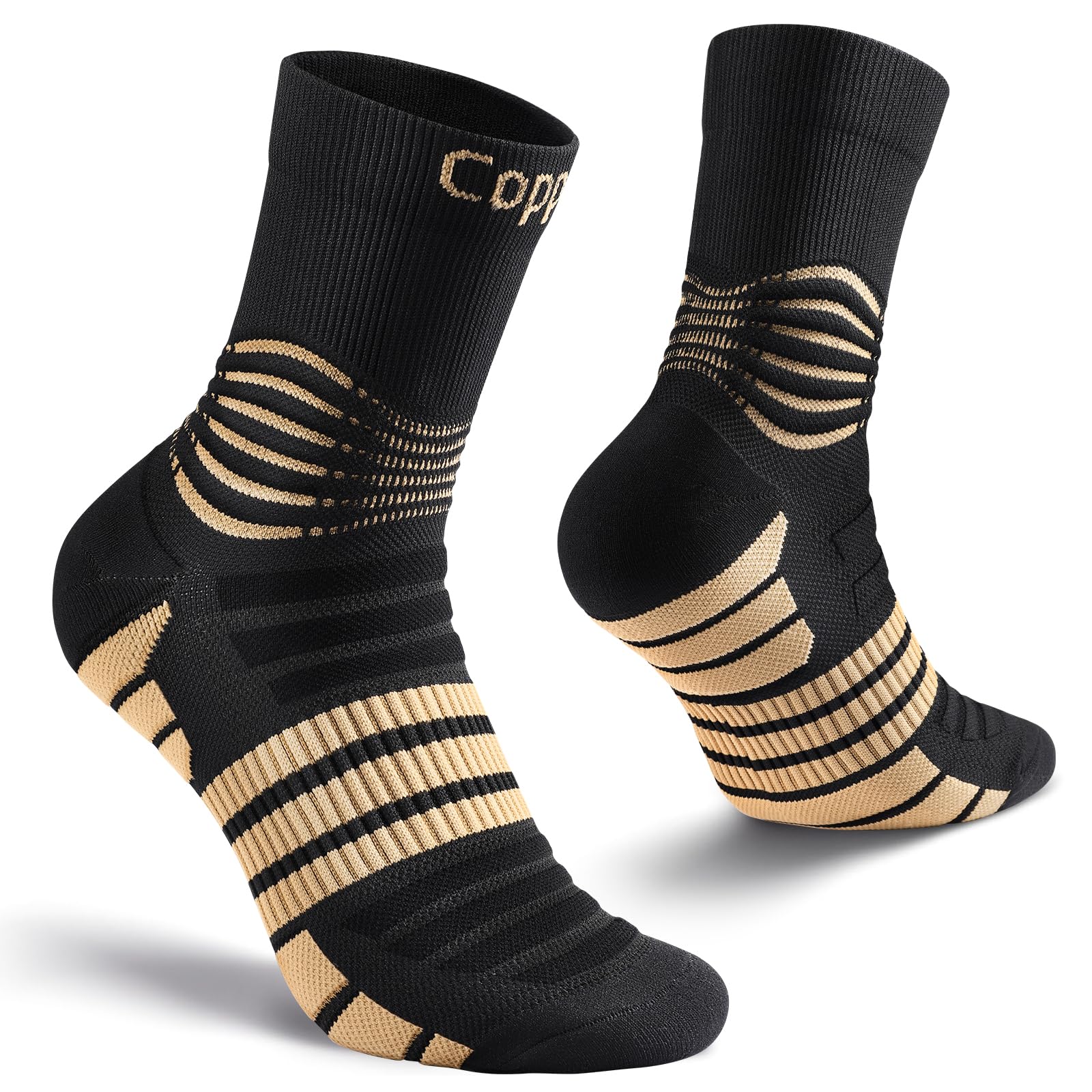
Medical-grade support that one buyer credits for near-total ankle pain relief.
This is the only pair in the lineup with a stated 20-30 mmHg compression range — the highest pressure here — which makes it a serious choice for recovery from injury or significant swelling. The fabric is a blend of 24% copper ions infused fiber with 62% nylon and 14% spandex, and the sock integrates six compression rings at the ankle using what NEENCA calls their “Ankle Tuck Compression Technique.” One buyer shared that an acupuncturist suggested copper socks for pain around the top of the foot and ankles, and after wearing the NEENCA pair they said “Way less pain. Even the sheets on my bed on my feet hurt me. But not any more.” That kind of real-world outcome is hard to ignore.
The catch is that this level of compression is tough to get on. A reviewer noted the sock “just didn’t fit my feet and legs. It’s too tight to put on.” Another said it was “very tight on the ankle to the point of discomfort.” Compared to the milder 15-20 mmHg Iseasoo pair, the NEENCA demands more patience during dressing and is best suited for people who need high medical-grade pressure, not just mild daily support. It also comes as a single pair, so the cost per wear is higher if you plan to rotate multiple pairs.
what separates it
- Highest compression level (20-30 mmHg) for medical recovery and significant swelling
- Copper-infused fiber with 6 compression rings at ankle for targeted joint support
- Class 1 Medical Device designation
The Hard Part
- Very difficult to put on — buyer describes it as “too tight”
- Some find the ankle compression uncomfortably intense
- Single pair per pack limits value compared to 6-pair options
Choose it for: post-injury recovery or chronic ankle pain where a doctor has recommended firm compression, and you are comfortable with a tight dressing process.
Pass if: you just want everyday mild support without struggling to pull them on each morning.
3. Dr. Motion 6 Pairs Womens Low Cut Ankle Cushioned Breathable Compression Socks
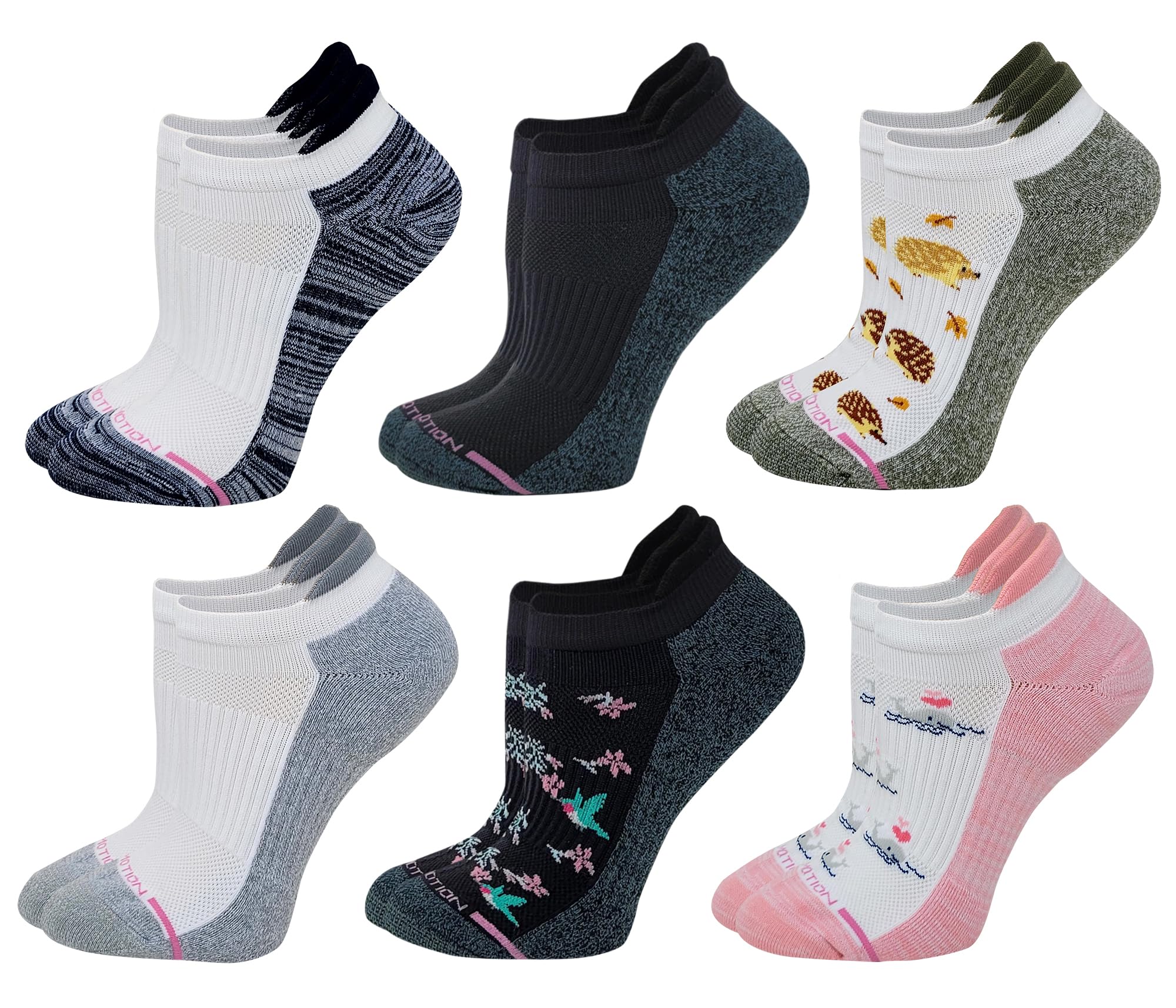
A six-pack of cushioned socks that hug your feet without the fight.
These Dr. Motion socks hit the balance between daily comfort and noticeable arch support. They use a half-cushion design — thick and fluffy on the sole but breathable enough that reviewers point out “they don’t make my feet sweat” even during active wear. The mild compression is not specified in mmHg, but buyer reviews consistently describe it as a light squeeze that supports the arch without feeling restrictive. One reviewer summed it up: “they lightly squeeze your feet and provide such good support to your arches it feels… like they hug your feet.” The 6-pair pack makes it easy to rotate through a work week without a second thought.
Compared to the TechWare Pro, the Dr. Motion sock is thicker and less precise in its anatomical fit, but it also has no issues with tight toes or misaligned heels — buyers with a range of foot widths report a comfortable fit. The heel stays put through the day, and the material holds up in the wash without shrinking, according to long-term users. The downside is that the compression is mild enough that it may not satisfy someone who needs firm therapeutic pressure for significant swelling. For that, you would want the NEENCA 20-30 mmHg pair.
Cushion That Works: The combination of pillowy sole padding and gentle arch squeeze makes these the most wearable ankle compression socks for all-day use — from the office to the gym to lounging at home.
Best for: anyone who wants a no-fuss, comfortable compression sock for everyday support in a convenient multi-pack, and does not need medical-grade tightness.
Not ideal if: you require a specific mmHg level for a medical condition or you have very narrow feet that need a tight anatomical fit.
4. Iseasoo Copper Ankle Compression Socks

A 15-20 mmHg cotton copper blend that hits the right balance of support and breathability.
If you prefer a cotton-rich feel over synthetic nylon, this is your pick. The Iseasoo socks are 85% cotton with 8% copper fiber and 7% spandex — a fabric mix that feels closer to a regular athletic sock than a medical garment. The stated compression level of 15-20 mmHg is the same mild-to-moderate range that works for reducing everyday foot fatigue, and buyers confirm it is effective: one reviewer wrote “the compression is not to bad that it’s unbearable” while another reported that after standing all day at work, “my feet don’t hurt anymore.” The low-cut design with stay-put cuffs and arch support means they stay in place inside shoes without bunching, unlike the FITRELL pair that some found slightly too large.
Buyers consistently praise the durability, noting “no shrinkage after many washes” and that the reinforced heel and toe hold up well over time. The copper fiber is marketed for freshness and durability rather than a medical effect, which is consistent with what the data shows. The only limitation is that this pack includes five pairs — solid value, though the Dr. Motion pack gives you six pairs for a similar tier price.
Why It Works
- Cotton-dominant fabric (85%) feels soft and breathable
- Stated 15-20 mmHg compression level for reliable daily support
- Buyers confirm no shrinkage and excellent durability after repeated washing
Keep in Mind
- Copper fiber benefit is durability/freshness, not a medical effect
- 5-pair pack is one less than the 6-pair Dr. Motion set
- Cotton blend may feel warm in hot weather
Grab these if: you want a cotton-feel compression sock with a clear mmHg rating that you can wear all day without irritation, and you value durability over fancy features.
Skip them if: you need a cushioned sole for high-impact activity or you prefer a fully synthetic moisture-wicking fabric for intense workouts.
5. FITRELL Ankle Compression Socks
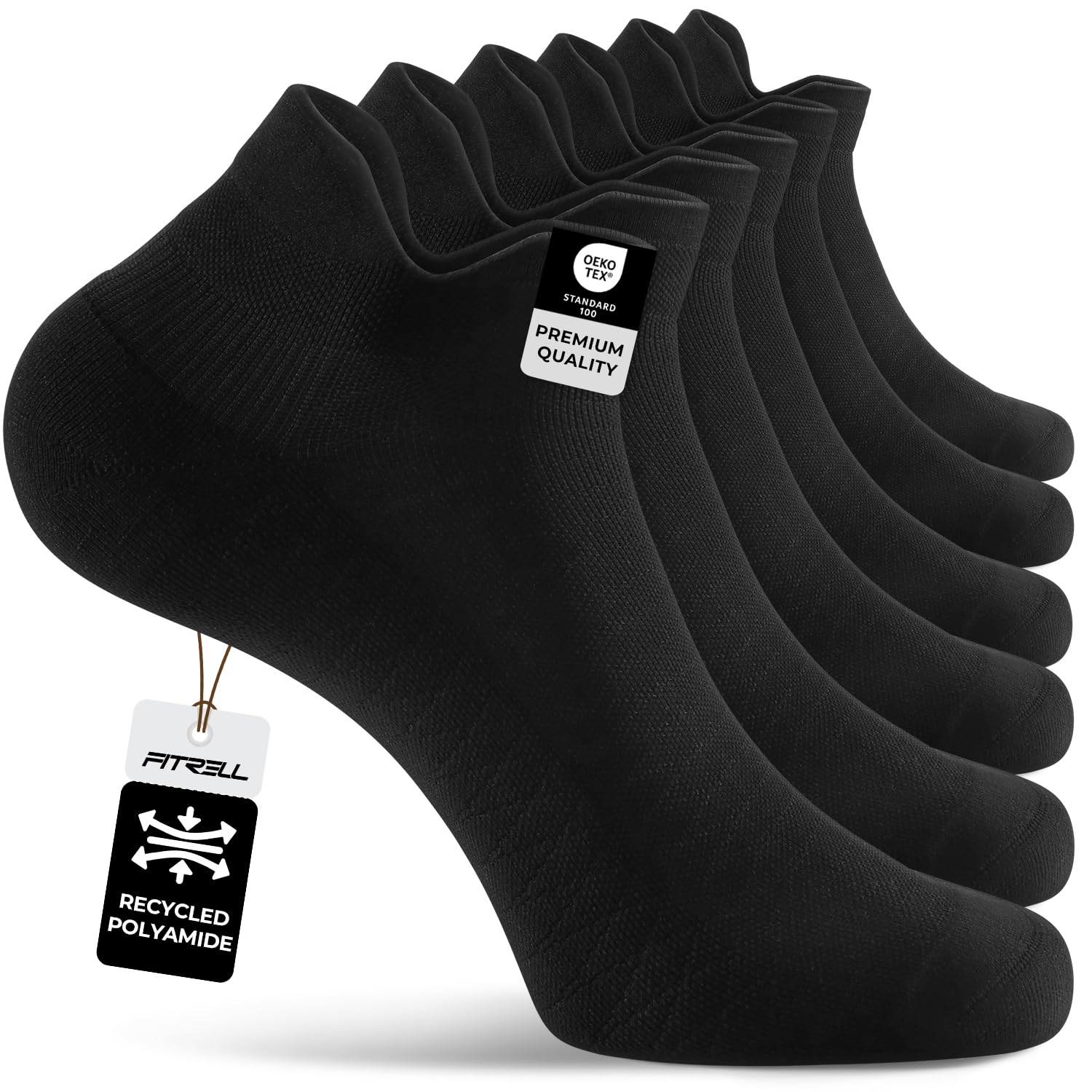
A cushioned companion for walks and work days that shoppers say stays put all shift.
The FITRELL sock is built around one simple promise: it does not slide down. Buyers call out this specifically — “they stay put and don’t slide down into my shoes” — which is a common frustration with low-cut socks that lose grip during movement. The cushioned sole adds comfort for walking, wearers say they “noticed swelling reduction” and that the socks “seem very durable.” The fabric is a cotton blend that feels soft rather than clinical, and the stretch is described as “just right” for those on their feet all day at work.
On the flip side, a reviewer with smaller feet found the socks “slightly too big” and had to adjust to avoid bunching material on the sole. This suggests that if you are on the smaller end of the size range, the Dr. Motion or Iseasoo pairs might fit more securely. The compression level is not specified in mmHg, so you are trusting the fit based on feedback rather than a measured standard. For general walking and standing comfort, though, buyers are overwhelmingly positive.
Stays-put design: The combination of a snug cuff and cushioned sole keeps these planted on your foot through a full day of walking, which is the #1 thing buyers praise — one reviewer even bought a second box after the first pair sold them.
Best for: active walkers and people who stand all day and just want a comfortable sock that provides mild support without riding down into the shoe.
Consider another option if: you have small feet and a tight fit is critical, or if you require a medically specified compression level.
6. DHSO 7 Pairs Cushioned Ankle Compression Socks
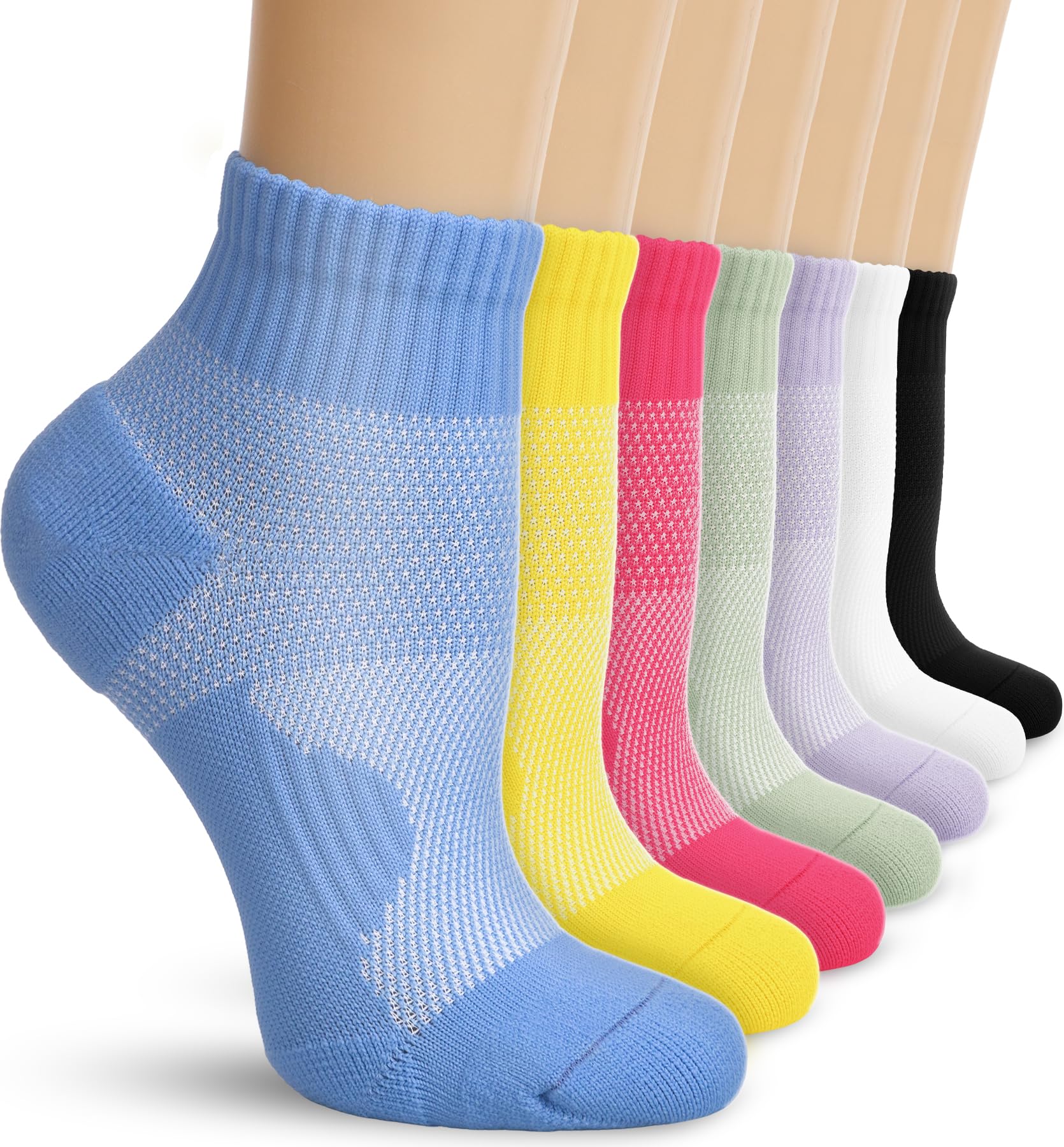
Seven pairs of comfortable socks for the price of one premium pair — a no-brainer for rotation.
If your priority is filling a drawer with affordable ankle socks that still offer arch support and ankle protection, the DHSO pack delivers the most pairs of any option here. The socks feature mesh ventilation for breathability and an anti-blister design, making them a practical choice for daily wear and travel. Buyers describe them as “very nice comfortable socks” with “just the right amount of compression” and say the colors are appealing. One reviewer did note they wished the socks were “a little thinner for summer,” so if you run hot, the lighter-weight Iseasoo cotton blend might suit you better.
The catch is that the compression level is not quantified in mmHg, so you are getting a mild squeeze rather than a medical-grade fit. These are a solid entry-level pick for someone who is new to compression socks and wants to test the concept without a large investment. They are designed for women per the department listing, so men should check the size chart carefully before purchasing.
Value Highlights
- Highest pair count — 7 pairs in one purchase
- Buyers love the color variety and overall comfort
- Mesh ventilation for airflow during activity
Trade-offs
- Compression level is not specified in mmHg
- Some buyers find the fabric too thick for warm weather
- Women’s sizing may not fit all men well
Choose this for: getting the most socks per dollar for everyday lightweight compression and arch support, especially if you want to stock up in one go.
skip it if: you need a specific mmHg rating, have men’s sizing needs, or want a thinner summer-weight sock.
Understanding the Specs
mmHg — What The Pressure Number Means
This stands for millimeters of mercury, which is the standard unit for measuring compression. Think of it as a pressure rating: 15-20 mmHg (like the Iseasoo socks use) provides a firm squeeze that reduces mild swelling and fatigue. 20-30 mmHg (found on the NEENCA pair) is stronger and used for medical recovery. Most buyers with everyday ankle soreness only need the lower range, not the medical grade.
Copper Fiber — What It Actually Does
Copper-infused fibers (8% in the Iseasoo socks, 24% in the NEENCA) are added for durability and antimicrobial freshness — they help the sock hold its shape and resist odor over time. They are not a proven medical treatment for pain or circulation. If a copper sock feels warm and comfortable, that is the thicker fabric and compression doing the work, not the copper itself.
FAQ
What level of compression do I need for ankle support?
Can I wear compression ankle socks while sleeping?
How do I know if my compression socks are too tight?
Do copper-infused socks really help ankle pain?
How do I wash compression ankle socks without ruining them?
What is the difference between ankle compression socks and knee-high ones?
How many hours a day should I wear compression socks?
Can I wear compression ankle socks with high heels or dress shoes?
How do I choose the right size for ankle compression socks?
Final Thoughts: The Verdict
For most people, the winner among these compression socks for ankle support is the Dr. Motion 6 Pairs Low Cut because it combines cushioned comfort, a convenient multi-pack, and consistent buyer praise for fit and durability. If you want a firm anatomical brace-like fit for sports or plantar fasciitis, grab the TechWare Pro. And for a soft cotton-feel with a reliable 15-20 mmHg rating, the Iseasoo Copper socks deliver proven value.
How We Picked
We do not accept paid placement. Every pick is matched to a real buyer and a real use-case; we do not hands-on test units.
Sources & Methodology
Specifications: manufacturer listings and product documentation. Review insights: verified customer reviews, as of July 2026. Pricing: not shown on this page (it changes often); check the current price via the retailer link.
As an Amazon Associate, WellFizz earns from qualifying purchases. This does not affect which products we feature.

Mo Maruf
I created WellFizz to bridge the gap between vague wellness advice and actionable solutions. My mission is simple: to decode the research and give you practical tools you can actually use.
Beyond the data, I am a passionate traveler. I believe that stepping away from the screen to explore new environments is essential for mental clarity and physical vitality.