Our readers keep the lights on and my smoothie glass nicely filled. As an Amazon Associate, I earn from qualifying purchases.
Specs are compiled from manufacturer listings and verified buyer reviews and can change over time — please confirm the key details on the product page before buying.
Tendonitis turns everyday moves into flinching moments. The right sleeve stops the ache before it starts; the wrong one bunches up and slides off. This guide ranks six compression sleeves for tendonitis by real specs and verified buyer reports after weeks of wear.
I’m Mohammad Maruf — the founder and writer behind WellFizz. This guide is built by comparing the manufacturers’ published specifications and the patterns across verified customer reviews, so you get each pick’s real strengths and trade-offs instead of marketing spin.
You will find the best compression sleeve for tendonitis broken down by the exact support level, fit quirks, and durability that matter most when your elbow aches during work, sports, or sleep.
Quick Picks
- Bauerfeind EpiTrain Elbow Support — Premium Pick
- KEKING Compression Arm Sleeves — Best Value
- Copper Compression PowerKnit Elbow Sleeve — Workhorse Pick
- Zensah Compression Tennis Elbow Sleeve — Targeted Relief
- Modvel 2 Pack Elbow Brace for Tendonitis — 2-Pack Value
- Dr. Arthritis Elbow Brace — Budget Champion
How To Choose The Best Compression Sleeve For Tendonitis
Ignore marketing and focus on compression strength, material give, and fit at your widest forearm point.
Compression Level: Why 20-30 mmHg Matters
Not all sleeves squeeze the same. A light sleeve feels comfortable but won’t push blood back up your arm to reduce swelling that triggers tendon pain. The medical-grade standard is 20-30 mmHg (a unit that measures how much pressure the fabric applies), often called “firm compression.” That range actually improves circulation and calms inflammation. Sleeves listed as “tight” or “supportive” without a mmHg number are guesswork.
Material and Breathability
You will likely wear this sleeve for hours through typing, lifting, or sleeping. Neoprene traps heat and sweat, getting itchy fast. Look for a blend of nylon and spandex — it wicks moisture away from your skin and dries quickly, so the sleeve does not turn into a wet sock on your arm. Copper-infused fabric is a bonus some buyers like, but nylon-spandex is what actually keeps you comfortable all day.
Length and Sizing Accuracy
A sleeve that is too short rolls up behind the elbow, and one that is too long bunches at the wrist. Most sleeves that work well sit from a few inches above the elbow to a few inches below it. Measure the circumference of your forearm about 4 to 5 inches down from your elbow (with your arm straight), not your bicep. The size chart on each product matters — ignore generic S/M/L and match your actual inches to the table.
Quick Comparison
On smaller screens, swipe sideways to see the full table.
| Model | Best For | Compression Level | Weight | Material | Amazon |
|---|---|---|---|---|---|
| Bauerfeind EpiTrain | Chronic, daily pain | Targeted knit + pads | 5.29 oz | Polyester knit | Amazon |
| KEKING Arm Sleeves | Sports & full-arm support | 20-30 mmHg graduated | 2.89 oz | 80% Nylon, 20% Spandex | Amazon |
| Copper Compression PowerKnit | All-day wear & gym | Consistent (no mmHg listed) | 1.76 oz | Copper-infused fabric | Amazon |
| Zensah Compression Elbow Sleeve | Targeted tendon relief | Flip-cuff adjustable | 2.08 oz | Moisture-wicking fabric | Amazon |
| Modvel 2 Pack Elbow Brace | Value & multi-sport | Consistent (no mmHg listed) | 3.53 oz (per pack) | Lightweight, breathable fabric | Amazon |
| Dr. Arthritis Elbow Brace | Adjustable strap convenience | Customizable strap | — | Moisture-wicking fabric | Amazon |
In‑Depth Reviews
1. Bauerfeind EpiTrain Elbow Support
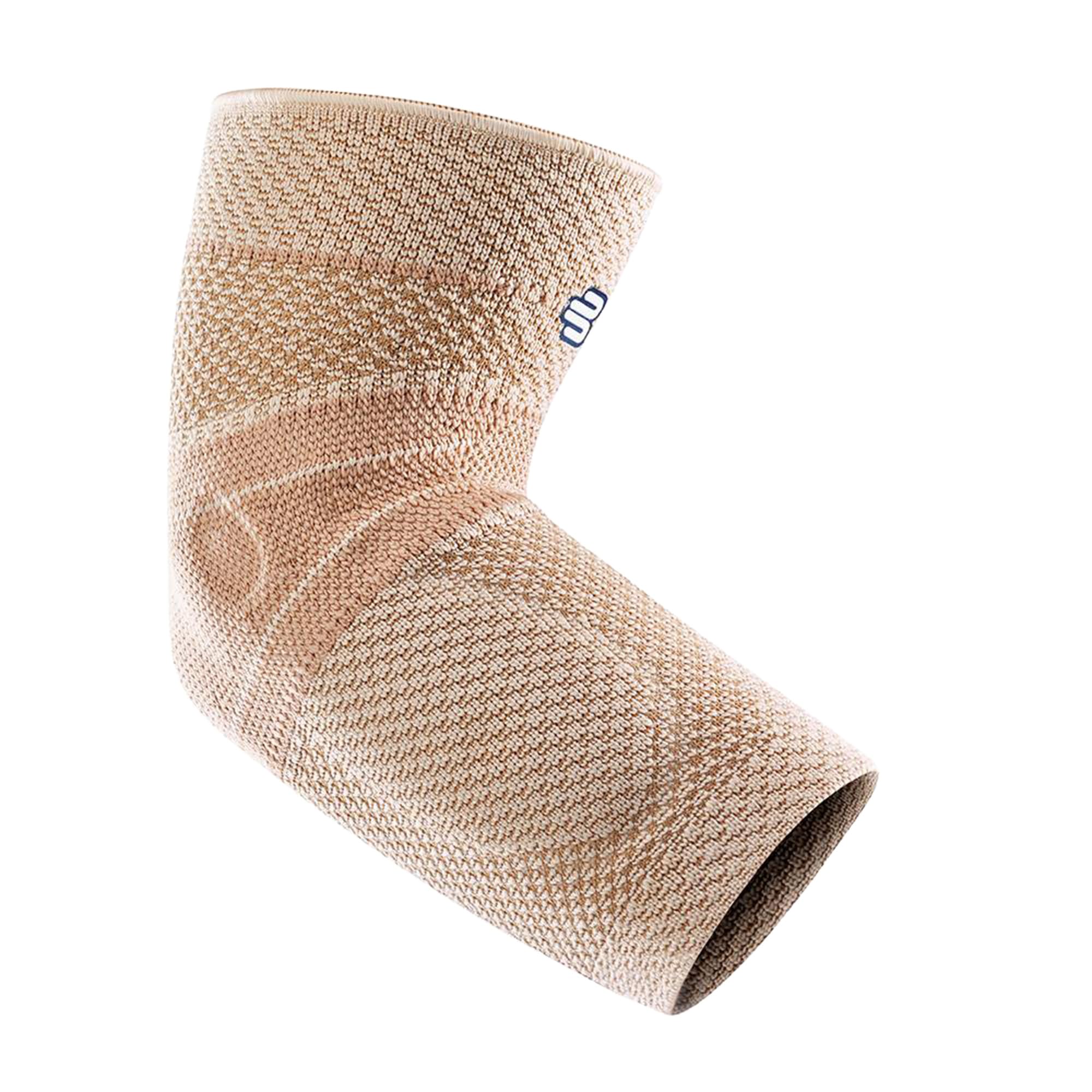
The medical-grade knit that turns chronic elbow ache into a distant memory.
This is the no-compromise solution for anyone who has tried cheaper sleeves and found them lacking. The Bauerfeind EpiTrain uses a special knitted fabric with built-in stabilizing pads that create a compression massage effect on the soft tissue as you move — which basically means every bend of your arm actively reduces swelling and activates the surrounding muscles. It weighs 0.15 Kilograms (about 5.29 ounces), so it feels substantial without being clunky, and the breathable polyester knit keeps your skin from getting irritated like neoprene braces do.
The catch is the price and the learning curve. One reviewer noted that it is “difficult to put on/off” and warned to “avoid moisture,” suggesting you need to be careful during application. But the same owner called it the “best hybrid brace for lateral epicondylitis” and said the soft compression and tendon pad were worth the fuss. Another buyer who wears it daily during heavy lifting reported it “eliminated left elbow pain and greatly reduced right elbow pain.” Among premium options, the EpiTrain is the one that treats tendonitis like a medical condition, not a minor annoyance.
Unlike the KEKING sleeves that provide even compression across a large flat knit, the Bauerfeind uses targeted pad pressure — so you get therapy right where the tendon inserts rather than a uniform squeeze.
What makes it worth the money
- Built-in stabilizing pads create a massage effect that actively reduces swelling during movement
- Breathable knit fabric won’t irritate skin or trap sweat like neoprene
- Buyers report it eliminates elbow pain during heavy lifting and daily wear
The two trade-offs
- Tricky to put on and take off; moisture can be an issue
- Premium price point is a serious investment for casual users
For chronic pain sufferers: If you’ve been dealing with tendonitis for months and other sleeves have let you down, this is the final stop — buyers consistently say it is worth the money.
Not a first-timer sleeve: If you just want mild support for occasional gym soreness, the price and fuss of getting it on are overkill.
2. KEKING Compression Arm Sleeves
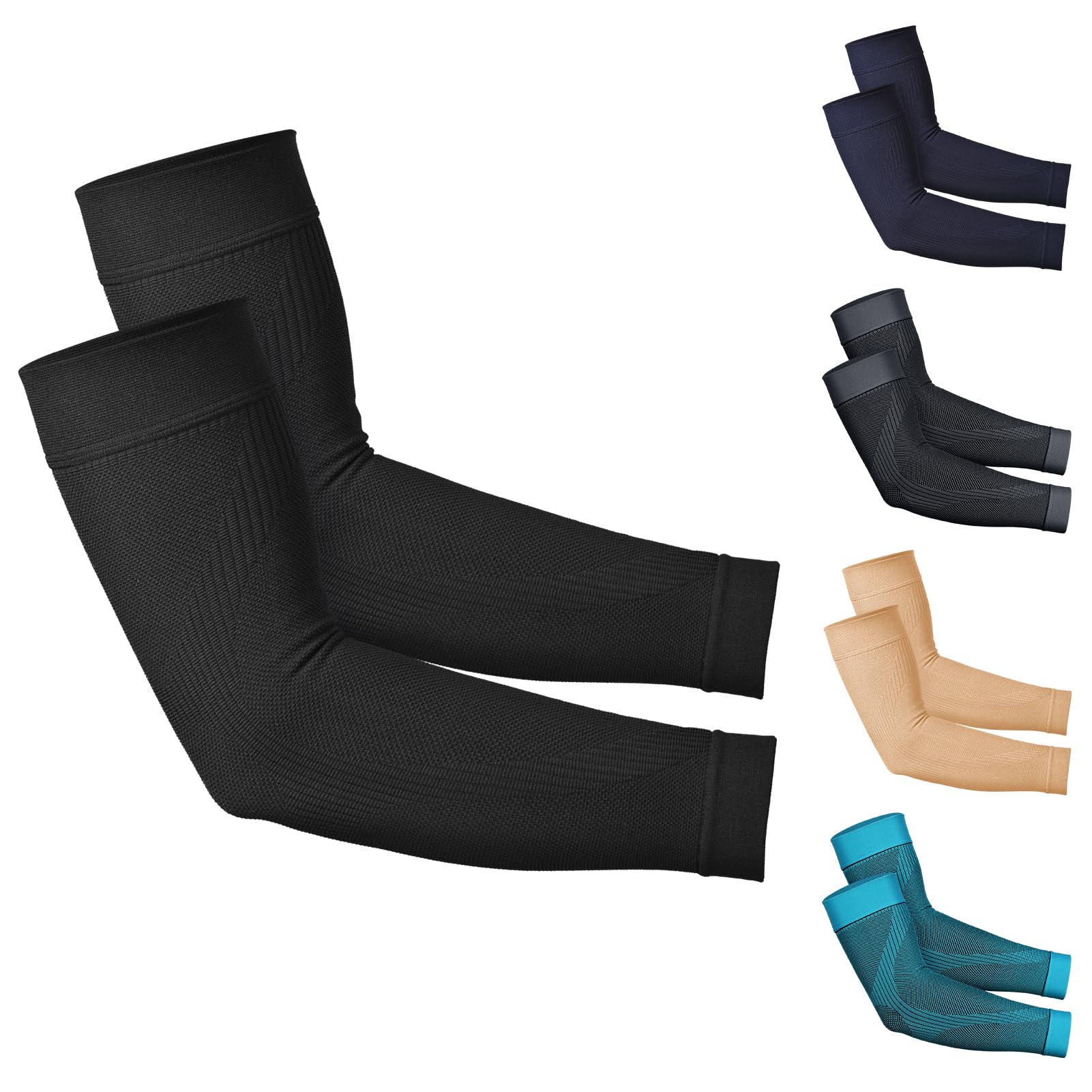
The rare sleeve that delivers firm graduated compression without feeling like a tourniquet.
Most sleeves claim to offer compression, but the KEKING sleeves back it up with a specific number: 20-30 mmHg (a firm graduated pressure that pushes blood from your wrist toward your elbow). This is the same compression range used in medical-grade lymphedema sleeves, and it makes a real difference for tendonitis because it actively reduces fluid buildup around the inflamed tendon. The fabric is 80% Nylon and 20% Spandex, which wicks sweat and won’t get heavy after a sweaty workout.
Buyers are surprisingly unified on these — one reviewer who suffers from radial tunnel syndrome said they “eliminated radial tunnel syndrome symptoms” and called them “excellent for tennis.” Another owner, who was skeptical about buying compression garments online, admitted these are “near perfect” and praised the fit as “amazing.” The 2.89 ounces weight makes them the lighter option, and fans bought multiple colors. A practical detail: some users found the sleeves slightly too long, needing to roll the cuff, and a few wished for more compression — so if you need maximum squeeze, these lean toward comfortable firm rather than tourniquet-tight.
This is the team’s overall top pick because it combines a verified 20-30 mmHg rating with overwhelmingly positive buyer feedback. Compared directly, the KEKING sleeves list 20-30 mmHg compression, while the Copper Compression sleeve lists no mmHg rating, and buyers describe the KEKING fit as more precise than the Modvel pack.
Why buyers rave about them
- Genuine 20-30 mmHg graduated compression improves blood circulation and reduces swelling
- Lightweight at 2.89 oz and breathable enough for all-day wear at work or the gym
- Latex-free, durable, and stays in place without sliding down
The minor downsides
- Some find the material a bit scratchy and it can get hot after long wear
- Length runs a bit long for some arm sizes, requiring the cuff to be rolled
Smart money pick: If you want real, measurable compression at a fair price without the premium markup, this is the sleeve to grab — especially for tennis, golf, or full-arm recovery.
Skip if you need a short sleeve: The full-arm length covers from wrist to above the elbow; if you only want an elbow band, this is more than you need.
3. Copper Compression PowerKnit Elbow Sleeve

The smooth daily driver that people actually wear for months straight.
This one is for the person who needs a sleeve they can forget about. The PowerKnit is a smooth pull-on design with copper-infused fibers that supposedly help with muscle warmth, but the real story is the consistent, non-restrictive compression it delivers all day. One buyer mentioned wearing it “daily for 3 months for relief” and noted “some immediate relief during flare-ups” — which is about as honest as reviews get. The sleeve weighs just 0.05 Kilograms (1.76 ounces), making it the lightest option here, and the copper infusion is bonded into the fabric so it won’t wash away over time.
The trade-off is sizing, which several reviewers called tricky. One owner said the Small/Medium was “too tight” and the Large/X-Large was “way too loose,” wishing for a true Medium size. Another noted a slight looseness at the lower arm and tightness at the upper, causing some itching on sensitive skin — though they also reported “significant improvement from first use” for their golfer’s elbow. This sleeve wins points for being comfortable enough to sleep in, but you need to measure carefully and perhaps land on the snugger side. For a more predictable fit with a confirmed mmHg rating, the KEKING sleeves are a safer bet.
What makes it a daily wear winner
- smooth, lightweight 1.76 oz design is comfortable enough to wear all day and while sleeping
- Copper-infused fibers stay effective for the life of the product, not just the first wash
- Buyers confirm significant pain relief for golfer’s elbow and post-workout soreness with daily use
Watch out for
- Sizing is inconsistent — S/M may be too tight and L/XL too loose with no true medium option
- Can cause itching and redness on sensitive skin, though no rash reported
Best for consistent, long-term wear: If you need a sleeve you can put on every morning and forget about through work, gym, and sleep, the smooth knit and durability here are tough to beat.
Not ideal for in-between arm sizes: If your forearm measurement falls right between the size ranges, the jump between S/M and L/XL is too wide for a comfortable fit.
4. Zensah Compression Tennis Elbow Sleeve
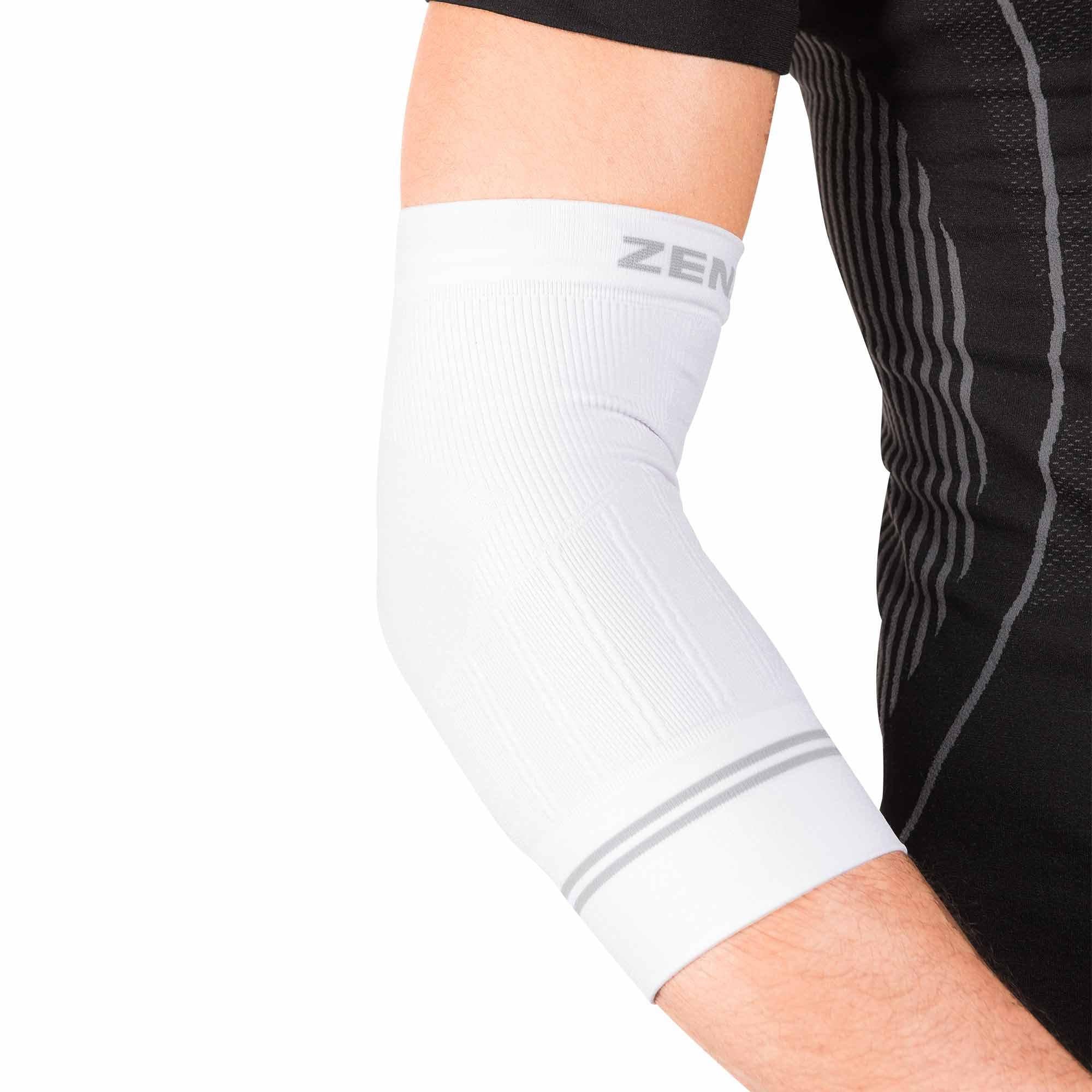
A lightweight sleeve that lets you dial up the compression exactly where it hurts.
The Zensah sleeve stands out for one clever detail: a flip cuff that adds extra compression right at the source of the pain — the forearm tendon just below the elbow. When your tendonitis flares up mid-match, you flip the cuff down for a tighter squeeze, and when you are resting, you flip it back for lighter support. The entire sleeve weighs just 2.08 ounces and uses moisture-wicking fabric that stays dry through sweaty sessions. The no-slip cuff ensures it won’t roll down during a tough tennis rally, which is a common complaint with cheaper sleeves.
The lack of customer reviews in the data makes it harder to get a long-term durability read, but the design is proven (it has been on the market since 2013). This is a category-specific tool for people whose tendonitis is localized to the lateral or medial epicondyle — the classic tennis or golfer’s elbow spots. It won’t provide the full-arm support of the KEKING sleeves, but it offers pinpoint adjustability no other sleeve here matches.
Why the flip cuff wins
- Unique flip cuff adds extra compression exactly at the pain source when you need it most
- Lightweight at 2.08 oz with moisture-wicking fabric that won’t get heavy with sweat
- No-slip cuff stays put during active sports
Consider this
- Provides targeted support, not full forearm coverage — limited for diffuse tendonitis
- Limited long-term review data available to assess durability over years
Pick this for match day: If your tendonitis flares predictably during specific activities (serving in tennis, swinging a golf club), the flip-cuff adjustability is a standout for on-the-fly relief.
Skip for all-day wear: The shorter cut that targets only the elbow area may shift during daily tasks other than sports.
5. Modvel 2 Pack Elbow Brace for Tendonitis
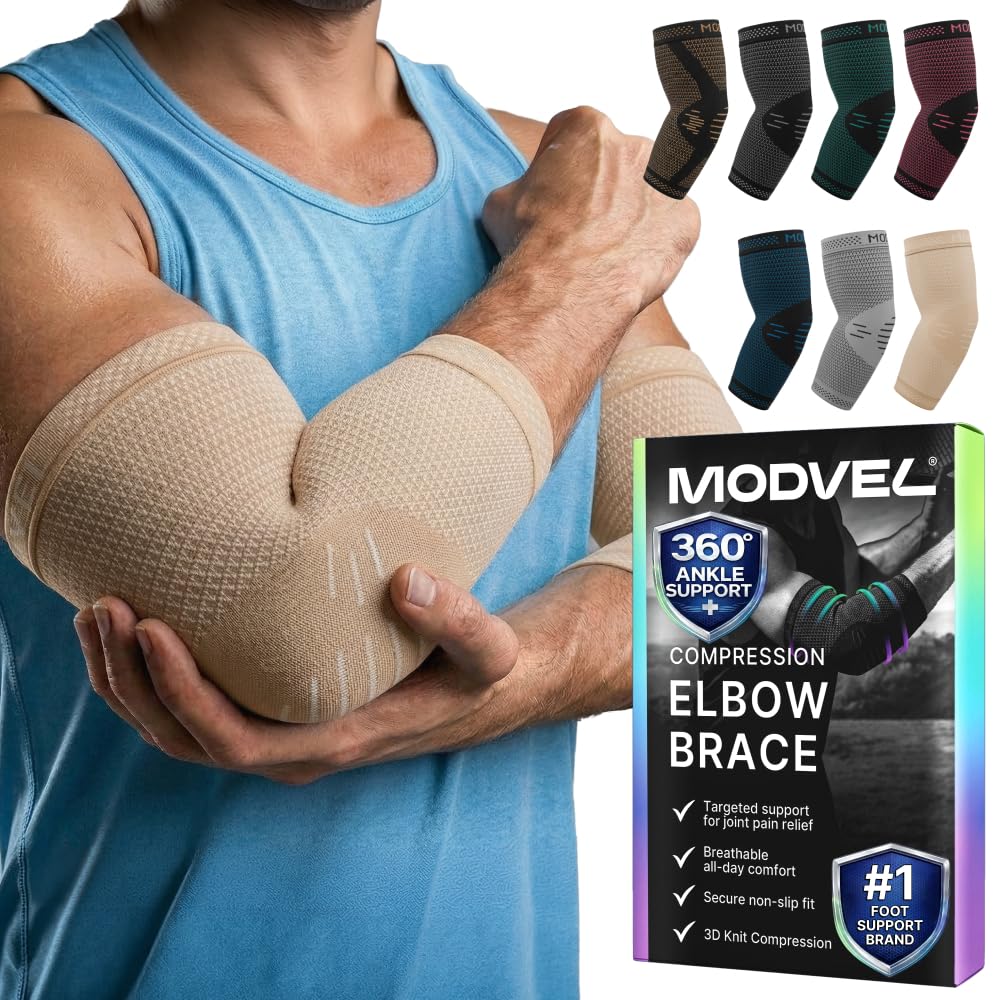
Two sleeves for the price of one, with a rubberized grip that refuses to budge.
The Modvel 2 Pack is the smartest buy if you need a backup sleeve or want one for the gym and one for work. At 3.53 ounces for the whole pack (each sleeve is lighter), it’s a solid mid-weight option that uses a rubberized interior to prevent slipping — a detail buyers consistently mention as a standout. One owner said it provided “immediate relief and support for weightlifting, racquet sports, and daily tasks” and noted the fabric is breathable and non-slip. Another reviewer who is 5’10” and 175 pounds wearing a size Large confirmed the fit was comfortable and the rubberized inside worked as promised.
The main issue is the top band tightness. A review mentioned the size Medium fits but the top band is “too tight on non-bulky arms,” causing discomfort that prevents long wear. So if you have leaner arms, you might find the upper edge digs in. Compared directly, the KEKING sleeves weigh 2.89 ounces for a single sleeve, while the Modvel pack weighs 3.53 ounces for the whole pack, and the Modvel fit is less refined around the bicep area.
Best for two-zone coverage
- Two sleeves in one pack provide excellent value and a spare for rotation
- Rubberized interior grips skin to prevent slipping during active movement
- Owners mention immediate relief for weightlifting and racquet sports
One sizing hiccup
- Top band can be uncomfortably tight on arms that are not bulky, causing pinching
- Sizing runs snug — ordering up may loosen the good compression elsewhere
Solid value for active people: If you lift weights, play tennis or golf, and need a sleeve that stays locked in place without constant pulling up, the Modvel 2-pack is a no-brainer for the price.
Not for slim arms: The aggressive top band pinch makes this a poor choice if you have lean, non-muscular upper arms.
6. Dr. Arthritis Elbow Brace
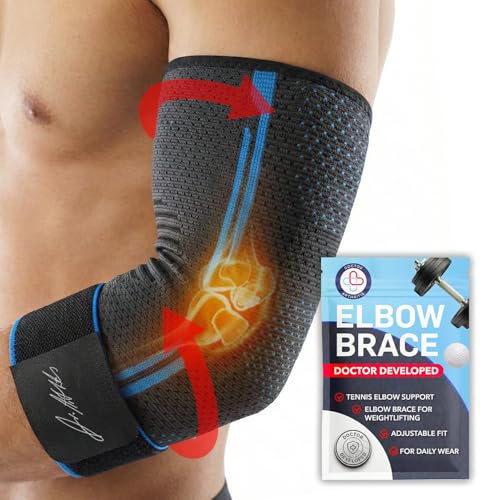
A simple strap-based sleeve that starts working the second you tighten it.
If you want adjustable compression that you can tune by feel rather than relying on a fixed-knit squeeze, this Dr. Arthritis sleeve is your entry point. It uses an adjustable strap instead of a pull-on knit, which means you can loosen it for typing and tighten it for lifting. The moisture-wicking fabric avoids the itch of neoprene, and the single Medium size is designed for adults. One owner reported it “worked great” and said they have been “pain free for weeks” — a strong testimonial for a budget-priced brace.
The limitation is that this is a Medium-size brace with an adjustable strap, not a full graduated compression sleeve. It won’t give you the 20-30 mmHg circulation boost of the KEKING sleeves, and the Modvel pack includes two sleeves instead of one. But if you have a specific spot of tendonitis that responds to direct pressure rather than circumferential squeeze, the strap lets you target that exact point better than any fixed-knit sleeve can.
Why the strap works
- Customizable strap lets you dial in compression exactly where the tendon hurts
- Moisture-wicking fabric keeps you cool and avoids neoprene itchiness
- Buyer reports being pain-free for weeks with regular wear
The limits
- No graduated compression — offers pressure only where the strap sits, not the whole forearm
- Single sleeve per purchase, while similarly priced options offer two
Best for targeted spot pain: If your tendonitis is concentrated in one small area (like the outer elbow knob), the adjustable strap gives you direct, tunable pressure that a knit sleeve cannot match.
Skip for diffuse pain: If your whole forearm aches or you need circulation-boosting support from wrist to elbow, choose a graduated compression sleeve instead.
Understanding the Specs
20-30 mmHg Graduated Compression
This number is the real deal. mmHg (millimeters of mercury) measures the pressure the sleeve applies to your arm. 20-30 mmHg is considered firm medical-grade compression — it gently squeezes tighter at your wrist and loosens as it goes up your arm, which pushes blood and fluid back toward your heart. That reduces the swelling around your tendon that causes pain. Sleeves that just say “firm” or “supportive” without giving a mmHg number are basically offering guesswork.
smooth vs. Strap Design
A smooth pull-on sleeve gives you consistent, even compression across the whole elbow and forearm — great for all-day wear and for people who want to put it on and forget it. An adjustable strap lets you tighten or loosen pressure right where the tendon hurts, which is better if your pain is localized to one spot (like the bone bump on the outside of your elbow). The trade-off is that a strap can slip or bunch, while a smooth sleeve stays put but cannot be fine-tuned.
FAQ
Will a compression sleeve really help my tendonitis?
How tight should a compression sleeve for tendonitis be?
How do I measure my arm for a compression sleeve?
Can I wear a compression sleeve all day?
Can I wear a compression sleeve on both arms?
What is the difference between a compression sleeve and an elbow strap?
Can I wash my compression sleeve in the washing machine?
Will a compression sleeve help with golfer’s elbow?
Final Thoughts: The Verdict
For most buyers, the best compression sleeve for tendonitis winner is the KEKING Compression Arm Sleeves because it delivers genuine 20-30 mmHg graduated compression at a fair price, backed by overwhelmingly positive buyer reviews for eliminating symptoms and staying comfortable all day. If your tendonitis is stubborn and daily, grab the Bauerfeind EpiTrain for its medical-grade knitted support that actively massages the injured tissue with every movement. And for a simple, budget-friendly option that targets one specific pain spot, the Dr. Arthritis Elbow Brace with its adjustable strap gives you direct control over the pressure point.
How We Picked
We do not accept paid placement, and we did not hands-on test every unit. Instead, we match each pick to a real buyer and use-case by comparing the manufacturers’ published specifications against the patterns in verified customer reviews — so you get each pick’s real strengths and trade-offs instead of marketing copy.
Sources & Methodology
Specifications: manufacturer listings and product documentation. Review insights: verified customer reviews, as of July 2026. Pricing: not shown on this page (it changes often); check the current price via the retailer link.
As an Amazon Associate, WellFizz earns from qualifying purchases. This does not affect which products we feature.

Mo Maruf
I created WellFizz to bridge the gap between vague wellness advice and actionable solutions. My mission is simple: to decode the research and give you practical tools you can actually use.
Beyond the data, I am a passionate traveler. I believe that stepping away from the screen to explore new environments is essential for mental clarity and physical vitality.