Our readers keep the lights on and my smoothie glass nicely filled. As an Amazon Associate, I earn from qualifying purchases.
Specs are compiled from manufacturer listings and verified buyer reviews and can change over time — please confirm the key details on the product page before buying.
You need a compression sleeve for arm pain that does not slip down, roll up, or squeeze like a tourniquet by midday. But many do exactly that. The right one stays put and delivers even pressure for tennis elbow, lymphedema, or post-surgery recovery. To get that, you have to look past marketing and focus on fit, fabric, and graduated compression (pressure that is tightest at the wrist and loosens toward the upper arm, which helps push fluid out).
I’m Mohammad Maruf — the founder and writer behind WellFizz. This guide is built by comparing the manufacturers’ published specifications and the patterns across verified customer reviews, so you get each pick’s real strengths and trade-offs instead of marketing spin.
Here are five top options for anyone searching for the best compression sleeve for arm pain, broken down by what they do well and where they fall short.
Quick Picks
- Ailaka Medical Compression Arm Sleeves — Best Overall
- Bauerfeind Sports Compression Arm Sleeves — Premium Pick
- Hiball Lymphedema Medical Compression Arm Sleeve — Best Value
- THX4COPPER Arm Sleeve (Pair) — Maximum Squeeze
- Juzo Soft 2001, Compression Armsleeve — Medical Grade
How To Choose The Best Compression Sleeve For Arm Pain
Buying a compression sleeve is not as simple as picking the most popular listing. The right one depends on pressure level (mmHg), fabric type, and fit for your arm shape.
Check the compression rating (mmHg)
Almost every medical-grade sleeve uses a scale measured in mmHg — millimetres of mercury, a standard unit for pressure. For general pain, swelling, or recovery from conditions like tendonitis, a rating of 20-30 mmHg is the balance. Anything below 15 mmHg offers light support but not enough medical benefit, while anything above 30 mmHg is typically reserved for severe lymphedema and often requires a doctor’s prescription.
Look for graduated compression and silicone grip
Graduated compression means the sleeve is tightest at the wrist and gradually loosens as it moves up the arm — this design helps push fluid upward, reducing swelling. Without it, you are just wearing a tight tube. A silicone band at the top of the sleeve is also essential, especially if you are active, because it stops the fabric from rolling down during the day.
Choose the right fabric for your activity
Most quality sleeves are made of a nylon and spandex blend (around 70/30 or 78/22). This mix gives you stretch without losing shape after washing. Thicker material works better for warmth and heavy compression, while thinner blends breathe more easily during workouts. Avoid sleeves that feel flimsy — they lose elasticity fast and slip down after a few wears.
Quick Comparison
| Model | Best For | Compression Level | Weight | Fabric | Amazon |
|---|---|---|---|---|---|
| Ailaka Medical Compression | Post-surgery & lymphedema recovery | 20-30 mmHg | 1.76 oz | 78% Nylon, 22% Spandex | Amazon |
| Bauerfeind Sports | Sports performance and circulation | Gradient (not specified) | 4.48 oz | Microfiber (proprietary) | Amazon |
| Hiball Lymphedema | Bursitis and mild-to-moderate swelling | 20-30 mmHg | 1.06 oz | 70% Nylon, 30% Spandex | Amazon |
| THX4COPPER Arm Sleeve | Tennis elbow and high-compression needs | Maximum (not specified) | — | Copper-infused fabric | Amazon |
| Juzo Soft 2001 | Medical/therapeutic lymphedema care | 20-30 mmHg | 3.2 oz | FiberSoft technology | Amazon |
In‑Depth Reviews
1. Ailaka Medical Compression Arm Sleeves for Men Women – 20-30 mmHg

Post-surgery warriors and lymphedema patients swear by this sleeve’s stay-put fit.
Made from 78% nylon and 22% spandex, the Ailaka uses graduated compression at 20-30 mmHg — a medical-grade level that is tightest at the wrist and loosens as it moves up the arm, helping push fluid out of the tissues. That is critical for post-surgery recovery, lymphedema, or chronic swelling. Buyers report that the sleeves fit perfectly and stay in place, which is a rare claim in this category. Unlike the lighter Hiball sleeve (1.06 oz), the Ailaka is noticeably heavier at 1.76 ounces, giving it a sturdier feel that resists rolling down even during a full day of walking, golfing, or housework.
Silicone dots along the top cuff add grip without acting like a tourniquet, so it stays put whether you are cycling, gardening, or sleeping. One reviewer who survived a propane explosion and relies on compression for burn recovery said these fit every bit as well as custom-made sleeves from a specialist — but at a fraction of the cost and wait time. Of course, the tight fit takes practice to pull on, and at least one reviewer noted their hands swelled after a few hours on the smaller side, so sizing up is worth considering if your arms measure close to the boundary between two sizes.
Built for medical use
- True 20-30 mmHg graduated compression
- Silicone dots prevent slipping all day
- Latex-free material suitable for sensitive skin
Be ready for a snug fit
- Very tight — size up if between measurements
- Thick fabric may feel warm in summer
Reach for this if: you need reliable, medical-grade compression for post-surgery recovery or lymphedema and you want a sleeve that does not require constant tugging back up.
Look elsewhere if: you prefer a feather-light sleeve or need something thinner for wearing under dress shirts.
2. Bauerfeind Sports Compression Arm Sleeves – 1 Pair
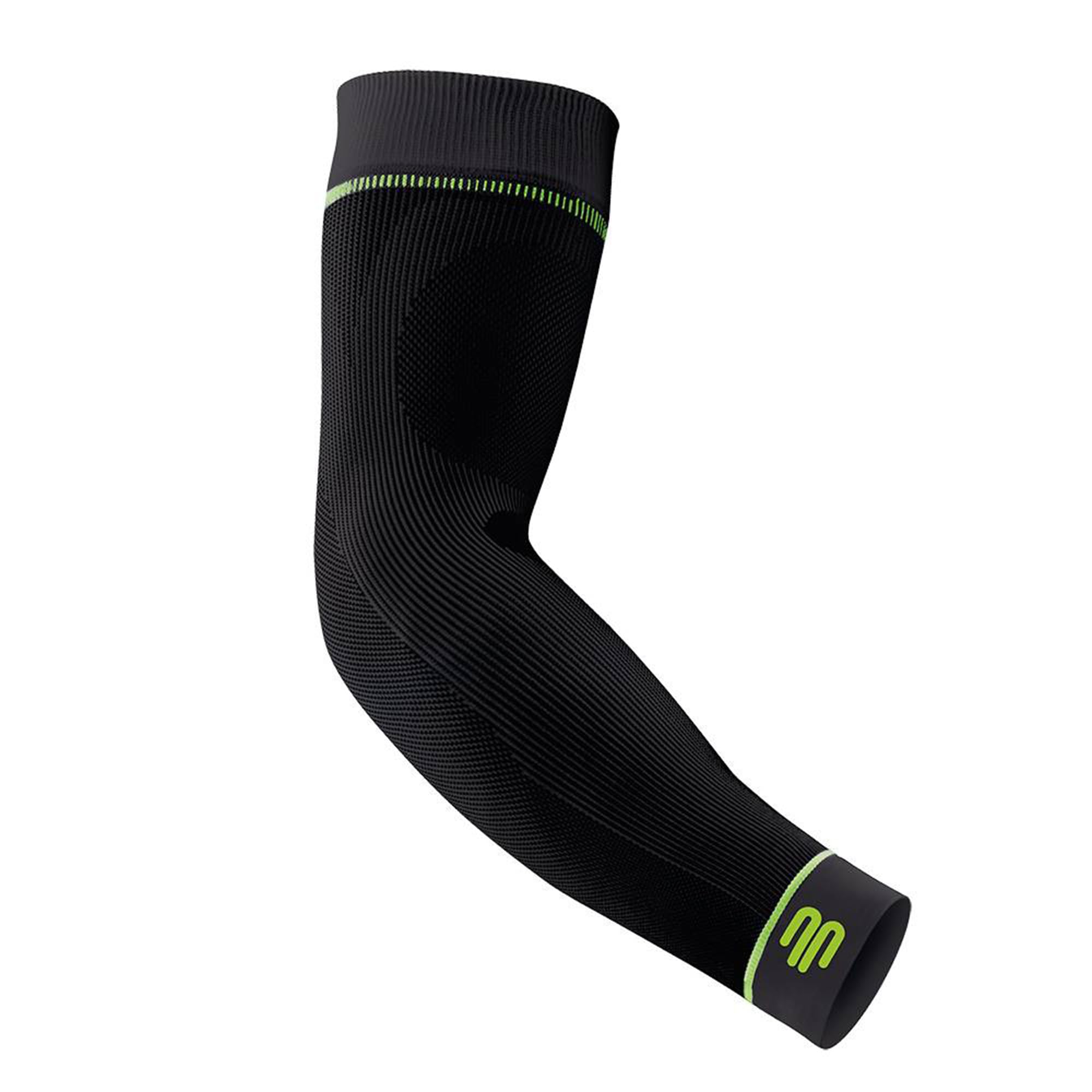
German engineering meets serious sports recovery — if your budget allows.
Bauerfeind is the brand athletes trust for joint support, and this sleeve pair brings that same reputation to general arm pain. At 4.48 ounces per pair, these are the heaviest sleeves on this list, which translates to a very substantial, durable feel that holds its shape wash after wash. The gradient compression works to improve oxygen and blood circulation during activity, and buyers specifically note that the sleeve stays put through hours of tennis without needing adjustment. One reviewer who switched from Nike sleeves (which tore at the seam after three uses) said the Bauerfeinds are well constructed and never move during play.
The catch is the premium price point. You are paying for a German-made microfiber fabric that resists pilling, but the material can be damaged if it comes into contact with Velcro or rough tape. The brand recommends measuring your arm and consulting its size chart carefully — one reviewer with a medium measurement sized up to large for a more comfortable fit while still getting good compression. It is not the best choice if you need strict medical-grade compression at 20-30 mmHg, because Bauerfeind does not publish a standard mmHg rating for this model.
Built athletic grade
- Exceptional build quality that survives frequent washing
- Does not slip during high-movement sports
- Sold as a pair for better value than many premium singles
Premium price, premium caution
- High cost — roughly per pair
- No specified mmHg rating, so not suitable for strict medical use
- Microfiber pills if exposed to Velcro or rough tape
Grab this for: athletes or active people who need reliable, comfortable compression during tennis, basketball, or weightlifting and who have the budget for a long-lasting sleeve.
skip it if: you need a verified 20-30 mmHg medical-grade sleeve for lymphedema, or if you are looking for a budget-friendly option.
3. Hiball Lymphedema Medical Compression Arm Sleeve, 20-30 mmHg

Featherlight at 1.06 ounces, but the silicone band makes all the difference.
At 1.06 ounces versus the Ailaka’s 1.76 ounces, the Hiball is the lightest option here, making it a solid pick if you need to wear a sleeve under clothing or during hot weather. It delivers 20-30 mmHg graduated compression from a blend of 70% nylon and 30% spandex, and features an extra-long cuff design that covers from the wrist past the elbow. The dotted silicone band at the top is designed to be flipped outward to prevent irritation and stop the sleeve from acting like a tourniquet — a smart touch that buyers who used these after liposuction found effective for balanced, even compression across the whole arm.
However, the lighter fabric comes with trade-offs. A few owners mention that the graduated compression does not feel quite right — they mention the sleeve being loose at the bicep but constricting at the forearm, especially in size L. For mild bursitis or everyday arm fatigue, this sleeve is a comfortable, breathable value choice, but if you need strong, consistent compression for serious lymphedema, some reviewers found it simply would not stay up and had to look elsewhere.
Light and breathable
- Very lightweight at 1.06 oz — comfortable for all-day wear
- Flipable silicone band reduces skin irritation at the top
- Affordable mid-range price for a medical-grade sleeve
Compression consistency issues
- Some customers note tourniquet-like tightness at the wrist
- Top cuff can stretch out and slip down over time
- Not reliable for severe lymphedema or large upper arms
Choose this for: mild to moderate arm pain, post-liposuction recovery, or daily office wear where you want medical-grade compression without a bulky feel.
Pass if: you need rock-solid, slip-free compression for serious lymphedema or have very large biceps that extend the top band.
4. THX4COPPER Arm Sleeve (Pair) – Elastic Compression for Tennis Elbow

These sleeves are extremely tight but not uncomfortably so, reviewers point out — the purest compression hit on this list.
THX4COPPER does not specify a mmHg number, but real-world owner feedback makes its compression level clear: it is the tightest sleeve here. Shoppers say that these sleeves deliver maximum compression compared to any others they have tried, with zero slipping down the arm — even for a 16-inch upper arm. The fabric is infused with active copper, which the brand claims aids recovery, but the real story is the thickness. One buyer compared them directly to Incrediwear sleeves and said the THX4COPPER actually came out better, offering the same pain relief for a fraction of the price.
The trade-off: putting them on takes some effort because the material is thick and uncompromising. That same thickness, however, means they trap heat well, which reviewers specifically noted for keeping arms warm during winter months — a bonus for arthritis or old elbow injuries that stiffen up in the cold. This is not a sleeve for light activity or heat-sensitive days. But if you need maximum squeeze plus warmth, and you dislike sleeves that roll down at the bicep, the THX4COPPER is a standout budget-friendly pair that punches well above its cost.
Unshakable compression
- Highest perceived compression level in this group
- Zero slipping — stays in place even with a 16-inch upper arm
- Copper-infused fabric for warmth in winter
Tight means tight
- Difficult to pull on — takes practice
- Thick fabric can get warm in summer
- No stated mmHg rating; not suited for precise medical pressure
Reach for these if: you want the tightest, most secure compression sleeve for tennis elbow, bicep tendonitis, or arthritis, and you are okay with a thick material that provides warmth.
Look elsewhere if: you need a lightweight option for summer wear or if you require a specific 20-30 mmHg medical rating.
5. Juzo Soft 2001, Compression Armsleeve with Silicone Top Band, 20-30 mmHg
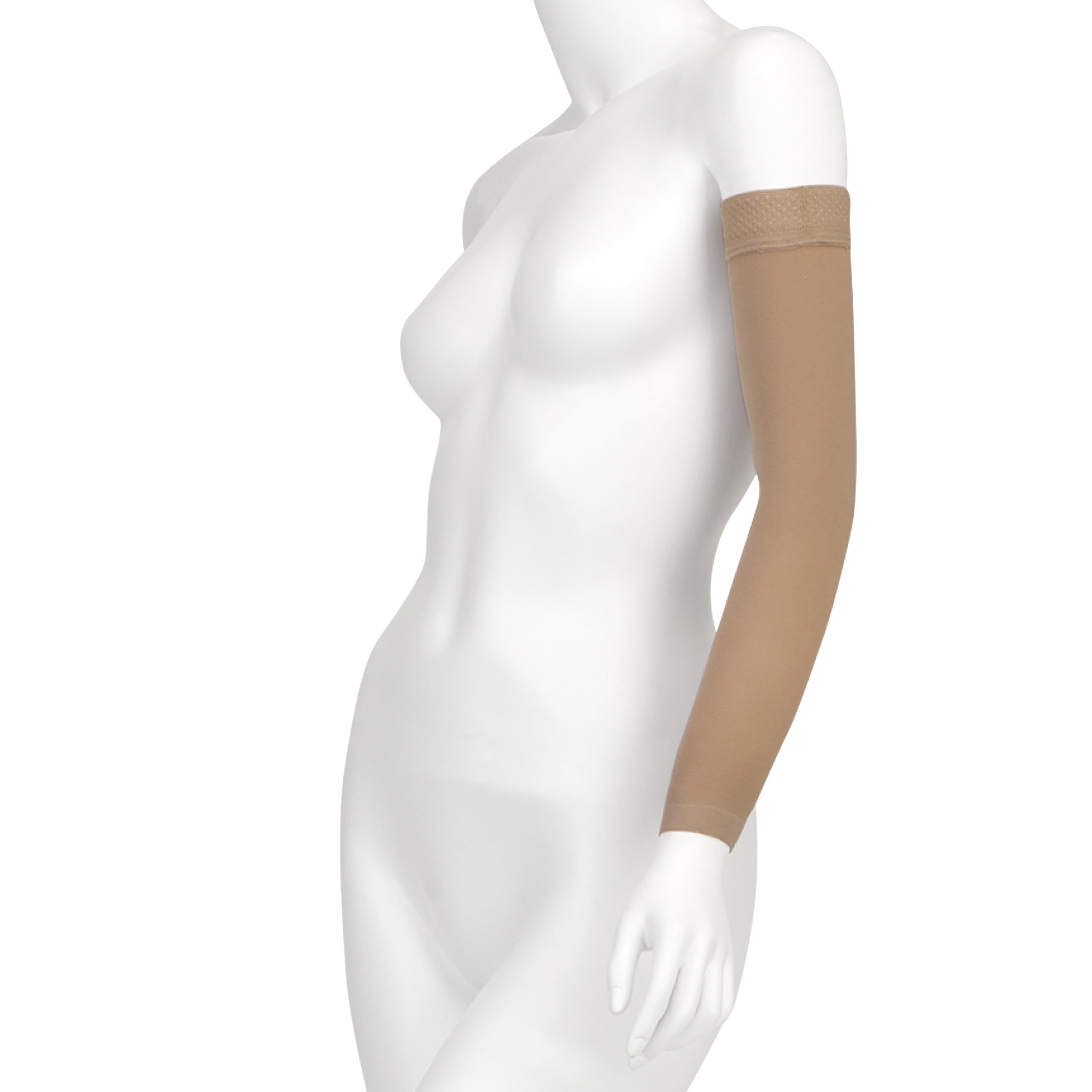
The gold standard for post-cancer lymphedema care, recommended by hospital shops.
Juzo is a heritage medical brand, and the Soft 2001 sleeve is a direct, prescription-grade tool for managing arm swelling — particularly after lymph node removal. At 20-30 mmHg with a full beaded silicone top band, it offers verified graduated compression in a smooth, comfortable design. One buyer who purchased this product through Amazon after getting the same sleeve from a cancer center shop said it was an exact match, arriving on time without needing a trip to the hospital. The sleeve weighs a solid 3.2 ounces, giving it a substantial, high-quality feel that multiple buyers confirm works reliably for keeping swelling down.
The fabric uses Juzo’s FiberSoft technology, which wraps each elastic fiber with soft threads to make the sleeve easier to pull on and more durable against repeated washing. It is machine washable on warm and can be tumbled dry on low, so daily care is simple compared to some tight-weave competition. The obvious barrier is the cost — at for a single sleeve, this is the most expensive pick here, and that price may be hard to swallow if your need is mild or occasional. But for anyone managing chronic lymphedema or post-surgical swelling, the Juzo is the professional-grade tool that does not cut corners.
Hospital-caliber results
- Full 20-30 mmHg graduated compression with medical pedigree
- FiberSoft fabric is easier to put on than thicker sleeves
- Holds up well through machine washing and drying
Premium is premium-priced
- Expensive — over for a single sleeve
- Available in limited color and size options
- Overkill for minor sports injuries or occasional use
Choose this if: you have a diagnosed condition requiring serious, reliable compression (lymphedema, post-surgery care) and you want exactly what a hospital shop would give you.
Pass if: you are dealing with mild tennis elbow or just want compression for gym recovery — a much more affordable sleeve will do the same job for your situation.
Understanding the Specs
Graduated Compression (mmHg)
Graduated compression means the sleeve is tightest at your wrist and gets slightly looser as it moves up your arm. The pressure is measured in mmHg — millimetres of mercury, the same unit used for blood pressure cuffs. A 20-30 mmHg rating, which is the most common medical-grade level, is strong enough to move fluid out of swollen tissue without cutting off circulation. Lower ratings (15-20 mmHg) are lighter and better for travel or general fatigue, while higher levels (30-40 mmHg) are usually prescription-only.
Fabric Blend and Weight
Most compression sleeves are made of a nylon and spandex blend. The ratio affects how much the sleeve stretches and how long it keeps its shape. A 78/22 or 70/30 Nylon/Spandex mix is typical for medical sleeves. Weight matters too — measured in ounces, a sleeve like the Ailaka at 1.76 oz feels substantial and sturdy, while a lighter sleeve like the Hiball at 1.06 oz is more comfortable in warm weather but may not hold its compression as consistently.
FAQ
Is a 20-30 mmHg compression sleeve safe to wear all day?
How do I measure my arm for a compression sleeve?
Can I wear a compression sleeve while sleeping?
What is the difference between graduated and uniform compression?
How long does a compression sleeve last before needing replacement?
Will a compression sleeve help with tennis elbow or golfer’s elbow?
Can I wear a compression sleeve under clothing?
Why does my sleeve roll down at the top?
Final Thoughts: The Verdict
For most buyers, the compression sleeve for arm pain winner is the Ailaka Medical Compression Arm Sleeve because it delivers verified 20-30 mmHg graduated compression with a silicone grip that stays put all day, at a mid-range price that beats premium brands on value. If you want something lightweight for mild arm fatigue and everyday wear, grab the Hiball Lymphedema Sleeve. And for serious medical-grade care, especially after cancer surgery or for chronic lymphedema, the Juzo Soft 2001 is the professional standard recommended by hospital shops.
How We Picked
We do not accept paid placement. Every pick is matched to a real buyer and a real use-case; we do not hands-on test units.
Sources & Methodology
Specifications: manufacturer listings and product documentation. Review insights: verified customer reviews, as of July 2026. Pricing: not shown on this page (it changes often); check the current price via the retailer link.
As an Amazon Associate, WellFizz earns from qualifying purchases. This does not affect which products we feature.
Related Guides

Mo Maruf
I created WellFizz to bridge the gap between vague wellness advice and actionable solutions. My mission is simple: to decode the research and give you practical tools you can actually use.
Beyond the data, I am a passionate traveler. I believe that stepping away from the screen to explore new environments is essential for mental clarity and physical vitality.