Our readers keep the lights on and my smoothie glass nicely filled. As an Amazon Associate, I earn from qualifying purchases.
Specs are compiled from manufacturer listings and verified buyer reviews and can change over time — please confirm the key details on the product page before buying.
If you’re dealing with a groin injury or hernia, every step, bend, or sneeze can feel like a reminder. The right compression short can mean the difference between lying down all day and moving with less pain. This guide cuts through the options to find which ones deliver targeted support where you need it most.
I’m Mohammad Maruf — the founder and writer behind WellFizz. This guide is built by comparing the manufacturers’ published specifications and the patterns across verified customer reviews, so you get each pick’s real strengths and trade-offs instead of marketing spin.
The best compression shorts for groin injury hold the injury firmly in place without digging in, letting you move freely while the support works quietly underneath your clothes.
Quick Picks
- Everyday Medical Inguinal Hernia Belt — Best Overall
- ZEAZEN Large Hernia Support Belt for Men — Best Value
- Pauline Inguinal Hernia Belt — Dual Support
- Cramer Groin Hip Spica Support For Groin Strain — Muscle Wrap
- ARMSTRONG AMERICA Hernia Belt for Men — Lightest Belt
- Fajas Galess Inguinal Hernia Support Underpants — Invisible Wear
How To Choose The Best Compression Shorts For Groin Injury
Not all groin supports are the same. Some work like a truss with hard pads; others wrap like a bandage. Picking the wrong type can leave the hernia unsupported or the wrap sliding off. Here is what to check first.
Compression Pad vs. Wrap Style
If you have a specific inguinal hernia, you want a belt with a removable pressure pad that sits directly over the bulge. General wraps like neoprene spicas are better for muscle strains or hip flexor injuries where you need even heat and compression, not a targeted push.
Waist vs. Hip Measurement
Many hernia belts ask for your hip circumference, not your waist size. A belt sized by hip measurement stays put when you bend. A waist-sized belt can ride up. Always measure exactly where the strap sits before picking a size.
Velcro Quality and Leg Straps
A belt is only as good as its closure. Weak hook-and-loop fasteners peel loose during the day. Look for high-strength Velcro that holds through movement. Some belts add a leg strap for extra security; others let you skip it if you prefer boxer briefs underneath.
Quick Comparison
| Model | Best For | Weight | Support Type | Closure | Amazon |
|---|---|---|---|---|---|
| Everyday Medical Inguinal Hernia Belt | Best Overall | — | Belt + Removable Pad | Hook & Loop (Velcro) | Amazon |
| ZEAZEN Large Hernia Support Belt | Adjustable Fit | 0.15 kg | Belt + Dual Removable Pads | Hook & Loop | Amazon |
| Pauline Inguinal Hernia Belt | Dual-Side Support | 0.17 kg | Belt + Dual Removable Pads | Hook & Loop | Amazon |
| Cramer Groin Hip Spica Support | Muscle Strain Wrap | — | Neoprene Wrap | Lace-Up | Amazon |
| ARMSTRONG AMERICA Hernia Belt | Budget Entry | 0.11 kg | Belt + Removable Pad | Hook & Loop | Amazon |
| Fajas Galess Inguinal Support Underpants | Invisible Wear | 0.23 kg | Integrated Underpants | Pull-On | Amazon |
In‑Depth Reviews
1. Everyday Medical Inguinal Hernia Belt for Men & Women
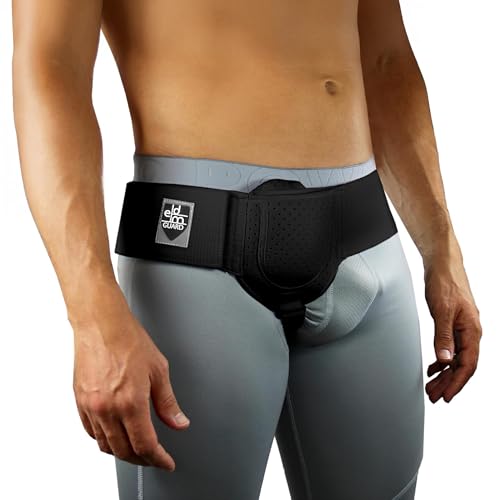
The one that stays put through a full work shift without constant tugging.
This belt is built for all-day wear. The S/M size fits hip circumference between 86-112 cm, which is 34-44 inches — and the key measurement is your hips, not your waist, so it doesn’t ride up when you sit or crouch. The removable compression pad delivers targeted pressure on either the left or right side, and buyers report it works well for both single and double hernias. One reviewer, a 6ft 205lb male using it for pre-surgery support, noted the small/medium fits tight and the Velcro holds firmly even during bending and exercise bike sessions.
Unlike the lighter ARMSTRONG AMERICA belt (0.11 kg) which some found too snug on a 34″ slim waist, the Everyday Medical design has a reinforced strip that prevents rollover, though one owner mentioned it can develop a kink over time creating an “oil can” effect on the fabric. The leg strap is optional — many wearers skip it and wear boxer briefs underneath instead. The built-in elastic band wraps around the hips with a pocket for the pressure pillow, giving you steady support for standing, walking, and stairs.
For long-term value, this is the pick that buyers come back to — one reviewer noted they plan to buy a second for continued use. It lets you handle a physical job that involves sitting, climbing, and crouching without the belt shifting.
Real-World Strengths
- Snug, comfortable fit for all-day wear
- Reinforced strip stops the belt from rolling over
- Removable pad works on left or right side
- Velcro attaches away from skin to avoid chafing
Watch For
- Fabric may develop a kink over time
- S/M runs tight on 6ft 205lb frame
- Not comfortable for use while seated on the toilet
Reach for this if: you need a hernia belt that stays secure through a full active day, including bending, walking, and climbing.
Look elsewhere if: you have a very slim waist under 34 inches — the S/M size may be too snug, and the kink issue might bother you.
2. ZEAZEN Large Hernia Support Belt for Men
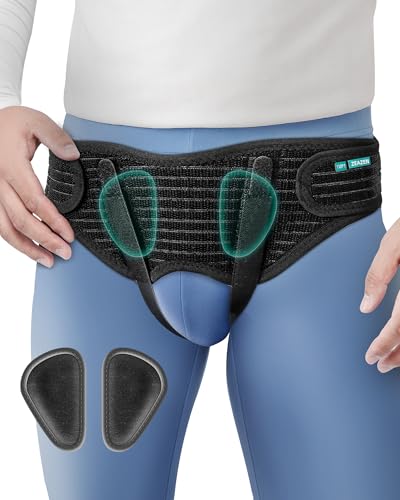
Two detachable pads mean you aim the pressure exactly where it hurts.
The ZEAZEN belt stands out because of its dual removable medical-grade pressure pads — you can position them individually for a left-side, right-side, or double hernia. At 0.15 kg it is mid-weight among the group, heavier than the ARMSTRONG AMERICA (0.11 kg) but lighter than the Pauline (0.17 kg). The adjustable hook-and-loop fasteners use high-strength Velcro that owners mention stays firm through daily movement, though one buyer mentioned the pull tabs on the straps can fall off, especially on the side with the worse hernia.
Customers note the pressure bulges are detachable and you can put them exactly where you need them. One user, a man over 50 at 160 lbs and 70 inches tall, uses this belt daily for exercise and removes it only at bedtime. He said the perineal straps are uncomfortable but necessary, so he uses just one. The breathable moisture-wicking fabric is meant to keep your skin cool through long wear, and the lightweight material slips under clothing discreetly.
The catch: a reviewer gave it a 50% rating because the pull tabs fell off easily, especially on the right side over the worst hernia. The same person felt the design needs better sizing for different body types. Still, most owners call it effective for double hernia support.
Solid Middleground: The ZEAZEN gives you the targeting ability of two repositionable pads at a competitive price, but check the strap tabs for durability early on.
Best for: anyone with a double hernia who wants to aim support separately on each side.
Skip if: you need a belt that requires zero strap adjustment — the pull tabs can loosen.
3. Pauline Inguinal Hernia Belt for Single/Double Hernia Support

The heaviest of the truss-style belts, but reviewers point out it works for a full year.
At 0.17 kg, the Pauline is heavier than the ARMSTRONG AMERICA belt (0.11 kg), partly because of the non-slip silicone strips on the belt that stop it from shifting during movement. It uses adjustable groin straps with strong Velcro and two removable compression pads that can be positioned for left or right hernias. The slim low-profile design is meant to stay hidden under clothes, though one buyer described it as bulky and said it can get uncomfortable for continuous wear.
Shoppers say using it “on and off for almost one year before corrective surgery” — that is the kind of real-world longevity you want from a daily-use belt. Another reviewer said the pain is not completely gone but became manageable, which is a realistic outcome for a non-surgical support. The material is a breathable polyester fabric that is designed to keep you cool through the day. One honest reviewer noted it “works as advertised” but that getting the right size is critical — the wrong size reduces effectiveness significantly.
Compared to the lighter ZEAZEN, the Pauline feels more substantial on the body, which some users prefer for a more secure sensation. The trade-off is that “bulky” feel, especially when you sit down.
Long-Term Pick
- Dual removable pads for left/right support
- Non-slip silicone strips prevent shifting
- Real buyer used it for almost a year before surgery
- Makes pain manageable, not just masked
The Bulk Factor
- Heaviest of the mid-range belts at 0.17 kg
- Some find it bulky and uncomfortable for all-day wear
- Sizing must be exact — wrong size reduces support
Best suited for: someone with a single or double hernia who wants an adjustable belt they can wear long-term before surgery.
Not ideal if: you need a barely-there feel — this one is noticeable, especially sitting down.
4. Cramer Groin Hip Spica Support For Groin Strain

Not a truss — this is a 73-inch neoprene wrap built for strains, not hernias.
The Cramer is fundamentally different from the hernia belts above. It is a laced neoprene wrap, 73 inches from end to end, designed to wrap around the waist and upper thigh for groin strains, hip flexor injuries, and hip arthritis. It fits waist sizes between 26 and 40 inches, and buyers report it reduces strain by 60% or more while retaining heat in the muscles. Unlike a hernia truss, there is no removable pad — instead, the wrap provides even compression and heat retention across the whole pelvic region. Holes in the waist area allow breathing and let you insert ice or heat packs inside the compression area.
Owners mention this wrap provides more support than Kinesio Tape for a hip flexor injury, but it takes practice to wrap correctly. One owner reported it barely fits a 20-inch thigh. The neoprene is thick and supportive, but that bulk makes it hard to wear under anything except very loose sweatpants. Another owner mentioned the wrap comes undone during activity unless you secure it with athletic tape, and the newer version has breathing holes that stretched and tore after a single wear.
This is the better pick if you have a groin strain or hip flexor pull rather than a specific inguinal hernia. The 60%+ strain reduction number from a verified buyer is the standout stat here for a muscle injury.
Strain Specialist: The Cramer spica wrap is exactly right for a pulled groin muscle or hip flexor — it reduces strain by 60%+ and retains heat in the groin area — but skip it for direct hernia support.
Choose this if: you have a groin strain or hip flexor injury, not a hernia, and want heat and compression over a large area.
Avoid if: you need targeted pressure over a specific hernia bulge — this wrap spreads compression rather than focusing it.
5. ARMSTRONG AMERICA Hernia Belt for Men

At 0.11 kg, the lightest belt here, but sizing and Velcro are hit-or-miss.
The ARMSTRONG AMERICA belt is the featherweight of this group at 0.11 kg — lighter than the Pauline belt (0.17 kg). It uses a single removable pressure pad that fits left or right groin, and the adjustable waistband and leg strap aim for a custom fit. The breathable materials are meant to keep you sweat-free all day, and the belt can be worn under clothing. But the reviews reveal mixed real-world results. One buyer with a 34-inch slim waist found it “too snug” and needed to size up from medium to large. Another said the Velcro straps peel away after use, requiring constant re-adjustment — they would not buy again due to poor adhesion.
On the positive side, several users found it helped with discomfort. One customer observed the product worked well after trimming the foam pad to make it tighten correctly. But another called it “unwearable” because the pressure pad is baseball-sized and impossible to wear under clothing without a visible bulge. Without the pad, the belt is tolerable but uncomfortable, that reviewer said. You get what you pay for here: it is the lightest and most affordable, but the durability and fit are inconsistent.
Compared to the Everyday Medical belt which uses a reinforced strip to prevent rolling, the ARMSTRONG belt lacks that reinforcement, which may explain the shifting and Velcro issues.
What Works
- Lightest option at 0.11 kg
- Can be worn under clothing
- Adjustable waist and leg strap
- Some customers note relief from discomfort
Common Complaints
- Velcro loses adhesion with use
- Pressure pad is too large for discreet wear
- Sizing runs small — 34″ waist needs size up
- Uncomfortable when worn without pad
Best for: someone who wants the lightest possible belt for occasional use and is willing to trim the foam pad for a better fit.
Not for: anyone who needs reliable all-day Velcro hold or has a slim waist — the fit and adhesion issues are common.
6. Fajas Galess Inguinal Hernia Support Underpants

The only “underpants” style here — worn over your regular underwear for completely discreet support.
This is a compression garment designed differently from the belt-style options. It looks and fits like tight underpants made from 81% polyamide, 13% cotton, and 6% elastane, and it weighs 0.23 kg — the heaviest of the six picks. The design shapes the buttocks naturally and aims for total invisibility under clothes. You wear it over your usual underpants for external control over an inguinal hernia. One buyer at 36-inch waist and 175 lbs found it fits per the size guide and uses it for bilateral inguinal hernia recovery and now for heavy workouts to prevent reinjury.
Sizing is the biggest concern here. Multiple reviewers warn that sizes run very small — a 34-inch waist buyer found the medium too tight and the large also too tight, to the point where it aggravated the hernia. Another buyer said the recommended size rides low on the hips. The material is high quality and built very well according to owners, but ordering one size up from your usual is probably necessary. One buyer confirmed they got a new larger size and it fits well.
This is the right pick if you want support without straps or buckles, especially for workouts or long days on your feet where a traditional belt might pinch or dig in. But the sizing risk is real — measure carefully and consider going up one full size.
Discreet Confidence: The Fajas Galess underpants disappear under your clothes and work well for workouts and all-day wear, but order a size up to avoid aggravating your hernia.
Choose this if: you want the most discreet option — no straps, no Velcro tabs, just compression you can wear all day.
pass on it if: you are between sizes or have a 34-inch waist — the sizing runs extremely small and getting the wrong size can make the hernia worse.
Understanding the Specs
Removable Pressure Pad
This is the key feature for inguinal hernia belts. A removable pad sits directly over the hernia to hold it in place while you move. Belts with two pads let you support both sides independently. Without a pad, a belt is just a compression wrap, which works better for general muscle strains than for a specific hernia bulge.
Weight and Wearability
Heavier belts (0.17 kg or more) feel more substantial and secure but can feel bulky under clothes. Lighter belts (around 0.11 kg) are easier to ignore but may shift more during activity. The trade-off is constant: a heavier belt stays put but is always noticeable; a lighter belt disappears but may need more adjustment.
Hook-and-Loop vs. Lace-Up Closure
Most hernia belts use Velcro-style hook-and-loop fasteners for easy adjustment. The quality of this fastener is critical — poor Velcro peels away during the day, especially when you bend, and requires constant tightening. Lace-up closures, like on the Cramer spica, let you dial in tension precisely but take practice to wrap correctly and can come undone during activity.
Waist vs. Hip Measurement
Many hernia belts are sized by hip circumference, not waist size. If you measure your waist, the belt may ride up when you bend. Always check whether the brand asks for hip measurement (around the widest part of your hips) or waist measurement (around your belly button). Getting this wrong can mean a belt that is too loose to support or too tight to wear.
FAQ
Will any compression short work for an inguinal hernia?
How tight should a hernia belt feel?
Can I sleep in a groin compression belt?
How do I measure myself for the right size?
Can I wear a hernia belt under jeans or work pants?
How long does a hernia belt last?
What is the difference between a truss and a compression wrap?
Can I exercise or lift weights with a hernia belt?
Do hernia belts work for femoral hernias too?
Should I buy a hernia belt before or after surgery?
Final Thoughts: The Verdict
Across the board, the best compression shorts for groin injury winner is the Everyday Medical Inguinal Hernia Belt because it combines secure Velcro hold, a reinforced strip that prevents rolling, and an optional leg strap that makes all-day wear practical for physical jobs. If you want a dual-pad belt that lets you target support on each side independently, the ZEAZEN Large Hernia Support Belt gives you the most adjustability. And for a groin strain or hip flexor injury that needs broad heat and compression rather than a focused hernia pad, the Cramer Groin Hip Spica Support reduces strain by 60%+ and retains heat in the tissues during recovery.
How We Picked
We do not accept paid placement. Every pick is matched to a real buyer and a real use-case; we do not hands-on test units.
Sources & Methodology
Specifications: manufacturer listings and product documentation. Review insights: verified customer reviews, as of July 2026. Pricing: not shown on this page (it changes often); check the current price via the retailer link.
As an Amazon Associate, WellFizz earns from qualifying purchases. This does not affect which products we feature.
Related Guides

Mo Maruf
I created WellFizz to bridge the gap between vague wellness advice and actionable solutions. My mission is simple: to decode the research and give you practical tools you can actually use.
Beyond the data, I am a passionate traveler. I believe that stepping away from the screen to explore new environments is essential for mental clarity and physical vitality.