Our readers keep the lights on and my smoothie glass nicely filled. As an Amazon Associate, I earn from qualifying purchases.
Specs are compiled from manufacturer listings and verified buyer reviews and can change over time — please confirm the key details on the product page before buying.
Finding the right compression garment after an arm lift is the single most important step you can take for your recovery. The wrong fit means painful digging, rolled-up sleeves, or zero compression where you need it most.
I’m Mohammad Maruf — the founder and writer behind WellFizz. This guide is built by comparing the manufacturers’ published specifications and the patterns across verified customer reviews, so you get each pick’s real strengths and trade-offs instead of marketing spin.
Whether you are just starting your search or ready to buy, these nine products represent the best options available for a quality compression garment after arm lift surgery, and this breakdown will help you match the right one to your specific recovery needs.
Our Picks at a Glance


How To Choose The Best Compression Garment After Arm Lift
An arm lift (brachioplasty) reshapes your upper arms by removing excess skin. A post-surgical compression garment holds your new contours flat and reduces swelling by preventing fluid from pooling in loose tissue. A garment that fails at either job can slow healing and leave lumpy results.
Compression Level and Graduation
Post-surgical garments use a specific measurement called mmHg (millimeters of mercury) to describe how tightly they squeeze. A “graduated” garment is tightest at the wrist and loosens as it moves up the arm. This design pushes fluid back toward your heart rather than trapping it in your hand. For arm lift recovery, look for a garment that states its compression range clearly—something between 15-20 mmHg or 20-30 mmHg is typical for this stage of healing.
Closure System and Independence
In the first days after surgery, your range of motion is limited. You cannot easily twist your arms behind your back. A front zipper or hook-and-eye closure lets you dress yourself without help. Sleeves with no closure are simpler but can be difficult to pull on over tender incisions. Think through who will help you during week one and choose your closure style accordingly.
Material and Breathability
You will wear this garment for weeks, often 23 hours a day. An 80% Nylon, 20% Spandex blend offers the right balance of stretch and hold while letting your skin breathe. Cotton feels soft but lacks the sustained compression needed for healing. A smooth design also reduces the risk of fabric edges rubbing against your fresh incision lines.
Quick Comparison
| Model | Best For | Compression Level | Closure Type | Material | Amazon |
|---|---|---|---|---|---|
| KEKING Compression Sleeves★ Best Overall | Gentle, all-day wear | 15-20 mmHg | Pull-on (no closure) | 80% Nylon, 20% Spandex | Amazon |
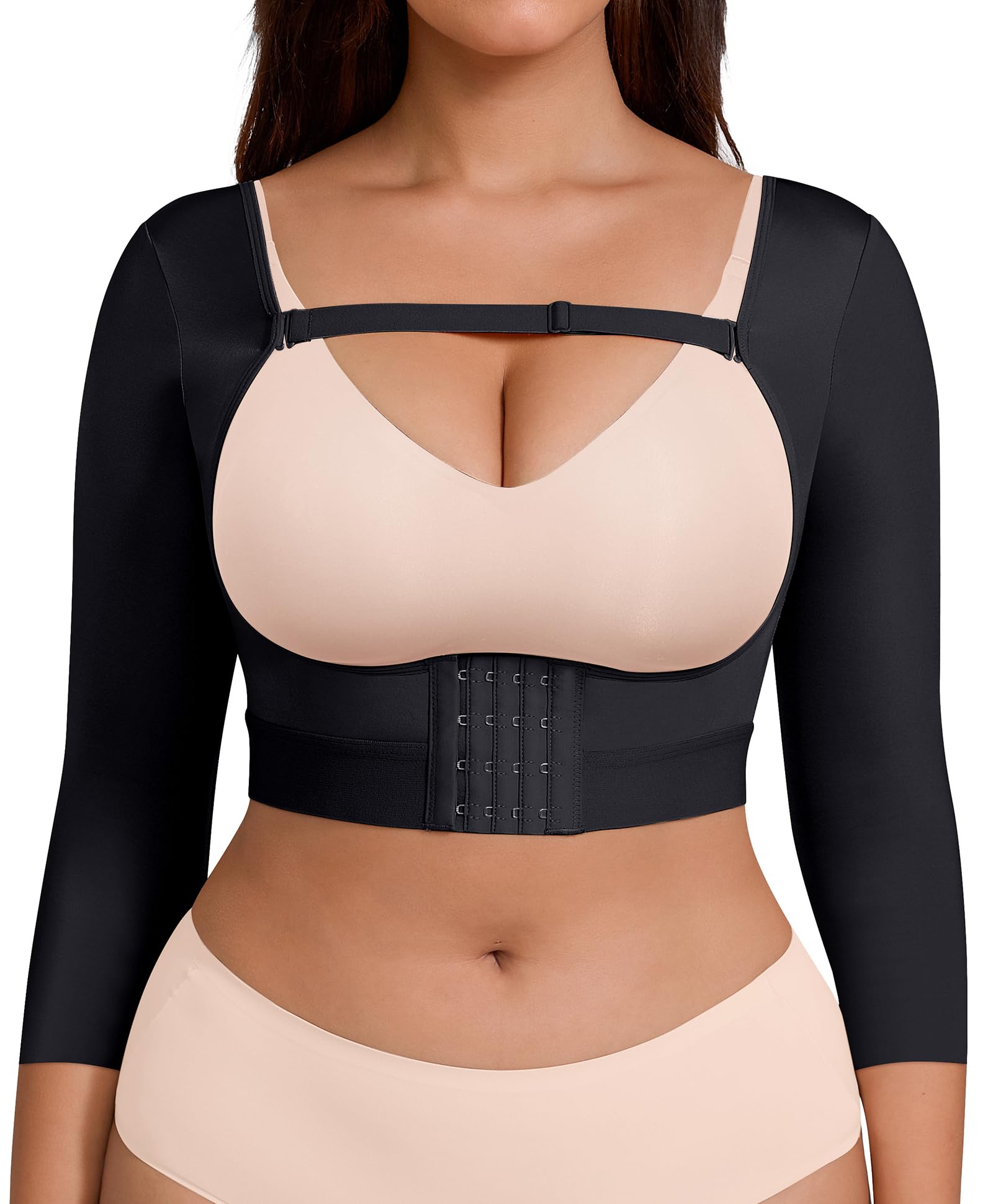
| FeelinGirl Upper Arm ShaperAlso Great | Post-surgery all-in-one support | Firm (not specified in mmHg) | 4 Row Hook & Eye | Nylon / Spandex blend | Amazon |
| Ailaka Medical SleevesStrong Hold | High-compression control | 20-30 mmHg | Pull-on (no closure) | 78% Nylon, 22% Spandex | Amazon |
| FeelinGirl Arm Shaper (Front Closure) | Easy on/off after surgery | Firm (not specified in mmHg) | Front Zipper | Nylon / Spandex | Amazon |
| Truform Compression Sleeve | Medical-grade reliability | 20-30 mmHg | Pull-on (no closure) | 73% Nylon, 27% Spandex | Amazon |
| Variteks Upper Arm Sleeve | Posture & arm shaping combo | Firm (not specified in mmHg) | 3 Hook & Eye | Nylon, Spandex, Cotton | Amazon |
| Bioflect Compression Sleeves | Lymphedema & pain relief | Medium compression | Neck strap (wrap style) | Bio-ceramic knit | Amazon |
| Salome 0328-C Vest | Full upper body shaping | Firm (not specified in mmHg) | Zipper (front) | Powernet fabric | Amazon |
| Marena Long Arm Sleeves | Premium post-surgical recovery | Firm (not specified in mmHg) | Back hook & eye | Nylon / Spandex | Amazon |
In‑Depth Reviews
1. KEKING Lymphedema Compression Arm Sleeves (Pair)
Our pick — over 4★ from 250+ verified ratings; the strongest balance of quality and price.
The lightweight pair that delivers gentle graduated compression without the suffocating squeeze.
The KEKING sleeve is the lightest option on this list at just 2.08 ounces, and that lower weight translates into a noticeably softer feel on the arm. The 15-20 mmHg compression level is the most common starting point for post-surgical wear—firm enough to manage swelling but gentle enough that you can keep it on all day and night without dreading the next application.
Buyers report that the smooth knitting technology makes a real difference in comfort. There are no silicone dots on the top band, which is a deliberate choice: silicone can cause allergic reactions or skin irritation on sensitive post-surgery skin, and this sleeve avoids that risk entirely. The graduated construction is tightest at the wrist and loosens toward the upper arm, which is exactly how a post-surgical garment should work to push fluid out of the hand.
The honest friction point here is sizing. A significant number of owners found the fit too tight despite measuring carefully, and a few report that it cut off circulation after a couple of hours. The recommendation is to size up from your initial measurement, especially during early recovery when swelling is at its peak. At the arm lift stage, you need compression, not restriction—and the KEKING walks that line well for most people.
Pair for lymphedema
- smooth knit avoids irritating incisions and sensitive skin
- No silicone dots means zero allergy risk on the top band
- Light enough for comfortable 24-hour wear
Sizing can be tricky
- Sizing runs tight — most owners recommend going up one size
- A few received a single sleeve instead of the advertised pair
- Less compression than the 20-30 mmHg alternatives
Best suited for: First-time compression users or anyone who wants a gentle, breathable sleeve they can tolerate for long stretches.
Think twice if: You need maximum compression right after surgery—the 20-30 mmHg options deliver a stronger squeeze.
2. FeelinGirl Upper Arm Shaper for Women
Buyers call this arm shaper a “standout” for arm lift recovery wear.
It consistently appears in reviews as the go-to choice after brachioplasty. The 4-row hook-and-eye closure lets you dial in exact tension—looser when swelling peaks, tighter as your body settles. The fabric stays put without sliding or rolling, the top complaint about cheaper alternatives.
The material is soft against incisions and breathable enough for 23-hour wear, but the trade-off appears in a few honest notes: some owners say the bottom of the sleeves can roll up after repeated movement. The cut also runs small, so the general advice is to size up from your normal top size. One buyer recovering from arm lift surgery summed up the experience: “I bought three. I’m going on week 11 for recovery and I wear this compression as much as I can.”
At the arm lift recovery stage, you want something that compresses the underarm and back area evenly. A small number of owners felt this garment fell short there, so if your incisions run deep into the armpit, you may want a more targeted sleeve. For the vast majority, though, the combination of adjustability, comfort, and lasting compression makes it the most versatile choice on this list.
Snug upper arm fit
- Adjustable 4-row closure gives you room to tighten as swelling goes down
- Soft material stays breathable during full-day wear
- Stays in place without slipping or bunching up
May roll down
- Runs small — size up for a comfortable fit
- Sleeve bottoms can roll up with heavy arm movement
- Some owners felt compression was insufficient in the underarm zone
Reach for this if: You want an adjustable, comfortable post-surgery garment that you can wear through weeks of recovery without fighting it.
Look elsewhere if: You need strong, targeted compression that reaches deep into the armpit area—this is a general-fit shaper.
3. Ailaka Medical Compression Arm Sleeves
The higher-pressure sleeve that gives you 20-30 mmHg of graduated compression for serious swelling control.
If your surgeon wants firm compression after your arm lift, the Ailaka sleeve brings the highest rating in this range at 20-30 mmHg. It is noticeably heavier than the KEKING option—3.21 ounces compared to 2.08 ounces—and that extra material means a stronger squeeze from wrist to bicep. The graduated design works the same way: tight at the bottom, loosening as it climbs, which helps drive fluid back into circulation.
The material blend is 78% Nylon and 22% Spandex, and buyers consistently note that the fabric feels breathable and lightweight on the arm despite the higher compression. The silicone grip dots along the top edge are there to stop the sleeve from sliding down, but a few owners with sensitive skin report that these dots caused irritation or even small scabs. If your skin reacts easily to adhesives or silicone, this is a factor to consider.
Where the Ailaka shines is in staying put. The reinforced top band keeps the sleeve anchored above the bicep, and the quality of the stitching gets frequent praise. A small subset of users found that the material stretched out after a few uses and no longer held its shape, but the overwhelming pattern in the reviews is that this sleeve holds its compression well through weeks of daily wear.
Medical-grade compression
- Higher 20-30 mmHg compression for more aggressive swelling management
- Stays firmly in place above the bicep during movement
- Breathable fabric despite the stronger squeeze
Fabric may irritate
- Silicone grip dots can irritate sensitive or allergic skin
- A few owners found the material stretched out after limited use
- Heavier than the gentler-compression alternatives
Grab this for: Stronger post-surgical compression when your doctor wants 20-30 mmHg, especially if you need reliable grip that stays up.
skip it if: You have known silicone allergies or sensitive skin that reacts to grip dots.
4. FeelinGirl Arm Shaper Front Closure
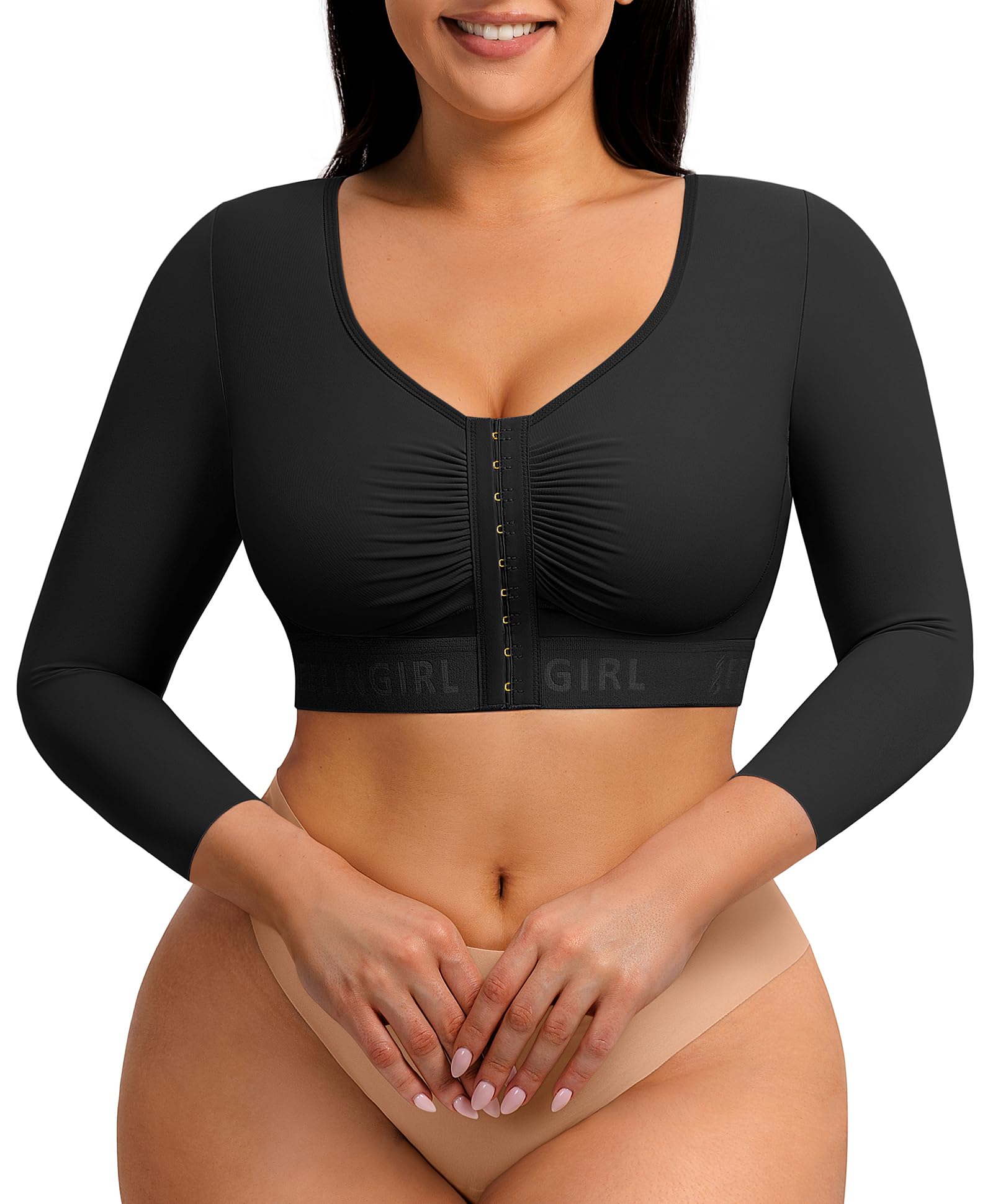
The front-zipper shaper that lets you dress yourself when reaching behind your back hurts.
In the first days after an arm lift, every movement that stretches your arms can feel like a setback. This FeelinGirl variant solves that by putting a front zipper on the closure, so you can step in and zip up without twisting or pulling. The design includes full sleeve coverage that smooths the arms while also lifting the bust, which several post-surgery owners found helpful for overall upper-body shaping.
Buyers describe the material as “soft and compresses perfectly,” with no rough edges or stitching to irritate fresh incisions. A few owners noted that internal arm seams can dig into healing wounds—one called it a “deal-breaker” for post-arm-lift recovery. That seems to be a fit issue that varies by body shape, so test the placement of the seams against your own incision lines carefully.
The material is stretchy and breathable enough for all-day wear, and the front closure makes bathroom breaks and dressing changes significantly less painful. For anyone recovering without live-in help, this design feature alone can save a lot of frustration.
Best if: You need a front-closure garment because you will be dressing yourself after surgery.
Not ideal if: Your incisions run exactly where the internal arm seams sit—check that placement before committing.
5. Truform Lymphedema Compression Arm Sleeve

The FDA-registered sleeve that brings medical-grade reliability to your post-surgical recovery routine.
Truform has been making compression garments since 2013, and this sleeve reflects that experience. The 20-30 mmHg graduated compression is built into a 73% Nylon, 27% Spandex construction that feels firmer than the cheaper alternatives. what separates it is the FDA registration—a mark of quality control that matters when you are trusting a product with your surgical recovery.
The dot-top grip band uses silicone to keep the sleeve anchored, and owners consistently say this design stays put better than competing brands like Juzo. At just 1.6 ounces, it is the second-lightest sleeve on the list despite delivering the higher compression tier. Buyers describe the texture as “so comfortable” and the fit as “firm without being uncomfortable.”
The honest downside here is sizing. This is a single sleeve, not a pair, and a significant number of owners found the fit too small even after using the size chart. The feedback is consistent: measure carefully and consider sizing up. The silicone grip is strong enough to cause discomfort if the sleeve is too tight, so do not skip the measurement step.
Choose this for: A proven medical brand with FDA registration and a strong silicone grip that truly stays in place.
Be aware: Single sleeve only, and the sizing runs small—measure twice and size up if you are between sizes.
6. Variteks Upper Arm Compression Sleeve Shaper Crop Top

The crop-top hybrid that compresses your arms and corrects your posture in one garment.
This Variteks garment is not just an arm sleeve—it is a vest-style compressor that covers your arms, shoulders, and upper back with a 3-hook closure system. The design gives you adjustable compression across a larger area, and the back panel doubles as a posture corrector. For arm lift recovery, this means your upper arms get consistent pressure while your shoulders are pulled into better alignment.
Owners mention that the Lycra material matches the quality of the Marena brand at a significantly lower investment. The back closures are heavy-duty and prevent the sleeves from sliding forward over your incisions, which is a common problem with standalone sleeve designs. A post-op owner noted that it is “painful to put on due to 10-inch incisions, but doable” and that the back hooks are easy to fasten without pulling on the arms.
The main friction point is the back strap that connects the two sleeves. Several owners found that this piece runs too short, pulling the sleeves tight into the underarm area. If you have a broader back or shoulders, this specific design may cause uncomfortable digging. The sizing also runs small—one buyer who ordered an XL “could not even get my arms into it.”
Ideal for: Anyone who wants arm compression plus back support in a single garment with adjustable hook closures.
Not for: Broad-shouldered buyers — the back connector can be too short, and the sizing is notoriously small.
7. Bioflect Compression Arm Sleeves Wrap

The wrap-style sleeve that uses bio-ceramic fibers and a massaging knit to soothe post-surgical discomfort.
Bioflect takes a different approach to compression. Instead of simple nylon-and-spandex squeezing, it uses bio-ceramic fibers and a raised 3D knit that creates diversified pressure points along the skin. The idea is to massage the capillaries beneath the skin while providing moderate compression. For arm lift recovery, this can help with the lymphatic drainage that prevents fluid buildup under your new arm contours.
The wrap design includes a neck strap that keeps the sleeves anchored, and owners with conditions like lipedema and lymphedema report significant pain relief. One buyer with Stage 3 lipedema said the sleeves are “comfortable, supportive, breathable, and reduce arm pain.” The sleeves are also easy to put on and take off compared to pull-on styles, which matters when your range of motion is limited.
The downsides are real and worth noting. The Bioflect material snags easily, and the armpit area can be irritating for some users. One owner reported a strong chemical odor after 30 minutes of wear that irritated their throat and lungs. The neck strap works for some but causes headaches during the day for others. This is a niche garment for people who need the specific massage and bioactive features, not a universal post-surgery solution.
Best for: Post-surgical recovery combined with lymphedema or lipedema where the massaging knit helps manage fluid.
Skip if: You want a simple, no-fuss compression sleeve—the wrap design and bio-ceramic features add complexity without necessarily improving basic compression.
8. Salome 0328-C Compression Sleeve Upper Arm Shaper
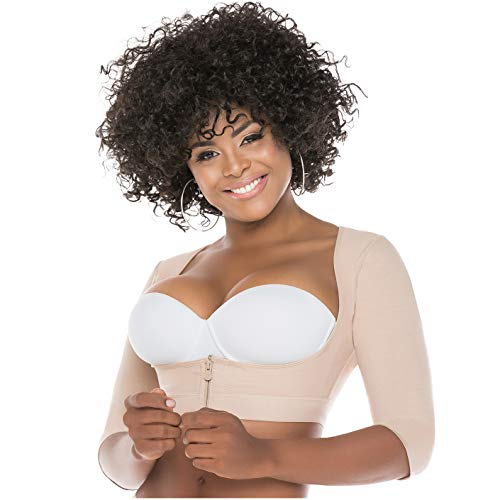
The Colombian-designed vest that wraps your whole upper torso while targeting your arms.
Salome is a well-known name in post-surgical shapewear, and this vest-style garment brings that reputation to arm lift recovery. The short-sleeve design covers your upper arms while extending down over your chest and back, giving you compression across a larger area than standalone sleeves. The front zipper makes it easy to get on and off by yourself.
The fabric quality gets consistent praise, but the execution has real problems for arm lift recovery. The most direct feedback from an owner who bought this after an arm lift procedure: “Garment barely compressed my arms.” That is a fundamental miss for a compression garment. Other buyers found the fit inconsistent across the body—the chest fits well while the arms feel too small or too loose, depending on the batch.
A few owners reported that the sleeves arrived with loose stitching or came apart at the seams after limited wear. The sizing also runs unpredictably large in some areas and small in others. For a garment at this level, the inconsistency is hard to recommend over the more reliable options on this list.
Consider if: You want a full-torso vest for shaping and posture, not just arm compression—the brand quality is apparent in the fabric.
Pass on this if: Your primary need is targeted arm compression after surgery—the sleeve design does not deliver consistent pressure there.
9. Marena Long Arm Sleeves

The premium post-surgical garment that surgeons themselves often recommend and dispense.
Marena is the brand you see in plastic surgery offices, and this long-arm sleeve is designed specifically for brachioplasty recovery. The full-arm coverage extends from wrist to shoulder with a back hook-and-eye closure system. The garment is engineered to be “comfortable for 24-hour wear,” and buyers confirm that the material is soft enough to tolerate through the night.
The quality of the compression and the smoothness of the fabric against incisions get frequent praise. Owners who have tried cheaper brands before Marena say the difference is immediately obvious in how the sleeve feels and how it avoids irritating seams. “More comfortable than the hospital garment” is a common sentiment. The back closure system also lets you slide your arms in and fasten without help, which is a real advantage when your range of motion is restricted.
The catch is worth flagging honestly: there is a persistent pattern of owners reporting that the armpit area cuts into the underarm incisions, causing significant discomfort. A few reviewers found this so painful that they stopped using the garment entirely. The fix that works for many is placing gauze pads in the underarm area to buffer the seam, but if you are sensitive to armpit pressure, this may not be the garment for you. The fit also runs small—one reviewer noted the garment was so tight in the shoulders that the back buckle could not reach across.
Best for: The highest quality post-surgical material and construction from a brand that specializes in recovery garments.
Watch out for: The armpit seam can cut into incisions—gauze padding is a workaround, not a fix.
Understanding the Specs
mmHg Compression Level
mmHg stands for millimeters of mercury, and it is the unit doctors use to measure how much pressure a garment applies to your arm. For post-surgical recovery, you will typically see 15-20 mmHg (moderate compression) or 20-30 mmHg (firm compression). A graduated garment is tightest at the wrist and loosens toward the upper arm, which helps push fluid back toward your heart rather than trapping it in your hand. The higher number is not always better—your surgeon will recommend the level based on your specific procedure and swelling pattern.
Material Blend
The nylon-and-spandex ratio determines how the garment stretches and holds over time. A blend around 80% Nylon and 20% Spandex gives you a good balance of firm compression and breathability. More nylon typically means a smoother, more durable surface, while more spandex adds stretch and recovery. A smooth construction is important for post-surgical wear because seams can rub directly against your incision lines and cause irritation or delayed healing.
FAQ
How many hours a day should I wear a compression garment after arm lift surgery?
How do I measure my arm for a compression sleeve to get the right size?
What is the difference between 15-20 mmHg and 20-30 mmHg compression?
How long does a compression garment last before it loses its effectiveness?
Can I wear a regular arm compression sleeve instead of a post-surgical garment?
Why does my compression garment hurt under my armpit?
Should I get a sleeve or a full vest-style garment for arm lift recovery?
Can I sleep in my compression garment?
Final Thoughts: The Verdict
For the majority of shoppers, the compression garment after arm lift winner is the FeelinGirl Upper Arm Shaper because its adjustable 4-row closure and soft, breathable material match what real recovery demands. If you want a gentle, lightweight sleeve you can wear all day without thinking about it, the KEKING gives you graduated 15-20 mmHg compression at just 2.08 ounces. And for strong, medical-grade hold with an FDA registration stamp, the Truform delivers reliable 20-30 mmHg compression from a trusted brand.
How We Picked
We do not accept paid placement. Every pick is matched to a real buyer and a real use-case; we do not hands-on test units.
Sources & Methodology
Specifications: manufacturer listings and product documentation. Review insights: verified customer reviews, as of July 2026. Pricing: not shown on this page (it changes often); check the current price via the retailer link.
As an Amazon Associate, WellFizz earns from qualifying purchases. This does not affect which products we feature.
Related Guides

Mo Maruf
I created WellFizz to bridge the gap between vague wellness advice and actionable solutions. My mission is simple: to decode the research and give you practical tools you can actually use.
Beyond the data, I am a passionate traveler. I believe that stepping away from the screen to explore new environments is essential for mental clarity and physical vitality.