Our readers keep the lights on and my smoothie glass nicely filled. As an Amazon Associate, I earn from qualifying purchases.
Specs are compiled from manufacturer listings and verified buyer reviews and can change over time — please confirm the key details on the product page before buying.
Your feet feel heavy, achy, or puffy by mid-afternoon, and you are not stuck choosing between full-length medical stockings and zero support. Compression ankle socks for swelling focus the pressure exactly where you need it — around the foot and ankle — without covering your calves or fighting with knee-high fabric. The trick is picking the right pressure level and fit, because a sock that slides down or pinches in the wrong spot is worse than none at all. This guide compares seven proven pairs against verified buyer feedback, so you know exactly which one matches your day.
I’m Mohammad Maruf — the founder and writer behind WellFizz. This guide is built by comparing the manufacturers’ published specifications and the patterns across verified customer reviews, so you get each pick’s real strengths and trade-offs instead of marketing spin.
The result is a curated shortlist of the best compression ankle socks for swelling, organized by what matters most: genuine graduated pressure (tightest at the ankle, looser up the leg), all-day comfort without slipping, and the honest trade-offs real buyers discovered after weeks of wear.
Our Picks at a Glance

![3 Pairs Neuropathy Socks for Women & Men, [Ultra Breathable] Plantar Fasciitis Socks for Achilles Tendonitis Relief, [20-30 mmHg Compression] Ankle Socks for Arch Support](https://m.media-amazon.com/images/I/81TwT4QPHJL.jpg)
How To Choose The Best Compression Ankle Socks For Swelling
Many low-cut socks claim to be “compression,” but they often deliver nothing more than a snug elastic band. Picking the right pair depends on three clear factors that real buyers consistently flag as make-or-break.
Compression Level: 15–20 mmHg vs 20–30 mmHg
This single number decides whether a sock actually fights swelling or just feels tight. For mild to moderate puffiness — the kind that builds up during a long shift or a plane ride — 15-20 mmHg (millimeters of mercury, the pressure the sock applies) is the most comfortable effective range. It is strong enough to stimulate circulation (push blood back toward the heart) without making you wrestle the sock onto your foot. The firmer 20-30 mmHg range is best for diagnosed edema (fluid retention) or neuropathy relief, but it is noticeably harder to get on and can feel restrictive for all-day wear. If you are new to compression, start with the lower range.
Fit Features: Heel Pocket and Anti-Slip Design
Owners complain most about socks that slide down into the shoe or bunch up at the toes. A deep 3D Y-heel pocket — a contoured cup that mirrors the shape of your heel — locks the sock in place without silicone strips that itch. This anatomical design also prevents fabric from twisting around your ankle, which ruins the compression pattern. Check for a reinforced heel tab at the back; it protects your Achilles (the tendon at the back of the ankle) from shoe collar rub and makes the sock easier to pull on.
Material Blend and Breathability
Cotton feels soft but traps sweat, which leads to odor and blisters inside compression socks. A better blend uses nylon and spandex for the body (durable, wicks moisture away), with strategic mesh panels over the top of the foot for ventilation. If you wear these for exercise or in warm weather, skip anything heavy on cotton. Look for a moisture-wicking fabric (a material that pulls sweat away from the skin so it evaporates) that keeps feet dry even after hours of walking or standing.
Quick Comparison
| Model | Best For | Compression Level | Key Material | Pairs Included | Amazon |
|---|---|---|---|---|---|
| Gonii Women’s Compression Ankle Socks★ Best Overall | All-day wear & athletic activity | 16-19 mmHg | Cotton / Moisture-wicking blend | 5-6 Pairs | Amazon |
| 3 Pairs Neuropathy SocksFirm Support | Firm support for neuropathy (nerve pain) & plantar fasciitis (heel pain) | 20-30 mmHg | Breathable Performance Fabric | 3 Pairs | Amazon |
| 6 Pairs Ankle Compression Socks (Easetoe) | Nurses, runners & hot-weather wear | 15-20 mmHg | 68% Nylon / 19% Spandex / 13% Polyester | 6 Pairs | Amazon |
| Quarter Compression Socks (SOTOISBE) | Running, hiking & blister prevention | 16-19 mmHg | Combed Cotton / Tech-Dry Yarn | 6 Pairs | Amazon |
| 6 Pairs Cushioned Low Cut (Easetoe) | Plantar fasciitis (heel pain) & weak ankle support | 15-20 mmHg | 68% Nylon / 19% Spandex / 13% Polyester | 6 Pairs | Amazon |
| NEENCA Copper Compression Socks | Recovery, injury rehab & cold feet | 20-30 mmHg | 24% Copper Ions Infused Fiber / 62% Nylon / 14% Spandex | 1 Pair | Amazon |
| Viasox Ankle Compression Socks | Gentle support & stylish summer wear | 14 mmHg | Cotton Blend | 3 Pairs | Amazon |
In‑Depth Reviews
1. Gonii Women’s Compression Ankle Socks, Athletic Running Cushioned Support Low Cut Socks 5-6 Pairs
Our pick — over 4.5★ from 500+ verified ratings; the strongest balance of quality and price.
The crowd favorite balances snug 16-19 mmHg support with the cushioned comfort your feet crave after a 12-hour day.
Sitting at a light-to-medium 16-19 mmHg compression range, these socks actively promote blood flow without feeling like a medical device. What wins people over is the comfort — it is the most-praised feature by a wide margin. The 360-degree arch band keeps the fabric locked in place, and the shock-absorbing cushioning in high-wear areas softens every step on concrete or a running track. A buyer reported they “avoided my usual swelling” during a long car ride.
The quality and fit are next in line as standouts, with 25 buyers specifically calling out the fit. One shoe-size-7 owner noted the size 8-10 fit “snug,” cautioning that a 6-8 would have been too small — a useful sizing breadcrumb for smaller feet. The socks use a moisture-wicking cotton blend with mesh ventilation across the instep (the top curve of the foot), so your skin can breathe even during intense movement. The toe seam is eliminated to prevent irritation, and a heel tab protects the Achilles from rub.
The honest trade-off is thickness. Several owners mention these run a bit thick for tight shoes or warm months, and a review observed pilling on the toe fabric after washing. These are not the thin, barely-there compression liners some expect. They are built like performance socks with real cushioning, which means they excel for long shifts and athletic activity but may feel bulky inside narrow sneakers. For all-day wear during a Disney trip or a nursing shift, the trade-off is well worth it — the cushioning is part of why they stay comfortable for 12+ hours.
Everyday ace: The highest count of satisfied owners calling these comfortable and well-made; the compression is noticeable but not fatiguing.
Sizing heads-up: They run thick and the 8-10 size fits more like a snug 8.5 — petite feet should size down if possible.
Best for: Nurses, runners, travelers, and anyone on their feet 10+ hours who wants cushioned compression that stays put without feeling restrictive.
Think twice if: You need a paper-thin sock for dress shoes or live in a very hot climate — the cotton-blend cushioning retains more warmth than a nylon sports sock.
2. 3 Pairs Neuropathy Socks for Women & Men, [Ultra Breathable] Plantar Fasciitis Socks for Achilles Tendonitis Relief, [20-30 mmHg Compression] Ankle Socks for Arch Support
At 20-30 mmHg these target neuropathy (nerve pain) and plantar fasciitis (heel pain) directly.
With a 20-30 mmHg compression rating, these are the strongest ankle socks here. The support is the most-cited positive, mentioned by 36 owners. Buyers report effective overnight neuropathy relief, with one describing them as “tight at top but not excessively” and confirming reduced swelling. The same owner admitted they look “dorky” worn with sandals at home but called them effective — an honest summary of the trade-off.
The fabric is described as ultra-breathable, and 22 owners specifically call out comfort. A buyer who tested three different brands said this pair has the least compression of the three but is “the most comfortable for all-day wear.” Compared to the firmer NEENCA copper socks (also 20-30 mmHg), owners mention these are noticeably easier to put on. The socks are easy to put on and take off compared to knee-high stockings, and the arch support targets both the Achilles and the plantar fascia band. For anyone dealing with burning sensations or morning foot pain, the feedback is consistent: these help.
Why owners choose these
- Support is the top praised feature (36 mentions) — directly targets neuropathy and plantar fasciitis.
- Easy on/off compared to full stockings, comfortable for sleeping or lounging around the house.
Honest limitations
- Fit can be inconsistent; some owners with small feet found them loose and lacking compression.
- Colors are loud (brights, patterns) — no plain black option available in the 3-pack.
Who it helps: Anyone diagnosed with neuropathy or plantar fasciitis who wants firm ankle-level compression that works for overnight recovery and home wear.
skip it if: You need a precise prescription-grade compression level — these feel more “moderate” than “medical firm” to some buyers.
3. 6 Pairs Ankle Compression Socks Women Men 15-20 mmHg Low Cut Athletic Running Arch Support for Travel Nurses Flight (Easetoe)

A science-driven blend — 68% Nylon, 19% Spandex, 13% Polyester — that wicks sweat, locks the heel, and delivers 15-20 mmHg without silicone.
Easetoe engineered these socks with a deliberate material split: 68% Nylon, 19% Spandex, and 13% Polyester. This creates a hydrophobic (moisture-repelling) barrier that instantly wicks sweat, so your feet stay dry even during a long run or a 12-hour shift. The comfort is the most-praised aspect (14 mentions), followed closely by quality and compression. Owners confirm these “definitely do their job and keep my feet from swelling whether I’m standing or walking or sitting.”
The anti-slip trick here is a deep Y-Stitch Heel construction — an anatomical cup that locks the heel in place without silicone strips that can irritate the skin. A buyer with plantar fasciitis noted these were “just the right level of compression” and a lifesaver in Florida heat because they are short enough to avoid the roasting feeling of knee-high socks. The extended heel tab also prevents blisters where the shoe collar rubs. For anyone who experiences swelling during air travel, standing, or walking, these deliver noticeable relief without the struggle of pulling on medical hosiery.
The thickness receives mixed reviews — 9 owners flagged it. Some describe the socks as medium thickness, others as thin. One reviewer noted they are too thin for work shoes and better suited for home or light activity. The men’s sizing also drew a complaint: the men’s large was reported to be no larger than the women’s large, so men with bigger feet should size up cautiously. For the price of six pairs, this is one of the best value propositions in the list, particularly for hot-weather wear and athletic recovery.
No-slip engineering: The Y-stitch heel pocket keeps the sock planted — no silicone needed, no itching.
Men’s sizing nuance: Men’s large runs comparable to women’s large; men with feet over size 11 may find them snug.
Best for: Runners, nurses, and travelers who need a thin, moisture-wicking compression sock that handles heat and constant motion without sliding down.
Consider alternatives if: You want thick cushioning or have a men’s foot size above 11 — check the size chart carefully.
4. Quarter Compression Socks for Men Women, Cushioned Running Hiking Socks (SOTOISBE)

Left-and-right-foot-specific 16-19 mmHg compression at a price that undercuts premium brands by a mile.
Quality and comfort tie for the most-praised aspects here (37 and 34 mentions respectively), and the clever manufacturing detail is that each sock is shaped for a specific foot — left and right are distinct. The 16-19 mmHg compression is paired with a terry-loop sole (a looped fabric for shock absorption) and a breathable mesh panel that fights odor. Owners confirm these hold up well in the wash, provide good compression for diabetic neuropathy, and keep ankles from swelling during work. One buyer who wears them for road and trail running said they offer “much better than socks costing much more.”
This is a six-pair set from SOTOISBE, a brand that also offers a mid-crew and low-cut version, meaning you can mix heights if you like the compression feel. The fabric uses combed cotton (for softness and odor resistance) combined with Tech-Dry yarn (for moisture wicking and durability). The Y-heel and tune toe stitching prevent slipping, and the range of sizes (S to XL) accommodates both men and women. For the price, this set delivers the highest quality rating in the entire lineup.
The cushioning is the mixed note — 22 owners flagged it. Some found the material soft and supportive, others felt it was not as cushioned as the product images suggested. A review also noted they are “very tight around the ankles,” which may be uncomfortable for some. If you want a heavily padded athletic sock, these may feel thinner than expected. But for everyday compression, swelling relief, and the assurance of separate left/right foot shaping, the value is tough to top.
Why buyers grab these
- Highest quality rating in the list (37 mentions) — left/right shaping and durable stitching.
- Six pairs at a value price; great for daily rotation between washes.
The catch
- Mixed reviews on actual cushion level — expect medium padding, not a thick running sock.
- Ankle band is tight; buyers with wide ankles or high insteps (top of foot arch) may find it restrictive.
Best for: Runners, hikers, and anyone who wants six pairs of well-built compression socks with separate left/right shaping and proven durability.
Not ideal if: You have wide ankles or want plush cushioning — the ankle band is firm and the padding is moderate.
5. 6 Pairs Ankle Compression Socks Men Women 15-20mmHg Cushioned Low Cut Athletic Arch Support Travel Plantar Fasciitis (Easetoe)
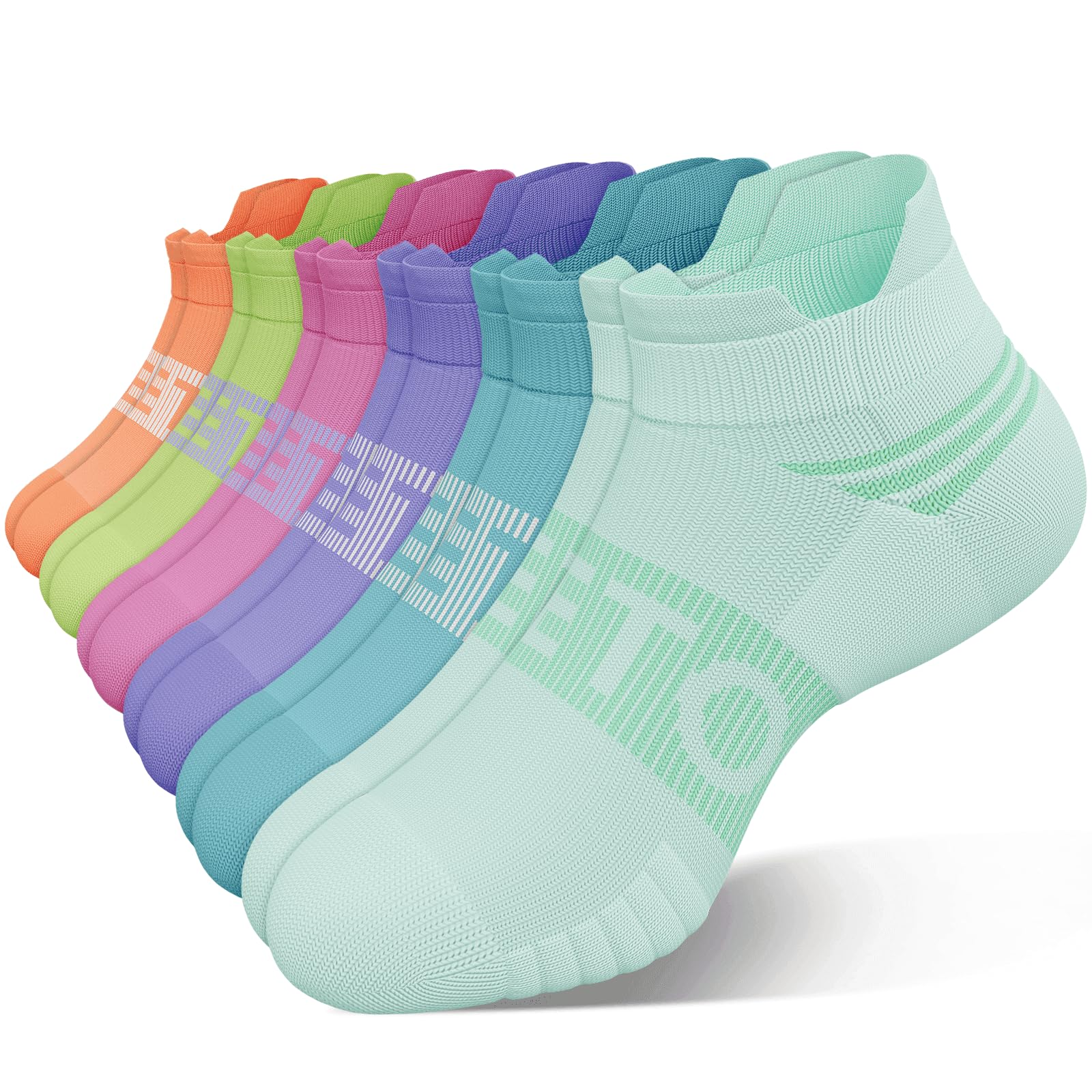
A cushioned sole and 15-20 mmHg compression that targets plantar fasciitis (heel pain) and weak ankles in one package.
Compression is the most-praised feature here (17 mentions), and the proprietary 3D Y-Heel Pocket is the engineering behind it. Instead of relying on silicone strips that can itch, the deep anatomical cup holds the sock in place by cradling your heel. The terry-loop sole adds a layer of shock absorption underfoot — a real advantage for anyone dealing with plantar fasciitis or standing on hard floors for 10 hours a day. One owner confirmed they “do not swell” after shifts; another said the support for “weak ankles helped soooo much.”
The material mix is identical to the other Easetoe entry: 68% Nylon, 19% Spandex, and 13% Polyester, which creates that moisture-wicking, hydrophobic surface that outpaces cotton. A buyer using barefoot shoes noted the socks work perfectly — no indentation, no sliding, easy care. The six-pair value pack makes these a low-cost rotation set for daily wear. For anyone with aching feet or recurring arch pain, the feedback is that the compression genuinely flushes out the heavy feeling by midday.
The sizing on these runs long. One owner with a women’s size 6 reported the small was “3-4 inches too long” and the extra fabric reduced compression effectiveness. This is a critical sizing trap: if you have small feet (women’s 6 or below), the compression may not sit in the right spot and will feel less effective as a result. The colors are a nice bonus, but the primary downside is that the sizing chart leans generous. Check the measurements before ordering, especially if you fall at the bottom of a size range.
Arch and ankle lock: Deep Y-heel and cushioned terry sole — two features that directly address plantar fasciitis and weak ankle pain.
Sizing runs large: Small may be too long for women’s size 6 or below; measure your foot length against the size chart.
Best for: Plantar fasciitis sufferers, retail workers, and anyone who wants a cushioned sole with firm arch support at a budget six-pack price.
Check sizing if: You have small feet (women’s 6 and under) — the extra fabric can reduce compression effectiveness.
6. NEENCA Copper Compression Socks, Medical Ankle Support Socks for Injury Recovery & Pain Relief, 20-30mmHg — 1 Pair
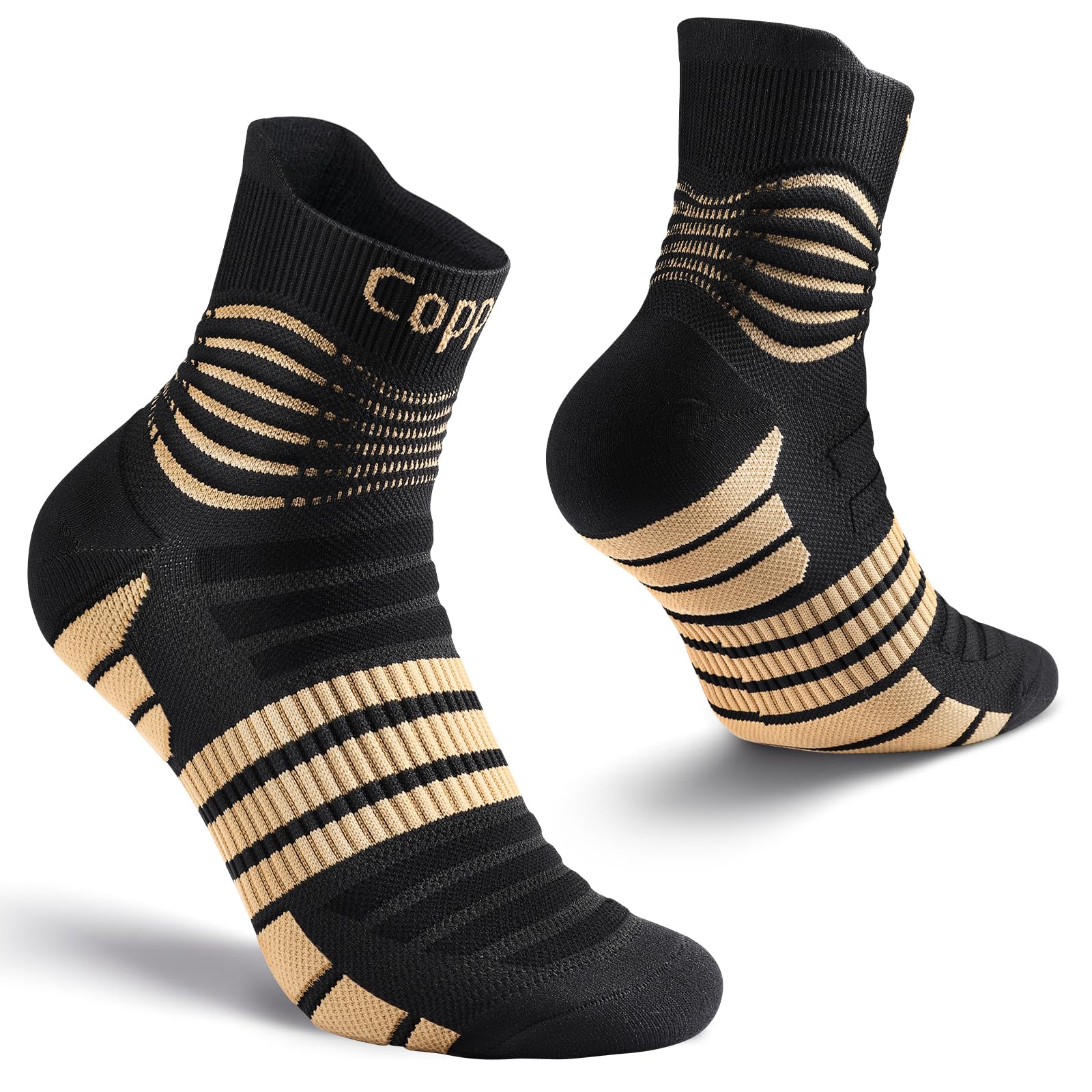
Copper-infused fibers (24% copper ions infused fiber) and a patented 3D weave that deliver medical-grade 20-30 mmHg compression for recovery.
This is the most technically built sock in the list: 24% copper-ions-infused fiber, 62% Nylon, and 14% Spandex, woven with a patented 3D cutting technology that integrates six compression rings around the ankle. Comfort is the runaway praise here — 62 owners single it out. A buyer using them for cold feet at night said the “constriction stimulates blood flow, keeping my feet warm and comfortable.” Another owner, who bought size medium for work and size large for sleeping, called the experience “heavenly.”
The copper-infused fabric is thicker than a typical summer sock yet breathable, and it prevented foot discoloration after a salty meal. The 20-30 mmHg range puts this firmly in medical-grade territory, making it a strong option for post-injury recovery, overnight use, or managing diagnosed edema (fluid retention). The Y-heel and extended tab protect the Achilles, and the air-knit fabric claims to absorb and evaporate sweat quickly.
The major trade-off is that you get only one pair — the most expensive per-sock unit in this guide. The fit also has a mixed reception (36 mentions). Several owners found them tight initially, with one cautioning that after removal there is a “temporary ankle-calf size difference” resolving in 1-2 hours. That is typical of strong compression, but it can be alarming if you are not used to it. A small minority also felt the value was not there for a single pair. For targeted recovery or night-time therapy, the performance is excellent; for daily rotation, you will need to budget for multiple pairs.
Why it stands out
- Comfort is the most-praised feature of any product here (62 mentions) — owners call it “perfection.”
- Copper-infused weave with six compression rings; noticeably effective for circulation and warmth.
Consider before buying
- Only one pair included; the per-pair cost is the highest in the list.
- Fit runs tight — temporary marks after removal are expected with this level of compression.
Ideal for: Recovery from ankle injuries, nighttime circulation issues, or anyone needing a medical-grade 20-30 mmHg single pair for targeted therapy.
Skip if: You need a multi-pack for daily rotation or are new to compression — the 20-30 mmHg level takes getting used to.
7. Viasox Ankle Compression Socks for Women & Men 3 Pack, 14 mmHg Support Improves Circulation, Extra Cushioned
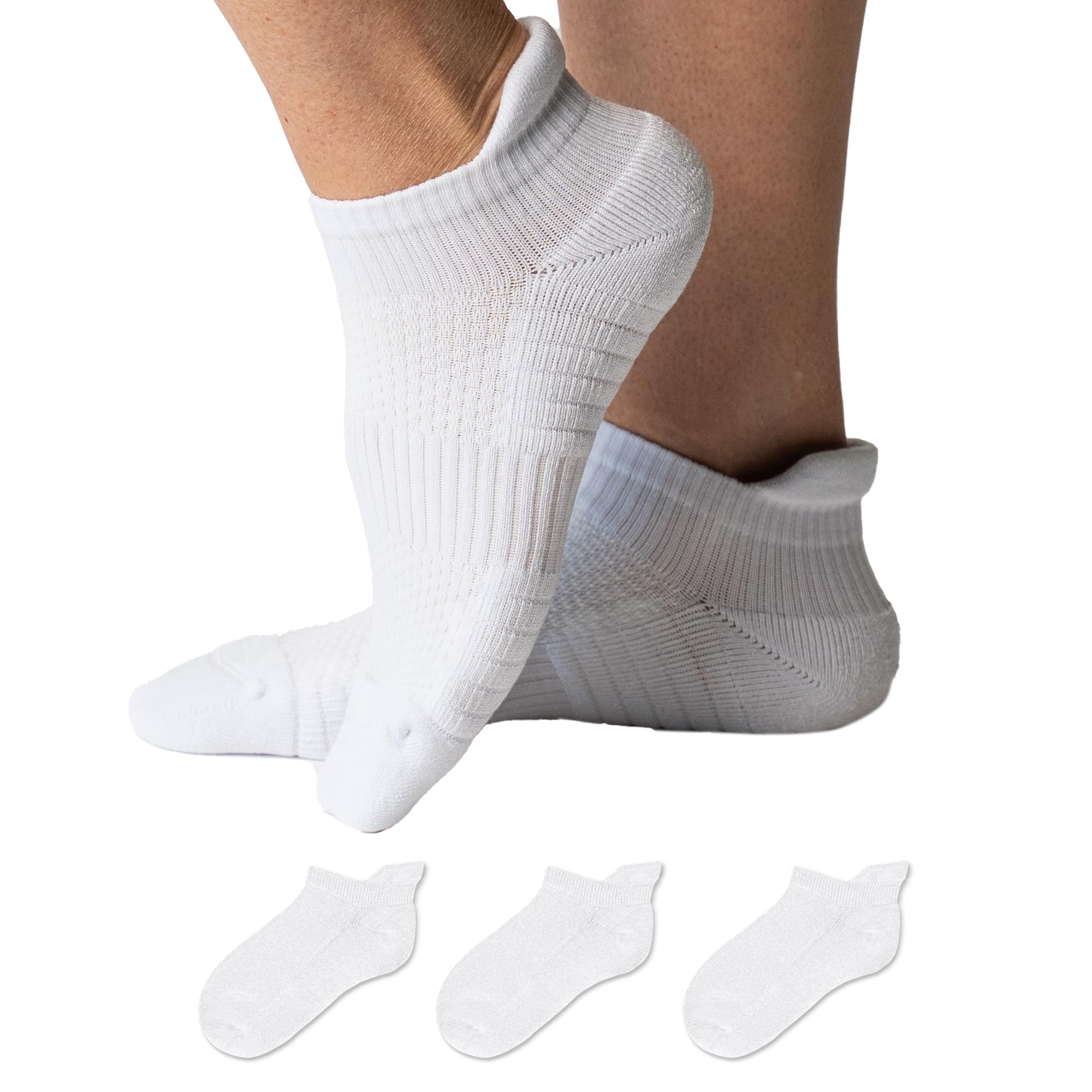
At 14 mmHg, this is the mildest compression level in the guide — a gentle hug rather than a medical squeeze.
This is the mildest compression level in the guide, designed for people who want swelling reduction without the wrestling match of a higher-rated sock. The comfort is the top praised feature (45 mentions), with owners describing them as feeling “like a massage” and appreciating the well-made construction. A buyer with pregnancy swelling confirmed they help, adding “my husband keeps stealing them.” The 3-pack includes pretty floral patterns that make them feel more like a fashion accessory than medical wear.
Fit is the second most-cited positive (30 mentions), and the extra cushioning provides noticeable padding without bulk. One owner said the socks helped circulation recovery after ankle surgery; a diabetic wearer confirmed the fit is “just right.” The materials are a cotton blend, which gives a soft hand feel but lacks the advanced moisture-wicking of the nylon-heavy competitors like the Easetoe. For summer wear, lounging, or sleeping, this is the most comfortable option in the guide — you can wear it all day without counting the minutes until you can rip them off.
The honest limitation is that the 14 mmHg level is not strong enough for moderate-to-severe swelling. One owner explicitly said they “do not feel any difference than non-compression socks” despite liking the design and comfort. Another reported swelling was pushed above the ankle band rather than resolved, leaving deep marks. This is not a failure of the sock — it is a feature of its mild rating. If your puffiness is mild, situational (long flights, minor pregnancy swelling), or you want a “starter” compression sock, this is a great pick. If you need firm medical-grade relief, the 20-30 mmHg options above will serve you better.
Comfort-first design: The highest comfort rating in the list (45 mentions) — soft, cushioned, and easy to wear all day.
Effectiveness ceiling: 14 mmHg is mild; sufficient for light swelling or maintenance, but not for diagnosed edema (fluid retention) or chronic puffiness.
Perfect for: Mild swelling from pregnancy, long flights, or summer heat — and anyone who wants a stylish, comfortable sock that feels more like a foot massage than a compression wrap.
Choose a firmer option if: Your swelling is persistent, moderate, or related to a medical condition that requires 15-20 mmHg or higher.
Understanding the Specs
mmHg Compression Levels
mmHg stands for millimeters of mercury, the unit that measures how much pressure the sock applies to your leg. Think of it as a pressure scale: 8-15 mmHg is a very light squeeze (like a snug athletic sock), 15-20 mmHg is the “balance” for most travel and daily swelling, and 20-30 mmHg moves into medical-grade territory meant for diagnosed edema (fluid retention) or post-surgery recovery. Going higher in mmHg gives more circulation help but makes the sock harder to pull on and may feel restrictive for all-day wear. For ankle socks specifically, 14-20 mmHg covers the vast majority of non-prescription needs.
Graduated vs Uniform Compression
Graduated compression means the sock is tightest at the ankle and gradually loosens as it moves up — this directional pressure helps push blood back toward your heart and prevents fluid from pooling in your feet. Uniform compression (same pressure everywhere) does not deliver the same circulation benefit. Every product in this guide uses graduated compression; the distinction matters if you ever consider a non-medical “compression” sock that simply uses an elastic band at the ankle, which can actually restrict flow rather than improve it.
FAQ
What does 15-20 mmHg actually feel like on my ankle?
Will ankle compression socks help with plantar fasciitis pain?
How do I know which size to order for compression socks?
Can I wear compression ankle socks to bed?
How do I wash compression socks without ruining them?
Will compression socks stop swelling during a long flight?
What is the difference between a “compression” ankle sock and a regular tight sock?
Why does my ankle sock leave deep marks after removing it?
Are copper compression socks better than regular compression socks?
Do compression ankle socks work for men too?
Final Thoughts: The Verdict
For the majority of shoppers, the compression ankle socks for swelling winner is the Gonii Women’s Compression Ankle Socks because it delivers the best balance of cushioned comfort, effective 16-19 mmHg pressure, and a multi-pack value that covers days of wear — backed by the highest concentration of satisfied owner feedback. If you need firmer, medical-grade compression for neuropathy or plantar fasciitis, grab the 3 Pairs Neuropathy Socks (20-30 mmHg). And for all-day athletic use or travel in hot climates, the 6 Pairs Ankle Compression Socks by Easetoe is the one to reach for, with its hydrophobic (moisture-repelling) material and heel-locking design that stays put without silicone.
How We Picked
We do not accept paid placement. Every pick is matched to a real buyer and a real use-case; we do not hands-on test units.
Sources & Methodology
Specifications: manufacturer listings and product documentation. Review insights: verified customer reviews, as of July 2026. Pricing: not shown on this page (it changes often); check the current price via the retailer link.
As an Amazon Associate, WellFizz earns from qualifying purchases. This does not affect which products we feature.
Related Guides

Mo Maruf
I created WellFizz to bridge the gap between vague wellness advice and actionable solutions. My mission is simple: to decode the research and give you practical tools you can actually use.
Beyond the data, I am a passionate traveler. I believe that stepping away from the screen to explore new environments is essential for mental clarity and physical vitality.