Our readers keep the lights on and my smoothie glass nicely filled. As an Amazon Associate, I earn from qualifying purchases.
That final drag across the leather determines whether your edge shaves hair or just scrapes it. Without the right abrasive compound loaded into the fibers, a strop is just a pretty piece of leather. The grit suspended in a wax bar—measured in microns, not mesh numbers—dictates how cleanly the micro-burr snaps free. Too coarse and you round the apex; too fine and you polish without removing the burr root.
I’m Mohammad Maruf — the founder and writer behind WellFizz. I log dozens of hours cross-referencing micron ratings, leather tannage reports, and first-hand use accounts from carvers, turners, and kitchen knife enthusiasts to find which stropping compounds actually deliver repeatable apex refinement.
This guide strips away the marketing fluff and focuses on the real abrasive science—aluminum oxide, chromium oxide, and diamond emulsions—so you can match the right grit to your blade steel and intended edge. Whether you use a paddle, a bench hone, or a power belt, the best compound for stropping makes the difference between a sharp knife and a legendary finish.
How To Choose The Best Compound For Stropping
Stropping compound isn’t a one-size-fits-all purchase. Your choice depends on the steel type, the current edge geometry, and whether you want a working edge or a mirror-polished shaver. Understanding three key variables will prevent the most common mistake: over-polishing a burr you haven’t fully removed.
Abrasive Particle Size (Micron Rating)
Compound grit labels like “fine” and “ultra-fine” are inconsistent across brands. A reliable compound lists its micron rating. For general deburring after a 1000-grit stone, look for a compound in the 3–6 micron range (roughly 8000–4000 grit equivalent). For final polishing and mirror finishing, 0.5–1 micron compounds (roughly 14000–60000 grit) refine without cutting into the apex. Higher micron numbers mean coarser particles; lower numbers mean finer polish.
Abrasive Chemistry
Aluminum oxide (white) is a relatively soft abrasive that breaks down evenly, making it excellent for final polishing on stainless and carbon steels. Chromium oxide (green) is harder and slightly coarser; it cuts faster and is ideal for removing tenacious burrs on high-alloy tool steels. Diamond emulsions and pastes offer the fastest cut across all steels, including vanadium-rich super steels, but require a dedicated strop to avoid cross-contamination.
Wax Binder Quality
The binder—usually paraffin or a blend of stearic acid and hard wax—affects how easily the compound loads into the leather. Cheap binders flake off or form a hard glaze on the surface. A good binder softens slightly with friction and deposits abrasive particles deep into the leather nap, not just on top. If the compound crumbles when applied, the binder is too dry.
Quick Comparison
On smaller screens, swipe sideways to see the full table.
| Model | Category | Best For | Key Spec | Amazon |
|---|---|---|---|---|
| Angerstone Double Side Strop Kit | Kit | All-in-one starter with three compounds | Three compounds: CrO, AlO, red polishing bar | Amazon |
| Flexcut PW14 Gold Compound | Compound Bar | Woodcarver’s portable finishing bar | 1 oz gold compound bar (proprietary blend) | Amazon |
| Super Strop 1×30 Leather Belt | Power Strop Belt | High-speed deburring on 1×30 sanders | White AlO compound included; belt 30 inches | Amazon |
| BeaverCraft LS1P1 Strop Kit | Kit | Beginner-friendly paddle strop & eBooks | Double-sided cowhide; includes compound bar | Amazon |
| Hutsuls Buffalo Leather Strop | Paddle Strop | Premium handcrafted organic buffalo leather | 3″ x 9″ paddle; organic buffalo leather + ashwood | Amazon |
In‑Depth Reviews
1. Angerstone Double Side Leather Strop Kit

The Angerstone kit ships with three separate compound bars—green chromium oxide, white aluminum oxide, and a red polishing bar—which lets you dial in abrasion from coarse burr removal to a fine mirror edge without buying additional sticks. The leather itself is vegetable-tanned cowhide measuring 8–9 ounces (roughly 3.2 mm thick), thicker than most paddle strops in this tier, and the surface resists cupping even after repeated compound loading.
Each side of the 14-inch paddle serves a different role: the smooth side holds the white compound for final passes, while the suede side retains the coarser green compound for initial burr-breaking. Users report the strop remaining structurally sound after over a year of consistent use, though the red bar is less essential—it works best as a very fine final step on softer steels like O1 or 1095.
For the price, you get a usable strop block, three distinct compounds, and a guide that explains basic technique. The only compromise is the handle finish, which feels slightly rough compared to premium ashwood handles, and the red compound’s binder can be a bit crumbly if stored in a hot garage. Still, this is the most complete entry point for someone who wants to compare abrasive chemistries without buying three separate products.
Why it’s great
- Three distinct compounds let you experiment with abrasive type and grit progression
- Thick 8-9 oz cowhide resists stretching and maintains flatness over time
- Dual-sided smooth/suede surfaces optimize loading for fine vs. coarse compounds
Good to know
- Red compound binder can crumble in high temperatures; store away from direct sun
- Handle could benefit from a more refined sanding or grip texture
- Not ideal for power stropping—this is strictly a hand-strop paddle
2. Super Strop 1×30 Leather Honing Belt

This 1×30-inch leather belt transforms a standard Harbor Freight, Wen, or Rikon belt sander into a powered strop capable of deburring an entire run of knives in minutes. The included white buffing compound is a fine aluminum oxide formulation that cuts fast enough to remove a wire edge from high-speed steel but fine enough to leave a near-mirror finish without overheating the apex. The belt is intentionally cut slightly short to ensure a snug fit, which means you may need to stretch it during the first installation.
Users report that the leather itself is high-quality, producing consistent results for years with proper care. The green compound sample that ships alongside the white bar acts as a coarser pre-polish step for heavy burrs, though serious users often supplement with diamond pastes for vanadium-rich super steels. The key operational caution is speed control: running the sander above medium-low speed generates enough friction heat to glaze the compound and burn the leather.
The belt’s 30-inch loop provides a long working surface, which is especially helpful for long blades like chef’s knives or machetes. Removing the belt after each session prevents permanent stretching, and the leather responds well to periodic conditioning with a light oil to prevent drying. For anyone already owning a 1×30 sander, this belt delivers the most efficient stropping setup available without investing in a dedicated power sharpening system.
Why it’s great
- Leverages existing 1×30 belt sander for rapid, consistent deburring of multiple blades
- Included white AlO compound and green CrO sample cover two common grit levels
- Leather holds up for years when stored properly off the machine
Good to know
- Requires a variable-speed sander; full speed glazes compound and risks leather damage
- Initial installation may demand careful stretching—belt runs tight at first
- Not a full strop solution if you don’t already own a compatible 1×30 sander
3. Flexcut PW14 Gold Polishing Compound & Strop

The Flexcut PW14 pairs a compact 8-inch strop with a 1-ounce bar of the brand’s proprietary gold compound, a blend that carvers have relied on for decades. The compound strikes a balance between chromium oxide and aluminum oxide, offering moderate abrasive aggression that can bring a 1200-grit woodcarving edge to hair-shaving sharpness in about 12 alternating passes per side. The strop itself is flat, clampable, or hand-holdable, making it easy to take to a carving bench or a campsite.
Some users note that the leather on this specific strop is thinner and has a lower grain density than premium alternatives, which can cause the compound to sit on the surface rather than embedding deeply. A light sanding of the leather with 220-grit paper before the first loading is a common trick to open the pores and improve retention. That extra step aside, once the gold compound bonds with the leather, it holds the abrasive well and produces consistent results across straight edges and curved carving gouges.
The real draw here is the compound chemistry. Flexcut’s gold bar yields a sharp but not overly polished edge, which woodcarvers prefer because a slight toothiness helps with slicing end grain and making clean stop cuts. The strop’s size is also a benefit for portability—it fits neatly into a bag with a set of chisels or palm tools. If you primarily carve basswood or butternut and want an edge that cuts cleanly without slipping on glossy surfaces, this setup delivers.
Why it’s great
- Gold compound formula leaves a slightly toothy edge ideal for woodcarving stop cuts
- Compact 8-inch size fits in a tool roll or apron pocket for field use
- Clampable base allows hands-free use on a workbench or carving table
Good to know
- Leather surface is thinner and less porous than premium cowhide; pre-sanding helps compound adhesion
- Not effective for heavy-duty burr removal on thick knives—better for touch-ups
- Price per square inch of leather is higher than paddle-style strops of similar cost
4. BeaverCraft LS1P1 Leather Strop Kit
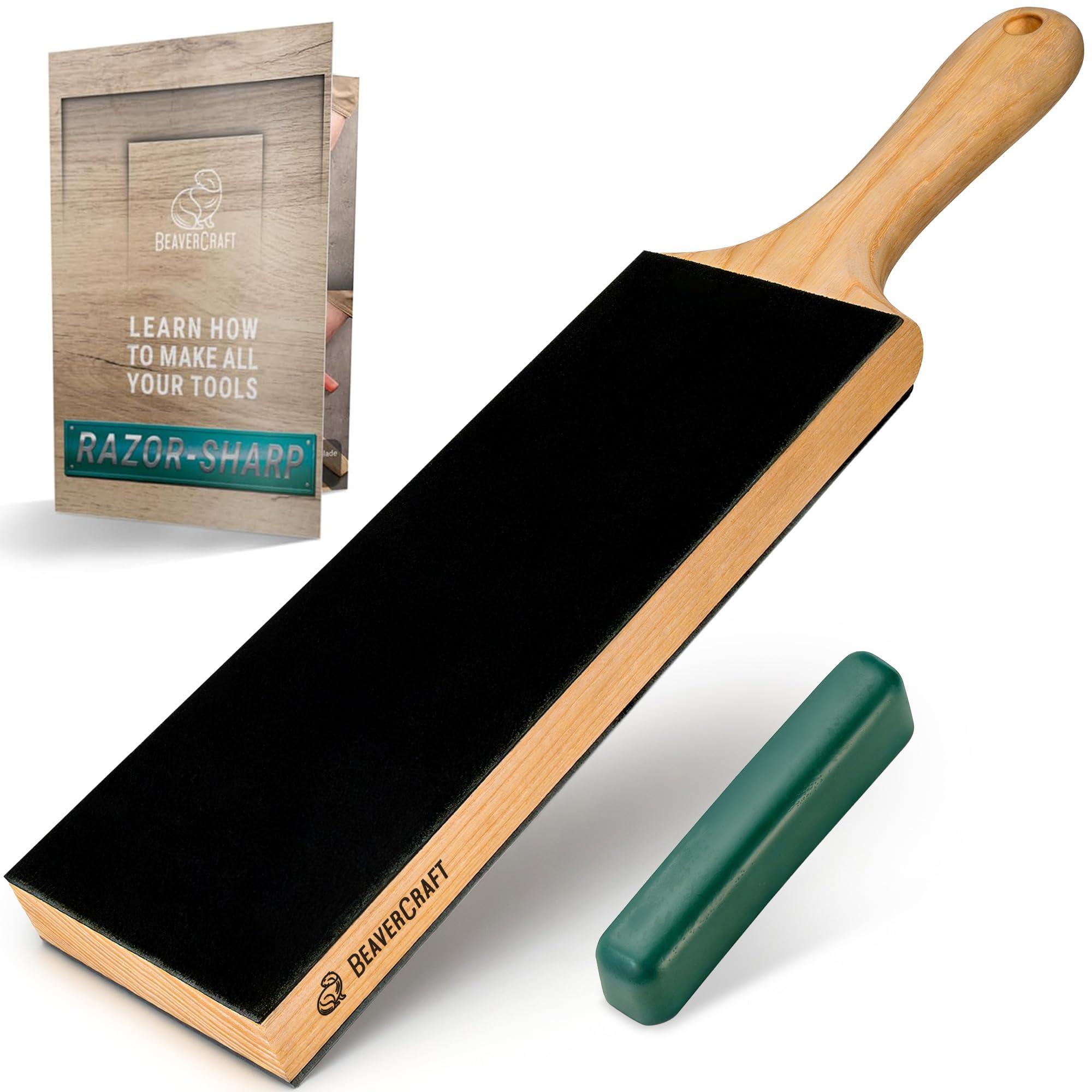
The BeaverCraft LS1P1 bundles a European-made cowhide strop with a solid ashwood paddle handle and a polishing compound bar, all packed with a digital ebook guide that walks beginners through proper stropping form. The leather measures 15.2 inches long and 3 inches wide, giving a generous working surface for kitchen knives, chisels, and plane blades. The cowhide is vegetable-tanned with a consistent nap that holds compound well after the initial break-in period of about 20–30 strokes.
What sets this kit apart is the handle ergonomics. The ashwood shaft is contoured and sanded smooth, reducing hand fatigue during long sharpening sessions. Users report that the included compound bar is a fine aluminum oxide blend that wears evenly without excessive dusting. The double-sided leather allows one side to be loaded with compound for rough deburring and the other left bare for final buffing, though the bare side still benefits from a light coat of compound after several sessions.
For beginners, the included ebooks on sharpening whittling knives and hook knives provide genuine instructional value, not just marketing fluff. The instructions cover stroke count, angle control, and how to detect burr release by feel. The strop itself is durable enough for weekly use over many months, though heavy users may eventually need to replace the leather pad. For anyone looking for a single purchase that includes everything needed to start stropping correctly, this kit is the most coherent package available.
Why it’s great
- European vegetable-tanned cowhide with consistent nap for reliable compound loading
- Contoured ashwood handle reduces fatigue during extended stropping sessions
- Included compound bar and instructional ebooks eliminate guesswork for beginners
Good to know
- Leather may require a light sanding on first use to fully open the pores
- Included compound is a single fine grit; users needing a coarser pre-polish must buy separately
- Heavy daily use may wear the leather faster than thicker 8-9 oz alternatives
5. Hutsuls Buffalo Leather Strop Block

The Hutsuls strop uses organic buffalo leather, which offers a denser fiber structure and longer fiber length than standard cowhide. This means the leather absorbs stropping compound deeper into the nap, exposing fresh abrasive particles as the surface wears rather than shedding compound in clumps. The 3-inch by 9-inch paddle provides 27 square inches of usable stropping surface, which is generous for a hand paddle and accommodates everything from straight razors to 8-inch chef’s knives.
The double-sided design features one smooth side and one textured side. The smooth side works best with the included green chromium oxide compound for final polishing, while the textured side holds coarser compounds or diamond paste for initial burr removal. The ashwood handle is stitched precisely to the leather, preventing the pad from peeling or shifting under lateral pressure. Users consistently praise the handcrafted quality, noting the absence of adhesive bleed or warping after months of use.
The included green compound bar is a fine chromium oxide blend that cuts efficiently on both carbon and stainless steels. The only downside is that the strop ships without a protective case, so the leather is exposed to dust during storage. A quick wipe-down and re-application of compound after a few sessions keeps performance consistent. For anyone who values premium materials and handcrafted assembly over bulk inclusions, this strop delivers a noticeably tactile improvement over mass-produced paddles.
Why it’s great
- Dense buffalo leather fibers hold compound deeper and release abrasive gradually over time
- Handcrafted stitching prevents delamination between leather and ashwood base
- Smooth and textured sides optimize loading for both fine polishing and coarse burr removal
Good to know
- No storage case included; leather can collect dust between sessions if left uncovered
- Paddle is shorter (9 inches) than some models, limiting its reach on very long blades
- Premium materials come at a higher entry cost than composite or budget leather strops
FAQ
Can I mix different compound chemistries on the same strop side?
How many alternating strokes should I use per session?
Does the color of the compound indicate its grit or chemistry?
Final Thoughts: The Verdict
For most users, the best compound for stropping winner is the BeaverCraft LS1P1 because its European cowhide and fine compound provide a predictable, repeatable path from sharp to razor-sharp. If you want the convenience of comparing multiple abrasive chemistries in one purchase, grab the Angerstone Double Side Strop Kit. And for power stropping large batches of blades on a 1×30 belt sander, nothing beats the Super Strop 1×30 Leather Honing Belt.

Mo Maruf
I created WellFizz to bridge the gap between vague wellness advice and actionable solutions. My mission is simple: to decode the research and give you practical tools you can actually use.
Beyond the data, I am a passionate traveler. I believe that stepping away from the screen to explore new environments is essential for mental clarity and physical vitality.