Our readers keep the lights on and my smoothie glass nicely filled. As an Amazon Associate, I earn from qualifying purchases.
Specs are compiled from manufacturer listings and verified buyer reviews and can change over time — please confirm the key details on the product page before buying.
One bag of compost can make or break your tomato harvest. The wrong one burns roots or adds nothing but filler, but the right one turns weak soil into a thriving vegetable bed. You need a compost for vegetable garden that matches your soil and growing style — here are the seven that earn a spot in the shed, with the trade-offs spelled out so you pick wisely.
I’m Mohammad Maruf — the founder and writer behind WellFizz. This guide is built by comparing the manufacturers’ published specifications and the patterns across verified customer reviews, so you get each pick’s real strengths and trade-offs instead of marketing spin.
This guide covers the seven best compost for vegetable garden options, from worm castings to manure blends, with a clear verdict on which one deserves your money.
Our Picks at a Glance

How To Choose The Best Compost For Vegetable Garden
Before you open your wallet, there are a few critical things to understand about what is actually inside that bag. Many beginners grab the first bag they see, only to discover it is mostly filler, contains weed seeds, or lacks the nutrient density that hungry vegetables like tomatoes and corn demand. Here is what to look for.
Consider the Source: Worm Castings vs Manure vs Blended Compost
Worm castings (vermicompost) are packed with beneficial microbes and are gentle enough to use directly on seedlings without burning them — they are a “slow-release” powerhouse. Manure-based composts (like cow manure) add more bulk organic matter to improve soil texture, but they must be fully composted to avoid burning tender roots. Blended mixes combine multiple ingredients and often include mycorrhizae (a beneficial fungus that helps roots absorb water and nutrients) but you pay for the convenience.
Check for Organic Certification and OMRI Listing
If you care about keeping your vegetable garden chemical-free, look for a bag that is OMRI-listed (a third-party stamp meaning the product is approved for organic use by the Organic Materials Review Institute). Without this, you have no verified guarantee against synthetic pesticides or persistent herbicides in the compost.
Look at the Weight and Volume Relative to Your Garden Size
A 5-pound bag is great for a few pots or a small raised bed, but if you have a 4×8 foot in-ground bed, you will need multiple bags. Check whether the bag gives the volume in quarts or cubic feet — this tells you how much ground it will actually cover. A denser, heavier bag can mean more concentrated nutrients, but it may also mean you get less volume per dollar.
Pay Attention to Texture and Visible Filler
Open the bag and look: the best compost for a vegetable garden has a dark, crumbly, soil-like texture with no large sticks, rocks, or undecomposed clumps. Some bags contain “composted forest products” which is often just finely ground bark with very low nutrient value — essentially expensive filler. Quality compost smells earthy, not sour or ammonia-like, and should feel moist but not soggy.
Quick Comparison
| Model | Best For | Weight | Organic Status | Main Ingredient | Amazon |
|---|---|---|---|---|---|
| Back to the Roots 5lb★ Best Overall | General all-purpose feeding | 5 Pounds | Organic | Worm Castings | Amazon |
| R&M Organics 10 lbAlso Great | Reviving struggling plants | 10 Pounds | Organic | Dairy Cow Manure | Amazon |
| Wiggle Worm 40 lbs | Large gardens & living soil | 40 Pounds | Organic | Worm Castings | Amazon |
| Espoma Land and Sea | High-nutrient boost | 24 Pounds | Organic | Lobster & Crab Meal | Amazon |
| Coast of Maine 20 qt | Ready-to-use potting mix | 20 Quarts | OMRI Listed | Composted Manure & Peat Moss | Amazon |
| Worm Bliss 1 Gallon | Seedlings & delicate roots | 1 Gallons | Organic | Pure Worm Castings | Amazon |
| Black Kow 8 qt | Budget soil amendment | 6 Pounds | Organic | Composted Cow Manure | Amazon |
In‑Depth Reviews
1. Back to the Roots Organic Worm Castings (5 lb)
Our pick — 4.8★ from 906 verified ratings; the strongest balance of quality and price.
A no-fuss 5-pound bag of pure castings for anyone new to organic soil feeding.
Get the simplicity of worm castings without the complexity of egg-material hatching or different worm diets. This Back to the Roots bag delivers exactly what it says: pure USA vermicompost with no burn risk and no odor. It is 5 pounds of granules (80 ounces) that you can use indoors or outdoors, on vegetables, herbs, flowers, or even houseplants. The maker claims it contains beneficial microbes that protect seedlings from harmful pathogens, which is a genuine advantage over standard manure composts that lack microbiological content.
The resealable bag is a thoughtful touch — you can easily dip in for a handful when transplanting a seedling or top-dressing a pot without having to transfer the castings to another container. Shoppers say it works well as a soil amendment for root development and overall plant growth. The main difference between this and the Worm Bliss bag is the sifting: this one is pure castings, but the manufacturer does not emphasize the multi-step screening process that Worm Bliss boasts, so the texture may vary slightly bag to bag.
The 5-pound format is a compromise between the compact 1-gallon Worm Bliss bag and the massive 40-pound Wiggle Worm. It is portable, affordable, and gives you enough material to mix into about four 5-gallon pots of soil. If you are just getting started with organic gardening and want a straightforward, reliable product, this is your starting point.
What You Get
- Pure USA vermicompost with no burn or odor
- Contains beneficial microbes to protect seedlings from pathogens
- Resealable bag keeps castings fresh between uses
The Limits
- Less economical per pound than the Wiggle Worm 40 lb bag
- No worm egg material for self-sustaining soil life
Start here if: you are new to compost amendments and want a solid, trustworthy bag of worm castings that works for everything.
Move up to Wiggle Worm: once you know you need bulk quantities for a larger garden.
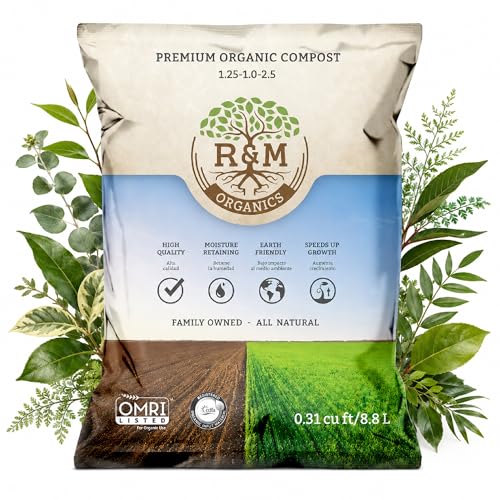
2. R&M Organics Premium Organic Compost (10 lb)
The ten-pound lifeline for vegetables that need a quick comeback.
Give a struggling plant a boost with fully composted dairy cow manure that releases nutrients slowly — the maker claims a 5:1 mixing ratio means you use about a quarter-inch layer around established plants. This R&M Organics Premium Organic Compost comes in a 0.31 cubic feet (10 lb) bag, a practical size for a small-to-medium raised bed or several large containers.
Buyers report it revived an ailing tomato plant fast: one owner mentioned yellow leaves turned green and flower buds appeared within a week of mixing it into a 27-gallon planter. Unlike the Black Kow bag below which some find stinky, this one has a clean earthy scent, so you can use it indoors without complaints. At 10 pounds it is heavier than the 5-pound worm-casting options, but you get more bulk organic matter to improve soil texture.
One reviewer noted the fine, topsoil-like texture made it easy to spread with no clumps — you are not fighting chunks of undecomposed wood. The catch is the same as any manure-based compost: if your soil already has high nitrogen levels, go light to avoid an overload.
Why It Works for Veggies
- Clean earthy smell, suitable for indoor use
- Low odor and fully composted — no burning of tender roots
- Fine, clump-free texture mixes easily into garden beds
The Limitation
- Heavier wet bag compared to dry granular options
- Dairy cow manure is less microbe-dense than worm castings
Reach for it if: you have a struggling plant or want a versatile all-purpose compost that works both indoors and out.
Look elsewhere if: you need the highest microbe count for “living” soil — worm castings are better for that.
3. Wiggle Worm 100% Pure Worm Castings (40 lbs)
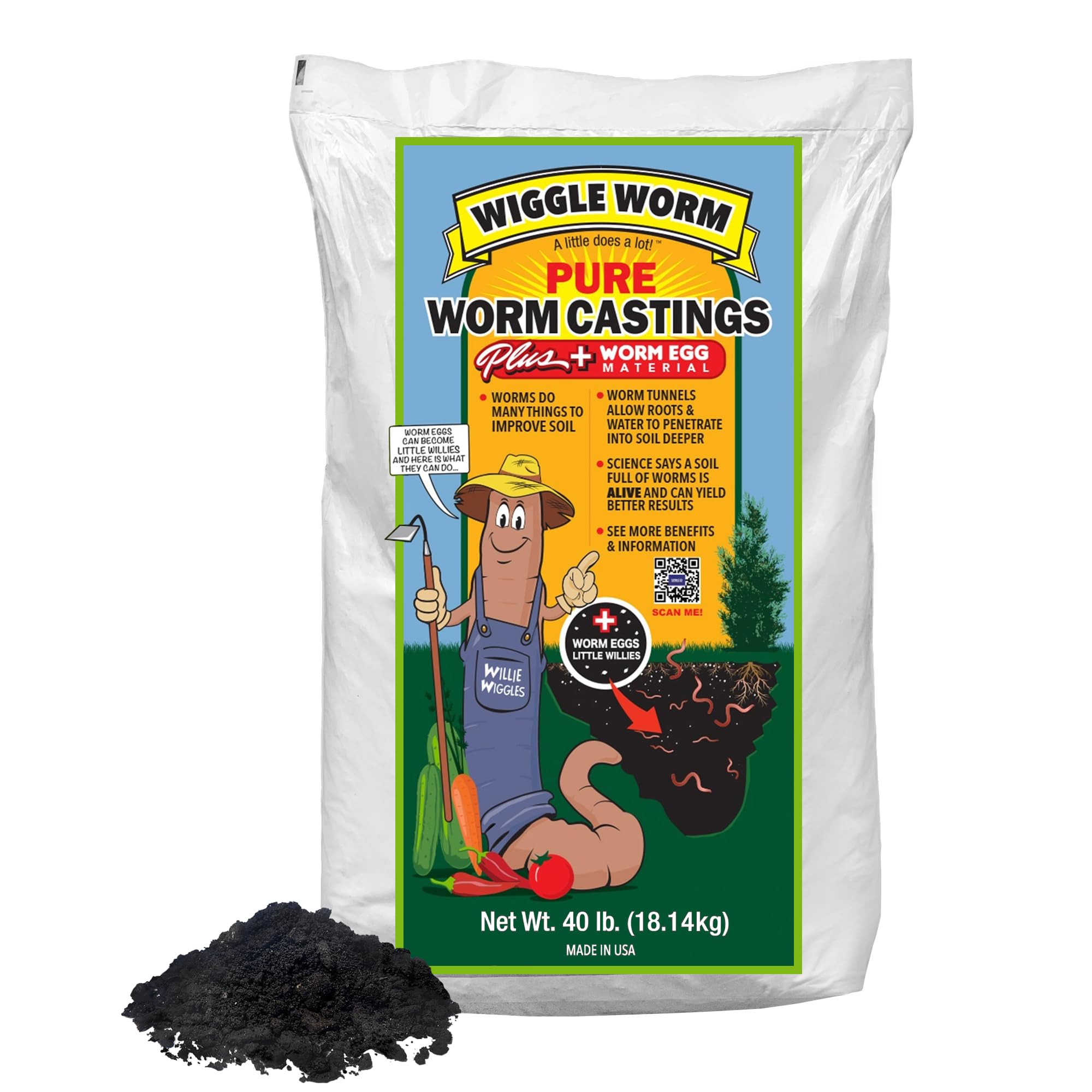
Forty pounds of castings that keep on working long after the bag empties.
For anyone with a serious in-ground vegetable garden or multiple large raised beds, this bulk bag delivers. At 40 pounds, it gives you 40 pounds versus the Back to the Roots 5-pound bag for a much lower cost per ounce. What sets this Wiggle Worm apart from standard castings is the inclusion of worm egg material (cocoons and tiny soil balls that can hatch into live worms once in your garden soil). Live worms tunnel, aerate, and produce more castings, creating a self-sustaining loop.
Buyers in harsh climates, including one gardener in the Mohave desert, report that this product made the difference between plants surviving triple-digit summers and giving up. The castings are soft and velvety with no foul odor, and owners mention the fine texture mixes easily into both potting soil and garden beds. The catch is that this bag is large and heavy to carry, so you will want to store it in a garage or shed with a scoop handy.
The company notes that small rocks may occasionally slip through the sifting process, so you might find a few tiny pebbles. But considering the sheer amount of pure, filler-free castings you get at this price point, it is the most economical way to build living soil at scale. One reviewer specifically mentioned getting baby worms in their garden after using this — a sign that the egg material really works.
Where It Excels
- Worm egg material can hatch to create self-sustaining soil life
- Soft, velvety texture with no filler or clumps
- Best cost-per-pound of any worm casting in this list
What to Expect
- Heavy 40 lb bag is awkward to lift and store
- Small rocks may occasionally slip through the sifting process
Grab this if: you want the biggest bang for your buck in pure worm castings and have space to store a bulk bag.
Not for you if: you need just a small bag for a few pots — the 1-gallon Worm Bliss is lighter and easier.
4. Espoma Organic Land and Sea Gourmet Compost (24 lb)

Seafood-derived compost that feeds both the plant and the root zone fungi.
Feed your vegetables trace minerals from lobster and crab meal with this Espoma Organic Land and Sea Gourmet Compost — something the Black Kow and R&M Organics bags do not include. This 24-pound bag also contains Myco-Tone, a proprietary blend of endo and ecto mycorrhizae (beneficial fungi that attach to plant roots and help them pull water and nutrients from the soil).
Reviewers report excellent results with hostas, vegetables, and herbs, with one loyal buyer mentioning they have used this product for three years straight. It is meant to be mixed with native soil when planting or transplanting, not used as a standalone potting mix. The crustacean meal can give it a faint ocean scent, though buyers describe it as natural rather than offensive. The trade-off is that this is not a bulk soil amendment for covering large areas — it is a concentrated soil booster for giving established plants a targeted nutrient lift.
Unlike the Coast of Maine bag, which is a complete planting soil ready to fill a pot, this one is a compost that you blend with your existing dirt. Think of it as a seasoning, not the base. If you are growing heirloom tomatoes or heavy-feeding squash, the mycorrhizae plus crab meal combination can produce noticeably denser foliage.
Strengths
- Unique lobster and crab meal provides trace minerals not found in manure composts
- Includes mycorrhizae for improved root health
- Proprietary Myco-Tone blend supports a rich soil food web
Limitations
- More expensive per pound than bulk manure options
- Mild seafood scent may be noticeable in enclosed spaces
Ideal for: vegetable gardeners who prize biological diversity in their soil and want an extra edge for heavy feeders like tomatoes and corn.
Consider a different option: if you need a large volume for filling raised beds — this is a concentrated supplement, not a bulk fill.
5. Coast of Maine Organic & Natural Planting Soil for Vegetables & Tomatoes (20 qt)

A complete ready-to-go mix that works straight from the bag into the pot.
Fill a 5-gallon container straight from the bag with this Coast of Maine Organic & Natural Planting Soil — it is a complete planting soil, not just a compost to mix in. It is OMRI-listed (third-party verified for organic use), which separates it from generic “natural” bags that lack an official stamp. The base is composted manure combined with sphagnum peat moss, giving it a light, fluffy texture that balances moisture retention and drainage — exactly what container vegetables need.
Customers note using one bag per 5-gallon pot for tomatoes and zucchini, with plants thriving with no signs of transplant shock. One buyer mentioned that it may contain some undecomposed twigs, so you might want to sift it if you are planting fine-seeded crops like carrots. The 20-quart volume is substantial: enough to fill several large pots or top-dress a small raised bed. Unlike the Black Kow bag which adds bulk to clay soils, this one improves aeration in heavy soils while holding moisture in sandy spots.
The main catch is that because it is a complete mix, it is less concentrated than pure worm castings. If you want to add a nutrient punch to this soil, you could blend in a handful of the Wiggle Worm castings or the Espoma Land and Sea. The aromatic wood material in the mix seems to deter some insects, according to one reviewer, which is a nice bonus for outdoor containers.
What Makes It Easy
- Ready to use as a complete potting soil — no mixing required
- OMRI listed for verified organic use
- Lightweight texture with excellent drainage for containers
The Downsides
- May contain small twigs that need sifting for fine-seeded crops
- Less concentrated in nutrients than pure worm castings
Best suited for: container vegetable gardeners who want a grab-and-go mix that performs well for tomatoes, peppers, and zucchini right out of the bag.
skip it if: you prefer to build your own custom soil blend from scratch — you would be paying for convenience.
6. Worm Bliss (1 Gallon) – Organic Worm Castings
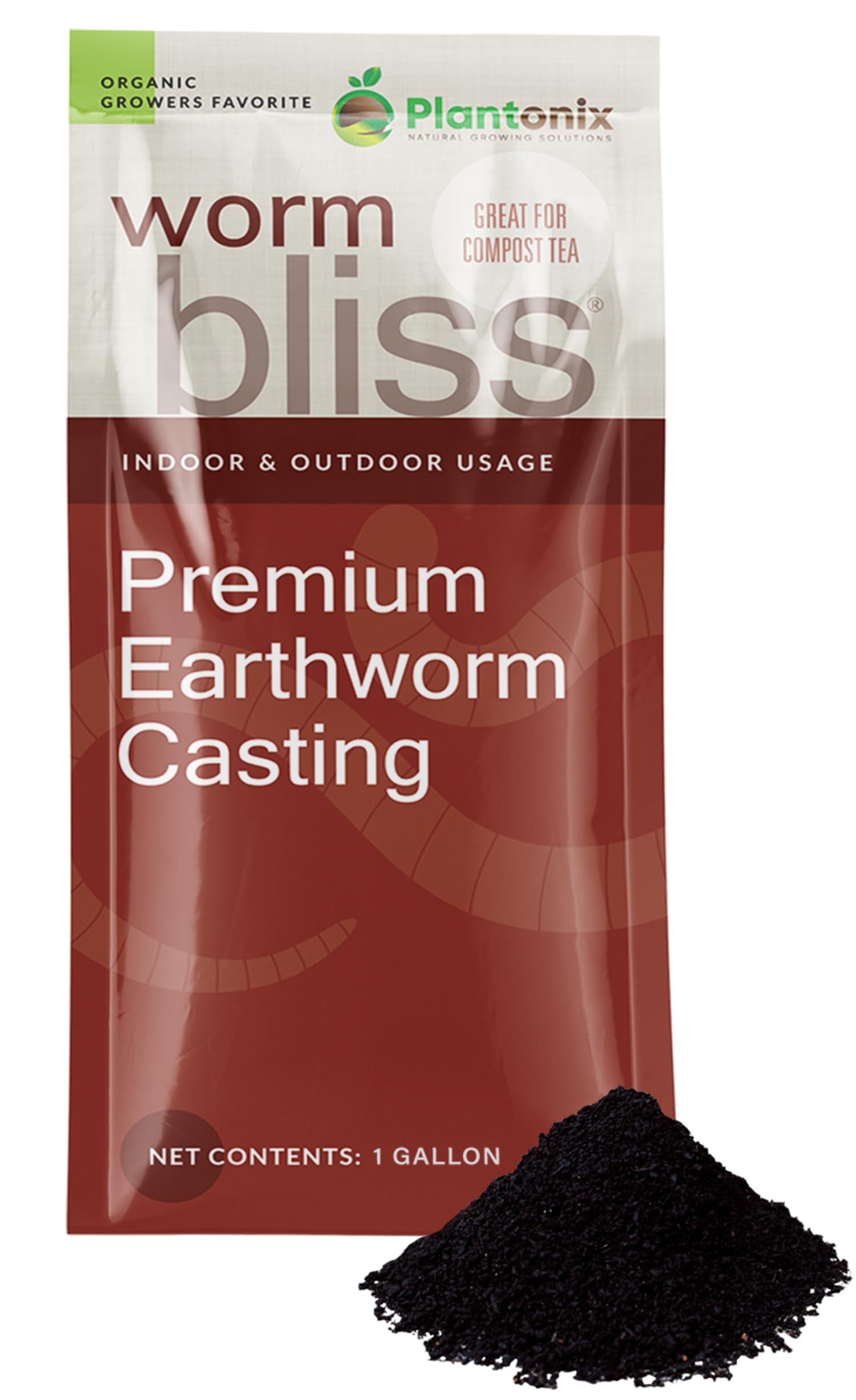
Pure, sifted castings from vegan-fed worms — no dirt, no filler, no gnats.
Start seedlings and delicate roots without worry using these Worm Bliss castings. Plantonix raises these worms in a climate-controlled facility and feeds them a strictly vegan diet, which means the castings are free from any manure-based impurities or synthetic additives. The company explicitly screens out dirt, sand, and rocks, so what you get is a uniform, fine-grained material that will not clump or block the delicate roots of seedlings and young transplants. This is a noticeable difference from the Back to the Roots bag, which is also quality worm castings but does not emphasize the multi-stage sifting process.
Buyers specifically call out that this brand does not attract fungus gnats — one reviewer wrote “I’ve also got gnats from other castings but not with this one.” That is a huge plus if you are bringing compost indoors for houseplants or starting seeds in a grow tent. The castings improve water retention (the humus content holds moisture around roots) and the microbial activity helps break down organic matter so roots can access nutrients more easily. The 1-gallon volume (80 ounces) is a neat size for mixing into a wheelbarrow of potting soil or top-dressing a few large containers.
The limitation is straightforward: at 1 gallon, this bag covers less ground than the 40-pound Wiggle Worm or the 20-quart Coast of Maine. If you have a big vegetable patch, you will need multiple bags. But for precision work — starting seeds, potting up herbs, or giving a specific plant a targeted boost — this is tough to top.
Why Gardeners Love It
- Vegan-fed worms produce castings free from manure impurities
- Sifted for a fine, uniform texture that won’t harm delicate roots
- Reviewers point out no fungus gnats, unlike some competing castings
The Size Trade-Off
- 1-gallon bag is small for large in-ground gardens
- Premium pricing per pound compared to bulk options
Choose this for: starting seeds indoors, potting up herbs, or any application where you need clean, gnat-free worm castings that won’t burn or crowd young roots.
Consider the Wiggle Worm instead: if you have a large vegetable plot and prefer a bulk economy size.
7. Black Kow Composted Cow Manure Fertilizer (8 qt)

The classic manure amendment that loosens clay soil and feeds at the same time.
Fix poor soil structure without spending much with Black Kow Composted Cow Manure. This product addresses two problems at once: it adds moisture-holding capacity to sandy soils, preventing water from draining straight through, and provides aeration to heavy clay soils, breaking up tight particles so roots and water can move more freely. The bag recommends a 1:1 mixing ratio with your native soil, which is straightforward: for every shovel of dirt, add one shovel of Black Kow.
One owner reported, “It really helped my garden veggies,” while another noted that their mother uses it on everything she plants, with flowers looking noticeably prettier. However, the same reviewer admitted “it smell terrible” — this is fully composted, so it does not have the sharp ammonia of fresh manure, but it retains a strong barnyard scent that makes it better suited for outdoor gardens than indoor containers. At 6 pounds for 8 quarts, it is the lightest bag weight-wise, but it still packs a punch in terms of soil restructuring.
The 8-quart size is small enough to grab for a single planting session, yet the effect on soil structure is noticeable. Unlike the worm castings bags which focus on microbiology and slow-release nutrients, this one is all about the physical improvement of your dirt. If you are dealing with hard-packed ground or sandy soil that refuses to hold water, this is the budget-friendly fix. Just be prepared for the farmyard aroma to last a day or two after application.
Where It Shines
- Breaks up heavy clay soil and adds moisture retention to sandy soil
- Contains millions of beneficial bacteria for nutrient conversion
- Simple 1:1 mixing ratio makes application easy
The Drawbacks
- Strong barnyard smell that lingers outdoors
- Less concentrated in nutrients per pound than worm castings
Reach for it when: you are amending poor native soil, whether it is too sandy or too clay-heavy — this is the structural fix your dirt needs.
Choose a worm casting bag instead: if you want odor-free indoor use or the highest possible microbial density for living soil.
Understanding the Specs
NPK Values and Why They Matter
NPK stands for Nitrogen (N), Phosphorus (P), and Potassium (K) — the three primary nutrients every plant needs. Nitrogen drives leafy green growth, phosphorus supports root development and flowering, and potassium helps overall plant health and disease resistance. Most composts do not list a high NPK number because they act as a soil conditioner first and a fertilizer second, but knowing the ratio helps you choose: a leafy vegetable like lettuce needs more N, while a fruiting vegetable like tomatoes needs more P and K.
OMRI Listing
OMRI (Organic Materials Review Institute) is an independent third-party seal that means a product has been reviewed and approved for use in certified organic production. When you see the OMRI seal on a bag of compost, you know it contains no synthetic pesticides, no prohibited herbicides, and no sewage sludge. For vegetable gardeners, this is the only way to be certain the compost is truly organic from raw material to bag.
Mycorrhizae
Mycorrhizae are beneficial fungi that form a symbiotic relationship with plant roots. They attach to the root system and extend far beyond it, effectively acting as an extra set of roots to pull water and nutrients from the soil. Composts that include mycorrhizae (like the Espoma Land and Sea) give your vegetables a head start on establishing a healthy root zone, especially in poor or disturbed soil.
Volume vs Weight
A 20-quart bag of potting mix is not the same as a 20-pound bag of compost. Volume (quarts, gallons, cubic feet) tells you how much space the material will fill — useful for container gardening. Weight (pounds) tells you how dense and nutrient-concentrated the material is. A heavy bag for its size usually means less air and more solid organic matter, while a light bag for its size means more aeration but potentially fewer nutrients per scoop.
Worm Castings vs Manure Compost
Worm castings are the final product of earthworm digestion, loaded with beneficial bacteria, enzymes, and micronutrients. They are slow-release, odorless, and almost impossible to use in excess because they do not burn plants. Manure compost is the decomposed waste of herbivorous livestock (cows, horses, chickens). It adds more bulk organic matter to the soil and improves physical structure, but it must be fully composted to avoid burning roots and can have a stronger smell.
FAQ
Can I mix worm castings with manure compost together in the same bed?
How much compost do I need for a 4×8 foot raised bed?
Will the Black Kow smell attract animals to my garden?
How often should I apply worm castings during the growing season?
Is the Espoma Land and Sea safe to use around pets?
Will the Coast of Maine bag attract fungus gnats indoors?
Can I use worm castings as a seed starting medium?
Does the Wiggle Worm egg material guarantee I will get live worms in my garden?
How does the R&M Organics bag compare to kitchen compost from a bin?
Final Thoughts: The Verdict
For the majority of shoppers, the best compost for vegetable garden is the R&M Organics Premium Organic Compost because it offers a versatile, low-odor manure compost that works for both indoor containers and outdoor raised beds without the risk of burning plants. If you want the highest concentration of beneficial microbes and worm egg material to build self-sustaining living soil, grab the Wiggle Worm 40 lb Bag. And for a convenient grab-and-go complete potting mix that is OMRI-listed and ready for vegetable containers, the Coast of Maine 20 qt Planting Soil is the easiest path to healthy tomatoes and squash.
How We Picked
We do not accept paid placement. Every pick is matched to a real buyer and a real use-case; we do not hands-on test units.
Sources & Methodology
Specifications: manufacturer listings and product documentation. Review insights: verified customer reviews, as of July 2026. Pricing: not shown on this page (it changes often); check the current price via the retailer link.
As an Amazon Associate, WellFizz earns from qualifying purchases. This does not affect which products we feature.
Related Guides

Mo Maruf
I created WellFizz to bridge the gap between vague wellness advice and actionable solutions. My mission is simple: to decode the research and give you practical tools you can actually use.
Beyond the data, I am a passionate traveler. I believe that stepping away from the screen to explore new environments is essential for mental clarity and physical vitality.