Our readers keep the lights on and my smoothie glass nicely filled. As an Amazon Associate, I earn from qualifying purchases.
Specs are compiled from manufacturer listings and verified buyer reviews and can change over time — please confirm the key details on the product page before buying.
You want a compost that feeds your soil for the long haul, not just gives it a quick chemical jolt. For an organic vegetable garden, the right bag builds healthy earth without synthetic additives. This guide covers five OMRI-listed (independently verified for organic production) composts — from concentrated worm castings to big-value bulk bags — so you pick the right texture and nutrients for your beds.
I’m Mohammad Maruf — the founder and writer behind WellFizz. This guide is built by comparing the manufacturers’ published specifications and the patterns across verified customer reviews, so you get each pick’s real strengths and trade-offs instead of marketing spin.
Finding the best compost for organic vegetable garden means looking at volume, nutrient source, and certification honestly. Here is how five solid options stack up.
Quick Picks
- Wiggle Worm 100% Pure Organic Mineral-Dense Worm Castings Fertilizer, 15lbs — Best Overall
- Coast of Maine Organic & Natural Quoddy Blend Lobster & Crab Compost — Best for Tomatoes
- Ribbon Organics OMRI Certified Organic Compost 7.9 Gallons — Bang for the Buck
- Brut Cow Compost – Nutrient-Rich Composted Cow Manure, 10 Quart — Value Compost
- Life Cycle Organics Organic Compost 1 Gallon — Starter Bag
How To Choose The Best Compost For Organic Vegetable Garden
Here is what to look for when you are buying for organic vegetables.
OMRI Listing Is Your Shortcut
OMRI (the Organic Materials Review Institute) independently verifies that a product meets organic production standards. If a bag of compost says “OMRI Listed,” you can use it in a certified organic garden without worrying about hidden synthetic additives. Every product in this guide carries that certification.
Volume And Weight Tell You The Coverage
A 1-gallon bag covers a small raised bed or a few containers. A 7.9-gallon bag handles a full 4×8 bed. Match the volume to the size of your garden — buying a huge bag for a single planter wastes money, and a tiny bag for a big bed means you run out mid-project.
Nutrient Source Matters For Your Crops
Worm castings are gentle and full of beneficial microbes — great for transplants and seedlings. Cow manure compost adds nitrogen and organic matter for leafy greens. Lobster shell compost brings calcium and chitin, which helps with root development and disease resistance. Pick the source based on what you are growing.
Quick Comparison
| Model | Best For | Volume | Weight | Source Material | Amazon |
|---|---|---|---|---|---|
| Wiggle Worm Castings | Microbe-rich soil for seedlings | 0.5 cu ft | 15 lbs | Worm castings | Amazon |
| Coast of Maine Quoddy Blend | Calcium boost for tomatoes | 1 cu ft | — | Lobster & crab shell | Amazon |
| Blue Ribbon Organics | Large bed amendment | 7.48 gal | 32-35 lbs | Organic compost blend | Amazon |
| Brut Cow Compost | Nitrogen for leafy greens | 10 qt | 10 lbs | Cow manure | Amazon |
| Life Cycle Organics | Small containers & pots | 1 gal | — | Organic compost | Amazon |
In‑Depth Reviews
1. Wiggle Worm 100% Pure Organic Mineral-Dense Worm Castings Fertilizer, 15lbs
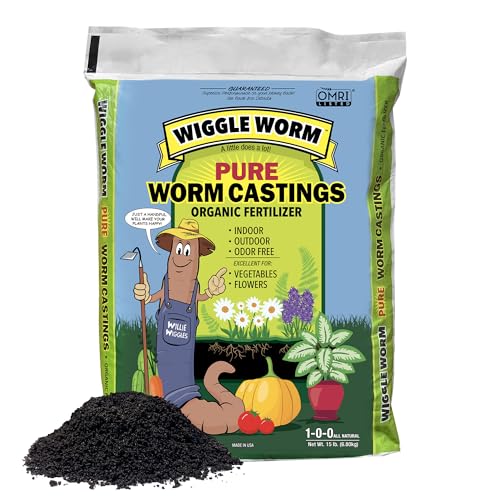
This bag gives you concentrated worm power that feeds your soil life without the risk of fertilizer burn.
These are 100 percent pure castings — not vermicompost mixed with leftover bedding — so the product works differently than many bagged options. The tiny football-shaped granules improve soil aeration and drainage at the same time, which is rare in a single bag. Since it is OMRI listed and recognized as a fertilizer, you can use it confidently in an organic garden without second-guessing the ingredients. Verified buyers report vigorous tomato growth, no odor, and zero foliage burn.
At 15 pounds, this bag goes further than most standard fertilizers because you only need a handful or half a cup per plant three times a year. That concentrated strength is a major advantage over bulkier composts that require heavy applications. You can mix worm castings into your potting blend or top-dress established beds for a mid-season microbial boost.
Unlike the bulk compost options below, the Wiggle Worm bag is lighter in physical volume (0.5 cubic feet) but heavier in nutrient density. One reviewer used it on bonsai and said the fine black texture was perfect for the pot. This is the smart pick if you want the most biological activity per pound. Choose this over the Ribbon Organics bag if you value concentrated feeding per handful over sheer cubic footage.
Why It Leads
- 100% pure worm castings, not vermicompost — OMRI listed as fertilizer
- Only a small amount needed per plant (half a cup)
- Won’t burn roots, odorless, and non-toxic
The Volume Trade
- 0.5 cu ft volume is small for covering large beds
- Higher upfront cost per bag than bulk manure composts
Reach for this if: you want a concentrated, microbe-heavy soil booster that goes a long way per handful and is safe for transplants and seedlings alike.
Look elsewhere if: you need to fill a large 4×8 raised bed from scratch — you would spend too much on bags to cover the volume.
2. Coast of Maine Organic & Natural Quoddy Blend Lobster & Crab Compost
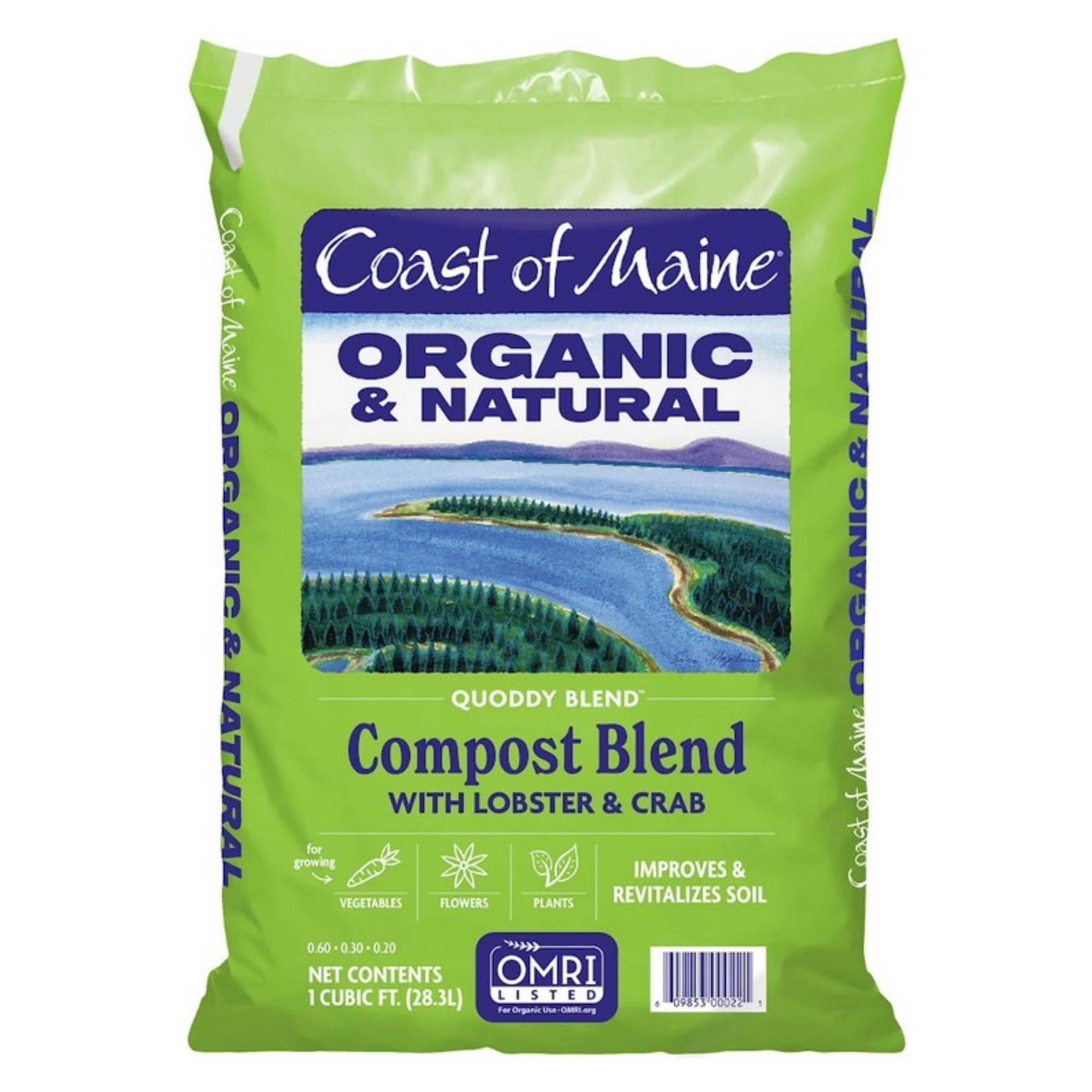
You get calcium-rich seafood compost here — it fights blossom end rot on tomatoes while feeding the whole bed.
This blend combines composted cow manure, sphagnum peat moss, composted bark, and the star ingredient: lobster and crab shell meal. The chitin and calcium from the shells are exactly what heavy feeders like tomatoes and peppers need to prevent blossom end rot and build strong cell walls. One reviewer calls it “one of the best composts I’ve ever used,” citing great value for the quality. The texture is described as “very light and fluffy,” and reviewers also confirm it has virtually no smell.
At 1 cubic foot, this bag gives you decent coverage for beds and borders without being as heavy as pure manure or as small as worm castings. The peat moss and bark help with water retention and aeration, so the soil stays loose and drains well between waterings. Use this as a top dressing or mix it directly into the planting hole for vegetable transplants.
Compared to the 10-pound Brut Cow Compost bag, the Coast of Maine Quoddy Blend offers a more complex nutrient profile because of the shellfish meal. It also beats the 1-gallon Life Cycle Organics option in volume by a wide margin. For fruiting vegetables, the lobster-shell calcium is a specific advantage that no other compost in this lineup provides.
Rich and Balanced: The lobster-shell calcium targets fruiting vegetables specifically — no other compost in this lineup brings chitin (a compound that supports root health) to the soil. OMRI listed and made with sustainable seafood by-products.
Light Texture Caveat: Some owners mention the fluffy, lightweight bag compresses a lot when wet, so you may need more than you expect to fill a bed.
Best for: anyone growing tomatoes, peppers, or squash who wants natural calcium and chitin in the soil plus good drainage from peat and bark.
Not for: tight budgets — this is a mid-range pick, and the light texture means one bag covers less volume than you might assume from the cubic-foot label.
3. Ribbon Organics OMRI Certified Organic Compost 7.9 Gallons

The big bag you grab when your raised bed needs serious organic matter, fast.
At 7.48 gallons and weighing 32 to 35 pounds, this is the largest volume option in the lineup — 7.48 gallons versus the 1-gallon Life Cycle Organics bag. If you are filling a 4×8 raised bed or amending a whole vegetable patch, this single bag saves you from buying multiple small units. It is OMRI certified for organic use, and the manufacturer states it is safe at any concentration, so you can mix it straight into native soil without worrying about burning roots.
The compost improves soil structure and aeration while promoting water retention, which is exactly what sandy or clay-heavy garden beds need. The manufacturer recommends pairing it with worm castings and other soil builders, so you can use it as a base layer and add concentrated nutrients like the Wiggle Worm bag on top. Buyers pairing it with other amendments report solid results.
This is the most practical choice for anyone who needs bulk organic matter at a reasonable volume-per-bag ratio. The only catch is that the brand does not publish a detailed nutrient breakdown (NPK) on the label. If you need precise numbers for specific crops, you may want to blend it with a more data-rich option like the Coast of Maine bag.
Volume Champion
- 7.48 gallons at 32-35 lbs — best raw coverage for large beds
- OMRI certified and safe to use undiluted
- Improves both aeration and water retention
Missing Data
- No published NPK numbers — hard to match to specific crop needs
- Heavy bag to haul from the car to the backyard
Grab it for: filling new raised beds or amending large existing plots where you need volume and organic certification without per-bag guesswork.
skip it if: you want a compost with a clear, labeled nutrient analysis for precise feeding schedules.
4. Brut Cow Compost – Nutrient-Rich Composted Cow Manure, 10 Quart

Straightforward cow manure compost that feeds your soil with nitrogen without the stink.
This is a 100 percent pure composted cow manure with no additives — just aged, aerated manure that has been tested for safety. It is OMRI listed for organic use, so it fits smoothly into an organic vegetable garden. The compost has a finely sifted texture, and the manufacturer specifically notes it is odor-free and gentle on roots, eliminating the risk of plant burn. That makes it a safe option for seedlings and delicate transplants.
At 10 quarts and 10 pounds, it lands right between the 1-gallon Life Cycle bag and the larger 7.48-gallon Ribbon Organics bag for volume. You get nitrogen, calcium, and iron from the manure, which supports bigger leafy growth in greens like spinach, kale, and lettuce. Use it as a top dressing or mix it into potting soil for outdoor containers. The Wiggle Worm bag weighs 15 pounds, while the Brut bag weighs 10 pounds — so if you want a larger weight of organic matter for a lower spend, the Brut bag is the volume-to-price leader here.
One trade-off compared to the Coast of Maine bag is that this is a single-source compost (cow manure only), not a blend with peat and shell meal. That makes it simpler but less rich in micronutrients like calcium and chitin. If your garden soil already has good drainage and just needs organic matter and nitrogen, this is the straightforward pick.
Simple and Effective: Pure composted cow manure with OMRI listing, no additives, and a fine sifted texture that works well in vegetable beds.
Basic Profile: Single-source means fewer micronutrients than blended options like the lobster compost above — add a mineral supplement if your soil is depleted.
Ideal for: gardeners who want a simple, affordable organic manure compost for leafy greens and general soil amending without paying for a blended formula.
Not ideal for: fruit-heavy crops like tomatoes and peppers that would benefit from the extra calcium and chitin found in the Coast of Maine or worm castings options.
5. Life Cycle Organics Organic Compost 1 Gallon
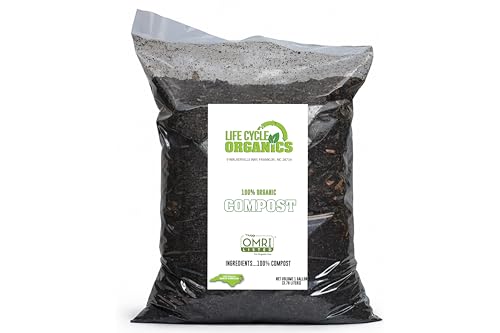
A small, no-fuss bag of OMRI compost sized for container gardeners and tiny raised beds.
This is the smallest option in the lineup at 1 gallon, and it is built for a very specific use case: you have a small raised bed, a few large pots, or you need just enough compost to amend a couple of planting holes. The product is OMRI listed, which means it meets organic standards even at this entry-level size. One buyer calls it a “perfect amount for small raised garden bed” that simply does the job. Another reviewer added it to existing soil and saw immediate plant improvement.
At 128 fluid ounces (1 gallon), this bag is 1 gallon versus the 7.48-gallon Ribbon Organics bag. The price is lower, but the volume-to-cost ratio is not as favorable if you need to cover a lot of ground. It makes the most sense for urban gardeners, apartment balcony growers, or anyone who wants to try an organic compost without committing to a heavy bag. The mixing ratio on the label is 1:1 with soil, which is straightforward.
Compared to the 10-quart Brut Cow Compost, the Life Cycle bag is 1 gallon while the Brut bag is 10 quarts — and the Brut bag gives you more volume for a modest price step-up. If you think you might expand your garden, you are better off with the Brut bag or the Ribbon Organics bag. But for a true one-and-done small project, this hits the mark.
Compact and Clean
- OMRI listed with a simple mixing ratio of 1:1 with soil
- Good for small raised beds, containers, and spot treatments
- Verified reviews confirm it works as advertised.
Volume Limits
- 1 gallon is small — the Ribbon Organics bag is 7.48 gallons
- Not cost-effective for large vegetable patches
Grab it for: a single small raised bed, a few containers, or testing an organic compost for the first time without buying a big bag.
Move up if: your garden spans more than one 2×2 bed or you plan to amend a full plot — the Brut Cow Compost or Ribbon Organics bag will save you money per cubic foot.
Understanding the Specs
Volume vs. Weight – What Matters More
Volume (gallons, quarts, or cubic feet) tells you how much physical space the compost will cover in your bed. Weight (pounds) tells you how dense and compacted the material is. For filling a large raised bed, volume matters most — you need enough material to fill the space. For concentrated feeding, weight matters because a denser bag like the 15-pound Wiggle Worm bag packs more nutrients into a smaller physical volume.
OMRI Listing – The Organic Shortcut
OMRI (Organic Materials Review Institute) is an independent third-party verification that a product meets USDA organic standards. If a compost is OMRI listed, you do not need to read the fine print to know it is free of synthetic pesticides, GMOs, or prohibited substances. Every compost in this guide carries that label, so you are safe to use any of them in a certified organic garden.
FAQ
Can I use these composts directly in a raised bed without mixing?
How much compost do I need for a 4×8 raised bed?
Is worm castings better than cow manure compost?
Will lobster shell compost make my garden smell like seafood?
Can I mix these different composts together?
How long does a 1-gallon bag of compost last in a small garden?
Do I need to wear gloves when handling these composts?
What is the difference between 10 quarts and 1 cubic foot?
Can I use these composts in potted indoor vegetable plants?
Do I need to reapply compost every season?
Final Thoughts: The Verdict
For most buyers, the compost for organic vegetable garden winner is the Wiggle Worm Pure Worm Castings because it packs the highest nutrient density per pound with OMRI certification and a proven track record of healthy tomato growth without burning roots. If you want a calcium-boosted soil amendment for fruiting crops like tomatoes and peppers, grab the Coast of Maine Quoddy Blend Lobster Compost. And for filling large raised beds on a budget, the Ribbon Organics 7.9-Gallon Bag gives you the most raw volume at a fair price — no other bag here comes close to its 32-to-35-pound weight for covering ground.
How We Picked
We do not accept paid placement. Every pick is matched to a real buyer and a real use-case; we do not hands-on test units.
Sources & Methodology
Specifications: manufacturer listings and product documentation. Review insights: verified customer reviews, as of July 2026. Pricing: not shown on this page (it changes often); check the current price via the retailer link.
As an Amazon Associate, WellFizz earns from qualifying purchases. This does not affect which products we feature.

Mo Maruf
I created WellFizz to bridge the gap between vague wellness advice and actionable solutions. My mission is simple: to decode the research and give you practical tools you can actually use.
Beyond the data, I am a passionate traveler. I believe that stepping away from the screen to explore new environments is essential for mental clarity and physical vitality.