Our readers keep the lights on and my smoothie glass nicely filled. As an Amazon Associate, I earn from qualifying purchases.
The difference between a patchy, struggling lawn and a thick, uniform carpet of grass often comes down to what’s sitting beneath the seed. Compost for grass seed isn’t just food—it’s the structural foundation that determines whether those tiny sprouts survive their first dry spell, heavy rain, or foot traffic.
I’m Mohammad Maruf — the founder and writer behind WellFizz. I’ve spent hundreds of hours analyzing soil amendments, from bagged manure blends to aerated composts, evaluating how each formulation affects germination rates, root anchorage, and long-term lawn health.
To save you from guessing games at the garden center, I’ve tested and compared the top options available now. This guide breaks down everything you need to know about selecting the best compost for grass seed and how to use it like a pro.
How To Choose The Best Compost For Grass Seed
Throwing seed on bare dirt rarely yields the thick lawn you’re after. Compost provides the organic matter, moisture-holding capacity, and initial nutrient boost that grass seedlings need to establish deep roots before summer heat or competition from weeds arrives. Here’s what to look for.
NPK Ratio: The Balance Between Growth and Burn
Nitrogen (N) drives leaf growth, phosphorus (P) supports root development, and potassium (K) aids overall plant health. For new grass seed, a lower nitrogen ratio—ideally around 4-2-3 or similar—gives a gentle start without burning tender roots. High-nitrogen fertilizers can scorch seedlings before they get a foothold. Manure-based composts and blended organic products typically hit this sweet spot naturally.
Texture and Uniformity
Screened compost with a consistent, crumbly texture spreads evenly and allows grass roots to penetrate without hitting large clumps or undecomposed wood chunks. Compost that’s too coarse will create air pockets, causing seed to dry out. Compost that’s too fine can compact and smother seedlings. Look for a mix that feels like moist, dark soil without visible sticks, rocks, or plastic fragments.
Odor and Weed Seed Content
Properly composted manure should have little to no ammonia smell—a strong odor indicates incomplete decomposition. High-quality bagged composts are heat-treated to kill weed seeds, so you aren’t inadvertently planting crabgrass alongside your fescue or Kentucky bluegrass. Odor-free or pleasantly earthy options like peat-manure blends or lobster-crab meal composts are signs of a well-finished product.
Quick Comparison
On smaller screens, swipe sideways to see the full table.
| Model | Category | Best For | Key Spec | Amazon |
|---|---|---|---|---|
| Michigan Peat Wholly Cow | Peat-Manure Blend | Top-dressing new seed beds | 40 Quart bag, peat + manure | Amazon |
| Brut Cow Compost | Pure Composted Manure | Mixing into planting holes | 1 Cu Ft bag, additive-free | Amazon |
| Espoma Land and Sea Gourmet | Seafood-Enriched Mix | Transplanting and container lawns | 1 Cu Ft bag, lobster + crab meal | Amazon |
| Jonathan Green Love Your Soil | Soil Conditioner | Breaking up compacted clay | 1,000 sq ft coverage, organic | Amazon |
| Hoffman Dehydrated Super Manure | Pelletized Poultry Manure | Small patches and potted grass | 5 lb bag, 4-2-3 NPK | Amazon |
In‑Depth Reviews
1. Michigan Peat Baccto Wholly Cow
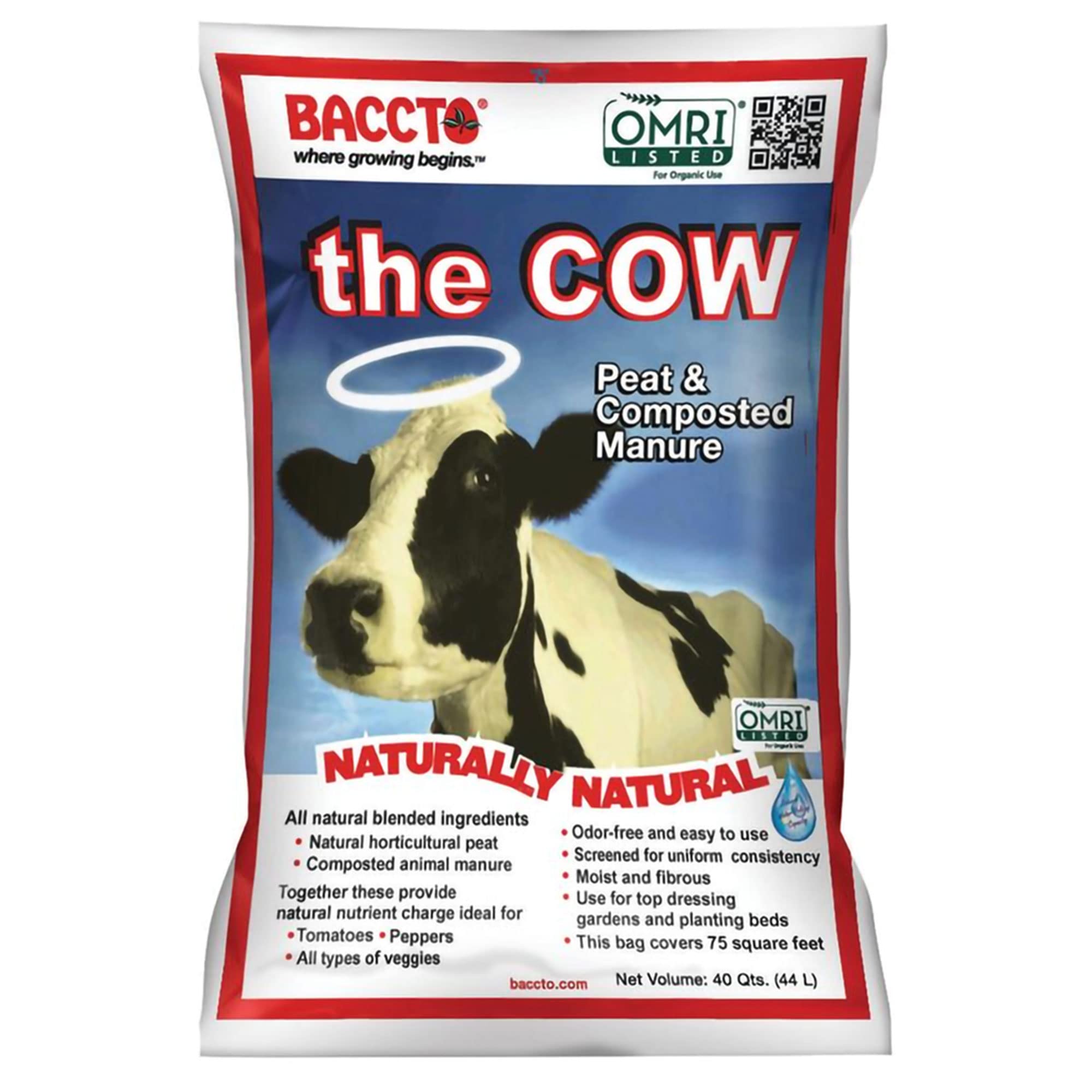
The Wholly Cow blend combines Canadian sphagnum peat with composted animal manure, resulting in a dark, fluffy, and remarkably uniform medium that feels more like premium topsoil than raw manure. Its water-holding capacity is a standout feature for grass seed—peat retains moisture near the surface, giving germination a consistent environment without the need for constant misting. At 40 quarts, this bag covers roughly 50 to 80 square feet at a quarter-inch depth, making it a viable option for small to medium lawns.
Customer reports confirm the compost arrives nearly odor-free, with only a handful of small sticks per bag and zero mold or contamination. Multiple reviewers successfully used it as a mushroom substrate and as a top-dressing for roses, underscoring its versatility. For grass seed, the screened consistency means you can spread it thinly over prepared soil without clumps blocking seed-to-soil contact.
One caveat: the 34-pound bag is heavy when wet, and the bag’s plastic can tear if lifted by the handles. Still, the overall value is solid for a premium mix that won’t introduce weed seeds or unpleasant smells into your lawn project.
Why it’s great
- Exceptional moisture retention helps grass seeds stay hydrated
- Nearly odor-free, pleasant to work with
- Uniform, screened texture with no large debris
Good to know
- Bag is heavy and can tear when wet
- Higher priced per cubic foot than budget manure blends
2. Brut Cow Compost
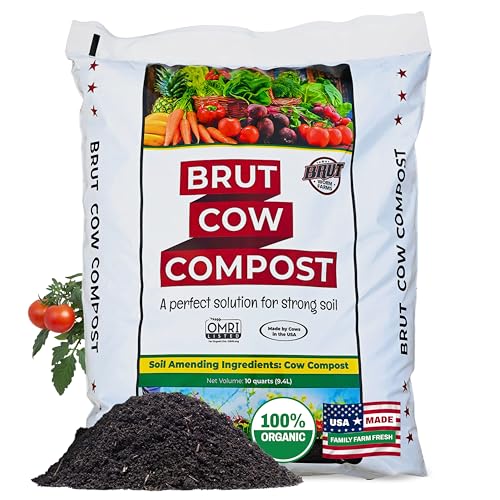
This 100% pure composted cow manure stands out for its total lack of fillers, synthetic additives, or undecomposed bedding materials. The aerated production process ensures a stable, humus-rich texture that won’t burn young grass roots—a critical factor when seeding. The 1-cubic-foot bag provides enough material to amend roughly 30 to 50 square feet when mixed into the top inch of soil, making it a practical choice for targeted lawn repair or small garden beds.
User feedback highlights its compatibility with container gardening and raised beds, with several growers mixing it at a 3:2 ratio with potting soil for impressive tomato and rose growth. For grass seed, this compost excels when used as a top-dressing after overseeding; the fine, dark particles hold moisture against the seed while feeding beneficial microbial activity below. The minimal ammonia odor confirms proper curing, and no reports of weed seed contamination appear in verified reviews.
On the downside, the bag is slightly smaller in volume than similar-priced blends, and some users note that it can be dustier than peat-based alternatives when dry. Still, for anyone seeking a pure, untreated manure compost, this is the cleanest option on the market.
Why it’s great
- 100% pure compost, no fillers or synthetic chemicals
- Aerated process ensures stable, burn-free nutrients
- Excellent for mixing into potting soil or top-dressing
Good to know
- Slightly smaller bag volume for the price
- Can be dusty when handled dry
3. Espoma Organic Land and Sea Gourmet Compost

What sets Espoma apart is its inclusion of lobster and crab meal—shellfish processing byproducts rich in chitin, which naturally suppresses soil-dwelling pests and feeds beneficial fungi. The bag also contains a proprietary blend of endo and ecto mycorrhizae, forming a symbiotic root network that helps grass seedlings access moisture and nutrients more efficiently. This compost is not a traditional manure but a gourmet planting mix intended to invigorate container soils and transplant beds.
At one cubic foot and roughly 24 pounds, the bag is lighter than peat-manure blends while offering a more complex nutrient profile. Verified buyers who have used the product for years report dramatically better hosta growth and vegetable yields. For grass seed, this compost works best when mixed into the top layer of a new bed or used as a soil conditioner before seeding rather than as a standalone top-dressing.
The primary trade-off is cost per square foot—this is one of the pricier options here, and its seafood-derived components produce a faint ocean scent that some indoor users may notice. But for gardeners who value biological diversity in their soil, the mycorrhizae and chitin content justify the premium.
Why it’s great
- Contains lobster and crab meal for natural pest suppression
- Includes beneficial mycorrhizae for root development
- Lightweight and easy to mix compared to peat blends
Good to know
- Higher cost per cubic foot than manure-based composts
- Faint seafood scent may be noticeable indoors
4. Jonathan Green Love Your Soil

Jonathan Green’s Love Your Soil is technically a soil conditioner rather than a pure compost, but its ability to loosen heavy clay and release tied-up nutrients makes it a powerful partner for grass seed. The organic formulation targets compacted, nutrient-locked soils that often defeat new seed. A single bag covers 1,000 square feet, offering exceptional value if your lawn suffers from hardpan or poor drainage.
Real-world results from verified purchasers are striking: one reviewer described a clay-infested lawn that transformed “without rototilling” after two or three applications. Another reported that the grass became thick, green, and healthy with no additional watering or chemical fertilizer. The product is safe for children and pets after application, and its fine granular form works well in a broadcast spreader.
The main limitation is that it’s not a standalone compost—it works best when combined with a thin layer of actual organic matter (like Wholly Cow or Espoma) on top of the seed. Also, the spreader setting printed on the bag may be inaccurate (several users found a setting of 4 instead of 6 worked better), so calibrating on a small test patch is wise.
Why it’s great
- Exceptional coverage of 1,000 sq ft per bag
- Breaks up compacted clay without tilling
- Safe for people and pets after application
Good to know
- Spreader setting printed on bag may need calibration
- Not a standalone compost; pair with organic matter for best results
5. Hoffman 20505 Dehydrated Super Manure

Hoffman’s dehydrated poultry manure in pelletized form delivers a solid 4-2-3 NPK ratio that is ideal for grass seed—enough nitrogen to green up sprouts without the burn risk associated with synthetic fertilizers. The 5-pound bag is small but concentrated; users report that a little goes a long way, with one teaspoon per six-inch pot being sufficient for container plants. For lawns, you’d spread it sparingly or dissolve approximately one tablespoon per gallon of water for a liquid feed that reaches the root zone quickly.
Reviews routinely mention that the pellets integrate quickly into soil and produce visible greening within days. The product is also noted for encouraging earthworm activity, a sign of healthy soil biology. The low price point makes this an accessible entry-level option for homeowners tackling a small patch or planting grass in a potted arrangement.
However, the bag lacks a snap closure, so you’ll need a clip or sealed tub to store the unused portion. Some users also note a mild manure dust that makes a mask advisable when applying in dry conditions. Over-application can burn plants, so careful measurement is required—this is not a product you can broadcast heavily.
Why it’s great
- Low 4-2-3 NPK ratio perfect for young grass
- Concentrated; a small amount covers many square feet
- Encourages earthworm activity in soil
Good to know
- Bag lacks resealable closure; store with a clip or tub
- Mild manure dust; wear a mask when applying dry
FAQ
Can I use bagged compost directly as a top-dressing for new grass seed?
Will compost with a strong ammonia smell harm my grass seed?
Is it better to use a soil conditioner or a manure-based compost for seeding?
Final Thoughts: The Verdict
For most users, the best compost for grass seed winner is the Michigan Peat Baccto Wholly Cow because it combines excellent moisture retention with a screened, odor-free texture that works perfectly for top-dressing new seed beds. If you want a pure, additive-free manure compost, grab the Brut Cow Compost. And for breaking up compacted clay soil on a large lawn, nothing beats the coverage and soil-loosening power of the Jonathan Green Love Your Soil.

Mo Maruf
I created WellFizz to bridge the gap between vague wellness advice and actionable solutions. My mission is simple: to decode the research and give you practical tools you can actually use.
Beyond the data, I am a passionate traveler. I believe that stepping away from the screen to explore new environments is essential for mental clarity and physical vitality.