Our readers keep the lights on and my smoothie glass nicely filled. As an Amazon Associate, I earn from qualifying purchases.
Specs are compiled from manufacturer listings and verified buyer reviews and can change over time — please confirm the key details on the product page before buying.
Standing on concrete for ten hours straight is brutal enough. Add the wrong boot to a foot condition like plantar fasciitis, and every step becomes a fresh reminder of a bad choice. This guide cuts through the marketing to find the composite toe work boots that actually help, not just claim to help, so your feet get the support they need without sacrificing safety.
I’m Mohammad Maruf — the founder and writer behind WellFizz. This guide is built by comparing the manufacturers’ published specifications and the patterns across verified customer reviews, so you get each pick’s real strengths and trade-offs instead of marketing spin.
Whether your job keeps you on hard floors, uneven terrain, or around electrical hazards, finding the right pair is a daily health decision. After poring over the specs and features, these are the composite toe work boots for plantar fasciitis that deliver on their promises to your arches.
Quick Picks
- Carolina Linesman 10″ Composite Toe Work Boots — Best Overall
- Carolina 8″ Composite Toe Logger Boots — Rugged Pick
- MWORK 6″ Work Boots — Budget Champion
- ROCKROOSTER Beaufort Composite Toe Work Boots — Metal-Free
How To Choose The Best Composite Toe Work Boots For Plantar Fasciitis
Buying a work boot when you have plantar fasciitis is different from just picking the toughest-looking pair. You are balancing safety certifications with the specific support your arch needs to avoid heel pain after your shift. Here are the three non-negotiable features to focus on.
Arch Support and the Footbed
A flat, generic insole will aggravate plantar fasciitis quickly. You need a boot that either comes with a dedicated arch support system — like Carolina’s AG7 footbed with arch support — or offers a removable insole you can swap for your own orthotic. The footbed is not a luxury here; it is a core requirement.
Composite Toe vs. Steel Toe for Foot Health
A composite toe is made from non-metallic materials like Kevlar or carbon fiber. For plantar fasciitis, this matters because composite toes do not conduct cold the way steel does, keeping your feet warmer on cold job sites, which reduces muscle tension and stiffness. They also meet the same ASTM F2413 safety standards as steel without the extra weight pulling on your foot.
Slip Resistance and Electrical Hazard Rating
Your arch already works overtime to stabilize you. A slip-resistant outsole rated to ASTM F3445 reduces the micro-adjustments your foot muscles have to make on wet or oily surfaces, lowering fatigue. An EH (Electrical Hazard) rating means the boot provides secondary protection against live circuits, a must for anyone working near electricity.
Quick Comparison
On smaller screens, swipe sideways to see the full table.
| Model | Best For | Height | Arch Support | Safety Standard | Amazon |
|---|---|---|---|---|---|
| Carolina 10″ Linesman | All-Day Support | 10″ | AG7 w/ Arch Support | ASTM F2413-18 | Amazon |
| Carolina 8″ Logger | Rugged Terrain | 8″ | AG7 w/ Arch Support Pillow Cushion | ASTM F2413 | Amazon |
| MWORK 6″ | Budget Entry | 6″ | PU Insole w/ Poron XRD Pad | ASTM F2413-18 | Amazon |
| ROCKROOSTER Beaufort | Metal-Free Safety | — | Built-in Arch Support | CSA Certified | Amazon |
In‑Depth Reviews
1. Carolina Linesman 10″ Composite Toe Work Boots
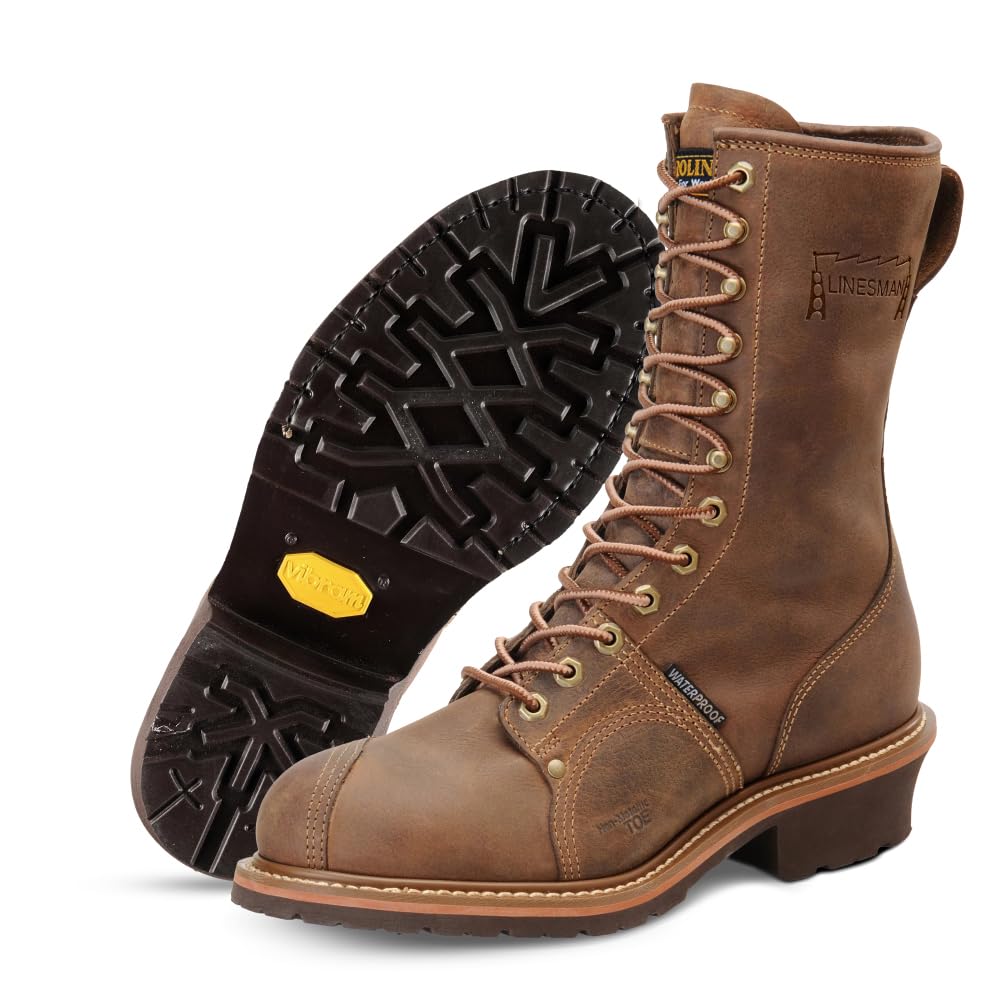
The 10-inch tower that cradles your arch from heel to toe all shift long.
Your arches need more than just a squishy insole — they need structured support that does not collapse halfway through a 12-hour day. The Carolina Linesman 10″ delivers that through its AG7 footbed, which includes dedicated arch support designed to reduce strain on the plantar fascia. This boot stands 10 inches tall, giving your ankle and lower leg a stable platform that reduces the rocking motion that can pull on your arch.
At 10 inches, this boot is taller than the 6-inch MWORK option, providing more ankle coverage — a real advantage if you are on uneven ground or carrying heavy loads. It features a Vibram rubber outsole with a pronounced heel that is rated for slip resistance to ASTM F3445. The composite toe meets ASTM F2413-18 standards, and it is EH rated for electrical hazard protection. Buyers who wear these for long shifts note that the memory foam cushioning in the AG7 insole does not pack down quickly, keeping the arch support effective through months of daily wear.
Arch-First Design Wins
- AG7 footbed with built-in arch support is ideal for plantar fasciitis
- 10-inch height offers substantial ankle stability, unlike shorter boots
- Waterproof Scubaliner lining keeps feet dry without sacrificing breathability
- Vibram outsole with heel provides excellent traction on loose terrain
The Height Trade-Off
- 10-inch shaft can feel restrictive if you are used to low-cut work shoes
- Heavier construction than 6-inch or 8-inch boots
- Premium price point puts it out of reach for a strict budget
Best for: Anyone who needs maximum arch support and ankle stability for long days on varied terrain, especially if you already know you need structured orthotic-level support.
Consider the height: If you frequently crouch, kneel, or drive, the 10-inch collar may feel cumbersome — an 8-inch logger may be a better fit for those movements.
2. Carolina 8″ Composite Toe Logger Boots
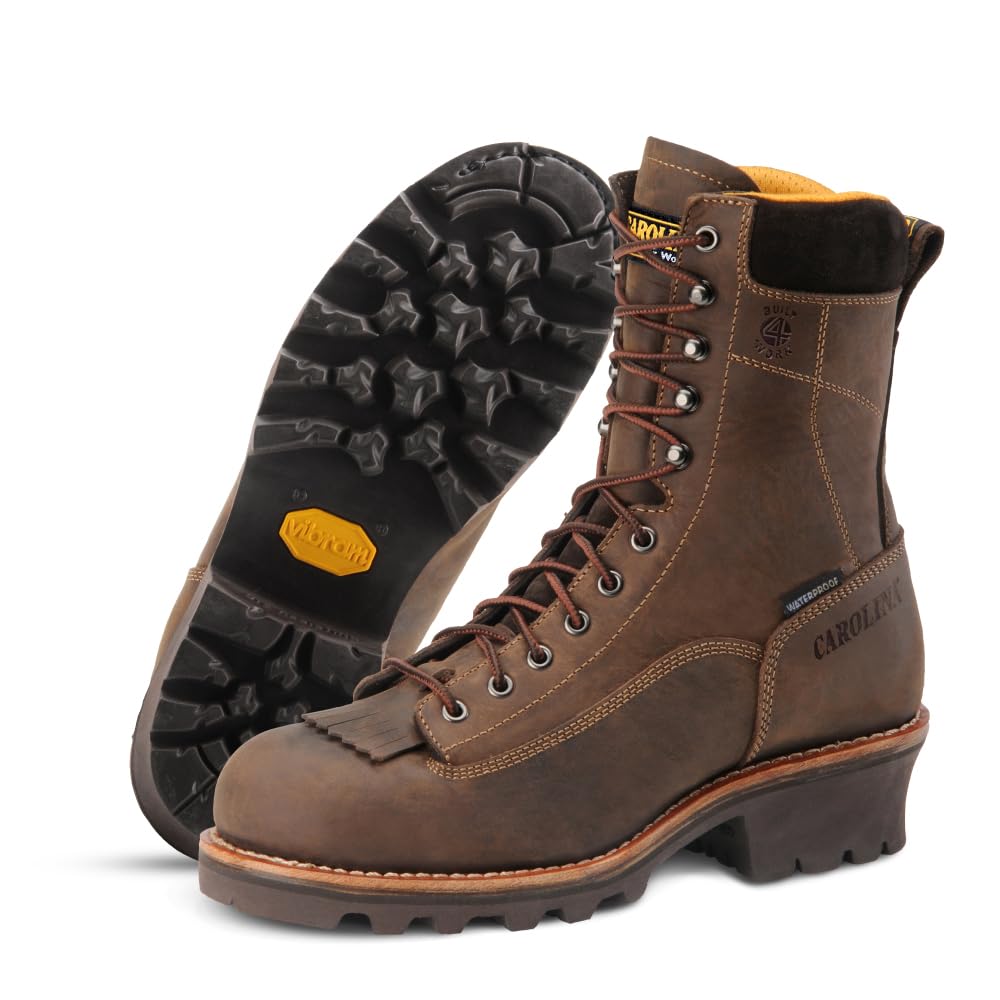
The shorter logger that keeps your arch supported without the 10-inch climb.
The Carolina Logger drops to an 8-inch height, which is a meaningful middle ground — more ankle coverage than the MWORK 6-inch, but less restrictive than the Linesman 10-inch. It shares the same AG7 footbed with arch support and a pillowy pillow cushion insert, making it a strong choice if you need that dedicated arch cradle but prefer a boot that bends easier when you kneel.
The upper is full-grain leather, and the outsole is the Vibram 261K rubber — a heavy-duty lug pattern built for logging and construction. It is waterproof with a Scubaliner membrane, and it meets ASTM F2413 for impact and compression with its composite toe. The boot is EH rated and slip resistant to ASTM F3445. Buyers report that the arch support feels more pronounced than in softer-cushion boots, which is exactly what you want when your plantar fascia needs a break from flat surfaces. The 8-inch profile also means it is roughly 4.9 lbs per pair, noticeably lighter than many 10-inch logger boots.
Solid Arch Foundation
- AG7 footbed with arch support and pillow cushion for targeted relief
- 8-inch height offers better mobility than a 10-inch boot
- Vibram 261K outsole grips uneven ground confidently
- Waterproof Scubaliner lining is effective and durable
Logger Lugs Are Specific
- Deep Vibram lug outsole can track mud and debris into buildings
- Raised heel changes your walking posture if you are used to flat soles
- Full-grain leather requires a break-in period for optimal comfort
Who it fits: You want the arch support of the premium Carolina line but work in an environment where a 10-inch boot would be too tall — think construction, logging, or outdoor trade work where you crouch often.
Warning: The raised logger heel is not for everyone; if you walk on flat concrete all day, it may shift your weight forward and create new pressure points.
3. MWORK 6″ Work Boots
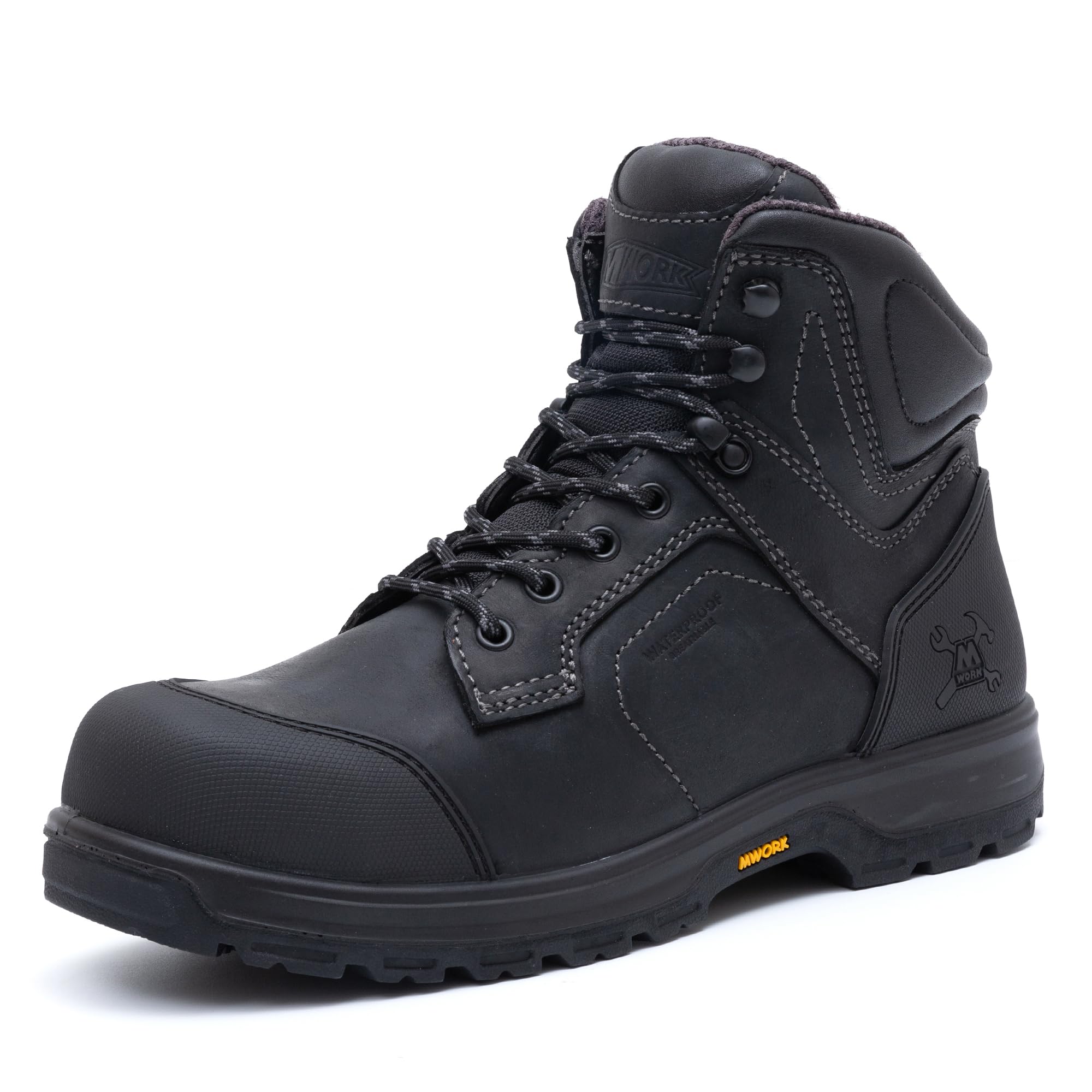
A budget-conscious choice that still puts a shock-absorbing pad under your heel.
Not everyone can drop a premium price on arch support, and the MWORK 6″ boots acknowledge that reality. While they lack a dedicated arch support footbed like Carolina’s AG7 system, they include a cushioned PU insole with a Poron XRD pad — a material designed to absorb impact right under your heel, which is the primary strike zone for plantar fasciitis pain. The boot meets ASTM F2413-18 I/75 and C/75 impact and compression safety standards with its composite toe, and it is EH rated up to 18,000 volts.
At 6 inches versus the 10-inch Carolina Linesman, this boot is more maneuverable for driving, crouching, or warehouse work. It uses a waterproof internal membrane (not a coating), and the natural rubber sole is oil-resistant (903#). Reviewers report that these boots are comfortable from the start with minimal break-in, which is a big plus if your plantar fasciitis means you cannot afford a painful break-in period. The trade-off: the arch support is softer and less structured than the premium picks, so if you need rigid correction, you will likely swap the insole for your own orthotic.
Value-Driven Comfort
- Poron XRD heel pad reduces impact shock for tender arches
- Composite toe provides ASTM F2413-18 safety without the weight of steel
- Short break-in period reported by most buyers
- Waterproof membrane built into lining, not a spray-on coating
Soft Support, Not Firm
- Insole is cushioned but lacks firm, structural arch support
- 6-inch height offers minimal ankle support compared to taller boots
- Lower price point means materials may not last as long as premium leather boots
Reach for this if: Your budget is tight but you still need impact protection and a composite toe, and you are willing to add your own orthotic insole for arch support.
skip it if: You need built-in structured arch support from the factory — the Carolina boots are a better fit for that need right from the start.
4. ROCKROOSTER Beaufort Composite Toe Work Boots
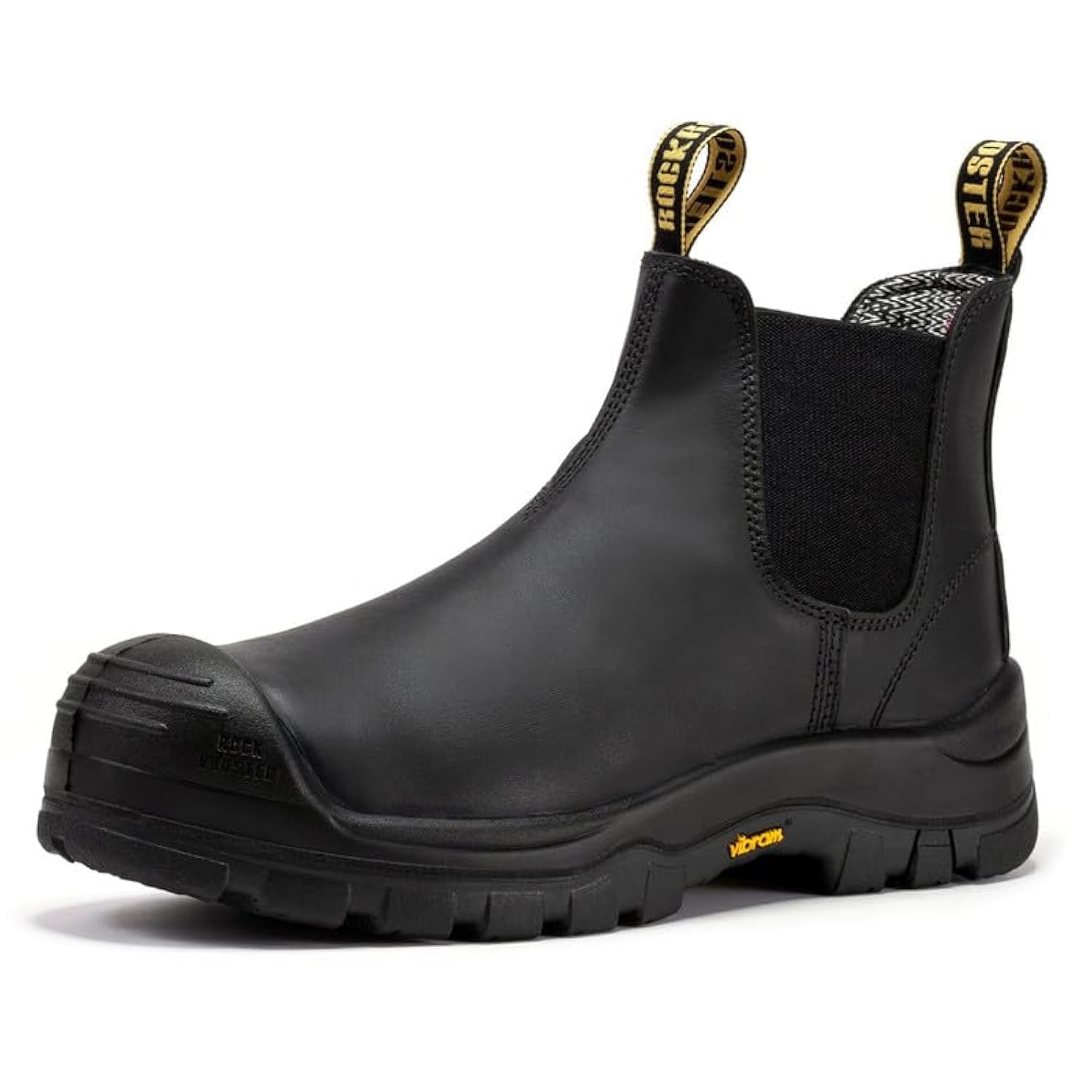
A fully non-metallic boot that passes airport security and still cradles your arch.
If your job takes you through metal detectors daily or requires a completely metal-free boot for safety reasons, the ROCKROOSTER Beaufort steps in with a CSA certification for Canadian safety standards. Its composite toe is paired with a built-in arch support design — a rare find at this price point — and a Vibram outsole for traction. The boot is constructed to be lightweight, reducing the load on your feet during long shifts.
While the data does not specify the exact height, its design targets workers who need to be mobile and cannot afford the bulk of a logger boot. The arch support is built into the boot, not an aftermarket insert, which helps maintain consistent support as you walk. Owners mention that the combination of a Vibram outsole and composite toe gives it a sturdy feel without the cold-conducting problems of steel. The catch is that replacement insoles may be harder to find if the built-in arch support does not match your arch profile, and some users report sizing runs slightly large, so you may need to size down when ordering.
Non-Metallic Advantage
- Fully metal-free design clears metal detectors and stays warm in cold weather
- Built-in arch support is pre-formed for consistent pressure relief
- Vibram outsole provides durable, reliable traction
- Lightweight build reduces overall foot fatigue
Fit and Support Caveats
- Some customers note the built-in arch does not fit all foot types
- Sizing may run large, requiring a size down for a snug fit
- CSA certification may not be recognized in all US jurisdictions
Ideal for: Workers who need a metal-free boot for security or cold-weather reasons, and want built-in arch support without swapping the insole.
Check the fit: Try a half-size down or order from a store with a flexible return policy — the sizing variance is a common buyer note.
Understanding the Specs
AG7 Footbed with Arch Support
This is Carolina’s proprietary insole system that provides structured support under your arch, not just cushioning. For plantar fasciitis, the “arch support” part of the name is what matters most — it holds up the arch so the plantar fascia ligament does not have to stretch as far with every step. It is removable in most cases, so you can swap it for a custom orthotic if needed.
ASTM F2413 Safety Standards
This is the US standard for protective footwear. The “I/75 C/75” you see means the toe can withstand a 75-pound impact and 75-pound compression. A composite toe (non-metallic) meets this same rating as steel but does not conduct heat or cold. The “EH” (Electrical Hazard) rating means the boot provides secondary protection against accidental contact with live circuits up to 18,000 volts in dry conditions.
FAQ
Will a composite toe work boot help my plantar fasciitis more than a steel toe?
Can I replace the insole in any of these boots with my own custom orthotic?
How does the 10-inch Carolina Linesman compare to the 8-inch Logger for ankle support?
Are these boots suitable for all-day standing on concrete floors?
Do composite toe boots meet the same safety standards as steel toe boots?
What does the EH (Electrical Hazard) rating actually mean for these boots?
How long does a pair of Carolina composite toe boots typically last?
Do any of these boots require a long break-in period?
Final Thoughts: The Verdict
If you want one dependable pick, the composite toe work boots for plantar fasciitis winner is the Carolina Linesman 10″ because the AG7 footbed with arch support directly targets the root cause of arch pain while the 10-inch height locks in ankle stability. If you need a more mobile option that still provides dedicated arch support, grab the Carolina 8″ Logger. And for a budget-friendly entry that lets you add your own orthotic, the standout is the MWORK 6″ for price-to-comfort ratio.
How We Picked
We do not accept paid placement, and we did not hands-on test every unit. Instead, we match each pick to a real buyer and use-case by comparing the manufacturers’ published specifications against the patterns in verified customer reviews — so you get each pick’s real strengths and trade-offs instead of marketing copy.
Sources & Methodology
Specifications: manufacturer listings and product documentation. Review insights: verified customer reviews, as of July 2026. Pricing: not shown on this page (it changes often); check the current price via the retailer link.
As an Amazon Associate, WellFizz earns from qualifying purchases. This does not affect which products we feature.

Mo Maruf
I created WellFizz to bridge the gap between vague wellness advice and actionable solutions. My mission is simple: to decode the research and give you practical tools you can actually use.
Beyond the data, I am a passionate traveler. I believe that stepping away from the screen to explore new environments is essential for mental clarity and physical vitality.