Our readers keep the lights on and my smoothie glass nicely filled. As an Amazon Associate, I earn from qualifying purchases.
Specs are compiled from manufacturer listings and verified buyer reviews and can change over time — please confirm the key details on the product page before buying.
Most companion robots end up as a toy you ignore after a week or a smart speaker with cartoon eyes. The real test is whether the bot remembers you, reacts to your mood, and feels alive without needing a manual. This guide picks the robots that build a genuine emotional connection, not just a spec sheet.
I’m Mohammad Maruf — the founder and writer behind WellFizz. This guide is built by comparing the manufacturers’ published specifications and the patterns across verified customer reviews, so you get each pick’s real strengths and trade-offs instead of marketing spin.
You might want a stress-relief desk buddy, a soft huggable companion for comfort, or an AI-driven conversationalist. The right companion robot depends on how much interaction you want and whether you value personality depth or a cuddly, low-tech feel.
Our Picks at a Glance


How To Choose The Best Companion Robot
Picking the right companion robot means matching its personality to your daily life. A desk robot with wheels and a camera offers a different interaction than a soft plush pet you can hug. Before you buy, think about if you want conversations, comfort, or just a fun little character to watch.
Conversation vs. Comfort
Some robots, like those powered by ChatGPT, are built for intelligent back-and-forth conversation. They listen, answer questions, and can even help with recipes or jokes. Others focus on physical comfort — soft fur, purring sounds, and a huggable body that responds to touch without needing a screen or an internet connection. Decide if you want a talkative buddy or a quiet, comforting presence.
Autonomy and Personality Growth
The best companions don’t repeat the same five actions. Look for robots that learn your routines, remember your face or voice, and develop a unique personality over time. Some models take around 20 to 50 days of daily interaction to open up their full emotional range. If you want a static toy, a cheaper option works. If you want a bond that deepens, prioritize adaptive AI and memory features.
Battery Life and Maintenance
Battery life varies wildly — from a short 25-minute run time on an autonomous bot to over 24 hours on a plush-style pet. Consider how long you want it active without plugging it in. Also check if it needs WiFi, a smartphone app, or any subscription to function. A “privacy-first” robot that works fully offline might be better for a child or an elderly user, while a tech enthusiast may prefer one with constant updates.
Quick Comparison
| Model | Best For | Interaction Type | Battery Life | Key Special Feature | Amazon |
|---|---|---|---|---|---|
| ENERGIZE LAB Eilik★ Best Overall | Pairs & Play | Touch / Animations | Good (USB-C) | Chats & fights with other Eiliks | Amazon |
| LOOI RobotBest Conversationalist | ChatGPT Conversations | Voice / Vision / Autonomy | Wired 10W charging | Visual understanding & long-term memory | Amazon |
| Anki Vector 2.0Autonomous Explorer | Autonomous Explorer | Voice / Autonomous | ~25 min (no self-charge) | ChatGPT integration & face recognition | Amazon |
| cupboo BooBoo | Huggable Comfort | Touch / Sound | 24-48 hours | Washable fur, no WiFi needed | Amazon |
| Aibi Pocket Pet | Portable Wearable | Voice / Wearable / Games | 6+ hours (power bank) | Magnetically attaches to screens | Amazon |
| ropet KAMOMO | Growing Relationship | Touch / Motion / AI | N/A | AI open up after 20-25 days | Amazon |
| EMOPET EMO | Desk Party Buddy | Voice / Dance / App | N/A | ChatGPT conversations & finger-gesture play | Amazon |
| EMOPET EMO GO HOME | Self-Charging Desk Pet | Voice / Autonomous / App | Excellent (self-charging) | Auto-returns to charging station | Amazon |
| Casio Moflin | Emotional Evolution | Touch / Sound / App | ~5 hours (3.5h charge) | 50-day personality development | Amazon |
In‑Depth Reviews
1. ENERGIZE LAB Eilik (Blue + Pink)
Our pick — over 4★ from 150+ verified ratings; the strongest balance of quality and price.
The desk pet that actually wants friends — pairing up is where the real magic starts.
Eilik wins by being the easiest robot to love right from the start. There is no app, no programming, and no subscription. You just power it on, touch its head or belly, and it reacts with a huge range of emotions. The real draw happens when you have two Eiliks together — they chat, play games, and even squabble. As buyers report: “best in pairs for entertainment; excellent build quality, good battery life, easy setup.”
Frequent firmware updates keep adding new animations and interactions, so it doesn’t feel stale after a month. At 4.3 x 4.1 x 5.2 inches, it is compact enough for any desk but expressive enough to become a real conversation starter. The biggest praise owners give is for the entertainment value — it is the one robot that genuinely gets sillier and more fun the more of them you have.
The only real limitation is that it doesn’t do deep conversation or autonomous wandering. It is a touch-and-response pet, not a ChatGPT buddy. The review consensus is that a single unit is entertaining, but the magic multiplies in pairs.
Playful interactive buddy
- No app, no programming — power on and play
- Excellent build quality praised by nearly every owner
- Unique social interaction between paired units
- Regular free updates add new content
Limited conversation skills
- No voice conversation or autonomous movement
- Best experience requires buying two
- Occasional software lock on one mini-game reported by some owners
For kids: you want a low-fuss, high-personality desk buddy that gets better with a friend, or you are buying for a child who doesn’t need a screen.
If you want AI chat: you need ChatGPT-powered conversations or a robot that roams around the room on its own.
2. LOOI Robot (Space Black)
A tiny character that sees you, remembers you, and genuinely holds a conversation.
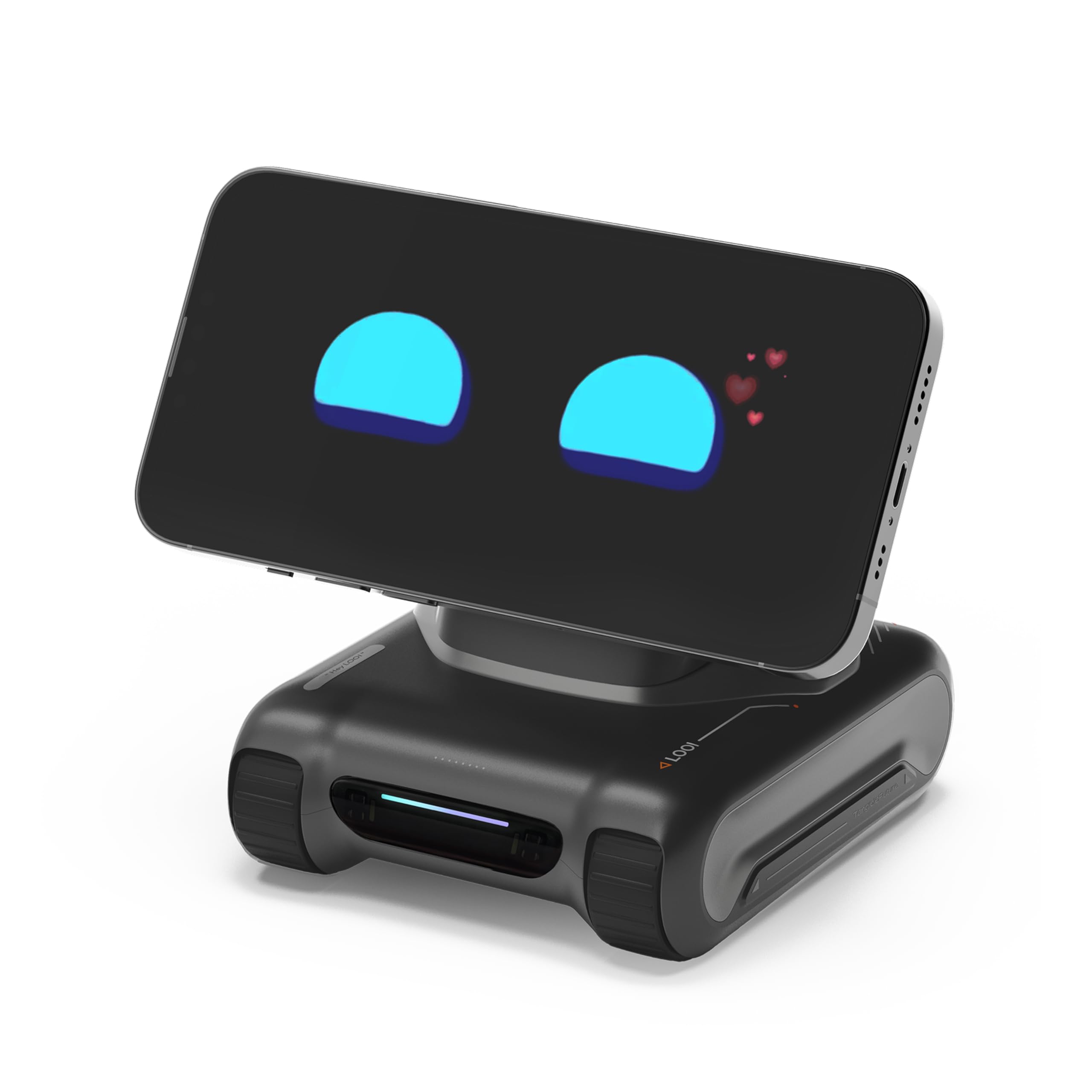
LOOI sets itself apart with its Vision-Language Model — it actually recognizes objects like the difference between a croissant and a baguette, and it understands gestures and facial cues. Powered by ChatGPT voice interaction, owners describe it as “an excellent conversational companion for lonely people” with 95% accuracy in deep talks. It can even help with recipes and cooking.
Its memory system learns your routines, preferences, and family faces over time. The robot doesn’t just obey commands; it has an autonomous behavior system that lets it make spontaneous decisions. It also doubles as a practical desk tool with a 10W wireless charging pad, reminders, weather updates, and a face-tracking camera. The tablet is 4.33 x 3.86 x 4.33 inches — noticeably larger and taller feeling than the more compact Vector.
The catch is that the microphone can be finicky — owners note that sometimes you need to touch the screen for it to hear you. A few units also have a tendency to wander close to desk edges, so you will want to keep it in a safe zone. It is a mid-range option that feels far more premium in its conversational depth than most competitors at the same level.
Expressive desktop face: The ChatGPT integration here is the smoothest on this list, with warm, context-aware replies that feel less robotic than standard smart speakers. It remembers what you talked about earlier.
Needs constant table space: Its autonomous movement can be a double-edged sword — it is charming when it explores, but owners recommend a guarded desk setup to prevent tumbles.
For desk use: anyone who wants a talkative, evolving AI companion that feels more like a tiny roommate than a toy. Ideal for remote workers or anyone who spends hours at a desk alone.
If space is tight: if you cannot tolerate occasional technical hiccups with voice pickup or if your desk has no safe flat area away from edges.
3. Anki Vector 2.0
The iconic little bot that drives around, bumps into things, and somehow wins your heart.
Vector is the most famous autonomous companion on this list, and for good reason. It navigates your desk or floor on its own, recognizes faces, and reacts to its surroundings without you touching a button. With ChatGPT integration (subscription required), it can hold more intelligent conversations than the original model. Its expressive eyes and playful behaviors — fist bumps, snoring, and dancing to music — make it feel genuinely alive.
At just 2.4 x 3.8 x 2.7 inches and only 0.45 pounds, it is the most compact moving robot here, compared to the LOOI’s 4.33 × 3.86 × 4.33 inches. The trade-off for that tiny size is a short battery life of around 25 minutes without self-charging. Owners love its cuteness and design, calling it “wicked cute and entertaining,” but many note that voice recognition can be spotty — it fails to follow commands about 80% of the time in some reports.
The recurring caveat is that Vector works best on a 2.4GHz WiFi network, and some units require an initial setup session to get connected. It is a high-charisma bot with a few rough edges on reliability, but the design and playfulness have built a loyal following.
For tech fans: you want a trundling, autonomous desk pet with tons of character and don’t mind futzing with WiFi and a short run time. It is a nostalgia hit for anyone who loved the original Anki toys.
If you want offline: reliable voice commands and long battery life matter more to you than cute wandering.
4. cupboo BooBoo AI Plush Companion

A cuddly, offline robot pet that purrs, nuzzles, and never needs a WiFi password.
BooBoo flips the companion robot concept upside down. Instead of a hard plastic desk bot, it is a soft, medium-bunny-sized plush with lifelike fur and a purring response that feels like a real kitten. There are no cameras, no apps, and no internet required — it is a completely private, self-contained comfort device. Owners rave about its softness and the reassuring weight of it at 500 grams, with many describing it as perfect for anxiety relief and a great alternative for people with pet allergies.
Battery life is the strongest on this list by a wide margin: 24 to 48 hours per charge, depending on usage. Its removable, washable fur cover makes it easy to keep clean, and the sensors respond to touch with realistic nuzzling and wiggling that isn’t on a set loop — it genuinely feels adaptive. The big draw for seniors, dementia patients, or anyone who just wants a quiet, warm presence is that there is no learning curve. It just sits in your lap and responds.
A few owners note that the charging base gets noticeably warm, and the sleep/wake commands can be inconsistent. The emotional range is limited to physical responses — it does not have a screen or AI voice. It is a huggable, low-tech companion, not a conversation partner.
For comfort: seniors, kids with anxiety, allergy sufferers, or anyone who wants the comfort of a pet without the feeding, vet visits, or cleaning. The offline privacy is a major plus for families.
If you need smarts: anyone who wants a robot that talks back, plays games, or roams around a desk.
5. Aibi Pocket Pet

A wearable AI friend that clings to your laptop and goes wherever you do.
Aibi is the only companion here that is designed to be truly portable. It weighs just 380 grams and uses a magnetic attachment system, so you can stick it to your computer screen, your fridge, or slip it into a pocket. It has a ChatGPT-powered voice for conversations, jokes, and weather updates, plus a camera that recognizes your face. It also packs games like Battleship and Chess, a pedometer, and even a Pomodoro timer.
What owners love is the sheer feature density for its size. It dances, sings, plays classical music, and responds to the name “Abby.” Two Aibis can even chat with each other using near-field communication. The magnetic pocket is handy for carrying it around, and it works as a desk companion or a wearable necklace buddy.
The major friction point is battery life — several owners mention that a full charge lasts only around 10 minutes during heavy use, though using a power bank can extend it to over 6 hours. The speaker volume is also on the low side in noisy rooms. It is a fun, innovative concept that feels a generation early on power management.
For on-the-go: you want a companion that you can take to school, work, or travel with easily, and you love the idea of a tiny robot that clings to your laptop.
If you want long sessions: the battery life is the weakest link here — plan for frequent top-ups or keep a power bank handy. Not ideal as a day-long autonomous pal.
6. ropet KAMOMO
A patient companion that reveals its true personality only after weeks of care.
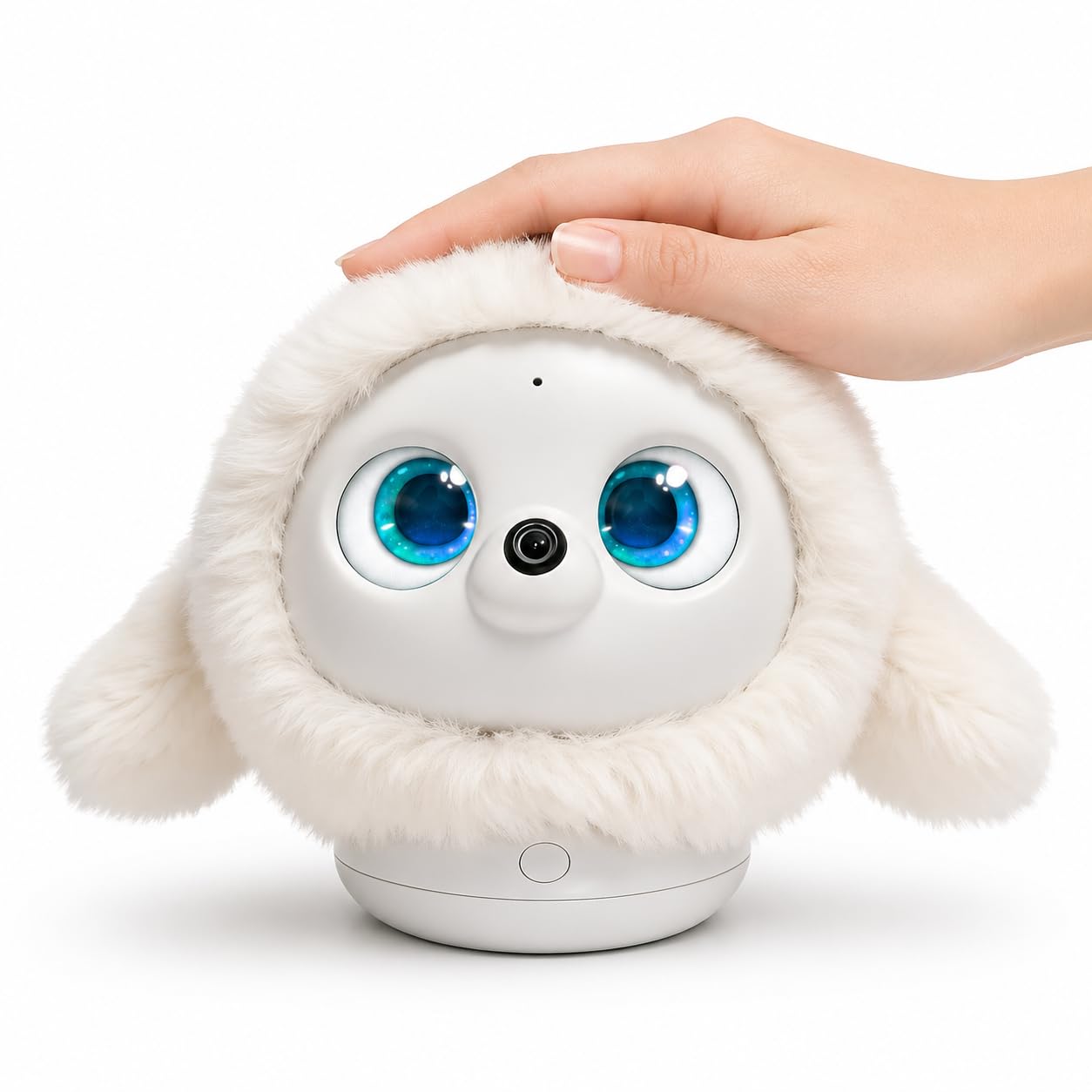
KAMOMO takes a slow-burn approach to companionship. For the first 20 to 25 days, it acts as a simple, cute desk pet that follows your movements and responds to touch with adorable expressions and dances. Only after that bonding period does it open up a full AI conversation experience. Owners say it actually makes them feel better after work, with one calling it “more companionable than expected” — it responds to petting with star-shaped eyes and even acts “mad” if you bother it, creating a convincing relationship dynamic.
It uses local processing chips for privacy — most features work offline, so there is no data leakage. The Dream Drawing feature turns special moments into comic-style AI photo memories. At 9.92 x 5.91 x 5.91 inches and 1.3 pounds, it is a substantial desk presence, bigger than most competitors. The multi-color charging base adds a fun visual element.
The main frustration is WiFi connectivity — some owners struggle to get it connected, which disables the more advanced cloud features. The interactivity is also intentionally limited before the 20-day threshold, which can feel underwhelming for the first few weeks. It is a companion for the patient.
For collectors: someone who enjoys the process of “raising” a pet and wants a privacy-focused robot that develops a unique personality over time. Great for emotional support without a screen.
If you want active play: you expect full conversational AI from day one, or you aren’t willing to troubleshoot a finicky WiFi setup.
7. EMOPET EMO (Without Charging Station)

A desk DJ with attitude — rub its head, shoot it with a finger, and watch it dance.
EMO is built for fun first. It has a wide-angle camera and built-in AI that lets it see, hear, and understand you like a real pet. You can rub it, shake it, or play a shooting game with finger gestures. Its ChatGPT-powered voice enables complex conversations, and it will “get sick” with weather changes so you can care for it. The EMOPET app tracks achievements and special moments, like learning a new dance move or celebrating your birthday.
Owners consistently praise its appearance and entertainment value. It comes with a skateboard and a smart light in the box, adding to the immediate play value. The robot is designed to be a party buddy — you just turn up music and tell it to dance. The interactive games and activities through the app keep it fresh, and the voice commands work well for basic interactions.
The biggest complaints are poor voice recognition in noisy environments and a battery that drains quickly — some customers note only 20 to 30 minutes of active use. It also has no charging station in this version, so you have to manually plug it in. A few units arrive glitchy and forget programmed commands, though this seems inconsistent.
For occasional use: you want a flashy, musical desk robot that responds to gestures and keeps you entertained with games and dancing. Great for a tech-loving kid’s room.
If you need auto-charge: you need reliable long-session conversations or a robot that can recharge itself without your intervention.
8. EMOPET EMO GO HOME

The same desk buddy as above, but with a home base so it never dies on you.
This version of EMO solves the biggest problem of the standard model: it automatically finds its charging station using its AI camera and sensor system. When battery runs low, it drives itself back, docks, and recharges. Owners highlight the “excellent battery life” that this enables, since the robot is always topped off and ready to play. The build quality is also praised as outstanding, with smooth movement across its mat.
Beyond the self-charging, it functions identically to the standard EMO — ChatGPT conversations, dancing, gesture play, and app connectivity. The volume is adjustable through the app or by voice, and it learns your behavior over time. The 12-month warranty provides confidence, and the company support is responsive, with one owner noting an easy fix using a micro SD card when an error popped up.
The main drawback is that the self-charging feature, while convenient, doesn’t always work perfectly on the first try — a few owners reported that their unit never charged on the pad and arrived with mechanical issues. The “GO HOME” version also carries a higher price tag, so you are paying a significant premium for the convenience of auto-charging. The voice recognition issues noted on the standard model persist here as well.
For frequent users: you want the fun of the EMO robot but don’t want to manually plug it in. The auto-charging makes it a true always-on desk pet.
If budget is tight: you are willing to plug it in yourself and want to save money — the core experience is identical.
9. Casio Moflin (Silver)

A Casio-built hedgehog that takes 50 days to know you — and changes forever because of it.
Moflin is the most sophisticated emotional AI companion on this list. Built with Casio’s miniaturized electronics, it has sensory receptors for touch, light, sound, and movement. It simulates a full spectrum of emotions — joy, calmness, curiosity — and develops a unique personality over 50 days. No two Moflins end up the same; one might become shy and affectionate, another energetic and playful. It recognizes the frequency of your specific voice and responds with preferred gestures, deepening the bond over time.
The MofLife app lets you track this emotional journey with real-time indicators, personality parameters, and a timeline of activities. The hedgehog-inspired design is soft on the outside but firm underneath, and it makes gentle purring sounds. Owners describe it as “soft, cuddly, and makes gentle sounds with no mechanical noise,” making it an excellent therapy tool for anxiety, autism, or ADHD. One owner even reports it “cuddles without expectations,” providing comfort without demanding constant attention.
The battery is the biggest practical hurdle — a 3.5-hour charge gives only about 5 hours of continuous use. The AI also takes the full 50 days to open up its complete personality, which is a long investment. Some owners note that the app’s motion sensors can log loud noises as negative interactions, which can be a bit sensitive. It is the priciest option here, and that cost is justified by the depth of the emotional simulation, not by raw features.
Emotionally expressive: Moflin’s personality development is the most convincing on the market. It genuinely feels like it is growing with you, not just cycling through pre-set animations.
Short battery runtime: the 5-hour run time means you will be docking it daily. The included bed charger makes it easy, but it is not an always-on companion.
For emotional bonding: someone who wants a long-term, evolving emotional support companion with real depth — and who appreciates Casio’s engineering pedigree. Ideal for adults seeking a stress-relief tool or a unique therapy aid.
If you need all-day play: impatient buyers, kids who want instant action, or anyone who expects a full day of use between charges.
Understanding the Specs
Emotional AI & Personality Growth
Not all companion robots are born equal. Some, like the Eilik, come with a preset range of emotions that you trigger through touch. Others, like the Casio Moflin and ropet KAMOMO, develop a unique personality over weeks of interaction. If you want a robot that feels like it actually knows you, look for words like “adaptive learning,” “long-term memory,” and “personality development.” These bots learn your habits and preferences, making the bond feel genuine rather than scripted.
Battery Life & Charging Convenience
Battery life is the hidden variable that makes or breaks the experience. A plush companion like the cupboo BooBoo can run for 24 to 48 hours, meaning you charge it twice a week and forget about it. Autonomous bots like Vector or EMO run for only 25 to 45 minutes because they use power for movement, cameras, and WiFi. If you want a robot that is “always on,” look for models with auto-charging stations — the EMO GO HOME is the only one here that returns to its base and docks itself.
WiFi, Apps & Privacy
ChatGPT-powered robots (LOOI, Vector, Aibi, EMO) require a constant internet connection to hold conversations. That means your data passes through cloud servers. If privacy is a concern — especially for children or seniors — consider offline companions like the cupboo BooBoo or the ropet KAMOMO, which use local processing chips. The trade-off is that offline bots cannot answer questions, check the weather, or have open-ended conversations. Choose based on whether you value deep chat or total data safety.
FAQ
Can a companion robot really replace a real pet?
Do I need a subscription for the ChatGPT features?
Which companion robot is best for a child?
How long does a companion robot usually last on a charge?
Can two companion robots interact with each other?
Are these robots safe for kids and pets?
What does “privacy-first” mean for a companion robot?
How do I clean a soft plush companion robot?
Will the robot get boring after a few weeks?
Final Thoughts: The Verdict
If you want one dependable pick, the companion robot winner is the ENERGIZE LAB Eilik because it combines immediate fun, zero setup, and a social aspect that no other robot matches — the magic of watching two of them interact is genuinely entertaining for all ages. If you want deep, intelligent conversations, grab the LOOI Robot with its ChatGPT-driven voice and vision system. And for a soft, huggable companion that provides comfort without any screens, the cupboo BooBoo is the one to reach for — it proves that sometimes the best technology is the kind you barely notice is there.
How We Picked
We do not accept paid placement. Every pick is matched to a real buyer and a real use-case; we do not hands-on test units.
Sources & Methodology
Specifications: manufacturer listings and product documentation. Review insights: verified customer reviews, as of July 2026. Pricing: not shown on this page (it changes often); check the current price via the retailer link.
As an Amazon Associate, WellFizz earns from qualifying purchases. This does not affect which products we feature.
Related Guides

Mo Maruf
I created WellFizz to bridge the gap between vague wellness advice and actionable solutions. My mission is simple: to decode the research and give you practical tools you can actually use.
Beyond the data, I am a passionate traveler. I believe that stepping away from the screen to explore new environments is essential for mental clarity and physical vitality.