Our readers keep the lights on and my smoothie glass nicely filled. As an Amazon Associate, I earn from qualifying purchases.
A camera that fits in your pocket shouldn’t force you to choose between portability and image quality. The modern compact travel camera market has evolved far beyond basic point-and-shoots, today offering 1-inch sensors, 4K video, and stabilization systems that rival much larger gear. Whether you’re documenting a weekend hike, capturing a family reunion, or starting a vlog, the right compact body can be the difference between missing the moment and preserving it with vivid clarity.
I’m Mohammad Maruf — the founder and writer behind WellFizz. I’ve spent hundreds of hours analyzing the technical specifications, real-world reviews, and market positioning of the most sought-after compact travel cameras to identify the models that truly deliver on their promises.
This guide cuts through the marketing noise to help you find the best compact travel camera for your specific needs and budget, without wasting time on models that don’t hold up in the field.
How To Choose The Best Compact Travel Camera
Picking the right compact travel camera comes down to understanding a few key specs that separate a frustrating travel companion from a reliable one. Smartphone cameras are impressive, but when you need real optical zoom, genuine low-light performance, and the flexibility of physical controls, a dedicated compact camera still wins. Here is what matters most.
Sensor Size: The Foundation of Image Quality
The sensor is the core of any camera. A 1-inch CMOS sensor is the gold standard for pocket-friendly travel cameras, delivering noticeably better dynamic range and low-light performance than the tiny sensors in budget compacts or most smartphones. APS-C sensors, found in larger mirrorless bodies like the Sony Alpha series or Canon EOS R50, offer even more detail and shallower depth of field, but at the cost of a larger body and interchangeable lenses. For all-around travel, 1-inch sensors hit the sweet spot; for dedicated photography where bag space is less tight, APS-C delivers a clear step up.
Optical Zoom: Reach Without Compromise
Digital zoom is a marketing trick—it simply crops the image, reducing quality. True optical zoom extends your reach without losing detail. A camera like the Panasonic ZS99 with its 30x optical zoom (24-720mm equivalent) lets you capture close-ups of distant landmarks or wildlife, while the DJI Osmo Pocket 3 has a fixed wide-angle lens. If you primarily shoot landscapes and group photos, a wide-angle fixed lens is fine. If you want to photograph subjects far away, prioritize optical zoom range and look for optical image stabilization (OIS) to keep telephoto shots sharp.
Image Stabilization: The Unsung Hero
Shaky hands produce blurry photos, especially in low light or at full zoom. In-body image stabilization (IBIS) and lens-based optical stabilization counteract that movement. For video creators, a 3-axis gimbal stabilizer found in the DJI Osmo Pocket 3 or Xtra Muse delivers incredibly smooth footage without a separate gimbal. For still photographers, IBIS allows you to shoot at slower shutter speeds without a tripod, a critical advantage in museums, twilight scenes, or handheld night shots. Never underestimate how much stabilization improves keeper rates during travel.
Video Capabilities: Beyond 4K Hype
Nearly every modern compact camera claims 4K video, but the implementation varies. Look for 4K at 30fps as a baseline; 60fps is better for smooth motion, and 120fps enables slow-motion playback. Consider bit-depth: 10-bit video (found in the Sony Alpha 6700 and DJI Osmo Pocket 3) holds far more color information for editing than 8-bit. Also check for features like a flip screen for vlogging, a microphone input for better audio, and unlimited recording time (some cameras overheat or impose time limits). A camera that nails video specs can double as your primary travel camcorder.
Quick Comparison
On smaller screens, swipe sideways to see the full table.
| Model | Category | Best For | Key Spec | Amazon |
|---|---|---|---|---|
| DJI Osmo Pocket 3 Creator Combo | Pocket Gimbal | Vloggers & action video | 1″ CMOS, 3-axis gimbal | Amazon |
| Sony Alpha 6700 | Mirrorless APS-C | Enthusiast hybrid shooting | 26MP, 4K/120p, AI AF | Amazon |
| Canon EOS R50 | Mirrorless APS-C | Beginners & family travel | 24.2MP, Dual Pixel AF II | Amazon |
| Sony Alpha a6400 | Mirrorless APS-C | Fast action & street photography | 0.02 sec AF, 11fps burst | Amazon |
| Olympus E-M10 Mark IV | Mirrorless MFT | Compact system camera lovers | 20MP, 4.5-stop IBIS | Amazon |
| Nikon Z 30 | Mirrorless APS-C | Vloggers & streamers | 4K UHD, eye-tracking AF | Amazon |
| OM System TG-7 | Rugged Compact | Adventure & underwater | Waterproof 15m, shockproof | Amazon |
| Panasonic ZS99 | Travel Zoom | Long-zoom travel & concerts | 30x optical zoom, Leica lens | Amazon |
| Canon EOS R100 | Entry Mirrorless | Budget mirrorless shooter | 24.1MP APS-C, 4K 24p | Amazon |
| Xtra Muse Vlogging Cam | Pocket Gimbal | Budget vlog alternative | 1″ CMOS, 4K/120fps, gimbal | Amazon |
| Kodak PIXPRO AZ528 | Superzoom Bridge | Budget superzoom reach | 52x optical zoom, 16MP | Amazon |
In‑Depth Reviews
1. DJI Osmo Pocket 3 Creator Combo

The DJI Osmo Pocket 3 is the benchmark for pocket-sized video creation. Its 1-inch CMOS sensor captures 4K resolution at 120fps, delivering footage that rivals much larger setups, while the integrated 3-axis mechanical gimbal eliminates the need for a separate stabilizer. The rotatable 2-inch touchscreen switches effortlessly between horizontal and vertical framing, a critical feature for creators who post to both YouTube and TikTok without cropping in post.
ActiveTrack 6.0 locks onto subjects reliably, keeping you centered in the frame even during movement. The Creator Combo includes a DJI Mic 2 transmitter, a wide-angle lens, a battery handle, and a mini tripod, making it a complete mobile studio out of the box. The audio quality from the included wireless mic is a significant upgrade over built-in mics, and the D-Log M 10-bit color profile allows serious color grading flexibility.
Battery life stretches to nearly three hours with the battery handle attached, and USB-C PD charging means you can top up quickly between shoots. The main trade-off is the fixed wide-angle lens—you cannot zoom optically, so close-ups of distant subjects require cropping or walking closer. The gimbal head is also delicate and benefits from the included protective cover during travel.
Why it’s great
- Class-leading 3-axis gimbal stabilization in a pocketable form
- 1-inch sensor delivers excellent dynamic range and low-light performance
- Creator Combo includes wireless mic, wide-angle lens, and tripod
- Intuitive touchscreen rotates for vertical video without software cropping
Good to know
- Fixed wide-angle lens offers no optical zoom, limiting reach for distant subjects
- Gimbal head is delicate; the protective cover is essential for rough travel
- Premium price reflects the gimbal and accessory bundle value
2. Sony Alpha 6700

The Sony Alpha 6700 sets a new standard for APS-C mirrorless cameras, packing a 26MP back-illuminated Exmor R sensor and a dedicated AI processor into a body that is still compact enough for serious travel. The AI-based Real-time Recognition autofocus tracks human eyes, animal eyes, and even vehicles with uncanny reliability, making it easy to capture sharp images of moving subjects without fiddling with focus points.
Video performance is equally impressive: 4K at 60fps comes from a 6K oversampled readout for exceptional detail, and 4K at 120fps allows dramatic slow motion. The 10-bit 4:2:2 internal recording with S-Log and LUT handling gives videographers professional-grade color grading tools. The in-body stabilization is decent for static shots but not strong enough to replace a gimbal for walking video—plan on using a stabilizer for smooth handheld footage.
The menu system remains Sony’s most debated feature; it is deep and powerful but not the most intuitive, requiring a learning curve. The lack of a built-in flash and the small body that feels cramped with large telephoto lenses are minor drawbacks. Battery life is excellent for a mirrorless camera of this class, and the E-mount ecosystem offers an enormous range of native lenses, from ultra-wide to super-telephoto.
Why it’s great
- AI autofocus is best-in-class, tracking eyes and subjects flawlessly
- 26MP sensor delivers exceptional detail and dynamic range
- 6K oversampled 4K video with 10-bit color and LUT support
- Large E-mount lens ecosystem for future upgrades
Good to know
- Complex menu system takes time to master
- In-body stabilization alone is not enough for smooth walking video
- Small body feels unbalanced with heavy telephoto lenses
3. Canon EOS R50 Mirrorless Camera Kit
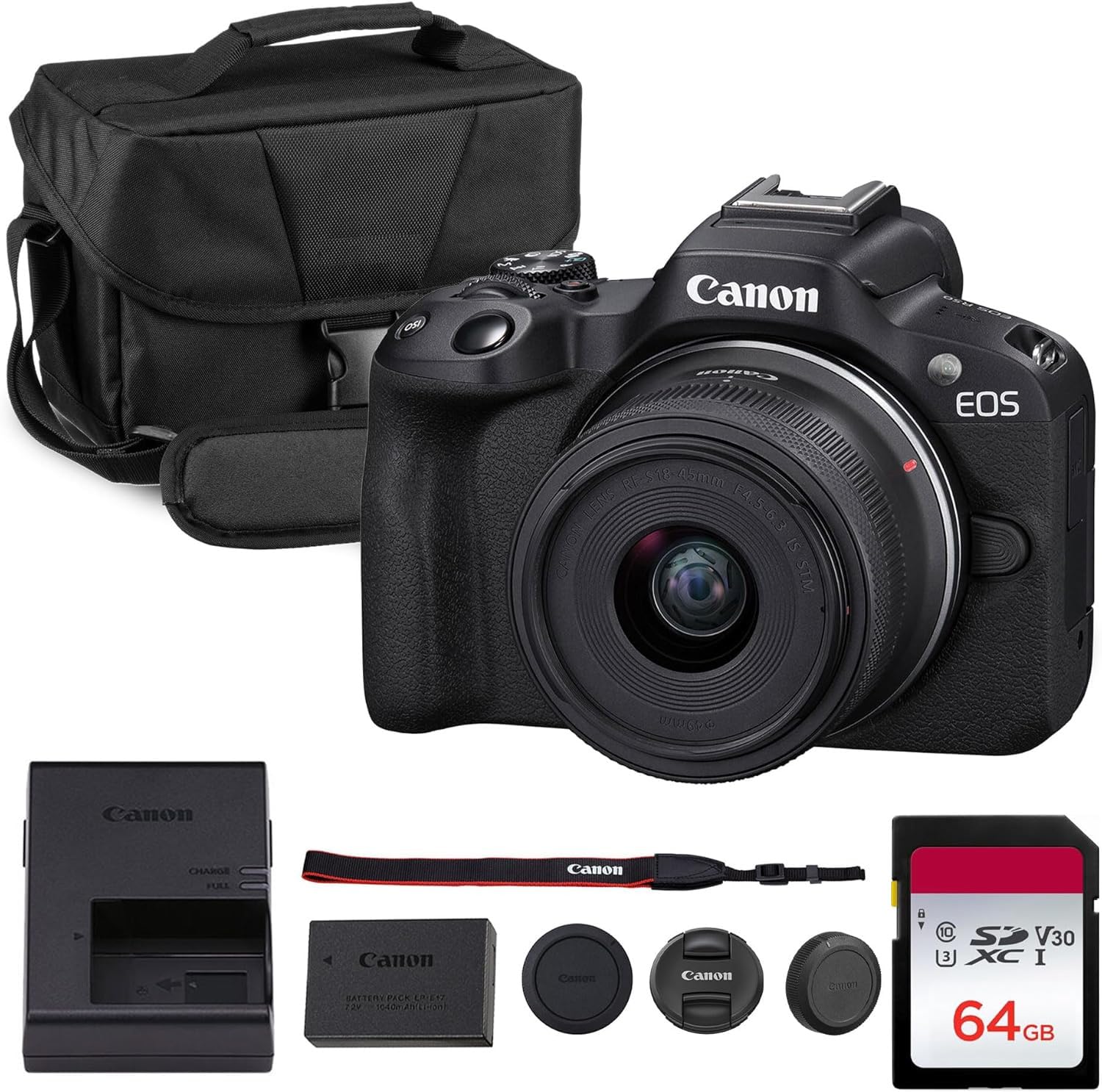
The Canon EOS R50 is designed to be the perfect upgrade for families and beginners who want mirrorless quality without complexity. The 24.2MP APS-C sensor paired with Canon’s Dual Pixel CMOS AF II delivers fast, reliable autofocus with face and eye detection for both humans and animals. The vari-angle touchscreen makes selfies, vlogging, and low-angle shots intuitive, and the Creative Assist mode helps newcomers understand how settings affect the final image.
Oversampled 4K video from the full sensor width produces sharp footage, and the vertical video mode is a thoughtful addition for social media creators. The included RF-S 18-45mm kit lens is a versatile walk-around zoom, but the real magic happens when you pair the R50 with a brighter prime lens like a 50mm f/1.8 for portrait-like bokeh. The camera is noticeably lightweight and comfortable to hold for extended periods.
Some compromises exist: there is no in-body stabilization, so you must rely on lens-based IS or steady hands. The buffer depth for burst shooting is modest, and the single SD card slot limits backup options during long trips. The battery is small but charges via USB-C, and a spare battery is a cheap investment for full-day shoots. Overall, the R50 delivers Canon’s excellent color science and user-friendly experience at a very accessible price.
Why it’s great
- Dual Pixel AF II provides reliable eye and face detection
- Lightweight and comfortable for all-day travel use
- Vari-angle touchscreen great for vlogging and selfies
- Creative Assist simplifies learning photography basics
Good to know
- No in-body image stabilization; relies on stabilized lenses
- Kit lens is decent but upgrading to a prime lens unlocks the sensor’s full potential
- Single SD card slot and modest burst buffer
4. Sony Alpha a6400

The Sony Alpha a6400 has been a staple of the compact mirrorless market for years, and for good reason. Its 0.02-second autofocus with 425 phase-detection points covering 84% of the sensor is still among the fastest in its class, making it a top choice for capturing fast-moving kids, pets, or street scenes. The 24.2MP Exmor CMOS sensor produces vibrant, natural colors with excellent detail up to medium ISOs.
The tilting LCD flips up 180 degrees for vlogging, though it blocks the hotshoe when open—a design quirk to note if you plan to use an external microphone. The real-time eye-tracking AF works for both humans and animals in stills, and the camera supports 4K video with full pixel readout without pixel binning, resulting in sharp footage. The E-mount compatibility gives you access to hundreds of lenses, from tiny primes to professional zooms.
The menu interface is deep and slightly dated, and the touchscreen functionality is limited compared to newer competitors. The 4K video suffers from noticeable rolling shutter in fast panning shots, and the lack of a headphone jack means you cannot monitor audio during recording. Despite these age-related drawbacks, the a6400 remains a fantastic value for photographers who prioritize speed and lens selection.
Why it’s great
- Blazing-fast 0.02-second autofocus with excellent tracking
- Compact body fits easily in a small bag
- Vast E-mount lens library offers incredible versatility
- 11fps continuous shooting captures action reliably
Good to know
- Screen blocks hotshoe when flipped up for vlogging
- 4K video has noticeable rolling shutter during fast pans
- Menu system is complex and touchscreen is limited
5. OM System Olympus E-M10 Mark IV

The OM System E-M10 Mark IV proves that Micro Four Thirds is still a fantastic travel format. Its 20MP Live MOS sensor paired with a 5-axis in-body image stabilization system rated at 4.5 stops of compensation allows handheld shots in dim light that would require a tripod with unstabilized cameras. The flip-down monitor with dedicated selfie mode makes it one of the most user-friendly cameras for spontaneous group shots and vlogging.
The kit lens is the ultra-compact 14-42mm EZ pancake zoom, which collapses to nearly nothing, allowing the entire setup to slip into a jacket pocket. Olympus lenses are known for their excellent optical quality, and the lens library is full of small, sharp primes that keep the system portable. The built-in 16 Art Filters, including an Instant Film mode, add creative fun without requiring post-processing.
The contrast-detection autofocus is competent but not as snappy as phase-detection systems from Sony or Canon, especially in low light. The battery is not USB-C rechargeable, which means carrying a separate charger. The Bluetooth and OI Share app are functional but slower than competitors for transferring images. Still, the combination of compact size, superb stabilization, and character-rich image quality makes this a beloved travel companion.
Why it’s great
- Exceptional 5-axis IBIS allows handheld shots in very low light
- Incredibly compact kit lens makes the system nearly pocketable
- Flip-down screen with selfie mode is intuitive for travel photography
- Creative Art Filters add character straight out of camera
Good to know
- Contrast-detect AF is slower than phase-detect competitors
- Battery charges via dedicated charger, not USB-C
- Bluetooth and Wi-Fi transfer speeds are sluggish
6. Nikon Z 30 with 16-50mm Lens

The Nikon Z 30 is engineered specifically for content creators who want a lightweight mirrorless for vlogging, streaming, and short-form video. It shares the same 20.9MP APS-C sensor and EXPEED 6 processor as the Z 50 but removes the viewfinder to reduce size and weight. The flip-out touchscreen selfie monitor is large and bright, and the red REC light on the front provides clear recording confirmation for on-camera talent.
Video capabilities are a highlight: unlimited 4K UHD recording with no overheating concerns, oversampled from the full sensor width for crisp detail. The eye-tracking autofocus works for people and pets, and the subject tracking is sticky enough for walking vlogs. The built-in stereo microphone has adjustable sensitivity and a dead-cat windscreen option for outdoor use. USB-C power delivery means you can keep recording indefinitely with a power bank.
The lack of a viewfinder is the most obvious compromise—if you prefer eye-level shooting, the Z 30 is not for you. The kit 16-50mm retractable lens is sharp and compact, but the limited lens lineup for Nikon’s DX Z-mount compared to Sony or Canon means fewer native options for future expansion. The camera also lacks in-body stabilization, so you will want stabilized lenses or smooth handheld technique for video.
Why it’s great
- Designed from the ground up for vloggers and streamers
- Unlimited 4K recording with no overheating issues
- Excellent eye-tracking AF for humans and animals
- USB-C power and data for long streaming sessions
Good to know
- No viewfinder means you must compose on the LCD
- No in-body stabilization; relies on lens stabilization
- Native Z-mount DX lens lineup is still growing
7. OM System Olympus Tough TG-7

The OM System Tough TG-7 is the undisputed king of rugged compact cameras, and the red color makes it easy to spot against rocks or underwater. It is waterproof to 15 meters without a housing, shockproof from 2.1 meters, crushproof to 100kgf, and freezeproof to -10°C. If you snorkel, hike in harsh conditions, or simply drop things often, the TG-7 is built to survive where other compact cameras would fail.
The F2.0 lens and back-illuminated 12MP CMOS sensor deliver excellent image quality for a rugged camera, and the variable macro system lets you focus as close as 1 centimeter from the lens for stunning close-ups of insects, flowers, and texture details. The five underwater modes, including underwater microscope and underwater HDR, produce vibrant shots even in murky water. 4K video at 30fps and 120fps high-speed recording add versatility for action clips.
The small sensor naturally struggles in low light compared to 1-inch or APS-C cameras, producing noticeable noise above ISO 800. The 9-point contrast-detect autofocus is slow by modern standards, and the lack of a hotshoe means no external flash for night photography. The battery life is modest, and the camera is thicker than a typical pocket compact, but for anyone who needs a camera that can handle the elements, the TG-7 is in a class of its own.
Why it’s great
- Extremely rugged: waterproof, shockproof, crushproof, freezeproof
- Exceptional macro capability with variable modes including underwater microscope
- Dedicated underwater modes produce great results without a housing
- Reliable point-and-shoot operation in extreme environments
Good to know
- Small sensor limits low-light performance and dynamic range
- Contrast-detect autofocus is slow and struggles in dim conditions
- Battery life is modest; carrying a spare is recommended for full-day trips
8. Panasonic LUMIX ZS99

The Panasonic LUMIX ZS99 (known as TZ99 outside the US) delivers a compelling combination of pocketable size and massive reach. Its Leica DC Vario-Elmar lens spans 24-720mm equivalent, offering 30x optical zoom that brings distant concert stages, wildlife, and architectural details into sharp view. The 20.3MP 1/2.3-inch sensor is smaller than 1-inch or APS-C sensors, but in good light and at base ISO, the images are crisp with pleasing Leica color rendering.
The 1,840k-dot tiltable touchscreen is a welcome upgrade for shooting from awkward angles, and the 4K video at 30fps captures smooth footage with 4K Photo burst mode at 30fps for extracting stills from video. Built-in Bluetooth v5.0 with a dedicated Send Image button makes transferring photos to a smartphone quick and painless. The USB-C charging is a modern convenience that simplifies travel cable management.
Image quality degrades noticeably above ISO 1600, and the small sensor struggles in dim concert or evening environments—use flash or accept grain. The autofocus, while hybrid phase-detect, is not as confident as the latest AF systems, occasionally hunting in low contrast. The lack of a built-in flash is disappointing for such a versatile zoom. But for a camera that fits in a pants pocket and reaches 720mm, the ZS99 has no direct competitor at its price point.
Why it’s great
- 30x Leica optical zoom (24-720mm) in a truly pocketable body
- Tiltable touchscreen and 4K video for flexible shooting
- Bluetooth 5.0 with dedicated share button for fast phone transfers
- USB-C charging simplifies travel charging
Good to know
- Small 1/2.3-inch sensor limits low-light performance and dynamic range
- No built-in flash; requires external or available light in dark settings
- Autofocus hunts occasionally in low-contrast scenes
9. Canon EOS R100 with 18-45mm Lens

The Canon EOS R100 is the smallest and lightest body in the EOS R mirrorless lineup, designed specifically for beginners who want the image quality of an APS-C sensor without the bulk. The 24.1MP CMOS sensor paired with the DIGIC 8 processor produces the classic Canon color science—warm, pleasing skin tones and vibrant landscapes straight out of camera. The RF-S 18-45mm kit lens is a capable everyday zoom for general travel and family photography.
Dual Pixel CMOS AF covers 143 zones with human face and eye detection, making it easy to keep subjects sharp. The camera shoots 4K video at 24fps and can capture HD at 120fps for slow-motion effects. The burst rate of 6.5fps with One-Shot AF is adequate for capturing casual action like children playing or pets running. The user interface is clean and beginner-friendly, with guided modes that explain settings in plain language.
The lack of a vari-angle touchscreen is a significant omission in 2024—the fixed 3-inch LCD limits creative framing. 4K video is cropped and limited to 24fps, and the single SD slot with UHS-I speeds restricts sustained burst shooting. The battery life is modest, but USB-C charging helps. For the price, the R100 offers an authentic mirrorless experience with access to Canon’s excellent RF lens ecosystem for future upgrades.
Why it’s great
- Smallest and lightest EOS R body, excellent for travel
- Classic Canon color science and reliable Dual Pixel AF
- Access to the full RF lens lineup for future growth
- Beginner-friendly interface with guided shooting modes
Good to know
- Fixed LCD screen cannot tilt for selfies or odd angles
- 4K video is cropped and limited to 24fps
- Single UHS-I card slot limits buffer performance
10. Xtra Muse Vlogging Camera

The Xtra Muse enters the pocket gimbal market as a budget-conscious alternative to the DJI Osmo Pocket 3, offering remarkably similar specs at a significantly lower entry point. It features a 1-inch CMOS sensor capable of 4K resolution at 120fps, paired with a built-in 3-axis gimbal that delivers smooth, stabilization without needing a separate gimbal setup. The 2-inch touchscreen allows horizontal and vertical framing, and the face and object tracking works reliably for keeping subjects centered.
The 10-bit X-Log color profile enables color grading flexibility in post-production, and the Master Follow mode ensures you stay framed when moving. Battery life is rated at 161 minutes, which is competitive with the DJI option. The standard bundle includes a carrying bag, wrist strap, and handle with a 1/4-inch thread for tripod mounting. Users have reported that DJI Pocket 3 accessories are compatible, and the DJI Mic can connect after a firmware update.
Build quality is solid for the price, but the gimbal arm feels slightly less robust than the DJI’s. The companion app is functional but not as polished, and the tracking algorithm occasionally loses subjects in complex backgrounds. The lack of a dedicated wireless microphone in the standard bundle means you will need to budget for an external mic if audio quality is critical. For budget-conscious creators who cannot stretch to the DJI, the Xtra Muse is a compelling starter pack.
Why it’s great
- 1-inch CMOS with 4K/120fps and 3-axis gimbal at a competitive price
- Compact and portable, with DJI Pocket 3 accessory compatibility
- 10-bit X-Log color for professional-grade color grading
- Reliable face and object tracking for solo creators
Good to know
- Tracking algorithm can lose subjects in complex or busy scenes
- Companion app is less polished than the market leader
- No wireless mic included in the standard bundle
11. Kodak PIXPRO Astro Zoom AZ528
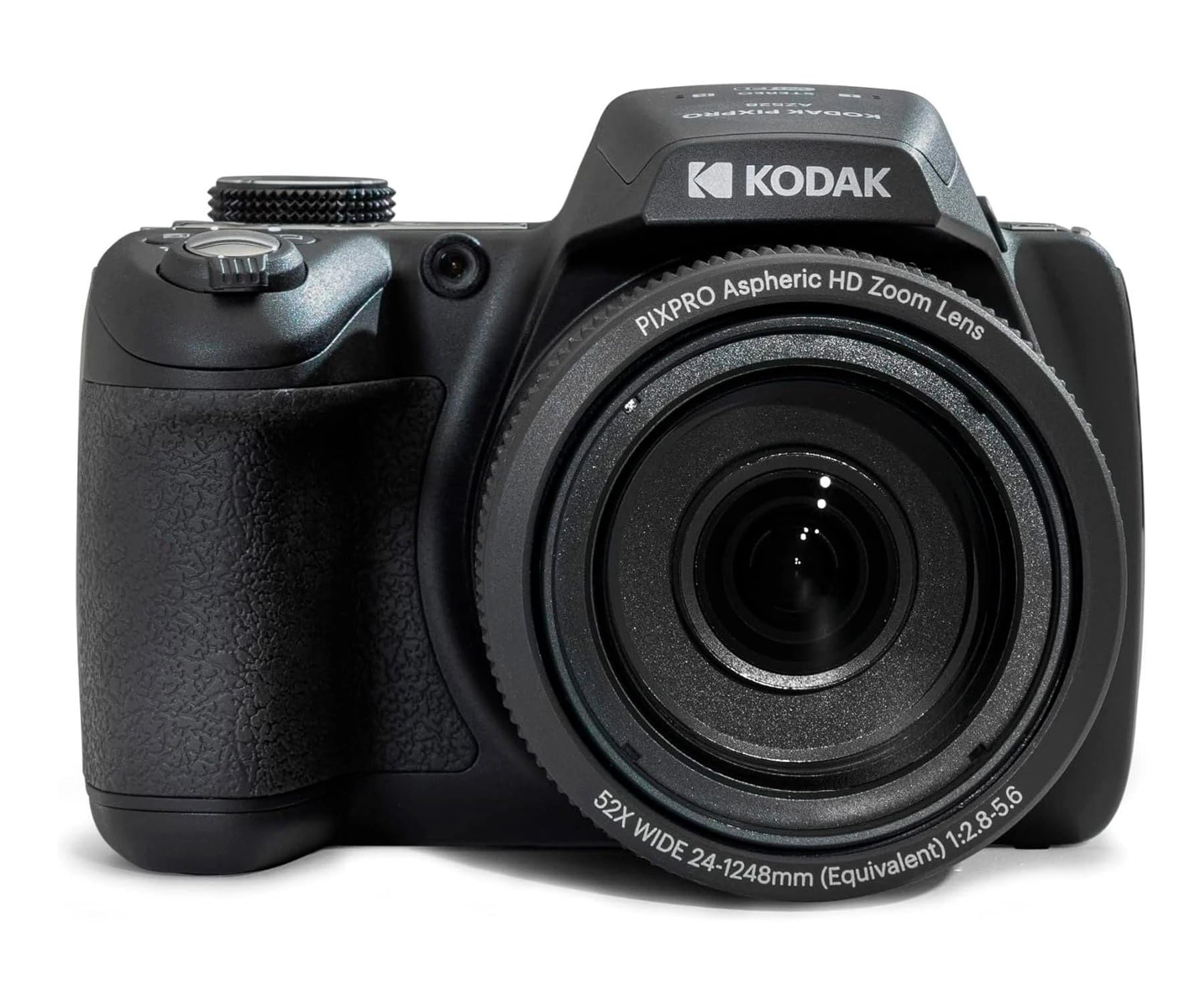
The Kodak PIXPRO Astro Zoom AZ528 is a budget-focused superzoom bridge camera that delivers extraordinary reach for its price. The headline feature is the 52x optical zoom lens with a 24mm wide-angle starting point, allowing you to frame everything from expansive landscapes to distant wildlife without changing lenses. The 16MP BSI CMOS sensor with optical image stabilization keeps telephoto shots reasonably sharp, though steady hands or a tripod are still recommended at full 52x zoom.
The 3-inch LCD screen is clear for composition and review, and the built-in Wi-Fi lets you share photos directly to a smartphone. Full HD 1080p video recording at 30fps is adequate for casual clips, and the 20fps burst mode in lower resolution is useful for capturing fast action. The camera accepts SD cards up to 512GB, offering generous storage for extended trips. The body is noticeably larger than a pocket compact but lighter than a full DSLR.
The autofocus uses contrast detection with 25 points, which is slower and less reliable than phase-detect systems, especially in low light. The small sensor produces noise starting at ISO 800, and the image quality cannot match 1-inch or APS-C competitors. The plastic body feels less premium, and the battery life is short—plan on carrying spares for a full day of shooting. But for budget-conscious travelers or beginners wanting to experiment with extreme zoom, the AZ528 offers unmatched reach per dollar.
Why it’s great
- 52x optical zoom (24-1248mm equivalent) for incredible reach
- Wi-Fi connectivity for easy smartphone sharing
- Very budget-friendly entry point for superzoom photography
- Optical image stabilization helps keep telephoto shots steady
Good to know
- Contrast-detect autofocus is slow and struggles in low light
- Small sensor limits image quality above ISO 800
- Short battery life; extra batteries are essential for full-day use
FAQ
Is a 1-inch sensor camera better than a smartphone for travel?
Do I need a separate gimbal for a compact travel camera?
How much optical zoom do I really need for travel?
What is the difference between 8-bit and 10-bit video, and does it matter?
Final Thoughts: The Verdict
For most users, the best compact travel camera is the DJI Osmo Pocket 3 Creator Combo because it combines a 1-inch sensor, professional-grade 3-axis gimbal stabilization, and a complete accessory ecosystem into a truly pocket-sized package that handles both photo and video with exceptional quality. If you need interchangeable lenses and professional-grade autofocus for serious photography, grab the Sony Alpha 6700. And for rugged outdoor adventures where waterproofing and shock resistance are non-negotiable, nothing beats the OM System Tough TG-7.

Mo Maruf
I created WellFizz to bridge the gap between vague wellness advice and actionable solutions. My mission is simple: to decode the research and give you practical tools you can actually use.
Beyond the data, I am a passionate traveler. I believe that stepping away from the screen to explore new environments is essential for mental clarity and physical vitality.