Our readers keep the lights on and my smoothie glass nicely filled. As an Amazon Associate, I earn from qualifying purchases.
A bad night’s sleep on a deflated, thin, or noisy pad can ruin an entire camping trip. The gap between a restless night spent tossing on hard ground and a restorative sleep under the stars comes down to one piece of gear: a compact sleeping pad that delivers real insulation and support without hogging pack space.
I’m Mohammad Maruf — the founder and writer behind WellFizz. I’ve spent countless hours cross-referencing R-values, packed dimensions, valve mechanisms, and fabric deniers to build a spec-accurate guide for this narrow category.
Whether you’re a weekend car camper or a thru-hiker counting every ounce, choosing the right compact sleeping pad means balancing thickness, insulation, weight, and packed size against your sleeping style and the season you’ll face.
How To Choose The Best Compact Sleeping Pad
The right compact sleeping pad is a balancing act between four main criteria: insulation, weight, packed size, and comfort. Each factor influences the others, so your ideal pick depends heavily on your specific use case — whether you’re hiking miles to camp or simply stashing a pad in the car for weekend trips.
R-Value and Insulation
R-value measures a pad’s resistance to ground heat loss. A pad rated below 2 is strictly for warm-weather use. For three-season camping, look for an R-value between 4 and 5. If you camp in below-freezing temperatures, aim for an R-value above 5. Many compact pads achieve higher R-values through reflective films or foam layers rather than just added thickness.
Weight and Packed Size
Compact sleeping pads are defined by how small they roll or fold. Ultralight air pads can pack down to the size of a water bottle and weigh under a pound, making them ideal for backpackers. Closed-cell foam pads are lighter but bulkier externally, while self-inflating pads offer a middle ground that trades some packed size for ease of setup.
Thickness and Sleeping Position
Thicker pads — 3 inches or more — prevent your hips and shoulders from “bottoming out,” which is critical for side sleepers. Back sleepers can manage with 2- to 2.5-inch pads. Compact pads with baffled or honeycomb internal structures provide stability without adding weight, reducing the “bounce” common in simple air mattresses.
Quick Comparison
On smaller screens, swipe sideways to see the full table.
| Model | Category | Best For | Key Spec | Amazon |
|---|---|---|---|---|
| Therm-a-Rest NeoAir Xlite NXT | Air Pad | Ultralight Backpacking | 13 oz, 4.5 R-Value | Amazon |
| Big Agnes Rapide SL | Air Pad | Three-Season Comfort | 4.8 R-Value, 4.25″ thick | Amazon |
| TREKOLOGY UL R7 | Air Pad | Cold-Weather Value | 7.2 R-Value, 2 lbs | Amazon |
| Klymit Static V | Air Pad | Budget Backpacking | 13.5 oz, 2.5″ thick | Amazon |
| NEMO Switchback | Foam Pad | Reliable Durability | 14 oz, 2.0 R-Value | Amazon |
| HiiPeak Double | Air Pad | Car Camping Duo | 3″ thick, built-in pump | Amazon |
| MLILY Memory Foam Mat | Foam Topper | Cot / Car Camping | 2.5″ thick, waterproof | Amazon |
In‑Depth Reviews
1. Therm-a-Rest NeoAir Xlite NXT

The NeoAir Xlite NXT sets the benchmark for ultralight compact sleeping pads. At just 13 ounces in the regular size, it packs down to roughly the volume of a 1-liter water bottle, making it nearly invisible inside a backpack. The 3-inch thick baffled internal structure provides stable support that prevents side sleepers from bottoming out, a difficult achievement at this weight class.
Therm-a-Rest’s Triple Core Matrix construction minimizes convective heat loss while the reflective ThermaCapture layer traps radiant heat, delivering a 4.5 R-value that handles three-season use and extends well into shoulder-season temperatures. The WingLock valve allows rapid inflation through the included pump sack and lightning-fast deflation when breaking camp.
The 30D ripstop nylon fabric is undeniably lightweight — which means users must be mindful of sharp ground debris. Early versions had a notorious crinkling noise, but this NXT revision is significantly quieter, earning praise from side sleepers who previously complained of rustling sounds during the night.
Why it’s great
- Exceptionally light and compact for backpacking
- Quiet fabric update eliminates crinkle noise
- 4.5 R-value handles cold nights
Good to know
- Thin fabric requires ground sheet or careful site selection
- Premium price reflects ultralight engineering
2. Big Agnes Rapide SL Insulated

The Big Agnes Rapide SL strikes an impressive balance between comfort and packed size by using a quilted top layer and offset I-Beam construction. At 4.25 inches thick with larger outer chambers that cradle the sleeper, this pad eliminates the hammock-like bounce common in simpler air mattresses. The quilted surface creates a pillowy feel that side sleepers consistently praise.
Insulation is handled by two layers of heat-reflective film sandwiched inside the air chambers, achieving a 4.8 R-value that’s warm enough for three-season backpacking and cool-weather trips. The high-volume valve works with the included Pumphouse sack to inflate the pad in under four minutes without introducing moist breath into the interior.
The 20-inch wide regular version saves weight for backpackers, but a 25-inch wide option is available for those who want more sleeping surface. Users note the pad packs slightly larger than some competitors, though the combination of quiet fabric, adjustable firmness, and reliable warmth makes it a favorite for long trips.
Why it’s great
- Quiet, comfortable quilted top surface
- High-volume valve with pump sack for fast setup
- Offset I-beam reduces air mattress bounce
Good to know
- Packs slightly larger than ultralight competitors
- Not designed for extreme winter conditions
3. TREKOLOGY UL R7 Sleeping Pad
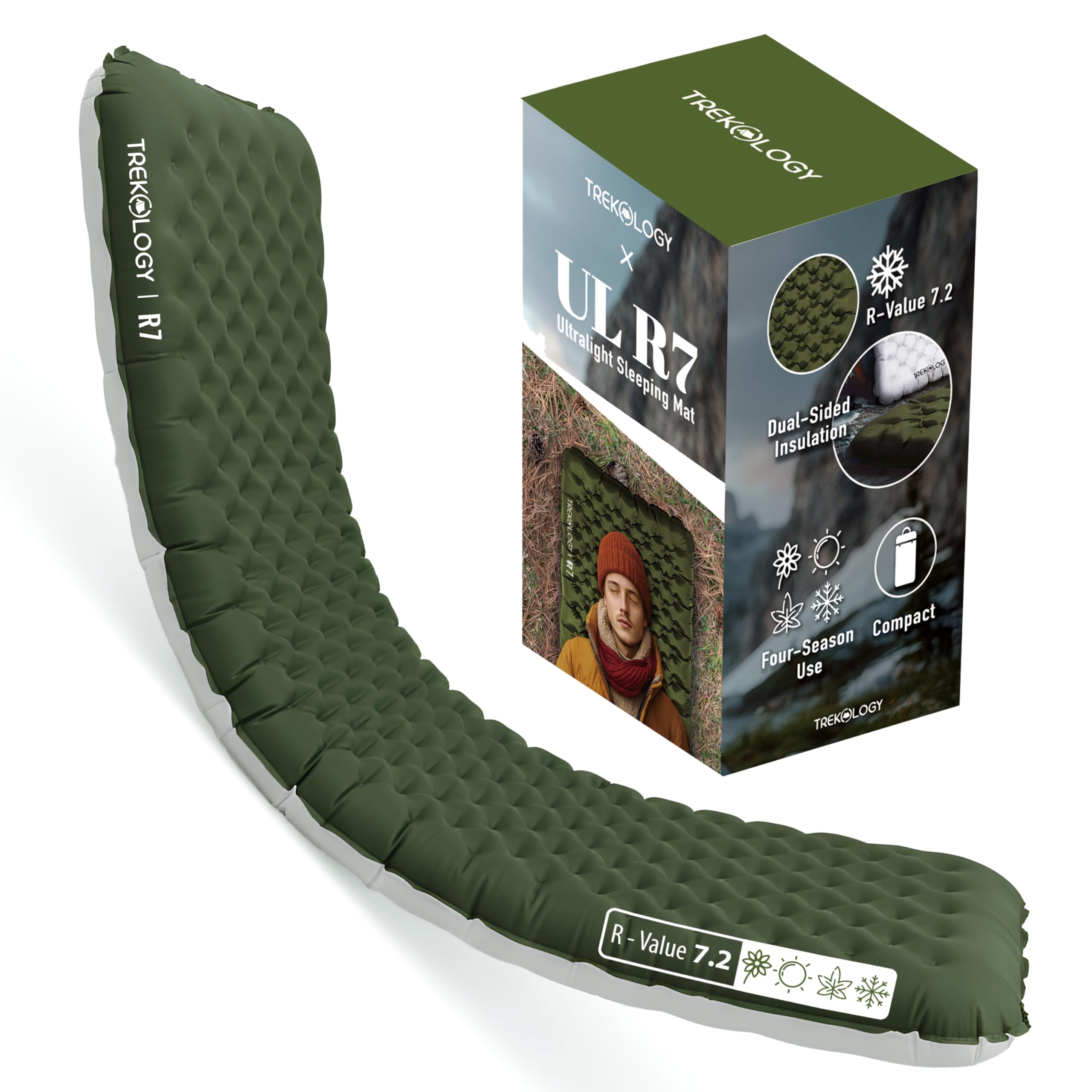
The TREKOLOGY UL R7 delivers a category-leading 7.2 R-value at a weight of just 2 pounds, making it one of the warmest compact sleeping pads available without stepping into specialist winter gear pricing. The SGS-certified insulation rating comes from advanced insulating air chambers that distribute weight evenly and prevent ground chill from seeping through.
At 4 inches thick, this pad provides ample cushioning for side sleepers and prevents bottoming out even on uneven tent floors. The 40D ripstop nylon with TPU coating feels noticeably tougher than the 30D fabric found on ultralight pads, offering better resistance against sharp rocks and sticks. The anti-leak valve design keeps air locked in and speeds up deflation.
Users consistently report staying warm in temperatures down to the low 20s Fahrenheit when paired with an appropriate sleeping bag. The pad does not include a pump sack or built-in pump — inflation requires lung power or a separate pump bag. At roughly the size of a water bottle when packed, it balances cold-weather insulation with genuine backpacking portability.
Why it’s great
- Excellent 7.2 R-value for cold-weather camping
- Durable 40D ripstop nylon with TPU coating
- Thick 4-inch profile for side sleepers
Good to know
- No inflation sack included; mouth or separate pump needed
- Slippery surface may require a pad liner for restless sleepers
4. Klymit Static V Sleeping Pad

The Klymit Static V is a lightweight, compact air pad that delivers surprising comfort for its weight. At just 13.5 ounces, it compresses down to 3 by 8 inches when deflated, making it one of the most packable options for ounce-conscious backpackers. The unique V-shaped chamber design limits air movement and heat loss, keeping the sleeper stable throughout the night.
The pad measures 50 by 23 by 2.5 inches — slightly narrower and shorter than full-size pads, which saves weight but may leave taller users with their feet on the ground. The deep welds create expansion zones that allow your sleeping bag’s insulation to fully loft beneath you, improving thermal comfort despite the pad’s basic construction and lack of added insulation materials.
Users consistently note the durable polyester fabric resists punctures well for a pad at this price point, though some longer-term reviews report air leakage after several months of frequent use. The separate inflation and deflation valves work reliably but require multiple breaths to fill. This pad is best suited for shorter adults, children, or as a backup pad for car camping trips.
Why it’s great
- Very lightweight and packs extremely small
- V-chamber design reduces air movement and heat loss
- Budget-friendly price for backpacking
Good to know
- Narrow 20-inch width may not suit wider sleepers
- Some reports of air leakage over extended use
5. NEMO Equipment Switchback Foam Sleeping Pad
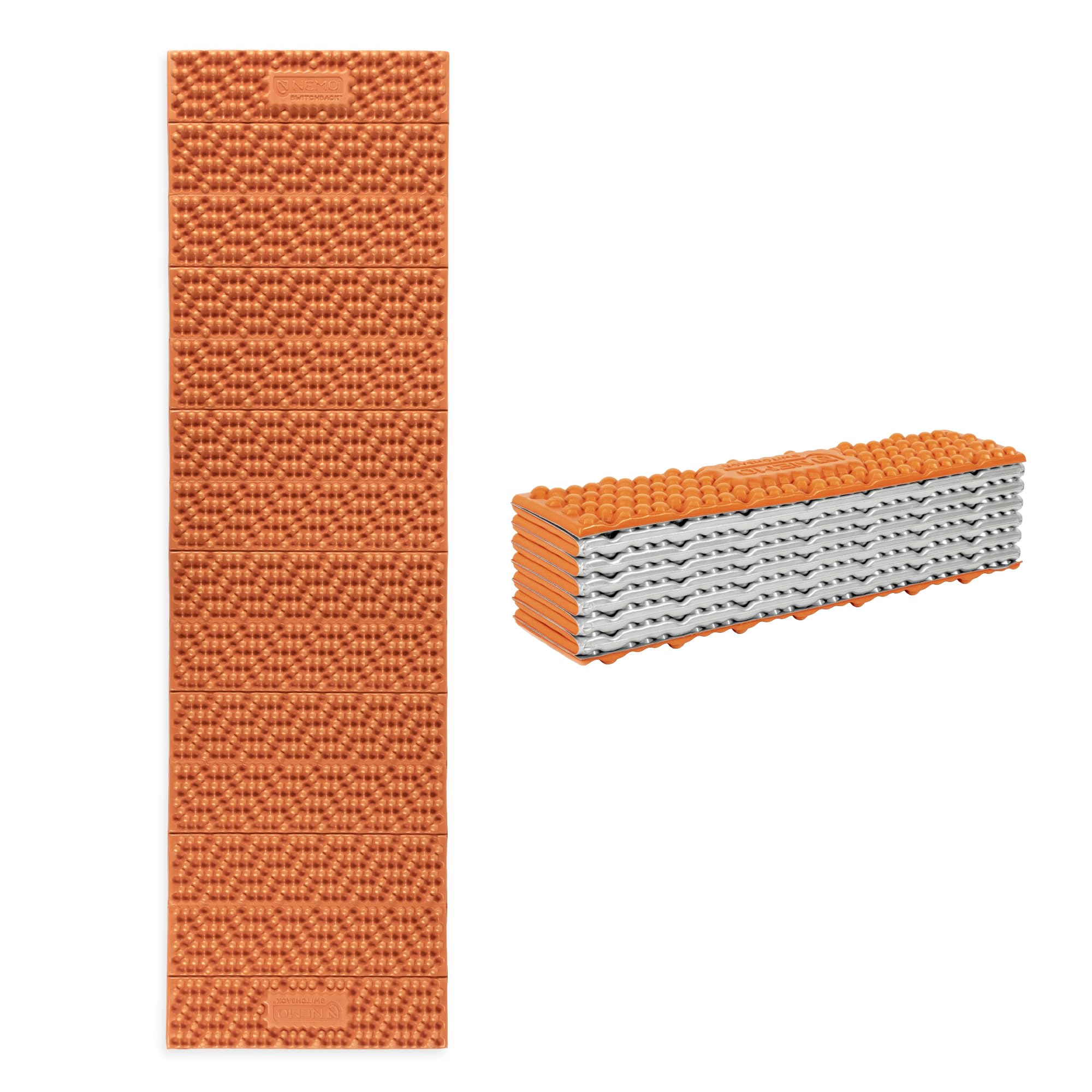
The NEMO Switchback is a closed-cell foam pad that solves the two biggest problems of inflatable pads: punctures and setup time. There is nothing to inflate, no valve to fail, and no fabric to tear — you simply unroll it and sleep. The hexagonal nesting pattern uses taller, wider nodes compared to traditional egg-crate foam pads, providing noticeably more plushness for a foam pad.
At 14 ounces, it’s nearly as light as the lightest air pads while being virtually indestructible. The dual-density Axiotomic foam offers a softer layer next to the body for comfort and a denser base layer for support. A metallized thermal reflective film on the bottom reflects heat back toward the sleeper, giving this pad an R-value of 2.0 — sufficient for warm-weather camping.
The Switchback folds into a surprisingly compact package, though it remains larger than a rolled air pad when packed. Many users pair it underneath an inflatable pad to add insulation and puncture protection. The foam also doubles as a camp seat or gear mat, adding versatility that air pads cannot match.
Why it’s great
- No inflation required, zero puncture risk
- Lightweight and folds into a compact shape
- Dual-density foam with heat-reflective layer
Good to know
- Less comfortable than thick air pads for side sleepers
- Bulkier when packed compared to ultralight air pads
- R-value only suitable for warm conditions
6. HiiPeak Sleeping Pad with Built-in Foot Pump
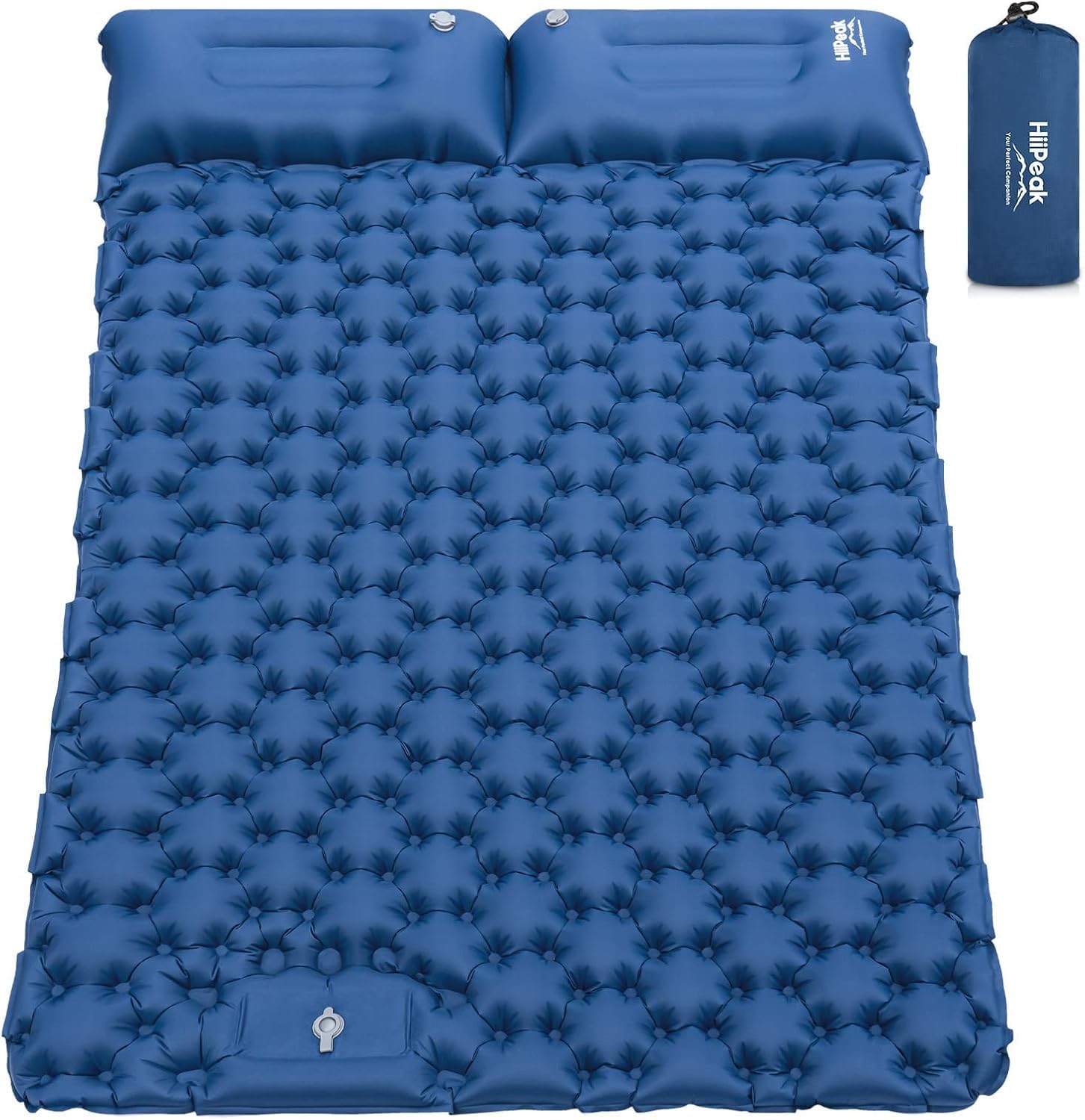
The HiiPeak Sleeping Pad solves the hassle of inflating a double-wide pad by integrating a foot pump directly into the pad’s construction. The user simply presses on the pump area with their foot, and the pad inflates in about three minutes — no mouth blowing, no extra pump sack, and no moisture inside the pad. The honeycomb-shaped air cells are designed to ergonomically support pressure points during sleep.
This pad measures 76.77 by 27.5 by 3 inches, offering generous space for two sleepers or one person who wants extra room to spread out. The 50D polyester pongee fabric with multi-layer TPU coating resists tears from rough ground and is fully waterproof. The dual-layer air release valve allows near-instant deflation by opening the deflation plug, making camp breakdown fast.
Weighing roughly 4 pounds, this pad is best suited for car camping, tent camping, or overlanding rather than backpacking. The built-in pillow is a nice touch, though many users find it too small and prefer a separate camping pillow. The pad packs down to roughly 12.2 inches, which is compact for a double-wide air mattress but larger than single-person backpacking pads.
Why it’s great
- Integrated foot pump eliminates need for separate pump
- Honeycomb air cells provide even support
- Generous double-wide dimensions for two sleepers
Good to know
- Too heavy for backpacking
- Built-in pillow is small for many users
- Foot pump requires firm, repetitive pressing
7. MLILY Memory Foam Camping Mattress
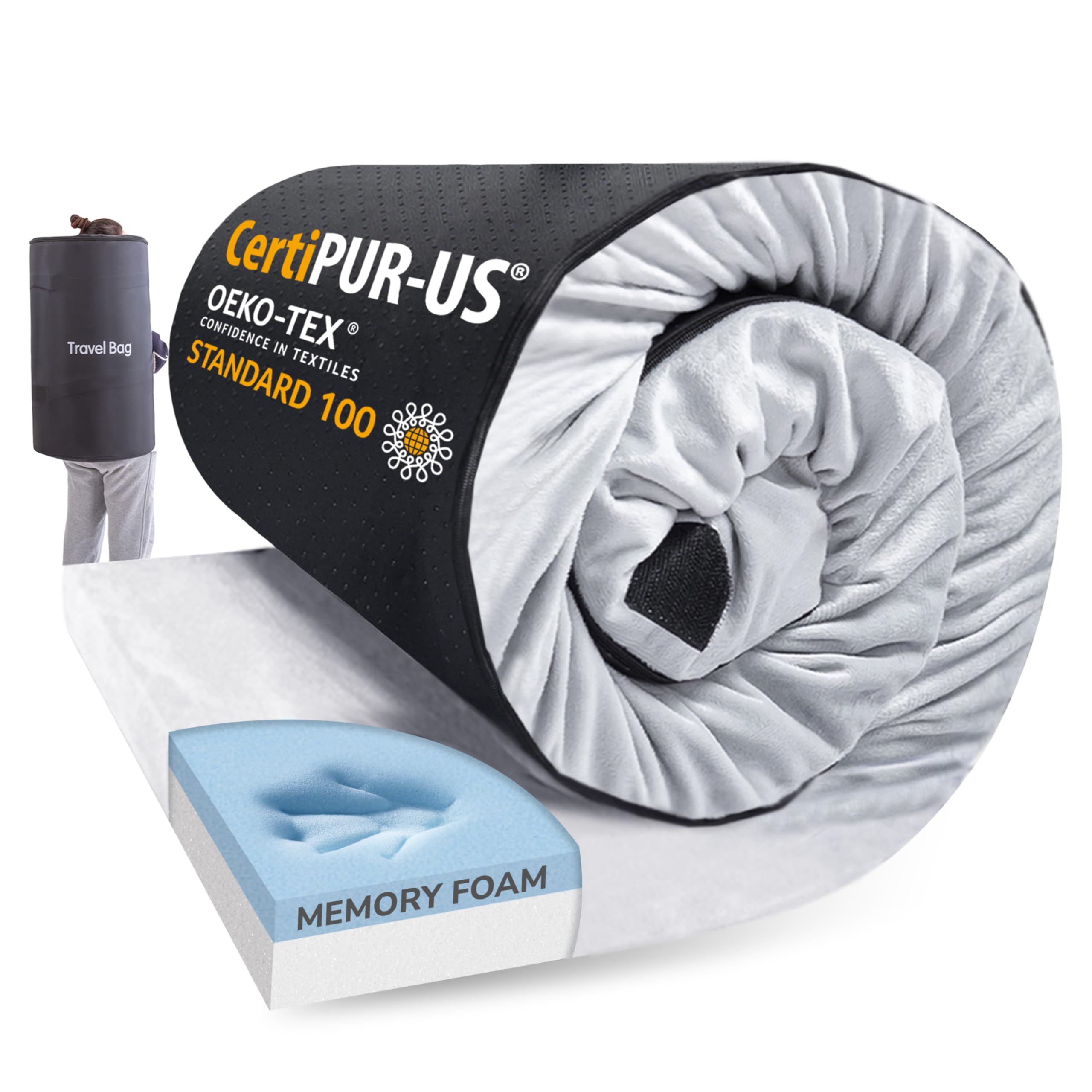
The MLILY Memory Foam Camping Mattress takes a completely different approach to compact sleeping pads by using AeroFusion memory foam rather than air. This 2.5-inch thick pad measures 72 by 24 inches — fitting most standard cots and folding camp beds perfectly. The top layer of memory foam molds to the sleeper’s curves, while the bottom Flex Support Foam layer provides stability and moisture resistance.
The bottom of the pad features a waterproof, non-slip coating that prevents sliding on grass, tent floors, or cot fabric. The top cover is made from 100% polyester with a smooth, soft texture that does not feel sticky against skin. The pad is CertiPUR-US certified, meaning the foam meets strict standards for content, emissions, and durability.
While this pad rolls up with attached straps and comes with a travel bag, the rolled size is noticeably larger and heavier than inflatable pads — it’s bulky enough that most users describe it as suitable for car camping rather than backpacking. The memory foam provides excellent pressure relief for side sleepers, and the 3-year warranty adds confidence in the build quality.
Why it’s great
- Memory foam conforms to body for pressure relief
- Waterproof and non-slip bottom works on cots or ground
- CertiPUR-US certified foam
Good to know
- Bulky when rolled; not suitable for backpacking
- No built-in insulation layer for cold ground
- Memory foam retains some heat in warm weather
FAQ
Can I use a compact sleeping pad in winter?
How do I repair a puncture in an inflatable compact sleeping pad?
What is the difference between closed-cell foam and air pads?
Final Thoughts: The Verdict
For most backpackers, the best compact sleeping pad is the Therm-a-Rest NeoAir Xlite NXT because it delivers genuine 4.5 R-value insulation at just 13 ounces while packing down smaller than any comparable air pad. If you prioritize cold-weather warmth above all else, grab the TREKOLOGY UL R7 for its class-leading 7.2 R-value at a surprising weight. And for car campers who want the integrated convenience of a built-in pump, nothing beats the HiiPeak Sleeping Pad — just leave it in the trunk and inflate in minutes at the campsite.

Mo Maruf
I created WellFizz to bridge the gap between vague wellness advice and actionable solutions. My mission is simple: to decode the research and give you practical tools you can actually use.
Beyond the data, I am a passionate traveler. I believe that stepping away from the screen to explore new environments is essential for mental clarity and physical vitality.