Our readers keep the lights on and my smoothie glass nicely filled. As an Amazon Associate, I earn from qualifying purchases.
Specs are compiled from manufacturer listings and verified buyer reviews and can change over time — please confirm the key details on the product page before buying.
Finding a truly compact camera that slides into a jeans pocket yet takes sharp, satisfying photos is harder than it sounds. Many models promise pocketability but deliver bulky bodies or grainy images. This guide cuts through the noise, comparing the key specs like optical zoom range, sensor size, and real battery life from actual buyer experiences — so you know exactly which little camera earns its carry.
I’m Mohammad Maruf — the founder and writer behind WellFizz. This guide is built by comparing the manufacturers’ published specifications and the patterns across verified customer reviews, so you get each pick’s real strengths and trade-offs instead of marketing spin.
This breakdown of the compact point and shoot camera market helps you match the right model to your real-world use — for daily carry, travel, or a first step away from phone photography.
Our Picks at a Glance

How To Choose The Best Compact Point And Shoot Camera
The right compact camera balances lens reach, sensor quality, and portability for your specific life. Here are the three factors that define the category.
Optical Zoom: Your Lens Reach
Ignore “digital zoom” — it just crops the image. The number that matters is optical zoom, measured at the lens. A 4X zoom (like the KODAK PIXPRO FZ45) is fine for group shots and everyday snaps. A 30x or 40x zoom (like the Panasonic LUMIX ZS99 or Canon PowerShot SX740 HS) lets you capture a performer on stage or a distant mountain ridge without moving. The trade-off is that cameras with longer zoom ranges often have smaller sensors, which can struggle in dimmer light.
Sensor Size and Megapixels
Sensor size has a bigger impact on photo quality than megapixel count. A larger 1.0-type sensor (found in the Sony RX100 VII) collects more light, giving you cleaner images in low-light situations like a candlelit dinner. Smaller 1/2.3-inch sensors are common in superzoom cameras and budget models. While a 20.1MP sensor (Sony) vs a 16MP sensor (Kodak) shows a 26% more gap in resolution, the real-world jump in image quality comes from the sensor’s surface area, not just the pixel count.
Battery and Power
Battery life varies wildly. Some cameras use standard AA batteries (like the KODAK PIXPRO FZ45), which you can buy anywhere, making them great for long trips without power. Most mid-range and premium models use rechargeable lithium-ion batteries. Check if the camera comes with a separate charger or relies solely on USB-C charging, which can be slower. One reviewer noted the Canon PowerShot ELPH 360 HS “battery dies quickly (15-20 min charge),” while a Kodak FZ55 user reported their battery lasts around “6-8 Hours depending on how much you use it.”
Quick Comparison
| Model | Best For | Optical Zoom | Sensor Size | Megapixels | Amazon |
|---|---|---|---|---|---|
| Sony RX100 VII★ Best Overall | Image Quality Purist | 8x (24-200mm) | 1.0-type | 20.1MP | Amazon |
| Canon PowerShot V1Best for Vloggers | Vloggers & Streamers | 3.1x (16-50mm) | 1.4-type | 22.3MP (Stills) / 18.7MP (Video) | Amazon |
| Panasonic LUMIX ZS99Travel Champion | Travel & Concert Goer | 30x (24-720mm) | 1/2.3-inch | 20.3MP | Amazon |
| Canon PowerShot SX740 HS | Superzoom on a Budget | 40x (24-960mm) | 1/2.3-inch | 20.3MP | Amazon |
| Canon PowerShot ELPH 360 HS | Pocketable Starter | 12x | 1/2.3-inch | 20.2MP | Amazon |
| Panasonic LUMIX TZ/ZS99 | Value-Minded Traveler | 30x (24-720mm) | 1/2.3-inch | 20.3MP | Amazon |
| KODAK PIXPRO FZ55 | Simple Point & Shoot | 5x | 1/2.3-inch | 16MP | Amazon |
| KODAK PIXPRO FZ45 | Budget-Friendly Starter | 4x | 1/2.3-inch | 16MP | Amazon |
In‑Depth Reviews
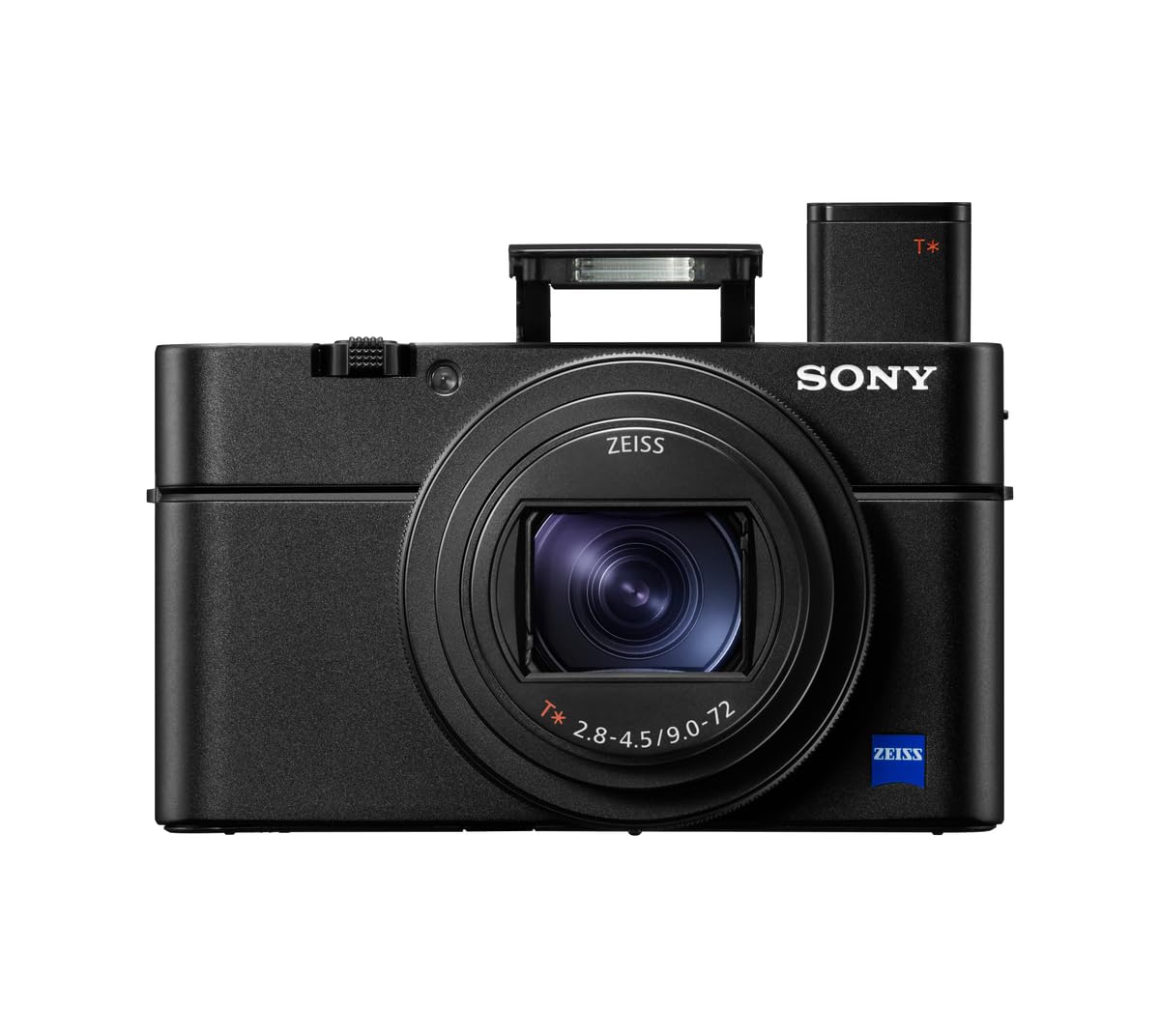
1. Sony RX100 VII Premium Compact Camera with 1.0-Type Stacked CMOS Sensor (DSCRX100M7), Black
Our pick — over 4★ from 550+ verified ratings; the strongest balance of quality and price.
The small-body specialist that still sets the image-quality benchmark for the whole category.
Photos stay clean in dim light without the grainy look that plagues smaller sensors — thanks to the 20.1MP 1.0-type stacked CMOS sensor. That larger surface area (compared to the tiny 1/2.3-inch sensors on most superzooms) collects more light. You get a Zeiss Vario Sonnar T 24-200mm F2.8-F4.5 lens, so the lens opens wider to let in more light, especially at the wide end.
Its autofocus system is a massive advantage for action shots. With 425 phase-detection autofocus points (a 47.2x gap compared to the KODAK PIXPRO FZ45’s 9 points), it tracks moving subjects like kids or pets with near-instant lock. It shoots up to 20 fps without blackout (the viewfinder never goes dark), and buyers report it “Performed well in -45°F cold,” which is a rare level of durability for a compact. The 4K video with mic input and log profile (CLog3) makes it a hybrid tool for serious vloggers, though the body is slippery and lacks weather sealing.
The catch is the price and some missing basics. There is no in-box battery charger (it charges via USB only), and it does not come with a printed manual. The grip is also very shallow, so a third-party add-on grip is almost essential.
The Image Quality Argument
- Large 1.0-type sensor gives best low-light performance in class.
- 425-point phase-detection AF is lightning-fast for tracking.
- 24-200mm F2.8-F4.5 Zeiss lens is sharp and versatile.
- 4K video with mic input and S-Log/CLog for pro video work.
The Real-World Downsides
- Slippery body with no included grip — feels precarious in hand.
- No weather sealing for use in rain or dust.
- No in-box battery charger (USB-only charging).
- Menu system is dense and takes time to learn.
Pick this for: the absolute best image quality in a pocket-sized package, especially if you shoot in low light or need reliable autofocus for moving subjects.
Look elsewhere if: you need a long optical zoom for sports or wildlife — the 200mm equivalent reach is shorter than the 720mm+ on superzoom models.
2. Canon PowerShot V1, Hybrid Camera, Built-in Ultra-Wide-Angle Zoom Lens, 4K Video, Vlogging
The content creator’s compact that trades zoom range for a big sensor and video stamina.
This is built for creators, not casual snappers. The 1.4-type sensor is even larger than the Sony RX100 VII’s 1.0-type sensor, and it delivers 22.3MP for stills and 18.7MP for video. The built-in 16-50mm F2.8-4.5 wide-angle zoom lens is perfect for vlogging — you can hold the camera at arm’s length and still have your face and the background in the frame. It has a cooling fan inside, which lets you shoot 4K video for much longer periods without the camera overheating.
Owners mention the “amazing eye AF” and that the “1.4” sensor produces sharp, clear images comparable to APS-C/full frame for everyday use.” The hybrid autofocus system with 100 points is fast and reliable for both video and stills. It records Canon Log 3 with 10-bit color depth, giving you professional-grade flexibility for color grading. Just be aware there is no in-box charger (USB-C only) and the lens tops out at a 50mm equivalent — much shorter than any superzoom.
The vlogger’s edge: The built-in cooling fan and 10-bit Log video are features not found on any other compact in this list, making this the only true hybrid for long-form content creation.
Reach for this if: you are a vlogger, live streamer, or video-first creator who needs a compact that can shoot 4K for 30+ minutes without overheating.
skip it if: you mainly take still photos of distant subjects — the 50mm max zoom is the shortest reach here.
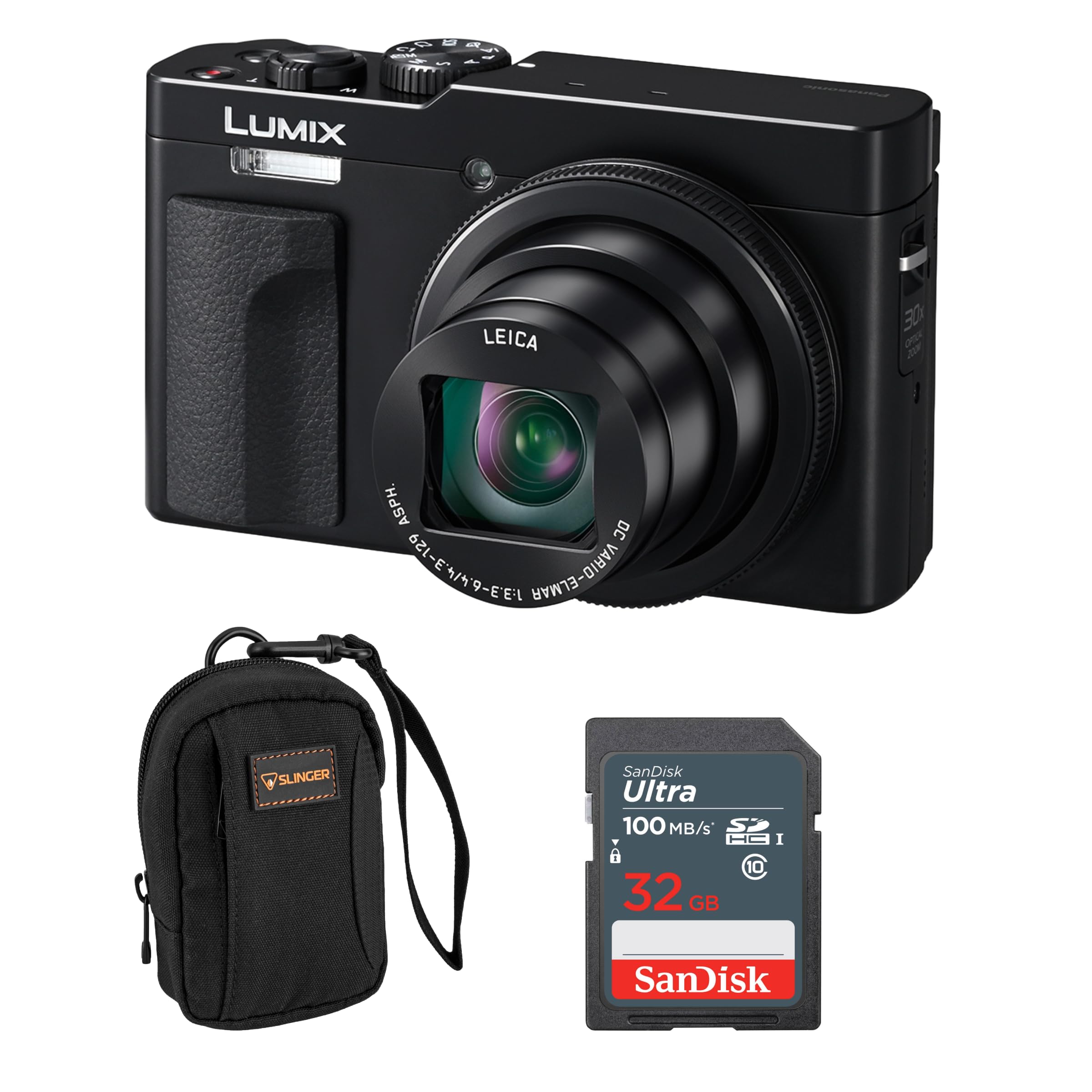
3. Panasonic LUMIX ZS99 Point and Shoot Camera, Compact Camera for Travel with 30x Zoom, DC-ZS99 + Bag+ 32GB SD Card (Black)
Packs a 30x Leica zoom into a jacket pocket — the all-in-one travel companion.
This bundle version of the ZS99 adds a 32GB SD card and a slinger camera case, so you are ready to shoot the moment it arrives. The headline spec is the 30x optical zoom 24-720mm LEICA lens, which means you can stand at the back of a concert hall or on a cruise ship deck and still fill the frame with your subject. The 1,840k-dot tiltable touchscreen lets you shoot from high or low angles, and USB-C charging makes it easy to top up from a power bank.
Customers note “it takes great pictures” and the 4K video at 30 fps with HD slow-motion at 120fps adds creative flexibility for travel clips. Bluetooth v5.0 with a dedicated Send Image button makes transferring photos to your phone simple. The camera is also capable of shooting in RAW format for more editing flexibility. But one reviewer clearly warned “don’t try to use the Bluetooth wireless feature with your phone. It’s a hassle and doesn’t work very well at all.” That is a common theme for this class — wired transfers or a card reader are often more reliable.
What Gives It the Edge
- 30x Leica optical zoom (24-720mm) covers wide landscapes to distant subjects.
- Compact body easily slips into a pocket or small bag.
- USB-C charging is convenient with any modern charger or power bank.
- Includes bag, SD card, and a 3-year warranty from the start.
The Annoyances
- Bluetooth and Wi-Fi transfer app is reportedly unreliable and difficult to pair.
- Charger not included — relies solely on USB-C charging.
- Small 1/2.3-inch sensor means lower image quality in dim light.
Best for: the traveler who wants one pocket camera that does everything from wide group shots to zooming in on landmarks without changing lenses.
Consider instead: the Sony RX100 VII if image quality is more important than zoom reach — or a bridge camera if you need more than 30x zoom.
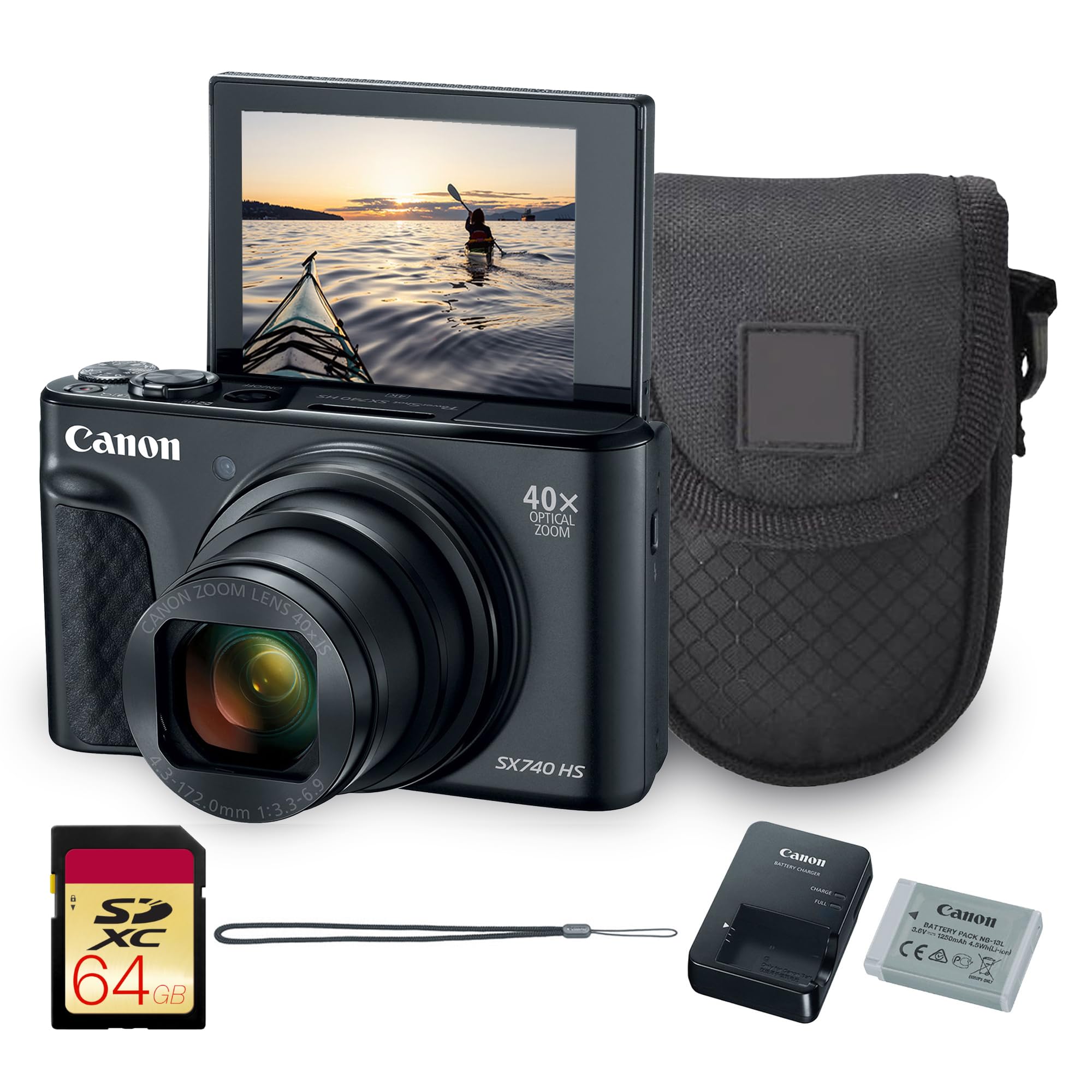
4. Canon PowerShot SX740 HS Digital Camera | 20.3MP CMOS Sensor, 40x Optical Zoom, 4K UHD Video
The longest reach at the lowest cost — 40x zoom that fits a shirt pocket.
For raw zoom-to-price ratio, nothing else here matches this Canon. The 40x optical zoom lens (24-960mm equivalent) is the longest in this roundup — you can capture a lion on a safari or a goal at a football match from hundreds of feet away. It records 4K UHD video at 30p with built-in 5-axis image stabilization to keep handheld footage steady. The 20.3MP CMOS sensor and DIGIC 8 processor deliver sharp colors and smooth autofocus for most subjects.
Reviewers point out “the quality of the pictures is phenomenal” and one reported impressive battery life lasting “a 5-day trip, heavy use, no recharge.” The flip screen makes selfies and vlogging possible. However, one buyer mentioned it is an “International product that can not be registered with Canon” in the US, meaning it may lack a US warranty depending on the seller. The small sensor also means photos at that 960mm zoom distance can look soft in anything less than perfect daylight.
The trade-off: You get incredible zoom reach, but the 1/2.3-inch sensor and F2.8-F5.6 aperture mean you must have good light to get clean, sharp images at the telephoto end.
Grab it for: outdoor daytime events like airshows, daytime concerts, or wildlife spotting where zoom reach is the top priority and budget is tight.
Pause if: you shoot indoors or at night often — you will see much better results with a larger sensor model like the Sony RX100 VII.
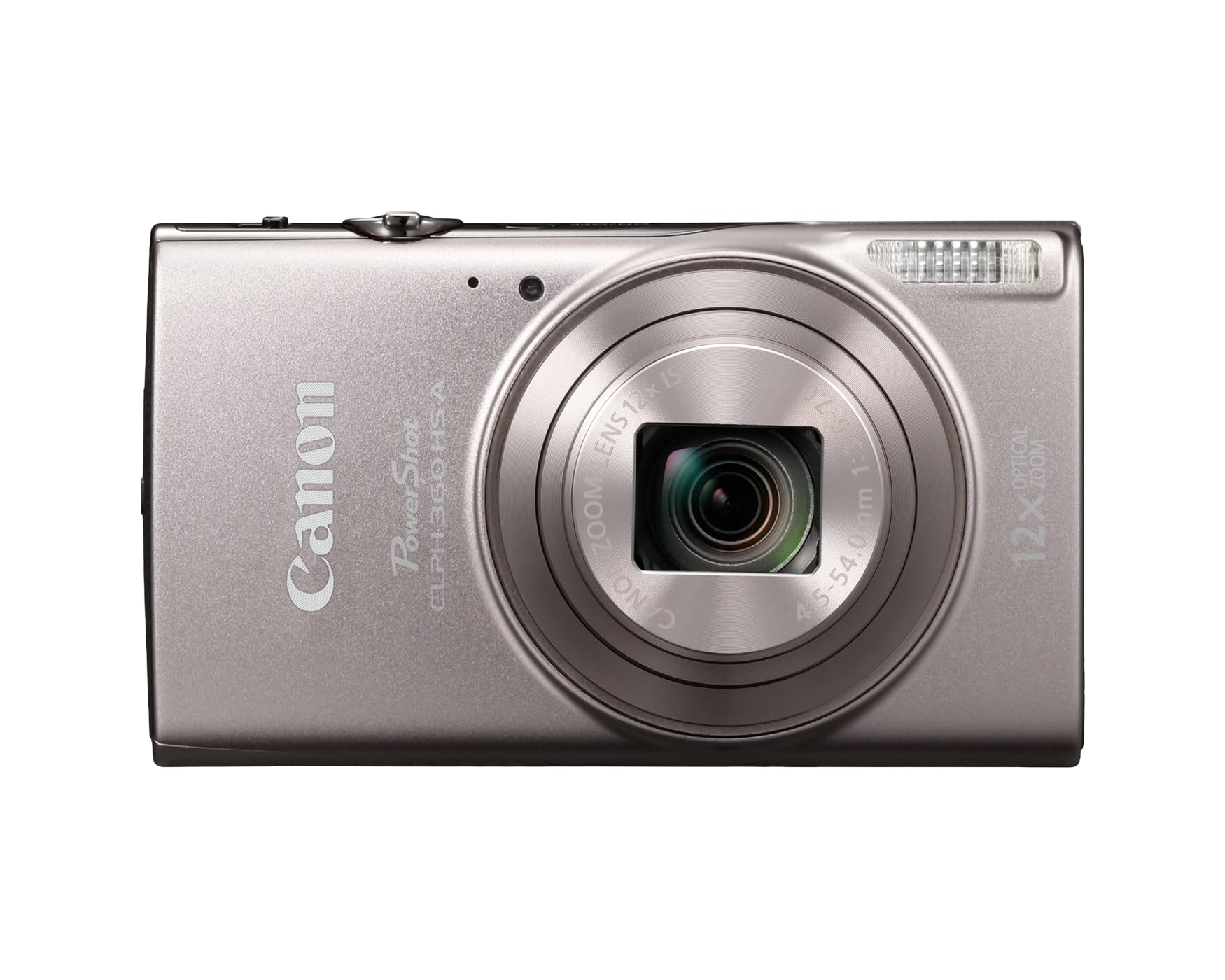
5. Canon PowerShot ELPH 360 HS A Silver
A slim, retro-styled Canon that balances zoom and size for the casual shooter.
This is the classic “baddie camera” — a compact, stylish body that prioritizes portability while giving you a real 12x optical zoom. The 20.2MP CMOS sensor paired with the DIGIC 4+ processor delivers solid daylight shots and decent performance in dimly lit rooms. It has built-in Wi-Fi and NFC, so you can send your favorite shots straight to your phone. The large 3.0-inch LCD screen makes reviewing photos easy, even from a wide angle.
The biggest issue is battery life. A reviewer says “battery dies quickly (15-20 min charge),” which points to a very short battery lifespan per charge — expect to need a spare battery for a full day out. Another reviewer loved it for concerts, saying it has “good zoom for concerts” and is “portable” but noted it “requires microSD card” (not included). The camera is lightweight and compact, but if you are not familiar with manual settings, you will need some tutorials from YouTube or TikTok to get the best quality.
What Works
- 12x optical zoom is a good middle ground for most social events.
- Incredibly slim and pocketable body.
- Built-in Wi-Fi makes sharing quick.
- 3.0-inch LCD is bright and useful for group framing.
The Catch
- Battery life is very short — a reviewer noted just “15-20 min charge” worth of life.
- Requires a microSD card (not included in box).
- Outdated DIGIC 4+ processor is slower than newer models.
Best for: the style-conscious casual shooter who wants a slim camera for daytime social events and is willing to buy a spare battery.
Think twice if: you need a camera for long days out or multi-day travel without easy recharging — the battery is simply not up to it.
6. Panasonic LUMIX TZ/ZS99 Point and Shoot Camera, Compact Camera for Travel with 30x Zoom, DC-TZ99 (Black)

The 30x Leica zoom in a standalone package for those who already have their own memory cards.
This is the non-bundle version of the ZS99 — the same camera body with the same 30x optical zoom Leica lens (24-720mm equivalent) and 4K video at 30p, but without the extra case and SD card. If you already own a memory card and prefer your own bag, this saves you some money for the same core hardware. The 1,840k-dot tiltable touchscreen and USB-C charging are unchanged, and the 20.3MP sensor with 30x zoom is still a powerful combination for travel.
Shoppers say it “features a Leica 30-1 zoom lens” and that “the camera can be used by beginner and experienced pro photographers alike.” It packs a ton of features into a body that “easily fits in my pocket.” However, one buyer returned the camera because they “found the Auto focus poor” and the “picture quality was very poor, compared to my iPhone 16 pro” — a strong reality check that the small sensor superzoom class is not competing with high-end smartphone cameras in good light. The autofocus is reported as slow by some, and the menu is less intuitive than Canon’s.
The honest read: You are buying the zoom reach — 30x is a massive advantage over any phone. But the small sensor means image quality in good light is acceptable, not great. The 30x zoom vs the KODAK’s 4x zoom shows a 7.5x gap that makes this a clear upgrade for reach.
Choose this if: your number one need is a pocketable 30x zoom for daylight travel, and you are comfortable navigating a slightly complex menu.
Choose the Sony instead if: image quality and autofocus speed matter more to you than reaching a distant subject.
7. KODAK PIXPRO FZ55 16MP Digital Point & Shoot Camera, 5X Optical Zoom, 28mm Wide Angle (Bundle)
A beginner-friendly budget pick that focuses on simplicity over features.
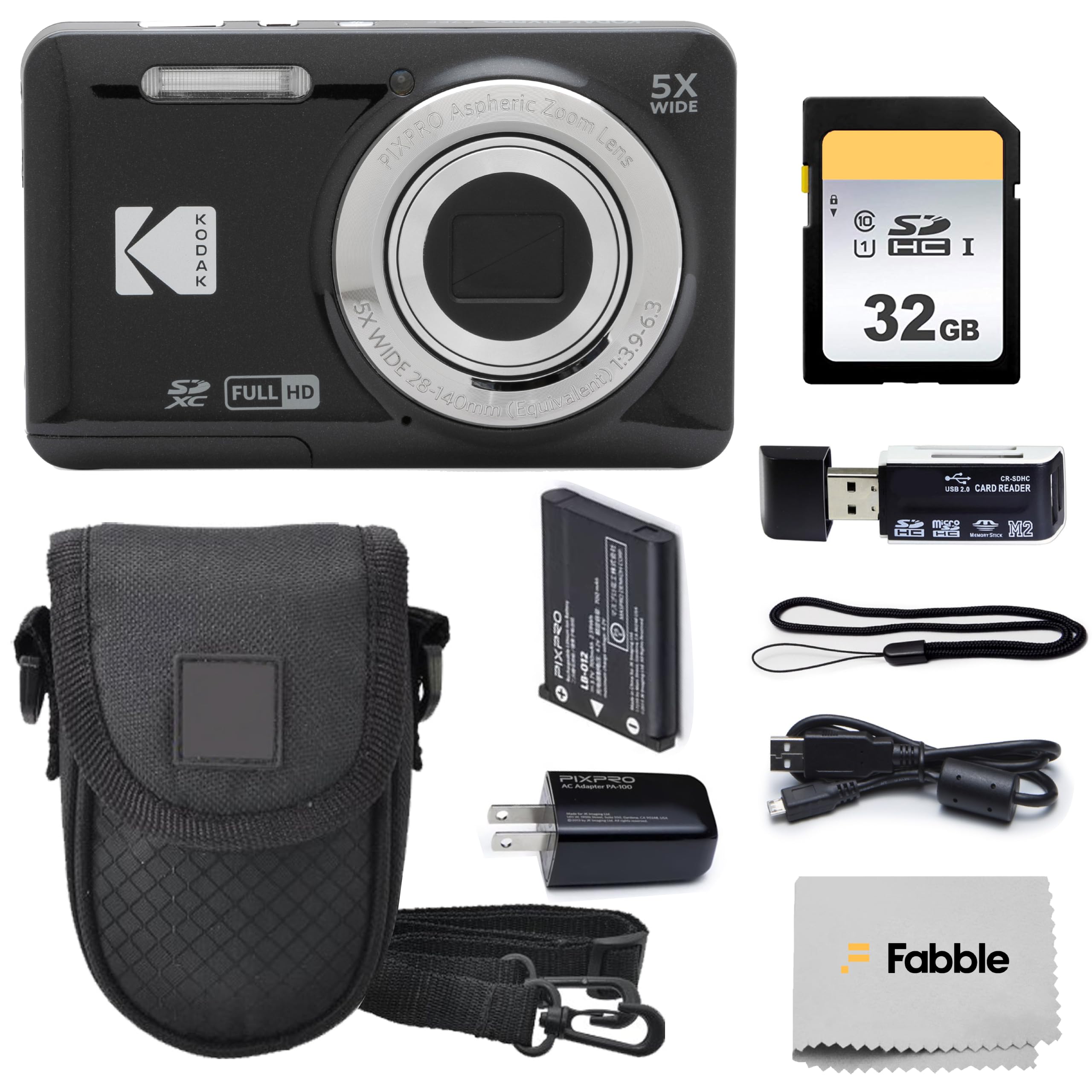
If you just want a camera that “just works” without diving into a complex menu, the FZ55 is a solid entry-level choice. Its 16MP sensor captures “vibrant” colors (according to a reviewer), and the 5x optical zoom with a 28mm wide-angle lens offers a 4% wider field of view than the FZ45’s 27mm lens — meaning you fit a tiny bit more into the frame. It also has a faster F2.8 aperture than the FZ45’s F3.5 (a 25% more gap), which lets in a bit more light for slightly better low-light shots and brighter flash photos. The 2.7-inch LCD screen is small but functional for framing and review.
One owner reported the “battery last around 6-8 Hours depending on how much you use it” — a solid battery life for a compact. The camera uses a rechargeable lithium-ion battery (not included AAs), so you need to plan for charging. Buyers report it is “very easy to use” and that “the quality of the photos are clean, clear when taken off of the camera and uploaded on a PC.” The bundle includes a 32GB SD card, a protective case, and a card reader, which is excellent value for a first-time buyer.
What Stands Out
- Faster F2.8 aperture helps in dimmer conditions.
- Very user-friendly menus and controls.
- Bundle includes case, card, and reader — ready out of box.
- Battery life reported around 6-8 hours of intermittent use.
The Trade-Offs
- 5x zoom is limited for sports or wildlife.
- 16MP sensor is low resolution for large prints.
- Small hands are fine, but large hands may find it uncomfortable.
Best for: the absolute beginner, a child, or anyone who wants the simplest possible dedicated camera with good daytime colors.
Consider the Sony if: you are looking for image quality that matches or exceeds a smartphone — this Kodak is more about the experience of using a camera than beating a phone’s sensor.
8. KODAK PIXPRO FZ45 16MP Digital Camera with 4X Optical Zoom 27mm Wide Angle and 2.7″ LCD Screen Bundle
The AA-battery champion for the budget shopper who wants the whole kit.
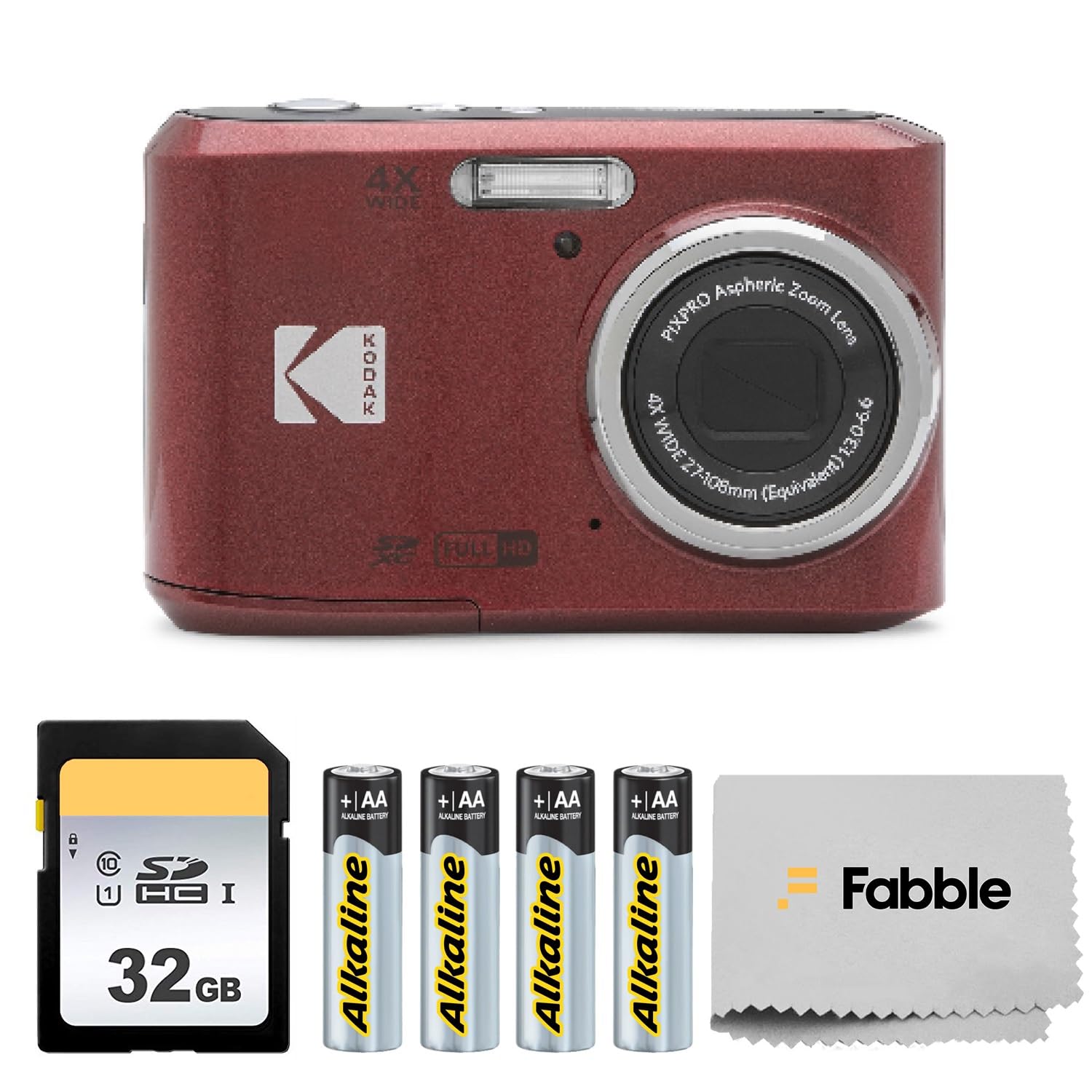
This is the most affordable entry point in the list, and it leans on a unique advantage: AA batteries. The 4x optical zoom and 16MP sensor produce “sharp daylight photos,” as one buyer put it. The 27mm wide-angle lens is slightly wider than the FZ55’s 28mm, meaning you actually get a touch more of the scene in your frame, though the lens is also slower at f3.5. The bundle is generous: AA batteries (4 pack), a 32GB SD memory card, a wrist strap, and a lens cleaning cloth are all included.
The major advantage of AA batteries is availability — you can grab fresh batteries at any convenience store or gas station, making this the ultimate camera for long backpacking trips where USB power is scarce. The 2.7-inch LCD is adequate for framing, and the 1080p Full HD video recording is a nice bonus at this price. However, the autofocus uses only 9 points (contrast detection), making it slow to lock focus compared to any other camera on this list. It also struggles significantly in low light. The build is all plastic and feels less substantial than the Canon or Panasonic options.
Why Buy It
- AA batteries are replaceable anywhere — no recharging needed.
- Very budget-friendly with a generous starter bundle.
- Simple controls perfect for kids or elderly users.
- Lightweight and genuinely pocketable.
The Hard Limits
- 4x zoom and f3.5 aperture limit use to well-lit scenes.
- 9-point autofocus is slow and prone to hunting.
- No viewfinder, no Wi-Fi — a very basic experience.
Best for: the absolute lowest-cost entry into digital photography, especially for kids or as a disposable-feeling travel camera where battery access is tough.
pass on it if: you are looking for any sort of zoom range, fast autofocus, or better low-light performance — the FZ55 is a meaningful upgrade for only a small step up in price.
Understanding the Specs
Optical Zoom Range
This is the lens’s actual physical magnification power. An 8x zoom (like the Sony RX100 VII) means the lens can make a subject appear eight times larger than its widest angle. A 40x zoom (Canon SX740 HS) brings distant subjects — like a performer on stage — into close view. Ignore “digital zoom,” which is just software cropping that degrades quality.
Sensor Size and Aperture
The sensor is the part of the camera that captures light. A larger sensor (1.0-type and above) collects more light, leading to cleaner, less grainy photos in dim rooms or at dusk. Aperture (like F2.8) measures how wide the lens opens. A lower number means the lens lets in more light, which helps in low light and creates a softer background blur.
FAQ
What is the difference between optical zoom and digital zoom?
Will a compact point and shoot take better photos than my smartphone?
How important is image stabilization in a compact camera?
What is a 1.0-type sensor and why does it matter?
Do I need a 4K video camera on my compact point and shoot?
Can I use a compact point and shoot for professional photography?
What is the best compact point and shoot camera for concerts?
How long do compact camera batteries typically last?
What is the difference between a point and shoot and a bridge camera?
Are compact cameras waterproof?
Final Thoughts: The Verdict
For the majority of shoppers, the compact point and shoot camera winner is the Sony RX100 VII because it delivers a 20.1MP 1.0-type sensor for superior image quality in a truly pocketable body. If you want a long reach for travel and concerts, grab the Panasonic LUMIX ZS99. And for a simple, budget-friendly starter with AA batteries, the standout is the KODAK PIXPRO FZ45.
How We Picked
We do not accept paid placement. Every pick is matched to a real buyer and a real use-case; we do not hands-on test units.
Sources & Methodology
Specifications: manufacturer listings and product documentation. Review insights: verified customer reviews, as of July 2026. Pricing: not shown on this page (it changes often); check the current price via the retailer link.
As an Amazon Associate, WellFizz earns from qualifying purchases. This does not affect which products we feature.
Related Guides

Mo Maruf
I created WellFizz to bridge the gap between vague wellness advice and actionable solutions. My mission is simple: to decode the research and give you practical tools you can actually use.
Beyond the data, I am a passionate traveler. I believe that stepping away from the screen to explore new environments is essential for mental clarity and physical vitality.