Our readers keep the lights on and my smoothie glass nicely filled. As an Amazon Associate, I earn from qualifying purchases.
Specs are compiled from manufacturer listings and verified buyer reviews and can change over time — please confirm the key details on the product page before buying.
A compact interchangeable lens camera (CILC) promises pro-grade photos in a body that actually fits in a coat pocket, but the real trick is picking one that doesn’t compromise on autofocus speed, stabilization, or video quality just to save an inch. This guide breaks down ten of the best current models, pointing out exactly where each one truly shines and where it stumbles, so you can match the right camera to the way you actually shoot.
I’m Mohammad Maruf — the founder and writer behind WellFizz. This guide is built by comparing the manufacturers’ published specifications and the patterns across verified customer reviews, so you get each pick’s real strengths and trade-offs instead of marketing spin.
Whether you shoot stills, vlog, or prefer classic controls, this guide matches a camera to your bag and budget. These are the best compact interchangeable lens camera models money can buy right now, reviewed with the hard specs that actually matter.
Our Picks at a Glance

How To Choose The Best Compact Interchangeable Lens Camera
Choosing a compact camera depends more on autofocus, stabilization, and video features than on megapixels. A camera that overheats in 20 minutes fails vloggers; a poor grip frustrates stills photographers.
Sensor Size – APS-C vs. Micro Four Thirds
APS-C sensors (found in Sony, Nikon, Canon, and Fujifilm models) are larger, giving you better low-light performance and shallower depth-of-field for that blurred-background look. Micro Four Thirds sensors (Panasonic and OM SYSTEM) are smaller, which allows the camera body and lenses to be genuinely more compact, but they let in less light and show more noise in dim conditions.
Autofocus – Points, Types, and Tracking
Phase-detection autofocus (PDAF) is faster and more reliable for tracking moving subjects than contrast-detection alone. The number of autofocus points tells you how much of the frame the camera can cover — Sony’s 425 points, for example, covers 84% of the sensor, while 49 points, as seen on some Panasonic models, is more limited and can struggle to lock onto subjects near the edge of the frame.
Image Stabilization – IBIS vs. Lens-Based
In-body image stabilization (IBIS) moves the sensor itself to counteract shaky hands, and it works with any lens you mount. Lens-based stabilization (OIS) only works with a stabilized lens. For a compact camera, IBIS is a huge advantage because you can use tiny, unstabilized prime lenses and still get sharp hand-held shots at slow shutter speeds.
Quick Comparison
| Model | Best For | Sensor | Autofocus Points | IBIS | Amazon |
|---|---|---|---|---|---|
| Sony Alpha ZV-E10★ Best Overall | Vlogging & Streaming | APS-C 24.2MP | 425 | No | Amazon |
| Sony Alpha a6400Action Ready | Fast Action & Wildlife | APS-C 24.2MP | 425 | No | Amazon |
| FUJIFILM X-E5Premium Pick | Style & High-Res Stills | APS-C 40.2MP | 425 | Yes (6-7 stops) | Amazon |
| Nikon Z50 II | Versatile Kit & Sharing | APS-C 20.9MP | 231 | No | Amazon |
| Nikon Z 30 | Social & Streamers | APS-C 20.9MP | 209 | No | Amazon |
| Canon EOS M200 | Entry-Level & Selfies | APS-C 24.1MP | 143 | No | Amazon |
| OM SYSTEM E-M10 IV | Portability & Stabilization | MFT 20MP | 121 | Yes (4.5 stops) | Amazon |
| FUJIFILM X-T30 III | Film Simulations & Fun | APS-C 26.1MP | Hybrid (Phase+Contrast) | No | Amazon |
| Panasonic LUMIX G85 | Weather-Sealed Video | MFT 16MP | 49 | Yes (Dual I.S.) | Amazon |
| Panasonic LUMIX G100 | Audio-First Vlogging | MFT 20MP | 49 | Yes (Hybrid I.S.) | Amazon |
In‑Depth Reviews
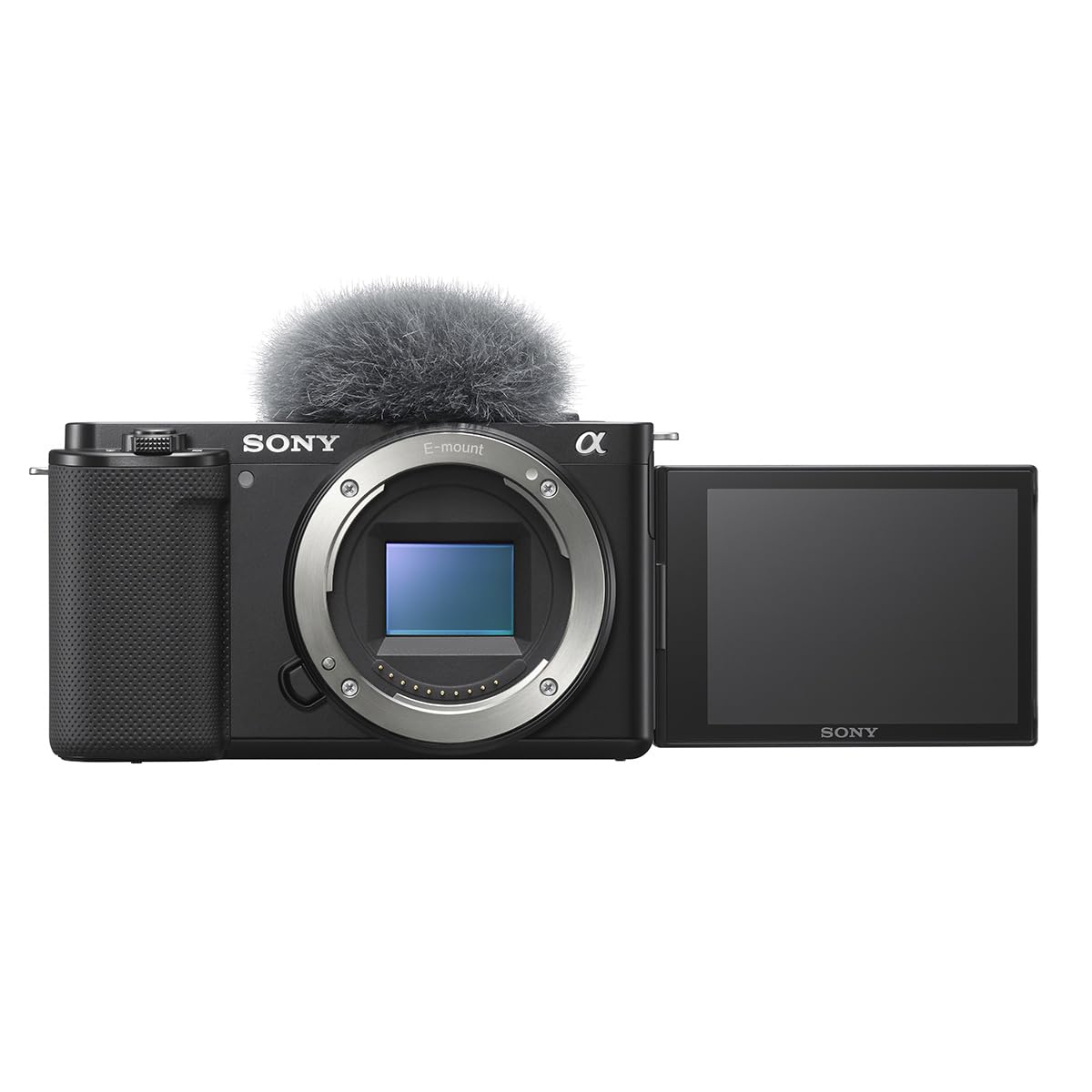
1. Sony Alpha ZV-E10
Our pick — over 4.5★ from 800+ verified ratings; the strongest balance of quality and price.
The vlogging-focused Sony that packs a huge APS-C sensor into a tiny body.
The ZV-E10 is built around a 24.2MP APS-C Exmor CMOS sensor and a BIONZ X processor, which is the same engine that drives Sony’s more expensive stills cameras. The 4K video here is oversampled from 6K using a full pixel readout without pixel binning, which means your footage retains sharp detail and avoids the soft, mushy look you get from cheaper binning methods.
For vloggers, the Product Showcase Setting is a clever touch — it smoothly pulls focus from your face to an object you hold up, so you don’t have to manually tap the screen. The Background Defocus button toggles a blurred background effect on and off instantly, which is far faster than adjusting aperture in the menu. The real speed advantage becomes clear when you compare its autofocus system to a budget competitor: the ZV-E10 packs 425 autofocus points, a massive 8.7x gap over the 49 points found on the Panasonic G100, meaning it locks onto a moving face or pet across nearly the entire frame rather than just the center.
There are caveats you need to know. Buyers report that the camera “overheats easily; battery lasts ~25 min in 4K,” so if you need to shoot long interviews or events in 4K, this is not your camera. There is no in-body image stabilization (IBIS), so you will need a stabilized lens or a gimbal for smooth walking shots, and reviewers also note a “severe rolling shutter” that makes quick panning shots look wobbly.
Why it stands out
- 425 autofocus points cover most of the frame for reliable eye-tracking.
- 4K video oversampled from 6K gives noticeably sharper files than standard 4K.
- Product Showcase and Background Defocus buttons are time-savers for solo creators.
What to watch for
- No IBIS means shaky handheld footage without a stabilized lens.
- Overheats and battery drains in ~25 minutes of 4K recording.
- Severe rolling shutter makes fast pans look distorted.
Your best bet if: You are a vlogger or streamer who shoots mostly indoors in short takes and values face-tracking autofocus and instant background blur.
The real limit: The tiny LCD and lack of a viewfinder mean you will likely need an external monitor for critical focus, and the overheating issue rules out long 4K shoots.
2. Sony Alpha a6400
A speed demon for capturing fast-moving kids, pets, and sports.
The a6400 delivers a claimed world’s-fastest 0.02-second autofocus acquisition, and it backs that up with 425 phase-detection points and 425 contrast-detection points that cover 84% of the sensor area. That coverage means a running dog stays locked in focus even when it drifts toward the edge of the frame, and the 11 fps continuous shooting at full 24.2MP resolution gives you plenty of frames to pick the perfect expression from a burst.
For video shooters, the camera includes built-in time-lapse and slow/quick motion modes so you don’t need to spend hours editing in post. The tiltable LCD flips up 180 degrees for vlogging, which is useful, but unlike the ZV-E10, this camera also has a built-in flash, making it more versatile indoors without extra gear. Compared to the ZV-E10, the a6400 trades the product-showcase gimmick for a viewfinder, making it a better hybrid choice for someone who shoots both stills and video in equal measure.
That speed comes with a complex interface — one reviewer notes it has “a million features, almost too many” — and the touchscreen is essentially useless for anything but setting the focus point. Buyers also report “terrible rolling shutter in 4K” and note the absence of a headphone jack makes audio monitoring impossible during recording.
Who this fits: The a6400 is for the user who needs blazing-fast autofocus and a high burst rate for sports or wildlife, and who is comfortable spending time learning a deep menu system.
One honest drawback: The rolling shutter in 4K is pronounced, so avoid fast pans, and the poor touchscreen implementation means you will mostly use physical buttons.
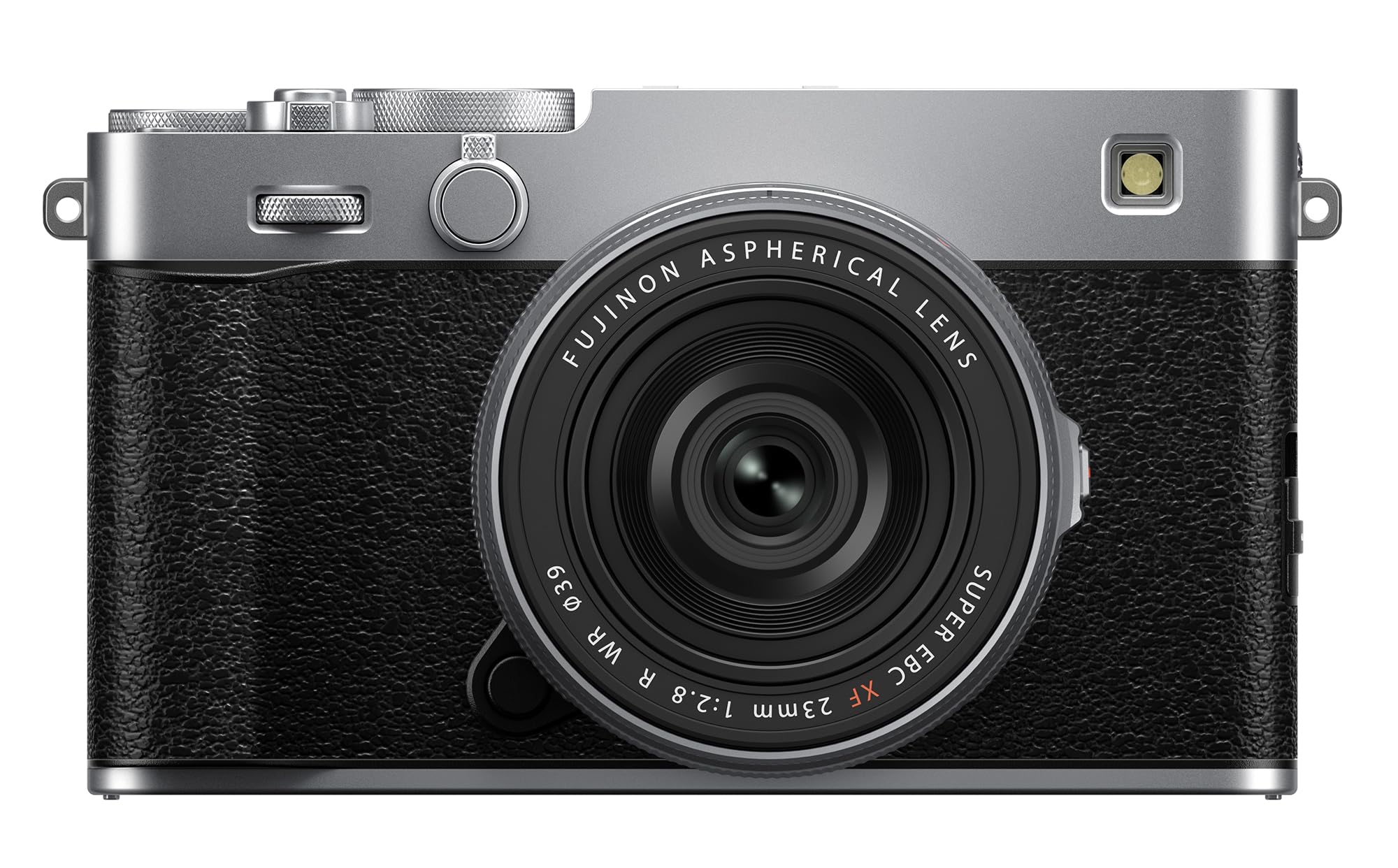
3. FUJIFILM X-E5
A rangefinder-style body with a 40.2MP sensor that rivals full-frame resolution.
The X-E5 is for the photographer who cares about the shooting experience as much as the final image. It packs a 40.2-megapixel X-Trans 5 HR sensor — the same one found in the X-T5 — which is 21% more resolution than the 24.2MP sensors in typical APS-C cameras like the Sony ZV-E10, giving you enormous cropping flexibility without losing detail. The in-body image stabilization provides up to seven stops of benefit at the center of the frame and six stops at the edges, which means you can hand-hold at shutter speeds that would normally be impossible without a tripod.
Fujifilm’s signature Film Simulations are front and center here, with a dedicated dial under the top plate that lets you switch between looks like Classic Chrome or Provia without diving into menus. The body is aluminum-topped and rangefinder-shaped, echoing the feel of vintage film cameras, and it is compatible with over 40 X Mount lenses. Reviewers call it “a joy to use for urban and street photos” and emphasize that it delivers “the same 40MP XTrans imager, the IBIS, and the modes including automatic in-camera HDR” as the much larger X-T5.
The trade-off is that this camera is not weather-sealed, so you should not take it out in a drizzle without a rain cover, and the battery is not the biggest, which means you will want a spare for a full day of shooting. The Film Simulation dial has drawn some criticism — one reviewer finds it “silly and worthless” and re-mapped the front wheel to ISO instead — so the dial’s usefulness depends on how much you value quick film-look switching.
Strengths
- 40.2MP sensor offers massive cropping headroom and excellent detail.
- IBIS rated at up to 7 stops provides steady hand-held shots in low light.
- Rangefinder styling is compact, beautiful, and intuitive for street photographers.
Drawbacks
- Not weather-sealed, so limited in rain or dust.
- Smaller battery means you need a spare for all-day use.
- The Film Simulation dial is controversial and can feel gimmicky to some.
Reach for this if: You want the highest resolution in a truly pocketable body and you love Fujifilm’s film colors straight out of camera.
Look elsewhere if: You shoot in harsh weather or need maximum battery life without carrying spares.
4. Nikon Z50 II

Two sharp kit lenses and 31 Picture Controls for instant looks.
The Z50 II comes as a kit with two NIKKOR Z DX lenses — a 16-50mm f/3.5-6.3 VR and a 50-250mm f/4.5-6.3 VR — which together cover everything from wide-angle landscapes to medium telephoto portraits, so you do not need to buy extra glass for months. The 20.9-megapixel DX sensor (APS-C size) is several times larger than a typical smartphone sensor, giving you natural shallow depth-of-field and superior low-light performance right out of the gate.
A standout feature is the 31 built-in Picture Control presets, accessible via a dedicated button. You can cycle through looks like “Vivid,” “Monochrome,” and “Flat” in real-time as you shoot, and you can download bespoke presets from the Nikon Imaging Cloud. The autofocus system uses 231 points and can automatically detect and track people, dogs, cats, birds, and vehicles, with dedicated modes for birds and airplanes that boost accuracy. Owners mention “autofocus is fast and very good” and that “the kit lenses are sharp.”
The camera records 4K UHD at 60p and offers in-camera 120p slow-motion in Full HD, which is strong for a camera in this price tier. The built-in flash is handy for indoor snapshots, and the SnapBridge app transfers photos to your phone in seconds. Just note there is no IBIS here — you rely on the lens-based VR for stabilization, which works well with the kit lenses but leaves unstabilized primes less steady.
Strongest selling point: The two-lens kit is genuinely useful, covering a real 24-375mm equivalent zoom range, and the Picture Control button makes it easy to get a stylized look without editing.
Honest limitation: Without IBIS, you need stabilized lenses for smooth video, and the 20.9MP sensor, while excellent, is 21% lower resolution than the Sony ZV-E10’s 24.2MP sensor, limiting extreme crops.
5. Nikon Z 30

Nikon’s answer to the vlogging compact with unlimited recording and USB-C power.
The Z 30 is built specifically for creators who stream and record long-form content. Unlike the ZV-E10, which overheats after about 25 minutes in 4K, the Z 30 offers “unlimited video run time” with no overheating, according to buyers, which is a standout for podcasters, streamers, and educators who record hour-long sessions. It plugs into your computer over USB-C for plug-and-play webcam operation at Full HD 60p, and it can run indefinitely on constant power over the same USB-C cable.
Inside is the same 20.9MP DX sensor found in the Z50 II, paired with a 209-point hybrid autofocus system that supports eye-tracking for people and pets. The 16-50mm kit lens is wide enough for handheld vlogging, and the flip-out touchscreen lets you see yourself while recording. Customers note the camera produces “sharp, vibrant image quality” and is “lightweight” with “intuitive controls.”
The major omission is an electronic viewfinder — you frame every shot using the rear screen, which can be a struggle in bright sunlight. Also, the Z 30 relies on electronic VR rather than in-body stabilization, so walking footage can look jittery without a gimbal.
Key advantages
- Unlimited 4K recording with no overheating — rare in this class.
- USB-C power delivery for non-stop streaming.
- Eye-detection autofocus for people and pets locks on reliably.
Key compromises
- No viewfinder means poor visibility in bright outdoor light.
- Electronic VR only — expect shaky hand-held walking shots.
Your best match: A streamer, podcaster, or educator who records long sessions in a studio setting and needs a camera that will not shut down mid-stream.
The main catch: You cannot use it as a run-and-gun camera without a viewfinder, and the lack of mechanical stabilization makes gimbal-use almost mandatory for smooth b-roll.
6. Canon EOS M200

A beginner-friendly Canon that delivers great image quality without overwhelming menus.
The EOS M200 is designed for someone moving up from a smartphone for the first time. It packs a 24.1-megapixel APS-C CMOS sensor and Canon’s Dual Pixel CMOS AF with eye detection, which gives you smooth, reliable focus in both photos and video without having to adjust any settings. The 3.0-inch touch panel LCD tilts 180 degrees for selfies, and the camera automatically switches to selfie mode when you flip the screen down, which is a thoughtful touch for TikTok or YouTube beginners.
The included EF-M 15-45mm f/3.5-6.3 IS STM lens covers a 35mm equivalent range of 24-72mm, which handles everything from group shots to street photography. Reviewers point out the camera is “compact, sharp with 22mm f/2 lens, good AF with face/eye tracking,” and that there are “no overheating issues with 20-30 min continuous recording.” The built-in Wi-Fi and Bluetooth allow automatic image transfer to your phone, so sharing on social media is easy.
The EF-M lens mount is a dead end — Canon has essentially abandoned the M-series for its newer RF-S mount, so the lens selection is small and there is no upgrade path without switching systems. Reviewers also note the “battery life lacking” and that the camera “enters sleep mode after 30 min during livestreaming/Zoom,” which can interrupt long calls.
Perfect for a beginner: If you want the look of a real APS-C camera with interchangeable lenses but have zero interest in learning manual controls today, the M200’s Auto mode and Dual Pixel AF deliver great results with zero fuss.
The real problem: Canon has discontinued development of the EF-M system, so if you want to buy more lenses down the road, you will have to adapt lenses or switch to a different mount — a non-starter for long-term investment.
7. OM SYSTEM Olympus E-M10 Mark IV

The smallest Micro Four Thirds body with 4.5-stop IBIS for steady handheld shots.
The E-M10 Mark IV uses a 20MP Live MOS sensor inside a Micro Four Thirds body that is genuinely small enough to slip into a jacket pocket when paired with the 14-42mm EZ pancake lens. The headline feature is the in-body 5-Axis Image Stabilization, which is rated at 4.5 shutter speed steps of compensation — practically, that means you can take sharp photos at 1/4 second or slower without a tripod, a huge advantage for shooting in museums, at dusk, or inside restaurants. Shoppers say “quick autofocus, 1-second handheld stabilization,” confirming it delivers on that promise.
The flip-down monitor and dedicated selfie mode make it one of the few compact cameras designed for self-portraits, and the 16 Art Filters, including the new Instant Film filter, let you apply creative looks in-camera. The camera is lightweight and well-made, with one reviewer calling it “the best entry-level mirrorless interchangeable lens camera for the beginner in 2025” and noting “it’s Taylor Swift’s favorite camera.”
The Micro Four Thirds sensor is smaller than APS-C, so you will see more noise in very dark scenes. The wifi transfer via the OI Share app is slow, and the lack of a USB-C port is annoying if you already use a modern charger for everything else.
What works
- 4.5-stop IBIS makes it possible to shoot in very low light without a tripod.
- The body is genuinely compact — it fits in a jacket pocket with a pancake lens.
- Selfie mode with flip-down screen and 16 Art Filters is fun for social content.
What doesn’t
- Smaller Micro Four Thirds sensor shows more noise than APS-C in dim light.
- Slow wifi transfer and no USB-C charging make cable management a chore.
- Burst rate is slower than a typical DSLR, limiting action shots.
Best for: The traveler who wants the smallest possible interchangeable-lens camera with stabilization that keeps photos sharp without a tripod.
Not for: Anyone who shoots in very dim venues without flash, or who needs fast wifi transfers for on-the-go publishing.
8. FUJIFILM X-T30 III
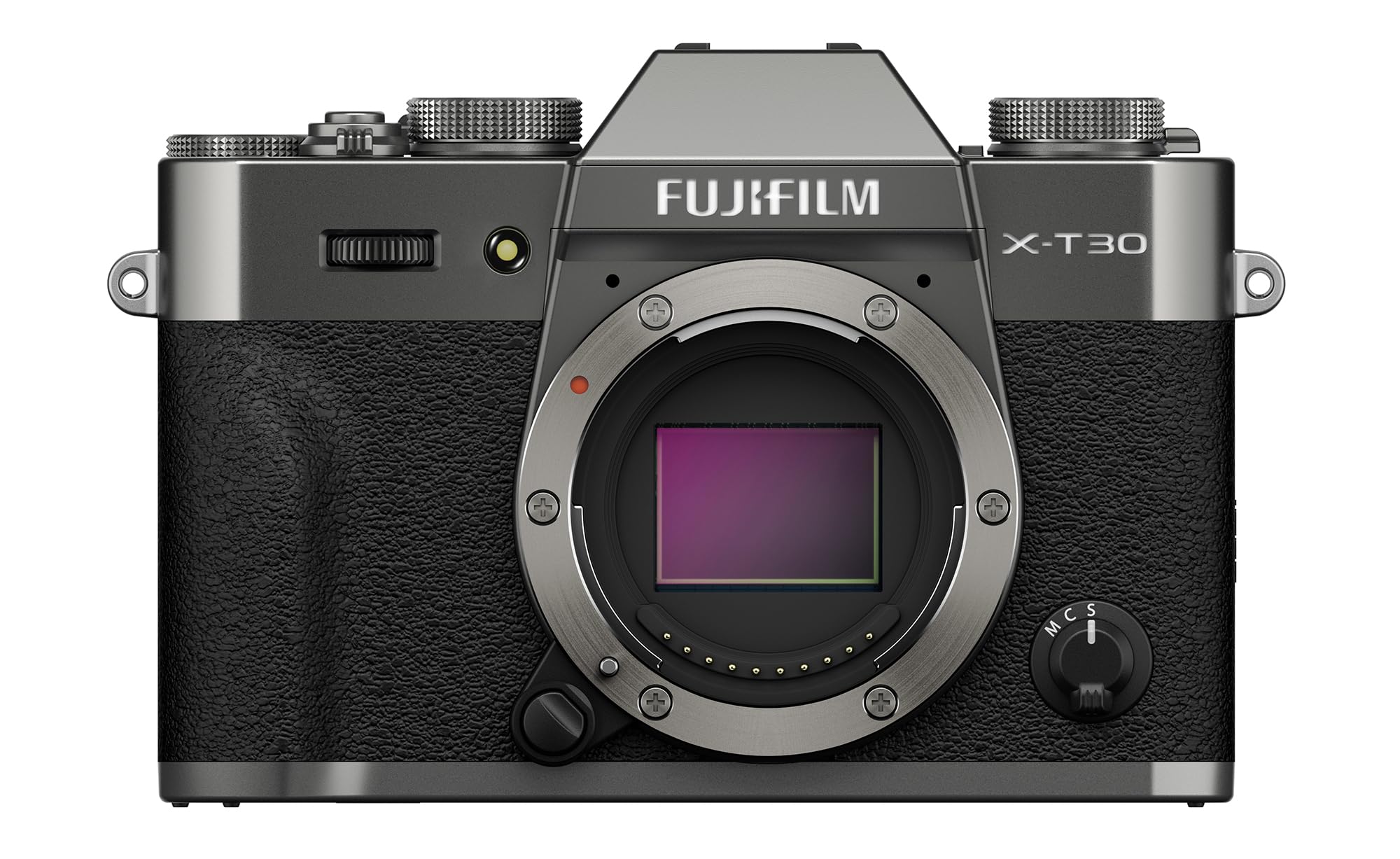
A tradition-honed compact that delivers Fujifilm’s iconic film looks in a shooter’s body.
The X-T30 III inherits the classic dial-heavy layout and 26.1-megapixel X-Trans CMOS sensor that has made Fujifilm a favorite among street and travel photographers. It packs 20 built-in Film Simulations — including Provia, Velvia, and Classic Chrome — that produce color profiles straight out of the camera, so you don’t have to spend time color-grading your photos. The AI-powered subject detection autofocus tracks people, animals, and vehicles automatically, a major upgrade from earlier X-T30 models.
The compact body has a charcoal silver finish and external dials for shutter speed, ISO, and exposure compensation. The camera supports 4K video and offers the same familiar Fujifilm menu system found in the X-T series, so it integrates smoothly into an existing Fuji ecosystem. Buyers praise its ease of use in Auto mode, which makes it accessible even for beginners who want to start simple and grow into manual controls.
There is no in-body image stabilization, so you need stabilized lenses or a consistent hand for sharp shots at slow shutter speeds. There is also no built-in flash, which means interior snapshots at night will require an external hotshoe unit or a fast prime lens. The lack of extensive customer reviews in the data makes it harder to gauge real-world gripes, but the absence of IBIS is the clear trade-off for this price.
Who this is for: A photographer who values the look of Fujifilm’s film simulations and wants a compact body with traditional analog controls, and who mostly shoots during the day or with fast lenses.
The missing piece: No IBIS and no flash means low-light handheld shooting is more difficult compared to a stabilized competitor like the E-M10 IV.
9. Panasonic LUMIX G85

A rugged Micro Four Thirds body with class-leading dual stabilization for outdoor video.
The G85 is built for shooters who need a weather-sealed camera that can handle a drizzle on a hike. The body is constructed with a magnesium alloy and features full weather sealing, so dust and light rain won’t ruin your day. Inside, a 16-megapixel Micro Four Thirds sensor omits the low-pass filter, which gives a near 10-percent boost in fine detail resolving power compared to standard 16MP sensors. The 5-axis in-body dual image stabilization (Dual I.S. 2) works in both photo and video, including 4K, producing remarkably smooth hand-held footage.
The kit lens is a 12-60mm Power O.I.S. lens, which covers a flexible 24-120mm equivalent range, and you get a built-in eye-level OLED live viewfinder with 2360K dots and a rear 3-inch touch-enabled LCD. The 4K Photo mode allows you to pull 8-megapixel stills from 4K video at up to 30 fps, letting you pick the exact moment of action you want. Buyers call it “superbly versatile” and note that its “stabilization is excellent” and it has “good image quality” with a “weather-sealed system”.
The main drawbacks are weight — one reviewer “returned due to increased weight vs G7 (almost as heavy as GH4)” — so it is not the lightest option here. The battery life is mediocre, there is no headphone jack for audio monitoring, and the 49-point contrast-detection autofocus is noticeably less advanced than the 425-point systems in Sony APS-C bodies, struggling more in low light for video.
What it does well
- Weather-sealed magnesium alloy body is ready for outdoor use in light rain.
- Dual I.S. 2 provides exceptionally smooth hand-held 4K video.
- 12-60mm kit lens covers a useful wide-to-telephoto range.
Where it falls short
- Heavier than competing compacts — nearly as heavy as a GH4.
- Only 49 autofocus points, which lag behind Sony’s 425-point systems.
- No headphone jack and mediocre battery life limit all-day shooting.
Choose this if: You shoot video outdoors in variable conditions and need a camera that can handle a splash, with stabilization that makes hand-held footage look gimbal-smooth.
Pass on it if: You need the lightest bag possible, or you rely on fast, accurate autofocus for moving subjects in video.
10. Panasonic LUMIX G100

A vlogging camera whose built-in microphone tracks you as you move.
The G100 is one of the only compact cameras that treats audio as a core feature, not an afterthought. It has a high-performance built-in microphone with tracking that automatically adjusts its pickup pattern to focus on your voice, even as you move around in the frame. This makes it a strong pick for solo vloggers who want decent sound without clipping an external mic on the hotshoe. The camera also features 5-Axis Hybrid I.S. to smooth out handheld wobble.
The lightweight body enables one-handed recording and captures 4K 24p/30p video plus 20MP stills. iA mode delivers well-exposed shots for beginners, while manual controls and Micro Four Thirds lens support allow growth. Buyers report it is “user friendly, light weight” and has “excellent video quality” with “superior low-light performance with reduced noise.”
The 4K recording time is capped at a maximum length — a hard limit, not heat-related. Buyers explicitly note the “4K video recording time is very limited; stops at max.” The autofocus uses only 49 contrast-detection points, which is a significant gap compared to the 425-point systems in Sony cameras, so tracking a moving subject is less reliable.
Strongest point: The tracking microphone is genuinely useful for a solo creator who wants good audio without extra gear, and the compact build makes it easy to carry everywhere.
The dealbreaker: The 4K recording time cap means you cannot record a single take longer than the limit, ruling it out for interviews, lectures, or event coverage.
Understanding the Specs
Autofocus Points
Autofocus points are tiny sensors on the camera’s imaging chip that detect contrast or phase differences in the light to lock focus. More points mean the camera can track a subject across a larger portion of the frame without losing it. For example, Sony’s 425 points cover 84% of the sensor area, so a moving bird stays sharp even near the edge of your shot, while a camera with 49 points has more dead zones where the subject will blur.
In-Body Image Stabilization (IBIS)
IBIS physically moves the camera’s sensor to counteract small shakes from your hands or your breathing. It is measured in “stops” (e.g. 4.5 stops), which refers to how many shutter-speed increments you can safely slow down before blur appears. A camera with 4.5-stop IBIS lets you shoot at 1/8 second as clearly as you would at 1/60 second without stabilization — a massive advantage for indoor and dusk shooting without a tripod.
FAQ
Should I get an APS-C or Micro Four Thirds sensor camera?
Does IBIS matter for video?
How many autofocus points do I really need?
Can I use this camera as a webcam?
What does 4K oversampled from 6K mean?
Why do some cameras limit 4K recording time?
Is the Canon EOS M200 a good buy in 2025?
How does rough weather sealing work on a camera?
What is the advantage of Fujifilm’s Film Simulations?
Should I be worried about rolling shutter?
Final Thoughts: The Verdict
For the majority of shoppers, the best compact interchangeable lens camera winner is the Sony Alpha ZV-E10 because its 24.2MP sensor, 425-point autofocus, and oversampled 4K video deliver a package that is tough to beat for creators at this size and price. If you want blazing-fast autofocus and burst shooting for sports or wildlife, grab the Sony Alpha a6400. And for the photographer who craves high-resolution stills and beautiful colors straight out of the camera, the standout is the
How We Picked
We do not accept paid placement. Every pick is matched to a real buyer and a real use-case; we do not hands-on test units.
Sources & Methodology
Specifications: manufacturer listings and product documentation. Review insights: verified customer reviews, as of July 2026. Pricing: not shown on this page (it changes often); check the current price via the retailer link.
As an Amazon Associate, WellFizz earns from qualifying purchases. This does not affect which products we feature.
Related Guides

Mo Maruf
I created WellFizz to bridge the gap between vague wellness advice and actionable solutions. My mission is simple: to decode the research and give you practical tools you can actually use.
Beyond the data, I am a passionate traveler. I believe that stepping away from the screen to explore new environments is essential for mental clarity and physical vitality.