Our readers keep the lights on and my smoothie glass nicely filled. As an Amazon Associate, I earn from qualifying purchases.
Finding a subwoofer that delivers chest-thumping lows without dominating your living space is the central challenge of modern home audio. A unit that is too large disrupts the room’s flow, while one that is too weak leaves movie explosions and music bass lines feeling hollow and distant. The solution lies in balancing driver size, amplifier power, and cabinet engineering to produce clean, extended low frequencies from a footprint that blends into any room.
I’m Mohammad Maruf — the founder and writer behind WellFizz. I’ve spent hundreds of hours analyzing driver excursion, RMS wattage curves, DSP integration, and crossover behavior across dozens of powered subwoofers to identify the models that offer genuine low-end extension from enclosures that respect your square footage.
This guide breaks down the crucial specifications and real-world performance of the best options on the market, helping you find the perfect best compact home subwoofer to fit your audio budget and room acoustics.
How To Choose The Best Compact Home Subwoofer
The ideal compact subwoofer disappears visually but announces its presence through every kick drum and explosion. To find that balance, you need to understand four interconnected specifications that define its performance.
Driver Size and Excursion
An 8-inch driver is the most popular choice for compact subwoofers, offering a strong compromise between cone area for moving air and a smaller cabinet footprint. A 10-inch driver can move more air for deeper bass but requires a larger enclosure. Equally important is excursion — the distance the cone travels. A long-throw design with a high-excursion surround, like the 12-inch driver in the SVS SB-1000 Pro, can produce tight, articulate bass at very low frequencies despite a sealed cabinet that would normally limit output. Look for driver materials like woven-composite, fiberglass, or treated paper that balance stiffness versus weight for fast transient response.
Amplifier Power: RMS vs Peak
Peak power ratings (e.g., 600W) are marketing numbers that represent a brief burst, while RMS (continuous) power determines how cleanly the subwoofer can play sustained bass notes without distortion. A compact sub with 200W RMS of Class-D amplification, like the Rockville Rock Shaker 8, can easily pressurize a medium-sized living room. For near-field desktop setups or very small rooms, 70W to 100W RMS is often sufficient if the amplifier is well-matched to the driver impedance and cabinet volume.
Enclosure Design: Sealed vs Ported
A sealed enclosure (acoustic suspension) produces tight, accurate bass with excellent transient response, making it ideal for music listening. It rolls off more gradually below the tuning frequency, which can sound more natural. A ported or bass-reflex enclosure uses a tuned vent (port) to reinforce output at a specific low frequency, giving more boom for home theater. For compact subwoofers, a sealed design allows for a physically smaller cabinet but requires more amplifier power to achieve the same output at low frequencies. Down-firing ported designs, like the Klipsch R-8SW, can be placed closer to walls without port noise.
Connectivity and Control
RCA line-level inputs and LFE inputs are standard. Speaker-level inputs (high-level) are crucial if your receiver lacks a dedicated subwoofer output. Variable low-pass crossover control (e.g., 30-160Hz) allows you to blend the sub with your main speakers by setting the frequency at which the sub takes over. A phase switch (0°/180°) or variable phase control is essential for aligning the subwoofer’s output with your main speakers to avoid cancellation at the crossover point. Higher-end models, like the SVS SB-1000 Pro, offer app-based DSP control for parametric EQ, volume, and custom presets from the listening position.
Quick Comparison
On smaller screens, swipe sideways to see the full table.
| Model | Category | Best For | Key Spec | Amazon |
|---|---|---|---|---|
| SVS SB-1000 Pro | Premium | Reference Music & Cinema | 12″ driver, 325W RMS, 20Hz extension | Amazon |
| Audioengine S8 | Premium | Desktop Hi-Fi & Stereo | 8″ driver, 250W RMS, down-firing | Amazon |
| KICKER HS10 Hideaway | Premium | Small Rooms & Apartments | 10″ driver, all-aluminum frame | Amazon |
| Audioengine S6 | Mid-Range | Desktop & Bookshelf Systems | 6″ driver, 210W, ultra-compact | Amazon |
| PreSonus Eris Sub 8BT | Mid-Range | Studio Monitoring & Gaming | 8″ driver, 100W RMS, Bluetooth 5.0 | Amazon |
| Klipsch R-8SW | Mid-Range | Small Home Theater | 8″ copper-spun IMG, down-firing | Amazon |
| Edifier T5s | Entry-Level | Desktop Near-Field Listening | 8″ long-throw, 70W RMS, 35Hz | Amazon |
| Rockville Rock Shaker 10 | Budget | Large Room Value | 10″ driver, 300W RMS, MDF | Amazon |
| Rockville Rock Shaker 8 | Budget | Entry-Level Punch | 8″ driver, 200W RMS, Y30 magnet | Amazon |
In‑Depth Reviews
1. SVS SB-1000 Pro Subwoofer
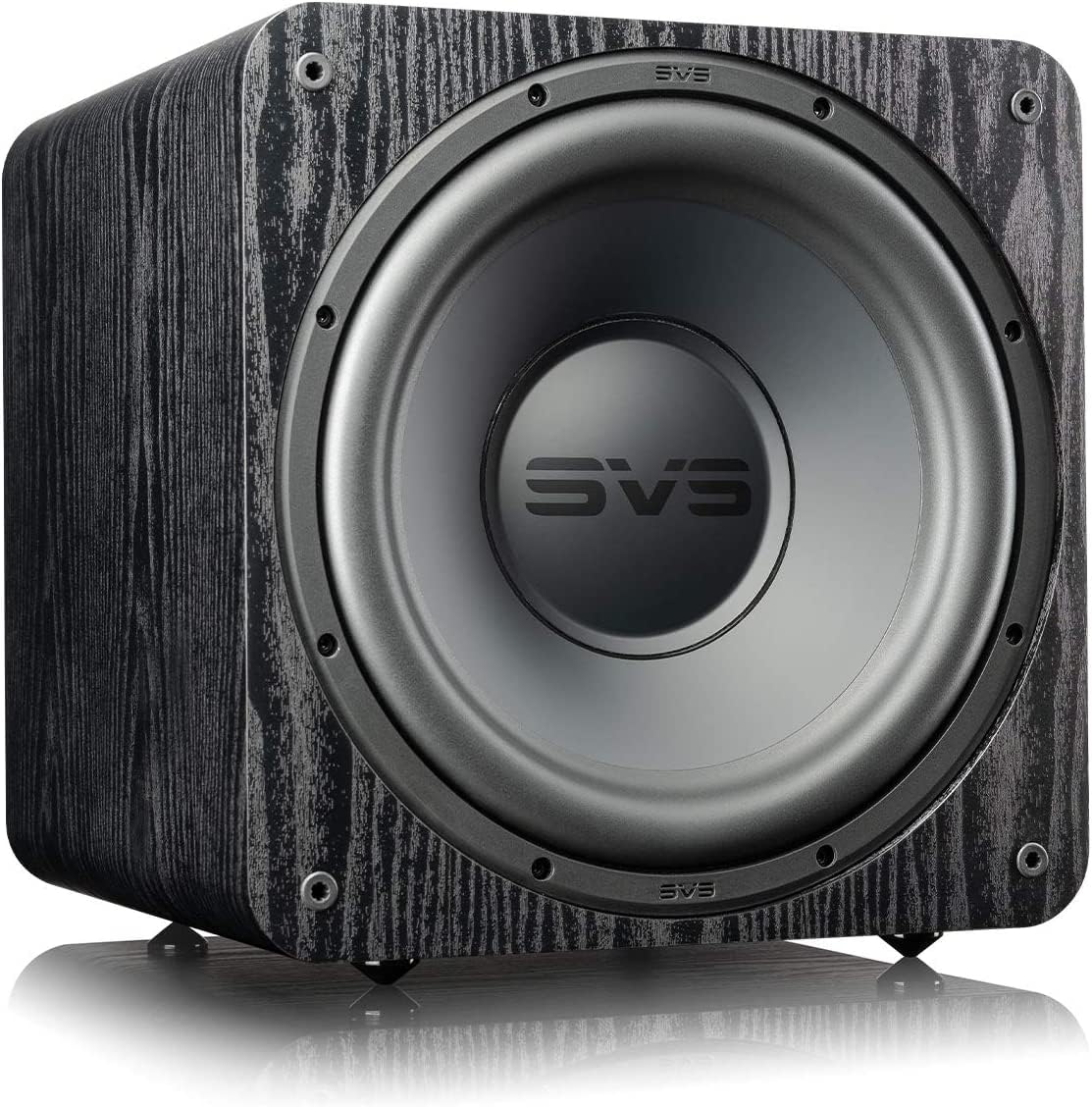
The SVS SB-1000 Pro redefines what a compact subwoofer can achieve. Its 12-inch high-excursion driver, driven by a 325W RMS Sledge STA-325D amplifier, reaches down to 20Hz with authority from a sealed cabinet that is only slightly larger than many 8-inch models. The 50MHz Analog Devices DSP platform enables pinpoint frequency response correction, while the smartphone app provides control over volume, parametric EQ, and custom presets from your listening chair — eliminating placement guesswork.
In a medium-sized room, a single SB-1000 Pro pressurizes the space with tight, articulate bass that handles everything from orchestral double basses to synth-heavy EDM without sounding boomy. Adding a second unit eliminates directional bass cues for a seamless soundstage. The auto-on/off function works reliably, and the build quality — including a rigidly braced MDF cabinet with an extra-thick front baffle — ensures no panel resonance even at reference levels.
For listeners who prioritize accurate, deep low-frequency extension from a compact footprint, the SB-1000 Pro is the definitive choice. Its DSP smartphone app and analog processing precision make it an adaptable hub for any system, from near-field desktop setups to dedicated two-channel listening rooms.
Why it’s great
- Exceptional 20Hz extension from a sealed, compact cabinet
- Smartphone app with PEQ, presets, and real-time tuning
- High-quality Sledge amplifier with vanishingly low distortion
Good to know
- Premium investment for a single subwoofer
- Logarithmic volume curve limits fine-tuning at very low levels
2. Audioengine S8 Powered Subwoofer

The Audioengine S8 is engineered for desktop hi-fi and stereo systems where sound quality and ease of placement are paramount. Its down-firing 8-inch driver and 250W RMS amplifier deliver deep, controlled bass that fills a small to medium room without dominating the landscape. The down-firing design allows it to be tucked near a wall or under a desk, and the front-firing port ensures clean airflow even in constrained positions.
Paired with Audioengine’s A5+ or A2+ speakers, the S8 seamlessly extends the low end, handling sub-40Hz frequencies that bookshelf drivers cannot reproduce. The variable crossover and phase controls enable precise integration, avoiding the mid-bass muddiness that plagues uncalibrated systems. Its sleep mode auto-engages after inactivity, saving power without needing a physical switch — a convenience for always-on desktop setups.
Build quality is excellent, with a dense MDF cabinet that resists vibration. Some users note that the pointed feet can scratch hardwood floors; a simple felt pad solves this. For a dedicated two-channel listening environment or a high-end computer audio rig, the S8 provides the clean, musical bass extension that transforms a good system into an immersive one.
Why it’s great
- Down-firing design for flexible, furniture-friendly placement
- Clean, distortion-free bass down to sub-40Hz territory
- Compact footprint with effortless integration to Audioengine speakers
Good to know
- Pointed feet may scratch hard surfaces without protection
- Best suited for small to medium rooms, not large home theaters
3. KICKER 46HS10 Hideaway Compact Powered Subwoofer

KICKER’s Hideaway HS10 is the ultimate solution for spaces where a traditional box subwoofer simply will not fit. Its ultra-slim, aluminum frame houses a 10-inch driver and a built-in amplifier, making it easy to slide under a couch, behind furniture, or inside an entertainment center. The included remote control allows independent bass level adjustment without altering your main volume.
Despite its compact profile, the HS10 delivers surprising low-frequency impact. The adjustable low-pass crossover, variable +6dB bass boost, and phase switch allow fine-tuning for any room. The auto turn-on options (DC-offset or signal sensing) ensure it wakes up automatically with your audio source. Audiophiles should note that this is not a high-excursion reference sub; it is designed to fill in missing low-end for factory or basic systems, producing clean kick drums and extended bass lines without rattling the walls.
For apartment dwellers or anyone with severe space constraints, the HS10 offers a unique form factor that sacrifices ultimate depth for unmatched convenience. It is best paired with bookshelf speakers or soundbars that lack their own subwoofer output, providing a noticeable upgrade in soundstage completeness.
Why it’s great
- Ultra-compact aluminum chassis fits in tight spaces
- Remote control for independent bass level
- Flexible auto turn-on options for easy integration
Good to know
- Not designed for high-volume, room-shaking output
- Wired connection only; no wireless audio streaming
4. Audioengine S6 Powered Subwoofer

The Audioengine S6 proves that a 6-inch driver can produce coherent, musical bass without dominating a desk or shelf. With 210 watts of peak power and a sealed enclosure, this front-firing subwoofer is optimized for near-field listening with desktop speakers or small bookshelf systems. Its slim profile and gray finish make it a visually unobtrusive addition to modern living spaces.
The S6 integrates seamlessly with Audioengine’s A2+ speakers, adding rich, detailed bass that extends the soundstage without muddying midrange frequencies. The variable crossover dial is precise, allowing fine-tuned blending. In a 12×17-foot room, a single S6 provides ample bass for music listening and casual movie watching without overwhelming the space. Its plug-and-play setup — included cables are high-quality — means you can be up and running within minutes.
For users who prioritize a tiny footprint and aesthetic coherence over the absolute lowest octave, the S6 is an elegant solution. It is not intended to pressurize a large home theater but excellently augments a near-field computer or turntable-based stereo system, delivering punchy, controlled bass that feels tight and intentional.
Why it’s great
- Extremely compact footprint for desk or shelf placement
- Seamless integration with Audioengine desktop speakers
- High-quality included cables for immediate setup
Good to know
- 6-inch driver limits ultimate low-frequency extension
- Best for near-field listening, not large rooms
5. PreSonus Eris Sub 8BT

The PreSonus Eris Sub 8BT bridges the gap between studio monitoring accuracy and casual home listening convenience. Its 8-inch woven-composite driver and 100W RMS amplifier (Class-D) deliver a flat frequency response down to 30Hz, making it suitable for music production where neutral bass reproduction is critical. The built-in Bluetooth 5.0 wireless input adds flexibility for streaming from a phone or tablet without connecting cables.
The high-pass and low-pass filter controls allow precise crossover configuration, ensuring the subwoofer takes over exactly where your main monitors stop — avoiding the low-end smearing that undermines mix translation. Front-panel ⅛-inch aux input and headphone output are practical for quick A/B comparisons. In a small home studio (12×10 ft), the Sub 8BT provides the accurate bass playback needed to craft sub-bass synths and kick drums without relying solely on headphones.
For content creators and gamers who need a versatile subwoofer for both critical listening and entertainment, the Eris Sub 8BT excels. The Bluetooth connection works reliably within 30 feet, and the auto power-saver mode engages after 40 minutes of inactivity. Using wired TRS connections for production avoids latency, while Bluetooth serves casual listening — a useful dual-role setup.
Why it’s great
- Studio-grade accuracy with flat response down to 30Hz
- Bluetooth 5.0 for wireless streaming from any device
- Precise high-pass/low-pass crossover controls for seamless blending
Good to know
- Front-panel aux and headphone connections are convenient but exposed
- Bluetooth switching between devices requires manual press
6. Klipsch Reference R-8SW

Klipsch’s Reference R-8SW packs the brand’s characteristic sound into a compact, down-firing package ideal for small apartments and bedrooms. The spun copper IMG (Injection Molded Graphite) woofer is a signature Klipsch component, offering stiffness and light weight for fast transient response. The all-digital amplifier simplifies integration, and the down-firing design minimizes placement constraints while keeping the driver protected from accidental bumps.
In a small room, the R-8SW produces tight, clean bass that enhances movies and music without shaking the walls at half gain. It is not designed to produce the subterranean rumble of larger ported subs; its strength lies in punchy, controlled output that blends naturally with satellite speakers and soundbars. The LFE and RCA inputs accommodate most receivers, and the crossover control is responsive, though it functions as a shelf filter rather than a true high-pass for the main speakers.
For listeners who want the reliability and known sonic signature of the Klipsch brand without overwhelming their living space, the R-8SW is a sensible choice. Its compact form factor fits neatly into entertainment centers, and its output level is sufficient for casual home theater use while remaining neighbor-friendly at moderate volumes.
Why it’s great
- Signature Klipsch copper-spun IMG woofer for fast response
- Down-firing design protects driver and allows flexible placement
- Compact footprint ideal for small rooms and apartments
Good to know
- Crossover is a shelf control, not a true high-pass for mains
- Power-off pop can occur with some paired speakers
7. Edifier T5s Powered Active Subwoofer

Edifier’s T5s is purpose-built for desktop near-field systems, delivering 35Hz extension from an 8-inch long-throw woofer and 70W RMS Class-D amplifier. Its 18mm MDF cabinet with a front-firing driver and right-firing acoustic port minimizes internal resonance for clean, tight bass that does not bleed into midrange frequencies. The wood grain finish integrates naturally with Edifier’s bookshelf speakers and many home decor styles.
The low-pass filter (30–160Hz) and phase selector (0°/180°) provide the essential control needed for seamless integration. The unit supports two wiring configurations: direct connection to a sub-out or series connection through the T5s to main speakers with line-level RCA inputs. Auto-standby engages after 15 minutes of inactivity. In a typical office or bedroom desk setup, the T5s adds the low-end weight that transforms small speakers from thin to satisfying without overwhelming the listening position.
For users with Edifier powered speakers (R1280Ts, R1700BTs, R1850DB, etc.) or other desktop monitors, the T5s is the natural companion. It is not designed for living room home theater but excels at its intended role: providing accurate, musical bass for near-field listening at modest volumes. Its compact dimensions (15.7 x 6.7 x 16.1 inches) fit comfortably beside or under a desk.
Why it’s great
- Excellent 35Hz extension from a compact, low-distortion cabinet
- Designed to pair directly with Edifier powered speakers
- Auto-standby and multiple connection options for convenience
Good to know
- 70W RMS is sufficient for near-field, not large rooms
- Series connection requires main speakers with RCA line inputs
8. Rockville Rock Shaker 10

The Rockville Rock Shaker 10 brings 300W RMS of Class-D power and a 10-inch driver to the budget-friendly tier, offering chest-thumping bass that rivals subwoofers costing significantly more. Its MDF enclosure with a high-grade vinyl finish and detachable foam grill provides a durable, presentable package. Volume, crossover frequency (variable), and phase controls allow basic system tuning, while RCA line and high-level speaker inputs ensure compatibility with most receivers.
In a medium to large living room, the Rock Shaker 10 easily pressurizes the space, producing tight kick drums and convincing movie explosions. Some users note that the bass can feel slightly loose at extreme levels, but for the wattage, it remains remarkably clean. The auto-off feature is present, though it does not engage as quickly as some competitors. It integrates well with Rockville’s own bookshelf speakers for a cohesive budget system.
For buyers who need raw low-end output without spending on premium branding, the Rock Shaker 10 is a standout. Its 10-inch driver moves significantly more air than 8-inch units in the same price range, making it a compelling choice for anyone setting up a first home theater on a tight budget. Be mindful of its size — it is larger than typical 8-inch compact subs — and ensure adequate floor space.
Why it’s great
- Powerful 300W RMS output from a 10-inch driver for the price
- Flexible connectivity with RCA and high-level inputs
- Solid MDF construction with vinyl finish and removable grill
Good to know
- Bass can sound slightly loose at maximum gain
- Enclosure is larger than typical compact subs
9. Rockville Rock Shaker 8

The Rockville Rock Shaker 8 is the entry-level gateway to a proper subwoofer system, offering 200W RMS of clean power and an 8-inch driver in a compact MDF cabinet. Its Y30 magnet and 1.5-inch 4-layer voice coil provide responsive, punchy bass that significantly upgrades small bookshelf speakers or soundbars. The RCA and speaker-level inputs pass-through allows daisy-chaining to multiple units if needed.
At moderate volumes in a small room, the Rock Shaker 8 produces tight, controlled bass that is surprising for its size and price. It does not pressurize large spaces, but for a desktop setup or a bedroom system, it adds the low-end weight that makes movies and music immersive. Some users report that the stock power cable can introduce a slightly bloated character; upgrading to a shielded cord tightens the response noticeably. The crossover knob lacks detents, requiring careful manual tuning.
For anyone assembling a first budget system or adding a subwoofer to a small secondary setup, the Rock Shaker 8 offers the lowest barrier to entry without sacrificing fundamental subwoofer functionality. It is simple, effective, and leaves room in the budget for other upgrades down the line.
Why it’s great
- Exceptional value for a powered 8-inch subwoofer
- Y30 magnet and 4-layer voice coil for responsive bass
- Compact size fits easily into small rooms and desks
Good to know
- Stock power cord can introduce bass bloat; an upgrade helps
- Lacks detented crossover markings for precise adjustment
FAQ
How do I know if a compact subwoofer is powerful enough for my room?
Can I place a compact subwoofer inside a cabinet or under a desk?
What does the phase switch do and when should I change it?
Is wireless subwoofer connectivity reliable for home audio?
How do I avoid a boomy or muddy bass sound from my compact subwoofer?
Final Thoughts: The Verdict
For most users, the best compact home subwoofer winner is the SVS SB-1000 Pro because it delivers reference-grade 20Hz extension, a versatile DSP smartphone app, and exceptional build quality from a cabinet that fits any room. If you want precise studio integration with Bluetooth convenience, grab the PreSonus Eris Sub 8BT. And for ultimate space-saving flexibility in apartments, nothing beats the KICKER HS10 Hideaway.

Mo Maruf
I created WellFizz to bridge the gap between vague wellness advice and actionable solutions. My mission is simple: to decode the research and give you practical tools you can actually use.
Beyond the data, I am a passionate traveler. I believe that stepping away from the screen to explore new environments is essential for mental clarity and physical vitality.