Our readers keep the lights on and my smoothie glass nicely filled. As an Amazon Associate, I earn from qualifying purchases.
Specs are compiled from manufacturer listings and verified buyer reviews and can change over time — please confirm the key details on the product page before buying.
Buying a compact full-frame camera means getting the huge sensor—and the rich, low-light images it delivers—without the weight of a pro DSLR. You want a system small enough to take everywhere, yet capable enough that you stop feeling the need to upgrade. That is a tight rope to walk, and most models lean one way or the other. This guide lines up the current contenders side by side, pulls their specs apart, and matches each one to the photographer who will actually enjoy using it every day.
I’m Mohammad Maruf — the founder and writer behind WellFizz. This guide is built by comparing the manufacturers’ published specifications and the patterns across verified customer reviews, so you get each pick’s real strengths and trade-offs instead of marketing spin.
You are moving up from a smaller sensor (a crop-sensor body) or downsizing from a heavier full-frame kit. The right compact full frame camera matches its shooting speed, resolution, and physical size to how you actually frame shots.
Our Picks at a Glance


How To Choose The Best Compact Full Frame Camera
Picking between these cameras is a lot harder than just looking at megapixels. The sensor size is already decided—full frame—so the real decision lives in shooting speed, video specs, stabilization, and how small the body actually feels in your hand. Here are the three specs you should check first.
Resolution And Sensor Generation
More megapixels means more cropping room later, but it also creates larger file sizes that fill up memory cards faster. A 24-megapixel sensor (like the one in the Canon EOS R8) still prints sharp at large sizes, while a 45-megapixel sensor (like the Canon EOS R5) lets you crop deep into a frame for a tighter composition. Newer sensor generations also handle noise better, so look for “back-illuminated” or “BSI” in the spec line if you shoot often in dim light.
Shooting Speed And Autofocus
If you photograph kids, pets, or sports, the frames-per-second (fps) number tells you how many shots the camera can fire in one second. A mechanical shutter that manages 12 fps is plenty for most people, but electronic shutter modes can reach 30 or even 40 fps—great for nailing the exact moment of a jump or a swing. Pair that with eye-detection autofocus that locks onto a subject’s eye and tracks it, and you will get far more keepers in action scenarios.
Quick Comparison
| Model | Best For | Megapixels | Max FPS (Electronic) | IBIS | Amazon |
|---|---|---|---|---|---|
| Canon EOS R5★ Best Overall | High-res hybrid work | 45 MP | 20 fps | Yes | Amazon |
| Canon EOS R6 Mark IIAlso Great | Versatile action shooter | 24.2 MP | 40 fps | Yes (8 Stops) | Amazon |
| Nikon Z 5 (Body) | Compact stills | 24.3 MP | — | Yes (5-Axis) | Amazon |
| Panasonic LUMIX S9 Kit | Social media content | 24.2 MP | — | Yes | Amazon |
| Nikon Z 6II | Low-light hybrid | 24.5 MP | 14 fps | Yes | Amazon |
| Sony a7 III Kit | Reliable all-around | 24.2 MP | 10 fps | Yes | Amazon |
| Sony Alpha 7 IV | Pro-grade photo/video | 33 MP | — | Yes | Amazon |
In‑Depth Reviews
1. Canon EOS R5
Our pick — over 4.5★ from 750+ verified ratings; the strongest balance of quality and price.
The 45-megapixel beast that shoots 8K RAW while fitting in a mirrorless body.
This is the camera for anyone who needs to crop into a frame or pull a high-res still from a video. The 45-megapixel CMOS sensor and DIGIC X processor give you an ISO range of 100-51200, expandable to 102400, so low-light images stay clean. It shoots 8K RAW internally and 4K at up to 120 fps with autofocus—making it a serious video tool as well as a stills camera.
The electronic shutter hits 20 fps, while the mechanical shutter handles 12 fps. That is a 3.3x gap in electronic speed compared to mechanical, meaning you have the speed to freeze fast action silently. The autofocus system uses Phase Detection and covers 100% of the frame for subject tracking of people and animals. Buyers consistently praise the image quality at higher ISOs, describing the files as “unreal” for landscape and wildlife work.
High resolution workhorse: The 45 MP gives you 86% more resolution than the 24.2 MP Canon EOS R8, so you can make tight crops without losing detail—but file sizes are much larger and demand faster memory cards.
Reach for detail: your editing workflow starts with heavy cropping or you need 8K video for production.
Look elsewhere if video long: you plan to use it for casual travel—the high-res files eat up storage and the body lacks a built-in flash.
2. Canon EOS R6 Mark II
The do-everything body that nails action shots without breaking your back.
You get a 24.2-megapixel full-frame sensor paired with the DIGIC X image processor—the same engine that handles noise and speed in Canon’s high-end video rigs. That combination lets you fire electronic shutter bursts at 40 fps at 20MP, so the exact moment a bird takes off or a kid scores a goal is yours. The 5-axis in-body stabilization (IBIS) corrects shake by up to 8 stops, meaning you can handhold a sharp shot in dim light where other cameras would blur.
The autofocus system here is clever: it detects people, animals, vehicles, and now horses, trains, and aircraft, and it will track a subject’s eye—even choosing left or right—without you toggling anything. For video, you get 6K oversampled uncropped 4K at up to 60 fps, plus Full-HD recording at up to 180 fps for smooth slow motion. Buyers report the body runs cool even during long recording sessions, and the 3.0-inch vari-angle touchscreen makes low-angle shots simple.
Unlike the Canon EOS R8, the R6 Mark II includes IBIS, which gives you steadier handheld video and lets you shoot a slower shutter speed in low light without a tripod. The dual UHS-II SD card slots are a real peace-of-mind feature for weddings or events where you need a backup recording.
Fast hybrid shooter
- 40 fps electronic burst catches split-second action
- 8-stop IBIS is top-tier for handheld low-light shots
- Subject detection now includes horses, trains, and aircraft
Limited buffer depth
- No built-in flash; you need a separate hotshoe flash
- At this level you will want a fast RF lens to match its speed
Best for action: you shoot a mix of action, portraits, and video and want one body that handles all three without compromise.
Think twice if burst heavy: you need the highest possible megapixel count for large-format printing—the 45MP Canon EOS R5 is better for that.
3. Canon EOS R8
A tiny body that applies professional color LUTs in-camera for instant social-ready files.
The LUMIX S9 is a small full-frame camera designed for creators who want to shoot, grade, and share fast. Its standout feature is Real Time LUT—you apply signature color presets (look-up tables) directly in the camera, preview them on the screen, and save the graded file to your phone instantly over a fast Wi-Fi connection. The body alone weighs very little and offers flexible framing through Open Gate recording, meaning you can capture one shot and extract multiple aspect ratios (16:9, 1:1, 3:2) from the same footage for different social platforms.
It uses a 24.2-megapixel sensor with a hybrid autofocus system and 179 autofocus points. The bit depth is 10-bit, which gives more color information for grading than an 8-bit camera. Buyers mention the body feels surprisingly solid for its size and the in-camera LUT feature saves real editing time when posting frequently. The body lacks a built-in flash, but the hotshoe lets you attach one.
Who it fits style: social media content creators and travel vloggers who want pro color science without sitting at a computer.
Who it does not expand: photographers needing fast mechanical burst rates or deep buffer for action sequences.
4. Sony Alpha 7 IV

The 33-megapixel sensor (33 million pixels per image) sits between 24 MP and 45 MP, giving you enough detail to crop in without slowing down your workflow.
The Alpha 7 IV uses a 33-megapixel full-frame Exmor R back-illuminated CMOS sensor and the BIONZ XR image processing engine, which the manufacturer claims is 8x more powerful than the previous generation. That power shows in video: you get up to 4K 60p at 10-bit 4:2:2 with full pixel readout in all formats, plus 7K oversampled full-frame 4K 30p that uses no pixel binning for cleaner detail. The S-Cinetone color profile gives your footage a cinematic look straight out of camera, reducing grading time.
The autofocus system uses 693 phase-detection points and 425 contrast-detection points combined, covering a wide area. The body supports CFexpress Type A, SDHC, and SDXC cards for flexible storage. Unlike the 24.2-megapixel Canon EOS R8, the Alpha 7 IV includes IBIS and offers a middle-ground resolution that gives you more cropping room than 24 MP without the massive file sizes of 45 MP.
Choose this for hybrid: a balanced high-res hybrid body that handles both stills and video with professional color tools.
Pass if simplicity needed: you want the absolute fastest burst speed—Sony’s electronic shutter here is not specified at the 40 fps level of Canon’s R8.
5. Nikon Z 6II

A versatile hybrid with a back-illuminated sensor that excels where the light gets thin.
The Z 6II’s 24.5-megapixel BSI (back-side illuminated) sensor is designed to capture more light, making it a strong choice for indoor events or dusk shooting. It shoots 4K UHD video at up to 30 fps with full pixel readout and offers both mechanical and silent shooting at up to 14 fps. The dual card slots accept CFexpress/XQD and UHS-II SD simultaneously, giving you a backup during paid shoots or long trips.
The camera body is weather-sealed and the 273-point phase-detection autofocus tracks subjects reliably. The Z 6II is also vertical-battery-grip ready for extended shooting sessions. Buyers typically mention the image quality at high ISO settings as a major reason they picked it over APS-C alternatives. Nikon’s Z mount is compatible with existing F-mount lenses using the FTZ adapter (sold separately), which adds over 360 compatible lenses to your options.
Ideal for balanced use: wedding, event, and low-light shooters who need dual card slots and a versatile lens ecosystem.
Consider alternatives if lates: you need the extremely high burst rates of 30-40 fps—the Z 6II tops out at 14 fps electronic.
6. Nikon Z 5 with 24-50mm Zoom Lens

The camera that defined the modern full-frame mirrorless segment still holds its ground today.
The a7 III uses a 24.2-megapixel back-illuminated full-frame Exmor R CMOS sensor with 1.8x readout speed, giving you 15-stop dynamic range and 14-bit uncompressed RAW files. The ISO range extends from 50 to 204,800, which means clean files even in very low light. The autofocus system uses 693 phase-detection points covering 93% of the frame area, paired with 425 contrast-detection points for accurate tracking.
You get up to 10 fps continuous shooting with either the silent electronic shutter or the mechanical shutter, with autofocus and auto-exposure tracking active the whole time. The included SEL2870 28-70mm f/3.5-5.6 lens covers common focal lengths for everyday shooting. Buyers consistently describe the battery life as excellent, with the NP-FZ100 lasting through full-day shoots—a real advantage over smaller batteries in similar bodies. The camera also includes a hotshoe for external lighting.
Solid pick for value: a reliable all-rounder with proven performance, great battery life, and a huge lens ecosystem.
Consider newer if touchscreen: you need higher video specs like 4K 60p or the latest autofocus algorithms found in the Alpha 7 IV.
7. Panasonic LUMIX S9 with 18-40mm Lens
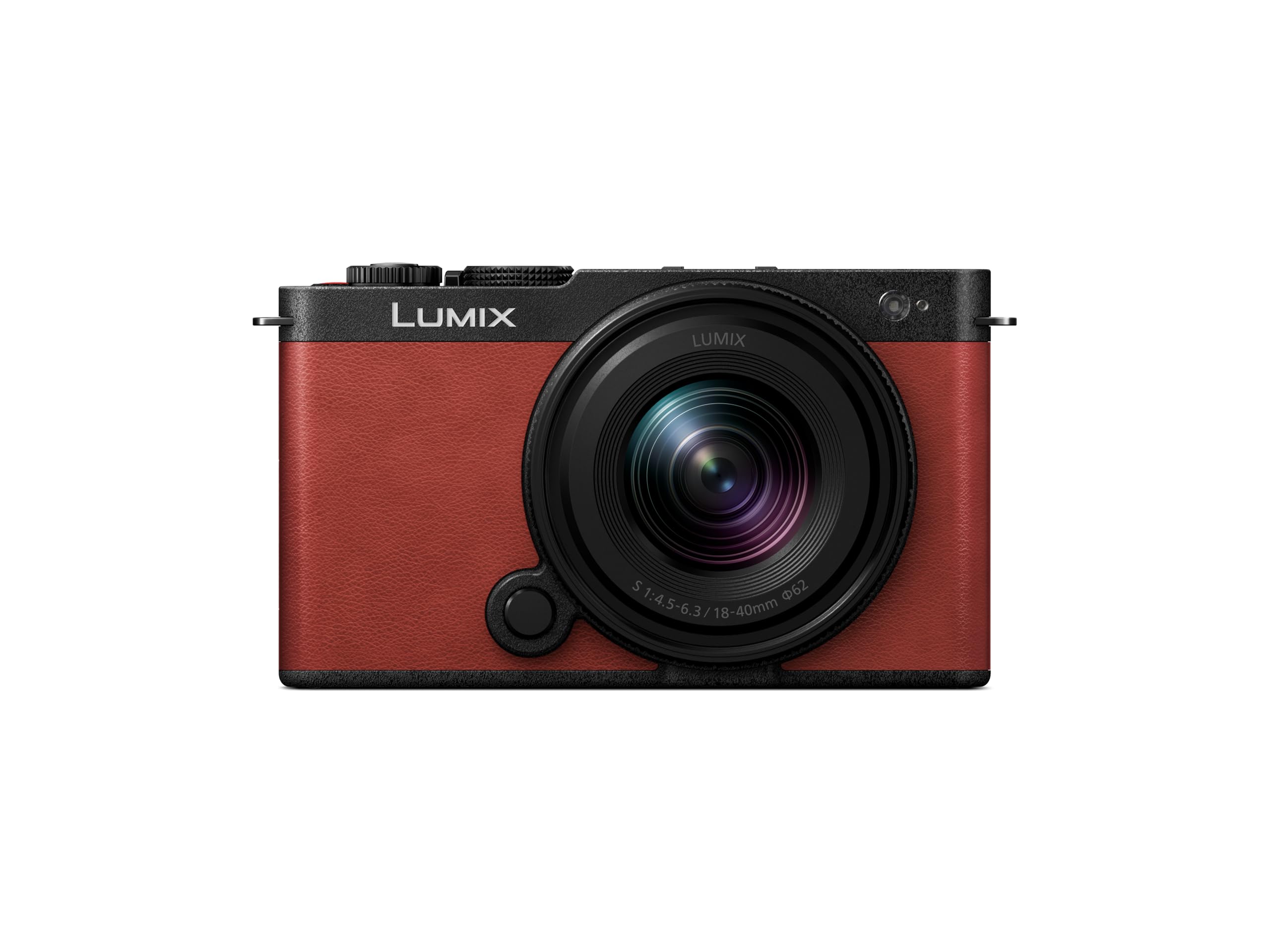
A purpose-built kit for creators who edit on their phone and post across multiple platforms.
This version of the LUMIX S9 bundles the body with the Panasonic LUMIX S 18-40mm F4.5-6.3 lens, a compact variable-aperture zoom covering wide-angle to standard focal lengths. The camera features an ultra-fast Wi-Fi connection that transfers full-resolution photos and video to the LUMIX Lab app on your phone in seconds. The Open Gate recording mode captures a full sensor readout so you can crop to 16:9, 1:1, or 3:2 from the same clip—ideal for Instagram Reels, YouTube, and TikTok without reshooting.
The body uses a 24.2-megapixel sensor with 10-bit depth for smooth color gradation and the autofocus system has 255 points with depth-from-defocus technology. The included lens has a variable aperture of F4.5-F6.3, which adapts to changing light but is not the fastest for dark interiors. Buyers appreciate how quickly files appear on their phone, describing the setup as “instant sharing” compared to traditional memory-card workflows.
Who it is for portability: social media creators who want full-frame quality and rapid phone transfer without editing on a desktop.
Who should pass low light: photographers who need a fast aperture lens for shallow depth of field—the kit lens is best for daylight and well-lit scenes.
8. Nikon Z 5 (Body Only)

Nikon’s most compact full-frame stills camera, stripped back to focus on pure image quality.
Buying the body only lets you choose your own lens from Nikon’s growing Z-mount lineup. The Z 5 is a 24.3-megapixel full-frame mirrorless camera with 5-axis in-body image stabilization, which steadies any lens you attach. The autofocus uses 273 points combining contrast and phase detection, with eye-detection for people, dogs, and cats that automatically tracks subjects as they move.
It records 4K video at 30 fps and 1080p at 60 fps, has USB power delivery for long shoots, and includes built-in Wi-Fi and Bluetooth for use with the SnapBridge app. The body is weather-sealed and the dual UHS-II SD card slots give you redundancy. One buyer mentioned that the Z 5’s ergonomics feel familiar to anyone who has used a Nikon DSLR, making it an easy transition for Nikon fans moving to mirrorless.
Choose it if budget tight: you want a compact, stabilized full-frame body to pair with your own choice of Z-mount or adapted F-mount lenses.
Look beyond if speed needed: you need high-speed burst shooting or advanced video features—the Z 5 is built primarily for still photography.
Understanding the Specs
Full-Frame Sensor
A full-frame sensor is the same size as a single frame of 35mm film (about 36mm x 24mm). It is larger than APS-C or Micro Four Thirds sensors, so it captures more light and gives you better low-light performance, shallower depth of field, and wider dynamic range. That is why “compact full frame” is such a prized combination: you get pro-grade image quality in a body that fits in a small bag.
In-Body Image Stabilization (IBIS)
IBIS shifts the sensor inside the camera to counteract tiny hand movements. It lets you handhold a camera at slower shutter speeds—sharp photos at 1/15th of a second instead of 1/60th. For video, it smooths out walking motion so you do not need a gimbal for casual clips. Cameras without IBIS rely on the lens for stabilization, which is an important factor when comparing the Canon EOS R8 (no IBIS) to the Nikon Z 5 (5-axis IBIS).
FAQ
What is the difference between a full-frame sensor and an APS-C sensor?
Do I need high megapixels like 45 MP for a compact full-frame camera?
Is in-body image stabilization (IBIS) essential for a compact full-frame camera?
How important is continuous shooting speed (fps) for a compact full-frame camera?
Can I use my old DSLR lenses on a compact full-frame mirrorless camera?
What memory cards should I use for 4K video on a compact full-frame camera?
Which compact full-frame camera is best for vlogging and content creation?
How does the Canon EOS R6 Mark II compare to the Canon EOS R5 for everyday shooting?
What does “Open Gate” recording mean on the Panasonic LUMIX S9?
Is a compact full-frame camera better than a high-end smartphone for photography?
Final Thoughts: The Verdict
For the majority of shoppers, the compact full frame camera winner is the Canon EOS R6 Mark II because it delivers 40 fps burst speed (40 fps), 8-stop in-body stabilization (corrects shake by up to 8 stops), and advanced subject detection in a body that handles everything from portraits to action. If you want the highest resolution for cropping and 8K video, grab the Canon EOS R5. And for your first step into full-frame without a big investment, the Canon EOS RP kit with its versatile 24-105mm zoom lens offers strong value.
How We Picked
We do not accept paid placement. Every pick is matched to a real buyer and a real use-case; we do not hands-on test units.
Sources & Methodology
Specifications: manufacturer listings and product documentation. Review insights: verified customer reviews, as of July 2026. Pricing: not shown on this page (it changes often); check the current price via the retailer link.
As an Amazon Associate, WellFizz earns from qualifying purchases. This does not affect which products we feature.
Related Guides

Mo Maruf
I created WellFizz to bridge the gap between vague wellness advice and actionable solutions. My mission is simple: to decode the research and give you practical tools you can actually use.
Beyond the data, I am a passionate traveler. I believe that stepping away from the screen to explore new environments is essential for mental clarity and physical vitality.