Our readers keep the lights on and my smoothie glass nicely filled. As an Amazon Associate, I earn from qualifying purchases.
Specs are compiled from manufacturer listings and verified buyer reviews and can change over time — please confirm the key details on the product page before buying.
A beginner compact camera must be simpler and more portable than a phone while delivering an optical zoom range a phone cannot match. The challenge is choosing between a pocket travel zoom and a superzoom for stadium reach, both with menus simple enough to avoid fumbling for the shutter button.
I’m Mohammad Maruf — the founder and writer behind WellFizz. This guide is built by comparing the manufacturers’ published specifications and the patterns across verified customer reviews, so you get each pick’s real strengths and trade-offs instead of marketing spin.
You want a camera that reaches the back row of a school play yet stays simple enough to learn as you go. The right compact digital camera for beginners gives you that reach without overwhelming you, so you actually want to carry it every day.
Our Picks at a Glance


How To Choose The Best Compact Digital Camera For Beginners
Three specs define a beginner camera’s success: optical zoom range, megapixel count, and image stabilization type. A zoom above 12x lets you capture a bird at a feeder or a child on stage without moving closer. A 16MP or higher sensor gives you room to crop shots. Optical image stabilization (OIS) keeps zoomed-in shots sharp when your hands are not perfectly still.
Optical Zoom vs. Digital Zoom
Optical zoom uses the lens to physically magnify the scene—you do not lose any image quality. Digital zoom, on the other hand, simply enlarges the pixels inside the camera, which makes the final image look grainy. When you see “50x Optical Zoom” in the specs, that is the number you care about. The digital zoom number is mostly marketing hype.
Megapixels and Sensor Size
For a compact camera, 16 to 20 megapixels (millions of pixels that make up a photo) is the balance. More pixels crammed onto a small sensor (typically 1/2.3-inch on these compacts) can actually hurt image quality in dim light because each pixel has less room to capture light. Do not chase 48-megapixel claims on a tiny sensor—they often produce softer images than a well-engineered 16-megapixel sensor.
Image Stabilization (OIS)
Optical Image Stabilization physically shifts the lens element to counteract hand shake. It is the difference between a sharp shot at full zoom and one you delete immediately. Beginners should prioritize a camera with built-in OIS—it saves more photos than any setting menu ever will.
Quick Comparison
| Model | Best For | Optical Zoom | Megapixels | LCD Screen | Amazon |
|---|---|---|---|---|---|
| Kodak PIXPRO AZ255★ Best Overall | Long-zoom budget pick | 25x | 16 MP | 3.0-inch | Amazon |
| Canon PowerShot SX530 HSAlso Great | Stadium & wildlife reach | 50x | 16 MP | 3.0-inch | Amazon |
| Panasonic LUMIX ZS99 | Pocket travel zoom | 30x | 20.3 MP | 3.0-inch tilting touchscreen | Amazon |
| Canon PowerShot ELPH 360 HS | Snapshot & share instantly | 12x | 20.2 MP | 3.0-inch | Amazon |
| KODAK PIXPRO FZ55 | All-purpose starter kit | 5x | 16 MP | 2.7-inch | Amazon |
| Minolta 48MP Camera | Social content & selfies | 16x digital only | 48 MP | 2.8-inch | Amazon |
In‑Depth Reviews
1. Kodak PIXPRO AZ255-BK
Our pick — over 4★ from 950+ verified ratings; the strongest balance of quality and price.
A 25x optical superzoom that runs on AA batteries, making power replacement easy on the road.
The AZ255 uses a 16-megapixel CMOS sensor and a 24mm wide-angle lens—17% wider than the 28mm lens on the FZ55, so you fit more into the frame for landscapes and group shots. The 25x optical zoom is a step above the pocket zooms and brings distant subjects closer without pixelating. It has Optical Image Stabilization (OIS), which helps keep those long-zoom shots sharp. It shoots 1080p Full HD video at 30 frames per second, and the 3-inch LCD provides a bright, clear view.
Reviewers point out the AA battery system is both a perk and a drawback—you can buy alkaline AA cells anywhere in the world, which is great for travel, but the camera uses four AA batteries at once, and they drain faster than a lithium-ion pack. Many owners recommend using rechargeable NiMH (nickel-metal hydride) AA batteries to save money over time. The 4.2-star average from 971 ratings is the highest count in this list, indicating broad buyer satisfaction.
The 3-inch LCD is 11% larger than the 2.7-inch display on the FZ45, giving you a more comfortable view for composing and reviewing shots. However, the camera lacks built-in Wi-Fi or Bluetooth, so sharing photos requires a memory card reader or USB cable. It is a solid mid-range superzoom that skips the frills but delivers strong optical reach.
Big Wins
- 25x optical zoom and 24mm wide-angle lens for landscape to telephoto flexibility
- AA batteries—find replacements anywhere in a pinch
- Over 970 buyers rated it 4.2 stars, a strong vote of confidence
Big Trade-offs
- AA batteries drain quickly; plan for rechargeable NiMH cells
- No Wi-Fi or Bluetooth for wireless sharing
- No touchscreen—standard button navigation only
Ideal for: beginner photographers who prioritize optical zoom and want the convenience of universal AA batteries over a proprietary rechargeable pack.
Not for you if: you dislike swapping batteries or need Wi-Fi to transfer images directly to your phone.
2. Canon PowerShot SX530 HS (Renewed)
A 50x optical reach that pulls stadium crowds into crisp, single-person shots.
This Canon lets you see a performer on stage as if you are in the front row, thanks to the 50x optical zoom (24-1200mm, in 35mm film equivalents). The 16.0-megapixel sensor and Canon DIGIC 4+ Image Processor work together to keep those far-away subjects sharp. You also get built-in Wi-Fi and near-field communication (NFC), so you can send images straight to your phone without digging out a cable.
Buyers report the 3.0-inch LCD with 461,000 dots makes composing a zoomed-in shot surprisingly easy, even in bright sunlight. It shoots 1080p Full HD video with a dedicated movie button, so switching from stills to video is one press away. The continuous shooting speed is 1.6 frames per second, which is not fast for action, but fine for posed scenes and moving groups.
The main trade-off is that this is a renewed (certified refurbished) unit, which means it has been inspected but is not brand-new. Owners mention the battery and charger are included, but you may want a spare if you plan a full-day shoot. With a 4.3-star average from 127 ratings, most owners found the zoom alone worth the purchase.
What Stands Out
- 50x optical zoom outruns everything else here—a 12.5x gap over the Kodak Pixpro FZ45’s 4x zoom
- Built-in Wi-Fi for easy phone transfers without a computer
- DIGIC 4+ processor handles ISO 100–3200 range decently for low-light situations
What to Keep in Mind
- Renewed condition means it is not factory-sealed; check the seller’s return policy
- 1.6 fps continuous shooting is too slow for sports or pets running
- No tilting or touchscreen—the LCD is fixed at 3.0 inches
Your best bet if: you need maximum zoom reach for concerts, wildlife, or distant subjects and are comfortable buying a renewed unit to save money.
Look elsewhere if: you want a brand-new sealed camera or prioritize fast action shots and a tilting screen.
3. Panasonic LUMIX ZS99

A 30x optical zoom packed into a body that slips into your jeans pocket.
The LUMIX ZS99 combines a 24-720mm Leica lens with 30x optical zoom and a 20.3-megapixel MOS sensor. It shoots UHD 4K video and 4K Photo bursts at 30 frames per second, which means you can pull a high-resolution still out of a video clip after the moment passes. The tiltable touchscreen has 1,840k-dot resolution—noticeably sharper than the 461k-dot screen on the Canon SX530 HS—and folds up to protect itself when stowed.
Buyers highlight the 5-axis Hybrid OIS+ (optical image stabilization) as a real help when shooting at full 720mm without a tripod. The camera also has dedicated Bluetooth 5.0 and a Send Image button that transfers photos to your phone through the Panasonic Image App. It uses USB Type-C charging, so you can top up with the same cable you use for your phone.
The trade-off is the price—this is the most expensive pick here by a significant margin. It also lacks a built-in flash, which is a limitation in very dark indoor spaces. The 4.2-star average from 137 ratings suggests most owners consider it a worthy investment for travel, but it is not a budget impulse buy.
Why It Justifies the Cost
- 30x Leica lens (24-720mm) delivers sharp images across its full range
- 4K video and 4K Photo burst mode at 30 fps for pulling frame-perfect stills
- Tiltable 1,840k-dot touchscreen and USB Type-C charging
The Catch
- No built-in flash—low-light indoor shots rely on ambient light or an external flash
- Premium cost makes it a serious investment for a beginner
- Battery life is not heavily advertised, so carry a spare for day-long shoots
Reach for this if: you want a pocketable camera with professional-grade zoom and 4K video that can serve you for years of travel and concerts.
Pass on it if: you are on a tight budget or need a built-in flash for frequent indoor evening photography.
4. Canon PowerShot ELPH 360 HS
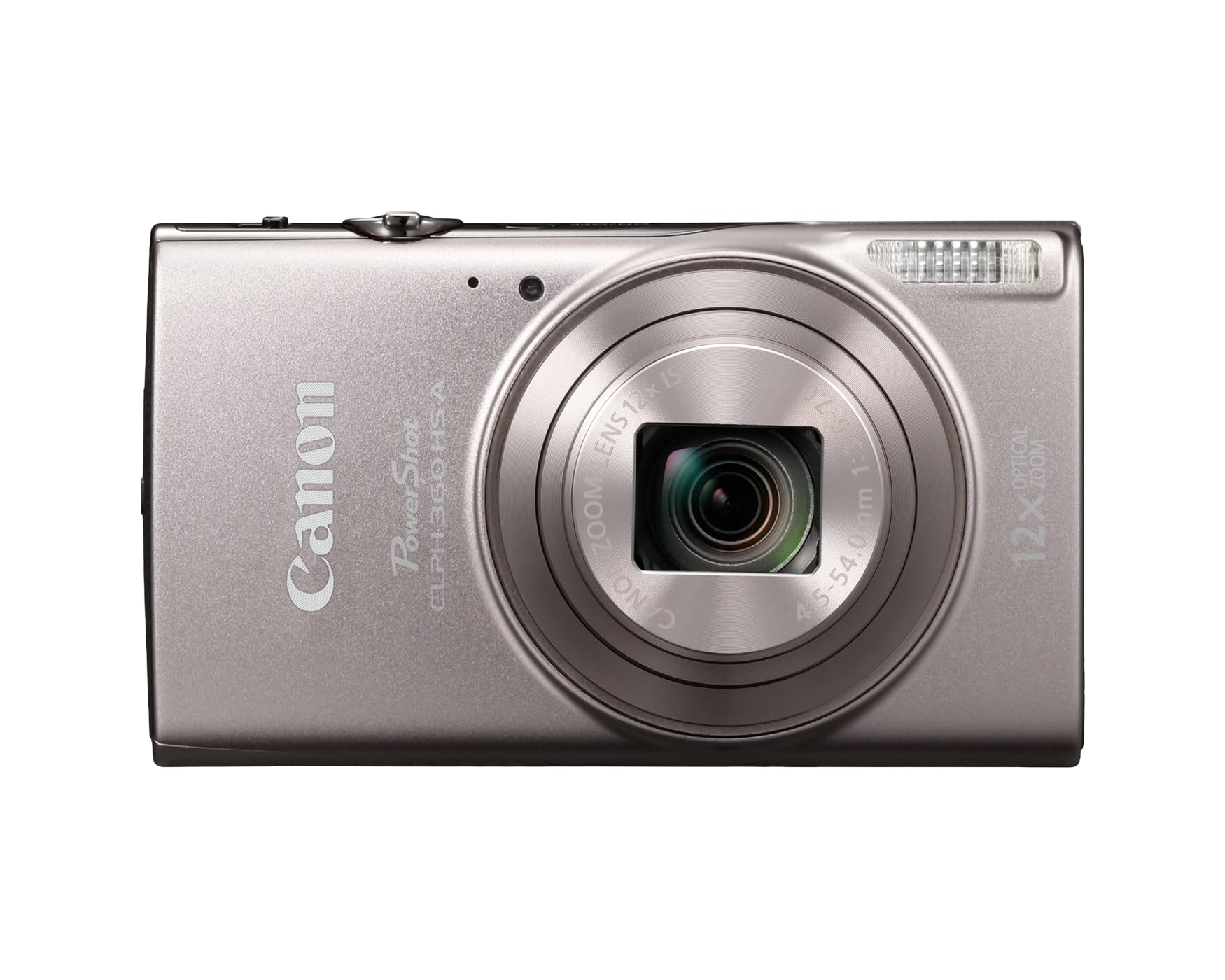
A compact 12x zoom with built-in Wi-Fi and the digic 4+ image processor that handles dim light well.
The ELPH 360 HS packs a 20.2-megapixel CMOS sensor with the DIGIC 4+ processor—the same processor found in the larger SX530—into a slim body. The 12x optical zoom (aperture F2.8 at the wide end to F5.6 at full telephoto) is paired with an Optical Image Stabilizer, so handheld shots at the long end stay sharp. Hybrid Auto mode records a four-second video clip before each still and stitches them into a daily recap video, which is a fun feature for beginners who want quick memories.
Customers note the large 3.0-inch LCD is bright enough for outdoor framing and that built-in Wi-Fi and NFC make transferring images to a phone simple. The camera weighs very little at just 14 grams for the battery, plus a compact body that fits in a coat pocket. Reviewers mention the one-hour battery life means you should plan to charge overnight for an all-day outing, but the lithium-ion battery recharges fairly quickly via USB.
The main limit is the 12x zoom—noticeably shorter than the 30x and 50x options in this list. If you need to bring faraway subjects close, the Canon SX530 or Panasonic ZS99 will serve you better. The ELPH is built for everyday snapshots, not long-range wildlife.
Its Strong Points
- 20.2MP sensor and DIGIC 4+ processor produce good low-light images
- Hybrid Auto mode creates daily highlight reels automatically
- Very compact and light—easy to carry everywhere
Its Shortfalls
- 12x optical zoom is far less than the 50x on the Canon SX530, limiting distant shots
- Battery averages about one hour of use per charge
- No 4K video—shoots only 1080p
Pick this for: everyday carry, family snapshots, and beginners who value a premium image processor and easy sharing over extreme zoom reach.
Choose something else if: you need to shoot distant subjects regularly or require 4K video recording.
5. KODAK PIXPRO FZ55 Bundle
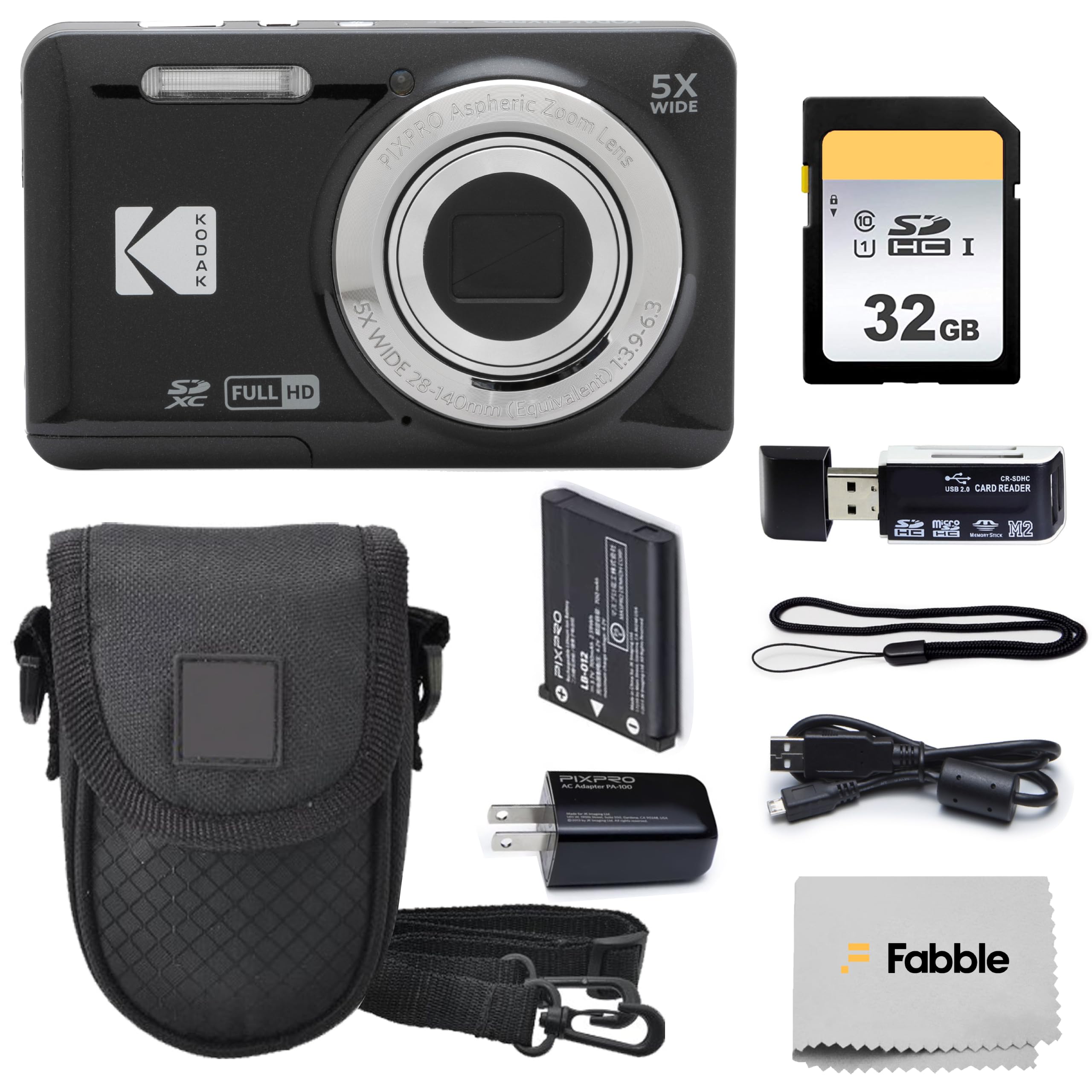
An all-in-one kit with a 5x optical zoom and lithium-ion battery for under.
The FZ55 bundle includes the camera, a 32GB SD card, protective case, hi-speed card reader, and cleaning cloth—everything you need to start shooting immediately. It features a 16-megapixel sensor, 5x optical zoom with a 28mm wide-angle lens, and built-in flash. The 2.7-inch LCD screen is smaller than the 3-inch screens on premium models, but it is adequate for composing shots and reviewing images.
Buyers rate this at 4.6 stars from 229 reviews, noting the image quality in daylight is strong for the price and the kit removes the stress of buying accessories separately. The lithium-ion battery is rechargeable, unlike the AA-battery models below. It also has both digital and optical image stabilization, though the digital stabilization is less effective than dedicated OIS.
If you rarely need to zoom, this is a solid starter kit. The aperture stays at F2.8 at the widest, which is decent for indoor shots, but the small sensor will struggle in dim light.
What You Get for the Price
- Complete bundle with case and SD card—no extra shopping needed
- Lithium-ion rechargeable battery (no AA swaps)
- 4.6-star average buyer rating from 229 reviews
What You Give Up
- 5x optical zoom is the shortest among the Kodaks here; the AZ255 has 25x
- 2.7-inch LCD is smaller and lower resolution than 3-inch models
- No Wi-Fi or NFC for phone transfers
Grab this if: you want a complete, ready-to-shoot kit with no hidden accessory costs and a rechargeable battery for casual family photography.
skip it if: you need significant optical zoom for distant subjects or prefer wireless image transfer to your phone.
6. Minolta 48MP Digital Camera

A 48-megapixel sensor and rear selfie lens built for social content creators on a tight budget.
The Minolta captures images at 48 megapixels—three times the pixel count of the 16-megapixel Kodak AZ255. It shoots 4K Ultra HD video with digital image stabilization, includes 9 scene modes and color filters, slow motion, and time lapse. The rear selfie lens makes composing self-portraits easy, and the 2.8-inch LCD screen lets you frame and review your shots. The complete package includes a 32GB memory card, rechargeable lithium-ion battery, USB cable, pouch, and wrist strap.
Shoppers say the autofocus uses phase detection and works quickly for stationary subjects, though the single autofocus point can miss fast-moving targets. The 16x digital zoom is not optical—it simply enlarges the pixels, which makes images look softer as you zoom in. For social media posts viewed on a phone, the 48MP files give you plenty of room to crop, but expect some grain in dim lighting due to the small sensor.
The trade-off is the lack of an optical zoom lens. The 48-megapixel count is impressive on paper, but it does not replace the reach of a 25x or 50x optical zoom. This camera is best for close-up portraits, group selfies, and video content—not for distant subjects. The 3.6-star average from 76 reviews reflects the reality that higher megapixels on a compact sensor do not guarantee sharper images than a well-designed 16-megapixel camera.
Social Content Strengths
- 48MP resolution allows aggressive cropping for social-media-sized images
- Rear selfie lens is great for vloggers and group shots
- 4K UHD video with slow motion and time lapse modes included
Optical Weaknesses
- 16x digital zoom only—no optical zoom means distant subjects look pixelated
- Single autofocus point struggles with moving subjects
- 3.6-star average is the lowest rating in this list
Reach for this if: you primarily shoot selfies, vlogs, and close-up content for social media and need 4K video at an entry-level price.
Avoid it if: you need to capture faraway subjects, action shots, or anything requiring optical zoom—a 16MP camera with optical zoom will outresolve this at a distance.
Understanding the Specs
Optical Zoom: The Distance Decoder
Optical zoom is the lens’s physical ability to magnify the scene before the image hits the sensor. A 50x optical zoom covers a massive range (24-1200mm equivalent), letting you shoot a wide landscape at one end and a bird at a feeder at the other without changing lenses. The number after the “x” tells you how many times the lens can magnify compared to its widest setting. Always choose optical zoom over digital zoom—digital zoom just crops the image inside the camera, which kills sharpness.
Megapixels: More Is Not Always Better
Megapixels measure the camera’s resolution: one megapixel equals one million pixels. On a compact camera’s small sensor (typically 1/2.3-inch), cramming 48 million pixels can actually produce more noise and softer details than a 16-megapixel sensor, because each pixel has less surface area to capture light. A 16MP to 20MP sensor on a well-engineered compact like the Canon PowerShot ELPH 360 HS often delivers cleaner daylight images than a 48MP sensor on the same small physical sensor size.
FAQ
Is a compact digital camera better than a smartphone for a beginner?
What does optical zoom mean in plain English?
Do I need image stabilization on a beginner camera?
How many megapixels do I really need for social media prints?
Which is better for a kid or teen: AA battery or lithium-ion camera?
Will a compact camera take better pictures than my phone at concerts?
What is the difference between the Kodak AZ255 and the Kodak FZ55?
Does a higher megapixel count mean better low-light performance?
Final Thoughts: The Verdict
For the majority of shoppers, the compact digital camera for beginners winner is the Canon PowerShot SX530 HS because its 50x optical zoom gives you the longest reach at a mid-tier price, and the built-in Wi-Fi (wireless networking for sharing photos) simplifies sharing. If you want true pocketability and 4K video (ultra-high-definition video with four times the pixels of 1080p), grab the Panasonic LUMIX ZS99. And for the best bang-for-buck starter kit that includes a case and memory card, the KODAK PIXPRO FZ55 is the budget-friendly pick.
How We Picked
We do not accept paid placement. Every pick is matched to a real buyer and a real use-case; we do not hands-on test units.
Sources & Methodology
Specifications: manufacturer listings and product documentation. Review insights: verified customer reviews, as of July 2026. Pricing: not shown on this page (it changes often); check the current price via the retailer link.
As an Amazon Associate, WellFizz earns from qualifying purchases. This does not affect which products we feature.
Related Guides

Mo Maruf
I created WellFizz to bridge the gap between vague wellness advice and actionable solutions. My mission is simple: to decode the research and give you practical tools you can actually use.
Beyond the data, I am a passionate traveler. I believe that stepping away from the screen to explore new environments is essential for mental clarity and physical vitality.