Our readers keep the lights on and my smoothie glass nicely filled. As an Amazon Associate, I earn from qualifying purchases.
The difference between a professional and an enthusiast often comes down to what fits in a jacket pocket. When your primary camera body is a bulky full-frame rig, the second camera you reach for on a personal trip or a street photography walk needs to vanish into your hand and deliver files that survive a 100% crop. That is the bar for today’s selection: uncompromising image quality in a chassis that never announces itself.
I’m Mohammad Maruf — the founder and writer behind WellFizz. This guide comes from hundreds of hours cross-referencing sensor performance, lens resolution data, real-world autofocus behavior from verified owners, and the thermal management specs that separate a usable everyday tool from a frustrating toy.
After sifting through dozens of models and analyzing thousands of customer reports, the following list represents the absolute best compact cameras for professional photographers currently available on Amazon — each chosen for its ability to deliver studio-grade results in a street-friendly footprint.
How To Choose The Best Compact Cameras For Professional Photographers
Not every small camera is a pro tool. The key differentiators are sensor surface area, lens resolving power, and the absence of computational crutches found in smartphones. Here are the three make-or-break factors when buying a serious compact.
Sensor Type and Resolution
Ignore marketing that hypes 20-megapixel counts on tiny 1/2.3-inch sensors. The real threshold for professional work is a 1-inch type sensor at minimum, with APS-C or full-frame sensors delivering the dynamic range and low-light headroom you need for print and large displays. A larger sensor gives you natural depth-of-field control and cleaner shadows at high ISO — something no algorithm can truly replicate.
Lens Aperture and Focal Length
A bright aperture (f/1.8 to f/2.8) separates a pro compact from a travel zoom. On a fixed-lens camera, the maximum aperture determines your ability to shoot indoors without flash and to separate a subject from the background. For interchangeable lens systems like Micro Four Thirds or E-mount, evaluate the glass you pair with the body — a cheap kit lens negates the advantage of a high-resolution sensor.
Autofocus Performance and Buffer Depth
Street and action photography demand a hybrid AF system with phase-detection points across the frame. Slow contrast-detect-only systems miss the decisive moment. Equally important is the buffer: can the camera sustain a 10-fps burst for more than two seconds before choking? A professional compact writes to a fast UHS-II card and clears the buffer in under 3 seconds — anything slower costs you shots.
Quick Comparison
On smaller screens, swipe sideways to see the full table.
| Model | Category | Best For | Key Spec | Amazon |
|---|---|---|---|---|
| Leica Q3 | Premium Full-Frame | Street & Travel | 60MP Full-Frame, f/1.7 Summilux | Amazon |
| Fujifilm X100VI | Premium APS-C | Everyday Carry & JPGS | 40.2MP APS-C, f/2, IBIS | Amazon |
| Fujifilm X-T50 | Mid-Range APS-C | Travel & Video Hybrid | 40.2MP APS-C, 6.2K Video | Amazon |
| Canon EOS R7 | Mid-Range APS-C | Action & Wildlife | 32.5MP APS-C, 30fps Electronic | Amazon |
| Sony RX100 VII | Premium 1-Inch | All-Round Travel Zoom | 20.1MP 1-inch, 24-200mm f/2.8-4.5 | Amazon |
| Ricoh GR IIIx | Premium APS-C | Street & Snap Shooting | 24.2MP APS-C, 40mm f/2.8 | Amazon |
| Panasonic S5II Kit | Premium Full-Frame | Studio & Video Hybrid | 24.2MP Full-Frame, Dual Kit Lenses | Amazon |
| Sony RX100 V | Mid-Range 1-Inch | Fast Action & 24fps Burst | 20.1MP 1-inch, 0.05s AF | Amazon |
| Canon PowerShot V1 | Mid-Range 1.4-Type | Vlogging & Streaming | 22.3MP 1.4-Type, f/2.8-4.5, Cooling Fan | Amazon |
| Nikon D7500 DSLR | Mid-Range APS-C | Versatile DSLR System | 20.9MP APS-C, 51-Point AF | Amazon |
| OM System E-M10 IV | Value MFT System | Compact System Camera | 20MP MFT, 5-Axis IBIS | Amazon |
| Nikon COOLPIX P1100 | Long Zoom Bridge | Wildlife & Birding | 16MP 1/2.3-inch, 125x Zoom | Amazon |
| Panasonic LUMIX ZS99 | Budget Travel Zoom | Travel & Concerts | 20.3MP 1/2.3-inch, 30x Leica Zoom | Amazon |
In‑Depth Reviews
1. Leica Q3 Compact Digital Camera (19080)
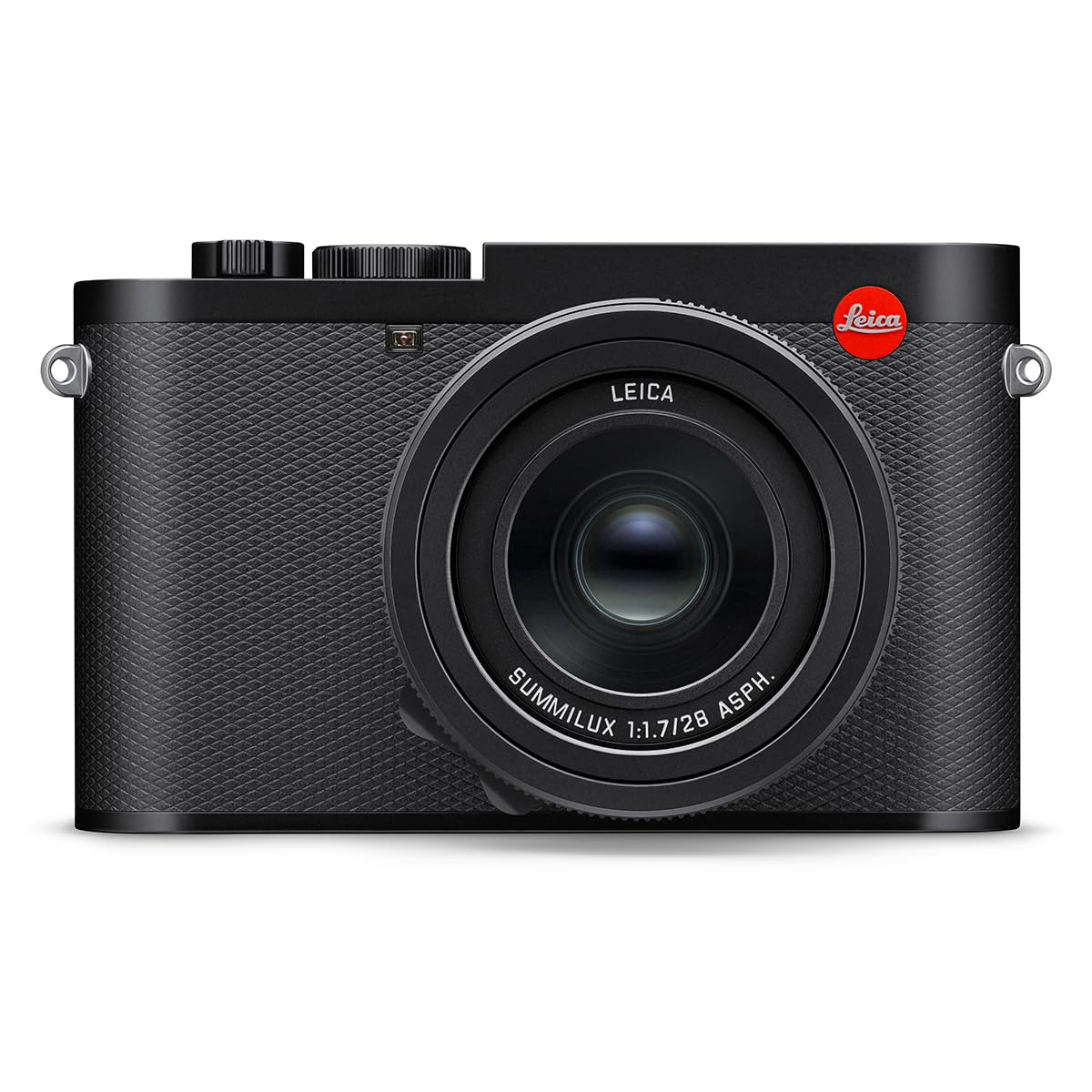
The Leica Q3 is the definitive benchmark for a professional compact camera. Its 60-megapixel BSI full-frame sensor with Triple Resolution Technology delivers forensic-level detail, and the legendary Summilux 28mm f/1.7 ASPH lens resolves every pixel with zero chromatic aberration. The Maestro IV processor backed by 8GB of memory ensures the buffer clears instantly, while the hybrid autofocus system with 256 points tracks subjects with absolute precision.
Owners report that the camera feels like a single-purpose tool built for one thing: making exceptional images. The digital zoom crops up to 90mm without significant quality loss, giving the 28mm prime surprising versatility. For street photography, travel, and reportage, the Q3 eliminates the need for any second body.
Downsides are few but real: the price tag is substantial, supply is constrained, and some units have arrived with missing accessories (check seller ratings carefully). But for the professional who demands uncompromising image quality in a compact chassis, this is the endgame.
Why it’s great
- Unmatched 60MP full-frame resolution in a pocketable form
- Summilux f/1.7 lens is among the sharpest ever made
- Hybrid AF with 256 points is fast and reliable in all light
Good to know
- Premium tier investment requires budget planning
- Fixed 28mm lens needs a digital crop for longer reach
- Some reports of damaged inventory from third-party sellers
2. Fujifilm X100VI Digital Camera

The X100VI is a cultural phenomenon for good reason. The 40.2-megapixel X-Trans CMOS 5 HR sensor paired with a 23mm f/2 lens (35mm equivalent) produces JPEGs so good that many professionals skip post-processing entirely. The new 5-axis IBIS provides up to 6 stops of stabilization, making handheld low-light shooting at ISO 12800 usable, while the built-in 4-stop ND filter gives you wide-aperture control in bright sunlight.
Users transitioning from full-frame systems report falling in love with the creative constraints of the fixed focal length and the tactile experience of the analog-style dials. Film Simulation modes, including REALA ACE, produce color renditions that are hard to replicate in Lightroom. The camera also shoots 6.2K video with impressive detail.
Minor gripes include inconsistent autofocus in very low contrast scenes, a rear screen that lacks the tilt range of the X-T series, and a battery life that demands a spare. None of these detract from its status as the ultimate everyday carry camera for working photographers.
Why it’s great
- Out-of-camera JPEGs with film simulations save editing time
- 40.2MP sensor captures fine detail for crops and large prints
- 6-stop IBIS and built-in ND filter add creative flexibility
Good to know
- Fixed 35mm equivalent lens requires you to zoom with your feet
- Battery life is modest; carry at least one spare
- Lens AF motors lag behind the latest contrast-detect algorithms
3. Fujifilm X-T50 Mirrorless Digital Camera XC15-45mm Kit

The X-T50 brings the same 40.2-megapixel sensor found in the X-T5 into a smaller, lighter body with a dedicated Film Simulation dial. It supports 6.2K/30p and 4K/60p video in 10-bit 4:2:2 color, and the native Frame.io Camera to Cloud integration is a game-changer for working professionals who need instant backups. Owners praise the lightweight build and excellent image quality that rivals full-frame sensors.
The kit lens (XC15-45mm) is a competent starter, but experienced users note that pairing the body with a sharper prime like the Fujinon 23mm f/2 unlocks the sensor’s full resolving power. The film simulation dial speeds up JPEG delivery for clients who want immediate results without post-processing.
Criticisms center on the SD card slot placement under the battery door, which makes tripod changes cumbersome, and the lack of weather sealing. The camera also generates large 40MP raw files that slow down older computers and card readers.
Why it’s great
- Excellent 40.2MP sensor in a lightweight body
- Dedicated film simulation dial for rapid workflow
- Native Frame.io cloud upload for instant backups
Good to know
- SD card slot placement is awkward under the battery door
- Not weather-sealed; care needed in rain or dust
- Large raw files require fast UHS-II cards and computer storage
4. Canon EOS R7 Mirrorless Camera (Body Only)

Canon’s R7 is the action-oriented APS-C body that professionals turn to for wildlife, sports, and fast-moving subjects. The 32.5-megapixel sensor with Dual Pixel CMOS AF covers 100% of the frame with 651 zones, and the camera captures bursts at up to 30fps in electronic shutter mode with pre-shooting buffer. The 5-axis IBIS provides coordinated control IS for shake-free telephoto shots.
Users consistently rate the autofocus as “sticky” — it locks onto subjects and stays locked, even during rapid burst sequences. The body is compact yet has a comfortable grip, and battery life is better than advertised. Dual SD card slots with V90 support ensure fast writes.
The main drawback is the RF mount lens ecosystem: native RF-S lenses are limited, and adapting EF-S lenses adds bulk. A few users also note that non-Canon lenses can have focus compatibility issues. But for a compact action body, the R7 is unmatched in its price tier.
Why it’s great
- 651-point Dual Pixel AF is incredibly fast and accurate
- 30fps electronic shutter with pre-shooting burst
- Excellent IBIS with coordinated lens stabilization
Good to know
- Limited native RF-S lens selection
- Non-Canon lenses may have focus quirks
- Crop sensor means telephoto reach but wider angle limitations
5. Sony RX100 VII Premium Compact Camera
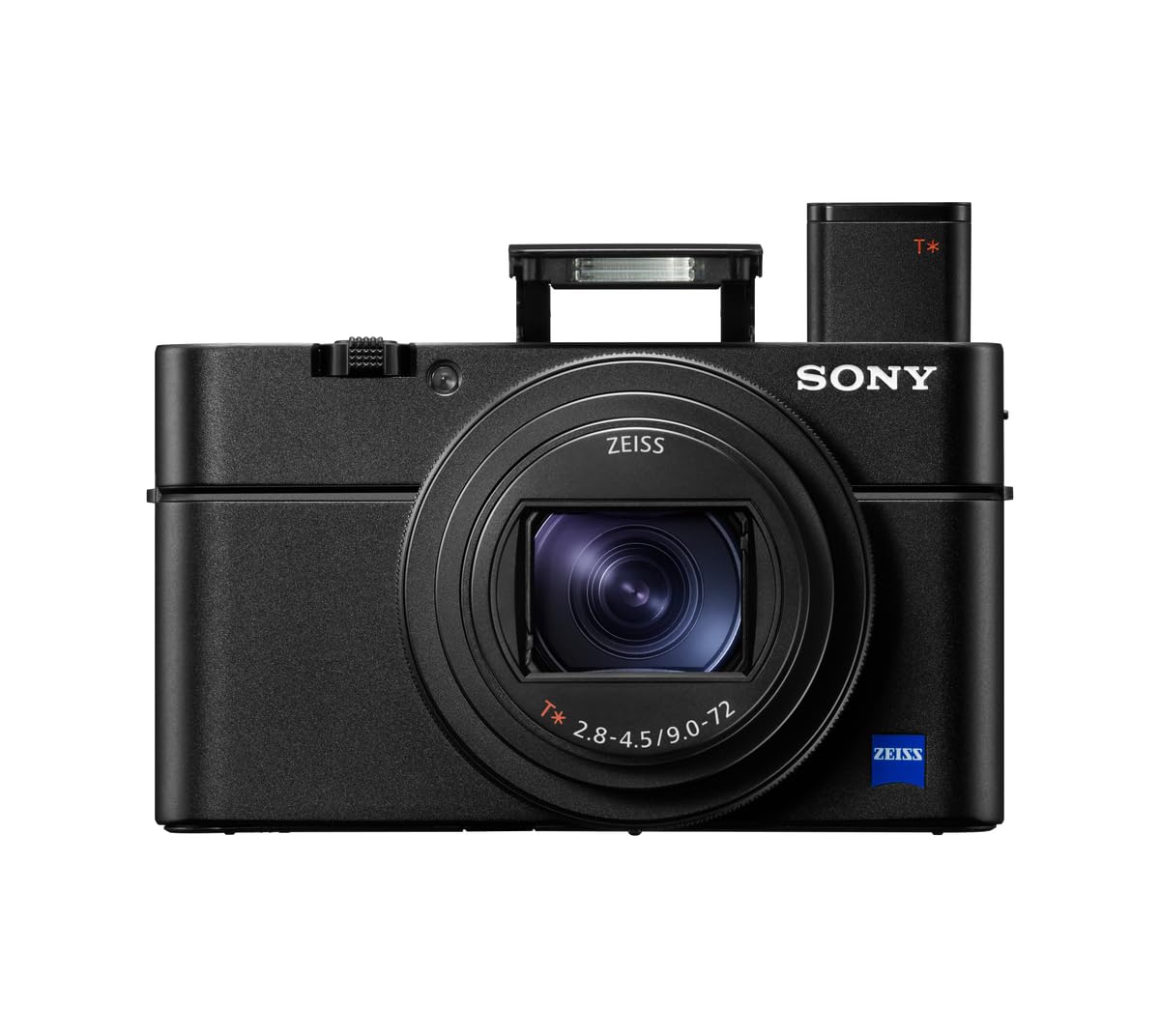
The RX100 VII is the Swiss Army knife of pro compacts. The Zeiss Vario-Sonnar 24-200mm f/2.8-4.5 lens covers everything from wide landscapes to telephoto portraits, while the 357-point phase-detection AF system locks focus in 0.02 seconds. The blackout-free 20fps burst mode and real-time tracking for humans and animals make this a serious tool for event and travel photography.
Owners who pair this with a Sony A7 series body appreciate the consistent color science and the ability to leave the big rig at home when traveling light. The 4K video with microphone input and active IS makes it a capable vlogging companion. The pop-up EVF is small but usable, and the lens produces sharp images even through glass at full zoom.
Common complaints include a slippery body finish, a complex menu system, and the lack of an included wall charger. The battery life is average, and the camera lacks weather sealing, but for pure versatility in a jacket pocket, the RX100 VII remains the top premium zoom compact.
Why it’s great
- 24-200mm zoom covers all travel scenarios in one lens
- Blazing fast 0.02s AF with 357 phase-detection points
- Blackout-free 20fps burst with real-time eye tracking
Good to know
- Slippery body needs an add-on grip for security
- No included wall charger; micro USB only
- Complex menu system requires time to learn
6. Ricoh GR IIIx Digital Compact Camera

The Ricoh GR IIIx is the ultimate stealth camera for street work. The 40mm f/2.8 equivalent lens provides a natural perspective that matches the human eye’s effective field of view, making compositions feel intuitive. The 24.2-megapixel APS-C sensor with the GR Engine 6 delivers sharp, film-like images that require minimal editing, and the 0.8-second startup time means you never miss a decisive moment.
Owners praise the camera’s pocketability — it truly disappears until you need it. Fast hybrid AF locks onto subjects quickly, and the customizable film simulations via community recipes let you dial in a look on the fly. The built-in IBIS compensates for the absence of a secondary stabilizer.
Drawbacks include poor battery life (carry at least two spares), no built-in flash, no tilt screen, and an open lens tube that invites dust onto the sensor. The fixed 40mm lens also means no zoom. But for pure photographic connection, nothing beats the GR IIIx’s quiet simplicity.
Why it’s great
- Extremely compact with an APS-C sensor and 40mm eq. lens
- 0.8-second startup is perfect for street photography
- Customizable film simulations produce stunning JPEGs
Good to know
- Battery life is very short; purchase at least two extras
- No built-in flash or tilt screen
- Lens extends and can attract dust without a filter adapter
7. Panasonic LUMIX S5II Mirrorless Camera (20-60mm + 50mm Kit)
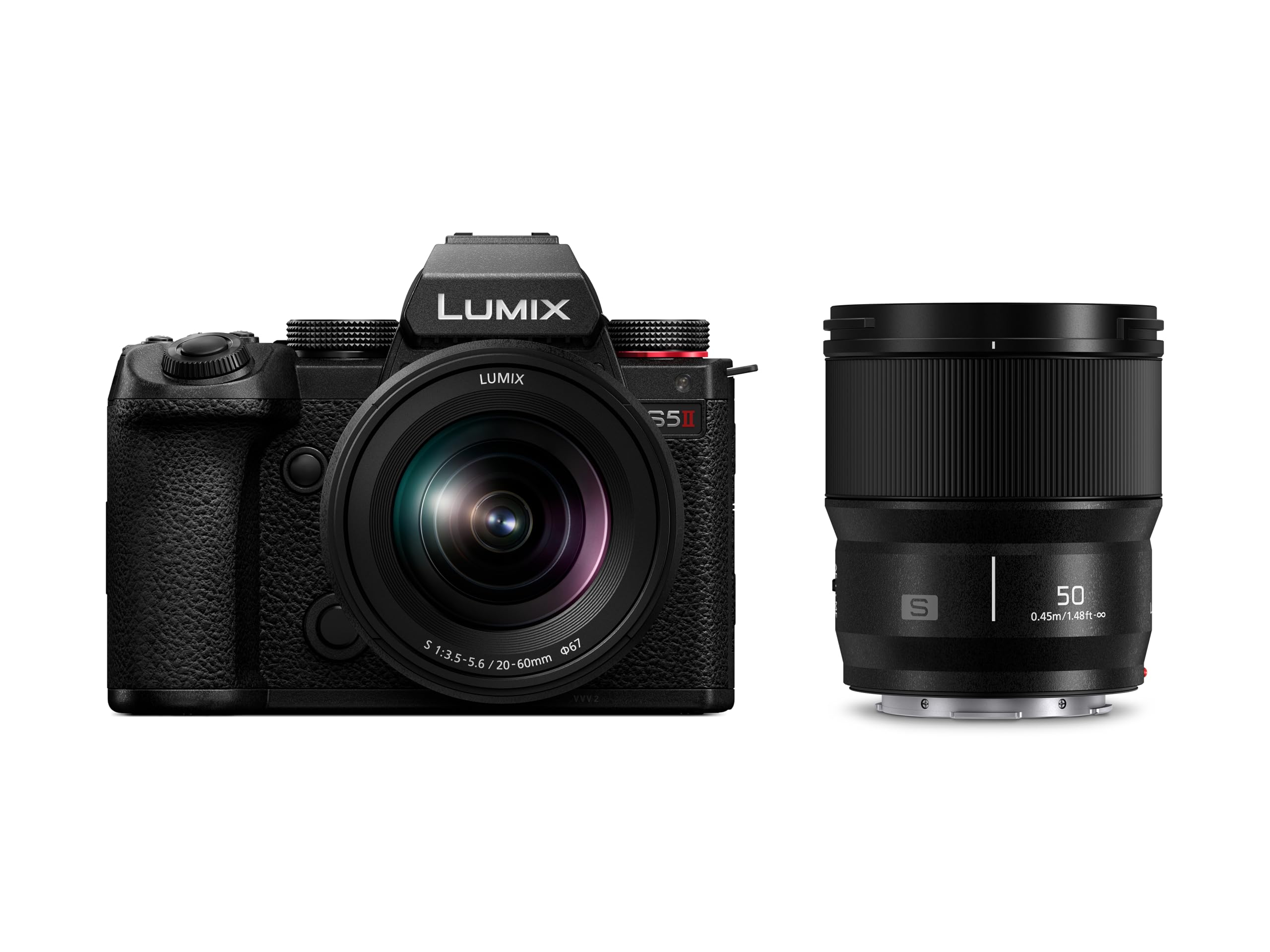
The S5II is the compact full-frame hybrid that finally fixes Panasonic’s autofocus reputation. The Phase Hybrid AF system with 779 detection points delivers reliable subject tracking in tough lighting, while the 24.2-megapixel full-frame sensor produces 14+ stop V-Log/V-Gamut video with rich dynamic range. The active I.S. technology enables smooth handheld walking shots.
Users transitioning from older Panasonic systems report that the PDAF is a huge leap forward — 95% reliable in most scenarios. The kit bundle with the 20-60mm f/3.5-5.6 zoom and the 50mm f/1.8 prime provides a solid starting kit for both photography and 4K video. The unlimited recording via the internal cooling fan is a lifesaver for content creators.
One significant criticism is the rolling shutter effect: fast panning movements create noticeable jelly warping, and the L-mount lens ecosystem is still growing. Low-light autofocus can occasionally struggle compared to competitors. But for the price point, this is the best full-frame value you can get.
Why it’s great
- Phase Hybrid AF finally matches rivals in reliability
- Active I.S. delivers smooth video footage without a gimbal
- Unlimited 4K recording via efficient thermal management
Good to know
- Rolling shutter is noticeable during fast panning
- L-mount lens selection is still maturing
- Low-light AF can be less consistent than phase-detect-only systems
8. Sony Cyber-Shot DSC-RX100 V

The RX100 V remains a speed champion in the compact world. Its 0.05-second hybrid AF — the world’s fastest at launch — with 315 phase-detection points captures sharp images of fast-moving subjects with no perceptible delay. The 24fps continuous shooting with autofocus tracking is exceptional for a pocket-sized camera, and the 1-inch Exmor RS sensor with DRAM delivers outstanding image quality.
Owners love the Zeiss 24-70mm f/1.8-2.8 lens for its bright aperture and consistent sharpness across the frame. The retractable Tru-Finder EVF is a welcome feature for bright daylight shooting, and the high frame rate makes this an excellent second camera for sports or event work.
The biggest downsides are poor battery life (~250 shots), tiny control buttons, and a complex menu that takes time to master. The 4K shooting is limited to 5 minutes. But for sheer speed in a small package, the RX100 V is still a very relevant pro tool.
Why it’s great
- World-beating 0.05s AF with 315 phase-detection points
- 24fps burst with continuous autofocus tracking
- Sharp 24-70mm f/1.8-2.8 Zeiss lens
Good to know
- Battery life is short; plan for multiple spares
- Small buttons can be fiddly for larger hands
- 4K video limited to 5-minute clips
9. Canon PowerShot V1 Hybrid Camera

Canon’s PowerShot V1 is a purpose-built hybrid for vloggers, streamers, and content creators who also want professional stills. The 1.4-type, 22.3MP sensor is larger than the standard 1-inch found in most rivals, giving better noise performance, and the 16-50mm f/2.8-4.5 wide-angle zoom is ideal for self-recording and interviews. Canon Log 3 recording with 10-bit color depth allows serious grading in post.
Users praise the built-in cooling fan that enables unlimited high-resolution recording, a major advantage over other compacts. The hybrid AF system with 100 detection points is fast and reliable, especially for eye tracking. The ultrawide lens is excellent for architecture and street photography too.
Drawbacks include no optical image stabilization (relying on electronic IS that degrades with walking movement), no flash, and the SD card slot being placed under the battery door (blocked by tripod quick-release plates). The body is also bulkier than expected — more coat pocket than pants pocket.
Why it’s great
- Large 1.4-type sensor with excellent 22.3MP stills
- Cooling fan enables unlimited 4K recording
- Canon Log 3 and 10-bit color for professional grading
Good to know
- No optical IS; electronic IS limited for walking shots
- SD card slot is under the battery door
- No flash or included charger (USB-C only)
10. Nikon D7500 DSLR with 18-140mm Lens

The D7500 is a testament to the fact that DSLRs still have a place in the pro compact conversation. The 20.9-megapixel sensor delivers class-leading image quality inherited from the D500, with a 51-point AF system featuring 15 cross-type sensors that locks onto subjects quickly. The 8fps burst rate and large 3.2-inch tilting touchscreen make it a comfortable tool for long shooting days.
Owners appreciate the 18-140mm VR kit lens for its versatility — covering wide landscapes to decent telephoto reach without swapping glass. The battery life is exceptional, easily lasting through a weekend of heavy shooting. The viewfinder is bright and lag-free, and the weather-resistant body handles light rain well.
The D7500 is a 2017 model and shows its age with no IBIS, no USB-C charging, and a slightly heavier body than mirrorless rivals. But for professionals who value optical viewfinders, proven ergonomics, and the Nikon F-mount system, it remains a very capable workhorse at a compelling value.
Why it’s great
- Excellent 20.9MP sensor with D500-level image processing
- 51-point AF with 15 cross-type sensors is fast in any light
- Exceptional battery life for all-day shoots
Good to know
- 2017 model lacks modern features like USB-C and IBIS
- Heavier than mirrorless alternatives
- No in-body stabilization; relies on lens VR
11. OM SYSTEM Olympus E-M10 Mark IV Silver Kit

The E-M10 Mark IV is the most accessible way to enter the professional compact system world. The 20-megapixel Micro Four Thirds sensor paired with 5-axis in-body image stabilization (rated for 4.5 shutter speed steps) delivers incredibly sharp images for its size. The flip-down monitor and dedicated selfie mode hint at its hybrid ambitions, while the 16 Art Filters provide creative JPEG options.
Owners rave about how pocketable the camera is with the 14-42mm EZ pancake lens — it fits in a jacket pocket, making it a truly go-anywhere system. The image quality is a clear step above any smartphone, and the IBIS allows 1-second handheld exposures. The 121-point contrast-detect AF is quick enough for daily use.
Downsides include a slower burst rate than competition, no USB-C charging, and a Wi-Fi app that feels dated. The kit lens is decent but upgrading to the OM System 12-45mm f/4 PRO lens significantly improves sharpness. Best suited for photographers building a budget-friendly system.
Why it’s great
- 5-axis IBIS provides excellent stabilization in a small body
- Compact enough for jacket pocket carry
- Good entry point to the M4/3 lens ecosystem
Good to know
- Slower burst speeds than high-end competition
- No USB-C charging; uses older micro USB
- Wi-Fi app transfer speeds are slow
12. Nikon COOLPIX P1100 Superzoom Digital Camera

The P1100 is a niche tool for a specific pro: the wildlife and bird photographer who must reach subjects at impossible distances. The 125x optical zoom covers an extraordinary 24-3000mm equivalent range, and the Dual Detect Optical VR stabilization provides up to 4 stops of shake compensation — essential for handholding at telephoto extremes. The dedicated Bird-watching mode optimizes settings for avian subjects.
Owners who use this for wildlife report capturing images that are literally impossible with any other compact camera. For travel photography involving distant subjects — bear sightings, glacier formations, moon details — the P1100 delivers detail that would require a multi-thousand-dollar lens kit on a full-frame system. The camera shoots 4K UHD video and raw format JPEGs.
Biggest compromises include a small 1/2.3-inch sensor that limits dynamic range and low-light performance, a plastic body that feels delicate, and poor tracking AF for birds in flight. The controls are also inconsistent with higher-end Nikon DSLR bodies. If reach is your priority over everything else, this is the tool.
Why it’s great
- Incredible 125x optical zoom reaches 3000mm equivalent
- Dual VR stabilization helps at extreme telephoto ranges
- Dedicated bird-watching mode for wildlife enthusiasts
Good to know
- Small sensor limits low-light and dynamic range
- Plastic construction feels less durable
- AF tracking struggles with fast-moving birds in flight
13. Panasonic LUMIX TZ/ZS99 Point and Shoot Camera

The ZS99 is the ultra-portable travel zoom that fits in a pants pocket while offering a 24-720mm equivalent Leica lens with 30x optical zoom. The 20.3-megapixel sensor captures decent images in good light, and the 4K video at 30p provides a higher resolution than most travel compacts. The tiltable 1,840k-dot touchscreen is useful for low-angle compositions.
Owners who bring this on family trips, concerts, and daily outings praise its size convenience. The zoom reach is genuinely useful for far-away subjects, and the Bluetooth 5.0 connection makes sharing images easy. The step zoom function and Lens Position Resume are thoughtful additions.
However, image quality is a notable step down from 1-inch and larger sensor cameras — low-light performance is poor, autofocus can hunt in dim conditions, and the LCD is hard to read in direct sunlight. This is best viewed as the most compact option for zoom reach, not as a primary pro camera. Several reviewers compared image quality unfavorably to modern smartphones.
Why it’s great
- 30x Leica zoom in a genuinely pocketable body
- 4K video and 10fps burst for action moments
- Bluetooth 5.0 for quick smartphone sharing
Good to know
- Small sensor delivers poor low-light performance
- AF can be slow and inaccurate in dim conditions
- LCD is difficult to view in bright outdoor light
FAQ
Is a 1-inch sensor good enough for professional work?
Why do fixed-lens compacts cost more than interchangeable lens cameras?
What is IBIS and why is it important in a compact camera?
Final Thoughts: The Verdict
For most professionals, the definitive compact cameras for professional photographers winner is the Leica Q3 because it combines a 60MP full-frame sensor with a world-class Summilux lens in a body that disappears in your bag. If you want exceptional JPEG film simulations and a more affordable price, grab the Fujifilm X100VI. And for unmatched zoom versatility in a jacket pocket, the Sony RX100 VII is your ultimate travel companion.

Mo Maruf
I created WellFizz to bridge the gap between vague wellness advice and actionable solutions. My mission is simple: to decode the research and give you practical tools you can actually use.
Beyond the data, I am a passionate traveler. I believe that stepping away from the screen to explore new environments is essential for mental clarity and physical vitality.