Our readers keep the lights on and my smoothie glass nicely filled. As an Amazon Associate, I earn from qualifying purchases.
The hunt for a compact camera with zoom usually hits a wall: pocket-friendly bodies ship with weak reach, and the cameras that bring distant subjects close weigh as much as a small telescope. That trade-off has frustrated travelers, wildlife watchers, and concert-goers for years. The real solution lives in the narrowing gap between sensor technology and lens engineering — where optical zoom stretches past 30x in a body that still slides into a jacket pocket.
I’m Mohammad Maruf — the founder and writer behind WellFizz. I’ve spent hundreds of hours analyzing lens formulas, stabilization systems, sensor sizes, and real-world image samples to identify which models genuinely deliver on the promise of reach without bulk.
This guide evaluates nine models that span entry-level superzooms to premium pocket cameras, weighing optical zoom range, stabilization effectiveness, sensor performance, and real-world handling to help you find the best compact camera with zoom for your specific shooting needs.
How To Choose The Best Compact Camera With Zoom
The best compact camera with zoom balances three competing forces — optical reach, sensor quality, and body size. A 60x zoom lens attached to a tiny sensor produces soft results at full extension. A large sensor in a pocket body limits zoom to 3x or 5x. Understanding where you fall on that spectrum determines which camera serves you best.
Optical Zoom vs. Digital Zoom
Optical zoom uses actual glass elements to magnify the scene. Digital zoom crops into the image and enlarges pixels — it degrades resolution immediately. Always prioritize optical zoom range; ignore any camera marketing that touts high digital zoom numbers. The cameras in this guide range from 30x optical zoom in pocket-friendly bodies to 83x optical zoom in bridge-style compacts.
Sensor Size and Low-Light Handling
Larger sensors capture more light, produce cleaner images at higher ISOs, and deliver more natural background blur. Compact cameras typically use 1/2.3-inch sensors, which make 30x to 60x zoom possible in a lightweight body. A few premium pocket cameras use 1-inch sensors — roughly four times the surface area — for significantly better low-light performance, but that sensor size limits zoom range to around 3x to 5x optical. The Nikon Z 30 uses an APS-C sensor, the largest in this lineup, but requires interchangeable lenses.
Image Stabilization at Full Zoom
At 50x or 80x optical zoom, hand movement magnifies dramatically. Optical Image Stabilization (OIS) uses lens elements that shift to compensate for shake. Some cameras combine OIS with digital stabilization for video. On bridge cameras, effective stabilization can mean the difference between a sharp handheld shot of a bird at 2000mm and a motion-blurred mess. Test this if possible — some stabilization systems handle panning better than static shake.
Autofocus Speed and Accuracy
At extreme telephoto lengths, autofocus needs to lock onto small, distant subjects through a narrow field of view. Contrast-detection AF is common in budget superzooms and can hunt or fail on fast-moving animals or athletes. Phase-detection or hybrid AF systems provide faster, more confident focus tracking. Cameras with manual focus override rings offer a safety net when autofocus struggles.
Battery Life and Charging
Zooming drains batteries faster than fixed-lens shooting because the lens motor extends and retracts glass elements with every power-up and zoom adjustment. Some compact cameras use USB-C charging, which allows external battery packs to extend shooting sessions in the field. Consider whether the camera ships with a dedicated charger or relies entirely on in-camera USB charging — the latter can be inconvenient if you want to shoot while charging a second battery.
Quick Comparison
On smaller screens, swipe sideways to see the full table.
| Model | Category | Best For | Key Spec | Amazon |
|---|---|---|---|---|
| Nikon Z 30 + 16-50mm | Mirrorless | Vlogging & creators | APS-C 20.9MP sensor | Amazon |
| Canon PowerShot V1 | Premium Compact | Content creation hybrid | 1.4-Type 22.3MP sensor | Amazon |
| DJI Osmo Pocket 3 | Gimbal Camera | Ultra-portable vlogging | 1-inch CMOS, 3-axis gimbal | Amazon |
| Panasonic LUMIX ZS99 | Travel Zoom | Pocketable long-zoom travel | 30x optical zoom (24-720mm) | Amazon |
| Xtra Muse | Gimbal Camera | Budget-friendly gimbal video | 1-inch CMOS, 4K/120fps | Amazon |
| Panasonic LUMIX FZ80D | Bridge Superzoom | Extreme zoom on a budget | 60x optical zoom (20-1200mm) | Amazon |
| Nikon COOLPIX P950 | Bridge Superzoom | Wildlife & moon photography | 83x optical zoom (24-2000mm) | Amazon |
| Canon PowerShot SX530 HS | Renewed Superzoom | Entry-level budget reach | 50x optical zoom (24-1200mm) | Amazon |
| Kodak PIXPRO AZ528 | Budget Superzoom | First-time superzoom buyers | 52x optical zoom (24mm wide) | Amazon |
In‑Depth Reviews
1. Nikon Z 30 with 16-50mm Zoom Lens

The Nikon Z 30 stands alone in this lineup as the only mirrorless interchangeable-lens camera, which gives it a decisive advantage in image quality and low-light performance. The APS-C 20.9-megapixel sensor captures dramatically more light than the 1/2.3-inch sensors found in most superzoom compacts, producing cleaner files at ISO 3200 and above. Paired with the 16-50mm kit lens, it provides a versatile wide-angle to short-telephoto range equivalent to 24-75mm in full-frame terms, though it lacks the extreme telephoto reach of the bridge-style cameras in this list.
Autofocus is among the fastest here, with 209 phase-detection points and reliable eye-tracking for both humans and animals — ideal for capturing an active child, a running dog, or a speaker moving across a stage. The fully articulating touchscreen flips forward for self-recording, making this an unusually strong hybrid stills-and-video camera. Video recording is unlimited, unlike some mirrorless competitors that overheat within 30 minutes, and USB-C provides constant power for extended streaming sessions.
The trade-off is that the Z 30 is not pocketable — the body alone weighs 405g with battery and card, and the attached lens adds another 135g. But for creators, vloggers, and photographers who prioritize sensor quality and lens system expandability over sheer zoom reach, this camera delivers a level of image fidelity that no compact superzoom can match.
Why it’s great
- APS-C sensor delivers outstanding low-light performance and dynamic range
- 209-point hybrid autofocus with reliable eye-tracking for people and pets
- Unlimited 4K video recording with USB-C power delivery
Good to know
- No viewfinder; composing shots relies entirely on the rear LCD
- Kit lens zoom range limited to 75mm equivalent, far less than superzoom compacts
- Requires carrying extra lenses for different focal lengths
2. Canon PowerShot V1

The Canon PowerShot V1 occupies a unique slot as a hybrid camera built specifically for content creators who shoot both video and stills. Its 1.4-type sensor — slightly larger than a standard 1-inch sensor — captures 22.3 megapixels for stills and 18.7 megapixels for video, with a base ISO of 800 in Canon Log 3 mode for wide dynamic range. The built-in 16-50mm F2.8-4.5 wide-angle zoom lens provides a 35mm equivalent range of roughly 18-50mm, making it ideal for vlogging and indoor shooting but limited in telephoto reach.
Video performance is the V1’s standout capability. Canon Log 3 records 10-bit color depth for professional-grade color grading, and the internal cooling fan enables extended 4K recording sessions without shutdown — a rare feature in compact cameras. The hybrid autofocus system with 100 AF points locks onto subjects quickly, and the ultrawide lens field of view keeps the shooter comfortably in frame during handheld vlogging.
The V1 does not include optical image stabilization in the lens body, relying instead on electronic stabilization for video, which is effective for static or slow-panning shots but introduces jitter during walking footage. There is no built-in flash, and the camera charges solely via USB-C with no included external charger. Its bulkier body is larger than traditional pocket cameras, though still far more compact than the Z 30 with a lens attached.
Why it’s great
- Larger 1.4-type sensor outperforms standard 1-inch compact sensors
- Canon Log 3 with 10-bit color for professional post-production flexibility
- Active cooling fan prevents overheating during long 4K recording sessions
Good to know
- No optical image stabilization; electronic stabilization struggles with walking shots
- Zoom range is limited to approximately 50mm equivalent — not a long-reach camera
- No battery charger included; charges only via USB-C port
3. DJI Osmo Pocket 3
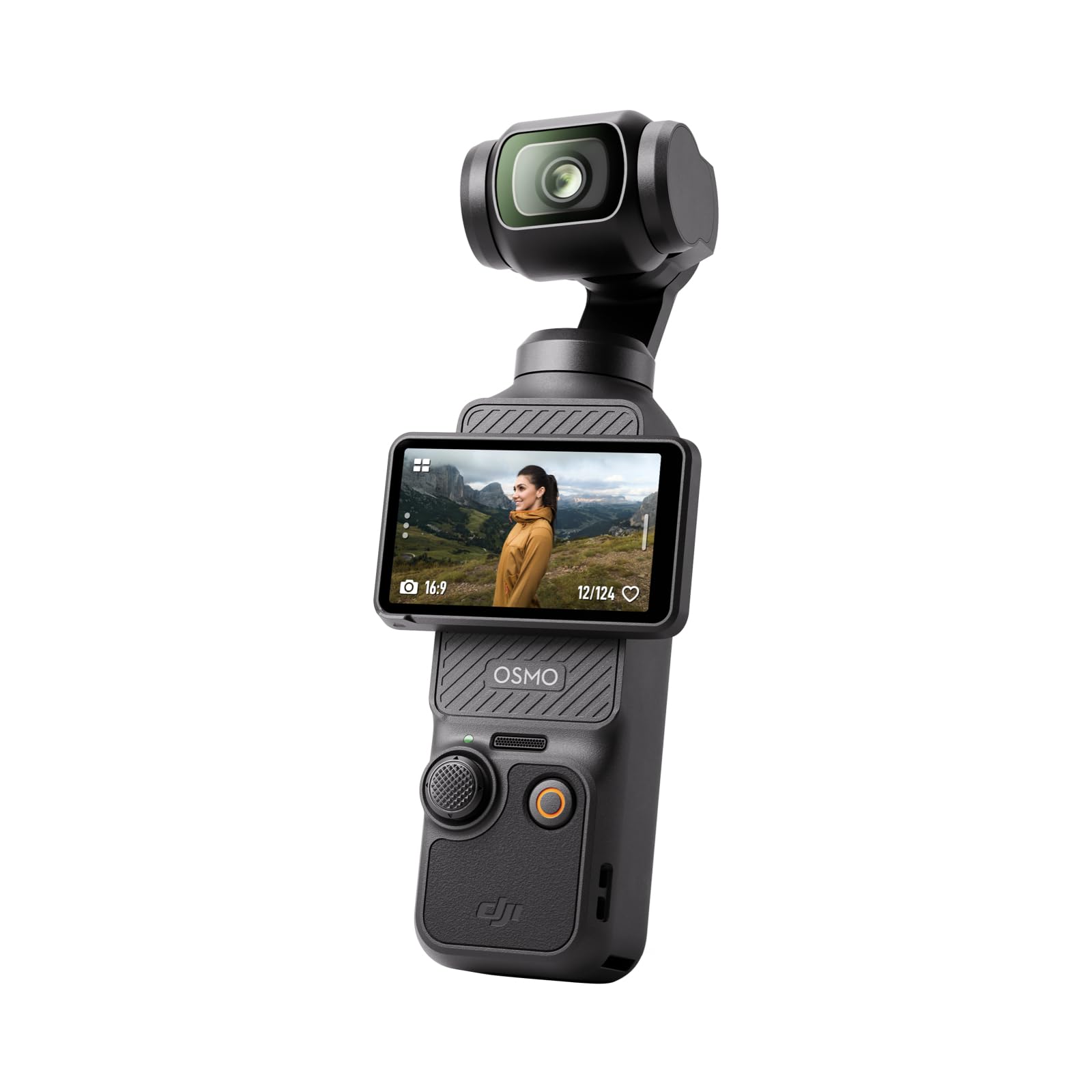
The DJI Osmo Pocket 3 redefines what a pocket camera can do by packing a 1-inch CMOS sensor and a fully motorized 3-axis gimbal stabilizer into a body that weighs just 179 grams. The 1-inch sensor captures 4K video at up to 120fps for smooth slow-motion playback, and the gimbal eliminates handheld shake completely — walking, jogging, or even running produces buttery-smooth footage without any electronic crop. Its 2-inch rotatable touchscreen switches between horizontal and vertical orientation instantly, a design choice that saves significant time for social media creators.
ActiveTrack 6.0 keeps subjects locked in the frame whether they are walking, dancing, or spinning, and the fast contrast-detection autofocus is reliable in good light. The built-in stereo microphones capture usable audio, and direct connectivity to DJI Mic 2 transmitters provides professional wireless sound without external receivers. Battery life reaches roughly 166 minutes of continuous recording, and USB-C fast charging can bring the camera back to full power quickly between shoots.
The trade-off for this tiny size and stabilization is limited optical range. The Osmo Pocket 3 uses a fixed wide-angle lens with no optical zoom — reach comes entirely from digital cropping, which reduces resolution. For users whose priority is smooth, stabilized wide-angle video in a truly pocketable device, this camera is unmatched. For those who need optical zoom to reach distant subjects, the Pocket 3 is not the right choice.
Why it’s great
- 3-axis mechanical gimbal delivers cinema-smooth footage in any walking scenario
- 1-inch sensor provides excellent video quality in mixed and low-light conditions
- Rotating screen enables instant switch between horizontal and vertical framing
Good to know
- No optical zoom — digital zoom only, which degrades image quality
- Battery is built-in and non-removable; cannot swap for fresh packs in the field
- ActiveTrack can lose subjects moving quickly across the frame in complex backgrounds
4. Panasonic LUMIX ZS99

The Panasonic Lumix ZS99 hits the sweet spot for travelers who want significant optical reach without carrying a bridge camera. Its 30x Leica DC zoom lens covers 24mm to 720mm (35mm equivalent), enough to frame a sweeping cathedral square at the wide end and pull in a performer on a distant stage at the telephoto end. The entire body slips into a jacket pocket or small purse, making it one of the few true pocket cameras capable of this zoom range.
The 1,840k-dot tiltable touchscreen is useful for shooting from awkward angles — hold the camera above a crowd at a concert or low to the ground for flower macros. Built-in Bluetooth 5.0 and a dedicated Send Image button transfer photos to a smartphone quickly, a feature that matters when you want to share shots from a day of sightseeing without pulling out a laptop. The hybrid autofocus system with 171 AF points provides confident subject locking, and USB-C charging means one cable serves both camera and phone.
The image sensor is a 1/2.3-inch type, which means image quality drops noticeably above ISO 800, and low-light concert shots will show grain. The lens aperture narrows to F6.4 at full telephoto, requiring good light or a steady surface for sharp results at 720mm. Image quality is good for social media and small prints but does not rival the larger-sensor cameras in this guide. The ZS99 arrives in silver; the nearly identical TZ99 is the European version that sometimes ships instead.
Why it’s great
- True pocket-friendly body with 30x optical zoom range
- Leica lens delivers consistent color accuracy and sharpness in good light
- USB-C charging and Bluetooth 5.0 for fast image transfer to phone
Good to know
- Small sensor struggles in low light; image quality degrades above ISO 800
- Aperture narrows significantly at full telephoto extension
- No built-in flash; some units ship as European TZ99 variant
5. Xtra Muse 4K Gimbal Camera
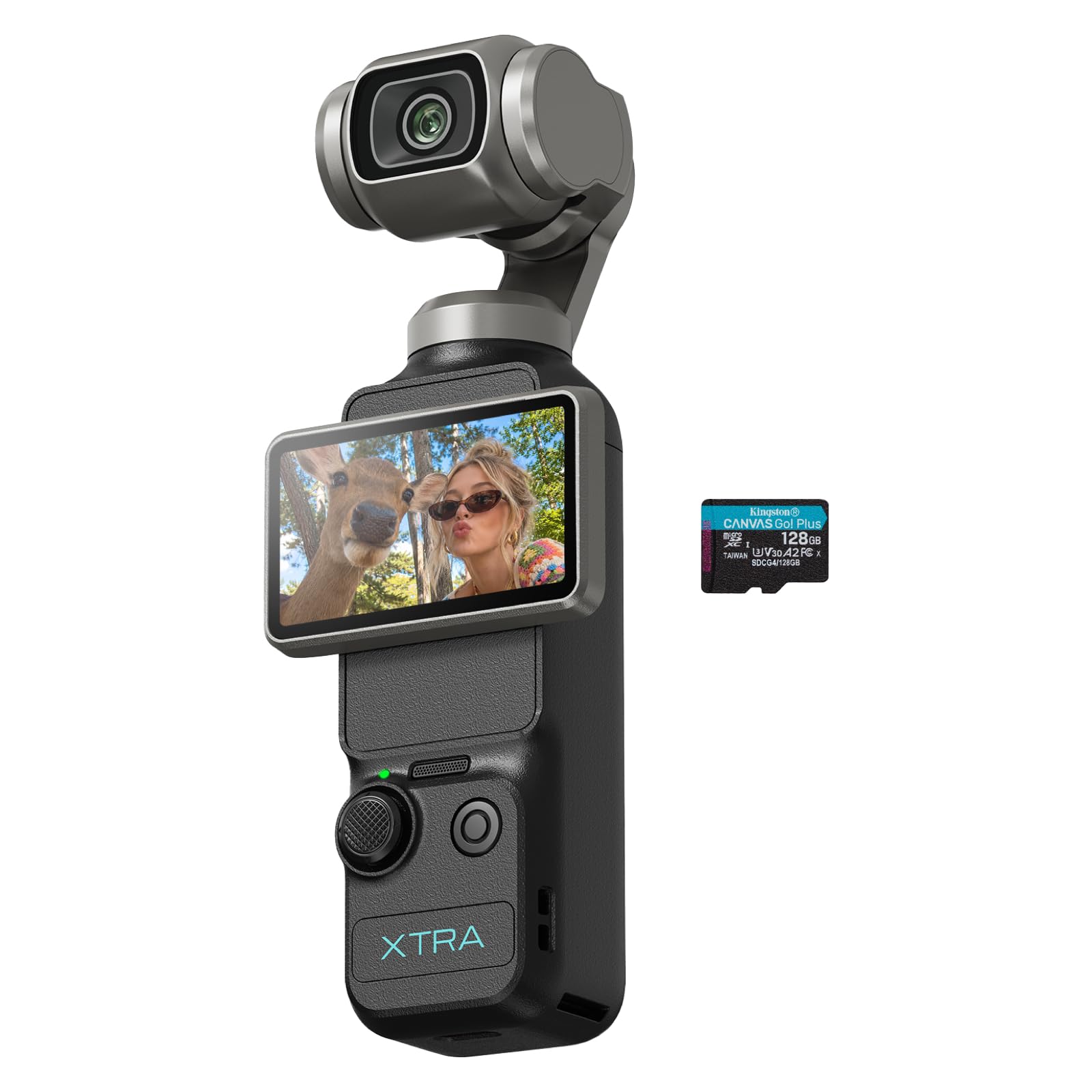
The Xtra Muse enters the market as a direct alternative to the DJI Osmo Pocket 3, sharing the same core concept — a 1-inch CMOS sensor mounted on a 3-axis gimbal stabilizer inside a pocket-sized body — but at a lower entry point. It records 4K video at 120fps for smooth slow-motion, and the built-in gimbal effectively cancels out the shake from walking, running, or hiking. The 2-inch touchscreen supports both horizontal and vertical framing, and the included carrying bag, wrist strap, and 1/4-inch threaded handle provide a complete out-of-box experience.
Master Follow mode keeps a moving subject centered in the frame, and fast autofocus locks onto faces and objects reliably in daylight conditions. The 10-bit X-Log color profile records up to one billion colors for flexible post-production grading, a feature typically reserved for cameras costing substantially more. The standard bundle includes a 128GB microSD card, saving buyers the hassle of purchasing storage separately.
Like the Osmo Pocket 3, the Xtra Muse has no optical zoom — all zooming is digital. The 20mm fixed wide-angle lens captures expansive scenes but cannot pull in distant subjects without cropping into the sensor. Build quality and user interface refinement fall slightly short of DJI’s offering, but for creators on a tighter budget who want stabilized 4K video from a 1-inch sensor, the Xtra Muse delivers strong value.
Why it’s great
- 1-inch sensor and 3-axis gimbal at a lower introductory price point
- 10-bit X-Log color for professional color grading flexibility
- Includes 128GB microSD card and full accessory bundle in the box
Good to know
- No optical zoom; relies entirely on digital cropping for reach
- User interface and stabilization refinement trail the DJI Pocket 3
- Battery life is decent but not exceptional for extended shooting days
6. Panasonic LUMIX FZ80D

The Panasonic Lumix FZ80D delivers 60x optical zoom from an equivalent 20mm wide-angle to 1200mm telephoto in a lightweight bridge camera body that weighs roughly 616 grams. That zoom range is extraordinary for the price — enough to capture a distant mountain peak, a buck at the edge of a field, or a performer on a faraway stage without moving from your spot. The Power O.I.S. optical image stabilization works actively at the telephoto end, making handheld shots at 1200mm feasible in good light.
Video shooters will appreciate the 4K Photo mode, which extracts 8-megapixel still frames from 4K video at 30fps. The Post Focus feature lets you tap a different area of a captured image to refocus after the shot — useful when the camera locked onto the wrong subject. The 2,360K-dot electronic viewfinder is bright enough for sunny-day shooting, solving the glare problem Rear LCD screens face outdoors. The contrast-detection AF system with 39 points works reasonably well in good light but hunts noticeably in low contrast or dim conditions.
The image sensor is a 1/2.3-inch type, and the small sensor size combined with the F2.8-F8.0 aperture range means image quality softens as light drops. Grain becomes visible above ISO 800, and the camera is not suitable for indoor sports or evening wildlife photography without a tripod. Battery life is moderate — heavy zoom users should carry a spare. For daytime outdoor shooting where extreme reach is the priority, the FZ80D offers more zoom per dollar than almost anything else on the market.
Why it’s great
- 60x optical zoom range delivers incredible reach for wildlife and sports
- Built-in electronic viewfinder works well in bright outdoor conditions
- Post Focus and 4K Photo features provide creative flexibility after capture
Good to know
- Small 1/2.3-inch sensor limits low-light performance significantly
- Contrast-detection autofocus hunts in low contrast or dim lighting
- No Wi-Fi connectivity; cannot transfer images wirelessly to phone
7. Nikon COOLPIX P950

The Nikon COOLPIX P950 holds the title for the most extreme optical zoom in this lineup — 83x optical zoom covering 24mm to 2000mm (35mm equivalent), with Dynamic Fine Zoom extending that to 166x digitally. At 2000mm, you can capture a full moon that fills the frame, a bird 100 yards away, or the facial expressions of a performer on a stadium stage. The dual-detection optical image stabilization is noticeably effective, making handheld shots at full zoom more consistent than previous-gen superzooms like the P900.
Nikon built this camera specifically for wildlife and astronomy enthusiasts. The dedicated Bird Mode and Moon Mode configure exposure, focus, and contrast automatically for those subjects — and they genuinely work. In Bird Mode, the camera prioritizes fast shutter speeds and adjusts color for feather detail. Moon Mode optimizes focus for infinite distance and reduces exposure to prevent the moon washing out to a bright white circle. The vari-angle LCD screen and electronic viewfinder give flexible composition options, and RAW format capture allows post-processing latitude that JPEG-only cameras lack.
The autofocus uses contrast detection with 399 focus points, and while it is improved over the P900, it still hunts when a small bird moves against a busy branch background. The manual focus ring on the lens barrel offers precise override when AF cannot lock. Image quality at the sensor level is typical of a 1/2.3-inch 16MP sensor — fine in bright light, noisy above ISO 800, and limited in dynamic range. The smartphone connectivity app is unreliable and often refuses to connect, which is a consistent complaint among users. At over 1 kilogram with battery and card, the P950 is not compact by pocket camera standards, but for its zoom capability, it is impressively portable.
Why it’s great
- 83x optical zoom reaches 2000mm equivalent — unmatched in this class
- Dedicated Bird and Moon modes optimize settings for specialized shooting
- Manual focus ring on lens provides precise focus control when AF fails
Good to know
- Small sensor produces noisy images above ISO 800 in low light
- Autofocus hunting is common with small subjects against busy backgrounds
- Smartphone app connectivity is unreliable and frequently drops connection
8. Canon PowerShot SX530 HS (Renewed)

The Canon PowerShot SX530 HS is a renewed model that packs a 50x optical zoom lens (24-1200mm equivalent) into a body that is significantly lighter and smaller than the bridge cameras above. It uses a 16.0-megapixel high-sensitivity CMOS sensor paired with the DIGIC 4+ processor, which together deliver decent image quality in good lighting conditions. The 50x zoom range covers everything from wide scenic shots to distant wildlife, making it a versatile travel companion for photographers who do not want to change lenses.
Built-in Wi-Fi and NFC enable wireless image transfer to a smartphone or tablet, a feature that is welcome for sharing shots on the go. The 3-inch LCD with 461,000 dots provides a clear view for composition, though it can be difficult to see in direct sunlight. For beginners, the camera offers a simple interface with automatic scene detection, while more experienced users can access manual controls. 1080p Full HD video recording at 30fps is sufficient for casual video capture, though 4K is absent.
The biggest caveat is that the SX530 HS is a renewed model, meaning it is a pre-owned unit that has been refurbished to working condition. Battery life is moderate — around 200 shots per charge by typical CIPA standards. The autofocus uses contrast detection with only 9 AF points, which is slow by modern standards and struggles in low light or with fast-moving subjects. Colors run slightly saturated by default, which some users find appealing and others find unnatural.
Why it’s great
- 50x optical zoom provides substantial reach in a lightweight body
- Built-in Wi-Fi for easy wireless photo transfer to a smartphone
- User-friendly interface suitable for beginners and casual photographers
Good to know
- Renewed unit; condition and accessories vary by individual seller
- 9-point contrast-detect AF is slow and struggles in low-light conditions
- Moderate battery life; no 4K video capability
9. Kodak PIXPRO Astro Zoom AZ528
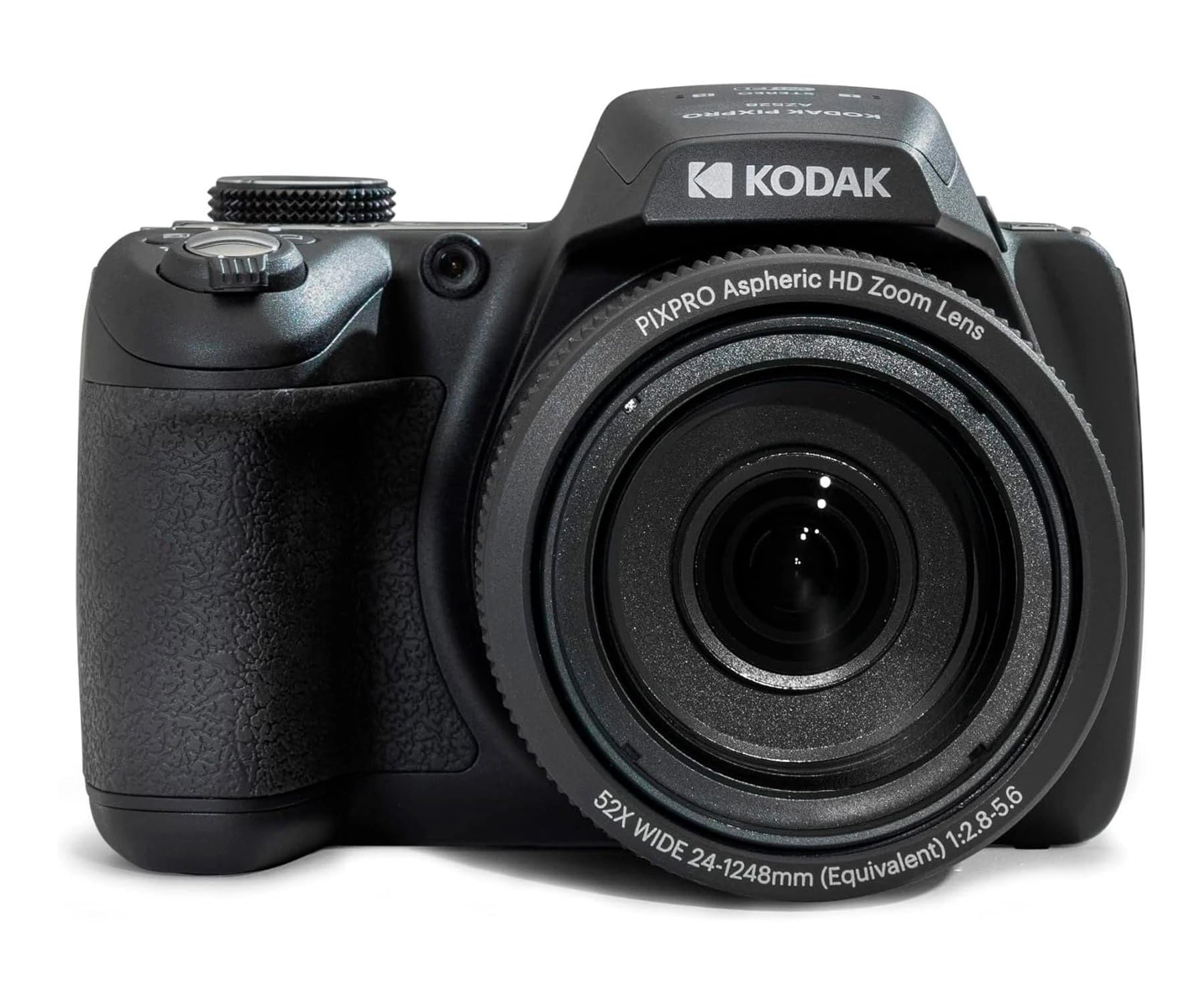
The Kodak PIXPRO Astro Zoom AZ528 delivers a 52x optical zoom lens at a budget-conscious price point that undercuts almost every competitor. The 24mm wide-angle lens captures sweeping landscapes, and at full zoom, you can bring in birds, wildlife, or stadium action that is invisible to the naked eye. The 16-megapixel BSI CMOS sensor with built-in optical image stabilization helps keep telephoto shots sharp, and the 6 fps burst mode captures short action sequences where timing is critical.
Wi-Fi connectivity permits wireless image transfer and remote camera control via a smartphone app, a feature that is genuinely useful for group photos or wildlife setups where touching the camera would scare the subject. The 3-inch LCD screen provides a clear live view, and the camera accepts SD, SDHC, and SDXC cards up to 512GB for plenty of storage. The rechargeable lithium-ion battery supports full-day shooting sessions when managed carefully.
The camera has clear limitations that reflect its price tier. The autofocus uses contrast detection with 25 points and is not always reliable — several users note the need to half-press the shutter multiple times to confirm focus lock, especially at the telephoto end. Body panels scuff easily, and the camera feels less solid than mid-range alternatives. The F2.8 aperture applies only at the wide-angle end; the aperture narrows as the lens zooms, reducing low-light capability. Users report needing steady hands or a tripod for sharp images at full zoom due to the stabilization system being less effective than premium alternatives.
Why it’s great
- 52x optical zoom at a highly accessible entry-level price
- Wi-Fi connectivity for wireless image transfer and remote shooting
- BSI CMOS sensor with OIS provides decent image quality in good light
Good to know
- Autofocus struggles at full telephoto; often requires repeated half-press attempts
- Build quality feels less durable; body panels scuff easily with normal use
- Image stabilization less effective than premium alternatives at max zoom range
FAQ
Will a compact camera with 50x zoom produce sharp handheld photos at full telephoto?
How does a 1-inch sensor in a pocket camera compare to a 1/2.3-inch sensor in a bridge camera?
Is 4K video recording at 120fps useful in a compact camera?
Final Thoughts: The Verdict
For most users, the best compact camera with zoom winner is the Nikon Z 30 with 16-50mm kit lens because its APS-C sensor and interchangeable lens system deliver image quality that no superzoom compact can match, while remaining smaller and lighter than traditional DSLRs. If you want the longest optical reach available in a single-lens body, grab the Nikon COOLPIX P950 and its 83x zoom that brings distant wildlife and the moon into crystal-clear view. And for true pocket portability with 30x zoom that disappears into a jacket, nothing beats the Panasonic LUMIX ZS99.

Mo Maruf
I created WellFizz to bridge the gap between vague wellness advice and actionable solutions. My mission is simple: to decode the research and give you practical tools you can actually use.
Beyond the data, I am a passionate traveler. I believe that stepping away from the screen to explore new environments is essential for mental clarity and physical vitality.