Our readers keep the lights on and my smoothie glass nicely filled. As an Amazon Associate, I earn from qualifying purchases.
Forgetting your dedicated camera at home because your smartphone is “good enough” has become a default for many, but the difference in optical zoom range, sensor size, and specialized features remains a chasm that no phone software update can bridge. A compact camera with built-in WiFi removes the one remaining friction point: wireless transfer to your phone for instant editing and social sharing.
I’m Mohammad Maruf — the founder and writer behind WellFizz. I analyze the optical hardware, sensor technology, and connectivity specs of compact point-and-shoot cameras to help buyers find the model that actually fits their shooting style without paying for features they’ll never use.
After spending countless hours researching sensor formats, zoom ranges, stabilization systems, and wireless protocols across dozens of models, I’ve narrowed the field to the best compact camera with wifi for different needs and budgets.
How To Choose The Best Compact Camera With WiFi
The right compact camera balances optical performance, wireless functionality, and portability against your specific use case — travel, wildlife, vlogging, or underwater adventure. The following factors separate a satisfying purchase from one that collects dust.
Sensor Size and Low-Light Capability
The physical size of the image sensor is the single largest determinant of image quality. A 1-inch sensor, found in the Sony ZV-1F, captures significantly more light and produces shallower depth-of-field than the 1/2.3-inch sensors common in superzoom bridge cameras like the Kodak PIXPRO AZ528 or Panasonic LUMIX FZ80D. If you shoot indoors, at dusk, or want defocused backgrounds, prioritize a larger sensor even if it means less zoom range.
Optical Zoom: Real Reach vs Marketing Numbers
Optical zoom uses the lens to magnify the image without quality loss, unlike digital zoom which simply crops and enlarges pixels. The Nikon COOLPIX P1100’s 125x optical zoom (24-3000mm equivalent) lets you photograph a bird at 100 meters, but requires a rock-solid tripod at maximum extension. For casual use, a 12x to 30x zoom covers most travel and event scenarios without the bulk or stabilization demands of extreme telephoto lenses.
WiFi and Bluetooth Connectivity
Not all wireless camera connections are created equal. Look for cameras that support both WiFi for fast image transfer and Bluetooth for persistent low-power connection that allows automatic geotagging and remote wake. The Panasonic LUMIX TZ/ZS99 includes Bluetooth v5.0 with a dedicated Send Image button, while the Canon EOS R100 uses WiFi for both transfer and remote live view through the Canon Camera Connect app. Ensure the app is compatible with your phone’s OS before purchasing.
Image Stabilization: Essential for Telephoto
Optical image stabilization (OIS) compensates for hand shake by moving lens elements. The Panasonic FZ80D’s POWER O.I.S. effectively stabilizes shots at its 60x telephoto end, while the OM System E-M10 Mark IV’s in-body 5-axis stabilization provides shutter speed compensation of up to 4.5 stops — allowing sharp handheld shots in dim light even with non-stabilized lenses. Without effective stabilization, long zoom shots will be consistently blurry in anything but bright daylight.
Video Capability and Recording Limits
If you plan to shoot video, check for 4K resolution, frame rate options (24p, 30p, 60p), and recording time limits. The Sony ZV-1F vlog camera records 4K without a hard time limit and includes a directional 3-capsule microphone with windscreen, while many pocket superzooms limit 4K recording to 5 or 10 minutes per clip. For vloggers, a side-articulating touchscreen is critical for self-framing — a feature the ZV-1F excels at with its flip-forward screen.
Quick Comparison
On smaller screens, swipe sideways to see the full table.
| Model | Category | Best For | Key Spec | Amazon |
|---|---|---|---|---|
| Canon EOS R100 + Kit Lens | Mirrorless | Interchangeable lens beginners | 24.1MP APS-C + Dual Pixel AF | Amazon |
| Panasonic LUMIX TZ/ZS99 | Pocket Superzoom | Travel & concerts | 24-720mm Leica lens | Amazon |
| Sony ZV-1F | Vlog Camera | Content creation & vlogging | 1-inch sensor + 20mm ultra-wide | Amazon |
| OM System TG-7 | Rugged | Underwater & outdoor adventures | 15m waterproof + 4x zoom | Amazon |
| Panasonic LUMIX FZ80D | Bridge | Budget wildlife & macro | 60x zoom + 4K Photo | Amazon |
| Canon PowerShot ELPH 360 HS | Everyday carry & travel | 12x zoom + 20.2MP CMOS | Amazon | |
| OM System E-M10 Mark IV | Mirrorless | Enthusiasts wanting compact ILC | 20MP MFT + 5-axis IBIS | Amazon |
| Kodak PIXPRO AZ528 | Bridge | Entry-level superzoom | 52x zoom + 16MP BSI CMOS | Amazon |
| Nikon COOLPIX P1100 | Extreme Superzoom | Distant wildlife & birding | 125x zoom + Dual VR | Amazon |
In‑Depth Reviews
1. Canon EOS R100 Mirrorless Camera with RF-S18-45mm Lens Kit

The Canon EOS R100 delivers a genuine APS-C sensor in a body that weighs just 356 grams with the kit lens attached — making it the smallest and lightest camera in the EOS R series. The 24.1-megapixel resolution and DIGIC 8 processor produce image quality that outclasses any 1/2.3-inch sensor compact, with natural bokeh and clean high-ISO performance up to ISO 6400. The included RF-S18-45mm f/4.5-6.3 IS STM lens provides a versatile 29-72mm equivalent zoom range suitable for everyday photography, landscapes, and portraits.
The Dual Pixel CMOS AF system covers 143 zones with human face and eye detection, and extends to animal and vehicle detection — a rare feature at this entry-level price point. Continuous shooting reaches 6.5 frames per second with One-Shot AF, which captures fast-moving subjects like running children or pets with reliable focus. The camera shoots 4K video at up to 24 fps and Full HD at 60 fps, and includes 120 fps HD recording for slow-motion playback. WiFi and Bluetooth allow wireless image transfer to the Canon Camera Connect app for instant social sharing.
Where the R100 compromises is the kit lens aperture, which limits low-light performance compared to brighter prime lenses, and the absence of in-body image stabilization — you rely on the lens’s optical IS instead. The LCD screen is fixed (not articulating), making self-framing or overhead shots difficult. Buyers planning to grow their lens collection will appreciate the RF mount’s compatibility with Canon’s expanding lineup of RF-S and full-frame RF lenses. For beginners who want a future-proof platform with genuine image quality improvement over smartphone cameras, the R100 is the most well-rounded entry point in this guide.
Why it’s great
- APS-C sensor delivers noticeably better dynamic range and low-light performance than smaller sensors
- Dual Pixel CMOS AF with eye/face/animal detection rivals much more expensive cameras
- Compact and lightweight body with a beginner-friendly guided interface
Good to know
- Kit lens has a slow maximum aperture, limiting low-light and bokeh
- Fixed LCD screen cannot be flipped for vlogging or selfies
- No in-body image stabilization; relies on lens-based OIS
2. Panasonic LUMIX TZ/ZS99 Compact Camera

The Panasonic LUMIX TZ/ZS99 packs a 24-720mm equivalent Leica DC Vario-Elmar lens with 30x optical zoom into a body that genuinely fits in a jeans pocket. This 30x zoom range covers wide landscapes at 24mm and distant subjects like stage performers at 720mm, making it one of the most versatile travel compact cameras on the market. The 20.3-megapixel 1/2.3-inch MOS sensor is paired with a Venus Engine processor that delivers respectable detail up to ISO 1600, though noise becomes visible at higher sensitivities. The 1,840k-dot LCD touchscreen tilts upward by 180 degrees for low-angle and selfie shooting.
Video shooters benefit from 4K recording at 30 fps with the ability to extract 8-megapixel stills from 4K bursts at 30 fps — a feature called 4K PHOTO that captures split-second timing impossible with traditional burst mode. High-speed HD recording at 120 fps allows smooth slow-motion playback. The built-in Bluetooth v5.0 maintains a constant low-power connection to your smartphone, and the dedicated Send Image button transfers photos instantly via WiFi without launching the app. A universal USB Type-C port handles charging and data transfer, eliminating the need for proprietary cables during travel.
The TZ/ZS99 lacks a built-in flash, which limits indoor group shots in dim environments, and the aperture narrows to f/6.4 at the telephoto end, requiring bright daylight or a tripod for sharp long-zoom images. Autofocus uses a hybrid system (contrast + depth-from-defocus) that works reliably in good light but hunts in low-contrast scenes. The Zoom Resume function remembers your last zoom position, which is a thoughtful touch for concert photographers who shoot from the same seat repeatedly. For travelers who prioritize zoom range and pocketability above all else, this Leica-lensed Panasonic is a refined choice.
Why it’s great
- 30x Leica zoom (24-720mm) in a genuinely pocketable body
- Bluetooth v5.0 with dedicated Send Image button for seamless sharing
- USB-C charging eliminates proprietary travel chargers
Good to know
- No built-in flash limits indoor low-light photography
- Image quality degrades noticeably above ISO 800
- Autofocus struggles in dim or low-contrast environments
3. Sony ZV-1F Vlog Camera

The Sony ZV-1F is purpose-built for content creators, featuring a 20mm equivalent ultra-wide-angle lens that keeps the shooter and background in frame even at arm’s length. The 1-inch 20.1-megapixel Exmor RS CMOS sensor is the largest sensor in this guide among non-interchangeable lens cameras, delivering significantly better low-light performance, dynamic range, and background defocus capability than any 1/2.3-inch sensor model. The f/2.0 maximum aperture gathers plenty of light for indoor and evening shooting, and the adjustable ND filter reduces shutter speed in bright conditions to maintain cinematic motion blur in video.
The side-articulating 3.0-inch touchscreen flips forward for self-framing, and the camera includes dedicated vlogging features like Product Showcase mode (which racks focus instantly to an object held near the lens) and Background Defocus (a one-button toggle for maximum bokeh). The built-in directional 3-capsule microphone with included windscreen captures clear audio that eliminates the need for an external mic in moderate wind. Autofocus uses Sony’s reliable Eye AF and real-time tracking, which locks onto faces and eyes with speed and precision unmatched by bridge cameras. 4K video records without a hard time limit, and the USB-C port supports continuous power delivery for extended recording sessions.
The trade-off for the large sensor is a fixed 20mm lens that cannot zoom optically — you lose the reach of superzoom cameras entirely. The ZV-1F also lacks a viewfinder, forcing reliance on the rear LCD in bright sunlight, and the battery life is limited to roughly 45 minutes of continuous 4K recording, making spare batteries essential for day-long shoots. The body feels lightweight but is less robust than ruggedized models, with some users reporting fragility after drops. For dedicated vloggers and social media content creators who prioritize image quality, autofocus, and audio performance over zoom flexibility, the ZV-1F is the clear specialist choice.
Why it’s great
- 1-inch sensor with f/2.0 lens delivers class-leading low-light and bokeh
- Product Showcase mode and Background Defocus button streamline content creation
- Excellent directional microphone with windscreen for clear vlog audio
Good to know
- Fixed 20mm lens offers no optical zoom capability
- Battery lasts roughly 45 minutes of video recording; spares required
- No viewfinder; LCD can be hard to see in bright outdoor light
4. OM System Olympus Tough TG-7 Red Underwater Camera

The OM System Tough TG-7 is the only camera in this guide built to survive conditions that would destroy any other compact: waterproof to 15 meters (50 feet), shockproof from 2.1 meters, crushproof to 100 kgf, and freezeproof to -10°C. The 12-megapixel back-illuminated CMOS sensor may seem low-resolution by modern standards, but the larger pixel pitch improves sensitivity in low light compared to higher-resolution 1/2.3-inch sensors. The f/2.0 lens is faster than typical compact zooms, and the 4x optical zoom (25-100mm equivalent) covers wide underwater scenes and tight close-ups. The variable macro system is the camera’s standout feature, offering four dedicated macro modes including microscope mode that focuses as close as 1 centimeter from the lens — revealing details invisible to the naked eye.
Five underwater shooting modes optimize white balance, exposure, and color science for submerged environments, automatically compensating for the blue/green cast that ruins dive photos from standard cameras. The camera records 4K video at 30 fps and high-speed 1080p at 120 fps for slow-motion underwater sequences. Built-in WiFi and the Olympus Image Share app allow wireless image transfer and remote control from a smartphone, which is particularly useful for positioning the camera in tight underwater crevices without submerging your phone. The dual-pane glass construction on the lens cover prevents fogging from temperature changes during dives.
The TG-7’s limitations stem from its small sensor, which produces noticeable noise above ISO 800 and cannot match the image quality of a 1-inch sensor camera in dim conditions. The 12-megapixel resolution limits cropping flexibility and large print potential. The camera is bulkier than a standard pocket compact, and the LCD can be difficult to read while wearing dive gloves. The battery life is adequate but lacks a warning before dying — the camera simply shuts off with zero warning when depleted. For snorkelers, divers, hikers, and parents who chase kids through splash parks, the TG-7 is the only camera that survives the adventure intact.
Why it’s great
- 15m waterproof, 2.1m shockproof, and freezeproof to -10°C without a housing
- Variable macro system with microscope mode focuses at 1cm from subject
- Five underwater color modes produce natural-looking dive photos
Good to know
- 12MP resolution limits cropping and large print quality
- Image noise becomes prominent above ISO 800
- Battery gives no warning before dying; requires spares for long days
5. Panasonic LUMIX FZ80D Point and Shoot Digital Camera

The Panasonic LUMIX FZ80D offers a 60x optical zoom (20-1200mm equivalent) that brings distant wildlife, moon craters, and stadium action into tight framing — a reach that would cost many times more with interchangeable lenses. The 18.1-megapixel 1/2.3-inch MOS sensor is paired with the Venus Engine processor and supports 4K video recording at 30 fps, plus 4K Photo burst mode that extracts 8MP stills from video at 30 fps. The POWER Optical Image Stabilizer is genuinely effective at the telephoto end, allowing sharp handheld shots at 1200mm in good light that would otherwise require a tripod. The 2,360k-dot live viewfinder with 0.74x magnification (35mm equivalent) provides a clear, glare-free viewing option in bright sunlight.
The Post Focus feature lets you tap any area on the captured image to refocus after shooting — useful for macro subjects where depth of field is razor-thin. The camera includes 4K Video mode that records at four times Full HD resolution, and the high-speed video records at 120 fps for slow-motion playback. The FZ80D charges via USB and can be powered from a portable battery pack during extended time-lapse sessions. The camera is lightweight at 616 grams, making it comfortable for day hikes where carrying a full DSLR and telephoto lens would be impractical.
The small sensor limits image quality above ISO 800, producing noticeable noise and reduced dynamic range, and the 1/2.3-inch format cannot match the detail or low-light performance of APS-C or 1-inch sensor cameras. The interface is dense and less intuitive than consumer-oriented models, with deep menu structures that require time investment to learn. Some users report that autofocus hunts in low light and that the camera’s build quality feels plastic. The battery drains faster when using the zoom extensively, so a spare is advisable for full-day shoots. For budget-conscious nature photographers who prioritize reach above all else, the FZ80D delivers extraordinary zoom at an entry-level price point.
Why it’s great
- 60x optical zoom (20-1200mm) provides extraordinary reach for the price
- 4K Photo burst extracts stills at 30fps from 4K video
- POWER O.I.S. enables sharp handheld shots at maximum telephoto
Good to know
- Small 1/2.3-inch sensor produces noise above ISO 800
- Menu system is complex and requires significant learning time
- Battery drains quickly with heavy zoom use; spare recommended
6. Canon PowerShot ELPH 360 HS Digital Camera
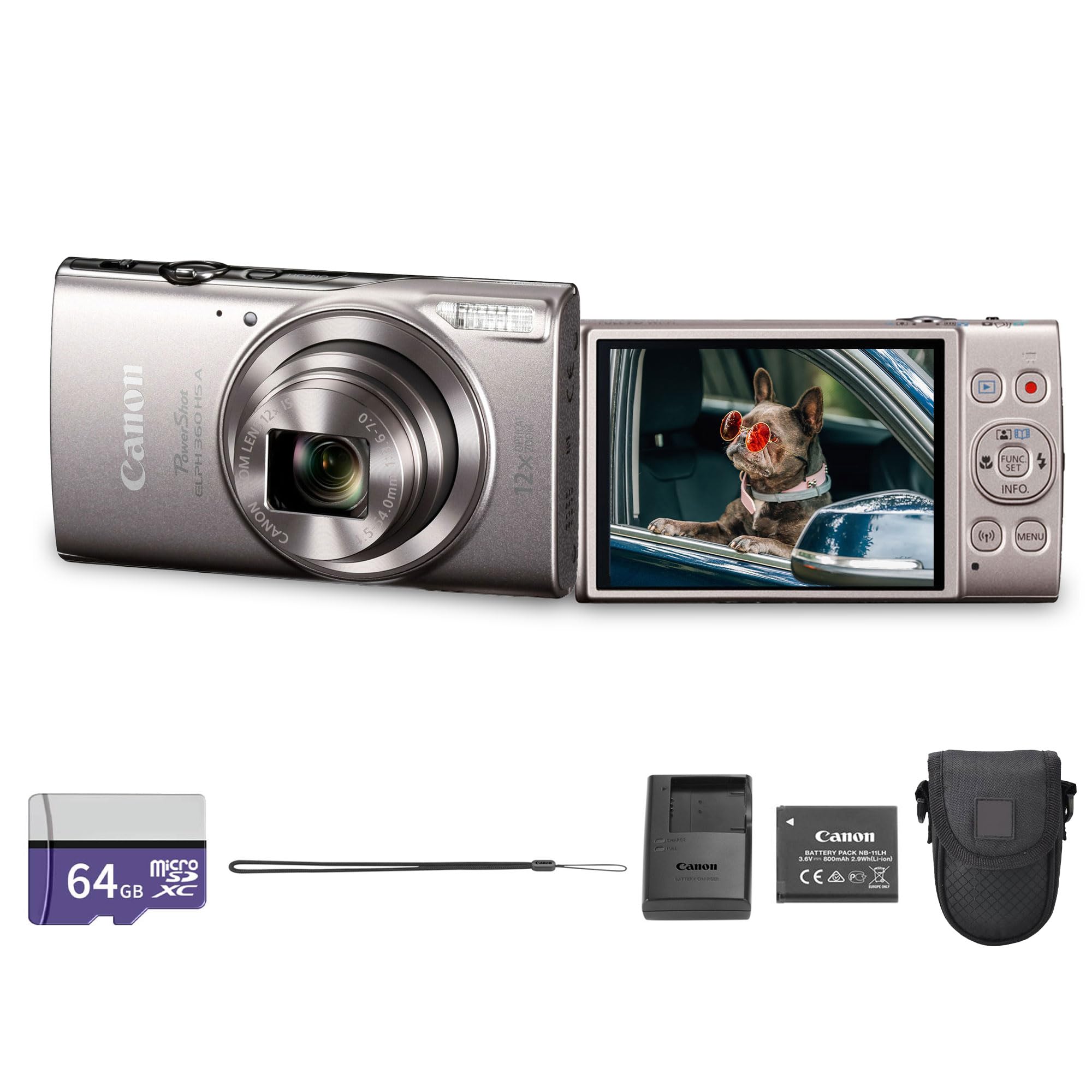
The Canon PowerShot ELPH 360 HS revives the pocket point-and-shoot formula with a 20.2-megapixel CMOS sensor and 12x optical zoom lens covering 25-300mm equivalent — a range that transitions from wide landscapes to useful telephoto reach for portraits and event candids. The DIGIC 4+ image processor enables 7.2 fps continuous shooting and Full HD 1080p video at 30 fps, with Intelligent IS that automatically selects the appropriate stabilization mode for the shooting scenario. The 3.0-inch 461k-dot LCD monitor provides bright, clear framing, and the camera includes creative features like Hybrid Auto (which records a short video clip before each still), Creative Shot (generates artistic variations), and Story Highlights (auto-curates a video reel from multiple shots).
The ELPH 360 HS measures just 1 inch thick and weighs under 150 grams, making it genuinely pocketable for everyday carry — a primary advantage over bridge cameras and mirrorless kits. The built-in WiFi allows direct transfer to smartphone or tablet, and the Canon Camera Connect app enables remote shooting and geotagging. The silver metal body has a retro aesthetic that has attracted a following among social media trendsetters, with some users noting it produces the same aesthetic quality as pricier models like the Canon G7X series.
The 1/2.3-inch sensor limits low-light performance, and ISO 3200 images show significant noise and reduced detail. The 12x zoom is modest compared to bridge cameras offering 30x to 125x range, and the lack of 4K video recording is a notable omission in 2025 when even budget smartphones shoot 4K. The included 64GB memory card is a nice bundling touch, but the camera supports SD cards up to 32GB officially, so very large cards may require reformatting. For users who want a fashionable, pocket-friendly camera for daytime social shooting and are willing to accept the sensor size constraints, the ELPH 360 HS fills a nostalgic niche with modern connectivity.
Why it’s great
- Ultra-compact 1-inch-thick body fits in any pocket or small bag
- Built-in WiFi enables instant sharing and remote smartphone control
- Creative Shot and Hybrid Auto modes add fun, shareable in-camera effects
Good to know
- No 4K video recording; limited to 1080p at 30fps
- Small sensor produces noticeable noise at higher ISOs
- 12x zoom is modest compared to bridge camera alternatives
7. OM SYSTEM Olympus E-M10 Mark IV Mirrorless Camera

The OM SYSTEM E-M10 Mark IV combines a 20-megapixel Micro Four Thirds sensor with 5-axis in-body image stabilization rated for 4.5 stops of compensation — allowing sharp handheld shots at shutter speeds as slow as 1 second with the kit lens. The 14-42mm EZ pancake zoom lens (28-84mm equivalent) collapses to an incredibly compact form factor when powered off, making the entire kit small enough to fit in a jacket pocket or large coat. The body features a retro-inspired silver and black design with textured grips, a flip-down touchscreen that activates selfie mode automatically, and a high-resolution 2.36M-dot OLED electronic viewfinder with 0.62x magnification.
The in-body image stabilization is the camera’s defining strength — it works with any lens you attach, including adapted legacy glass, making it ideal for shooting in dim venues, museums, and churches where tripods are forbidden. The 121-point contrast-detection AF system is adequate for static subjects but trails phase-detection systems for tracking moving subjects. The camera includes 16 Art Filters (31 variations) including Instant Film for a nostalgic aesthetic, and records 4K video at 30 fps. Bluetooth provides always-on connection to the OI Share smartphone app for automatic image transfer, remote control, and geotagging without draining the camera battery.
The Micro Four Thirds sensor has a 2x crop factor that makes wide-angle photography more challenging and produces less background defocus than APS-C or full-frame cameras with equivalent apertures. The E-M10 Mark IV charges via micro-USB rather than USB-C, which feels dated, and the WiFi transfer speed through the OI Share app is slower than competitors. The contrast-detect AF system struggles with fast-action sports and unpredictable wildlife movement. For photographers who value in-body stabilization, lens compatibility across the MFT system, and a compact interchangeable-lens body, the E-M10 Mark IV is the most feature-dense camera in this guide.
Why it’s great
- 5-axis in-body stabilization provides 4.5 stops of compensation with any lens
- Compact kit with collapsible zoom lens fits in a jacket pocket
- Extensive Art Filters and selfie mode for creative flexibility
Good to know
- Contrast-detect AF struggles with fast-moving subjects
- Uses micro-USB instead of USB-C for charging and data
- WiFi transfer speed is slower than some competitors’ apps
8. Kodak PIXPRO Astro Zoom AZ528-BK Digital Camera
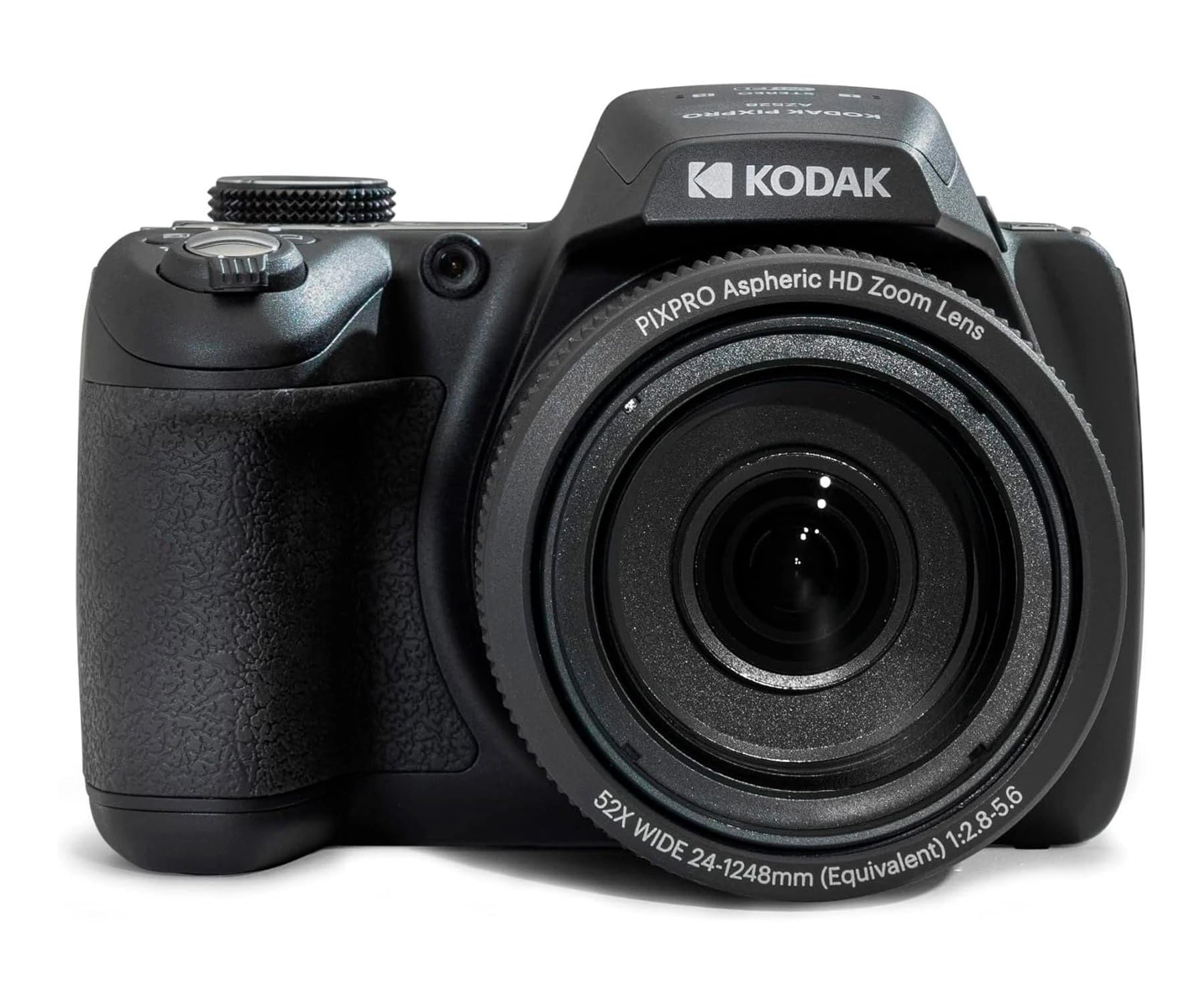
The Kodak PIXPRO AZ528 offers 52x optical zoom with a 24mm wide-angle lens — a combination that captures sweeping landscapes and distant wildlife at a price point significantly below most competitors in this zoom class. The 16-megapixel back-illuminated CMOS sensor employs BSI architecture for improved light gathering compared to standard CMOS sensors, and the optical image stabilization compensates for hand shake even at maximum telephoto. The 3.0-inch LCD screen provides clear framing, and the 6 fps burst mode captures sequences of fast action like birds taking flight or athletes in motion. Built-in WiFi transfers images wirelessly to iOS and Android devices for social sharing without a computer.
The camera includes full 1080p HD video recording, a rechargeable Li-Ion battery, and support for SD/SDHC/SDXC cards up to 512 GB — enough storage for thousands of high-resolution photos and hours of video from a full day of shooting. The SCN scene modes include Pet Mode optimized for animal photography, and the ergonomic grip makes one-handed operation comfortable during extended shooting sessions. The USB-C charging port is a welcome modern convenience, allowing fast charging from any USB-C power source including laptop ports and car chargers.
The AZ528’s 1/2.3-inch sensor produces soft images past ISO 800, and the 52x zoom is the lowest magnification among the bridge cameras in this guide — the FZ80D offers 60x and the P1100 offers 125x for not much more investment. The body material scuffs easily, and some users report that the finish shows wear within weeks of normal use. The autofocus can be sluggish in low light, and the burst buffer fills quickly with continuous RAW shooting. For first-time superzoom buyers who want dependable reach at the lowest entry cost, the Kodak AZ528 represents a functional starting point.
Why it’s great
- 52x optical zoom provides genuine telephoto reach at a very low entry price
- BSI CMOS sensor improves low-light sensitivity over standard sensors
- USB-C charging and large SD card support for all-day shooting
Good to know
- Image quality degrades noticeably above ISO 800
- Body finish scuffs easily with normal use
- Autofocus can be slow and hesitant in dim lighting
9. Nikon COOLPIX P1100 Superzoom Digital Camera

The Nikon COOLPIX P1100 pushes superzoom boundaries to 125x optical zoom (24-3000mm equivalent), a focal length that renders subjects visible from over half a mile away. The 16-megapixel CMOS sensor is paired with Dual Detect Optical VR that provides 4.0 stops of vibration reduction, enabling handheld shots at extreme telephoto in bright conditions. The camera includes a dedicated Bird-watching mode selected from the mode dial, which optimizes shutter speed, aperture, and focus for capturing small, moving wildlife at long distances. The Close Focus Macro mode lets you approach subjects as close as 1 centimeter from the lens for dramatic insect and flower microphotography. The customizable control ring on the lens barrel allows direct adjustment of focus, exposure compensation, or white balance without diving into menus.
The rotating LCD screen articulates for high- and low-angle framing, and the high-resolution electronic viewfinder provides a clear shooting experience in bright daylight. The camera records 4K UHD video at 30 fps, plus smooth slow-motion HD video, time-lapse, and Super-lapse movies. RAW shooting in NRW format preserves maximum editing flexibility in post-processing. The 179-point phase-detection/contrast hybrid AF system covers the frame densely, and the lens includes a retractable design that reduces bulk when powered off. Built-in WiFi and Bluetooth connect to the Nikon SnapBridge app for automatic image transfer to a paired smartphone.
The extreme 125x zoom is extremely demanding — any vibration, heat haze, or wind at maximum magnification degrades image quality, and a heavy-duty tripod is essential for consistent sharpness beyond 1000mm. The f/2.8 aperture at wide-angle narrows to f/8.0 at full telephoto, requiring very bright conditions or high ISO (with associated noise) for usable shots. The body, while lightweight at 1.4 kg, relies on plastic construction that feels less durable than the P900/P1000 predecessors. The Bird-watching mode has been reported to struggle with tracking birds against busy backgrounds, defeating its primary purpose. For nature photographers who absolutely need to photograph subjects at extreme distances and are willing to accept the limitations of small-sensor superzoom, the P1100 delivers reach that no other compact camera in this guide can approach.
Why it’s great
- 125x optical zoom (24-3000mm) provides unmatched reach in a fixed-lens camera
- Dedicated Bird-watching mode optimizes settings for avian subjects
- Macro mode focuses at 1cm for extreme close-ups
Good to know
- Requires a sturdy tripod for sharp images at maximum zoom
- f/8.0 aperture at telephoto end demands bright light or high ISO
- Bird-watching mode may fail to track subjects against complex backgrounds
FAQ
Can I use a compact camera with WiFi without a smartphone app?
Does WiFi drain the camera battery significantly faster?
How does a compact camera with WiFi compare to smartphone photography?
Final Thoughts: The Verdict
For most users, the best compact camera with wifi winner is the Canon EOS R100 because its APS-C sensor and Dual Pixel AF deliver image quality far beyond any 1/2.3-inch sensor compact at a price that undercuts most mirrorless alternatives. If you want maximum optical reach for wildlife and travel, grab the Panasonic LUMIX TZ/ZS99 with its pocketable 30x Leica zoom. And for rugged outdoor adventures including underwater shooting, the OM System Tough TG-7 is the only camera in this guide that survives the abuse and delivers usable results in extreme conditions.

Mo Maruf
I created WellFizz to bridge the gap between vague wellness advice and actionable solutions. My mission is simple: to decode the research and give you practical tools you can actually use.
Beyond the data, I am a passionate traveler. I believe that stepping away from the screen to explore new environments is essential for mental clarity and physical vitality.