Our readers keep the lights on and my smoothie glass nicely filled. As an Amazon Associate, I earn from qualifying purchases.
Shooting beneath the surface presents a brutal set of challenges — shifting light, color loss, particles that turn every frame into a haze. A standard point-and-shoot simply cannot handle the pressure, the temperature shift, or the lack of natural contrast. You need a sealed, rugged body with dedicated color correction and a lens that can focus through gloom. That is exactly what this guide dissects.
I’m Mohammad Maruf — the founder and writer behind WellFizz. I sort through storage specs, aperture ranges, depth ratings, and customer stress tests to find the cameras that actually deliver usable frames when submerged.
After analyzing depth ratings, sensor sizes, macro capabilities, and real-world dive reports, these picks form the definitive list of the best compact camera for underwater photography available right now.
How To Choose The Best Compact Camera For Underwater Photography
Choosing a compact camera for underwater photography comes down to more than just how deep it can go. You need to evaluate image sensor performance in low light, zoom range for framing subjects without disturbing them, and dedicated underwater shooting modes that correct the blue/green cast at depth. Below are the core specs that separate a usable underwater camera from a disappointing one.
Waterproof Depth and Seal Type
The depth rating stated on the box tells you how far the camera can descend without flooding. Most rugged compacts are rated between 10 meters and 15 meters without an external housing. For snorkeling and shallow freediving, 15 meters is plenty. Beyond that, you need a dedicated housing or a permanently sealed unit like the SeaLife Micro 3.0, which is individually tested to 60 meters. Pay attention to whether the seal relies on O-rings that need maintenance or a permanently sealed body that removes the flood risk entirely.
Underwater Color Correction and White Balance
Water absorbs red and orange light first, which is why raw underwater footage looks green or blue. Cameras with dedicated underwater white balance modes use algorithms based on real underwater image data to restore natural color. Some models offer manual white balance or multiple underwater scene modes for different depths. If you plan to shoot deeper than a few meters, look for a camera that offers either preset underwater modes or manual WB control — otherwise your images will need heavy post-processing.
Macro Capability and Close-Up Lighting
Underwater macro photography is one of the most rewarding use cases — nudibranchs, tiny shrimp, coral polyps. Compact cameras with a dedicated macro mode and built-in LED macro lights give you the ability to illuminate small subjects without an external strobe. The Pentax WG-90 and Ricoh WG-80 feature six macro LEDs arranged around the lens barrel, which provides even, shadow-free illumination at close range. A minimum focusing distance of one centimeter is the gold standard for this category.
Quick Comparison
On smaller screens, swipe sideways to see the full table.
| Model | Category | Best For | Key Spec | Amazon |
|---|---|---|---|---|
| SeaLife Micro 3.0 | Premium | Serious divers to 60m | Permanently sealed, 60m depth | Amazon |
| OM System Tough TG-7 | Premium | Versatile all-around snorkeling | F2.0 lens, 1cm macro | Amazon |
| Insta360 X5 | Premium | 360° immersive underwater video | 8K 360°, 15m waterproof | Amazon |
| Chasing Dory | Mid-Range | Remote exploration drone | 49ft tether, 1080p live view | Amazon |
| Pentax WG-90 | Mid-Range | Macro enthusiasts | 6-LED ring light, 5x zoom | Amazon |
| Ricoh WG-80 | Mid-Range | Harsh field conditions | 14m waterproof, 6 macro LEDs | Amazon |
| Pentax WG-1000 | Budget | Casual outdoor and shallow water | 15m waterproof, 4x zoom | Amazon |
| Kodak PIXPRO WPZ2 | Budget | Value-oriented beginners | 15m waterproof, 4x zoom | Amazon |
| Sony RX100 VII | Premium | Top-tier image quality in housing | 1.0-type sensor, 24-200mm zoom | Amazon |
In‑Depth Reviews
1. SeaLife Micro 3.0 64GB

The SeaLife Micro 3.0 is purpose-built for divers who need absolute seal integrity. Unlike rugged compacts that rely on O-rings, the Micro 3.0 is permanently sealed and individually depth-tested to 60 meters — zero risk of flooding from a worn gasket. Its 16MP IMX083 CMOS sensor shoots 4K video at 30fps and 1080p at 120fps for smooth slow-motion playback. The 100-degree wide-angle lens (19mm equivalent) captures broad reef scenes without requiring you to back away.
White balance is handled by three built-in underwater color correction filters plus manual WB control, so you can dial in color at specific depths rather than relying on a single generic underwater mode. The 2.4-inch TFT LCD is bright enough for outdoor use, and the rubber-armored body absorbs shock from accidental drops. Internal 64GB storage means you never forget a memory card.
The fixed-focus lens eliminates autofocus hunting, which speeds up shutter response to 0.1 seconds — crucial for catching fast-moving marine life. The downside is that without autofocus, close-up macro shots require precise positioning. But for open-water reef photography and video, this is the most reliable compact on the list.
Why it’s great
- Permanently sealed body removes flood risk entirely
- Three underwater color correction filters for depth-specific WB
- Ultra-fast 0.1 second shutter response for moving subjects
Good to know
- No autofocus — manual positioning required for macro
- Android app compatibility issues reported
- No flash built in
2. OM System OLYMPUS Tough TG-7 Red

The OM System Tough TG-7 inherits the legendary TG-6 lineage and refines the weak points. It is waterproof to 15 meters, shockproof to 2.1 meters, and freezeproof to -10°C. The standout feature is the F2.0 maximum aperture lens — the widest aperture on any rugged compact in this list. That extra stop of light makes a real difference at depth where ambient light drops fast. The back-illuminated CMOS sensor and TruePic VIII engine produce clean images up to ISO 6400.
Where the TG-7 truly shines is its variable macro system. Four macro modes allow focusing as close as one centimeter from the lens, and the underwater microscope mode magnifies tiny subjects like coral polyps and nudibranchs with impressive detail. Five dedicated underwater scene modes include underwater HDR for high-contrast depth shots and underwater snapshot for quick captures. The built-in flash is effective for fill light in turbid water.
4K video recording at 30fps includes vertical video mode for social media, and the 120fps high-speed movie mode captures slow-motion action. Battery life is solid for a full day of snorkeling, but the battery gauge can drop without warning — carrying a spare is wise. For divers who want one camera that does both wide-angle reef shots and extreme macro, the TG-7 is the most versatile option.
Why it’s great
- Fast F2.0 lens for better low-light performance underwater
- Four macro modes with 1cm minimum focus distance
- Five dedicated underwater scene modes with HDR
Good to know
- Battery can die without warning — carry a spare
- Low-light image quality trails phone cameras
- Bulky compared to action cams
3. Insta360 X5 Essentials Bundle

The Insta360 X5 is not a traditional underwater compact — it is a 360-degree action camera that happens to be waterproof to 15 meters without a housing. Dual 1/1.28-inch sensors capture 8K 360-degree video at 30fps, which means you can reframe your shot after the dive. That is a massive advantage underwater where repositioning is slow and difficult. The triple AI chip design improves noise reduction in dim conditions, so deeper shots retain detail.
The Invisible Selfie Stick effect works underwater too — the camera stitches out the pole, creating a third-person perspective that looks like you are being filmed by an invisible drone. FlowState Stabilization keeps footage smooth even in current or surge, and the 360° Horizon Lock ensures level video no matter how the camera rotates. The new replaceable lenses are a smart addition — if a lens gets scratched on coral, swap it in seconds instead of replacing the whole unit.
Battery life reaches 208 minutes in standard mode, and fast charging gets you to 80% in 20 minutes. The built-in wind guard and four-mic array capture clear audio for topside vlogging. The trade-off is that 360-degree video requires more storage and editing time, and the image quality in low-light underwater conditions is not as crisp as a dedicated sensor. But if you want immersive, reframable underwater footage, nothing else here competes.
Why it’s great
- 8K 360° capture lets you reframe after the dive
- Replaceable lenses reduce repair cost from scratches
- FlowState Stabilization eliminates gimbal need
Good to know
- Requires more storage and editing time for 360° footage
- Low-light underwater quality not as sharp as dedicated sensors
- MicroSD card not included
4. Chasing Dory Underwater Drone

The Chasing Dory redefines what a compact underwater camera can be — it is a palm-sized remotely operated vehicle with a 1080p HD camera and two 250-lumen headlights. Unlike handheld cameras, the Dory lets you explore without getting wet. It connects to a floating Wi-Fi buoy via a 49-foot tether and streams live 720p video to your phone. The CHASING GO2 app controls the drone like a gamepad — dive, ascend, tilt, and lock depth with virtual joysticks.
The built-in true color restoration algorithm corrects the blue cast in real-time, so the live feed looks natural even at depth. The 12MP still resolution captures usable screenshots from video, and the 4800 mAh battery delivers about an hour of continuous operation. At 9.7 x 7.4 x 3.6 inches and under 2.5 pounds, it packs into a backpack easily. The dual-play mode lets a second person control the drone while you focus on the camera feed.
Practical uses go beyond photography — inspecting boat hulls, checking dock pilings, or searching for lost gear. The learning curve is real; the manual lacks detail, and first-time users may struggle with calibration. Rough surface chop can reduce control responsiveness. But for exploring reefs, caves, and wrecks without holding your breath, the Dory opens a completely new angle of underwater photography that a handheld camera cannot match.
Why it’s great
- Remotely explore underwater without getting wet
- True color restoration algorithm for natural live feed
- Compact and packable for travel
Good to know
- Steep learning curve and sparse instruction manual
- Rough surface waves reduce control stability
- Battery life limited to about one hour
5. Pentax WG-90 Blue

The Pentax WG-90 is built for close-up work. Six macro LEDs surround the lens barrel, providing even illumination for subjects as close as one centimeter. That ring light eliminates the harsh shadows typical of a single flash, making it ideal for photographing small marine life like barnacles, anemones, and juvenile fish. The back-illuminated 16MP CMOS sensor and imaging engine push sensitivity to ISO 6400, which helps in low-light underwater environments.
The 5x optical zoom lens (28-140mm equivalent) covers wide-angle reef scenes and moderate telephoto reach. The underwater shooting mode optimizes color and contrast based on data from actual underwater captures, producing more natural greens and blues than generic auto mode. The Digital Microscope mode goes beyond standard macro, letting you capture details invisible to the naked eye. Triple anti-shake protection minimizes camera shake during handheld shots.
The body is waterproof to 14 meters for up to two hours, shockproof to 1.6 meters, and freezeproof to -10°C. Some users report water leakage at the battery/card cover on early units, so check the seal before each dive. The 2.7-inch LCD has anti-reflection coating for outdoor visibility. For divers who prioritize macro photography and need built-in lighting, the WG-90 is the most capable compact in its price tier.
Why it’s great
- Six macro LEDs provide even close-up illumination
- Digital Microscope mode captures ultra-fine detail
- 5x optical zoom covers wide to moderate telephoto
Good to know
- Some units reported leakage at battery cover seal
- Auto settings are weak — manual mode yields better results
- Autofocus points limited to 9
6. Ricoh WG-80 Orange

The Ricoh WG-80 shares the same rugged DNA as the Pentax WG series, offering waterproofing to 14 meters for up to two hours, shockproof construction, and freezeproof operation. Its 16MP back-illuminated CMOS sensor performs well in moderate light, and the 5x optical zoom lens (28-140mm equivalent) provides flexibility for different underwater subjects. The six macro LEDs positioned around the lens barrel deliver bright, uniform light for close-up shots.
Underwater and Underwater Movie shooting modes are specifically programmed using data from actual submerged images, which means the color correction is grounded in real-world conditions rather than generic algorithms. The body is crushproof and dustproof, making it suitable for construction site documentation as well as dive trips. Many field users report using the WG-80 for years in harsh environments — it holds up to repeated abuse that would kill a standard compact.
Image quality lags behind modern smartphones in bright conditions, with noticeable white clipping and noise in low light. Autofocus is slow compared to the TG-7, and the single autofocus point limits composition flexibility. The LCD is usable but not exceptionally bright in direct sunlight. For a durable, no-fuss camera that survives drops, dust, and dives, the WG-80 delivers exactly what its spec sheet promises.
Why it’s great
- Extremely durable — survives drops, dust, and saltwater exposure
- Six macro LEDs for even close-up lighting
- Proven field reliability with years of heavy use reported
Good to know
- Image quality shows white clipping and noise in low light
- Autofocus is slower than competitors
- Single autofocus point limits flexibility
7. Pentax WG-1000 Gray

The Pentax WG-1000 is the entry point into rugged underwater compacts. It is waterproof to 15 meters for one hour, shockproof to two meters, and dustproof against dirt and sand. The 16MP sensor with ISO 3200 captures sharp images in good light, and the 4x optical zoom lens with 27mm wide-angle coverage handles standard reef photography. Seven capture modes include Auto, Manual, and a dedicated Underwater mode that adjusts color balance for submerged shooting.
Twenty color modes let you add creative finishes in-camera, including Japan Style, Italian Style, and Sketch — a fun touch for casual users. The included O-CC180 Protector Jacket shields the body from scratches during rough use, and the carabiner strap clips securely to a backpack or buoyancy compensator. The camera body can be sterilized with ethanol or chlorine dioxide solutions, making it suitable for medical and industrial inspection use.
Image quality is acceptable for social media sharing but does not rival higher-end compacts. Autofocus can struggle in low-contrast underwater scenes, and some users report a green color cast in underwater mode that requires manual WB adjustment. Battery life is solid for a day of casual snorkeling. For its price tier, the WG-1000 offers reliable waterproof performance without the premium cost of the TG-7 or SeaLife.
Why it’s great
- Lowest entry price for a fully waterproof compact
- Included protector jacket and carabiner strap
- Sterilizable body for medical/industrial use
Good to know
- Autofocus struggles in low-contrast underwater scenes
- Underwater mode can produce a green color cast
- Image quality not suitable for large prints or professional use
8. Kodak PIXPRO WPZ2 Yellow Bundle

The Kodak PIXPRO WPZ2 bundle delivers surprising value for its price point. The camera itself is waterproof to 15 meters, shockproof to 2 meters, and dustproof — matching the depth rating of cameras costing significantly more. The 16MP sensor and 4x optical zoom lens (27-108mm equivalent) capture detailed images, and the 1080p Full HD video recording is adequate for casual clips. The bundle includes a carrying case, floating strap, monopod, card reader, screen protector, and cleaning cloth.
Image quality is respectable in bright conditions above water, and underwater shots show decent color reproduction for a budget compact. The floating strap is a practical addition — if you drop the camera while snorkeling, it stays on the surface rather than sinking. Battery life exceeds four hours of continuous use, which is strong for a full day of shooting. The WiFi app allows easy transfer of photos to your phone for instant sharing.
Low-light underwater performance is mediocre — images get noisy and colors wash out below five meters without a filter. The plastic build does not feel as premium as the Pentax or OM System cameras, and the battery door can be tricky to seal correctly on first use. For someone who wants a waterproof camera for occasional snorkeling trips and does not want to overspend, the WPZ2 bundle is the best value option available.
Why it’s great
- Excellent value with full accessory bundle included
- Floating strap prevents loss if dropped in water
- Solid battery life over 4 hours of use
Good to know
- Low-light underwater quality degrades quickly below 5m
- Plastic build feels less durable than competitors
- Battery door requires careful sealing to avoid leaks
9. Sony RX100 VII
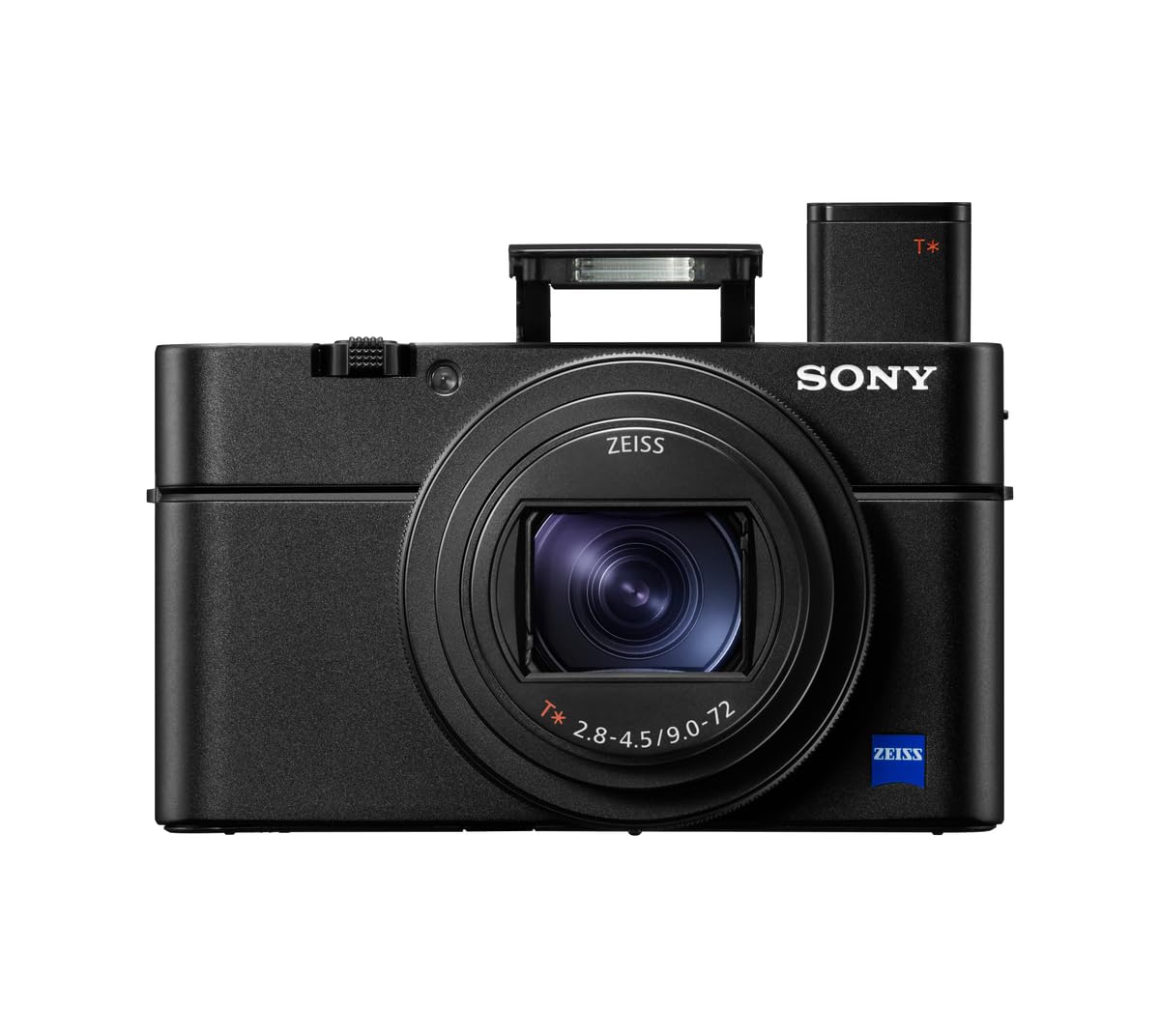
The Sony RX100 VII is the only camera on this list that is not waterproof out of the box — it requires a dedicated underwater housing. But its image quality is in a completely different league. The 20.1MP 1.0-type stacked CMOS sensor delivers sharp, low-noise images that rival DSLR quality. The Zeiss Vario-Sonnar T* 24-200mm F2.8-F4.5 lens covers everything from wide-angle reef panoramas to telephoto shots of distant marine life. The 357-point phase-detection autofocus system locks onto subjects in 0.02 seconds.
Real-time Eye AF works for both human and animal subjects, making it the best choice for photographing turtles, dolphins, and fish portraits. The 20fps blackout-free burst mode captures fast action without missing a frame. 4K video with S-Log3 and microphone jack support makes it suitable for professional underwater videography when paired with an external housing. The pop-up electronic viewfinder is usable topside for composition in bright sunlight.
The catch is the additional cost of a waterproof housing, which typically adds several hundred dollars. Without a housing, the RX100 VII is not waterproof at all — it is a land-only camera. The body is also slippery without an added grip, and the menu system is complex. For photographers who already own a housing or are willing to invest in one, the RX100 VII produces underwater images that no rugged compact can touch.
Why it’s great
- Best-in-class 1.0-type sensor for superior image quality
- 24-200mm Zeiss zoom covers wide to telephoto
- Real-time Eye AF tracks marine animals precisely
Good to know
- Requires external waterproof housing — not dive-ready out of box
- Housing adds significant cost to total package
- Body is slippery and menu system is complex
FAQ
Can I use a regular compact camera in a waterproof housing instead of a rugged camera?
What depth rating do I need for recreational snorkeling versus scuba diving?
How important are macro LEDs for underwater close-up photography?
Why do my underwater photos look blue even on a waterproof camera?
Is a 4x optical zoom enough for underwater photography?
Final Thoughts: The Verdict
For most users, the best compact camera for underwater photography winner is the SeaLife Micro 3.0 because its permanently sealed body removes flood risk entirely and delivers reliable performance to 60 meters with dedicated underwater color correction. If you want extreme macro capability with built-in lighting, grab the OM System Tough TG-7. And for the absolute best image quality when you are willing to use a housing, nothing beats the Sony RX100 VII.

Mo Maruf
I created WellFizz to bridge the gap between vague wellness advice and actionable solutions. My mission is simple: to decode the research and give you practical tools you can actually use.
Beyond the data, I am a passionate traveler. I believe that stepping away from the screen to explore new environments is essential for mental clarity and physical vitality.