Our readers keep the lights on and my smoothie glass nicely filled. As an Amazon Associate, I earn from qualifying purchases.
Spotting a leopard in a distant acacia tree is a rush of adrenaline, but pulling your camera up only to capture a blurry, distant smudge is a deep disappointment. The punishing heat, the jarring vibration of a safari vehicle, and the vast distances on the savannah demand a compact camera with serious optical reach and steady image stabilization, not a huge interchangeable-lens rig that fills a backpack.
I’m Mohammad Maruf — the founder and writer behind WellFizz. I have spent hundreds of hours analyzing the optical zoom ranges, sensor sizes, stabilization systems, and autofocus performance of compact superzoom cameras to build a guide that matches a real safari photographer’s needs.
Read on for my hands-on analysis of the best compact camera for safari across every budget tier, tested against the real challenges of wildlife photography on the move.
How To Choose The Best Compact Camera For Safari
Picking the right tool for a safari trip means balancing reach, weight, and durability. A camera that survives a dusty game drive and still delivers sharp, frame-filling images of a lioness at 200 meters is what separates a great safari camera from a bad one.
Optical Zoom Reach — The Deciding Factor
A 30x optical zoom gets you to a distant giraffe, but a 60x or 80x zoom brings you within touching distance of a cheetah without spooking it. Ignore digital zoom specifications — they only crop into a pixelated mess. The camera’s actual focal length in millimeters (35mm equivalent) is the number to watch. For safari, anything below 600mm equivalent often leaves you cropping heavily.
Image Stabilization — Your Handheld Lifesaver
Safari vehicles shake, your hands tire, and the golden hour light dims. A strong optical image stabilization (OIS) system compensates for all three, letting you shoot sharp frames at shutter speeds three or four stops slower than normal. Cameras with dual-detect or 5-axis stabilization are especially valuable at extreme zoom ranges.
Sensor Size and Low-Light Performance
Dawn and dusk are prime predator-viewing times. A 1-inch or APS-C sensor captures more light than a standard 1/2.3-inch sensor, reducing noise in those low-light conditions. A larger sensor also gives you more flexibility to crop without losing detail. The trade-off is typically a larger body and a shorter zoom range, so balance is key.
Autofocus Speed and Tracking
Birds in flight, a running gazelle, or a cat stretching out of the shadows — these moments demand fast phase-detection autofocus with reliable subject tracking. Contrast-detection systems often hunt or lag in low contrast. Look for cameras with a high number of phase-detection points and animal eye-tracking if your budget allows.
Quick Comparison
On smaller screens, swipe sideways to see the full table.
| Model | Category | Best For | Key Spec | Amazon |
|---|---|---|---|---|
| Nikon COOLPIX P1100 | Superzoom | Ultimate reach | 125x optical zoom (24-3000mm) | Amazon |
| Sony RX100 VII | Pocket Premium | Versatile travel | 1-inch sensor + 24-200mm Zeiss lens | Amazon |
| Fujifilm X100VI | Fixed Lens | Artistic safari | 40.2MP APS-C + 23mm f/2 lens | Amazon |
| Canon EOS RP + RF 24-105mm | Mirrorless | Full-frame IQ | Full-frame 26.2MP + 24-105mm kit | Amazon |
| Ricoh GR IIIx | Compact | Pocket EDC | APS-C 24.2MP + 40mm f/2.8 GR lens | Amazon |
| Nikon COOLPIX P950 | Superzoom | Bird & moon shots | 83x optical zoom (24-2000mm) | Amazon |
| Panasonic LUMIX FZ80D | Superzoom | Budget wildlife | 60x zoom + 4K video (20-1200mm) | Amazon |
| Leica V-LUX 3 | Bridge | Leica glass | 12.1MP + 24x zoom (25-600mm) | Amazon |
| Canon SX740 HS | Pocket Zoom | Lightweight travel | 40x zoom + 4K video (24-960mm) | Amazon |
| Panasonic LUMIX ZS99 | Travel Zoom | Pocketable 30x | 30x LEICA zoom (24-720mm) | Amazon |
| Kodak PIXPRO AZ528 | Value Superzoom | Entry-level reach | 52x zoom + 16MP BSI CMOS | Amazon |
In‑Depth Reviews
1. Nikon COOLPIX P1100 Superzoom

The Nikon COOLPIX P1100 is built for a single purpose: putting you in the same frame as a subject 100 meters away. Its 125x optical zoom reaches an extraordinary 3000mm equivalent field of view, making it the only compact camera capable of capturing a lion’s whisker detail from across a dry riverbed without a telephoto converter. The Dual Detect Optical VR stabilization — rated at 4.0 stops — keeps those long shots steady even when the safari truck’s diesel engine is vibrating through the floor.
The Bird-watching mode, accessible directly from the mode dial, tweaks exposure and focus for feather detail, and the Close Focus Macro mode lets you switch to a 1cm working distance for a perfectly detailed shot of a chameleon. The 16-megapixel BSI CMOS sensor captures 4K UHD video with reasonable clarity, and the rotating LCD screen lets you compose low-angle frames without lying in the dirt.
Image quality does not match a full-frame mirrorless in low-light, and the plastic body feels less substantial than its price suggests. But for sheer optical reach packed into a camera that weighs around 2 pounds, the P1100 is the tool that delivers wildlife shots no other compact can touch.
Why it’s great
- Only compact with 125x optical zoom reaching 3000mm equivalent
- Dual Detect VR stabilization for sharp handheld shots at max zoom
- Dedicated Bird-watching mode optimizes settings for avian subjects
Good to know
- Plastic body feels less robust than premium competitors
- Advanced controls buried in menu system
- Video stabilization weakens at extreme telephoto without tripod
2. Sony RX100 VII
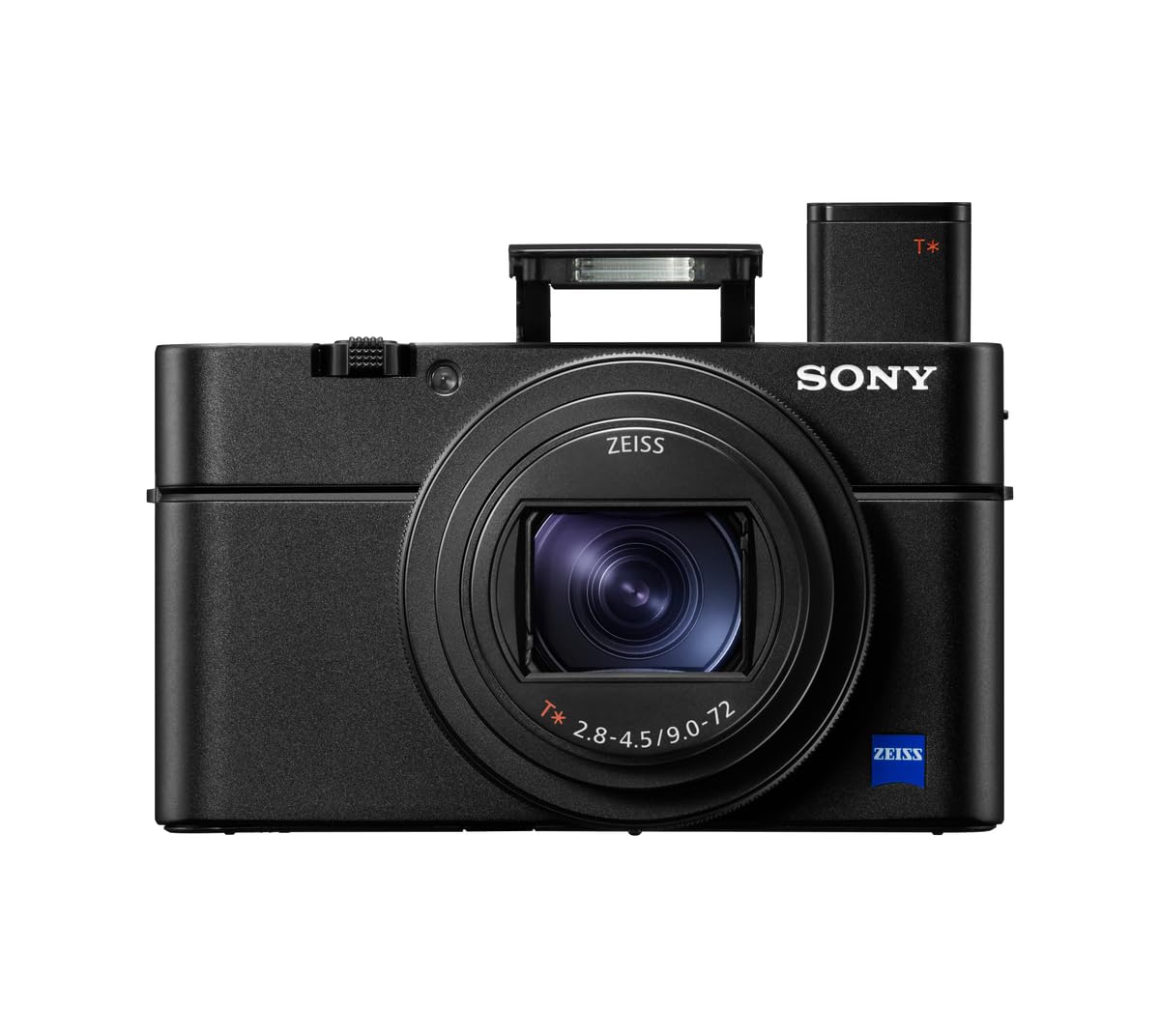
The Sony RX100 VII is the compact camera that proves great things can come in a pocket-sized body. The 20.1-megapixel 1-inch stacked CMOS sensor delivers exceptional dynamic range and low-light performance that leaves typical 1/2.3-inch sensors in the dust. The Zeiss Vario-Sonnar T* 24-200mm f/2.8-4.5 lens covers a versatile range for safari — wide enough for a landscape panorama, long enough for a close portrait of a grazing zebra at moderate distance.
Autofocus is a standout feature here. With 357 phase-detection points and 425 contrast-detection points, plus Real-time Eye AF for animals (still images only), the camera locks onto a moving subject with the tenacity of a much larger system. The 20 fps blackout-free continuous shooting ensures you catch the exact moment a cheetah accelerates. Sony also included a microphone jack, making this the top choice for travelers who want to shoot high-quality 4K video clips with clear audio during game drives.
The main limitation for safari purists is the zoom range. At 200mm equivalent, you cannot fill the frame with a distant predator the way a 600mm or 2000mm lens can. The body lacks weather sealing, and the glossy finish can feel slippery in humid conditions. It is a premium tool with a specific use case — best paired with a willingness to get physically closer to the action.
Why it’s great
- 1-inch sensor offers noticeably better low-light and dynamic range
- Lightning-fast phase-detection AF with animal eye tracking
- Pocketable body with Zeiss lens and mic input
Good to know
- 200mm max zoom is insufficient for distant wildlife
- No weather sealing — keep it dry on dusty roads
- Slippery finish without aftermarket grip
3. Fujifilm X100VI

The Fujifilm X100VI is not a traditional safari zoom camera. Its fixed 23mm f/2 lens (35mm equivalent) produces a classic wide-angle perspective that forces you to compose scenes creatively — sweeping landscapes, campfire portraits, and environmental shots that include the context of the savannah around the subject. The 40.2-megapixel X-Trans CMOS 5 HR sensor captures enough resolution to crop significantly while still printing large.
The in-body image stabilization rated at up to 6.0 stops is fantastic for handheld low-light shots at dusk, and the built-in 4-stop ND filter lets you shoot wide open in bright midday sun. The 20 film simulation modes, including the new REALA ACE, deliver vivid, character-rich JPEGs straight out of camera — perfect for travelers who want to edit minimally or share immediately. The hybrid optical/electronic viewfinder is a delight, giving you a parallax-free composition experience.
The X100VI cannot replace a superzoom. You will miss distant animal shots entirely without a separate telephoto camera. The autofocus system, while improved, still uses contrast detection and can hunt in low contrast. Battery life is shorter than typical mirrorless options. Buy it as a primary creative camera that captures the atmosphere of the safari, not the distant action.
Why it’s great
- 40.2MP sensor allows heavy cropping from wide-angle originals
- 6-stop IBIS for steady handheld shooting in fading light
- Film simulations deliver beautiful JPEGs with no editing needed
Good to know
- Fixed 35mm-equivalent lens cannot zoom to distant wildlife
- Contrast-detection AF can struggle with fast-moving subjects
- Short battery life — bring multiple spares
4. Canon EOS RP + RF 24-105mm F4-7.1

The Canon EOS RP is the lightest full-frame mirrorless camera on the market, and paired with the RF 24-105mm F4-7.1 IS STM kit lens it becomes a compact, versatile travel companion. The full-frame 26.2-megapixel sensor delivers outstanding dynamic range and low light performance — you can push ISO well into the thousands and still produce clean, detailed images of animals in the fading light of the bush.
The RF 24-105mm lens covers a useful range for landscapes, group portraits, and close-to-mid wildlife. The 5-stop optical image stabilization compensates for the slower maximum aperture, and the Dual Pixel CMOS AF with phase detection is fast and reliable for most subjects. The body features a fully articulating touchscreen, solid ergonomics, and compatibility with Canon’s extensive RF and EF lens lineup via an adapter if you want to add reach later.
For pure safari photography, the 105mm maximum focal length is limiting for distant animals. The kit lens is soft at the edges, and the variable aperture gets slower as you zoom, affecting low light performance further. It is not a dedicated wildlife camera; it is a high-quality all-rounder that excels in flexibility and image quality for travelers who shoot everything from a camp sunrise to a close-up elephant encounter.
Why it’s great
- Lightest full-frame mirrorless — easy to carry all day
- Exceptional low-light performance and dynamic range
- RF lens mount opens future upgrade path for telephoto lenses
Good to know
- 105mm max zoom is too short for distant wildlife without a second lens
- Kit lens is soft at edges and slower variable aperture
- 4K video has crop factor and no Dual Pixel AF
5. Ricoh GR IIIx

The Ricoh GR IIIx is a specialist’s tool designed for one purpose: fitting an APS-C sensor into a jacket pocket with no compromise on image quality. The 24.2-megapixel sensor paired with the 40mm f/2.8 GR lens (equivalent to a classic standard angle) produces insanely sharp images with a three-dimensional depth that phone cameras cannot replicate. This camera is less about hunting animals and more about capturing the texture of safari life — the dusty boots, the thorns on an acacia, the reflection of sunset in a waterhole.
The startup is nearly instant at about 0.8 seconds, and the hybrid AF with 101 points focuses quickly enough for street and snapshot photography. The in-body image stabilization (IBIS) is a surprising inclusion for such a compact body, enabling sharp handheld shots at slower shutter speeds. The built-in film simulations (including Positive Film and B&W) give JPEGs a rich, timeless look out of camera.
There is no optical zoom and no viewfinder (the optional EVF is expensive and bulky). Battery life is short — expect to carry at least two spares for a full day of shooting. It lacks weather sealing, which is a concern in dusty or humid environments. Use the GR IIIx as a secondary camera that captures the intimate, environmental side of safari when you are not reaching for a superzoom.
Why it’s great
- APS-C sensor in a truly pocketable form factor
- Sharp f/2.8 GR lens delivers incredible detail and depth
- IBIS enables handheld shooting in low ambient light
Good to know
- Fixed 40mm lens cannot zoom for distant subjects
- Very short battery life demands multiple spares
- No weather sealing — dust can be an issue on safari
6. Nikon COOLPIX P950

The Nikon COOLPIX P950 is a legend among birders and wildlife spotters for good reason. Its 83x optical zoom covers a 24-2000mm equivalent range, letting you photograph the moon’s craters, a bat hawk perched on a distant branch, or a crocodile’s eye barely breaking the water from 200 meters away. The 16-megapixel BSI CMOS sensor is paired with an excellent image stabilization system that keeps the viewfinder steady even at maximum reach.
Built-in Bird Mode and Moon Mode simplify tricky exposure situations. The scene modes genuinely help — Bird Mode raises the shutter speed and adjusts focus for small subjects against bright skies, while Moon Mode dials in the right exposure for lunar detail. The rotating LCD screen is very useful for shooting from the low angle of a safari vehicle, and the built-in Wi-Fi lets you transfer select images to your phone for instant sharing.
The autofocus system, while improved over the earlier P900, still uses contrast detection and can struggle with fast-moving birds in cluttered backgrounds. Image quality at full zoom is decent but not sharp enough for heavy cropping, and the small aperture (f/6.5 at telephoto) limits performance in overcast conditions. It is the go-to budget-friendly superzoom for dedicated wildlife shooters who cannot afford a DSLR with a 500mm lens.
Why it’s great
- 83x optical zoom covers a massive range for distant subjects
- Dedicated Bird Mode and Moon Mode for specific scene types
- Rotating LCD and built-in Wi-Fi for flexibility and sharing
Good to know
- Contrast-detect AF can struggle with fast or low-contrast subjects
- Image quality at max zoom is acceptable, not exceptional
- Small sensor limits low-light performance at telephoto end
7. Panasonic LUMIX FZ80D

The Panasonic LUMIX FZ80D is the entry-level bridge camera that delivers impressive reach for the price. Its 60x optical zoom covers a 20-1200mm equivalent range, giving you the ability to fill the frame with a distant giraffe without needing a separate telephoto lens. The POWER O.I.S. (Optical Image Stabilizer) is effective enough to keep 1200mm handheld shots reasonably sharp in good light, a crucial feature for a camera that will be used from a moving vehicle.
The camera records 4K video at 30p and offers the 4K Photo mode, which lets you pull 8-megapixel still frames from a video burst. This is surprisingly useful for capturing fast action like a bounding impala where timing a traditional shutter press might miss. The 2,360K-dot live viewfinder is bright and clear even under the harsh midday sun, making composition easier than squinting at an LCD screen.
Image quality at high ISOs and in low light is poor — the small 1/2.3-inch sensor produces noticeable noise above ISO 800. The interface is not intuitive; expect a learning curve for navigating menus and customizing settings. There is no built-in Wi-Fi or Bluetooth, so sharing images requires a card reader. The FZ80D is a solid choice for a first-time safari traveler on a strict budget who wants maximum zoom without a massive investment.
Why it’s great
- 60x optical zoom offers great reach for the price point
- 4K Photo mode captures perfect frames from video bursts
- Large, bright EVF works well in direct sunlight
Good to know
- Small sensor produces noisy images above ISO 800
- No Wi-Fi or Bluetooth for direct sharing
- Unintuitive menu system requires time to learn
8. Leica V-LUX 3

The Leica V-LUX 3 is a bridge camera that prioritizes lens character over raw spec numbers. The 24x super telephoto zoom (25-600mm equivalent) is paired with a Leica-branded lens that produces images with distinctive color rendering and contrast — colors feel rich and film-like straight out of the camera. The constant f/2.8 aperture at the wide end helps in lower light, though the variable aperture tightens as you zoom.
The camera records full HD 1080p video with decent quality, and the 12.1-megapixel CMOS sensor is adequate for sharing on social media and prints up to medium size. The body feels lighter and less substantial than a typical Leica, but the lens performance is what earned the brand its reputation. Users consistently praise the “Leica look” — a subtle micro-contrast and tonal depth that sets these images apart from other compact zooms.
This is an older model with dated specifications. The 12.1-megapixel sensor limits cropping ability, there is no 4K video, and the autofocus is noticeably slower than modern alternatives. The flash mode interface is non-intuitive, and the camera does not include a battery in the box. The V-LUX 3 is best for Leica enthusiasts who appreciate the glass character and want a compact travel camera that produces distinctive JPEGs without post-processing.
Why it’s great
- Leica lens delivers unique color rendering and micro-contrast
- Constant f/2.8 at wide end aids low-light shooting
- Lightweight for a bridge camera with this zoom range
Good to know
- Dated 12.1MP sensor and no 4K video
- Slow autofocus by modern standards
- Flash interface is poorly designed and hard to use
9. Canon SX740 HS

The Canon PowerShot SX740 HS is a genuinely pocketable compact camera that still delivers a meaningful 40x optical zoom range (24-960mm equivalent). Weighing just 299 grams, it is the lightest zoom camera in this guide and the type of camera you can keep in a jacket pocket or small hip bag during a game drive without a second thought. The 21.1-megapixel CMOS sensor paired with the DIGIC 8 processor produces good color and metering in bright conditions.
The camera supports 4K video capture and has a 10 fps continuous shooting mode for action sequences. The built-in Wi-Fi and Bluetooth allow you to auto-transfer images to your phone while you shoot, a feature that saves time at the end of a long day. The 3.0-inch tilt LCD is useful for selfie framing and low-angle compositions — handy for capturing ground-level shots of interesting insects or small reptiles.
The biggest compromises are in the autofocus system — a single phase-detection point — and the small sensor, which produces noisy images in anything less than ideal lighting. At 960mm equivalent, the aperture narrows to f/6.9, making low-light handheld shots difficult. The SX740 HS is best suited for travelers who prioritize pocketability above all else and shoot primarily in daylight hours on safari.
Why it’s great
- Extremely lightweight and genuinely pocketable
- 40x optical zoom (24-960mm) fits in a small package
- Wi-Fi and Bluetooth auto-transfer images to smartphone
Good to know
- Small sensor struggles in low light above ISO 800
- Single AF point is slow and imprecise
- Aperture narrows to f/6.9 at telephoto, limiting low-light reach
10. Panasonic LUMIX ZS99

The Panasonic LUMIX ZS99 (also known as the TZ99 in some markets) is a compact travel zoom that slides easily into a pocket while offering a 30x LEICA DC Vario-Elmar zoom lens covering 24-720mm equivalent. The LEICA-branded lens is the star here — images show good sharpness at the wide end and pleasing color neutrality that requires less correction in post than other compact zooms. The 1,840k-dot tiltable touchscreen is a practical addition for composing at awkward angles from a safari vehicle seat.
The hybrid autofocus system (a combination of contrast and phase detection) provides faster focusing than pure contrast-detect systems, and the 30 fps 4K PHOTO burst mode lets you capture split-second action like a jumping springbok. Built-in Bluetooth v5.0 with a dedicated Send Image button streamlines image transfer. USB Type-C charging means you can recharge from a power bank during a long game drive — a huge convenience in remote locations.
The zoom range, while respectable, stops at 720mm equivalent — sufficient for close-to-moderate distance shots but not enough for tiny or highly distant subjects like birds at 200 meters. Image quality at the telephoto end shows slight softness, and the variable aperture (f/3.3-6.4) limits low-light performance as you zoom. The post-sale packaging can be inconsistent; some units arrive with the wrong region variant. It is a smart, pocketable choice for mixed safari itineraries where you need wide-angle landscapes and moderate reach.
Why it’s great
- Pocketable body with LEICA-branded 30x zoom (24-720mm)
- Tiltable touchscreen for flexible composition
- USB-C charging enables portable battery recharging
Good to know
- 720mm equivalent is not enough for highly distant wildlife
- Image quality softens at telephoto end
- Variable aperture limits low-light performance when zoomed
11. Kodak PIXPRO AZ528
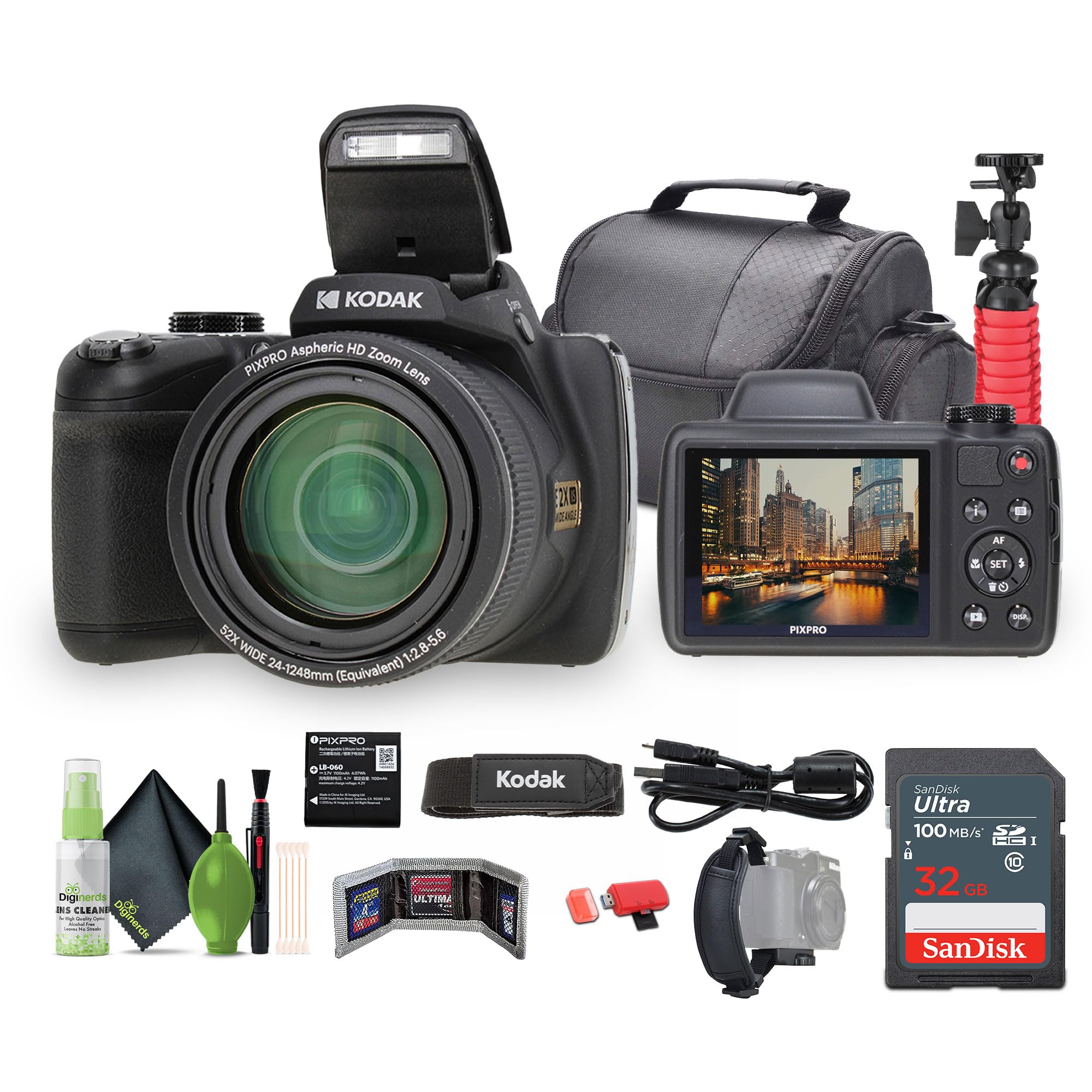
The Kodak PIXPRO AZ528 is the budget gateway into the world of superzoom photography. Its 52x optical zoom covers a true 24-1248mm equivalent range, which is enough to capture a distant heron in a tree or an alligator resting on a riverbank from a respectful distance. The 16-megapixel BSI CMOS sensor is a back-illuminated design that helps reduce noise compared to older standard sensors, and the 6 fps burst mode can handle slow-moving action like a grazing elephant.
The bundle includes a 32GB memory card, a flexible vlogging tripod, a camera bag, and a cleaning kit — everything a new safari photographer needs to start shooting immediately. The 3.0-inch LCD screen is usable for framing, and the built-in Wi-Fi enables wireless image transfer to a smartphone. The 360° Panorama Mode is a fun addition for capturing sweeping savannah horizons.
Image quality is typical for the price segment — fine in bright, outdoor conditions but noisy and soft in low light or at maximum zoom. The autofocus is phase-detection but with only 25 points, so tracking a running animal is not reliable. The build quality feels budget-tier, and one user reported a dirty lens unit out of the box. The AZ528 is best suited for someone who wants maximum zoom at the lowest possible entry price and is willing to work within the camera’s limitations.
Why it’s great
- 52x zoom (24-1248mm) at a very accessible budget price
- Includes memory card, bag, tripod, and cleaning kit
- Built-in Wi-Fi for easy smartphone image transfer
Good to know
- Image quality is noticeably soft at full zoom in low light
- Autofocus is slow and has only 25 points
- Some units have reported quality-control issues out of box
FAQ
Is 30x optical zoom enough for a safari?
Can I use a compact camera in dusty safari conditions?
Why should I choose a bridge/superzoom over a DSLR or mirrorless for safari?
Final Thoughts: The Verdict
For most users, the compact camera for safari winner is the Nikon COOLPIX P1100 because it offers the longest optical zoom (125x) in a still-ultraportable body with reliable image stabilization and dedicated wildlife modes. If you want the best pocketable image quality and can work within a shorter 200mm zoom, grab the Sony RX100 VII. And for a budget-friendly entry into superzoom wildlife photography, nothing beats the value of the Panasonic LUMIX FZ80D.

Mo Maruf
I created WellFizz to bridge the gap between vague wellness advice and actionable solutions. My mission is simple: to decode the research and give you practical tools you can actually use.
Beyond the data, I am a passionate traveler. I believe that stepping away from the screen to explore new environments is essential for mental clarity and physical vitality.