Our readers keep the lights on and my smoothie glass nicely filled. As an Amazon Associate, I earn from qualifying purchases.
Specs are compiled from manufacturer listings and verified buyer reviews and can change over time — please confirm the key details on the product page before buying.
Most hunting binoculars force you to choose: compact enough for your pocket but fuzzy, or sharp and clear but too heavy to carry all day. You need a pair that vanishes into your pack until you glass a ridgeline at dawn — and when you raise them, the image must be crisp enough to separate a buck from a stump in low light. This guide picks five compact binoculars that deliver on that promise, connecting real optical specs to what matters in the field.
I’m Mohammad Maruf — the founder and writer behind WellFizz. This guide is built by comparing the manufacturers’ published specifications and the patterns across verified customer reviews, so you get each pick’s real strengths and trade-offs instead of marketing spin.
The options below represent the strongest field-ready glass available today in the category of compact binoculars for hunting.
Quick Picks
- Maven B.3 8×30 mm Binoculars — Best Overall
- ZEISS Terra ED Pocket Binoculars 8×25 — Premium Pick
- Nikon 10×30 PROSTAFF P7 Waterproof Roof Prism Binocular — Top Performer
- Vortex Triumph HD 10×28 Binoculars — Budget Champion
- Nikon ACULON A30 10×25 Compact Binoculars — Compact & Light
How To Choose The Best Compact Binoculars For Hunting
A compact binocular needs to be small enough to stash in a jacket pocket or pack hip-belt, but powerful enough to identify game at the edge of legal shooting light. Three specs separate the keepers from the clutter.
Exit-pupil diameter: the number that controls dawn and dusk performance
Divide the objective lens size by the magnification — that gives you the exit pupil in millimeters. A larger exit pupil (around 3.75mm or bigger) sends more light to your eye, so you see antler tines at first light instead of a fuzzy silhouette. For low-light hunting, look for 3mm or higher.
Field of view (FOV): how much of the landscape you can scan
Measured in feet at 1,000 yards, a wider FOV means you can follow a running animal or scan a creek bottom without moving the binocular as much. In compact models, 300 feet or more is good; premium options push past 400 feet.
Coatings and glass types
Fully multi-coated lenses and phase-correction coatings on the roof prisms suppress glare and boost contrast. Extra-low dispersion (ED) glass eliminates color fringing around branches and fur. A binocular that is not fully multi-coated will look washed out in overcast conditions.
Quick Comparison
| Model | Best For | Exit Pupil | Field of View @ 1,000 yds | Eye Relief | Amazon |
|---|---|---|---|---|---|
| Maven B.3 8×30 | Ultra-premium optical quality in a tiny body | 3.75 mm | 430 ft | 15.1 mm | Amazon |
| Nikon PROSTAFF P7 10×30 | Maximum reach in a pocket-sized package | 3 mm | 346 ft | 15.4 mm | Amazon |
| ZEISS Terra ED 8×25 | Brilliant Zeiss glass that fits in your palm | 2.5 mm | 291 ft | 16 mm | Amazon |
| Vortex Triumph HD 10×28 | Budget-friendly durability with HD optics | 2.8 mm | — | 15 mm | Amazon |
| Nikon ACULON A30 10×25 | Ultra-light carry for close-range scouting | 2.5 mm | 262 ft (5°) | — | Amazon |
In‑Depth Reviews
1. Maven B.3 8×30 mm Binoculars
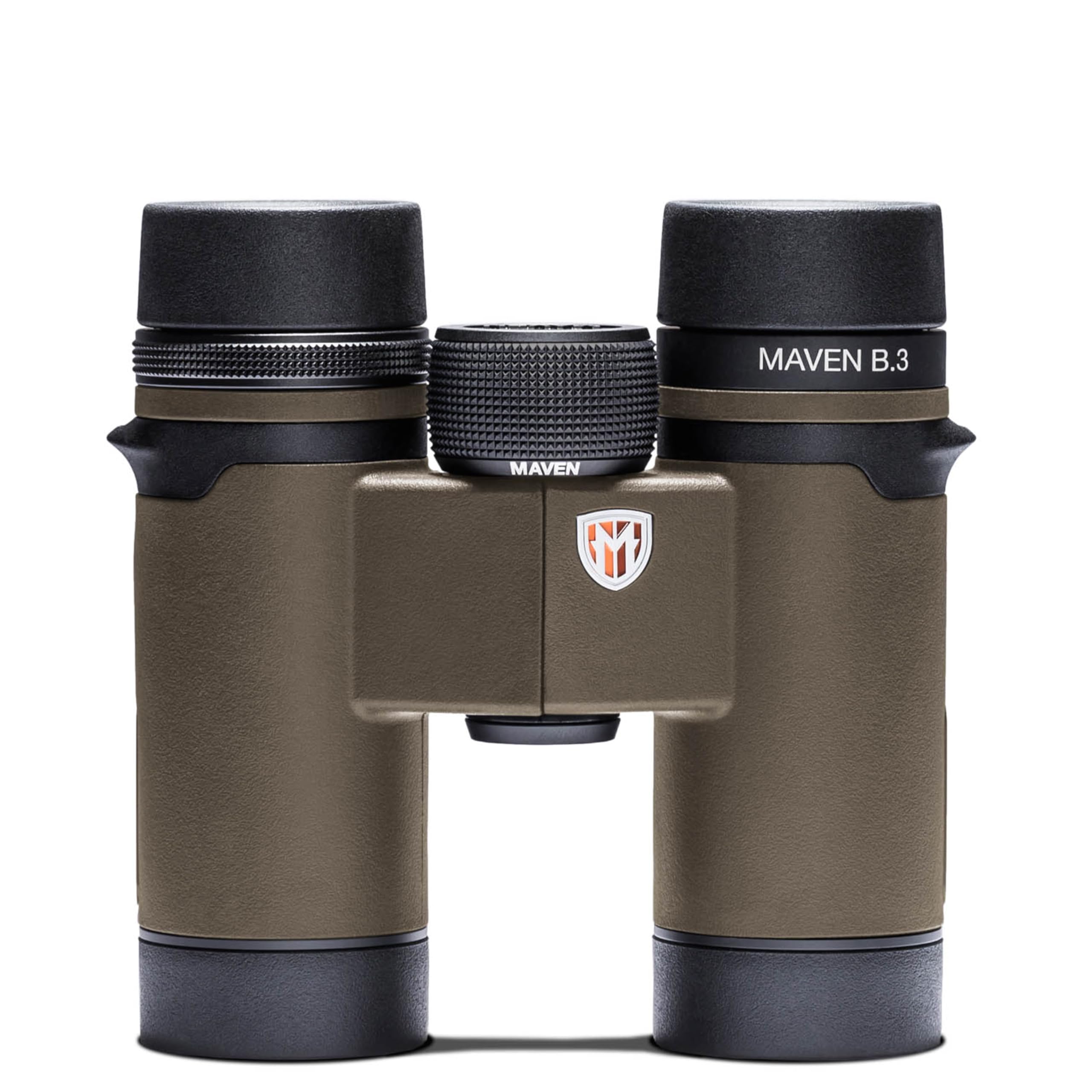
The Maven B.3 uses extra-low dispersion glass (ED glass, which cuts color fringing) and a large exit pupil — 3.75 millimeters — to give you a bright picture at dawn and dusk that the Nikon PROSTAFF P7 (3 mm) cannot match.
This 8×30 binocular weighs 16.6 ounces and measures 4.7 inches long, so it fits in a vest or pullover pocket. The exit-pupil diameter (the light beam from the eyepiece to your eye) is 3.75 millimeters, noticeably larger than the 3 millimeters on the Nikon PROSTAFF P7 or the 2.5 millimeters on the ZEISS Terra ED. That means more light reaches your eye in dim minutes of dawn, so a buck’s antler tines stay visible. The field of view (FOV) is 430 feet at 1,000 yards — wider than the PROSTAFF P7’s 346 feet — so you track a running coyote without moving the binocular.
Reviewers report the B.3 replaces a 10×42 Vortex Diamondback HD because the wider FOV and sharper image at 8x (magnification level) make up for the lower power. The focus wheel feels substantial and precise, and the diopter adjustment (focus correction for your eye) stays tight on bumpy trails. The trade-off is the premium price, but buyers who glass daily say they see the value in the glass quality.
What makes it worth it
- 3.75mm exit pupil provides top-tier low-light performance among compacts
- ED glass delivers exceptional clarity and color accuracy edge-to-edge
- Super compact at 16.6 oz and 4.7″ long — fits in a vest pocket
- Unconditional lifetime warranty backs the investment
Honest trade-offs
- Premium price point puts it out of range for casual or occasional use
- 8x magnification may feel underpowered to hunters used to 10x for open country
Grab it when: you glass daily or for multi-day backcountry hunts where every ounce counts and you refuse to compromise on clarity at dawn and dusk.
Look elsewhere if: your hunting is limited to a few weekends a year and you would rather put the budget into a better rifle scope.
2. ZEISS Terra ED Pocket Binoculars 8×25

Zeiss packs German optics into a 4.5-inch body with a hydrophobic coating (a water-repellent finish) on the lenses — this pair sheds raindrops faster than the Maven B.3.
The Zeiss Terra ED uses a Schmidt-Pechan prism design (a compact light path) and ED glass to produce sharp images despite its small 25mm objective lenses (the light-collecting lenses at the front). But the 16 millimeters of eye relief (distance your eye can be from the eyepiece and still see the full image) is the longest in this roundup, giving eyeglass wearers 16mm versus the PROSTAFF P7’s 15.4mm.
The large focus wheel falls naturally under your index finger, and the fast-focus design lets you snap from a close butterfly at 6 feet to a distant hawk. The body is fiberglass-reinforced and waterproof, so a sudden rain shower will not fog the internals. Buyers report the Terra ED handles low light surprisingly well for a 25mm objective, but note the exit pupil limits performance once the sun drops behind the treeline.
Stands out for
- Hydrophobic multi-coating sheds raindrops and smudges for a clear view in wet weather
- 16mm eye relief is the longest in the list — comfortable for glasses
- Magnesium body is tough yet incredibly light and pocketable
Known limit
- 2.5mm exit pupil limits low-light performance compared to the Maven B.3 or PROSTAFF P7
- 8×25 format feels less capable in thick timber at dusk
Your best bet if: you are a hiker, spot-and-stalk hunter, or birder who wants premium optics for daylight use and values pocketability over dawn-and-dusk light gathering.
Not the right choice for: the hunter who primarily glass in the last hour of legal light.
3. Nikon 10×30 PROSTAFF P7 Waterproof Roof Prism Binocular

At 10x magnification (power that brings distant objects ten times closer), the PROSTAFF P7 gives you more reach than the Maven B.3 while staying in a 30mm objective body — its 3mm exit pupil, versus the Nikon ACULON A30’s 2.5mm.
This Nikon PROSTAFF P7 delivers a 3-millimeter exit pupil, which keeps the image decently bright at twilight — better than the 2.5 millimeters of the ZEISS Terra ED or the 2.8 millimeters of the Vortex Triumph HD. The 15.4 millimeters of eye relief is a hair longer than the Vortex Triumph HD’s 15 millimeters, giving glasses users a slightly more forgiving view. Nikon packs full multi-coating (lens coatings that reduce reflections and increase brightness), phase-correction coated roof prisms (treatments that align light waves in roof-prism designs for contrast), and dielectric high-reflective prism coating (a mirror-like coating that sends more light to your eye) into a waterproof, fogproof, rubber-armored body.
The locking diopter ring keeps your focus setting from drifting when you shove the binoculars into a pack, and the oil- and water-repellent lens coatings make cleaning off morning condensation easy. The FOV is 346 feet at 1,000 yards, tighter than the Maven B.3’s 430 feet but expected for a 10x optic. One reviewer who uses these for varmint hunting on prairie dogs and coyotes says the P7 is tough to top at this price, though another notes the included lens caps are loose and recommends after-market replacements.
Where it wins: The PROSTAFF P7 gives you 10x magnification in a compact form that is significantly smaller and lighter than a full-size 10×42, and the multi-layer coatings produce a sharp, vivid image that rivals models costing twice as much.
Where it falls short: The loose factory lens caps and mediocre performance in very dim light are the two real downsides to know before you buy.
Take it on the hunt if: you need 10x power for scanning open country but refuse to carry the weight of a full-size binocular.
Pass it over if: most of your hunting happens in dense cover at dawn or dusk where a larger exit pupil would help more than magnification.
4. Vortex Triumph HD 10×28 Binoculars
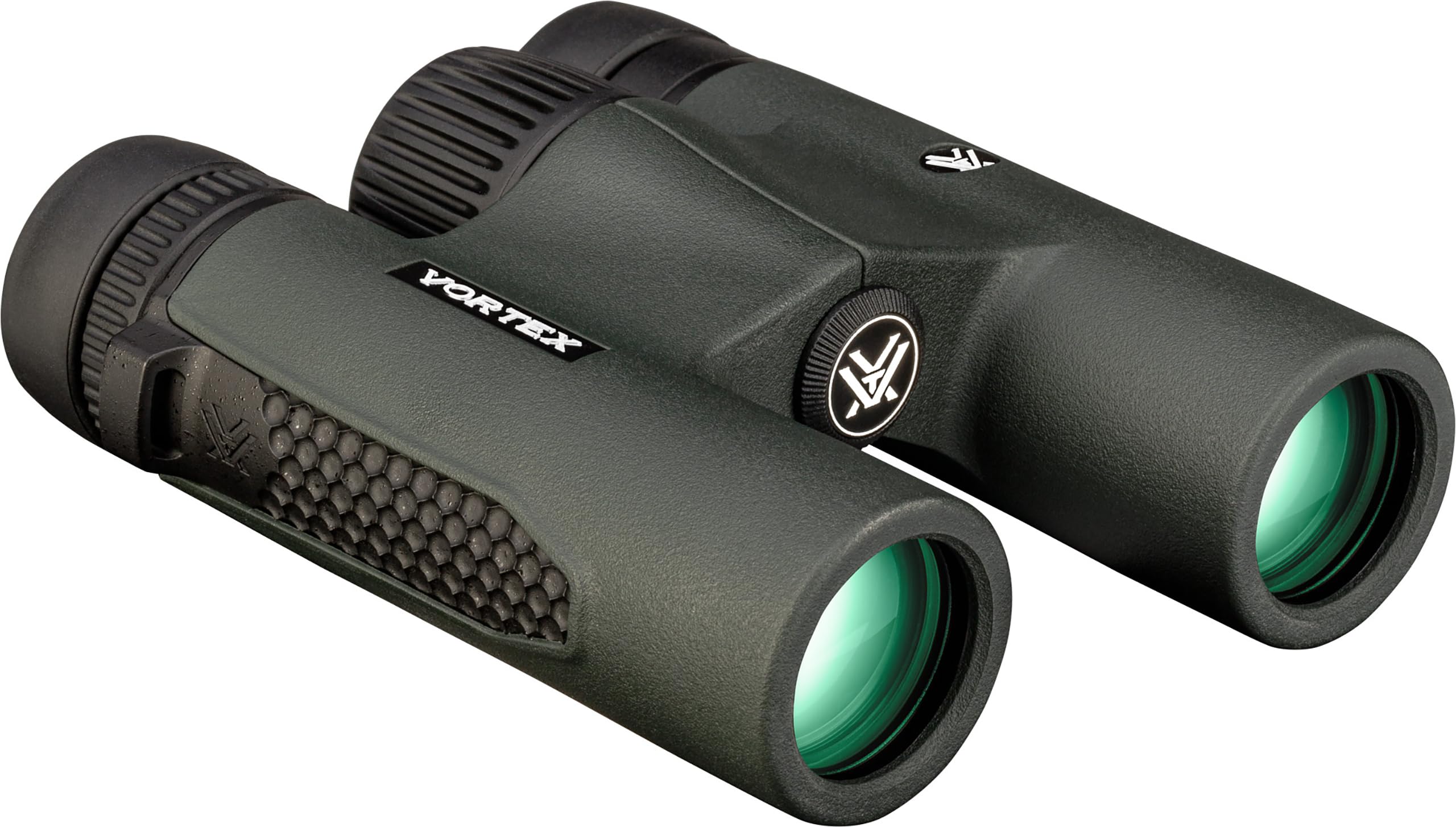
The Vortex Triumph HD comes with an unconditional lifetime warranty — it is transferable, so the coverage follows the binocular, not the original buyer — and its 2.8mm exit pupil lands between the Nikon PROSTAFF P7 and the ZEISS Terra ED in brightness.
Vortex packs its HD optical system with fully multi-coated lenses into a 10×28 chassis that is nitrogen-purged against internal fogging and wrapped in rubber armor. The 2.8-millimeter exit pupil is usable in decent light but falls short of the PROSTAFF P7’s 3 millimeters in twilight. The 15 millimeters of eye relief matches the PROSTAFF P7 within a hair, so glasses wearers get similar comfort. Owners mention the Triumph HD produces clear images up to 1-2 miles with a wide FOV and minimal distortion. It is tripod adaptable (it screws directly onto a standard tripod mount) — unusual in the budget tier — letting you lock it for long glassing sessions without arm fatigue. One reviewer says the polycarbonate chassis survived a 20-foot drop out of a tree with no damage.
The obvious trade-off is that sharpness is not as crisp as premium optics; one reviewer noted it lacks the razor-sharp finish of higher-end glass. It is a solid pair for the hunter on a budget who needs something tough enough to toss in a pack and functional enough to spot deer at moderate ranges.
Earns its place via
- Unlimited, unconditional, transferable lifetime warranty
- Tripod adaptable for extended glassing sessions
- Shockproof construction survived a 20-foot drop in one owner’s experience
The catch to note
- Image sharpness and contrast fall short of what the PROSTAFF P7 or ZEISS Terra ED deliver
- 2.8mm exit pupil limits performance in low light
Reach for it if: you need a tough, affordable binocular for casual hunting or as a backup that can survive being dropped, and you want the confidence of a no-questions-asked warranty.
Look past it if: you demand the best possible image quality or regularly glass in low-light conditions.
5. Nikon ACULON A30 10×25 Compact Binoculars
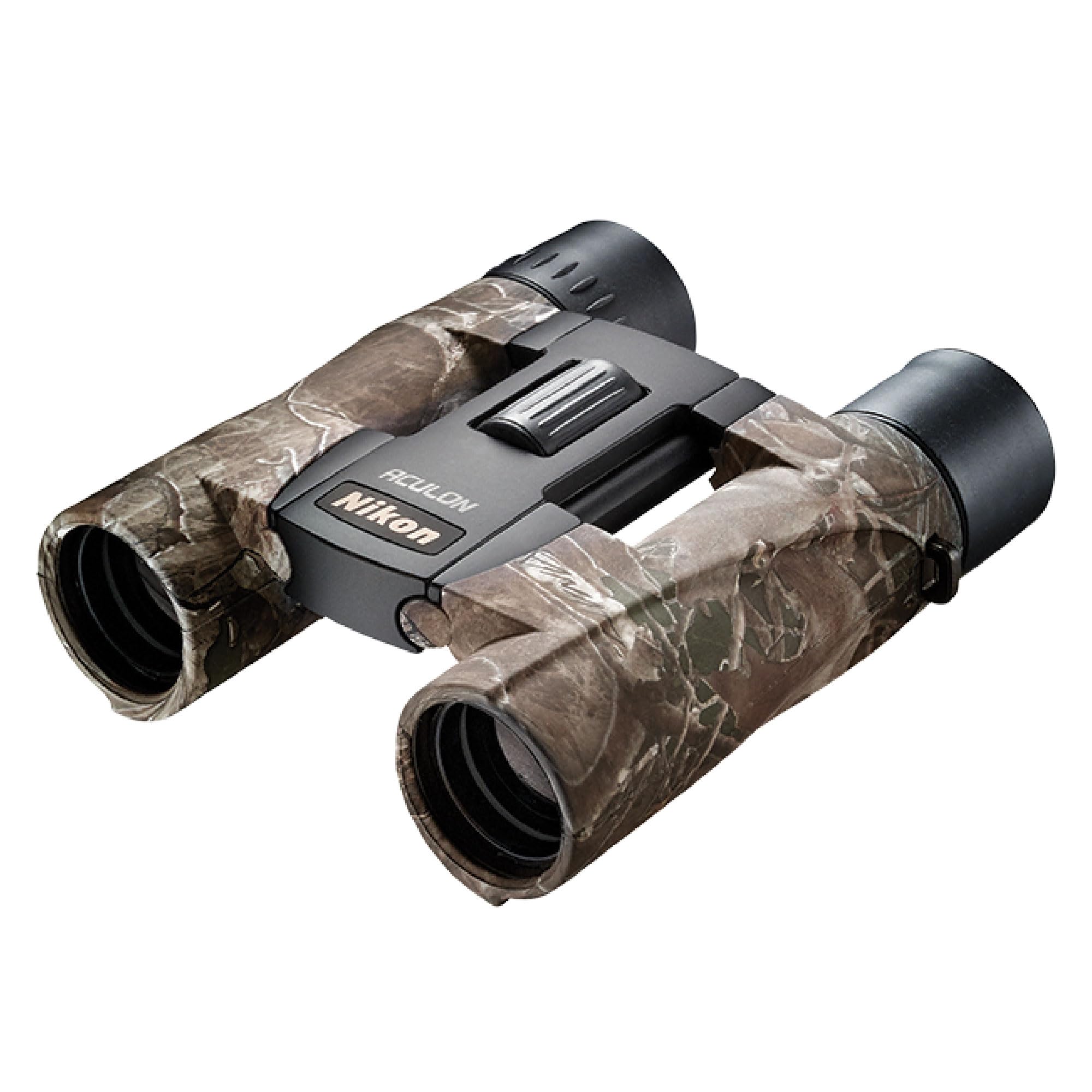
At a sub-entry-level price, the ACULON A30 uses a dual-hinge folding design to collapse smaller than any other pick in this list — it slides into a jacket pocket with room to spare.
For the hunter who only needs a quick look at a deer 100 yards away and refuses to carry anything heavy, the ACULON A30 is the ultra-light entry point. The dual-hinge folding design collapses into a compact shape that slides into a jacket pocket. Multilayered-coated lenses (basic lens coatings) deliver bright images in good light. — though you sacrifice weather sealing since the ACULON A30 is not waterproof and may fog in damp conditions.
Customers note the picture quality is clear if you get the focus right, and the ergonomic grip keeps hand fatigue low during extended use. The FOV is a narrow 5 degrees (roughly 262 feet at 1,000 yards), which is significantly tighter than the PROSTAFF P7’s 346 feet or the Maven B.3’s 430 feet — so scanning a hillside requires more panning. One reviewer who uses them for close-distance deer spotting while hiking says they are a real solid pair for casual use.
The biggest shortcoming is the lack of a secure neck strap mounting system, and the lens caps only cover the eyepieces, not the objective lenses. It is a pure daylight binocular for the hunter who values light weight and low cost above all else.
The simple case for it: At a featherlight weight with a sub-entry-level price, the ACULON A30 is the undisputed champion of “I need something in my pocket just in case” hunting — it works great for close-range scouting in good light and is small enough to forget you are carrying it.
The honest reality: It is not waterproof or fogproof, the field of view is tight, and low-light performance is limited by the 2.5mm exit pupil; this is a fair-weather companion, not a primary hunting optic.
Buy it if: you want a ridiculously portable binocular for incidental use on hikes or as a backup that lives in your day pack.
skip it if: you hunt in rain, fog, or low light, or you need a wide field of view to scan open terrain.
Understanding the Specs
Exit-pupil diameter (mm)
This is the diameter of the beam of light that leaves the eyepiece and enters your eye. You calculate it by dividing the objective lens size by the magnification — the bigger the number, the brighter the image your eye sees in low light. A 3mm exit pupil works well for most hunting light; anything above 3.5mm, like the Maven B.3’s 3.75mm, gives you a significant advantage in the last minutes of legal shooting time.
Field of view (@ 1,000 yards)
Measured in feet, this tells you how wide an area you can see at a distance of 1,000 yards. A number like 430 feet means you see a 430-foot-wide circle of landscape without moving the binocular. Wider is better for scanning quickly — 346 feet works for open country, but 430 feet lets you track moving animals through brush much more easily.
FAQ
What does exit-pupil diameter mean for hunting at dawn?
Is 8x or 10x better for compact hunting binoculars?
Why is waterproofing important in a hunting binocular?
How do I know if a compact binocular will fit in my pocket?
What is ED glass and do I need it for hunting?
What does field of view mean for tracking moving game?
Can I use compact binoculars with eyeglasses?
What is the warranty on a Vortex Triumph HD binocular?
How do phase-correction coatings help a hunting binocular?
Why do some compact binoculars ship without objective lens caps?
Final Thoughts: The Verdict
For most hunters, the compact binoculars for hunting winner is the Maven B.3 8×30 because its 3.75mm exit pupil and ED glass deliver a bright, sharp image at dawn and dusk, while weighing just 16.6 ounces that disappears into a vest pocket. If you need maximum reach in a small body, grab the Nikon PROSTAFF P7 10×30. And for the budget-minded hunter who wants a tough, warrantied pair that still produces HD-quality views, the standout is the Vortex Triumph HD 10×28.
How We Picked
We do not accept paid placement. Every pick is matched to a real buyer and a real use-case; we do not hands-on test units.
Sources & Methodology
Specifications: manufacturer listings and product documentation. Review insights: verified customer reviews, as of July 2026. Pricing: not shown on this page (it changes often); check the current price via the retailer link.
As an Amazon Associate, WellFizz earns from qualifying purchases. This does not affect which products we feature.
Related Guides

Mo Maruf
I created WellFizz to bridge the gap between vague wellness advice and actionable solutions. My mission is simple: to decode the research and give you practical tools you can actually use.
Beyond the data, I am a passionate traveler. I believe that stepping away from the screen to explore new environments is essential for mental clarity and physical vitality.