Our readers keep the lights on and my smoothie glass nicely filled. As an Amazon Associate, I earn from qualifying purchases.
An Alaska cruise presents a moving landscape of glaciers, breaching whales, and bald eagles perched on distant shorelines. The ship’s deck is your viewing platform, and a pair of compact binoculars is the only tool that turns those distant shapes into vivid memories. Without them, you’re left squinting at the spray where a whale just sounded, straining to see the texture of a calving glacier.
I’m Mohammad Maruf — the founder and writer behind WellFizz. This guide is the result of hundreds of hours spent analyzing specifications, poring over user experiences, and cross-referencing the optical performance that truly matters on a moving vessel in variable Alaskan light.
After evaluating dozens of models, I’ve narrowed the field to the seven that best meet the demands of a maritime voyage. Whether your priority is extreme portability or the brightest possible image in twilight, this guide to the best compact binoculars for alaska cruise will help you make a confident choice.
How To Choose The Best Compact Binoculars For Alaska Cruise
Choosing binoculars for an Alaska cruise is different from picking a pair for backyard birdwatching. The conditions — constant motion, variable light, and the risk of moisture — demand specific features. Here are the critical factors to prioritize.
Magnification and Objective Lens Size
An 8x magnification is generally the best choice for cruise viewing. The 8x power provides a steady image even with the ship’s motion, while a 10x magnification can amplify hand shake significantly, making it harder to lock onto a distant whale spout. The objective lens size (the second number, such as 25 or 42) determines light gathering. A 42mm lens collects more light, delivering brighter images in the low light of early morning or twilight, but adds weight. A 25mm lens is lighter and more pocketable but will struggle in dim conditions.
Waterproof and Fogproof Reliability
Alaska’s marine environment is wet. Sea spray, rain, and the humidity of a wildlife cruise require binoculars that are O-ring sealed and nitrogen-purged. A waterproof rating of IPX7 means the unit can be submerged in up to three feet of water without damage, which is excellent protection against a rogue wave. Nitrogen purging prevents internal fogging when you move from the cold deck into the warm interior of the ship — a common and frustrating problem with non-purged optics.
Lens Coatings and Prism Quality
Fully multi-coated lenses apply anti-reflective layers to every glass surface, maximizing light transmission and reducing glare. BaK-4 glass prisms, which are brighter and sharper than BK-7 prisms, further improve image quality. For the best color fidelity and sharpness, look for Extra-low Dispersion (ED) glass, which virtually eliminates the color fringing that can appear around high-contrast edges like a dark mountain against a bright sky. These optical upgrades matter most when your target is far away and the light is fading.
Eye Relief and Eyecup Design
If you wear glasses, eye relief is a crucial spec. Eye relief is the distance from the eyepiece lens where your eye can still see the full field of view. A range of 15mm or more is considered good for eyeglass wearers. Twist-up eyecups with multiple stops allow you to adjust the distance precisely, whether you’re wearing glasses or not. This feature directly affects comfort during long viewing sessions on deck.
Quick Comparison
On smaller screens, swipe sideways to see the full table.
| Model | Category | Best For | Key Spec | Amazon |
|---|---|---|---|---|
| Nikon Monarch M5 8×42 | Premium | Brightest low-light image on the deck | ED Glass / 19.5mm Eye Relief | Amazon |
| ZEISS Terra ED 10×42 | Premium | Sharpest long-range wildlife viewing | Schmidt-Pechan ED Glass | Amazon |
| ZEISS Terra ED Pocket 8×25 | Premium | Ultra-compact cabin companion | Hydrophobic Multi-Coating | Amazon |
| Celestron Nature DX ED 10×42 | Mid-Range | ED glass at a practical price | ED Objective Lenses | Amazon |
| Nikon TRAVELITE EX 8×25 | Mid-Range | Lightweight and packable daily carry | Multilayer-Coated Optics | Amazon |
| Nocs Provisions Standard Issue 8×25 | Entry-Level | Stylish and rugged pocket binoculars | IPX7 Waterproof | Amazon |
| Bushnell H2O Xtreme 10×42 | Budget-Friendly | Durable value for harsh weather | Fully Multi-Coated Lenses | Amazon |
In‑Depth Reviews
1. Nikon Monarch M5 8×42
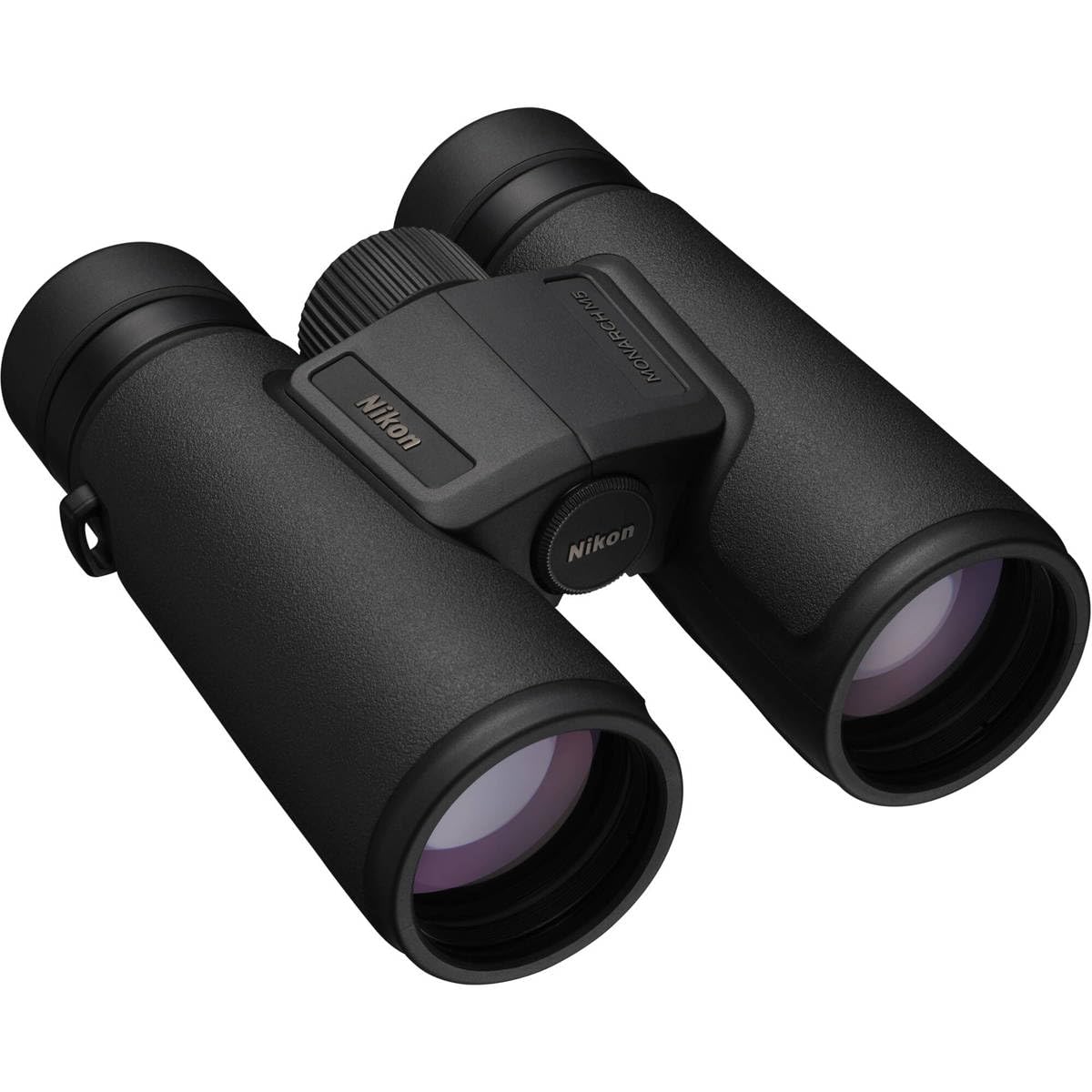
The Nikon Monarch M5 8×42 is the goldilocks choice for an Alaska cruise. Its 8x magnification provides a steady, easy-to-track image even as the ship rocks, while the 42mm objective lens with ED glass delivers exceptional brightness in the low light of early morning whale watching. The dielectric high-reflective prism coatings push light transmission to a level that reveals details — such as the mottled pattern on a humpback’s tail — that cheaper optics simply miss.
With 19.5mm of eye relief, this is one of the most comfortable options for eyeglass wearers spending extended periods on deck. The twist-up click-stop eyecups offer precise adjustment, and the large center focus knob is easy to operate with gloves on. The nitrogen-purged, O-ring sealed housing is both waterproof and fogproof, standing up to sea spray and the rapid temperature swings of the Inside Passage.
Weighing in at 21.5 ounces, it is not the lightest pair in this guide, but it strikes a nearly perfect balance between optical performance and reasonable portability. The closed-bridge design offers a solid grip, and the included case is well-padded for packing. For the cruiser who prioritizes image quality above all else, this is the clear winner.
Why it’s great
- Dielectric-coated prisms for exceptional low-light brightness
- ED glass virtually eliminates chromatic aberration
- Long 19.5mm eye relief for comfortable glasses wear
Good to know
- Heavier than compact 8×25 models
- Field of view is narrower than some competitors at this price
2. ZEISS Terra ED 10×42

The ZEISS Terra ED 10×42 brings legendary German optical engineering into a price range that is surprisingly attainable. The 10x magnification lets you pull in distant subjects — a brown bear foraging on a far shore, a puffin on a rocky outcrop — with a clarity and color accuracy that defined the premium tier for years. The Schmidt-Pechan ED glass and hydrophobic multi-coating combine for 88% light transmission and near-total elimination of color fringing.
The build is robust: a fiberglass-reinforced polycarbonate housing that is fully waterproof and fogproof. The large focus wheel falls naturally under the index finger, allowing rapid adjustments when a pod of orcas surfaces. With 18mm of eye relief, most eyeglass wearers will see the full field of view without vignetting. The included neoprene strap and hard case offer excellent protection during transit.
Users consistently note the image snap — that immediate, three-dimensional pop that separates premium glass from mid-range optics. The 10x magnification does require a steadier hand than 8x, so bracing your elbows on the ship’s railing becomes essential. For the serious wildlife viewer who demands the absolute sharpest image of distant subjects, the Terra ED 10×42 is the top contender.
Why it’s great
- Exceptional 88% light transmission for brilliant, true-color images
- ED glass delivers sharp, color-fringe-free views
- Fast, intuitive center focus wheel ideal for tracking wildlife
Good to know
- 10x magnification amplifies motion and requires a steady hold
- Made in China despite the German brand heritage
3. ZEISS Terra ED Pocket 8×25

When every ounce in your carry-on matters, the ZEISS Terra ED Pocket 8×25 proves that miniaturization does not have to sacrifice optical quality. This pocket binocular slips into a jacket pocket or small crossbody bag with room to spare, yet it delivers the same ZEISS hydrophobic multi-coating and ED glass found in its larger siblings. The result is a surprisingly bright, sharp image that punches well above its size class.
The magnesium alloy housing is impressively light at 11.5 ounces, yet the fiberglass-reinforced casing feels solid. The twist-up eyecups have multiple stops for comfortable use with or without glasses, and the quick-turn focus wheel makes it easy to lock onto a passing eagle. The 8x magnification is ideal for counteracting ship motion, while the 357-foot field of view at 1000 yards gives you the peripheral awareness to spot wildlife before it swims out of sight.
The trade-off is light-gathering capability. The 25mm objective lens cannot match the 42mm models in dim conditions — expect a dimmer image during deep twilight or heavy overcast. But for the vast majority of daytime cruise viewing, this is a brilliantly executed compact that disappears into your pack until you need it. It comes with a microfiber bag and neck strap, though no lens caps, so plan accordingly.
Why it’s great
- Ultra-light and pocketable at 11.5 ounces
- ZEISS hydrophobic coating sheds water and resists fogging
- ED glass ensures edge-to-edge clarity in a small package
Good to know
- Limited low-light performance compared to 42mm objectives
- No lens caps included with the purchase
4. Celestron Nature DX ED 10×42

The Celestron Nature DX ED 10×42 is the price-to-performance champion of this guide. It is the most affordable model to feature Extra-low Dispersion (ED) glass, which dramatically reduces chromatic aberration — the purple or green fringing you see around high-contrast edges. This makes distant glaciers and dark tree lines against bright skies look crisp and natural, a quality normally reserved for binoculars costing hundreds more.
The 10x magnification and 42mm objective lens provide bright, detailed views across the wide distances typical of Alaskan fiords. The phase-coated BaK-4 prisms improve light transmission, and the fully multi-coated optics keep the image bright even in overcast conditions. The rubber-armored polycarbonate housing is both waterproof and nitrogen-purged for fog-free operation, and the tripod adapter socket is a welcome addition for extended shore-based viewing.
Some users note that the ergonomics are less refined than pricier options — the grip is slightly less tactile, and the depth of field is shallower, requiring more frequent focus adjustments. The eye relief of 14.3mm is adequate but not generous for eyeglass wearers. Still, for the cruiser who wants ED-class optics without breaking the bank, the Nature DX ED delivers where it matters most: image quality.
Why it’s great
- ED glass at a market-leading budget-friendly price
- Phase-coated BaK-4 prisms for bright, true-to-life color
- Built-in tripod adapter socket for stable viewing
Good to know
- Shallow depth of field requires frequent refocusing
- 14.3mm eye relief is tight for some eyeglass wearers
5. Nikon TRAVELITE EX 8×25

The Nikon TRAVELITE EX 8×25 is a time-tested travel classic for good reason. Its compact, inward-curving body design makes it easy to grip and helps dampen the image shake that plagues small binoculars at higher magnifications. The 8x magnification is well-matched to the 25mm objective, delivering a steady, wide field of view that is ideal for scanning shorelines and tracking birds in flight from a moving ship.
Nikon’s multilayer-coated optics and aspherical eyepiece lenses work together to minimize distortion and color blur at the edges of the field. The image is bright for a 25mm class binocular, though you will notice a drop-off in light in the deep dusk of a northern summer evening. The nitrogen-purged, O-ring sealed construction makes it fully waterproof and fogproof, handling sea spray and sudden cabin-to-deck temperature swings without complaint.
The turn-and-slide eyecups with click-stop diopter adjustment allow quick customization, while the 11.1mm eye relief is sufficient for occasional glasses use but will be tight for some. This model is designed for those who prioritize weight savings — it is one of the lightest waterproof options available. If your cruise packing list is already bursting, the TRAVELITE EX is a reliable companion that takes up almost no space.
Why it’s great
- Extremely lightweight and compact for easy packing
- Waterproof and fogproof nitrogen-purged construction
- Ergonomic body design reduces vibration at 8x
Good to know
- Limited low-light performance due to small objective lens
- 11.1mm eye relief is below ideal for glasses wearers
6. Nocs Provisions Standard Issue 8×25
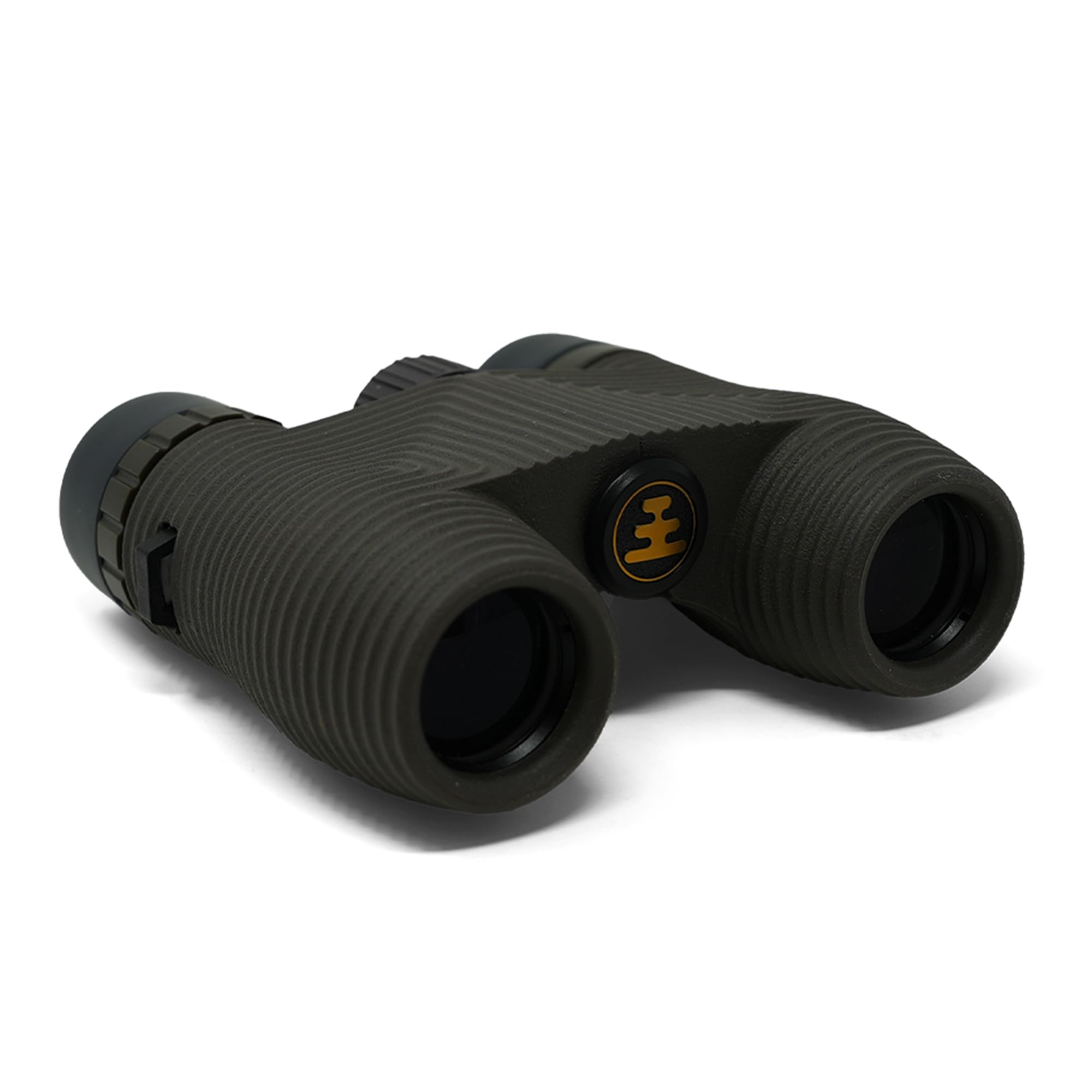
The Nocs Provisions Standard Issue 8×25 is a fresh entry that blends modern design with genuine functionality. Its IPX7 waterproof rating means it can handle full submersion in three feet of water — far beyond the splash resistance of most compact binoculars. This is a real advantage on a cruise deck where a rogue wave or sudden rain shower can drench your gear in moments.
Despite its small size, the fully multi-coated optics and BaK-4 prisms deliver a bright, clear image with good contrast. The 357-foot field of view is generous for an 8×25, making it easy to follow fast-moving wildlife. The patented Rugged Wave Grip design provides a secure, non-slip hold even with wet hands, and the body is impact-resistant for accidental drops against the ship’s railing.
The eye relief is the shortest in this guide at 10mm, which may force eyeglass wearers to press their lenses against the eyecups to see the full view. The strap attachment system is finicky to install initially, and the included strap is on the shorter side. Nocs Provisions backs the product with a lifetime warranty and donates 1% of sales to environmental causes, which may appeal to eco-conscious cruisers looking for a durable, lightweight companion.
Why it’s great
- IPX7 waterproof rating for maximum wet-weather protection
- Ergonomic wave grip pattern ensures secure handling
- Lifetime warranty and environmental contribution program
Good to know
- 10mm eye relief is too short for comfortable glasses use
- Strap attachment slots are narrow and difficult to thread
7. Bushnell H2O Xtreme 10×42

The Bushnell H2O Xtreme 10×42 is the workhorse option for cruisers who want reliable performance without a premium price tag. The 10x magnification provides good reach for spotting sea otters and harbor seals at medium to long distances, while the 42mm objective lens gathers enough light for use in the overcast conditions common in Alaskan waters. The fully multi-coated optics and BaK-4 roof prisms deliver a respectable image that punches above its cost.
This model is built for wet environments. The O-ring sealed, nitrogen-purged construction is fully waterproof and fogproof, and the rubber armored exterior provides a secure grip even when wet. The 17mm eye relief is generous and comfortable for eyeglass wearers, while the center focus knob is smooth and precise. A key limitation to note before buying: this model does not have a tripod adapter socket, so stable long-distance viewing requires a steady rest.
Users routinely praise the brightness and clarity of the H2O Xtreme, especially given its price point. It is heavier than compact 8×25 models at around 25 ounces, and the field of view is narrower than some 8x alternatives, which can make tracking fast-moving subjects like dolphins more challenging. For the cost-conscious cruiser who needs a waterproof, powerful binocular that will survive the trip, the H2O Xtreme is a solid foundation.
Why it’s great
- Excellent waterproof and fogproof protection for sea conditions
- 17mm eye relief is very comfortable for glasses wearers
- Bright 10×42 image quality at an accessible price
Good to know
- No tripod adapter socket for stable long-duration viewing
- Heavier than most compact options at 25 ounces
FAQ
Is 8x or 10x magnification better for a cruise ship deck?
What does an IPX7 waterproof rating mean for binoculars?
Why is ED glass important for Alaskan scenery?
Can I use my compact binoculars for stargazing on the cruise?
How do I keep my binoculars from fogging up in the Alaska weather?
Final Thoughts: The Verdict
For most cruisers, the best compact binoculars for alaska cruise winner is the Nikon Monarch M5 8×42 because it balances a steady, hand-holdable 8x magnification with exceptional low-light performance from its ED glass and dielectric-coated prisms. If you need the absolute sharpest view of distant wildlife, grab the ZEISS Terra ED 10×42. And for a featherweight pocket companion that disappears into your jacket, nothing beats the ZEISS Terra ED Pocket 8×25.

Mo Maruf
I created WellFizz to bridge the gap between vague wellness advice and actionable solutions. My mission is simple: to decode the research and give you practical tools you can actually use.
Beyond the data, I am a passionate traveler. I believe that stepping away from the screen to explore new environments is essential for mental clarity and physical vitality.