Our readers keep the lights on and my smoothie glass nicely filled. As an Amazon Associate, I earn from qualifying purchases.
When the grid goes down and the cell towers blink silent, a plastic rectangle in your pocket turns into a useless brick. The difference between panic and preparedness often comes down to a single device sitting in your emergency kit—one that can pull in a weather bulletin, power a vital phone call, or light a dark room when every other source has failed.
I’m Mohammad Maruf — the founder and writer behind WellFizz. I’ve spent hundreds of hours cross-referencing battery capacity claims, solar panel surface areas, hand crank generator efficiencies, and NOAA reception reports to separate the tools that deliver real emergency utility from those that only look the part on a product page.
This guide breaks down five rigorously vetted options to help you find the most reliable communication device for emergencies that keeps you informed, powered, and connected when conditions turn dangerous.
How To Choose The Best Communication Device For Emergencies
An emergency radio isn’t just a radio—it’s a multi-tool for staying alive when information and power are both scarce. The right choice depends on battery authenticity, charging versatility, and reception hardware that actually works when you need it most.
Battery Capacity That You Can Trust
Many budget radios inflate their mAh ratings using marketing math. A true 12000mAh lithium pack will charge a modern smartphone from dead to full roughly twice, while keeping the radio and lights running for 30–60 hours depending on volume and brightness. Look for verified independent reviews that confirm the claimed capacity—real-world emergency gear shouldn’t rely on guesswork.
Solar Panel Surface Area Over Silicon Hype
A monocrystalline panel measuring at least 8500mm² captures significantly more photons than the tiny decorative polysilicon panels (often around 2000mm²) found on cheaper units. Larger panel area translates directly to faster charging in overcast or indirect light conditions—exactly the scenario you’ll face during a storm when direct sun is absent.
Hand Crank Torque and Generator Efficiency
Not all cranks are equal. Upgraded generators with larger copper coils and reinforced magnets deliver nearly twice the charging efficiency per rotation. A smooth, low-effort crank arm that can top up a phone in three minutes of turning is a genuine survival feature—not a gimmick. Resistance should drop noticeably once the internal battery is fully charged, signaling the system is working correctly.
NOAA Reception and Antenna Quality
The ability to lock onto distant NOAA weather band signals from a basement, cabin, or valley depends on the radio’s internal IC chip quality and antenna design. An extendable 52cm antenna provides a real advantage over fixed stub antennas. High-sensitivity signal processing with noise-reduction circuitry ensures you hear the alert before the storm arrives.
Quick Comparison
On smaller screens, swipe sideways to see the full table.
| Model | Category | Best For | Key Spec | Amazon |
|---|---|---|---|---|
| Roxicosly CR1030 | Mid-Range | Solar and hand crank power generation | 8500mm² monocrystalline solar panel | Amazon |
| Mesqool B0F4QVQPH3 | Premium | High-torque crank and clear NOAA reception | Extended antenna with noise-reduction chip | Amazon |
| Mesqool B0F4QW1PP1 | Premium | Compact dual-light and phone charging | 260-foot beam flashlight, 12000mAh battery | Amazon |
| PPLEE CR1030 | Mid-Range | Clear AM/FM/NOAA sound and easy tuning | 57mm 5W full-range speaker | Amazon |
| QAUYYW B0DN4YR5MB | Budget | Largest battery in compact form | 74000mWh (20000mAh) capacity | Amazon |
In‑Depth Reviews
1. Roxicosly CR1030 Emergency Weather Radio
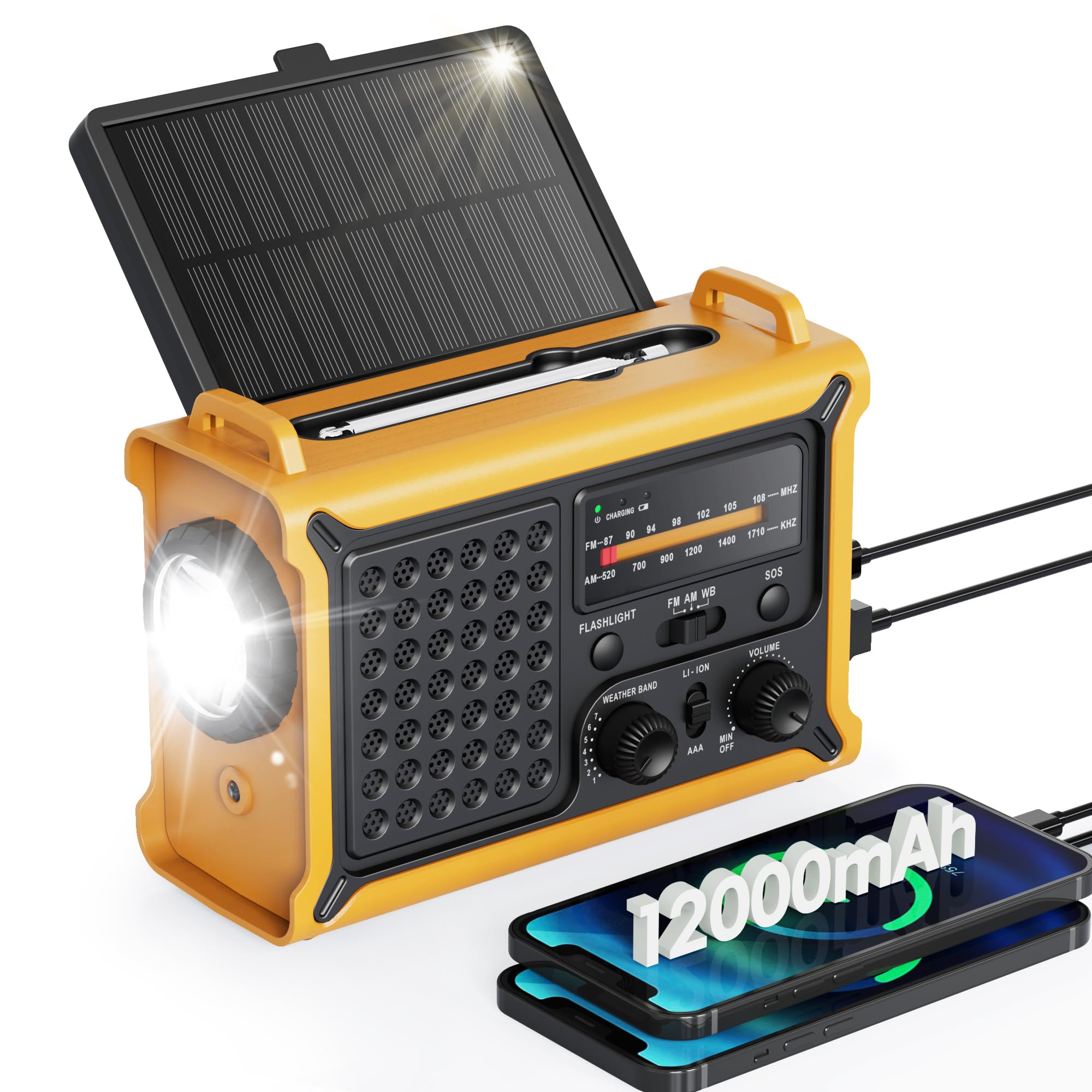
The Roxicosly CR1030 stands out for its 8500mm² monocrystalline solar panel—over four times larger than the decorative panels found on budget alternatives. This panel captures meaningful power even in indirect or overcast light, which is exactly when you’ll be relying on it during a storm. The hand crank is equally impressive: reinforced internals and a high-efficiency dynamo deliver usable power after just one minute of cranking, enough for an emergency call or lighting.
The built-in 12000mAh battery is genuine—verified by reviewers who ran FM radio and high-brightness lighting for approximately 18 hours before hitting low battery shutdown. After a three-hour solar charge on a car hood, the same test yielded another 1.5 hours of operation, confirming that the solar circuit actually works in real-world conditions rather than marketing specs. The AM/FM tuner pulls in strong local stations cleanly, and the 7 NOAA weather bands trigger a 9-second alarm when alerts are broadcast.
Dual lighting includes a 5W adjustable-beam flashlight and a 12-LED reading lamp with multiple brightness levels. The flashlight covers enough distance to navigate campsites or dark trails, while the soft lamp works well indoors. IPX6 waterproofing means it can handle rain and splashes without concern. The unit also accepts AAA batteries as a final backup, closing any gap if the rechargeable cell is fully depleted.
Why it’s great
- Largest monocrystalline solar panel in its class delivers real charging in low light
- One minute of hand cranking provides enough power for an emergency phone call or light
- Genuine 12000mAh battery capacity confirmed by independent user testing
Good to know
- No volume control for the storm warning siren—it’s fixed at full output
- Red flashing lights activate alongside the siren and cannot be disabled
2. Mesqool Emergency Weather Radio (B0F4QVQPH3)
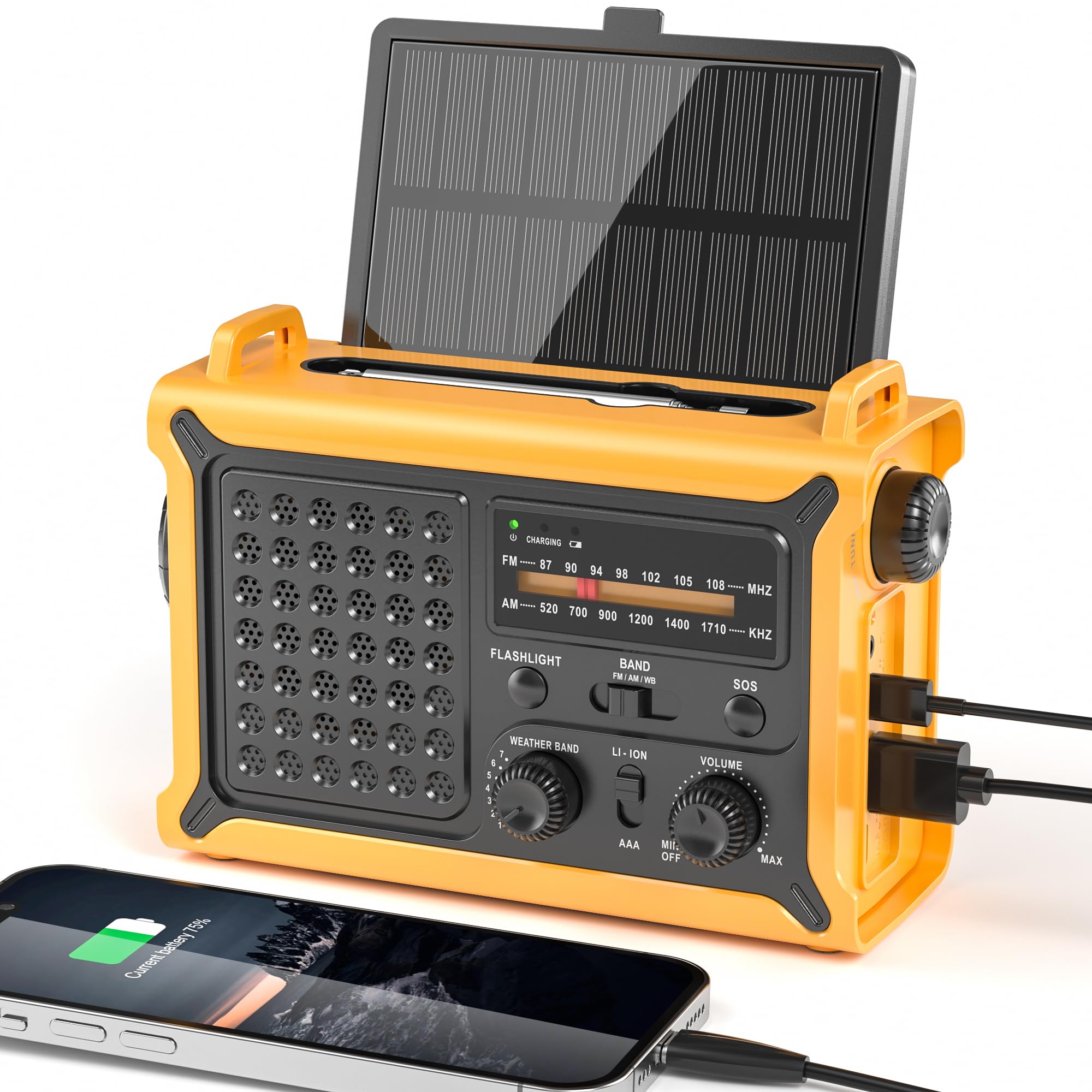
The Mesqool unit shares the same 8500mm² monocrystalline solar panel and 12000mAh battery platform as the Roxicosly, but it adds a high-torque crank generator with a larger copper coil and reinforced magnet. The result is nearly double the charging efficiency per rotation compared to standard cranks. Three minutes of turning yields enough power for both the radio and a phone charge, making it the best option for scenarios where sunlight is absent for extended periods.
Reception quality is where this model pulls ahead. A high-sensitivity IC chip combined with noise-reduction circuitry and an extended antenna locks onto distant NOAA, AM, and FM signals faster and with less static. Reviewers consistently describe the sound as “crystal clear” even for weather band signals that can be notoriously weak in valleys or basements. The analog tuning dial is large and tactile, easy to operate without looking down—a real advantage in the dark.
The flashlight casts a focused beam up to 260 feet, and the frosted reading lamp offers a warm, eye-comfort glow at two brightness levels. The body is ergonomically shaped with a non-slip grip, and the crank arm tucks away neatly when not in use. IPX6 waterproofing and the ability to also run on AAA or lithium batteries add redundancy. No battery level indicator is a minor omission but doesn’t detract from the unit’s core functionality.
Why it’s great
- High-torque hand crank generates nearly 2x charging efficiency per minute vs. standard models
- Noise-reduction circuitry delivers clearer NOAA reception in challenging locations
- 260-foot flashlight beam and soft reading lamp with two brightness levels each
Good to know
- No built-in battery level indicator—you won’t know exact remaining capacity
- Initial full charge takes several hours via USB-C before first use
3. Mesqool Emergency Weather Radio (B0F4QW1PP1)
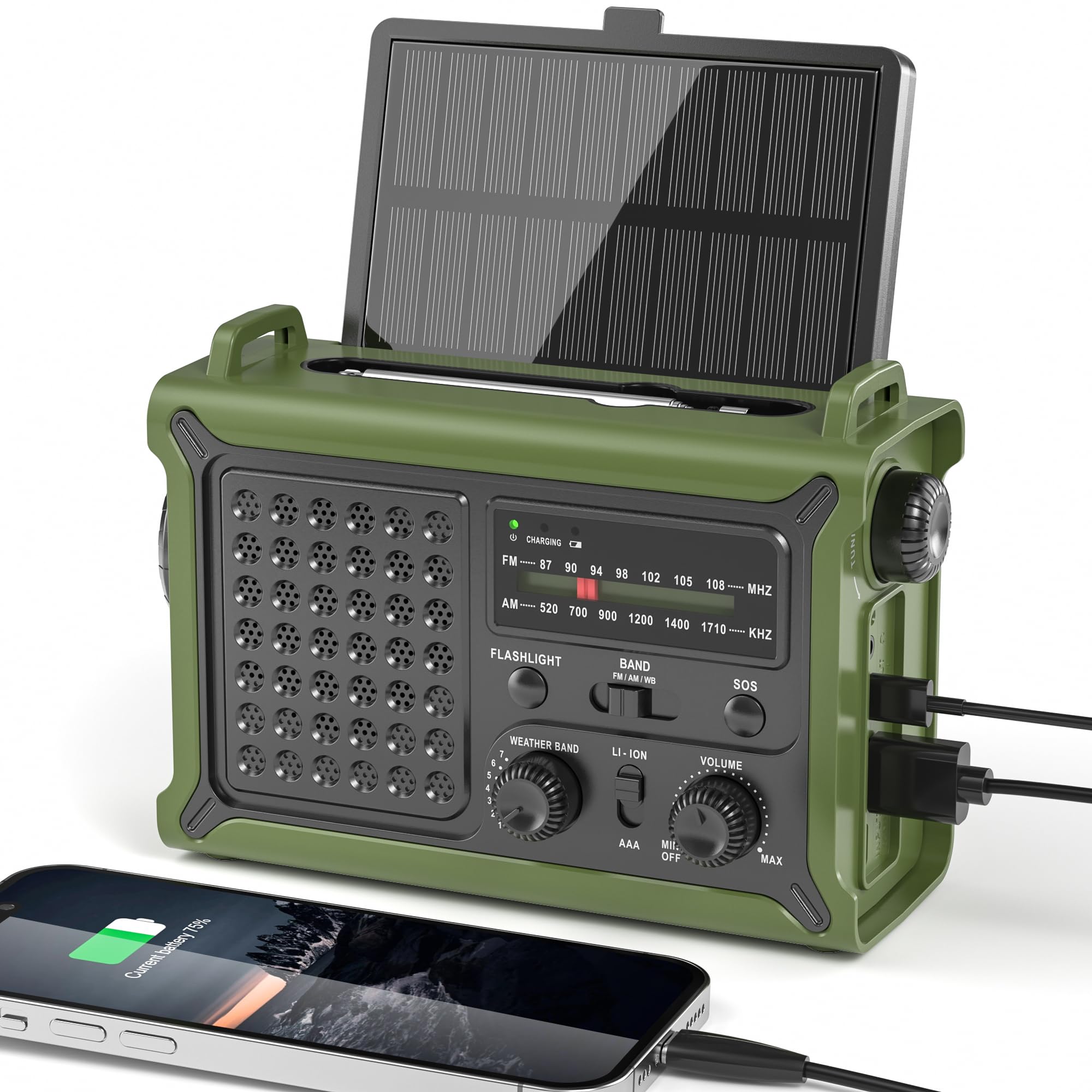
This sibling model to the premium Mesqool shares the same chassis, solar panel, crank generator, and 12000mAh battery, but in an army green finish that blends into camping and bug-out gear more naturally. The core specs are identical: 8500mm² monocrystalline solar panel, high-torque crank with reinforced magnet, and a battery that actually holds the claimed capacity. For users who prioritize a subdued, tactical aesthetic, this is the version to grab.
The dual USB outputs (Type A and Type C) allow simultaneous charging of a phone and another USB device—a small detail that becomes significant when you have multiple devices to keep alive. The flashlight reaches the same 260-foot beam, and the frosted reading lamp flips up to convert the solar panel into a lantern-like diffuser. The analog dial and tactile buttons are easy to operate by feel, and the tucked crank arm keeps the profile clean when not in use.
User feedback mirrors the yellow version: ready out of the box, excellent FM reception with the antenna extended, and stable AM/NOAA signal capture. The solar panel charges effectively even in cloudy conditions, and the hand crank requires noticeably less effort than budget alternatives. The unit is compact enough to live in a kitchen window permanently, keeping the battery topped off passively without any management.
Why it’s great
- Dual USB outputs (Type A and C) charge two devices simultaneously
- Tucked crank arm and compact design fit easily into bug-out bags
- Passive solar charging keeps the battery maintained in a windowsill
Good to know
- Same battery level indicator omission as the yellow premium version
- Army green color may not be visible in low-light environments if dropped
4. PPLEE CR1030 Emergency Radio
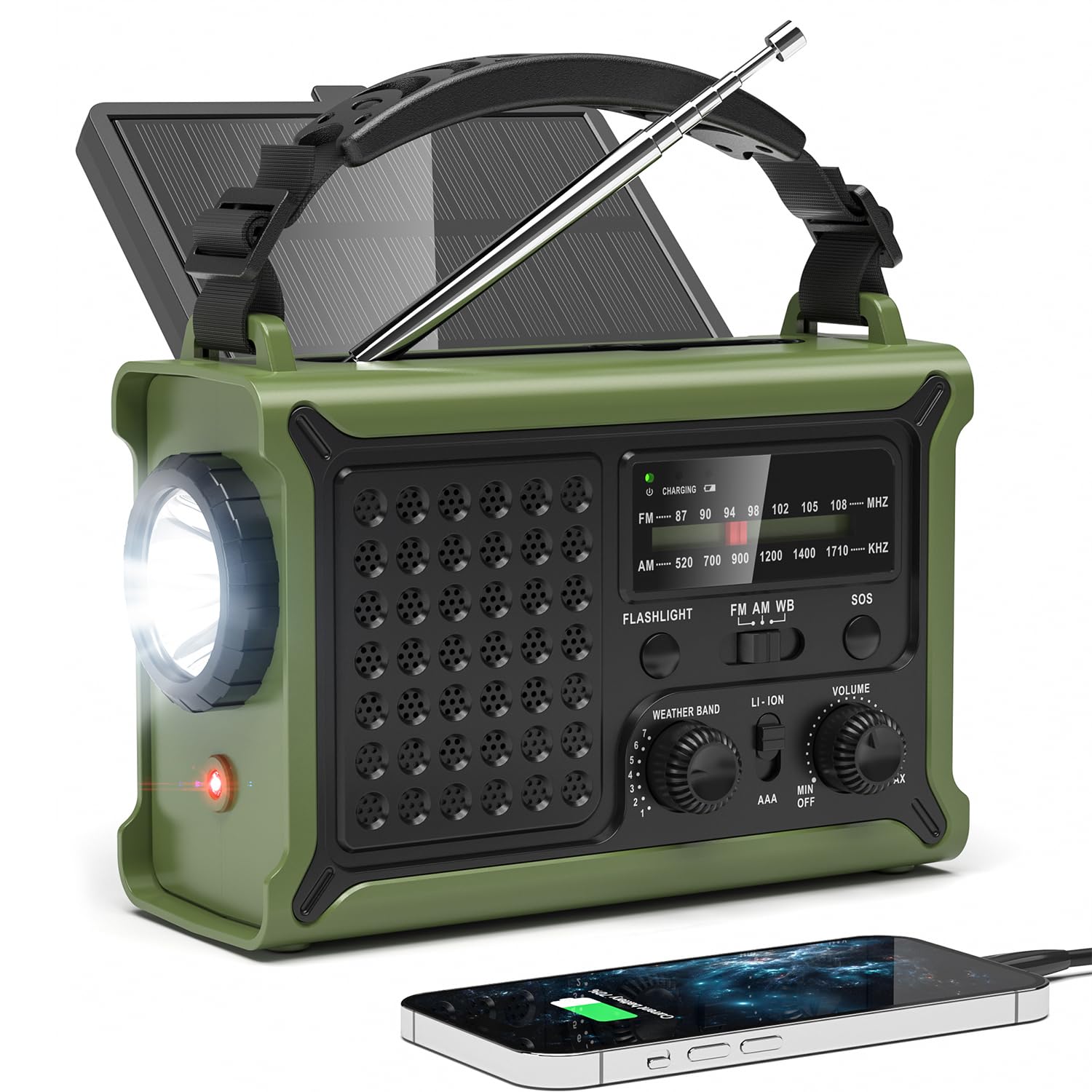
The PPLEE CR1030 distinguishes itself with a 57mm 5W full-range speaker that produces clear, balanced audio without distortion even at high volumes. For voice broadcasts—weather alerts, talk radio, emergency instructions—clarity is more important than bass, and this unit delivers. The large analog tuning knob, tactile buttons, and clear labels make it especially accessible for older family members or anyone who doesn’t want to navigate digital menus under stress.
The 12000mAh battery is matched with the same 8500mm² monocrystalline solar panel, so charging performance mirrors the Roxicosly and Mesqool units. A full charge supports up to 60 hours of AM/FM playback at moderate volume, with plenty of headroom left for the flashlight and reading lamp. The hand crank output is rated at 650mA, and the 3.5mm headphone jack allows private listening without draining the speaker entirely—useful for late-night monitoring in a tent or shelter.
NOAA reception is described by a retired electronics engineer reviewer as “excellent” across all seven weather bands, with strong signal lock even without extending the antenna fully. The emergency siren is genuinely loud and rings clear. The body is compact at 6.8 x 2.9 x 4.7 inches and weighs just over a pound, making it easy to grab and go. The included power adapter is a nice touch that saves buying one separately.
Why it’s great
- 57mm 5W speaker delivers clear, distortion-free audio at high volume for important broadcasts
- Large analog tuning knob and tactile buttons are easy to operate in darkness or by seniors
- Includes power adapter and headphone jack for flexible listening and setup
Good to know
- Solar panel efficiency in very low light is average; still requires some daylight
- Charging the full 12000mAh battery from empty via USB takes multiple hours
5. QAUYYW 74000mWh Emergency Radio
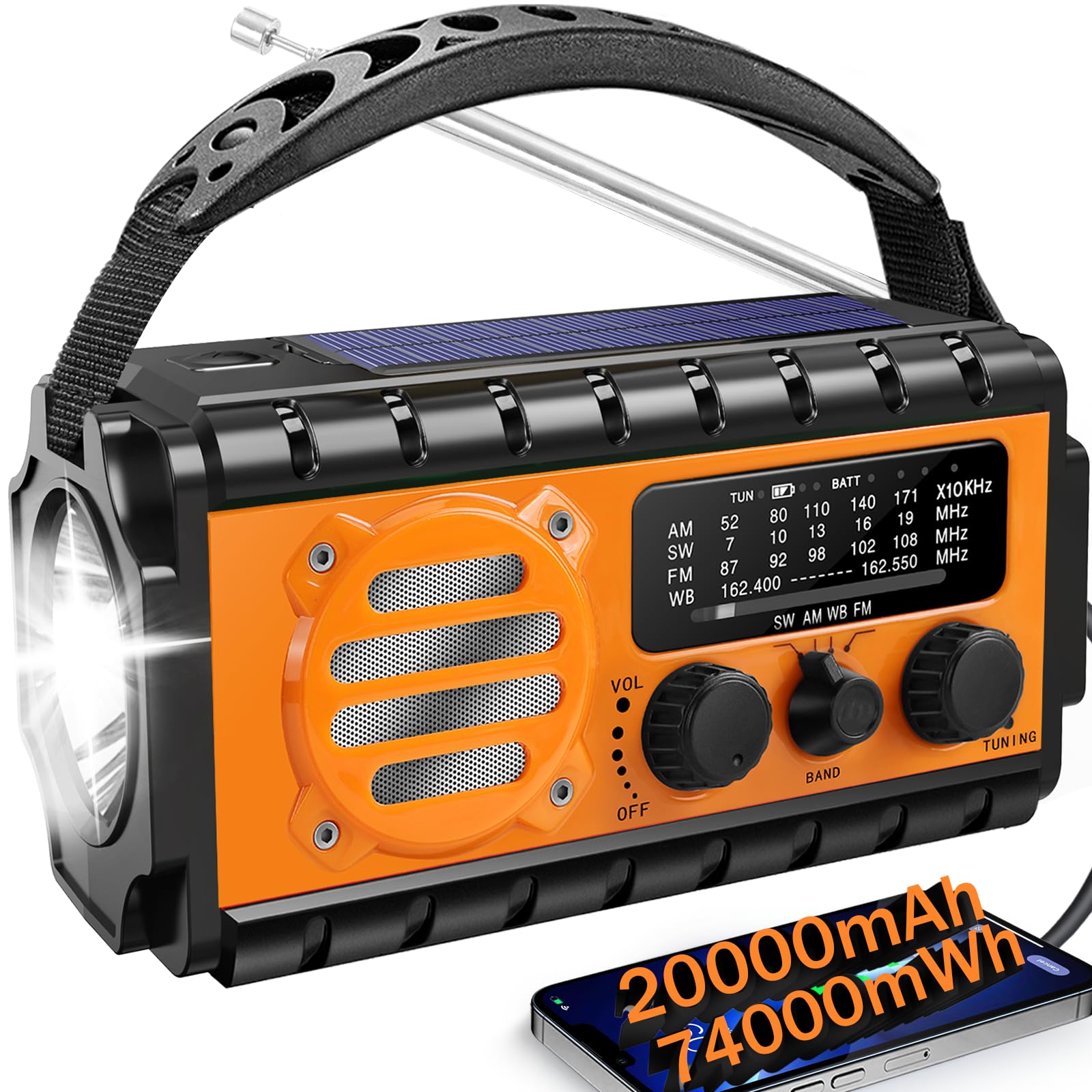
The QAUYYW radio packs a 74000mWh (20000mAh) battery—the largest capacity in this comparison—into a compact chassis that measures just 6.2 x 2.2 x 2.8 inches and weighs 0.68 pounds. This massive battery powers the radio for 35 hours at medium volume, the reading lamp for 50 hours, or charges a phone multiple times over. For users who want absolute maximum runtime without recharging, this is the battery leader.
The trade-off comes in solar panel and crank efficiency. The built-in panel is smaller than the 8500mm² units, so solar charging is slower and requires direct sunlight to be practical. The hand crank works, but it lacks the high-torque generator of the premium models, meaning longer cranking sessions are needed for meaningful power. The unit compensates with multiple charging modes: USB Type-C, solar, hand crank, and can also run on AAA batteries as a backup.
Reception covers AM, FM, shortwave, and NOAA weather bands through an extendable 52cm antenna. The antenna length gives it an edge in pulling in distant AM signals compared to fixed-stub designs. The three-dial interface (on/volume, band selection, tuning) is intuitive, and the orange/black color scheme makes it easy to spot in a dark backpack. Customers consistently mention its durability and solid construction—several reviewers bought multiples as gifts for family members preparing for hurricane season.
Why it’s great
- Largest battery capacity at 20000mAh provides extended runtime without recharging
- Compact and lightweight at 0.68 pounds, easy to carry for elderly or mobile users
- Extendable 52cm antenna improves distant AM and shortwave reception
Good to know
- Solar panel is smaller than premium models, requiring direct sun for effective charging
- Hand crank lacks high-torque generator; longer cranking needed for meaningful power
FAQ
Can a solar emergency radio charge a smartphone enough for emergency calls?
Why does the hand crank on some radios feel harder to turn than others?
Do NOAA weather radios work everywhere in the United States?
Final Thoughts: The Verdict
For most users, the communication device for emergencies winner is the Roxicosly CR1030 because it combines the largest monocrystalline solar panel, a genuinely efficient hand crank, and a verified 12000mAh battery at a mid-range entry point that doesn’t sacrifice performance. If you want premium crank torque and superior NOAA reception, grab the Mesqool (B0F4QVQPH3). And for absolute battery runtime above all else, nothing beats the QAUYYW with its 20000mAh capacity.

Mo Maruf
I created WellFizz to bridge the gap between vague wellness advice and actionable solutions. My mission is simple: to decode the research and give you practical tools you can actually use.
Beyond the data, I am a passionate traveler. I believe that stepping away from the screen to explore new environments is essential for mental clarity and physical vitality.