Our readers keep the lights on and my smoothie glass nicely filled. As an Amazon Associate, I earn from qualifying purchases.
Well water in a commercial kitchen is a constant battle against iron-eating equipment, bacteria that threatens health inspections, and sediment that chokes out every faucet and ice machine in the building. The difference between a filter that merely passes water and one that actually protects your operation comes down to matching the specific chemistry of your well—iron concentration, hardness grains, sulfur presence, and bacterial load—to a system designed to neutralize those exact threats. A generic sediment housing won’t save your steam table from scale buildup or prevent an E. coli boil order from shutting you down for days.
I’m Mohammad Maruf — the founder and writer behind WellFizz. I’ve spent hundreds of hours analyzing commercial water filtration specifications, comparing flow rates, media types, and micron ratings to separate the systems that solve real well water problems from the ones that just look good on a spec sheet.
Whether you’re fighting red iron stains, that classic rotten-egg sulfur stench, or mineral scale that destroys hot water heaters, the right commercial restaurant water filtration system for well water will keep your kitchen running and your health inspector happy. This guide breaks down the top options I’ve found to do exactly that.
How To Choose The Best Commercial Restaurant Water Filtration System For Well Water
Every well is unique, but the contaminants that damage commercial kitchen equipment fall into a few predictable categories. Matching the right technology to your specific well chemistry is the single most important decision you will make.
Identify Your Primary Contaminant
Iron and sulfur are the two most common well water headaches in a restaurant setting. Iron stains sinks, dishwashers, and ice machines and creates a metallic taste that ruins coffee and tea. Sulfur produces that unmistakable rotten-egg odor that can drive customers away. Test your well water first—if iron is above 1 ppm or you smell sulfur, you need an air injection or media-based oxidation system, not just a sediment filter.
Match Flow Rate to Peak Demand
A commercial kitchen can demand 10–15 gallons per minute during the lunch rush. Many residential filters max out at 4–6 GPM, which will cause a pressure drop that slows dishwashing and wrecks your coffee brew cycle. Look for systems rated at 12 GPM or higher, and pay attention to the pressure drop across the entire setup—some carbon blocks can choke flow significantly.
Quick Comparison
On smaller screens, swipe sideways to see the full table.
| Model | Category | Best For | Key Spec | Amazon |
|---|---|---|---|---|
| Aquasana EQ-WELL-UV-PRO-AST | UV + Carbon + KDF | Bacteria & scale control | 500,000 gallon capacity | Amazon |
| iSpring WF150K | Catalytic Carbon | Chlorine & VOC removal | 10-year filter life | Amazon |
| iSpring CRO1000 | Commercial RO | Zero-TDS water for coffee | 1,000 GPD membrane | Amazon |
| Kind Water E-3000 | Salt-Free Combo | Scale prevention without salt | 15 GPM flow rate | Amazon |
| Fleck 2510SXT Air Injection | Air Injection | High iron & sulfur removal | 12 GPM flow rate | Amazon |
| Fleck 5600 SXT Iron Eater 1.5CF | Air Injection | Iron up to 12 ppm | 1.5 cu ft Centaur Carbon | Amazon |
| DuraWater Iron Eater 48K Softener | Softener + Iron Filter | Hard water with iron | 48,000 grain capacity | Amazon |
| DuraWater Black Series Iron Filter | Air Injection | Iron & manganese removal | 12 ppm iron capacity | Amazon |
| Aquasure Signature Series | Softener + Filter | Smaller kitchen operations | 32,000 grain capacity | Amazon |
| Abundant Flow Fleck 5600SXT | Water Softener | High hardness water | 48,000 grains, 10% resin | Amazon |
| Bluonics 55W UV System | UV + Sediment | Bacteria & sediment removal | 12 GPM UV with 4 stages | Amazon |
In‑Depth Reviews
1. Aquasana EQ-WELL-UV-PRO-AST

This is the most complete single-package solution for commercial well water I’ve found. The Aquasana EQ-WELL-UV-PRO-AST integrates sediment filtration, catalytic carbon, KDF media, UV sterilization, and salt-free scale control into one unified system rated for 500,000 gallons of water. That kind of capacity means a busy restaurant kitchen can go years between major media replacements, which directly lowers total cost of ownership compared to systems that need cartridge swaps every few months.
The UV component is the critical differentiator here. Well water can carry coliform bacteria, E. coli, and viruses that would fail a health department test instantly. The UV lamp inside this system neutralizes 99.99% of those biological threats without adding chemicals or altering taste. The KDF media handles chlorine, iron, and hydrogen sulfide simultaneously, which removes both staining and odor in one pass. For a commercial kitchen serving coffee, tea, or fountain drinks, the improvement in taste is immediate and obvious.
Installation is more involved than a simple filter housing—you will need a solid mounting surface and basic plumbing skills, and the system requires a drain line for backwashing. Some users report needing a 2×4 to reinforce the wall mount. The salt-free conditioner does not actually soften water, so if your well water is above 15 grains per gallon of hardness, you may still see scale buildup on equipment. But for moderate-hardness well water with biological concerns, this is the gold standard.
Why it’s great
- UV sterilization kills bacteria and viruses without chemicals, ideal for health code compliance.
- 500,000-gallon capacity drastically reduces long-term maintenance frequency.
- Multi-stage approach handles sediment, iron, sulfur, and scale in one system.
Good to know
- Warranty may be voided if installed without a licensed professional.
- Does not soften water; high-hardness wells will need a separate softener.
- Installation requires a drain line and adequate wall reinforcement.
2. iSpring WF150K
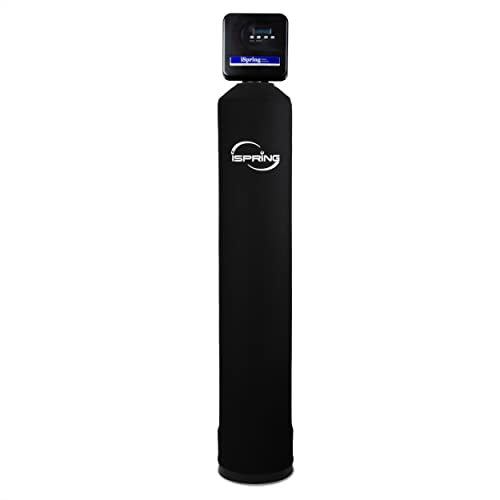
The iSpring WF150K is built around a patented catalytic carbon media that automatically backwashes and regenerates on a schedule set through the smart digital control valve. This self-cleaning mechanism is what gives the system its remarkable 10-year lifespan in a 2–3 bathroom home or comparable low-volume commercial setting. For a small café or deli with moderate water usage, this could mean a decade without opening the tank to replace media.
The system is certified to NSF/ANSI 42 and 53 standards, meaning it has been independently tested to reduce chlorine, lead, VOCs, and other common well water contaminants. The 15 GPM flow rate is acceptable for most small to medium restaurant operations, though you will want a pre-filter if your well has heavy sediment loads. The digital valve lets you program backwash intervals based on your actual water usage, which conserves water compared to timer-based systems that regenerate on a fixed schedule regardless of need.
One practical consideration: the WF150K needs to be placed in service and run through a couple of manual regeneration cycles before it builds internal pressure and starts filtering properly. Some buyers found that initially the water appears to bypass the media entirely until the air is purged from the tank. Once set up correctly, it requires virtually no daily attention, which is ideal for busy kitchen owners who cannot afford system babysitting.
Why it’s great
- Claimed 10-year media lifespan dramatically reduces replacement costs for light commercial use.
- Digital smart valve adjusts backwash frequency based on actual water consumption.
- NSF 42 and 53 certified for contaminant reduction.
Good to know
- May require several manual regeneration cycles to reach full operational pressure.
- Not designed for heavy iron or sulfur removal without additional pre-treatment.
- Plumbing connections need careful alignment to avoid leaks at the control head.
3. iSpring CRO1000

If your restaurant relies on espresso, pour-over coffee, or specialty beverages where water chemistry directly affects flavor, the iSpring CRO1000 is the system worth considering. This tankless commercial reverse osmosis unit produces 1,000 gallons per day with a 0.7 GPM flow rate, and it removes up to 99% of over 1,000 contaminants including dissolved solids, lead, fluoride, and arsenic. For well water with high total dissolved solids, this is the only surefire way to get truly neutral water for cooking and beverages.
The four-stage filtration process starts with a 20-inch sediment filter in a transparent housing so you can see when it needs changing, followed by two 20-inch carbon block filters and a 1,000 GPD RO membrane housed in stainless steel. The entire unit sits on a freestanding metal frame with locking casters, so you can move it around your utility room for maintenance access. An optional booster pump is recommended if your incoming water pressure drops below 80 psi.
Note that RO systems produce wastewater—the CRO1000 will send about 3–4 gallons down the drain for every gallon of purified water it produces. That ratio matters for water bills and septic systems. Additionally, RO strips out beneficial minerals, so water may taste flat if used for drinking without remineralization. For coffee shops where water quality defines the product, this is the benchmark, but the wastewater output and need for a booster pump on low-pressure wells are real considerations.
Why it’s great
- Removes 99% of total dissolved solids, essential for specialty coffee and tea.
- Commercial-grade metal frame with wheels allows flexible positioning and easy access.
- Transparent sediment housing lets you visually monitor filter condition.
Good to know
- High wastewater ratio—approximately 3-4 gallons wasted per gallon produced.
- Strips beneficial minerals; water may need remineralization for drinking taste.
- Requires incoming water pressure above 80 psi or an optional booster pump.
4. Kind Water Systems E-3000
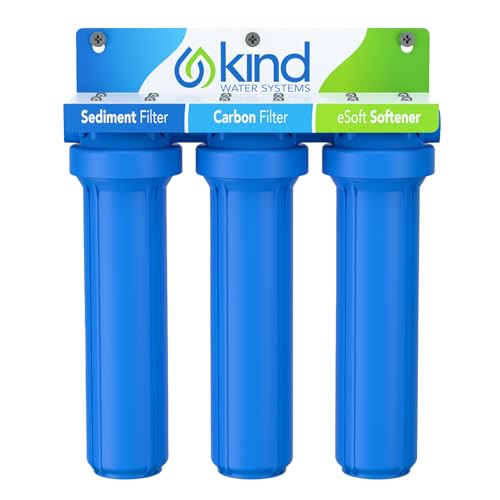
For restaurant owners who want to avoid the hassle of salt bags and brine discharge, the Kind Water E-3000 offers a salt-free whole-house conditioning approach. It combines a 5-micron pleated sediment filter, a coconut-shell carbon block, and a salt-free scale prevention medium into a compact, single-box system that requires no electricity and produces no wastewater. The 15 GPM flow rate is strong enough for most commercial kitchen demands without causing pressure drops during peak usage.
The carbon block targets over 155 chemical contaminants including chlorine, chloramine, VOCs, and pesticides, while retaining healthy natural minerals in the water. The salt-free descaler works by crystallizing hardness minerals into a form that will not stick to pipe walls, which helps protect water heaters, dishwashers, and espresso machines from scale buildup without removing calcium and magnesium entirely. This is particularly useful for well water with moderate hardness where you want to prevent equipment damage but do not need the slipperiness of fully softened water.
The plastic manifold design has drawn some criticism for leaking at the O-ring connections if not lubricated and seated perfectly. Several buyers reported needing PTFE tape on threads despite the manufacturer’s warnings against it. The salt-free conditioner is also limited in effectiveness—it works best on water under 15 grains per gallon of hardness. For high-hardness well water, you will still need a traditional softener. But for a low-maintenance, chemical-free approach to moderate well water problems, the E-3000 is a solid contender.
Why it’s great
- No salt, no backwashing, no electricity, and no wastewater make it nearly maintenance-free.
- High 15 GPM flow rate supports commercial kitchen demands without pressure loss.
- Retains natural minerals while preventing scale buildup on equipment.
Good to know
- Plastic manifold can leak at O-ring connections if not assembled with care.
- Salt-free conditioner is ineffective on water above 15 grains per gallon hardness.
- Does not remove dissolved iron or sulfur; best suited for city-quality well water.
5. Fleck 2510SXT Air Injection System
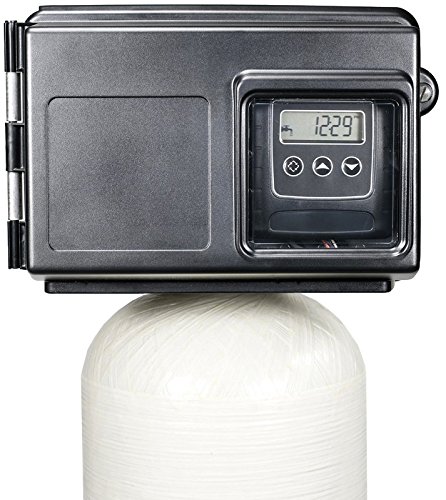
The Fleck 2510SXT Air Injection system from American Water Solutions is purpose-built for well water with high iron and sulfur content. It uses a pocket of compressed air inside the tank to super-oxidize dissolved iron, manganese, and hydrogen sulfide, converting them into solid particles that the Katalox media can then physically trap and backwash away. This oxidation process is far more effective than simple carbon filtration for the classic rotten-egg sulfur smell and the red iron staining that ruins sinks and dishwashers.
The Katalox media is the real star here—it cuts backwashing time in half compared to traditional green sand or Birm media, which means less water wasted during regeneration and a lower overall utility bill. The system is assembled in the USA by American Water Solutions and includes a stainless steel bypass valve, which is a nice touch for durability in a commercial environment. The Fleck 2510SXT control valve is widely respected for reliability and ease of programming; the digital display lets you set regeneration based on either volume of water used or a timed schedule.
One downside: the tank is fiberglass, not steel, which is visible through the translucent exterior. This does not affect performance but may feel less premium than a stainless steel housing. Some users reported that initial setup requires a manual purge cycle to clear air from the system, and the default regeneration settings use a significant amount of water—up to 75–120 gallons per cycle, which can stress a septic system if not adjusted. Overall, for a kitchen dealing with sulfur odor and iron staining, this is one of the most effective solutions I have seen in this price tier.
Why it’s great
- Air injection oxidizes iron and sulfur effectively, eliminating odors and staining.
- Katalox media reduces backwash water usage by half compared to traditional media.
- Fleck 2510SXT valve is reliable, programmable, and widely supported by parts suppliers.
Good to know
- Fiberglass tank is not as tough as stainless steel; visible through the translucent shell.
- Initial purge cycle required to remove trapped air from the system.
- High backwash volume may overwhelm septic systems if not tuned properly.
6. Fleck 5600 SXT Iron Eater 1.5CF
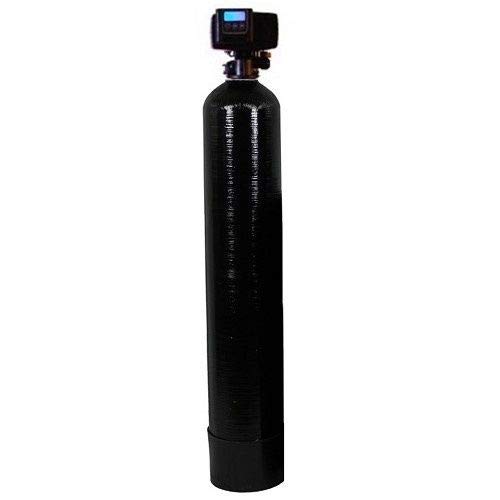
This Fleck 5600 SXT-based system packs 1.5 cubic feet of upgraded Centaur Catalytic Carbon, which is specifically chosen for its ability to handle iron concentrations up to 12 parts per million, sulfur up to 10 ppm, and manganese up to 2 ppm. The air injection technology is the same oxidation principle used in higher-end units, but the Centaur carbon provides additional catalytic activity that helps break down hydrogen sulfide faster than standard carbon media. For a restaurant pulling from a well with high iron that leaves orange streaks on every surface, this is a very direct solution.
Users consistently report immediate elimination of rust staining, metallic taste, and sulfur odor after installation. The system is designed for DIY installation with basic plumbing skills, and the Fleck 5600SXT valve programming is intuitive enough that most owners configure it without calling for support. The 12 GPM flow rating is adequate for most small to medium commercial kitchens, though you may notice a slight pressure drop if you are running multiple appliances simultaneously at peak volume.
A recurring tip from experienced buyers: the default regeneration settings are aggressive and can waste significant water—some users reported 75–120 gallons per cycle. If you are on a septic system, you will want to adjust the frequency and duration of regeneration cycles. Also, the unit does not come with a pre-filter, and several owners recommended adding a spin-down sediment filter upstream to protect the media from large particles that could clog the system prematurely.
Why it’s great
- 1.5 cu ft of Centaur Catalytic Carbon provides high iron and sulfur removal capacity.
- Air injection effectively oxidizes dissolved iron for reliable filtration.
- Fleck 5600SXT valve is user-friendly and easy to program for specific well chemistry.
Good to know
- Default regeneration can waste up to 120 gallons per cycle if not adjusted.
- No integrated pre-filter; a spin-down sediment filter upstream is recommended.
- May cause temporary milky water during the air purge phase after regeneration.
7. DuraWater Iron Eater 48K Softener & Iron Filter

If your well water has both hardness and iron, combining a softener and iron filter into a single tank makes financial and logistical sense. The DuraWater Iron Eater 48K uses fine-mesh resin designed specifically for high iron removal, with a 48,000-grain capacity sized for a 2–5 person household or a small commercial operation like a café or food truck. The Fleck 5600SXT metered valve regenerates based on actual water usage rather than a timer, which saves salt and water compared to older softeners that flush on a fixed schedule regardless of need.
Users report dramatic improvements in water quality—spotless silverware, softer skin, eliminated rust stains in sinks and toilets, and a noticeable reduction in mineral buildup on dishwashers and ice machines. The system handles iron up to 6–8 ppm and manganese up to 6 ppm, which covers the majority of problem wells in the Midwest and Northeast. The 14 GPM flow rate is respectable and should support simultaneous operation of a dish machine and a faucet without collapsing pressure.
Beware of the learning curve: the included manual is sparse, and several buyers described the initial setup as frustrating. The seller, A+ Water, is frequently praised for responsive phone support that walks you through the programming steps. Some users found that the system initially did not remove odor until they also replaced the anode rod in their water heater. And if your well has very high iron (above 8 ppm), you may need the air injection version rather than the softener-only approach.
Why it’s great
- Combines softening and iron removal in one tank, saving floor space and cost.
- Fine-mesh resin is specifically formulated for high iron conditions.
- Metered regeneration reduces salt and water waste compared to timer-based systems.
Good to know
- Initial setup is poorly documented; expect to rely on seller phone support.
- Not effective for odor without also replacing water heater anode rod.
- Iron removal limited to 6–8 ppm; higher concentrations need an air injection system.
8. DuraWater Black Series Air Injection
The DuraWater Black Series is the entry point for air injection technology without sacrificing capability. It handles iron up to 12 ppm, sulfur up to 10 ppm, and manganese up to 2 ppm, which places it in the same performance bracket as systems costing significantly more. The air injection method creates a pocket of compressed air at the top of the tank that super-oxidizes dissolved contaminants, making them filterable by the media bed below. This is a tried-and-true approach that has been used in commercial water treatment for decades.
One of the most common uses reported by buyers is eliminating orange iron stains that previously destroyed white sinks, dishwashers, and laundry. The system also removes the metallic taste that can ruin brewed beverages. Installation is straightforward for someone comfortable with basic plumbing—flex lines are recommended to simplify the connection. The digital control valve allows you to set backwash timing and frequency to match your water usage patterns.
There are a few quirks to be aware of. The system can produce milky-looking water for the first 2–3 regeneration cycles while the Katalox media conditions. This clears up on its own and is not harmful, but it can be alarming if you do not expect it. Some users noted that the air intake spits a small amount of water during the regeneration cycle, which can be addressed by adding a small snorkel extension. Over time, iron sludge can accumulate in the media bed, but annual maintenance is straightforward and far cheaper than replacing the entire system.
Why it’s great
- Effective air injection treatment for iron up to 12 ppm at a lower entry price.
- Digital control valve allows custom programming of backwash cycles.
- Eliminates both staining and metallic taste common with high-iron well water.
Good to know
- Milky water during first few regeneration cycles is normal but unexpected.
- Air intake may spit water during regen; a snorkel extension is a simple fix.
- Iron sludge buildup in the media may require occasional manual cleaning.
9. Aquasure Signature Series 32K

The Aquasure Signature Series is sized for 1–2 bathroom homes, which translates well for a small restaurant or food service operation with relatively low water demand. This 32,000-grain system combines a water softener with a carbon filter, using KDF media to inhibit bacteria and algae growth while removing chlorine, VOCs, pesticides, and sediment. The digital metered control head automates regeneration based on actual water usage, which is a nice efficiency feature at this price tier.
Users consistently report that this system eliminates hard water crust, chlorine smell, and sediment issues that previously plagued their kitchens. The fiberglass-lined polyethylene tank is corrosion-resistant and durable, and the included bypass valve makes it easy to isolate the unit for maintenance without shutting off water to the entire building. The system connects to plumbing up to 1.25 inches in diameter, which is compatible with standard commercial supply lines.
The 1.5 GPM flow rating is the biggest limitation here—that is a residential-level flow rate, not a commercial one. If you have a busy kitchen running a dish machine, a pre-rinse sprayer, and a hand sink simultaneously, you will likely experience a noticeable pressure drop. This system is better suited for a small café, a bar, or a break room kitchen than a full-service restaurant. Several buyers also mentioned that the system ships in multiple boxes, which can be confusing but all arrived on time.
Why it’s great
- Combines softening and carbon filtration in one unit for a simple, all-in-one install.
- Digital metered valve regenerates based on usage, saving salt and water.
- KDF media helps control bacteria and algae growth in the filter bed.
Good to know
- 1.5 GPM flow rate is too low for full commercial kitchen peak demand.
- Ships in multiple boxes; inventory tracking required to ensure all parts arrive.
- Default regeneration settings may need adjustment to avoid basement flooding.
10. Abundant Flow Fleck 5600SXT 48K

This is the simplest possible solution for well water that is primarily a hardness problem without significant iron or bacterial concerns. The Abundant Flow Fleck 5600SXT uses 10% cross-linked resin, which is an upgrade over the standard 8% resin found in many entry-level softeners. The higher cross-link percentage makes the resin more resistant to chlorine degradation, which extends its lifespan if you have city-treated water or use chlorine for well water disinfection. The 48,000-grain capacity is appropriate for a home or small commercial setting.
The Fleck 5600SXT metered valve is the same reliable control head used in systems costing twice as much. It regenerates on demand based on volume of water used, which means you are not wasting salt on unnecessary regeneration cycles. The pre-loaded resin tank comes ready to install with clear instructions, and the included install kit has the basic fittings you need for a straightforward hookup. Users consistently describe the installation as manageable for a reasonably handy person.
Keep in mind that this is strictly a water softener—it does not remove iron, sulfur, sediment, or bacteria. If your well has any of those contaminants, you will need additional equipment upstream. Also, the quick-release fasteners on the bypass valve can be overtightened and crack, so read the instructions carefully on that step. This is a smart entry-level choice if you already know your water is hard but otherwise clean, but it is not a comprehensive well water solution.
Why it’s great
- 10% cross-linked resin is more chlorine-resistant than standard 8% resin.
- Fleck 5600SXT valve is proven, reliable, and easy to program.
- Pre-loaded tank and clear instructions make DIY installation achievable.
Good to know
- Does not remove iron, sulfur, sediment, or bacteria—purely a softener.
- Quick-release fasteners can crack if overtightened during installation.
- Not sufficient as a standalone solution for complex well water chemistry.
11. Bluonics 55W UV System
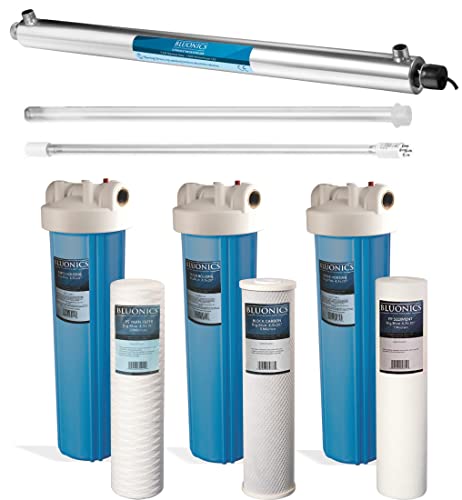
The Bluonics 55W UV system is a multi-stage filter that pairs sediment and carbon filtration with ultraviolet sterilization, making it a solid choice for well water where bacterial contamination is the primary concern. It uses a 20-micron string-wound sediment filter, a 5-micron carbon block, a 1-micron sediment polish, and a 55W UV lamp housed in 304 stainless steel. The 12 GPM flow rate is suitable for commercial use, and the system has been used successfully in food-service settings that passed county and state health inspections.
A standout feature is the dual 55W UV bulb design—two bulbs with separate power supplies create redundancy so that if one fails, the other continues protecting your water. This is rare in this price range and critical for commercial applications where a single-bulb failure could lead to a bacterial outbreak and a health department shutdown. Users report that the system effectively eliminated coliform bacteria from their well water, solving a problem that could have required a prohibitively expensive professional treatment system.
The thread quality on the brass fittings has drawn criticism—several users found the threading coarse and prone to leaking without heavy application of Teflon tape and pipe putty. The UV bulb is also fragile; multiple reviews mention receiving a broken bulb in shipment, though Bluonics customer service is consistently praised for sending replacements quickly. Annual maintenance costs run roughly – depending on filter replacement frequency. This system is a powerful bacterial defense but works best with a pre-existing iron/sulfur treatment solution upstream.
Why it’s great
- Dual 55W UV bulbs provide redundancy critical for commercial bacterial safety.
- 4-stage filtration catches sediment, chlorine, and microorganisms in sequence.
- 304 stainless steel UV housing is durable and corrosion-resistant.
Good to know
- Brass threading is coarse and prone to leaking without ample sealant.
- UV bulb is fragile and may arrive damaged despite packaging.
- Not a standalone solution for iron or sulfur; requires pre-treatment for those issues.
FAQ
Do I need UV sterilization for well water in a restaurant?
Can a water softener alone fix iron staining in my kitchen?
How often do I need to replace the media in an air injection iron filter?
What flow rate do I need for a commercial espresso machine?
Final Thoughts: The Verdict
For most users, the commercial restaurant water filtration system for well water winner is the Aquasana EQ-WELL-UV-PRO-AST because it combines UV sterilization, carbon and KDF filtration, and salt-free scale control in one high-capacity system that directly addresses the three biggest well water risks: bacteria, staining, and scale. If you are fighting high iron or sulfur levels specifically, grab the Fleck 2510SXT Air Injection system for its proven oxidation performance and water-saving Katalox media. And for a coffee shop or beverage-focused operation that needs zero-TDS water, nothing beats the iSpring CRO1000 despite its wastewater output.

Mo Maruf
I created WellFizz to bridge the gap between vague wellness advice and actionable solutions. My mission is simple: to decode the research and give you practical tools you can actually use.
Beyond the data, I am a passionate traveler. I believe that stepping away from the screen to explore new environments is essential for mental clarity and physical vitality.