Our readers keep the lights on and my smoothie glass nicely filled. As an Amazon Associate, I earn from qualifying purchases.
The difference between a chair that fuels focus and one that fuels chronic back pain is measured in the engineering of its lumbar support, the responsiveness of its mesh, and the sheer number of adjustments you can dial in to your exact frame. A standard task chair forces your body to conform to its shape; a true commercial-grade chair does the exact opposite.
I’m Mohammad Maruf — the founder and writer behind WellFizz. I’ve spent hundreds of hours cross-referencing foam density reports, BIFMA certification standards, and real-user feedback to separate the legitimately supportive chairs from the marketing-heavy shells.
Whether you run a corporate office or are investing in your own health for eight-hour days behind a desk, finding the right model among the sea of options for commercial office chairs can feel overwhelming — this guide breaks down exactly which specs and features actually matter for long-term comfort.
How To Choose The Best Commercial Office Chairs
Buying a commercial office chair is a multi-year investment in your physical health. A poorly chosen chair won’t just be uncomfortable — it will degrade your posture, compress your discs, and cost you thousands in lost productivity and medical bills. Here are the four critical factors that separate a long-term asset from a backache in disguise.
Lumbar Support: Passive vs. Active
Not all lumbar supports are created equal. A passive lumbar curve molded into the backrest is a static bump that may or may not hit your curve. An active lumbar support — one that you can move up, down, and — critically — deeper or shallower — lets you fine-tune the pressure against your lower spine. The best chairs in this category use an active system that flexes as you shift, maintaining contact whether you’re upright at a keyboard or reclined reading a document.
Seat Depth and Pan Edge Design
A seat pan that is too deep forces your knees to bend past 90 degrees, cutting off circulation to your thighs. A pan that is too shallow means your thighs lack support, which shifts your pelvis into a posterior tilt. The ideal pan has a waterfall front edge that slopes downward gently, and a depth adjustment range of at least two inches so you can align the seat with the back of your knees regardless of your height.
Mesh vs. Foam Upholstery
Breathable mesh is the dominant choice in commercial seating because it allows air to circulate continuously, preventing the heat and moisture buildup that makes foam seats feel swampy after three hours. That said, some high-end chairs use a premium open-cell foam wrapped in fabric for a plusher initial feel. The trade-off is longevity: mesh rarely sags, while high-density foam cushions can compress over two or three years depending on the weight they carry daily.
Frame Material and Weight Capacity
Commercial chairs live under heavier-than-average loads and longer-than-average daily use cycles. Look for a steel or aluminum frame rated to at least 300 pounds. The gas cylinder (the lift mechanism) should be BIFMA-certified Class-3 or Class-4, which signals it can handle tens of thousands of raises and lowers without failing. Plastic-base chairs might save money upfront but tend to crack under repeated stress in a multi-user office environment.
Quick Comparison
On smaller screens, swipe sideways to see the full table.
| Model | Category | Best For | Key Spec | Amazon |
|---|---|---|---|---|
| Steelcase Leap | Premium | Sitting long hours with custom lumbar firmness | Lower back firmness dial + Natural Glide System | Amazon |
| Haworth Fern | Premium | Continuous movement while seated | Patented Wave Suspension backrest | Amazon |
| Steelcase Gesture | Premium | Multi-posture work with full recline range | 360-degree armrest articulation | Amazon |
| Herman Miller Embody | Premium | Pressure distribution and natural alignment | Pixelated Support matrix + Backfit adjustment | Amazon |
| Nightingale CXO 6200D | Premium | Heavy-duty support (350 lbs capacity) | Flexible Ablex mesh + height-depth lumbar | Amazon |
| Ergohuman ME7ERG GEN2 | Mid-Range | Tall users needing eight ergonomic adjustments | Synchro tilt + seat depth + back height adjust | Amazon |
| Branch Verve | Mid-Range | Aesthetic balance with high-density foam comfort | Contoured V-shaped back + 6 adjustment points | Amazon |
| COTYFLY Massage Chair | Mid-Range | Integrated massage lumbar and footrest recline | 3D finger-pressure kneading + 4D armrests | Amazon |
| Desktronic SitOne | Mid-Range | Value-focused ergonomic with full adjustments | BIFMA-certified alloy steel frame | Amazon |
| Branch Ergonomic | Entry-Level | Petite users needing low seat height | Aluminum frame + 8 adjustment points | Amazon |
| Magshion 10-Pack | Entry-Level | Bulk office setup with mid-back mesh support | 300 lb capacity + 30-degree rocking function | Amazon |
In‑Depth Reviews
1. Steelcase Leap Office Chair

The Leap is Steelcase’s most clinical approach to ergonomics — it doesn’t just offer adjustments, it offers specific dials that few competitors dare to touch. The seat glides forward as you recline, thanks to the Natural Glide System, keeping your head at the same horizontal plane relative to your monitor. That single feature eliminates the common frustration of losing eye-level alignment when tilting back.
The 3D LiveBack technology uses a flexible polymer spine that tracks your vertebrae’s natural curve as you shift from upright typing to a more relaxed recline. Unlike a simple mesh sling that bags out in the middle, the LiveBack maintains distributed contact across the entire back. The real standout, however, is the lower back firmness dial — a small wheel that increases tension right at the lumbar curve, something a lumbar pillow can never replicate with precision.
Users consistently report that the chair initially feels firm but breaks into a personal fit over the first few weeks. The 4D adjustable arms lock positively and stay where you set them. The chair arrives fully assembled, which is rare at this weight class. On the downside, the standard upholstery fabric can feel slightly rough against bare arms in humid climates, and the seat pad runs thin for users over 230 pounds.
Why it’s great
- Lower back firmness dial offers lumbar customization no other chair matches
- Natural Glide System keeps monitor distance constant when reclining
- Fully assembled out of the box — zero build time
Good to know
- Fabric texture can feel rough on bare skin in warm conditions
- Seat cushion padding is relatively thin for very heavy users
2. Haworth Fern Ergonomic Office Chair

The Fern takes a fundamentally different approach to back support: instead of a rigid frame with a lumbar pad, it uses a patented Wave Suspension system that mimics the natural flexibility of a leaf. The backrest distributes weight dynamically across horizontal ribs that flex independently as you lean from side to side. This results in a seating experience that feels alive rather than locked in, which is ideal for people who shift positions frequently rather than sitting frozen at a keyboard.
The chair supports up to 350 pounds, and the breathable mesh seat surface avoids the sticky feel that some textile covers create on bare legs during summer. The 4D padded armrests are among the most comfortable in this tier — wide, softly cushioned, and adjustable with positive stops. A back stop control lets you limit the recline angle so you never feel like you are tipping too far back.
Assembly is non-existent: the Fern ships fully assembled in a large box, ready to roll out and start using. The 12-year warranty covers mechanical components, which signals Haworth’s confidence in the steel frame and gas cylinder. A few users note that the back makes popping sounds during aggressive reclining, and the plastic base, while rigid, lacks the premium feel of a polished aluminum base.
Why it’s great
- Wave Suspension back flexes naturally for dynamic sit-while-moving support
- Ships fully assembled with zero build time required
- 12-year warranty reflects exceptional build confidence
Good to know
- Plastic base lacks the visual polish of aluminum competitors
- Backrest can produce creaking or popping sounds under aggressive lean
3. Steelcase Gesture Office Chair
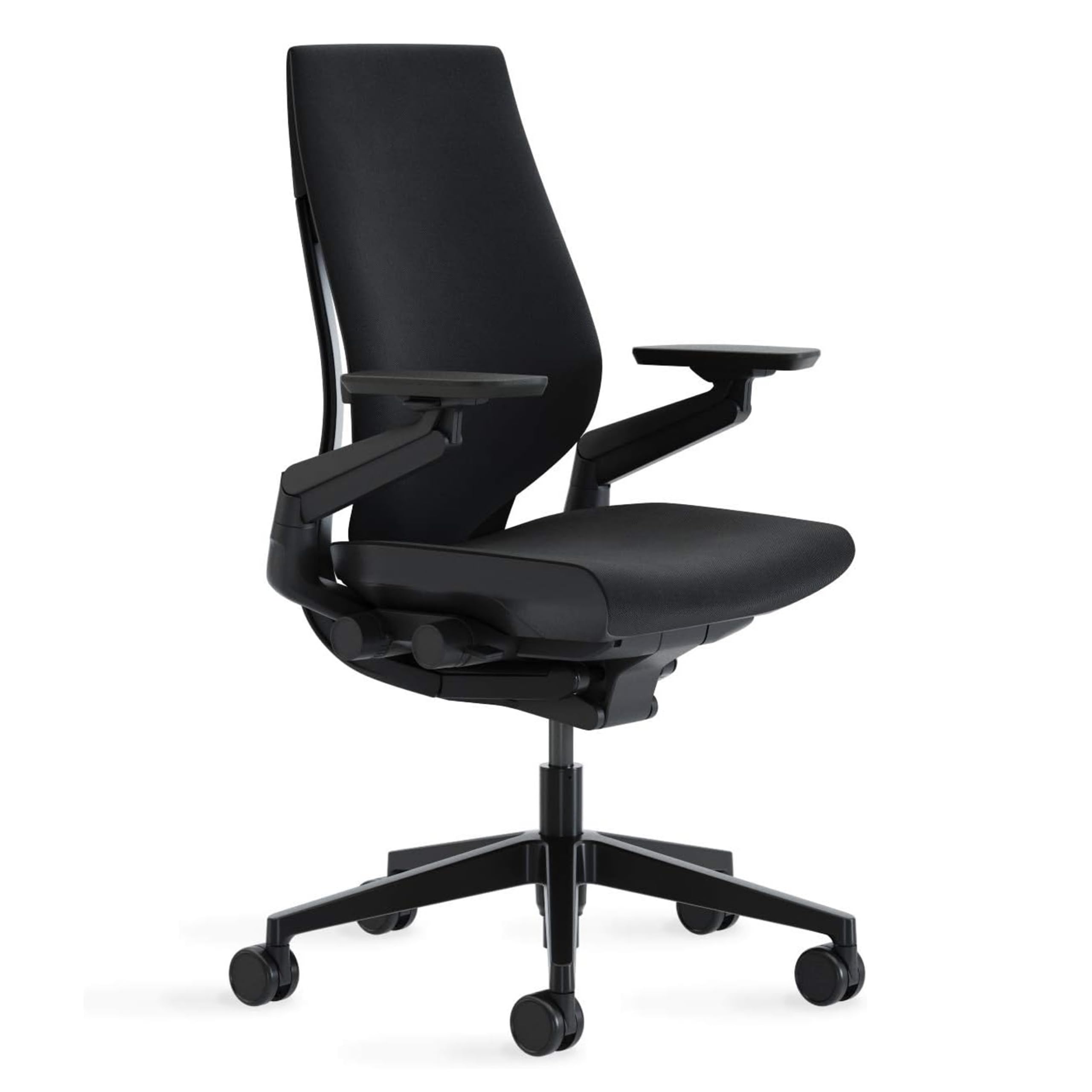
The Gesture was designed around Steelcase’s deep study of how people actually sit in the modern workplace — leaning forward to type, leaning back to read, lounging to one side with one arm on the desk. Its defining feature is the 360-degree armrest that can rotate completely around the pivot point, supporting your elbows whether you are typing, holding a phone to your left ear, or swiping a tablet in your lap. No other chair offers this range of arm mobility.
The contoured backrest follows the spine’s natural S-curve, and the intuitive adjustment controls are clustered within reach on the right side under the seat. The recline offers three lockable settings plus an upright lock, giving you precise control over posture without fumbling under the chair. The metal frame and heavy-duty casters roll silently on carpet and stay stable even during aggressive movement.
User reports over extended periods highlight that the firm seat cushion eliminates hip pain even after 12-hour days. However, the seat pan depth is slightly shallow and does not extend far enough for users over six feet tall, leaving a noticeable gap behind the knees. The convex shape of the arm pads also causes some users’ forearms to slide off the edges rather than resting flat.
Why it’s great
- 360-degree armrests rotate fully for unconventional seating postures
- Contoured backrest tracks the S-curve of the spine precisely
- Recline locks in three positions for controlled tilting
Good to know
- Seat pan depth is short for users over six feet tall
- Convex arm pads can cause forearms to slide off the edges
4. Herman Miller Embody Ergonomic Office Chair

The Embody was developed with input from over twenty physicians and PhDs in biomechanics and vision science, and that medical research pedigree is visible in every component. The seat and back surfaces use a Pixelated Support matrix — thousands of individual flexible pixels that conform independently to your body’s micro-movements. The result is a sensation of even weight distribution that reduces pressure points far more effectively than a single slab of foam or a taut mesh panel.
The Backfit adjustment lets you align the backrest’s central spine with your own spine’s natural curve. Once set, the backrest adapts automatically as you lean forward or recline, meaning you never lose lumbar contact. The Rhythm fabric is tight, smooth, and breathable — it actively prevents heat buildup even in unconditioned rooms. The 12-year warranty is transferable, adding long-term resale value.
Real-world longevity reports confirm that the Embody shows zero visible wear after five years of daily use. The main trade-offs are the armrests, which lack the front-to-back slide adjustment found on mid-range competitors, and the seat pan’s forward tilt, which some users find creates a subtle sliding sensation. Shorter users under five feet four inches often report that their feet barely touch the floor at the lowest seat setting.
Why it’s great
- Pixelated Support matrix eliminates pressure points across the entire seat
- Backfit adjustment matches the chair’s spine to your anatomical curve
- 12-year transferable warranty adds long-term value
Good to know
- Armrests lack front-to-back slide adjustment
- Seat pan tilt may cause a forward sliding sensation for some users
5. Nightingale CXO 6200D Ergonomic Mid Back Task Chair

The CXO 6200D is built like a tank — a carbon steel frame under a flexible Ablex mesh that conforms to the user’s back without stretching out over time. The lumbar support is adjustable both in height and depth, meaning you can dial the curve outward to fill the gap in your lower back rather than just moving a pad up and down. This two-axis lumbar is rare in chairs under two thousand dollars.
At 350 pounds rated capacity, the chair feels solid under heavy loads without wobbling. The memory foam seat cushion is notably thicker than what you find on the Steelcase Leap or the Ergohuman, and users with hip joint pain consistently report that the extra padding makes a noticeable difference during ten-hour shifts. The mesh back provides constant airflow, preventing the sweat buildup that fabric backs can trap.
Some users report that the lumbar support, despite its adjustability, creates a concentrated pressure point that becomes uncomfortable after several hours — requiring them to readjust the depth mid-day. The headrest on the 6200D moves only up and down (not tilting forward), which limits neck support for shorter users. The chair ships partially assembled in a very large box weighing over 100 pounds, so delivery logistics and assembly are a two-person job.
Why it’s great
- Carbon steel frame supports up to 350 pounds with zero flex
- Lumbar adjusts in both height and depth for precise lower back fit
- Memory foam seat cushion is thick and supportive for heavy users
Good to know
- Lumbar depth adjustment can create a concentrated pressure point over time
- Headrest only moves vertically, limiting tilt adjustability
6. Ergohuman Eurotech ME7ERG GEN2 High Back Mesh Chair

With eight distinct adjustment points — back height, back angle, seat height, seat depth, synchro tilt tension, tilt lock, arm height, and headrest — it accommodates a massive range of body types, from five-foot-two to six-foot-five.
The US-manufactured mesh backing is firmer and more resilient than imported mesh alternatives, providing consistent lumbar support that doesn’t sag after extended use. The synchro tilt mechanism keeps the seat angle changing in a 2:1 ratio with the back recline, preventing the common problem of the seat edge cutting into your thighs when you lean back. The 4-way adjustable arms are wide enough to accommodate elbows during relaxed typing.
Long-term reviews spanning five to ten years report that the mesh retains its tension, the gas lift maintains height, and the arm pads do not peel. The main criticisms center on the plastic casters, which feel cheap and can scratch hardwood floors unless replaced with rollerblade-style wheels, and the downward-angled seat edge, which some users report puts pressure on the back of their legs. The seat pan itself is also relatively short, leaving a four-to-six-inch gap behind the knees for taller users.
Why it’s great
- Eight adjustment points fit an extremely wide range of body types
- US-manufactured mesh holds tension without sagging for years
- Synchro tilt prevents thigh pressure when reclining
Good to know
- Stock plastic casters can scratch hardwood floors
- Seat pan is relatively short for users over six feet tall
7. Branch Verve Chair

The Verve stands out for its aesthetic design — a sculpted V-shaped back with an integrated spine channel that looks more modern than the utilitarian mesh of standard task chairs. The backrest uses a 3D knit fabric that stretches to conform to your shoulders while maintaining airflow, and the high-density foam seat cushion is noticeably thicker than what you find in the entry-level tier. It fits users from five feet to six feet tall and up to 275 pounds.
Six adjustment points cover seat height, seat depth, tilt lock, tilt tension, lumbar height, and armrest height. The seat depth slider is particularly useful for shorter users who need to shorten the pan to avoid knee pressure. The aluminum frame and brushed finish add a premium look that blends into design-conscious home offices as well as corporate open-plan layouts.
Multiple users note that the armrests are the weakest component — they are narrow at only three inches wide, lack cushioning, and the height adjustment mechanism feels imprecise, often resetting when you pull the chair close to your desk. The lumbar support is adjustable in height but lacks depth adjustment, so users with a pronounced lumbar curve may find it insufficient. The recline tension has only four preset positions rather than continuous adjustment, limiting fine-tuning.
Why it’s great
- V-shaped 3D knit back conforms to the shoulder blades and stays cool
- Thick high-density foam seat cushion offers plush all-day comfort
- Aluminum frame and brushed finish add genuine visual appeal
Good to know
- Armrests are narrow and lack cushioning for extended elbow support
- Lumbar support adjusts only in height, not in depth or firmness
8. COTYFLY Ergonomic Office Chair with Footrest
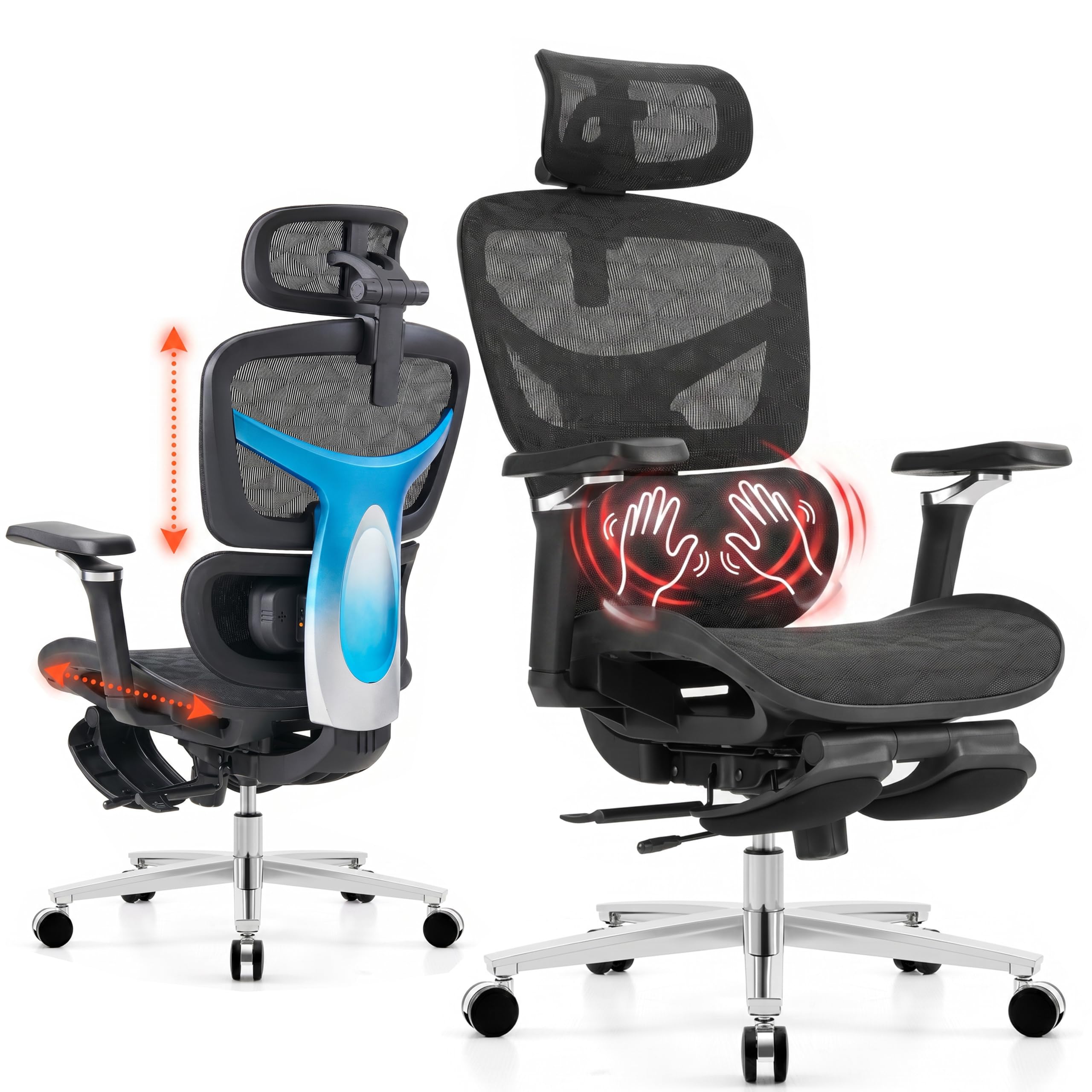
This chair brings two features that are almost impossible to find in commercial-grade seating at this price: a built-in 3D finger-pressure kneading massage pad in the lumbar area and an extendable footrest for zero-gravity recline positions. The massage nodes are cordless, powered by a rechargeable battery, and provide active muscle relief that no static lumbar support can replicate. The footrest slides out from under the seat, allowing you to recline the backrest between 90 and 135 degrees.
The 4D armrests adjust in height, width, rotation, and horizontal slide — a level of arm customization normally reserved for chairs costing twice as much. The backrest height adjusts independently from the seat, and the seat depth slides forward by about two inches, accommodating both short and tall users. The all-steel frame and BIFMA-certified Class-4 gas lift support up to 400 pounds, making this one of the highest weight-rated chairs in the mid-range.
The mesh is breathable and the expanded seat pan reduces pelvic pressure well. However, the chair is heavy at 60 pounds and the nylon base, while sturdy, is not as visually premium as aluminum. Some users note that the backrest has a slight rocking motion independent of the seat, which took getting used to. The massage function, while effective, creates a noticeable hum that can be distracting in quiet office environments.
Why it’s great
- Built-in 3D finger-pressure massage pad actively relieves lumbar tension
- Extendable footrest and 135-degree recline enable zero-gravity relaxation
- 400-pound capacity with Class-4 gas lift for heavy-duty stability
Good to know
- Backrest rocks independently from the seat, which feels unusual at first
- Massage motor produces an audible hum that may distract in quiet rooms
9. Desktronic SitOne Ergonomic Office Chair
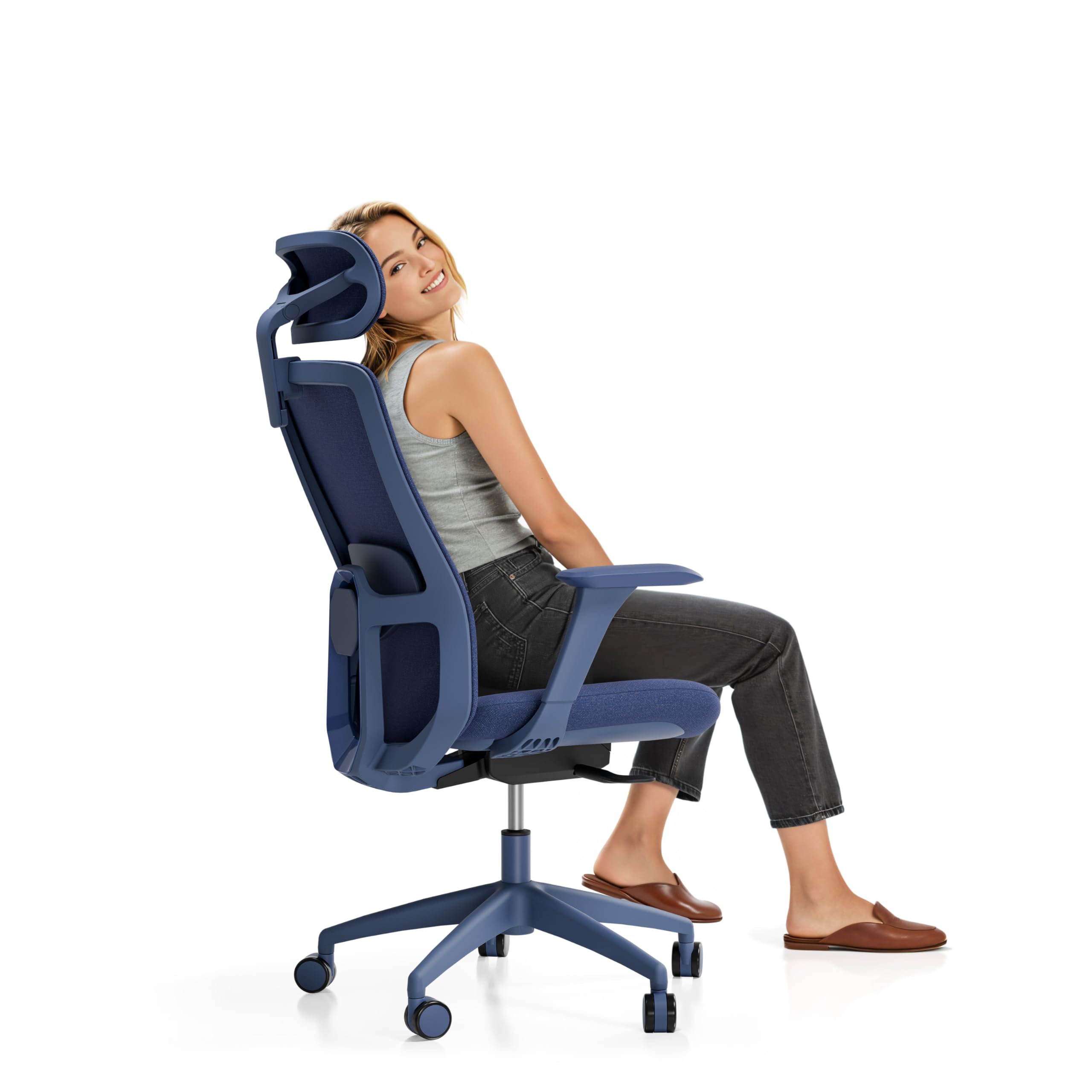
The SitOne is designed around a simple premise: provide a complete set of ergonomic adjustments — lumbar support, headrest, 4D armrests, recline, tilt tension, seat height, and seat depth — without pushing the price into premium territory. The alloy steel frame and BIFMA certification mean it meets commercial safety and durability standards, not just residential expectations. The mesh back keeps air moving, and the contoured seat cushion evenly distributes weight to prevent leg numbness.
Assembly is straightforward at around 30 minutes, and the included tools are clearly labeled. Users from five-foot-eight to six-foot-three report that the adjustments cover their range comfortably. The armrests offer four dimensions of movement (height, width, depth, and rotation), matching the adjustability found on chairs that cost three times as much. The lumbar support is gentle but present, providing a subtle curve rather than an aggressive forward push.
Some users note that the seat cushion, while firm and supportive, could benefit from an extra half-inch of padding for users on the heavier end of the range. The headrest is adjustable but does not offer forward tilt, so it works best for upright posture rather than reclining neck support. The armrest foam is dense but the support at the front tip of the pad feels slightly hollow after extended leaning.
Why it’s great
- BIFMA-certified alloy steel frame meets commercial durability standards
- 4D armrests rival the adjustability of premium chairs at a lower price
- Complete adjustment set including seat depth and tilt tension
Good to know
- Seat cushion could use a bit more padding for heavier users
- Headrest lacks forward tilt adjustment for reclined neck support
10. Branch Ergonomic Chair
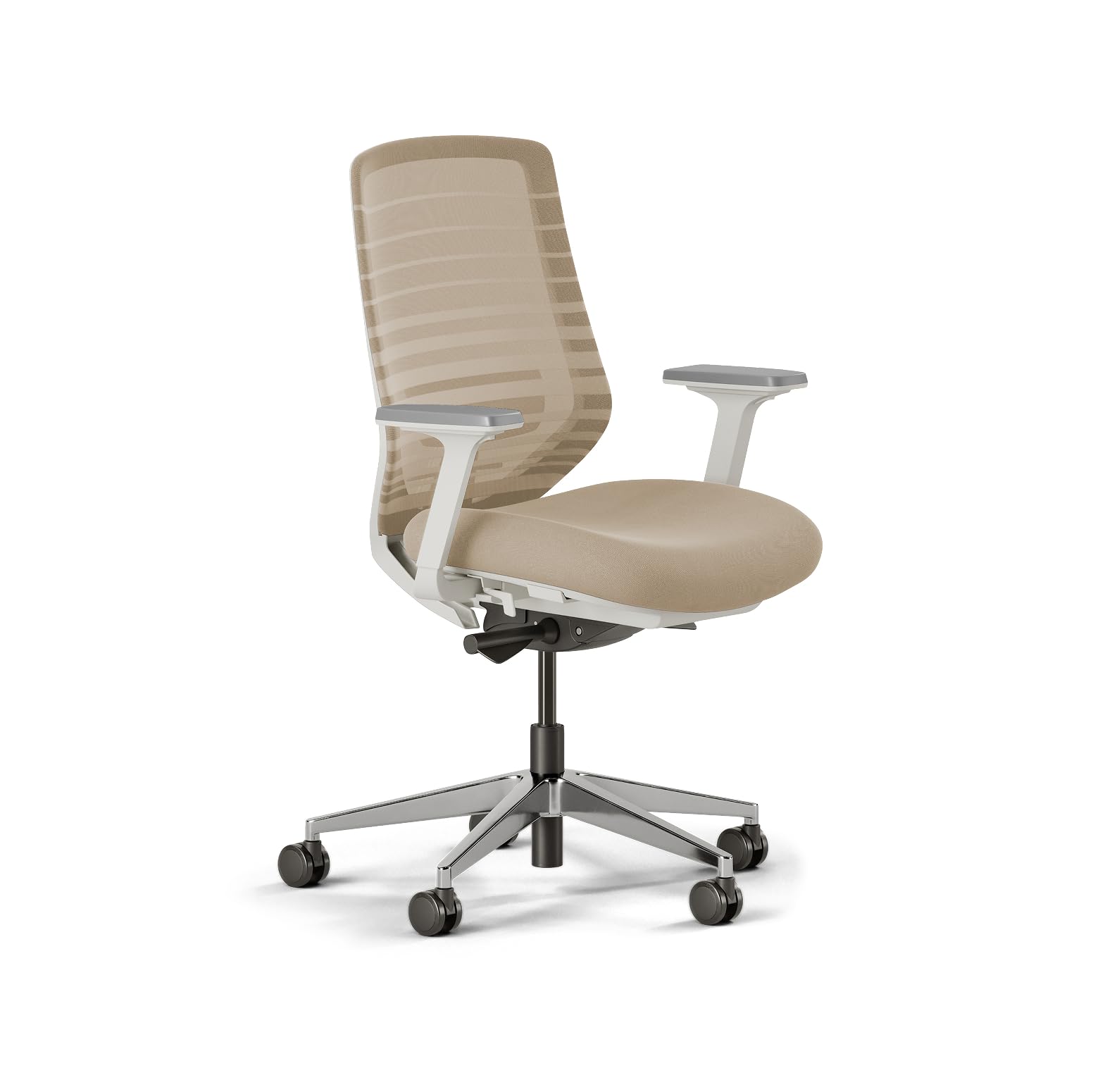
The Branch Ergonomic Chair prioritizes fit for smaller body types — a demographic often underserved by commercial seating. The seat height goes lower than most competitors, allowing users as short as five feet to plant their feet flat on the floor without the seat edge compressing their thighs. The eight points of adjustment include seat height, seat depth, backrest angle, armrest height, armrest width, armrest pivot, lumbar height, and tilt lock.
The aluminum frame keeps the weight down to around 30 pounds while still providing a sturdy foundation. The breathable mesh back prevents heat buildup, and the contoured foam cushion offers a firm but responsive sit that doesn’t bottom out during an eight-hour shift. The wheels are smooth-rolling and work well on both carpet and hard floors without leaving marks. Assembly takes roughly 30 minutes and requires only basic tools.
The chair lacks a seat tilt mechanism, which means you cannot adjust the angle of the seat pan independent of the backrest — a feature that users with hip issues may miss. The armrests, while adjustable in multiple dimensions, have a slightly loose feel if not tightened fully during assembly. The lumbar support is mild and passive (molded into the backrest frame) rather than an active adjustable pad, so users needing aggressive lower back pressure may need additional support.
Why it’s great
- Ultra-low seat height accommodates petite users down to five feet tall
- Aluminum frame is lightweight yet strong for easy rearrangement
- Breathable mesh back keeps the spine area ventilated during long sessions
Good to know
- Seat tilt adjustment is absent — the seat angle is fixed
- Lumbar support is passive and mild, not an active adjustable pad
11. Magshion Ergonomic Office Chair 10 Pack
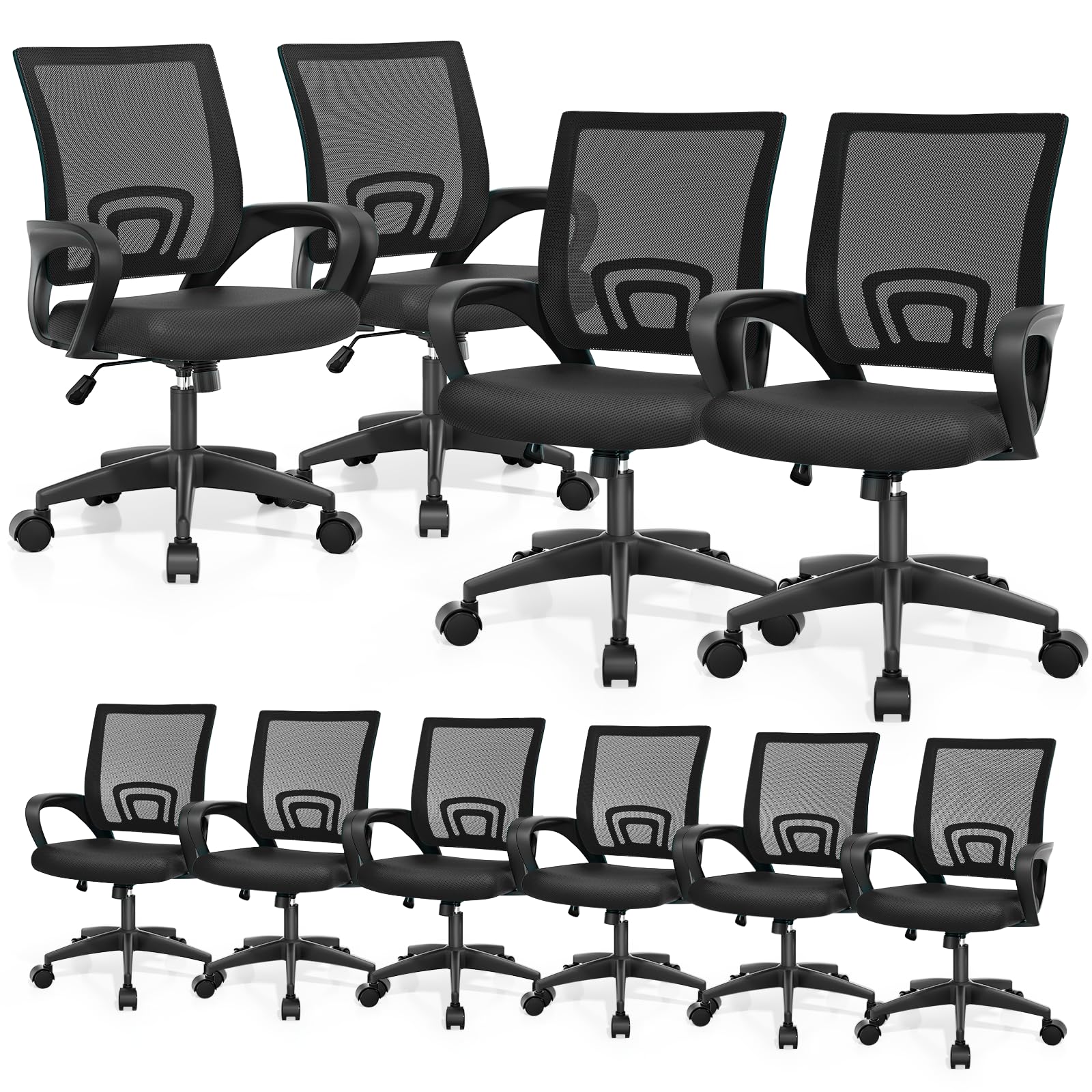
The Magshion 10-Pack is optimized for bulk commercial environments — offices that need to equip multiple workstations without spending premium per-seat prices. Each chair features a mid-back mesh design with a contoured lumbar bump that provides passive support when you lean back. The high-density sponge cushion is softer and thicker than typical budget-task-chair foam, and the mesh cover prevents the sweat pooling that cheap PU leather seats trap.
The chairs swivel 360 degrees, adjust in height from 14 to 18 inches, and offer a 30-degree rocking function activated by turning a knob under the seat. The gas lift is rated for up to 300 pounds, and the five-point nylon base provides stable support on both carpet and hard floors. Assembly is reported to take 10 to 15 minutes per chair, with included tools and straightforward instructions.
Quality control is the main variable here. Some units arrive with misaligned screw holes or rough plastic edges that can cause minor cuts during assembly. A few users report that the seat feels small for taller or wider frames, and the chairs lack the lumbar depth adjustability and armrest articulation found on higher-tier models. The armrests are fixed in width, which limits customization for broader-shouldered users. For bulk deployment in a call center or open-plan office where workers rotate through stations, however, the per-unit value is hard to beat.
Why it’s great
- Extremely competitive per-unit cost for bulk office deployment
- 30-degree rocking function allows brief relaxation between tasks
- High-density sponge cushion is thicker than typical budget task chairs
Good to know
- Quality control varies — some units arrive with misaligned components
- Fixed-width armrests and small seat pan limit larger user comfort
FAQ
How often should I replace a commercial office chair?
Is mesh back always better than upholstered back for long hours?
What does a weight capacity of 300 pounds actually mean for daily use?
Can I adjust a commercial chair for multiple users of different heights?
Final Thoughts: The Verdict
For most users, the commercial office chairs winner is the Steelcase Leap because its lower back firmness dial and Natural Glide System offer an unmatched level of lumbar precision and spine-friendly recline. If you want the most responsive back support that moves like your own spine, grab the Haworth Fern. And for a heavy-duty chair with memory foam cushioning that supports larger frames all day, nothing beats the Nightingale CXO 6200D.

Mo Maruf
I created WellFizz to bridge the gap between vague wellness advice and actionable solutions. My mission is simple: to decode the research and give you practical tools you can actually use.
Beyond the data, I am a passionate traveler. I believe that stepping away from the screen to explore new environments is essential for mental clarity and physical vitality.