Our readers keep the lights on and my smoothie glass nicely filled. As an Amazon Associate, I earn from qualifying purchases.
The heart of any high-volume juice bar, restaurant, or café beats with the sound of fresh citrus being pressed. But a machine that stalls on a tough grapefruit, overheats mid-service, or leaves half the juice locked in the rind is a direct drain on your bottom line and your patience. You need hardware that turns a 40-pound case of oranges into a steady stream of profit, shift after shift, without breaking a sweat or your back.
I’m Mohammad Maruf — the founder and writer behind WellFizz. For this guide, I spent over forty hours analyzing mechanical leverage ratios, motor torque curves, juice extraction percentages, and the real-world durability of the nine leading commercial citrus juicers in the current market.
Whether you run a tight bar back-of-house or a high-throughput juice concept, finding the best commercial citrus juicer means matching your volume, space, and maintenance tolerance to a machine that won’t quit at the worst possible moment.
How To Choose The Best Commercial Citrus Juicer
Picking the wrong citrus juicer for a commercial environment isn’t an inconvenience — it’s a measurable loss of labor cost, ingredient yield, and counter space. The decision breaks down into three non-negotiable factors: the mechanical action type, the materials used in high-wear areas, and the machine’s hourly throughput relative to your peak service windows.
Mechanical Action: Manual Leverage vs. Electric Reamer vs. Slow Masticating
Manual lever juicers — whether crank, press, or rack-and-pinion — deliver the highest juice yield per piece of fruit because the operator controls the pressure directly. They are silent, never overheat, and have near-zero motor maintenance. The trade-off is operator fatigue during high-volume rushes. Electric reamer machines, like the classic Sunkist J-1, trade some yield-per-fruit for raw speed, handling dozens of oranges per minute. Slow masticating juicers, like the Hurom H70 and Kuvings CS600, handle whole fruits and vegetables with minimal foam and oxidation, but their throughput per hour is lower while the machine’s duty cycle allows for continuous operation.
Construction Materials and Citric Acid Resistance
Citric acid aggressively corrodes aluminum, low-grade steel, and painted finishes. Any commercial citrus juicer should have its strainer cone, juice bowl, and pressing mechanism constructed from stainless steel or certified acid-resistant materials. Chrome-plated steel offers a compromise for budget tiers, but the plating can chip over time, exposing the base metal to corrosion. NSF certification, seen on models like the Hamilton Beach 932, confirms the unit meets independent standards for material safety and cleanability in a food service setting.
Throughput, Hopper Size, and Footprint
Calculate your peak demand: if your morning rush requires 60 fresh orange juices in 30 minutes, you need a machine rated at 120+ pieces per hour. A compact electric reamer fits tight bar counters, while a manual press with a 20-inch height demands stable shelf clearance. Also consider the hopper or feed chute width — a wider opening reduces prep time because you don’t have to halve every grapefruit.
Quick Comparison
On smaller screens, swipe sideways to see the full table.
| Model | Category | Best For | Key Spec | Amazon |
|---|---|---|---|---|
| Kuvings CS600 | Electric Masticating | Whole fruit, continuous duty | 88mm wide feed chute | Amazon |
| Nemco 55850 | Manual Lever | Premium yield, quiet operation | 20:1 rack-and-pinion leverage | Amazon |
| Sunkist J-1 | Electric Reamer | Bar, high-speed citrus only | 20 gallons per hour | Amazon |
| Breville 800CPXL | Electric Press | Mid-volume, effortless pressing | Quadra-Fin extraction cone | Amazon |
| Hamilton Beach 932 | Manual Press | Compact, NSF certified | 2,000 lbs squeeze force | Amazon |
| Hurom H70 | Electric Masticating | Cold press, low oxidation | Strainer-free auger design | Amazon |
| Tribest MJP-100 | Manual Press | Durable manual, no electricity | 200 lbs squeeze pressure | Amazon |
| Can-Can Pomegranate | Manual Lever | Pomegranates, specialty citrus | Stainless steel clamping system | Amazon |
| Waring Commercial BJ120C | Electric Reamer | Compact bar, light commercial | 120 oranges per hour | Amazon |
In‑Depth Reviews
1. Kuvings CS600 Whole Slow Juicer

The Kuvings CS600 is the only machine on this list designed for 24-hour continuous operation without overheating, thanks to its state-of-the-art cooling system and a heavy-duty deceleration motor. Its 88mm flip-gate feed chute accepts whole apples, pears, and even medium carrots without pre-cutting, which dramatically reduces prep labor in a busy café setting. The auger-driven slow masticating technology produces exceptionally dry pulp, meaning you capture nearly every drop of juice from every piece of produce.
All wetted components — the strainer, the auger, the main body — are constructed from stainless steel, Ultem, and Tritan, materials chosen specifically to resist the corrosive attack of citric acid during long operating sessions. The machine comes with a detachable Smart Cap for drip-free mixing of recipes and a cleaning brush that makes rinsing the few required parts a sub-60-second task. Users report switching from high-speed centrifugal machines and noticing an immediate upgrade in juice flavor and shelf stability.
The CS600 also doubles as a sorbet maker when paired with the optional blank strainer, adding a versatile revenue stream for a juice bar or restaurant. Its 20-pound weight provides significant stability on a counter, and the low-speed operation means near-silent juicing even during pre-service prep. For a commercial operator who prioritizes yield, versatility, and non-stop reliability, this is the benchmark machine.
Why it’s great
- Accepts whole fruits — saves labor time on every batch
- DC motor rated for 24-hour continuous operation
- Exceptionally dry pulp indicates maximum juice extraction
Good to know
- Premium price point; best suited for high-volume or specialty use
- Cleanup is easy but not dishwasher safe — hand rinse only
2. Nemco 55850 Manual Easy Citrus Juicer

The Nemco 55850 uses a rack-and-pinion lever system with a 20:1 mechanical advantage — every pull of the handle applies twenty times the force you invest, turning even the toughest pomegranates and rock-hard limes into near-dry pulp with a single smooth motion. Its construction is all aluminum and stainless steel, with two self-lubricating bronze bearings that require zero maintenance over years of daily use. Built in the USA, the entire machine is repairable; replacement parts are available directly from the manufacturer in Ohio.
Commercial users consistently report that this unit produces the driest pomace of any juicer they have ever used, translating directly to higher yield per case of fruit. The removable strainer cone and drip tray rinse in seconds under hot water, and the machine’s enamel-finished base stays immobile on the counter thanks to its substantial weight. Because it is entirely mechanical, there is no motor noise, no heat buildup, and no duty cycle limit — it runs as long as you do.
One nuance: the handle requires two full 360-degree rotations per fruit, which is slightly slower than a crank-style press for the first-time user. But operators quickly adapt, and the trade-off for silent, bone-dry extraction is worth the rhythm. It handles standard oranges and lemons beautifully; very large grapefruits may require trimming the edges to fit the cone.
Why it’s great
- 20:1 leverage ratio makes hard fruits effortless
- All-metal construction with repairable parts from Ohio
- Produces bone-dry pulp for maximum yield
Good to know
- Two-turn handle cycle is slower per fruit than electric models
- Large footprint on counter — needs stable clearance
3. Sunkist Growers J-1 Commercial Juicer

The Sunkist J-1 is the iconic electric reamer juicer that has defined the commercial citrus segment for decades. Built from chrome-plated steel and corrosion-proof white plastic, it is a single-purpose machine that does one thing brilliantly: press citrus fast. With an output rated at 20 gallons per hour and three interchangeable extracting bulbs for different fruit sizes, this is the go-to for bars, nightclubs, and breakfast buffets where speed is the primary metric.
Users with over twelve years of operation report zero mechanical failures — the motor is powerful and self-lubricating, and the design is elegantly simple. Cleaning is straightforward: the reamer and drip tray are dishwasher-safe, and the motor base only needs a wipe-down. The machine’s 31-pound weight keeps it planted during aggressive juicing, and the chrome finish wipes clean in seconds, looking sharp on a back bar.
One trade-off: the juice contains more pulp and skin oil than a manual press produces, because the spinning reamer does not separate the rind emulsion as cleanly. This is a feature, not a bug, for cocktails where body and texture matter, but it is a consideration if your menu calls for crystal-clear juice. Also, it only processes citrus — not whole fruits or vegetables — so its role in your operation should be specialized.
Why it’s great
- Unmatched speed — up to 20 gallons per hour
- Three reamer cones handle lemons to large grapefruit
- Dishwasher-safe components, minimal daily cleaning
Good to know
- Higher pulp and rind oil in the juice
- Dedicated citrus machine only — not for whole produce
4. Breville 800CPXL Citrus Press Pro

The Breville 800CPXL bridges the gap between home and light commercial use with a power-assisted lever that reduces the physical effort of juicing to near zero. Its signature Quadra-Fin extraction cone uses four finned undulations to scrape the interior of the fruit half, maximizing the juice pulled from each orange or grapefruit. The triple-hinged arm ensures downward pressure is maintained through the entire stroke, while a dual-safety switch prevents the cone from spinning until the arm is properly lowered.
The die-cast stainless steel cone and acid-resistant body are built to withstand years of citric acid exposure without pitting or rusting. A built-in drip-stop spout holds juice between presses to keep your countert clean. The juice collector, filter, and fruit dome are all dishwasher-safe, making post-service cleanup fast. Users running 15-to-20-pound bags of oranges daily report six-plus years of trouble-free service before the motor eventually requires replacement — an excellent lifespan for a mid-range machine.
The main consideration is throughput: this machine processes a fruit in about one press-and-lift cycle, but it is not designed for the relentless pace of a 200-cover juice bar. It shines in a hotel breakfast station, a busy coffee shop, or a cocktail bar where volume per hour is moderate but consistency is critical. Some users note sharp edges on the juice tray and strainer that require careful handling during cleaning.
Why it’s great
- Power-assisted lever requires almost no physical force
- Quadra-Fin cone maximizes juice release from all citrus sizes
- Dishwasher-safe components for quick cleanup
Good to know
- Mid-range throughput — not ideal for high-volume rushes
- Sharp edges on strainer and tray require careful handling
5. Hamilton Beach Commercial 932 Manual Citrus Juicer
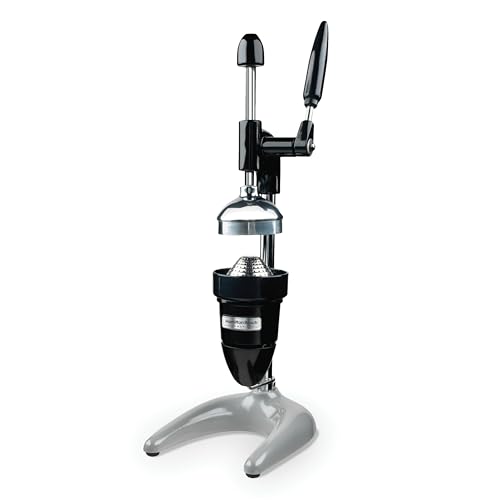
The Hamilton Beach 932 is an iconic manual press that has been in continuous production since 1932, a testament to its timeless mechanical design. The press arm generates up to 2,000 pounds of force, squeezing the maximum juice from lemons, limes, and oranges with a single controlled pull. Its NSF certification is a significant advantage for any food service establishment that faces health inspection requirements — the unit is independently verified for material safety and hygienic design.
The base is constructed from metal with an acid-resistant enamel finish, and the stainless steel strainer cone and ABS plastic funnel are removable for cleaning. Users praise the machine for its rock-solid stability — the sure-grip feet prevent any tipping or sliding even during heavy pressing. The 932 transforms a bag of citrus into juice faster than any hand reamer, and it accomplishes this with zero noise and zero electricity.
Two real-world caveats: the aluminum interior juice cup can show wear over time from constant acid exposure, and the press chamber is slightly too small for oversized navel oranges, which can cause bitter rind oil to extract along with the juice. The compact footprint (just 7 by 9 inches) is a major plus for tight bars, but the machine is 19.5 inches tall, so check your under-counter clearance before mounting.
Why it’s great
- NSF certified for commercial food service compliance
- 2000-pound squeeze force for maximum juice out of each fruit
- Compact footprint with stable sure-grip feet
Good to know
- Aluminum juice cup may wear with acid over time
- Press chamber small for extra-large oranges or grapefruits
6. Hurom H70 Cold Press Juicer
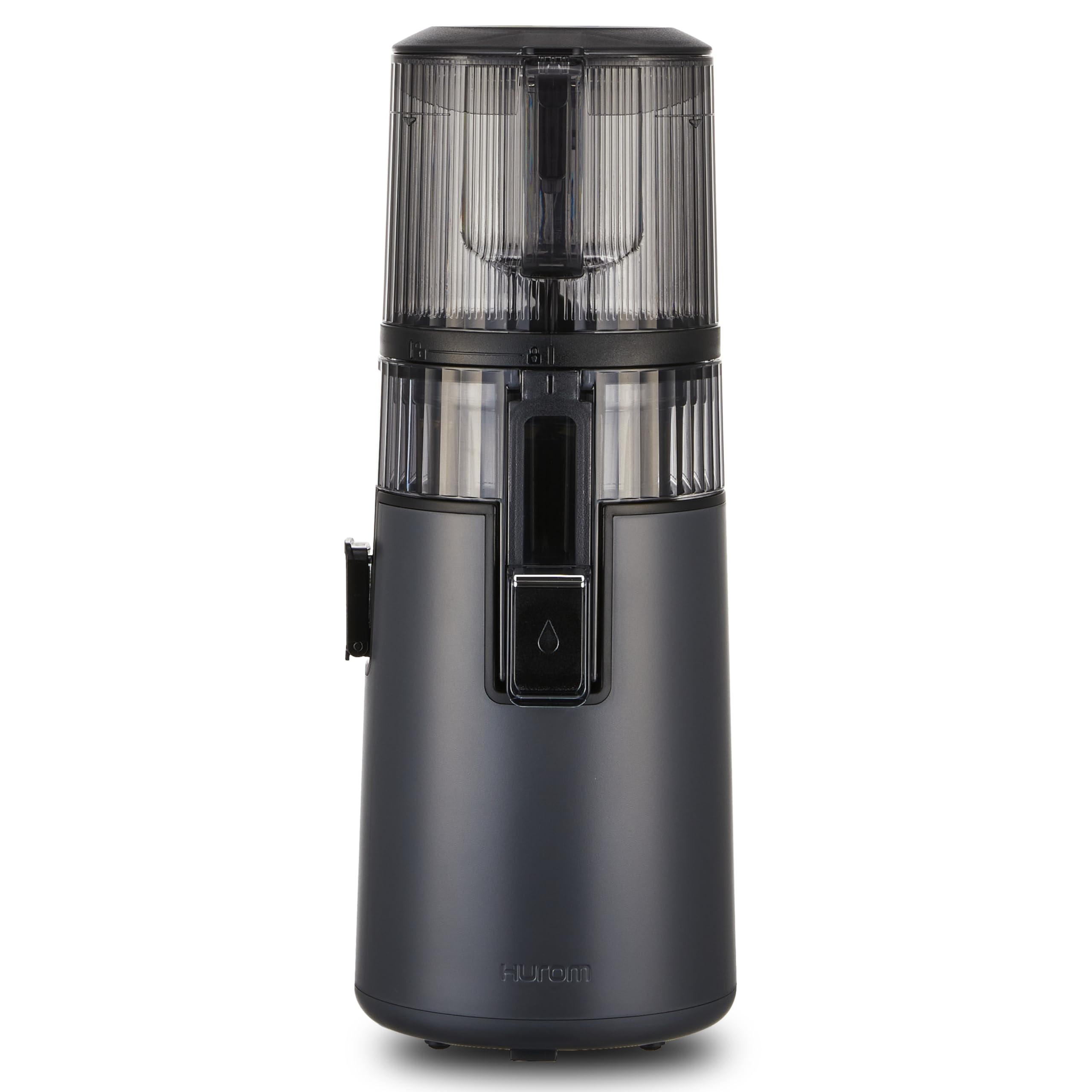
The Hurom H70 is a revolutionary masticating juicer that eliminates the mesh filter entirely. Instead of a fine screen that clogs and requires vigorous scrubbing, the H70 uses a two-part auger system that separates pulp from juice through a wide internal chamber. The result is a slow cold press that rinses clean in under sixty seconds — no brush required for the chamber — while delivering a consistently smooth juice with low oxidation.
Its 14.8-pound frame is compact for a masticating machine, fitting under most cabinets with an 8 by 8-inch footprint and a 16-inch height. The larger self-feeding hopper and wider inlet accept quartered apples and halved oranges without much prep, and the auger extracts juice with a gentle squeeze that preserves the flavor profile of the fruit. Users report handling everything from carrots to beets to leafy greens, making this unit versatile for a café menu that extends beyond citrus.
The front-facing gauge window shows the juice level at a glance, a thoughtful detail for managing flow during service. A minority of users have reported difficulty with the locking mechanism during disassembly, with the unit becoming stuck and requiring a multi-minute effort to open. While Hurom advises hand-washing only, the sheer ease of the rinse step largely compensates for the lack of dishwasher compatibility.
Why it’s great
- Strainer-free design rinses clean in under a minute
- Slow auger preserves flavor and reduces oxidation
- Wide hopper minimizes produce prep time
Good to know
- Locking mechanism can jam, requiring disassembly effort
- Not dishwasher safe — hand wash only
7. Tribest MJP-100 Professional Manual Cold Press

The Tribest MJP-100 is a heavy-duty manual press built around a stainless steel rack-and-pinion system that generates 200 pounds of squeezing pressure per press. Unlike lower-cost manual juicers that use plastic gears and aluminum components, every load-bearing part of the MJP-100 is solid stainless steel bars, delivering the longevity required for daily commercial use. The strainer and bowl lock into place with a twist, preventing the assembly from separating during pressing.
Users running the machine on farms and in Istanbul juice stalls report processing 300 lemons or oranges per session without signs of wear. The ergonomic handle and secure locking mechanism make the operation almost effortless, while the internal gears amplify the force so that even hard limes are juiced in a single press. A built-in swing drip cup prevents spillage between presses, directing the juice into a waiting glass or container.
The biggest caveat with this unit is that the press hat (the pressing disc) is non-removable from the shaft, which can make cleaning the underside of the disc slightly more involved. Also, the recommended technique is to press slowly — a rapid slam can cause splash-back. For a juice bar operator who values absolute yield and is willing to invest a few more seconds per fruit, the Tribest is a sturdy, no-electricity workhorse.
Why it’s great
- All stainless steel load-bearing parts resist corrosion
- Rack-and-pinion gearing amplifies hand force significantly
- Drip cup minimizes countertop mess
Good to know
- Press hat is non-removable, complicating deep cleaning
- Requires slow pressing to avoid splash-back
8. Can-Can Pomegranate and Citrus Juicer

The Can-Can juicer, manufactured in Turkey, is built specifically for pomegranates, though it handles all citrus with equal skill. Its clamping system uses a threaded handle to press the fruit against a stainless steel cone, creating juice that passes through a glass collecting bowl — one of the only machines here that retains glass for contact surfaces. Users report 98% juice extraction from pomegranate seeds, with the dry pulp left inside the rind rather than staining the strainer.
The 4.5-kilogram weight and wide base keep the machine stable during pressing, and the few metal parts make cleaning straightforward — a rinse with a kitchen spray dissolves the pomegranate tannins. The clamping mechanism eliminates the need to hold the fruit manually, reducing hand fatigue during large batches. Buyers consistently note that the seller is responsive and supports the product well, a rare plus for a niche import machine.
The unit is tall at 21.65 inches, requiring dedicated vertical clearance, and the included juice cup is small — most users replace it with a standard Tom Collins glass or a larger pitcher. It is not suited for continuous electric operation, and the manual clamping action is slower per fruit than a lever or crank. But for a juice bar that features pomegranate or pomegranate-citrus blends, the Can-Can delivers unmatched specialty performance.
Why it’s great
- Extracts 98% of pomegranate juice in one press
- Clamping system enables hands-free pressing
- Glass collection bowl keeps juice pure and neutral
Good to know
- Tall design needs significant vertical clearance
- Slower per fruit than lever or electric models
9. Waring Commercial BJ120C Compact Electric Citrus Juicer
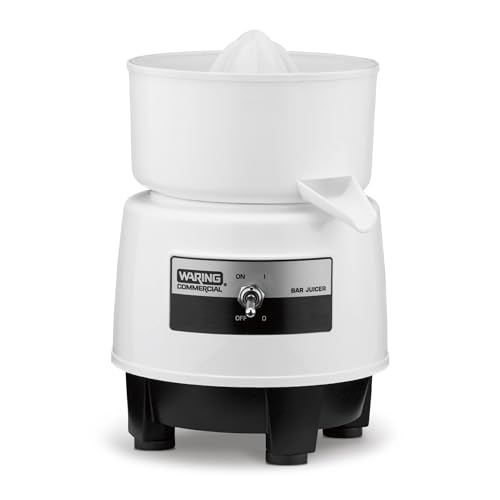
The Waring BJ120C is a compact electric bar juicer that delivers 120 oranges per hour from a footprint of just 7.25 inches square. Its universal reamer handles all citrus sizes, and the heavy-duty die-cast base with vibration-dampening feet keeps the machine stable on a crowded bar top. The motor is rated to run for extended periods, with some users reporting continuous two-hour operation without overheating.
This machine is TUVus certified, meeting recognized safety and quality standards for commercial electrical equipment. The 1-quart capacity and simple on-off operation make it ideal for a bartender who needs fresh lime juice for a shift without dealing with complex cleaning procedures — the reamer, drip tray, and juice container are all dishwasher-safe. The lightweight 6-pound construction means it could be moved from the back prep area to the service well as needed.
The trade-off is construction feel: the unit uses a significant amount of plastic in the bowl and reamer assembly, which has led to reports of the plastic bowl cracking within the first month of heavy use. While Waring is a respected commercial brand, this model feels consumer-grade in its materials, and the warranty process has frustrated some users. For a light-volume operation with careful handling, it works well; but a high-throughput bar should budget for eventual replacement parts or step up to a sturdier unit.
Why it’s great
- Tiny footprint — perfect for crowded bar surfaces
- Motor runs two hours continuously without overheating
- Dishwasher-safe components for easy cleanup
Good to know
- Significant plastic construction susceptible to cracking
- Not designed for extreme commercial throughput
FAQ
What does NSF certification mean for a citrus juicer?
How do I choose between a manual press and an electric juicer for my café?
Can I juice pomegranates in a standard citrus press?
Final Thoughts: The Verdict
For most users, the commercial citrus juicer winner is the Kuvings CS600 because it combines the highest versatility with a continuous-duty motor that never quits during a rush. If you need silent, maximum-yield juicing without electricity, grab the Nemco 55850. And for raw speed in a high-volume bar program, nothing beats the Sunkist J-1.

Mo Maruf
I created WellFizz to bridge the gap between vague wellness advice and actionable solutions. My mission is simple: to decode the research and give you practical tools you can actually use.
Beyond the data, I am a passionate traveler. I believe that stepping away from the screen to explore new environments is essential for mental clarity and physical vitality.