Our readers keep the lights on and my smoothie glass nicely filled. As an Amazon Associate, I earn from qualifying purchases.
Specs are compiled from manufacturer listings and verified buyer reviews and can change over time — please confirm the key details on the product page before buying.
If your feet ache after a long day on them, the real problem might be hiding inside your sneakers. Many so-called comfortable shoes cut corners on the midsole cushioning (the foam layer between your foot and the ground) or use a narrow toe box (the front part of the shoe where your toes sit) that squeezes your foot the wrong way, turning every errand into a chore. This guide lines up the most comfortable sneakers for men and women and focuses on the specs and real-world feedback that actually predict all-day relief.
I’m Mohammad Maruf — the founder and writer behind WellFizz. This guide is built by comparing the manufacturers’ published specifications and the patterns across verified customer reviews, so you get each pick’s real strengths and trade-offs instead of marketing spin.
If you want a pair that genuinely supports your feet from the morning commute to the evening walk, these reviews of the most comfortable sneakers will point you straight to the right pair without the guesswork.
Quick Picks
- Under Armour Men’s Charged+ Assert 11 Running Shoes — Best Overall
- Nike Men’s Flex Train Workout Shoes — Roomy Fit
- New Balance Men’s 608 V5 Casual Comfort Cross Trainer — Built for Abuse
- adidas Men’s Kaptir 4.0 Sneakers — Treadmill Specialist
- Skechers Women’s Arch Fit Arcade-See Ya There Hands Free Slip-ins Sneaker — Hands Free
- Skechers Men’s Max Cushioning Glide Step Advert Hands Free Slip-ins — Maximum Cushion
- Brooks Women’s Trace 4 Neutral Running Shoe — Running Specialist
How To Choose The Best Comfortable Sneakers
Buying comfortable sneakers is not about picking the most expensive pair. You need to match the shoe’s design to how you use it. Three factors separate a shoe that feels great all day from one that you kick off the minute you get home.
Cushioning and Midsole Technology
The midsole is the layer between your foot and the ground. It absorbs impact. Look for terms like Charged+ cushioning, Max Cushioning, or ABZORB. These are not just marketing names — they describe how much shock the shoe soaks up. More cushioning means less stress on your knees, especially if you walk on concrete or stand for hours.
Toe Box Width and Heel Support
A narrow toe box can cause blisters, bunions (a bony bump at the base of your big toe), or a cramped feeling. If your foot feels squished at the front, look for sneakers with a roomy toe box. Heel support is the counter (the stiff cup at the back of the shoe) that locks your foot in place. A good heel cup prevents slipping and gives you stability during walking or light running.
Weight and Flexibility
A heavy shoe makes your legs tired faster. A lightweight shoe below about 10 ounces (283 grams) feels almost like wearing a sock and lets you move naturally. Flexibility does not mean flimsy — the shoe should bend at the ball of your foot (the joint just behind your toes), not in the midsole, so your gait (your natural walking stride) is natural.
Quick Comparison
| Model | Best For | Cushioning Type | Weight | Closure | Amazon |
|---|---|---|---|---|---|
| Under Armour Charged+ Assert 11 | All-day comfort / Walking | Charged+ midsole | 10.2 oz | Standard tie lace | Amazon |
| Nike Flex Train | Gym / Daily wear | — | — | Lace-up | Amazon |
| New Balance 608 V5 | Heavy daily use / Standing | ABZORB midsole | — | Lace-Up | Amazon |
| adidas Kaptir 4.0 | Treadmill running / Everyday | — | — | Lace-up | Amazon |
| Skechers Arch Fit Arcade (Women) | Slip-on convenience / Casual | Arch Fit insole | — | Hands Free Slip-ins | Amazon |
| Skechers Max Cushioning Glide Step (Men) | Maximum cushion / Walking | Glide-Step + Air-Cooled Goga Mat | — | Hands Free Slip-ins | Amazon |
| Brooks Trace 4 (Women) | Road running / Long days | Soft protective cushioning | 8.1 oz / 229.6g | Lace-up | Amazon |
In‑Depth Reviews
1. Under Armour Men’s Charged+ Assert 11 Running Shoes
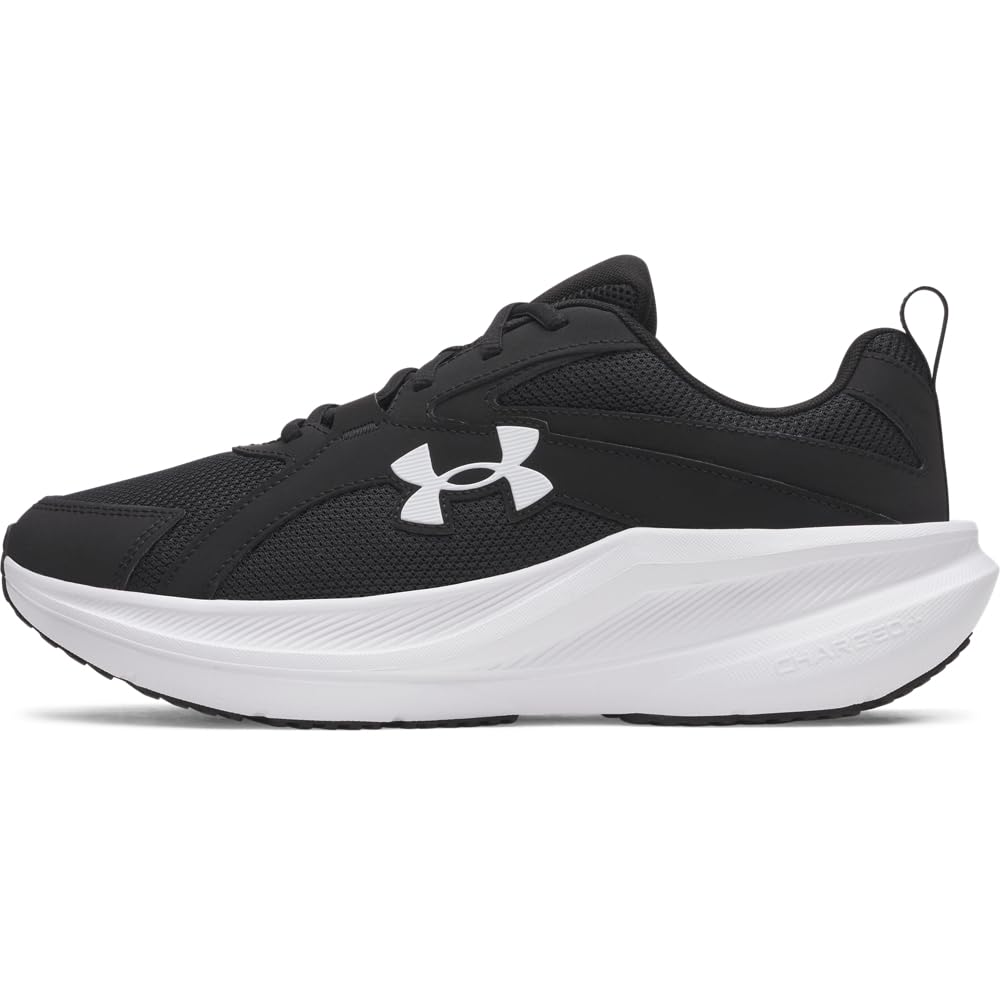
A 76-year-old reviewer said this shoe made him give up his HOKAs — that is the level of all-day comfort here.
This pair uses a Charged+ midsole (a dense foam layer designed to feel soft while still bouncing back), so your foot lands comfortably on concrete or pavement. The athletic mesh upper uses durable leather overlays for midfoot support, and the outsole has flex grooves (slits cut into the rubber) that let your toe bend naturally as you walk. It is a neutral shoe, meaning it gives you a balance of flexibility and cushioning rather than correcting your gait.
Buyers report that after only 14 hours of wear, these truly outperformed other brands like Skechers, New Balance, and HOKA in genuine comfort and long-term wearability. One reviewer notes that the toe box runs a bit narrow, so if you have a wide foot or a condition like hallux rigidus (stiff big toe joint), you may want to size up. The weight sits at 10.2 ounces (289 grams), light enough for a full day on your feet without feeling like a brick on your heel.
Unlike the Nike Flex Train which leans toward a rounded toe box that feels roomier, the Under Armour feels more snug and secure in the heel — better for runners who want a locked-in fit. At this price point, the combination of a Charged+ midsole, leather overlays, and an upper made with at least 30% recycled content makes it a standout value in the mid-range tier.
What stands out
- Charged+ midsole provides softness and all-day comfort so your knees feel less impact
- Durable rubber outsole with flex grooves for natural toe-off (the push you make when you take a step)
- Upper contains at least 30% recycled content
The trade-offs
- Reported to feel narrow in the toe box for some wearers
- Outsole grip can be slippery on wet surfaces according to one reviewer
Reach for this if: you want a lightweight, neutral-ride sneaker that pairs office-appropriate looks with genuine walking comfort — especially if you have sore knees and need cushioning that lasts a full shift.
Heads up: that snug toe box means wide-footed buyers should consider ordering a half-size up or skipping it if you need a wide (4E) width.
2. Nike Men’s Flex Train Workout Shoes
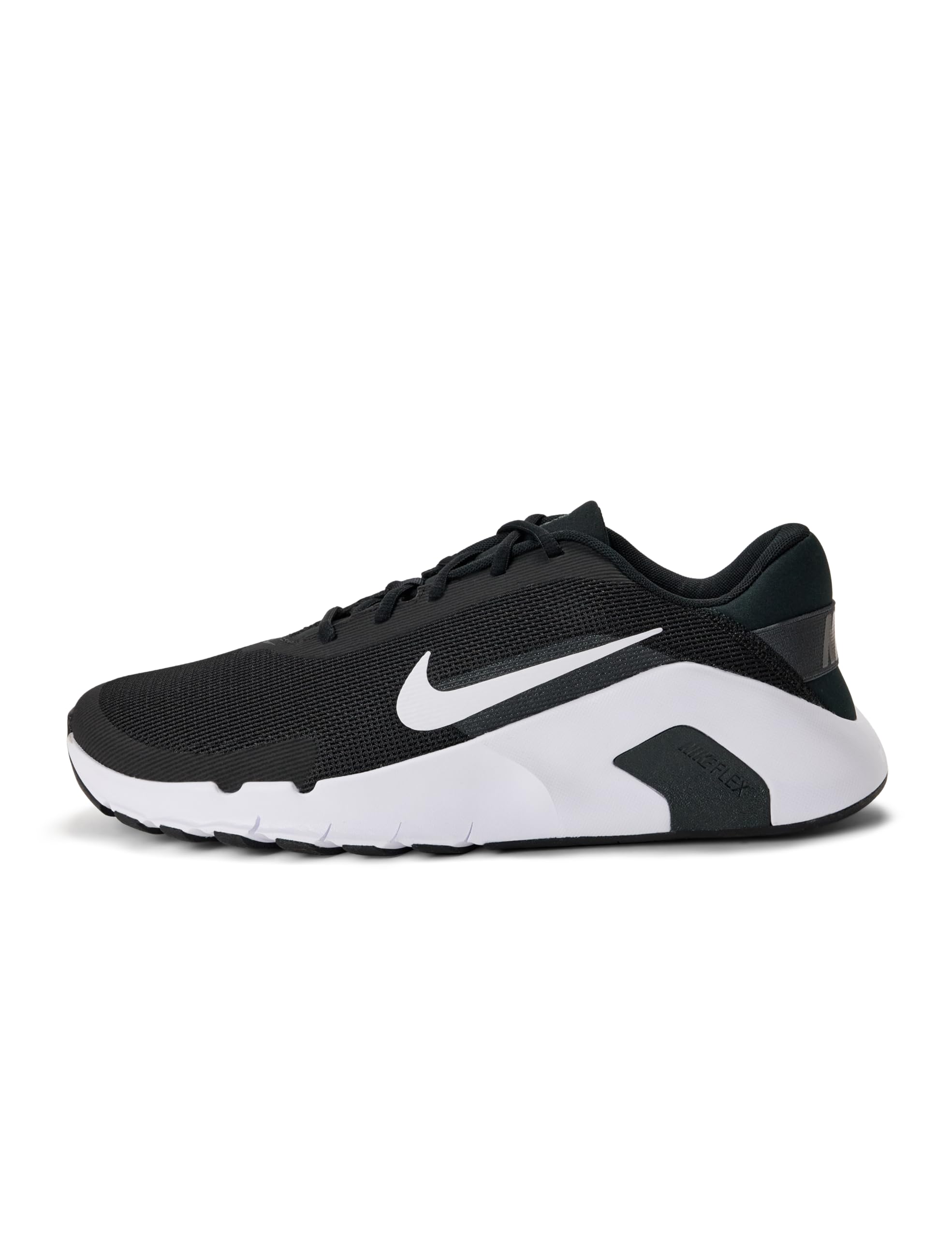
A gym companion that does not cramp a bigger man’s foot — one buyer who is 6’3 and 220 pounds says it works for lifting and power walking.
Owners mention that the Flex Train has a wider, rounder toe box compared to a standard Nike size 12, so if you usually feel restricted in the front of your sneakers, this model gives you room to spread your toes. One reviewer who is 6’3 and 220 pounds says these are great for lifting weights, power walking, and even light running because the sole supports your full body weight without making your foot lean to the side. The material is flexible but still gives support around your ankle and midfoot.
This is a lighter option than the New Balance 608 V5 — and where the New Balance is built for abuse on concrete, the Flex Train feels more agile and suits gym sessions or daily errands. The main trade-off is a lack of published cushioning technology; you do not get a named midsole like Charged+ or ABZORB, so the comfort comes from the shoe’s flexible construction rather than a specific foam. Reviewers also say it runs slightly large, so if you are between sizes, you may want to size down half a step.
Why it works
- Wide, round toe box accommodates bigger feet comfortably so your toes can spread
- Flexible material supports your foot without being stiff
- Lightweight even in a size 13
What to know
- Runs slightly large, so you may need to size down
- No advanced midsole cushioning tech listed
Best for: anyone who wants a loose-fitting athletic sneaker for the gym or casual walking, especially if strong arch support is not your top priority.
skip it if: you need maximum impact absorption on concrete all day — the New Balance 608 V5 or Under Armour Assert 11 give you more named cushioning.
3. New Balance Men’s 608 V5 Casual Comfort Cross Trainer

One reviewer says these survive a year of 20,000 steps a day on concrete — a real durability benchmark.
One buyer reports that these stand up to heavy and abusive use for about one year — 20,000 steps a day, squatting on toes, kicking cinderblocks — which gives you a real durability benchmark. The ABZORB midsole (a foam that absorbs impact through a combination of cushioning and compression resistance) means your heel and forefoot get a layer that softens every step on hard floors. Customers note it stays comfortable for eight-plus hours of walking on concrete and has good traction on all surfaces.
Where the Under Armour Assert 11 uses a Charged+ midsole that reviewers call “walking on clouds,” the New Balance ABZORB feels denser and more supportive — less plush, more stable. The trade-off, according to reviewers, is that when the shoe finally wears out, the sole separates from the shoe and the tread separates from the sole all within a couple of weeks, so the end is sudden. They are also not water resistant — the tongue (the flap under the laces) lets moisture in — so keep them dry.
Strengths
- ABZORB midsole absorbs impact for all-day comfort so your joints feel less shock
- Reviewed as durable for heavy use over about one year
- Comfortable for 8+ hours of walking on concrete
Caveats
- Sole can separate suddenly when it wears out
- Not water resistant (tongue lets moisture in)
Your pick if: you work on your feet all day — nursing, warehouse, construction-adjacent — and need a shoe that absorbs constant impact without breaking down for a year.
Think twice if: you walk in wet conditions or want a plush cloud-like feel; the midsole is supportive rather than soft.
4. adidas Men’s Kaptir 4.0 Sneakers
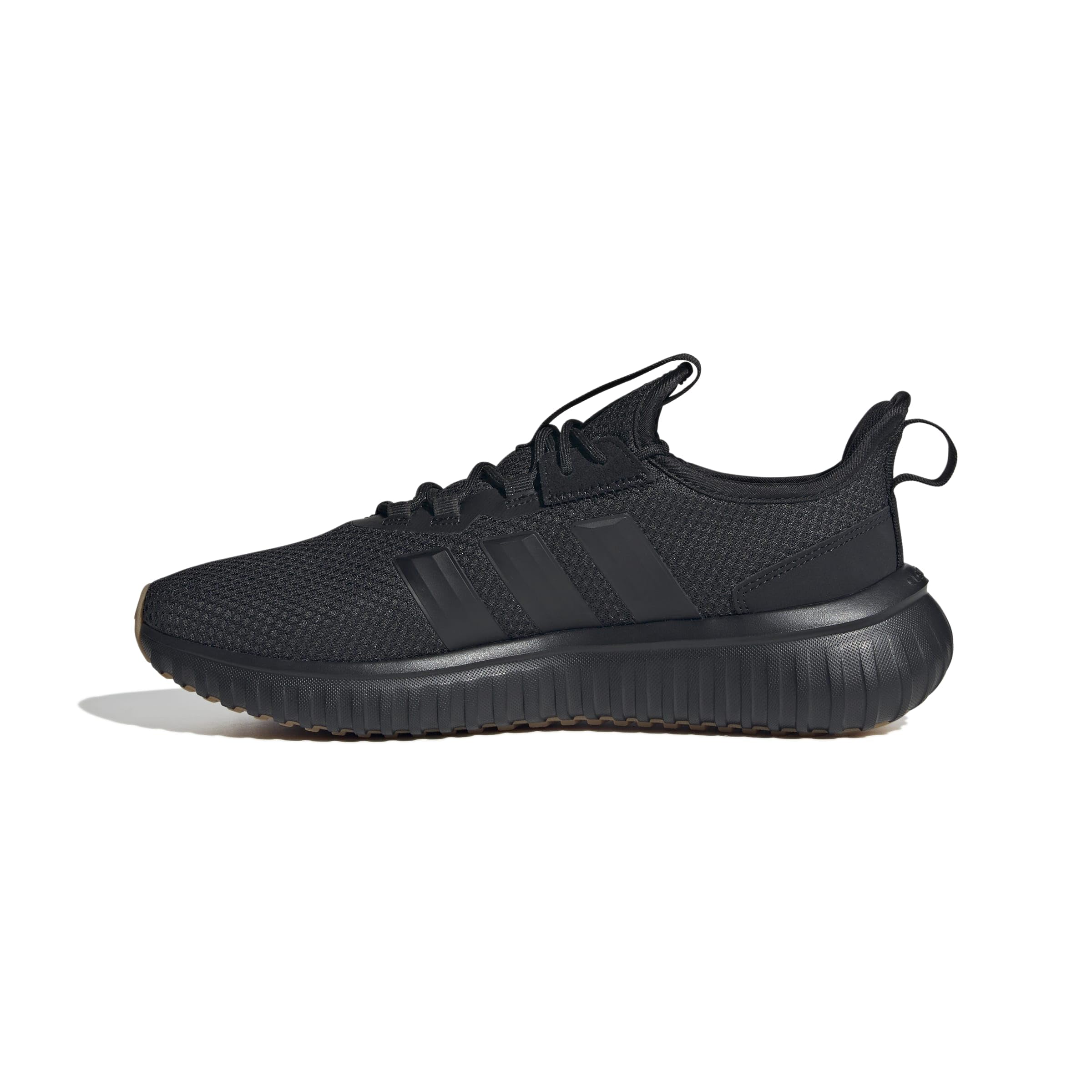
A long-time runner who tried Brooks, Nike, New Balance, and Puma says this is the best for treadmill work.
A reviewer who has tried Brooks, Nike, New Balance, and Puma says the Kaptir 4.0 has been the best for treadmill running because it is not too bouncy and still supportive, with a roomy toe box that prevents blisters when you size up. At about 2.13 pounds (966 grams) for the pair, these feel lightweight and easy to slip on, and multiple reviewers confirm they are comfortable right from the start with no break-in period. The cushioning works well for walking and standing for long periods too.
The main limitation, as one runner points out, is a lack of strong arch support — fine for a run on a flat treadmill belt, but if you overpronate (your foot rolls inward too much when you land) or need all-day arch support, you might want an insole upgrade. This is also a lighter, more casual-looking shoe than the New Balance 608 V5, but it lacks the heavy-duty build of the V5 for outdoor concrete pounding. Unlike the Under Armour Assert 11 with its Charged+ midsole, the Kaptir 4.0 does not list a specific cushioning technology in the specs, so the comfort is more about the shape and fit than a proprietary foam.
What we like
- Roomy toe box reduces friction for treadmill running so you avoid blisters
- Lightweight and comfortable right from the start
- Good cushioning for walking and standing
What to watch
- Lack of arch support for all-day wear, per reviewers
- Laces are reported to be very long
Go for it if: you log miles on a treadmill and want a breathable, roomy shoe that does not need a break-in period — size up half to a full step.
Better choices if: you need strong arch support or plan to wear them on concrete all day; the New Balance 608 V5 is more supportive.
5. Skechers Women’s Arch Fit Arcade-See Ya There Hands Free Slip-ins Sneaker
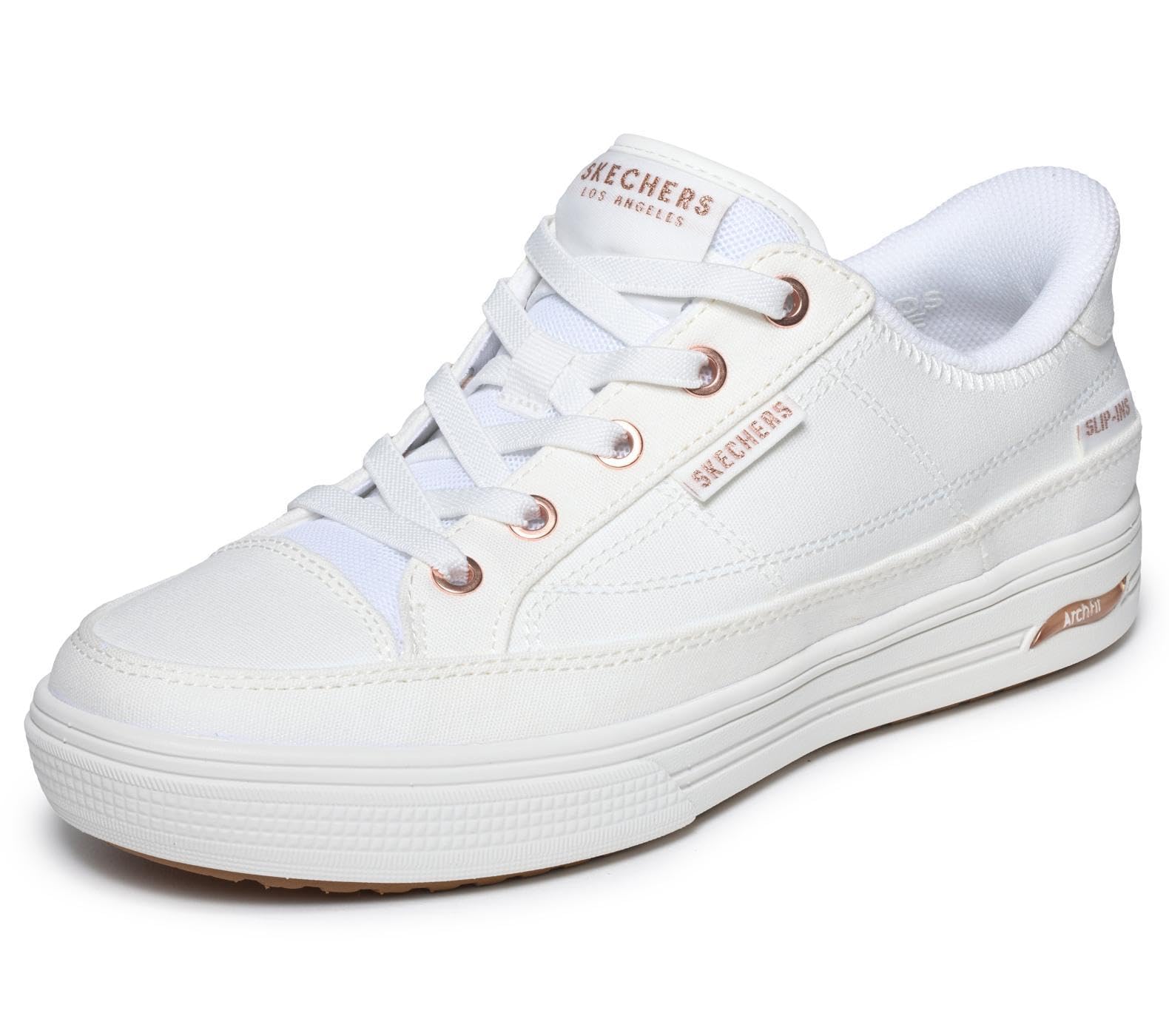
A slip-on that still supports your arches after two months of daily wear, according to one buyer.
One buyer who wore these daily for two months says they tick all the boxes — comfortable with super arch support, easy to slip on every time, and the heel panel shows no wear despite frequent use. The Hands Free Slip-ins design means you step in and go without bending over, which makes them ideal for people with back issues or anyone who wants a quick on-off sneaker. Reviewers point out they are lightweight and fit true to size for most.
That said, a different reviewer who typically wears Skechers with arch support found that these did not give her feet enough support for long-term wear, so she only uses them around the house now. Sizing can also be unpredictable — one buyer had to go down a full size and still found the laces too tight to slide into easily. If you need aggressive arch support, the Brooks Trace 4 is a more consistent bet, but for a casual slip-on with decorative laces, this is a top contender.
Standout features
- Easy slip-on design with Hands Free tech that holds up after 2 months
- Super arch support according to one long-term reviewer
- Lightweight casual style
Watch out for
- Sizing can be inconsistent — some buyers need to go down a full size
- Ornamental (decorative, not functional) laces may be too tight for easy slip-on
Choose this if: you want a stylish slip-on sneaker that prioritizes convenience and has dedicated arch support — especially for casual errands or house wear.
Look elsewhere if: you have high arches that need aggressive support all day; test the fit carefully first.
6. Skechers Men’s Max Cushioning Glide Step Advert Hands Free Slip-ins
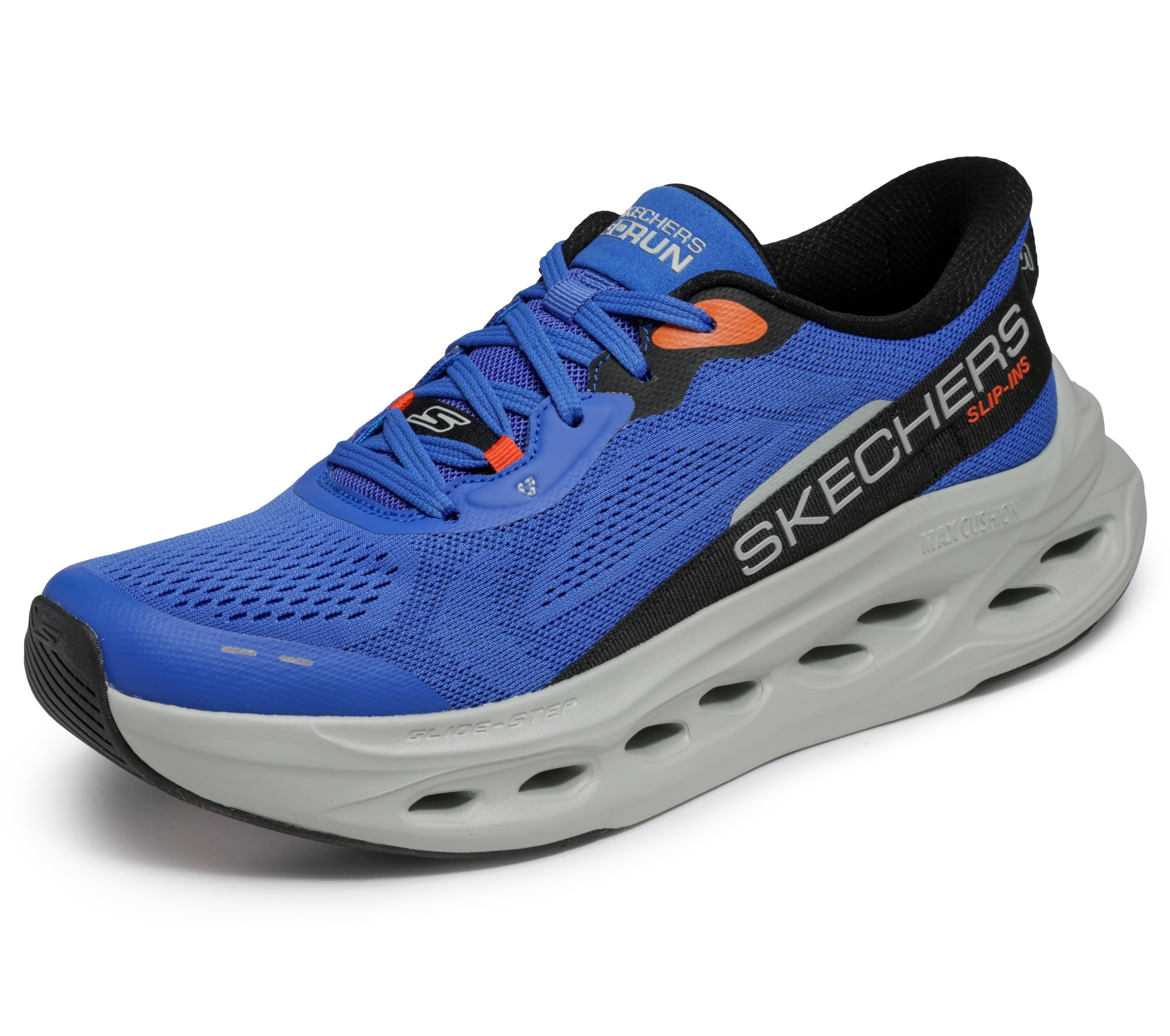
One mall walker calls these better than HOKAs at half the price — that is the cloud-like feel here.
This is the premium end of the Skechers lineup. It uses Glide-Step design (a curved sole that rocks you forward) combined with an Air-Cooled Goga Mat insole (a breathable, cushioned footbed) and a Goodyear Performance Outsole (durable rubber from the tire brand), so you get a durable bottom, a cushioned footbed, and a slight rocking motion that makes each step feel easy. One reviewer who compares them directly to his HOKA running shoes says they are just as comfortable but cost half as much. He also praises them for being feather light, flexible, with great arch support and a perfect heel cup.
The Hands Free Slip-ins design is the same concept as the women’s Skechers, but the Max Cushioning model adds significantly more midsole foam — you can feel it when you land on your heel. Reviewers report no break-in period and zero rubbing or discomfort straight from the box. The main catch is that unlike some other Skechers slip-ons that have purely decorative laces, this pair uses real shoestrings, so you still have to tie them if you want full security. That said, one older buyer says the laces stayed tied all day and did not come loose, which solved his tripping worry.
Why it is a top pick
- Max Cushioning plus Glide-Step gives a cloud-like walking feel so your heel feels soft on every step
- Goodyear Performance Outsole for long-term durability
- Slip-in tech is easy and secure once on
Consider this
- Real shoestrings — not fully hands-free if you need to tighten them
- Premium price point vs other Skechers models
Perfect for: anyone who wants the plushest walking experience in a slip-on — especially if you are on your feet all day and value not bending over to get ready.
Not for you if: you expect fully laceless slip-ons without any tying; these require laces to stay snug.
7. Brooks Women’s Trace 4 Neutral Running Shoe

A sub-8.1-ounce (229.6-gram) running shoe that fits like it was made for your foot — shoppers say the toe box is anything but cramped.
At 8.1 ounces (229.6 grams), the Trace 4 is one of the lightest picks on this list, and it packs a 12mm midsole drop (the height difference between heel and toe), which encourages a heel-first running gait and takes pressure off your Achilles tendon (the band at the back of your ankle). Reviewers love that there is plenty of room at the front of the shoe — one buyer specifically says many running shoes are too narrow and smush the top of her foot, but the Trace 4 does not. The description tags it as “soft and protective,” and buyers confirm it is comfortable right away with no break-in period.
Unlike the Skechers Max Cushioning which is designed for walking with a rocker motion, the Trace 4 is built for road running and everyday runs. A hairstylist who stands for 8 to 9 hours calls them super comfortable due to the memory foam construction and says they are still durable after five months of daily use. The main trade-off is the all-white color — one buyer says they get dirty easily, so she saves them for going out rather than running. Compared to the New Balance 608 V5, the Trace 4 is much lighter and more specialized for forward motion rather than heavy static standing.
The best parts
- Only 8.1 oz (229.6 g) — very light for a cushioned running shoe, so your legs feel less tired
- 12mm drop supports a natural heel-strike gait (landing on your heel first)
- Roomy toe box that does not smush the foot
The downsides
- Light colors show dirt fast, per reviewers
- Designed as a neutral shoe — no extra support for overpronation (foot rolling inward too much)
Reach for this if: you are a road runner or walker who wants a featherlight neutral shoe with a generous toe box and reliable drop measurement.
Heads up: if you need motion control or run on technical trails, look at the Adrenaline GTS 25 instead — the Trace 4 is strictly neutral.
Understanding the Specs
Midsole Drop
This is the height difference measured in millimeters between the heel and the toe of the shoe. A 12mm drop (like on the Brooks Trace 4) encourages a heel-first landing, which many walkers and heel-strikers find comfortable. A lower drop, like 6mm, feels more natural for forefoot runners and mimics barefoot running. For everyday comfortable sneakers, most people do well with a drop between 8mm and 12mm because it takes strain off the Achilles tendon.
Neutral vs Support
A neutral shoe (like the Under Armour Assert 11 or the Brooks Trace 4) gives you flexibility and cushioning but does not correct your foot’s natural rolling motion. Support shoes (like the Brooks Adrenaline GTS 25) have firmer medial posts (denser foam on the inside of the shoe) or guide rails that reduce overpronation — when your foot rolls inward too much. If you have flat feet or get shin splints (pain along the shinbone), you may need a support shoe. If your feet have normal arches, neutral is fine.
FAQ
How do I know if a shoe has enough arch support for me?
What is the difference between a running shoe and a cross trainer for daily comfort?
Do slip-in sneakers stay secure on my feet without laces?
How can I tell if a shoe has a wide toe box before ordering?
What does a 12mm midsole drop actually feel like?
How long should comfortable sneakers last with daily use?
Can I wear running shoes for weightlifting?
What does “neutral” mean for a running shoe?
How do I clean white sneakers without ruining them?
Final Thoughts: The Verdict
For most people, the most comfortable sneakers winner is the Under Armour Charged+ Assert 11 because it delivers a proven Charged+ midsole, lightweight 10.2-ounce build, and genuine all-day comfort at a price that undersells the name brands. If you want a road-running shoe with a roomy toe box and 12mm drop, grab the Brooks Trace 4. And for the plushest slip-in experience without bending over, the Skechers Max Cushioning Glide Step is the pick for maximum cloud-like cushioning.
How We Picked
We do not accept paid placement. Every pick is matched to a real buyer and a real use-case; we do not hands-on test units.
Sources & Methodology
Specifications: manufacturer listings and product documentation. Review insights: verified customer reviews, as of July 2026. Pricing: not shown on this page (it changes often); check the current price via the retailer link.
As an Amazon Associate, WellFizz earns from qualifying purchases. This does not affect which products we feature.

Mo Maruf
I created WellFizz to bridge the gap between vague wellness advice and actionable solutions. My mission is simple: to decode the research and give you practical tools you can actually use.
Beyond the data, I am a passionate traveler. I believe that stepping away from the screen to explore new environments is essential for mental clarity and physical vitality.