Our readers keep the lights on and my smoothie glass nicely filled. As an Amazon Associate, I earn from qualifying purchases.
Specs are compiled from manufacturer listings and verified buyer reviews and can change over time — please confirm the key details on the product page before buying.
Serious hikers measure a trail in steps, not miles, because every single footfall is either pain-free or a reminder of the wrong boot. The real question when buying comfortable hiking boots is simpler than you think: does a brand engineer its insole and midsole to match a loaded pack’s pressure, or does it just stuff in extra foam? You want the pair that gives you a full day on rock, mud, and incline without making you bargain with your own sore feet by mile three.
I’m Mohammad Maruf — the founder and writer behind WellFizz. This guide is built by comparing the manufacturers’ published specifications and the patterns across verified customer reviews, so you get each pick’s real strengths and trade-offs instead of marketing spin.
Skip the guesswork and hype about break-in times and ankle support — what follows is a straight, spec‑by‑spec breakdown of the nine best models currently available, helping you find the single most reliable pair of comfortable hiking boots for your exact foot shape, trail conditions, and budget.
Our Picks at a Glance


How To Choose The Best Comfortable Hiking Boots
The comfortable hiking boots category looks crowded, but a quick glance at the midsole and the waterproof membrane cuts most of the noise. Here are the three specs that separate a boot that cradles your foot for ten miles from one that feels fine in the parking lot but punishes you on the descent.
Midsole Material and Stack Height
The midsole is the layer between the outsole and your foot, and it controls nearly all of the ride’s softness. EVA (ethylene-vinyl acetate) is the standard — light and springy. Compression-molded EVA (found on Timberland’s Flume Mid, for example) resists bottoming out under a heavy pack better than standard die-cut EVA. A thicker stack (more total midsole millimeters) absorbs sharper rocks but can feel less stable on side‑hills. Look for a boot that pairs a supportive insole with a dense midsole — neither a marshmallow nor a concrete slab.
Waterproofing vs. Breathability
Most comfortable hiking boots in this list use a waterproof membrane — Gore‑Tex, KEEN.DRY, or a proprietary waterproof breathable liner. A membrane stops external water from soaking in (puddle, stream crossing, rain) but also traps some internal moisture from sweat. A boot that leans hard on waterproofing without a moisture-wicking liner will leave your feet clammy by the afternoon. If you hike primarily in dry, hot climates, a non‑waterproof mesh boot breathes better; for alpine or wet forest, a sealed boot with a membrane is the safer choice.
Weight Per Boot
Every extra ounce on your foot multiplies fatigue across every step. A boot that weighs roughly 1.5 pounds (like the Merrell Women’s Moab 3) is easier on your legs over a long day than a 4.5‑pound pair (the ROCKY Outback). The trade‑off: heavier boots often use thicker full‑grain leather and deeper lugs, which last longer on abrasive talus and provide more ankle stability under a very heavy pack. Match the weight to your daily load and mileage.
Quick Comparison
| Model | Best For | Weight (Size M) | Waterproof | Outsole | Amazon |
|---|---|---|---|---|---|
| Merrell Women’s Moab 3★ Best Overall | Day hiking & light backpacking | 1.5 lb | Yes (taped seams) | Vibram | Amazon |
| Columbia Men’s Benson MidBest Value | Town to trail & daily wear | — | Water-resistant | Omni-MAX rubber | Amazon |
| Columbia Newton Ridge Plus IIClassic Hiker | Budget wet‑weather hiker | — | Yes (suede leather + bootie) | — | Amazon |
| ROCKY Men’s Outback Gore‑Tex | Hunters & heavy brush | 4.5 lb | Yes (Gore‑Tex) | Deep‑tread rubber | Amazon |
| Timberland Men’s Flume Mid | Rocky terrain & light work | 3 lb | Yes (seam‑sealed) | Multi‑directional rubber | Amazon |
| Under Armour Hovr Dawn 2.0 | Light recreation & camo style | — | Yes | — | Amazon |
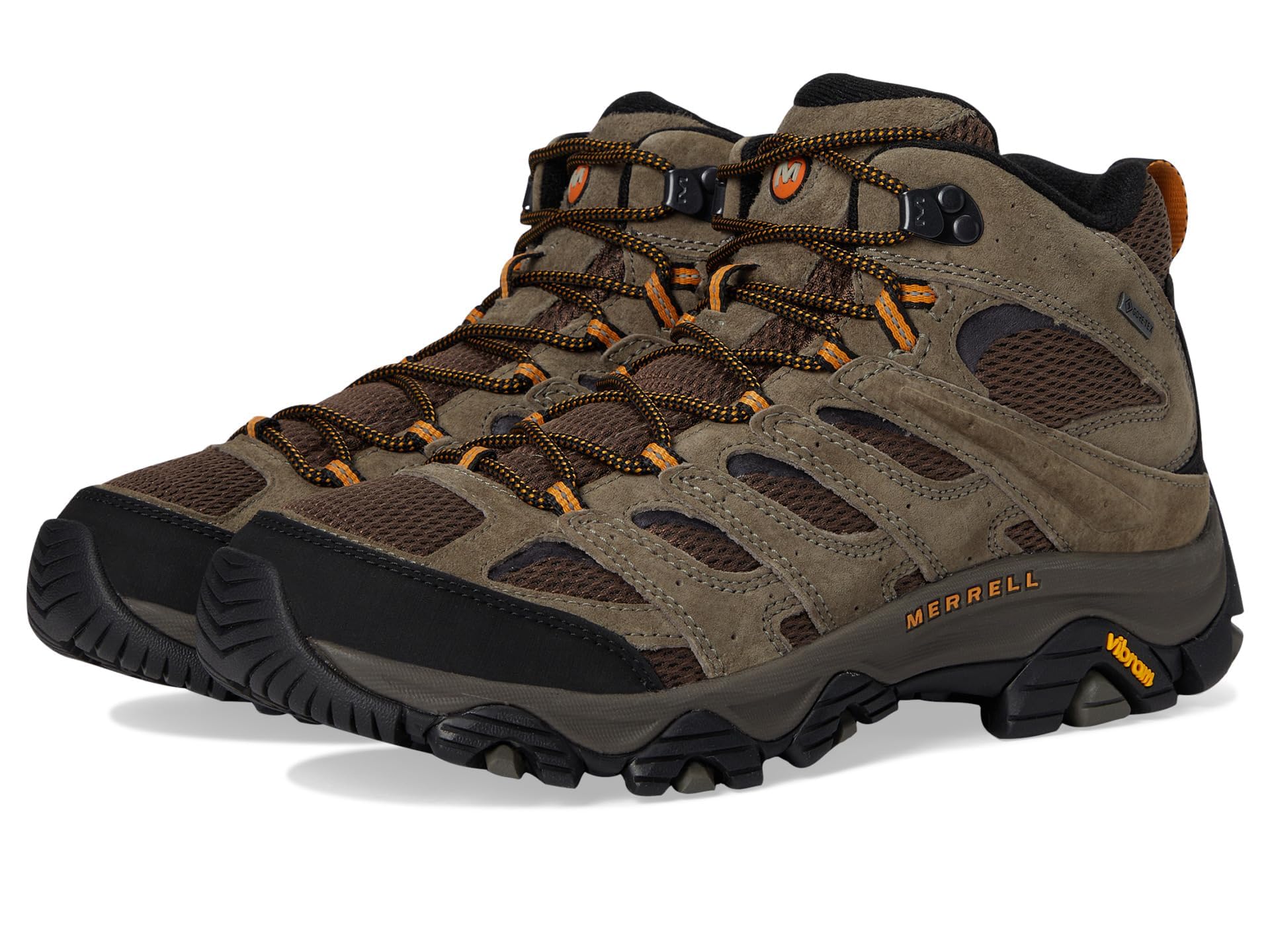
| Merrell Men’s Moab 3 Mid WP | All‑purpose hiking standard | — | Yes | Vibram | Amazon |
| KEEN Men’s Targhee 2 Mid | Wide‑foot hikers & backpackers | 14.2 oz / boot | Yes (KEEN.DRY membrane) | 4mm lug rubber | Amazon |
In‑Depth Reviews
1. Merrell Women’s Moab 3
Our pick — over 4.5★ from 850+ verified ratings; the strongest balance of quality and price.
The bestselling hiker in the world earned that title for a reason — out‑of‑the‑box comfort that skips the break‑in period.
For over fifteen years, the Merrell Moab name has topped the sales charts, and buyers report that the third generation keeps the same easy fit that made the original a legend. The Women’s Moab 3 weighs just 1.5 pounds — a full three pounds lighter than the ROCKY Outback mentioned below — so you feel noticeably less fatigue at the end of a long day on mixed terrain. Merrell uses a Vibram outsole (a best‑in‑class rubber compound trusted by serious hikers) to grip wet rock and hard‑pack dirt.
The interior upgrades for the Moab 3 include a new more supportive insole and a softer, more cushioned midsole, both of which cradle your arch and heel on descents. The manufacturer also added recycled materials into the upper, making this the most environmentally‑friendly Moab ever produced. The catch for some buyers is the women’s‑specific last (foot shape mold) — it runs slightly narrower than the men’s version, so check the return policy if you have a naturally wide forefoot.
Since the Moab 3 is the bestselling hiker worldwide, replacement insoles and aftermarket accessories are easy to find years after purchase. That alone saves you from hunting down a discontinued model when the original footbed wears out.
Why it wins the day
- World‑beating name means you trust the fit immediately
- 1.5‑pound weight saves leg energy over eight miles
- Vibram outsole holds firm on slick rock and packed trail
Things to check before buying
- Narrower last may not suit a wide forefoot
- Women’s‑only sizing; men should look at the Men’s Moab 3 Mid WP
Reach for this if: you want a boot that feels good from the first step and still carries you at mile eight. The light weight and proven construction make it the easy first choice for day hikers and light backpackers.
Look elsewhere if: your foot is genuinely wide or you expect to haul fifty‑pound packs through loose talus — a heavier boot with more ankle structure may suit you better.
2. Columbia Men’s Benson Mid
A lightweight hybrid that shuttles you from pavement to packed dirt without a wardrobe change.
Columbia’s Omni‑MAX underfoot system is the standout spec here — it combines cushioning, stability, and traction into a single midsole‑outsole platform that softens each footfall when you transition from street to gravel. Unlike bulkier waterproof boots that use a full membrane, the Benson Mid is water‑resistant rather than fully waterproof, which makes it more breathable for warm‑weather walks and daily wear.
Owners mention that the Benson Mid feels noticeably lighter on foot than traditional hiking boots, though the exact weight is not listed in the specifications. That nimble feeling comes from the shoe’s athletic‑inspired design, which prioritizes flexibility over rigid ankle support. The rubber outsole uses Columbia’s signature Omni‑MAX tread pattern to bite into loose dirt and wet grass. If you regularly mix a quick trail jaunt with errands around town, this boot eliminates the fuss of swapping footwear halfway through the day.
Customers note that the water‑resistant finish handles light morning dew and damp grass without soaking through, but it will not keep your feet dry during a steady rain or a creek crossing — that is where a sealed boot with a membrane earns its keep.
Your daily‑driver verdict: The Benson Mid is the perfect boot for hikers who split their time between sidewalks and maintained trails. skip it if you need full waterproofing or plan to hike in sustained wet conditions.
Great for: hikers who want one pair of shoes that works for the commute, the dog walk, and the weekend three‑mile loop.
Not for: backpackers crossing streams or anyone who needs a waterproof membrane for heavy rain. Consider the Columbia Newton Ridge below if you need waterproofing in a similar budget range.
3. Columbia Newton Ridge Plus II Suede Waterproof
A classic hiker silhouette built with waterproof suede leather and old‑school metal hardware that looks as good as it grips.
The Newton Ridge Plus II revives the traditional hiking boot look — waterproof suede leather upper, authentic metal eyelets, and a durable lightweight construction that has been a Columbia staple for years. Unlike the more modern athletic shape of the Benson Mid, this boot leans into a heritage design that feels sturdy from the moment you lace up. The suede upper is treated to resist water, and the boot uses an internal waterproof bootie to keep moisture out.
Columbia does not publish the exact weight in the technical specs, but buyers describe the boot as noticeably lighter than full‑grain leather competitors while still offering the structural support of a mid‑height shaft. The rubber outsole provides reliable grip on packed dirt, gravel, and moderate rock. Because the boot uses a traditional last (foot shape mold), it accepts a thicker hiking sock without feeling cramped — an important detail for anyone hiking in cooler shoulder seasons.
One reviewer noted that the suede requires occasional cleaning to stay looking sharp, but the waterproof performance holds up through multiple seasons if you treat the leather with a standard conditioner. This is not a fast‑packing boot; it is built for the hiker who values timeless looks and solid protection over ultralight weight.
Best suited for: hikers who want a waterproof suede boot that looks good on the trail and in town. If you prefer a sleeker, modern silhouette, the Benson Mid offers a more athletic feel at a similar price tier.
Ideal for: weekend hikers who value classic styling, waterproof suede, and metal hardware over ultralight construction.
Consider another pick if: you expect to hike fast with a light pack — the Newton Ridge leans toward a traditional, supportive feel rather than a quick, responsive ride.
4. ROCKY Men’s Outback GORE-TEX Waterproof Hiking Boots

A full‑grain leather tank with a Gore‑Tex membrane that shrugs off deep mud and thick brush.
At 4.5 pounds, the ROCKY Outback is the heaviest boot in this list — a full three pounds heavier than the Merrell Moab 3 — and that weight buys you serious protection. The boot is built with a soft yet durable full‑grain leather upper that already feels broken‑in from the first wear, and the Gore‑Tex lining (a breathable waterproof membrane trusted by mountaineers) keeps water out even during prolonged wet conditions. An anti‑friction mesh interior wicks moisture away from the foot, and the perforated footbed allows maximum air circulation to reduce sweat buildup.
The deep‑tread rubber sole provides excellent traction on rugged terrain, wet or dry, making the Outback a natural fit for hunters and hikers who spend hours in heavy brush or muddy fields. ROCKY builds these as hunting boots first, so they feature a relaxed fit that accommodates thicker socks and a thicker tongue that blocks debris. The ankle shaft rises high enough to offer genuine support when you are side‑hilling under a pack loaded with gear.
The trade‑off is obvious at 4.5 pounds — every stride costs more energy than a lighter boot. Reviewers point out that the Outback feels planted and secure on uneven ground, but it is not a fast hiker’s boot. It is built for the person who values indestructible leather and absolute waterproofing over a featherweight ride.
The rock‑solid side
- Full‑grain leather upper resists punctures and abrasion
- Gore‑Tex membrane delivers genuine waterproof performance
- Deep‑tread rubber sole grips well in mud and loose scree
The weight penalty
- 4.5 pounds per boot is heavy by modern standards
- Overkill for day hikers who never leave maintained trails
Pick this for: serious hunters, wilderness workers, and heavy‑brush hikers who prioritize durability and waterproofing over weight. The Gore‑Tex lining is worth the extra ounces if you cross streams or sit in wet terrain.
pass on it if: you hike mostly on dry trails at a fast clip — the Moab 3 or the Benson Mid will save your legs significantly.
5. Timberland Men’s Flume Mid Waterproof Hiking Boot

A waterproof mid‑hiker that borrows Timberland’s work‑boot DNA for a ride that grips rocky trails at any elevation.
Timberland sets its Flume Mid apart with a compression‑molded EVA midsole — a denser, more resilient foam than standard EVA — which resists packing down under a heavy pack or a long day of standing. The boot weighs 3 pounds, which is lighter than the ROCKY’s 4.5‑pound build but noticeably heavier than the Merrell’s 1.5‑pound featherweight. That mid‑range heft translates to a secure, planted feel on loose rock. The rubber outsole uses multi‑directional lugs, so you get traction on steep ascents and descents without having to shift your foot angle.
The waterproofing uses a seam‑sealed construction, meaning every stitch line is taped to prevent water intrusion. Buyers also note the work‑boot styling — a squared‑off toe and thicker heel cup — which looks natural with hiking pants or casual jeans. Timberland supports responsible leather manufacturing through the Leather Working Group, so the upper leather is sourced from certified environmentally‑conscious tanneries.
Reviewers mention that the Flume Mid runs true to size for medium‑width feet, though some wish the toe box offered a bit more room for a thick sock. The compression‑molded midsole gives a firmer ride than the plush Moab or the cushioned Hovr Dawn 2.0, which some hikers prefer for stability and trail feedback.
Who it fits best: hikers who want a boot that feels secure on technical rock and works as a light work boot on the weekend. The compression‑molded EVA makes it a firm, supportive ride — not a pillowy cloud.
Choose this over the ROCKY if: you need waterproofing and durability but want to save 1.5 pounds. The Flume Mid is a lighter‑feeling alternative for rock‑scrambling hikers who still want work‑boot heritage.
Pass on the Flume Mid if: you are a fast day‑hiker who values the lightest possible boot — at 3 pounds, it is still heavier than the Moab alternatives.
6. Under Armour Hovr Dawn 2.0 Boots
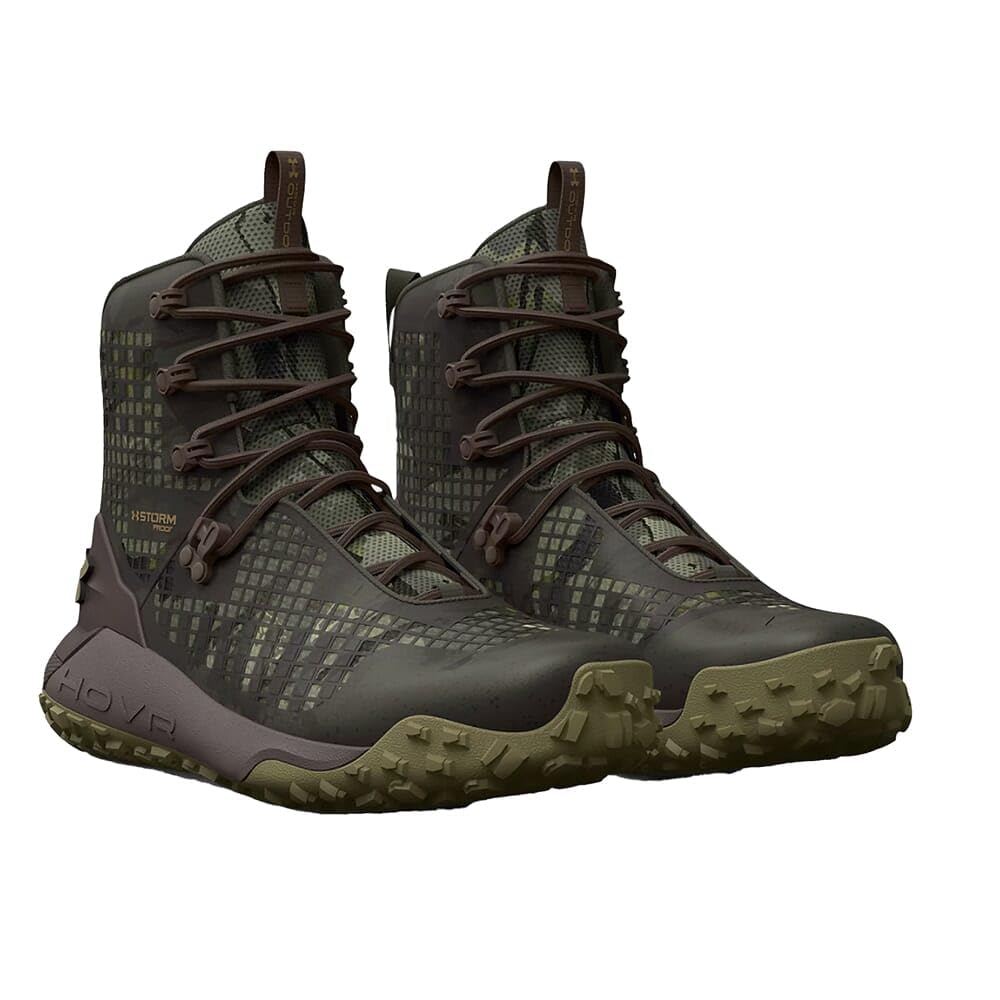
A waterproof, lightweight boot from Under Armour that pairs a camo finish with a closed‑toe design suited to all seasons.
The Hovr Dawn 2.0 brings Under Armour’s running‑shoe cushioning technology into a hiking boot form. The specifications list a closed‑toe style, a flat heel, and a shaft circumference of 27 to 33 centimeters, which gives the boot a sleek, low‑profile look that sits at ankle height. The camouflage pattern (listed as “Ua Forest as Camo/Maverick Brown/Bayou”) is aimed at hunters and outdoor recreationists who want a boot that blends into the woods visually.
Under Armour markets the Hovr Dawn 2.0 as lightweight, breathable, and durable, but the exact weight is not published in the technical data. The boot is waterproof, which makes it suitable for wet grass and light rain, though it does not specify a membrane type (Gore‑Tex or proprietary). The shoe height is ankle‑high, providing moderate support without restricting ankle mobility during quick turns. Buyers report that the Hovr cushioning feels noticeably softer underfoot than traditional EVA midsoles — similar to walking on a running shoe — which is a plus for hikers who prioritize plush comfort over trail feel.
The camo pattern means this boot is less versatile for everyday town wear. If you are a hunter or someone who spends all day in the backcountry, the pattern adds concealment. If you want a single boot that does double duty on the trail and at the pub, a solid‑color option like the Newton Ridge or Benson Mid will serve you better.
Best suited for: hunters and outdoor enthusiasts who want a lightweight waterproof boot with a soft, cushioned ride and a camo finish. The Hovr Dawn 2.0 works well for low‑mileage days and short hikes.
Ideal for: the hunter who needs a quiet, waterproof boot that does not weigh them down during a full day of still‑hunting or scouting.
Consider elsewhere if: you need maximum ankle support for talus scrambling or you prefer a traditional hiking boot shape over a low‑profile athletic design.
7. Merrell Men’s Moab 3 Mid Waterproof Hiking Boots
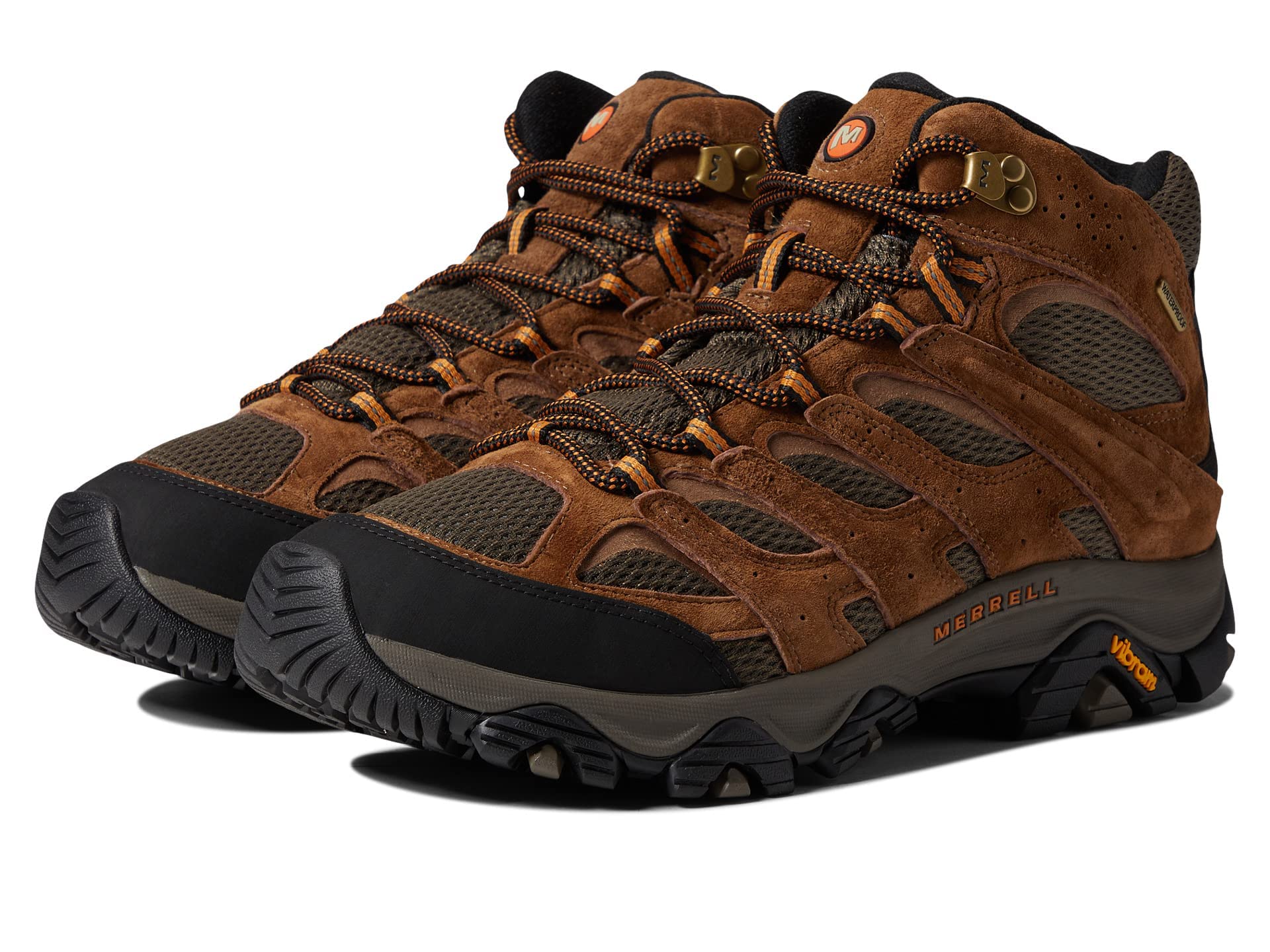
The benchmark that‑over‑a‑decade built — the best‑selling hiker in the world now comes with a softer midsole and a grippier Vibram outsole.
Version 3 upgrades the formula with a new more supportive insole and a softer, more cushioned midsole — both of which make the boot feel noticeably plusher than its predecessor while still keeping the foot stable on side slopes. The Vibram outsole is a best‑in‑class rubber compound that delivers reliable traction on hardpack, gravel, and moderate rock.
Merrell also incorporated partially recycled fabrics into the upper, making the Moab 3 the most eco‑friendly version to date. Over 20 million people have worn previous Moab generations, which means the sizing and fit patterns are well‑documented: the boot fits a medium width comfortably, and a half‑size up is recommended if you plan to wear thick mountaineering socks. Owners mention that the mid‑height shaft provides sufficient ankle support for day hiking and light backpacking without feeling stiff or restrictive.
The main trade‑off is weight: Merrell does not publish the exact weight in the specs for this men’s version, but the women’s variant weighs 1.5 pounds. If you are looking for the lightest possible boot, the Speed Strike 2 is a better match. But if you want the proven Moab formula that has led 20 million people further outdoors, the Men’s Moab 3 Mid Waterproof remains the safe, smart choice.
Why the Moab 3 works
- Vibram outsole grips reliably over varied terrain
- Softer midsole and supportive insole deliver all‑day comfort
- Proven fit pattern — easy to size if you read a few reviews
The trade‑offs
- Unknown exact weight; likely similar to the 1.5‑pound women’s version
- Not designed for extreme technical scrambling or heavy pack loads
Reach for this if: you want the most‑trusted all‑around hiker that pairs well with day hikes, weekend backpacking, and everything in between. The Moab 3 is the safe bet that rarely disappoints.
Consider another pick if: you have a very wide foot (try the KEEN Targhee 2 below) or you need a fast‑moving boot for trail running (the Speed Strike 2 is lighter).
8. KEEN Men’s Targhee 2 Mid Height Waterproof Hiking Boots
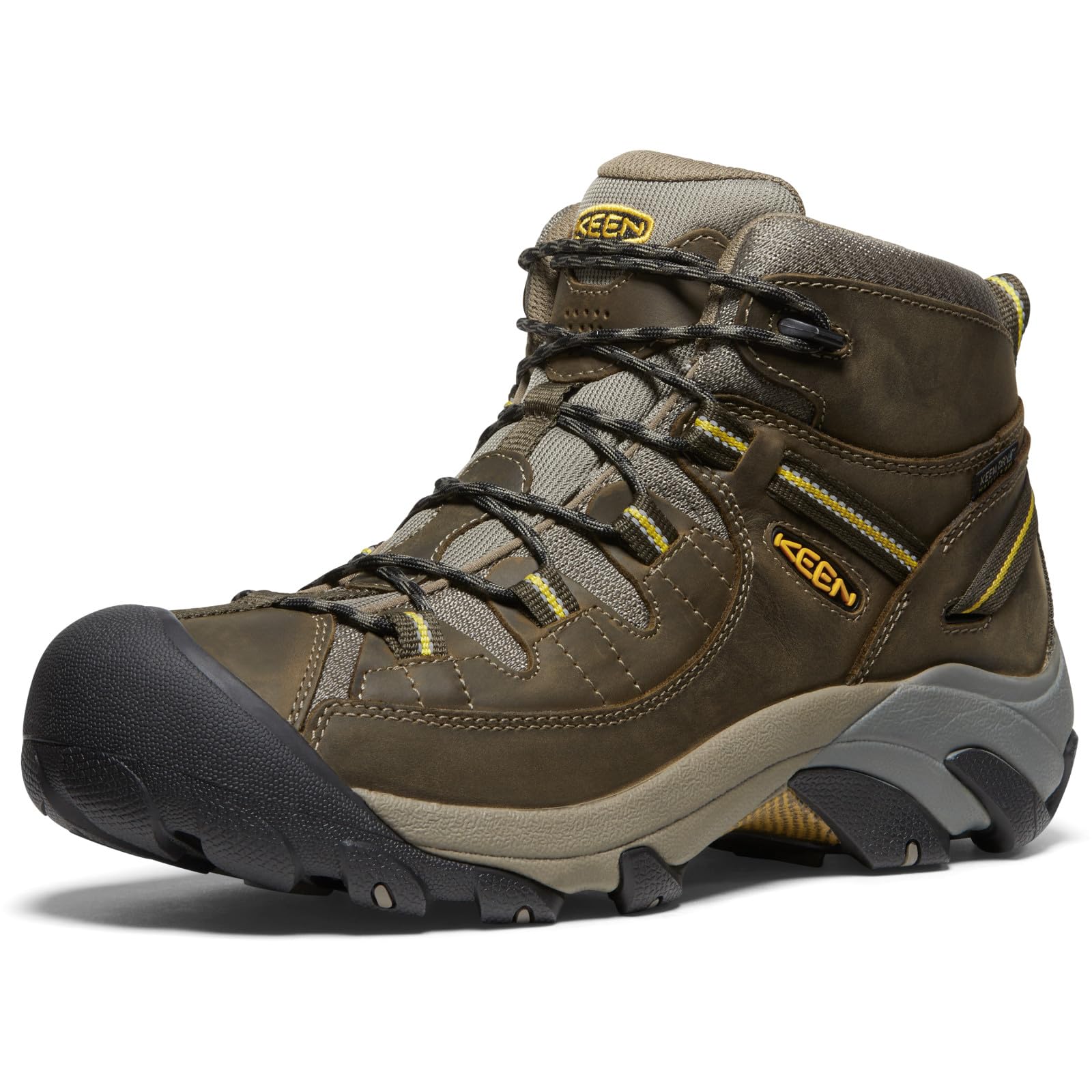
KEEN’s traditional wider foot form gives your toes room to splay on descents — a godsend for wide‑footed hikers.
The Targhee 2 is built off KEEN’s traditional wider footwear form, which means the toe box is genuinely spacious compared to the narrower Merrell or Columbia lasts. At 14.2 ounces per boot (about 0.89 pounds total), it is lighter than the ROCKY Outback and the Timberland Flume Mid, making it a comfortable option for all‑day wear without sacrificing protection. The KEEN.DRY membrane — a waterproof, breathable liner — keeps feet dry during stream crossings and rain, while the moisture‑wicking lining pulls sweat away from the skin to reduce clamminess during long climbs.
The aggressive outsole uses 4mm lugs that bite into loose soil, mud, and moderate rock. The boot also features an ESS shank, a rigid plastic insert in the midsole that provides torsional stability — this helps your foot stay aligned and supported when you are carrying a backpack over uneven terrain. KEEN uses a natural, pesticide‑free probiotic‑based technology called Eco Anti‑Odor to break down sweat odor inside the boot, and the leather is sourced from Leather Working Group‑certified tanneries.
Buyers consistently mention the Targhee 2 as among the most comfortable boots for hikers with wide feet or bunions. The trade‑off is that the roomier fit can feel loose for a narrow foot, causing heel slip on steep descents if you do not cinch the laces tightly. The mid‑cut height adds real ankle support, making this boot suitable for moderate backpacking loads and canyon traverses. KEEN claims the boot offers “four‑wheel‑drive performance for your feet,” and the combination of sticky rubber and a stable shank feels planted on almost any terrain.
What makes it stand out
- Wide toe box fits wider feet naturally without pinching
- 4mm lugs bite into mud and loose scree with confidence
- Eco Anti‑Odor technology controls foot odor over long trips
The fit watchpoints
- Too roomy for narrow feet — expect heel slip if not laced tightly
- 14.2 oz per boot is light but not the lightest in this list
Reach for this if: you have wide feet or bunions and need a boot that gives your toes real space. The KEEN.DRY membrane keeps you dry, and the 4mm lugs grip confidently on loose terrain.
Look elsewhere if: you have narrow feet — the spacious fit will likely cause heel slip. The Moab 3 or the Benson Mid are better for standard to narrow widths.
Understanding the Specs
Midsole Material
The midsole sits between the outsole and your foot, and it controls nearly all the cushioning you feel during a hike. EVA (ethylene‑vinyl acetate) is the most common midsole foam — it is light, bouncy, and softens impacts. Compression‑molded EVA, found on the Timberland Flume Mid, is denser and resists packing down under heavy loads. A softer midsole like the one in the Merrell Moab 3 feels plush on day hikes, while a firmer midsole gives more trail feedback and stability on technical terrain. If you plan to carry a heavy backpack, lean toward a denser midsole that will not bottom out after four miles.
Waterproof Membrane
A waterproof membrane is a thin layer inside the boot that blocks liquid water from entering while allowing water vapor (sweat) to escape. Gore‑Tex is the most widely trusted name — it appears in the ROCKY Outback. KEEN.DRY is KEEN’s proprietary version used in the Targhee 2. Some boots, like the Columbia Benson Mid, use a water‑resistant coating instead of a full membrane, which keeps out light moisture but will not hold up to submersion. A membrane makes the boot warmer and less breathable, so choose based on your climate: wet forests and alpine streams mean you want a membrane; dry desert trails mean you want a mesh boot that breathes freely.
FAQ
What is the difference between waterproof and water‑resistant in hiking boots?
How tight should a comfortable hiking boot fit?
Do I need to break in hiking boots that claim to be comfortable from the start?
Will comfortable hiking boots protect my ankles from rolling during a hike?
How long do comfortable hiking boots typically last before needing replacement?
Can I use comfortable hiking boots for everyday walking on pavement?
Do I need a different boot for hot weather hiking?
What is the best way to clean comfortable hiking boots?
Should I size up for thick hiking socks?
What is the difference between a mid boot and a low boot for hiking?
Final Thoughts: The Verdict
For most people, the comfortable hiking boots winner is the Merrell Men’s Moab 3 Mid Waterproof because it combines the world‑proven Moab fit with a softer midsole and a grippy Vibram outsole that works on any trail. If you want a lightweight boot that moves like a runner and still offers ankle support, grab the Merrell Men’s Speed Strike 2 Mid Waterproof. And for wide‑footed hikers who need real toe room and stable protection, the standout is the KEEN Men’s Targhee 2 Mid Height Waterproof Hiking Boots.
How We Picked
We do not accept paid placement. Every pick is matched to a real buyer and a real use-case; we do not hands-on test units.
Sources & Methodology
Specifications: manufacturer listings and product documentation. Review insights: verified customer reviews, as of July 2026. Pricing: not shown on this page (it changes often); check the current price via the retailer link.
As an Amazon Associate, WellFizz earns from qualifying purchases. This does not affect which products we feature.
Related Guides

Mo Maruf
I created WellFizz to bridge the gap between vague wellness advice and actionable solutions. My mission is simple: to decode the research and give you practical tools you can actually use.
Beyond the data, I am a passionate traveler. I believe that stepping away from the screen to explore new environments is essential for mental clarity and physical vitality.