Our readers keep the lights on and my smoothie glass nicely filled. As an Amazon Associate, I earn from qualifying purchases.
Specs are compiled from manufacturer listings and verified buyer reviews and can change over time — please confirm the key details on the product page before buying.
If your work day pounds your feet into submission, the wrong boot turns every step into a reminder you should have bought better. The real difference between a boot you tolerate and one you forget you are wearing depends on the insole, the weight, and how much break-in time it demands before it stops fighting back.
I’m Mohammad Maruf — the founder and writer behind WellFizz. This guide is built by comparing the manufacturers’ published specifications and the patterns across verified customer reviews, so you get each pick’s real strengths and trade-offs instead of marketing spin.
Whether you stand on concrete, walk miles of warehouse floor, or work outdoor jobs in rough weather, finding the right pair means knowing which safety features and cushioning systems actually deliver. Here is your no-fluff guide to the best comfort safety boots that keep you moving without the pain.
Our Picks at a Glance
How To Choose The Best Comfort Safety Boots
The single biggest mistake buyers make is picking a boot by its brand name or safety rating alone, ignoring the weight and the insole. A heavy steel-toe boot with a thin, flat insole will wreck your knees and back by mid-shift, even if it passes every safety standard. Here is what actually matters.
Toe Protection: Steel vs Composite vs Alloy
Steel toes are the toughest and cheapest, but they conduct cold and heat and add noticeable weight. Composite toes (made from materials like Kevlar, carbon fiber, or plastic) are lighter and do not conduct temperature, so your feet stay warmer in winter. Alloy toes (aluminum or titanium) are the lightest of the three and meet the same safety standards, but they cost more. For all-day comfort, composite or alloy toes are the smarter pick if your job does not demand the absolute crush protection of steel.
Cushioning and Support: The Real Comfort Engine
Look for a removable cushioned insole (often EVA or polyurethane foam) and an anti-fatigue midsole that absorbs shock and returns energy with each step. A boot that weighs under 20 ounces per shoe (around 570 grams) will noticeably reduce leg fatigue over a 10-hour day. Padded collars and moisture-wicking linings also cut down on rubbing and blisters during break-in.
Sole and Traction: Where You Meet the Ground
A wedge sole provides a flat, stable platform that distributes weight evenly — ideal for smooth concrete like warehouses and workshops. Lugged outsoles with deep treads are better for mud, gravel, and uneven outdoor terrain. Slip-resistant rubber outsoles are essential if you work around oil, water, or grease. Check for an ASTM F2913-24 slip-resistance rating if slippery floors are your daily reality.
Quick Comparison
| Model | Best For | Weight | Toe Type | Waterproof | Amazon |
|---|---|---|---|---|---|
| Timberland PRO Boondock 6″★ Best Overall | Heavy outdoor work | 4.5 lbs / pair | Composite | Yes | Amazon |
| NORTIV 8 Metrostrike-NanoBest Value | All-day walking on hard floors | Lightweight | Composite | No | Amazon |
| Moc Toe Work Boots (Safety Loong) | Budget value, classic style | — | Steel / Soft | Water-resistant | Amazon |
| Wolverine Floorhand | Wet environments, value | — | Steel | Yes | Amazon |
| SUREWAY Slip On | Quick on/off station boots | Lightweight | Composite / Soft | Water-resistant | Amazon |
| Timberland PRO Powertrain Alloy Toe | Light athletic work | ~501 g / shoe | Alloy | Yes | Amazon |
| KEEN Utility Kenton Mid | Light-duty warehouse | 18.3 oz / shoe | Composite | No | Amazon |
In‑Depth Reviews
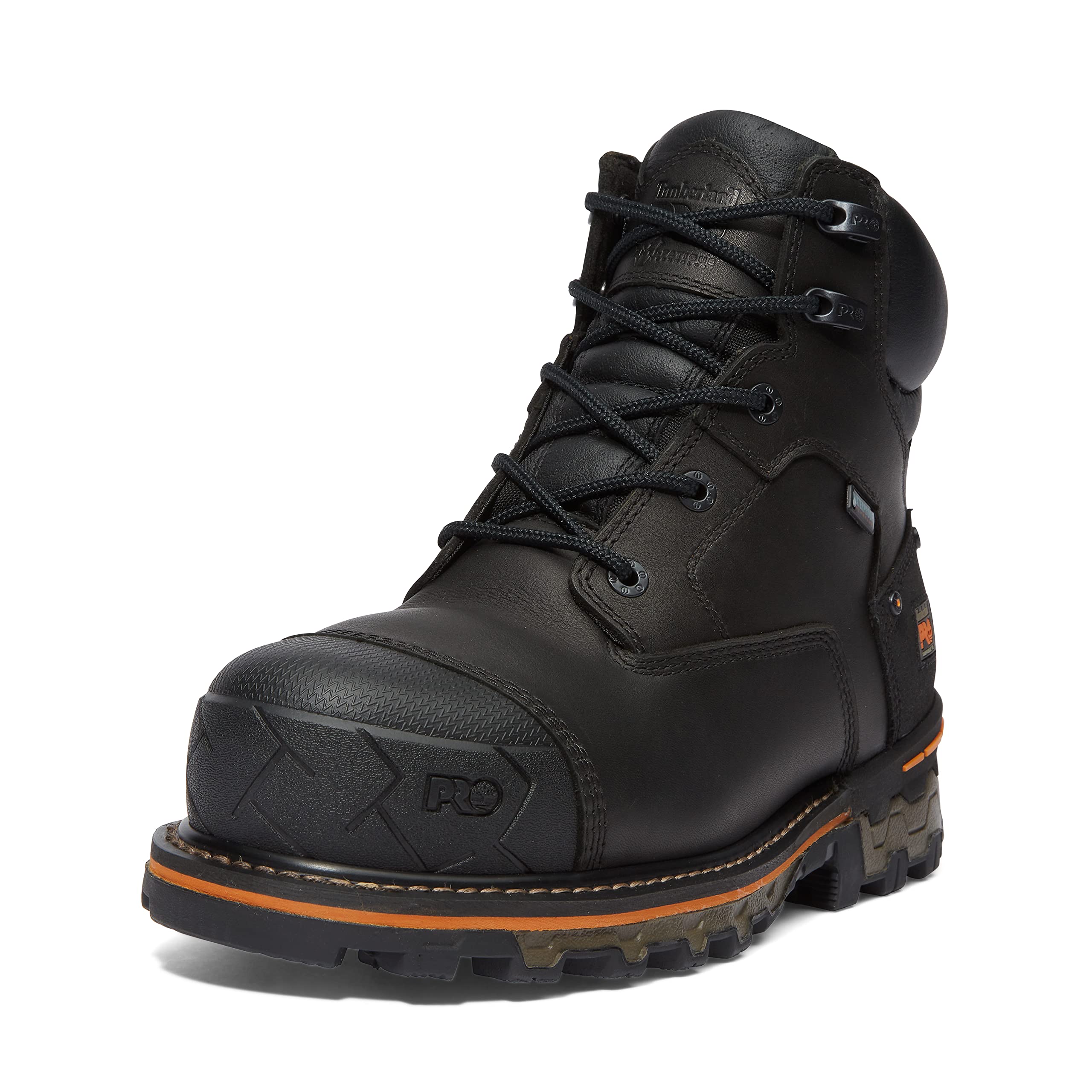
1. Timberland PRO Men’s Boondock 6 Inch Composite Safety Toe Waterproof Industrial Work Boot
Our pick — 4.5★ from 950+ verified ratings; the strongest balance of quality and price.
The waterproof workhorse that marine construction guys trust for years.
Your feet stay dry, safe, and warm on wet job sites — that is the point of the Timberland PRO Boondock 6″. The composite toe (a non-metal safety cap that does not conduct cold or heat, unlike a steel toe) keeps your toes protected without turning into ice blocks in cold weather. A reviewer working in marine construction confirmed the waterproof leather upper holds up in water very well. Other buyers report the boot lasted 2 years without a leak and stayed comfortable through snowy days.
At 4.5 pounds for the pair, these are noticeably heavier than the NORTIV 8 or the KEEN Kenton. Some owners mention they feel a little bulky. That weight is the trade-off for the rugged waterproof build and a durable outsole that survives gravel, mud, and wet concrete. If your day involves standing in water or walking rough outdoor terrain, the protection here beats the lighter options in this list.
Built to Last
- Genuine waterproof protection — feet stay dry in snow and puddles
- Composite toe meets safety standards without the cold-conducting downside of steel
- Durable leather and construction that customers note lasting over 2 years of hard use
The Weight to Know
- Heavier than most boots here — not ideal if you hike miles on concrete
- Some buyers mention they feel bulky, especially around the toe box
Reach for this if: you work outdoors in wet conditions and need a boot that survives years of abuse.
Look elsewhere if: you cover 10+ miles a day on hard flat floors — the weight will tire your legs faster than a lighter pair.
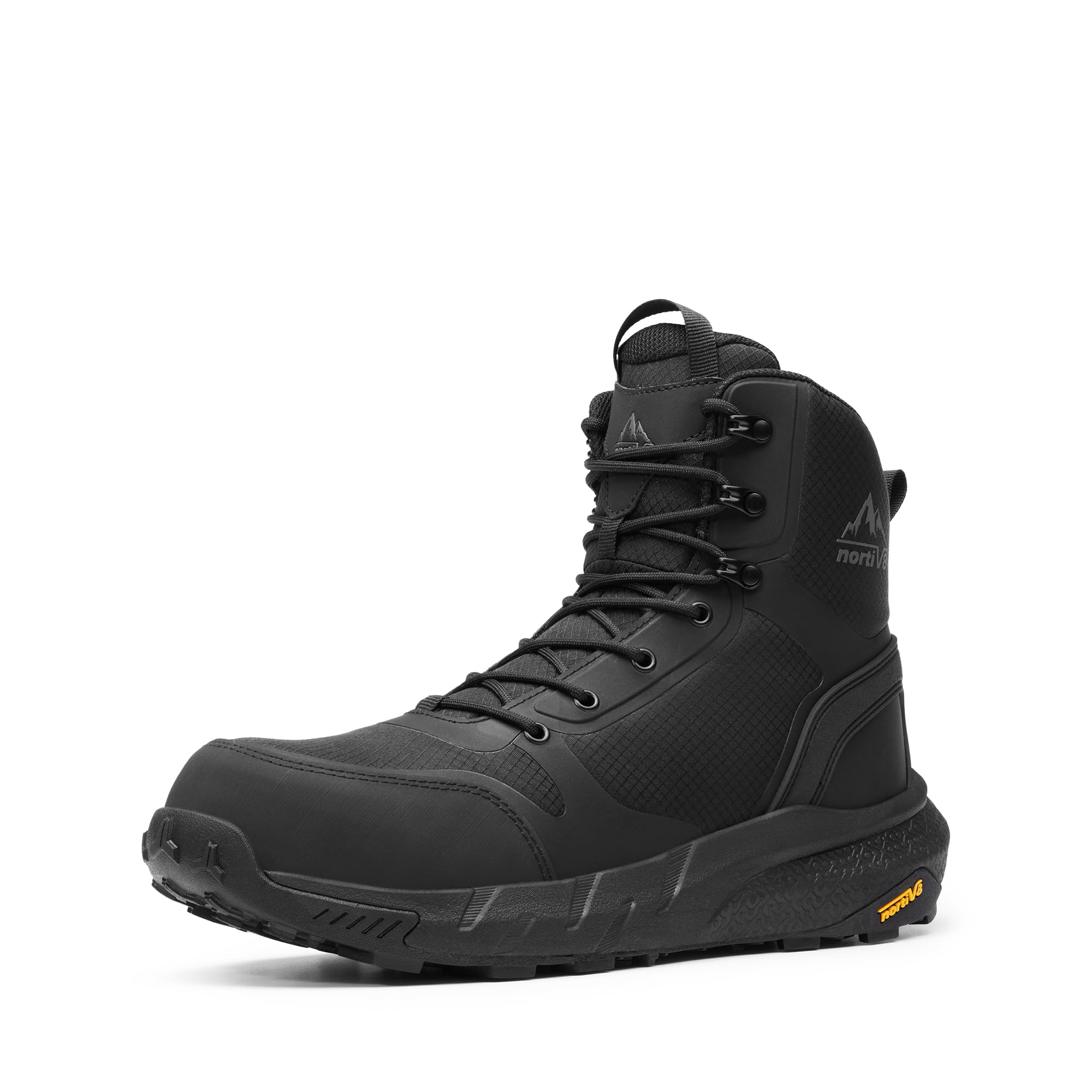
2. NORTIV 8 Men’s Composite Toe Work Boots – 8” Lightweight ASTM F2412-24 & ASTM F2913-24, Metrostrike-Nano
One 42-year veteran calls it the most comfortable boot he has ever worn — and hundreds of buyers agree.
The NORTIV 8 Metrostrike-Nano delivers step-in comfort with zero break-in, according to multiple buyers. One reviewer who has worn work boots for 42 years said he had never felt a pair this good on his feet, describing the insoles as like walking on a memory foam mattress. The composite toe meets ASTM F2412-24 (impact and compression) and ASTM F2913-24 (slip resistance) standards, so you are not sacrificing protection for that plush feel.
The catch? These are not waterproof. A reviewer noted that walking through wet grass after heavy rain caused moisture to leak onto his socks. Compared to the Timberland PRO Boondock above, these trade waterproofing for a much lighter feel and instant comfort. That makes them a better fit for dry indoor conditions like a warehouse or assembly line.
Why Buyers Love It
- Zero break-in — reviewers point out they feel already broken in from the first wear
- Very lightweight compared to traditional work boots, reducing leg fatigue
- Meets both impact/compression (F2412-24) and slip-resistance (F2913-24) standards
- Side zipper makes on/off fast and easy
Honest Limits
- Not waterproof — wet grass and puddles will soak through
- Some buyers question long-term durability compared to pricier brands
Pick this for: dry, indoor jobs where you log miles on concrete and want a boot that feels plush from day one.
skip it if: you work in rain, mud, or standing water — you need a waterproof boot like the Timberland PRO Boondock instead.
3. Moc Toe Work Boots for Men Waterproof Soft/Steel Toe Comfortable Full Grain Leather, 6″ Workboots

Full-grain leather and a wedge sole that make this look like a premium boot without the premium price.
The rich reddish-brown full-grain leather and the solid, flexible wedge sole (a flat outsole that spreads your weight evenly) catch your eye first. Shoppers say it feels like walking on pillows. One reviewer compared the quality directly to Timberlands costing three times as much. The boot comes with a steel toe option for maximum protection or a soft toe for lighter duty. The removable insole lets you swap in your own orthotic if the stock cushioning is not enough.
Fit varies by foot shape. One reviewer noted discomfort after a few hours of wear, with pain concentrated on the smaller toes — though the same buyer noted the boot was remarkably comfortable at first. Wide-footed buyers report the boot fits well despite not offering explicit wide sizing. Try them indoors first before committing to a full shift.
What Stands Out
- Full-grain leather upper at a price far below typical premium moc toes
- Solid, flexible wedge sole that distributes weight evenly on flat surfaces
- Removable insole lets you customize the cushioning
- Water-resistant build keeps light moisture out
What to Watch
- Some buyers develop discomfort in the toe area after a few hours — fit may not suit all foot shapes
- Not a true waterproof boot for heavy rain or standing water
Best suited for: light construction, warehousing, or casual work settings where you want a traditional moc toe look without spending +.
pass on it if you need guaranteed waterproofing or a boot that fits narrow feet perfectly.
4. Wolverine Floorhand Waterproof Steel-Toe 6″ Work Boot

A classic American work boot that locks water out without locking your wallet away.
The Wolverine Floorhand delivers honest waterproofing at a price that undercuts most competitors. A buyer who works around extremely hot steam water confirmed he can spray these with a strahman hose (a high-pressure hot-water cleaning hose) and nothing gets through. The steel toe provides solid impact protection, but it adds weight and conducts cold — your feet will feel the chill faster than in a composite-toe boot. Buyers also note the boot is stiff for the first couple of weeks and requires a real break-in period before it becomes comfortable for a 12-hour shift.
Compared to the NORTIV 8 which offers instant comfort but no waterproofing, the Floorhand demands patience but rewards you with genuine wet-weather protection. Several reviewers mention the boot runs large: one buyer who normally wears size 10 found that size 9.5 fit perfectly. Order a half-size down if you can try them on, or stick with your normal size if you plan to wear thick socks.
What It Delivers
- Genuine waterproof construction — proven against hot steam and hose sprays
- Steel toe meets safety standards for impact-heavy environments
- Solid stability on cruddy surfaces, as several owners mention
The Trade-Offs
- Long break-in period — the first two weeks can be stiff and uncomfortable
- Steel toe conducts cold, so winter work may feel colder than composite-toe options
- Some buyers noted glue quality concerns after extended use
Get this if: you need a waterproof steel-toe boot on a tight budget and do not mind a break-in period.
Choose the NORTIV 8 or the Timberland PRO Powertrain instead if: you need instant comfort or work in cold environments.
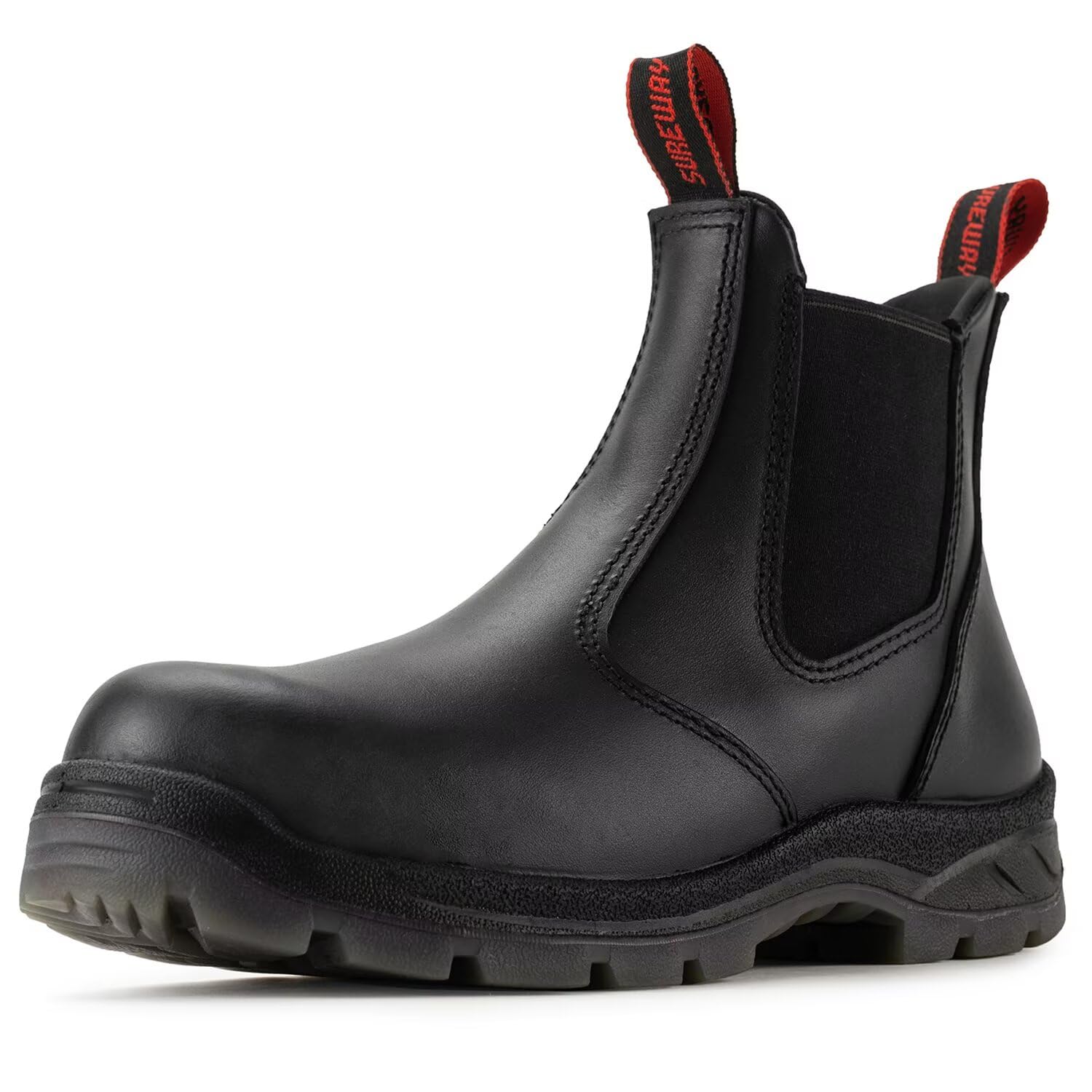
5. SUREWAY Men’s Slip On Work Boots, Upgraded Slip/Water Resistant, Electric Hazard
Firefighters and mechanics love how fast these slip on and off — no laces, no delay.
The SUREWAY Slip On is built for jobs where you need boots on and off rapidly. It uses a pull-on design with elastic side panels and a composite toe option that meets ASTM F2413-18 electrical hazard (EH) standards, meaning it reduces the flow of current if you step on a live wire. A firefighter reviewer said he can put them on quick and kick them off just as fast. Another firefighter praised them as very lightweight. The oil-tanned full-grain leather upper and water-resistant treatment handle light moisture well. The slip-resistant outsole adds grip on wet or oily floors.
The composite toe caused slight discomfort for one buyer, who felt the end of the toe pressed on the top of his foot during the first few days — though he noted it was not a deal breaker and the boot loosened up. Unlike the lace-up NORTIV 8 or Timberland PRO Powertrain, these sacrifice the locked-in heel feel of laces for the convenience of slip-on access.
Best Features
- Slip-on design saves time for jobs with frequent boot changes
- Composite toe plus electrical hazard (ASTM F2413-18 EH) protection
- Lightweight build that firefighters and station workers appreciate
- Replaceable insole with a spacer for a customizable fit
Limitations
- Composite toe may press on the top of the foot during initial break-in
- Not fully waterproof — water-resistant only, so not for standing water
- Less ankle support than lace-up boots for uneven terrain
Ideal for: fire station, EMS, mechanics, or any job where you take boots on and off many times a day.
Not for: hiking, construction sites with mud or standing water, or anyone needing firm ankle support.
6. Timberland PRO Men’s Powertrain Alloy Toe Hiker Shoes

An athletic safety shoe that one buyer calls a “concrete slayer” — and it weighs just over a pound per shoe.
If you want the lightest safety-rated shoe that still qualifies as a work boot, the Timberland PRO Powertrain is it. It weighs roughly 501.7 grams per shoe (just over 1.1 pounds), significantly lighter than the Boondock’s 4.5-pound pair. The alloy toe (aluminum or titanium — the lightest toe type) offers the same impact protection as steel without the weight. The Anti-Fatigue Technology midsole absorbs shock and returns energy with each step. Buyers on concrete say these feel amazing and wish they had bought them sooner. The ripstop nylon upper with TPU (thermoplastic polyurethane) toe overlays adds durability without the weight of full leather.
Customers note these are best for light-duty work like warehousing, assembly, or light construction. They are not built for heavy mud, deep water, or job sites with sharp debris. One buyer compared them directly to the Timberland PRO Boondock and noted the Powertrain is significantly lighter but less durable over time.
Why It Stands Out
- Extremely light at ~501 g per shoe — less fatigue over long shifts
- Alloy toe protects without the weight or cold conductivity of steel
- Anti-Fatigue Technology for shock absorption on concrete
- Breathable, moisture-wicking ReBOTL lining (at least 50% recycled plastic)
Consider This
- Not for heavy outdoor work or deep water — lighter build means less ruggedness
- Some buyers find lower durability than full-leather Timberland models
Choose this for: walking 10+ miles a day on concrete or warehouse floors where every ounce of weight matters.
Select something else if: you work in wet, muddy, or debris-heavy environments that demand a full leather waterproof boot.
7. KEEN Utility Kenton Mid (Comp Toe)

A mid-top work sneaker that weighs 18.3 ounces and gives your toes room to spread out naturally.
The KEEN Utility Kenton Mid is built for light-duty work where you want safety toe protection without the bulk of a traditional boot. At 18.3 ounces (519 grams) per shoe, it is one of the lightest options in this guide — right in range with the Timberland PRO Powertrain. The composite toe and wider KEEN fit (built on KEEN’s traditional wider footwear form) let your toes splay, which buyers on their feet all day really appreciate. A reviewer who walks on concrete covered in coolant, oil, and transmission fluid reported the soles hold up well without noticeable wear. The removable insole lets you drop in your own orthotic if the stock cushioning is too firm.
The biggest miss is the lack of waterproofing. Multiple buyers point out these are not water resistant by any means. Another reviewer noted that while comfortable, the soles are hard and provide very little cushioning for long hours. If you need maximum plushness, the NORTIV 8 or the Timberland PRO Powertrain offer softer underfoot feel.
Key Strengths
- Very light at 18.3 oz — reduces leg fatigue on long shifts
- Composite toe and wider fit for natural toe splay
- Excellent grip on oily, slippery concrete surfaces
- Removable insole for custom orthotics
Honest Weaknesses
- Not waterproof — moisture from wet grass or puddles soaks through
- Hard sole with minimal cushioning for some — not ideal for all-day standing on concrete
Best for: light assembly, maintenance, or warehouse work on dry, smooth floors where you want sneaker-like lightness.
Look elsewhere if: you need waterproofing or a plush, cloud-like insole for 12-hour shifts on hard concrete.
Understanding the Specs
Toe Protection Types
Steel toes are the strongest and cheapest but add weight and conduct temperature (cold in winter, hot in summer). Composite toes use materials like Kevlar or carbon fiber — they are lighter, do not conduct temperature, and do not set off metal detectors. Alloy toes (aluminum or titanium) are the lightest of the three while meeting the same safety standards, but they cost more. For all-day comfort in cold environments or jobs where you walk a lot, composite or alloy toes beat steel every time.
Anti-Fatigue Technology
This is a midsole feature that absorbs the shock of each footstrike and returns a small amount of energy, reducing the strain on your feet, knees, and lower back over a long shift. Boots with anti-fatigue midsoles (like the Timberland PRO Powertrain) typically feel more springy and less punishing on concrete than basic EVA foam insoles. If your job keeps you on your feet for 8+ hours, this spec matters more than the brand name on the tongue.
Weight Per Shoe
This is the single most underrated comfort spec. A boot that weighs 18-20 ounces (about 510-570 grams) per shoe will tire your legs far less than a boot weighing 30+ ounces. Every half-pound you shave off each foot adds up to hundreds of pounds of cumulative lift over a 10-mile walking shift. When comparing two boots, check the weight first — a heavy boot cannot be saved by a good insole.
Waterproof vs Water-Resistant
A waterproof boot uses a membrane (like Gore-Tex or a proprietary film) that keeps liquid water out while allowing vapor to escape. Water-resistant leather or fabric can handle light rain or splashes but will soak through if you stand in a puddle or work in heavy rain. If your job involves hoses, mud, or snow, look for the word “waterproof” explicitly in the specs. “Water-resistant” is fine for light duty.
FAQ
How do I know what size safety boot to buy?
What is the difference between steel toe and composite toe for comfort?
How long do comfort safety boots typically last?
Can I replace the insoles in comfort safety boots?
Are composite toe boots safe for electrical hazard environments?
What does ASTM F2412-24 and ASTM F2913-24 mean?
How do I break in stiff safety boots faster?
Can I wear safety boots with wide feet?
Is a slip-on safety boot as comfortable as a lace-up one?
How do I clean and maintain waterproof safety boots?
Final Thoughts: The Verdict
Across the board, the best comfort safety boots winner is the Timberland PRO Boondock 6″ because it combines genuine waterproofing, a composite toe that won’t freeze your feet, and the durability that buyers report lasts 2 years of hard work. If you want a lighter boot for all-day walking on concrete, grab the NORTIV 8 Metrostrike-Nano — it offers zero break-in comfort and slip-resistance at a value that is tough to top. And for the lightest safety shoe that still protects your toes, the Timberland PRO Powertrain Alloy Toe is the pick for warehouse workers covering miles every shift.
How We Picked
We do not accept paid placement. Every pick is matched to a real buyer and a real use-case; we do not hands-on test units.
Sources & Methodology
Specifications: manufacturer listings and product documentation. Review insights: verified customer reviews, as of July 2026. Pricing: not shown on this page (it changes often); check the current price via the retailer link.
As an Amazon Associate, WellFizz earns from qualifying purchases. This does not affect which products we feature.
Related Guides

Mo Maruf
I created WellFizz to bridge the gap between vague wellness advice and actionable solutions. My mission is simple: to decode the research and give you practical tools you can actually use.
Beyond the data, I am a passionate traveler. I believe that stepping away from the screen to explore new environments is essential for mental clarity and physical vitality.