Our readers keep the lights on and my smoothie glass nicely filled. As an Amazon Associate, I earn from qualifying purchases.
Specs are compiled from manufacturer listings and verified buyer reviews and can change over time — please confirm the key details on the product page before buying.
Your feet will tell you long before your watch does whether you chose the right shoe. A poor fit turns a good run into a grind — sore arches, aching knees, and zero motivation to lace up again. The goal is to find a pair that makes comfort the default, not a bonus. This guide walks through four men’s running shoes that actually deliver on cushioning and support, based on published specs and what verified customers say.
I’m Mohammad Maruf — the founder and writer behind WellFizz. This guide is built by comparing the manufacturers’ published specifications and the patterns across verified customer reviews, so you get each pick’s real strengths and trade-offs instead of marketing spin.
The comfort running shoes for men below each solve a different need, from an all-rounder to a budget-friendly option.
Our Picks at a Glance
How To Choose The Best Comfort Running Shoes For Men
Buying a comfort-focused running shoe boils down to three decisions: the foam under your foot, the shoe’s weight, and where you run. Here is what to look for.
Foam Type and Cushioning Level
The midsole foam is your primary shock absorber. Brand names like PWRRUN+, FF BLAST PLUS, and Charged+ all aim for the same outcome — a soft landing that does not pack down on longer runs. More foam means a plusher ride, but too much can make the shoe feel wobbly at faster speeds.
Shoe Weight and Your Daily Mileage
Heavier shoes (over 10.5 oz) feel stable and cushioned for easy days but can tire your legs on runs over 10 miles. Lighter shoes (under 9.5 oz) feel quicker and less bulky, but they often have less foam, which can reduce comfort on hard pavement. Match the weight to your typical run distance.
Quick Comparison
| Model | Best For | Weight (oz) | Offset (mm) | Midsole Foam | Amazon |
|---|---|---|---|---|---|
| Under Armour Charged+ Assert 11★ Best Overall | Budget-friendly cushioning | 10.2 | — | Charged+ | Amazon |
| Saucony Ride 18 | Versatile daily training | 9.1 | 8 | PWRRUN+ | Amazon |
| ASICS Gel-Cumulus 27 | Joint-friendly long runs | — | — | PureGEL + FF BLAST PLUS | Amazon |
| Nike Journey Run | Everyday plush comfort | — | — | — | Amazon |
In‑Depth Reviews
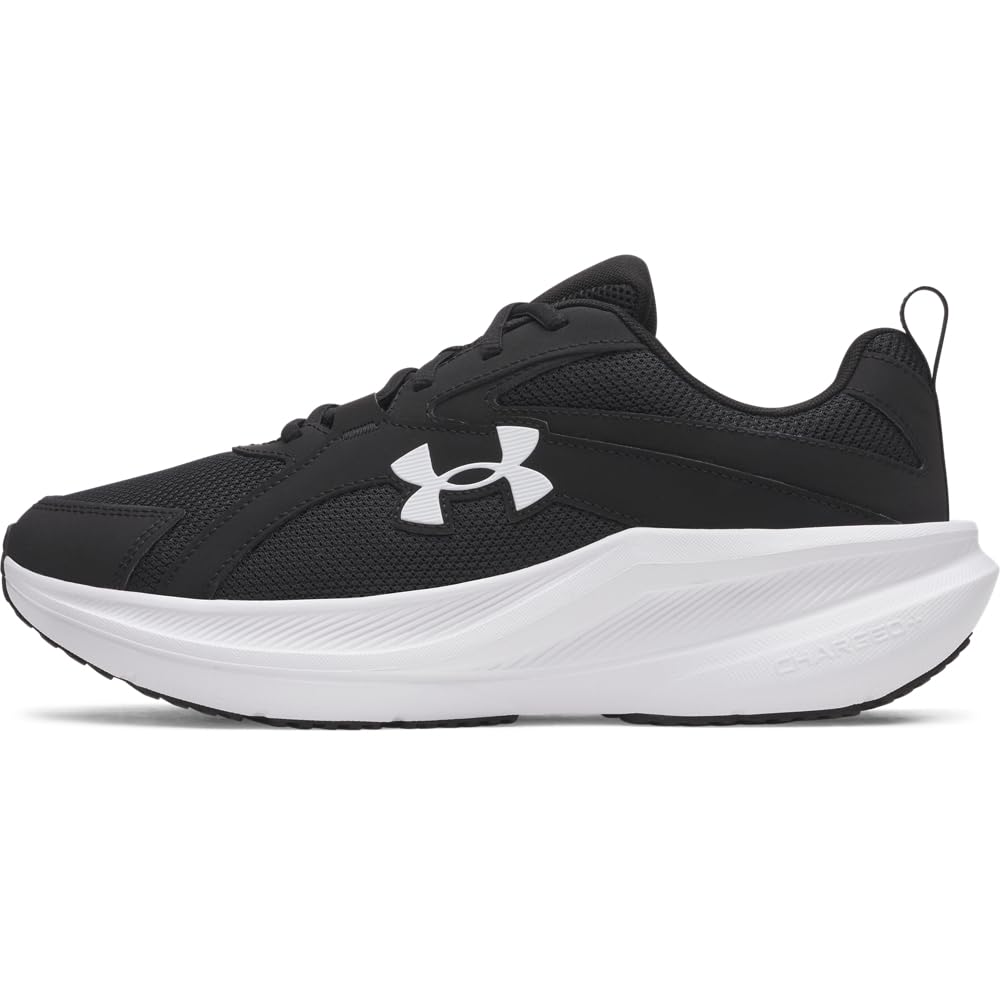
1. Under Armour Men’s Charged+ Assert 11 Running Shoes
Our pick — over 4.5★ from 950+ verified ratings; the strongest balance of quality and price.
A heavy-duty daily trainer that wraps your foot in recycled materials without skimping on midsole softness.
You get genuine all-day softness at a value price here. Under Armour’s Charged+ Assert 11 uses Charged+ midsole cushioning — their proprietary foam compound that they say is engineered for “class-leading softness & all-day comfort.” That competes directly with the Ride 18’s PWRRUN+ in forgiveness, though the Assert 11 is heavier at 10.2 oz versus the Saucony’s 9.1 oz. The trade-off for that weight is durability: a rubber outsole with strategically-placed flex grooves handles toe-off smoothly, and the upper blends athletic mesh with durable leather overlays for added midfoot support. Under Armour states the upper contains at least 30% recycled content, which is a sustainability feature the other three picks here do not mention. The shoe is a neutral platform, similar to the Saucony and ASICS options, so it works for runners with a standard gait who want reliable, soft cushioning without a high cost. The lace type is a standard tie, and the package weight is 2.4 Pounds for the pair. Buyers with wider feet have noted that the leather overlays can feel snug through the midfoot at first, but they break in over the first few wears.
Budget-friendly build
- Charged+ foam delivers genuine all-day softness at a value price
- Upper contains at least 30% recycled content — a sustainability edge
- Durable leather overlays provide structured midfoot support
Heavier than rivals
- At 10.2 oz, it is 1.1 oz heavier than the Saucony Ride 18, so it feels bulkier on longer runs
- Leather overlays may feel tight on wider feet before break-in
Grab these if: you need a comfortable, durable daily trainer on a tighter budget and do not mind a bit of extra weight for lasting construction.
Look to the Ride 18 if: you run longer distances (8+ miles) and want a lighter shoe that does not tire your legs as quickly.
2. Saucony Men’s Ride 18 Sneaker
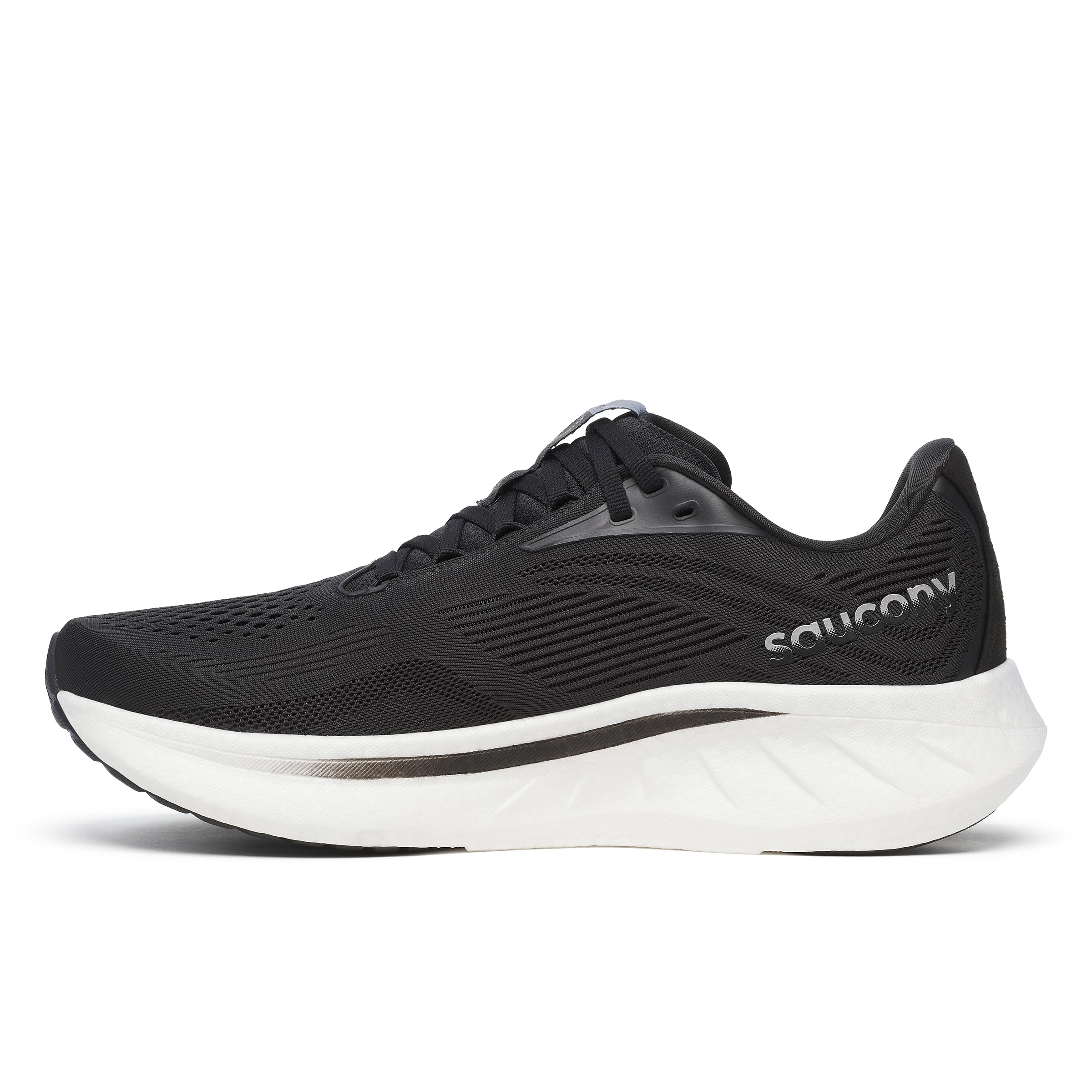
The do-it-all daily trainer that balances softness with a surprisingly light weight.
You get more energy return (the spring-back feel of the foam) from the reformulated PWRRUN+ midsole in the Ride 18, even though the shoe itself weighs only 9.1 oz (259g). That is noticeably lighter than the 10.2 oz of the Under Armour Charged+ Assert 11, so your legs feel fresher as the miles add up. The heel-to-toe offset (the difference in stack height between heel and forefoot) is 8mm, with a 35mm heel stack and a 27mm forefoot stack. That is a neutral drop that works well for both heel-strikers and midfoot-strikers. Front flex grooves help your stride roll smoothly through the toe-off phase. The engineered mesh upper lets air flow, and extra padding around the heel collar locks your foot in without squeezing. Saucony classifies this as a neutral-support shoe, meaning it works for runners who do not need motion control — just balanced, predictable cushioning for everyday pavement miles. Buyers report the Ride 18 feels ready straight from the start with little to no break-in period, a real advantage over some plush shoes that take 20 miles to soften up.
Why it clicks
- Reformulated PWRRUN+ foam is soft and responsive
- At 9.1 oz, it is lighter than most daily trainers at this price
- Engineered mesh upper breathes well on warm runs
One trade-off
- Neutral support only — not for runners who need significant pronation control
The one-shoe quiver: if you want a single pair that handles a quick three-miler and a relaxed half-marathon without hurting your feet, start here.
Skip it for maximum plushness: if recovery days demand the softest possible feel, the Triumph line (with PWRRUN PB foam) is a better pick.
3. ASICS Men’s Gel-Cumulus 27 Running Shoes
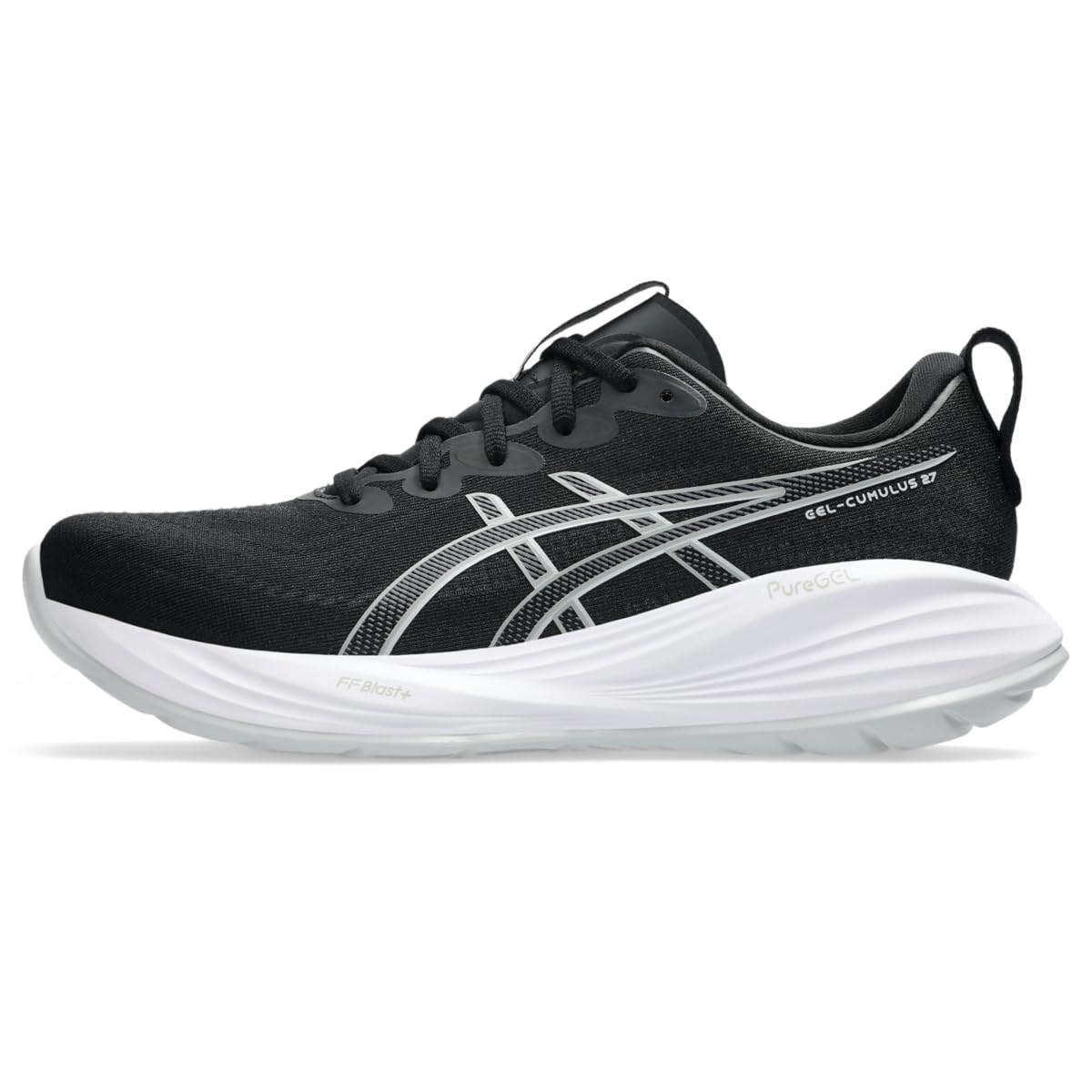
PureGEL technology sits under your heel to absorb shock that would otherwise travel to your knees.
Your knees get the direct benefit here. ASICS put PureGEL technology — a soft, silicone-based insert in the rearfoot — into the Gel-Cumulus 27 to improve shock absorption compared to standard gel units. That insert sits inside FF BLAST PLUS foam, a lightweight, bouncy midsole that gives you a cushioned ride without a heavy, sinking feeling. ASICS states this combination is designed to “reduce the impact on your joints,” so you can run further without body aches the next day. Unlike the Saucony Ride 18, which uses one foam type throughout, the Cumulus 27 layers a FluidRide outsole under the FF BLAST PLUS foam to smooth the transition from heel-strike to toe-off. The engineered mesh upper wraps your foot securely without irritation. ASICS rates this as a neutral-cushioning shoe, so it works best for runners with a natural gait who want extra softness on long pavement runs. Owners mention that the PureGEL insert is especially noticeable on concrete sidewalks — the landing feels less jarring than in previous Cumulus versions.
Protects your joints: PureGEL technology targets shock absorption in the heel, which matters most if you land heel-first.
Not for speed work: The maximum cushioning makes this shoe feel less responsive during intervals or tempo runs.
Choose this for joint relief: if your runs leave your knees or hips sore, the PureGEL + FF BLAST PLUS combo is built to dial down impact.
Look to the Ride 18 for versatility: if you want one shoe for both easy runs and faster days, the Saucony is a lighter, more responsive alternative.
4. Nike Men’s Journey Run Road Running Shoes
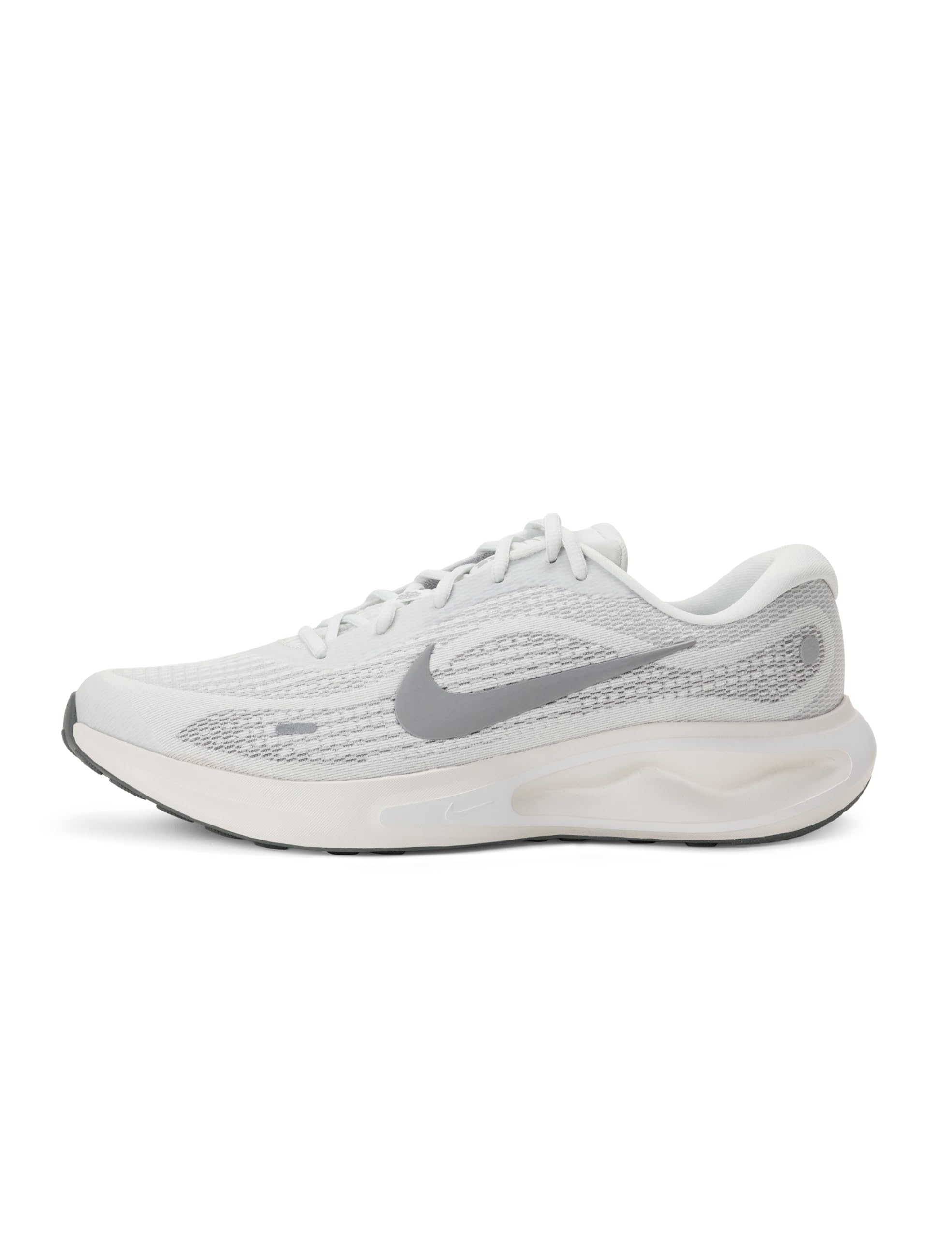
Extra cushioning in the heel, tongue, and collar for a step-in feel that rivals a slipper.
The Nike Journey Run stands apart from the ASICS Gel-Cumulus 27 by focusing its plushness on the areas that wrap your foot, not just under it. The heel, the tongue, and the collar all carry extra padding that makes the shoe feel almost slipper-like when you first put it on. A rubber outsole underneath provides grippy traction across pavement and packed surfaces so you stay stable mile after mile. Because Nike has not published specific midsole foam names or weights for this model in the available data, the focus is on the overall ride construction. The Journey Run is a neutral everyday running shoe designed around comfort rather than speed metrics. If you value a soft, padded feel around your entire foot (not just under it), this shoe leans into that experience more directly than the lighter, foam-focused Saucony Ride 18. One thing potential buyers should consider: without a published weight or foam type, comparing its cushioning depth to the Cumulus 27 or the Ride 18 is harder to do by spec sheet. The Journey Run appeals most to runners who prioritize a pillowy upper feel over a specific foam formulation number.
Plush details stand out
- Extra padding in the heel, tongue, and collar for a cozy fit
- Engineered mesh upper keeps your foot secure without rubbing
- Rubber outsole provides steady grip on pavement
Missing details
- No published midsole foam type or weight, so comparing cushioning depth by spec is guesswork
Best for comfort-first buyers: if a soft, padded interior matters more than published foam stats, the Journey Run delivers that premium step-in feel.
Not for spec-shoppers: if you need exact foam chemistry and weight numbers to make a decision, the Saucony Ride 18 or ASICS Cumulus 27 give you more data to work with.
Understanding the Specs
Midsole Foam Types
The foam between your foot and the ground does the heavy lifting for comfort. PWRRUN+ (Saucony) is a lightweight, responsive foam that returns energy on each stride. FF BLAST PLUS (ASICS) is a softer, bouncier compound that pairs with a gel insert for impact absorption. Charged+ (Under Armour) prioritizes softness and all-day comfort over snap-back responsiveness. There is no universal “best” foam — match the feel to your preferred running experience.
Offset (Heel-to-Toe Drop)
Offset is the difference in millimeters between the heel stack height and the forefoot stack height. A higher offset (8-12mm) suits heel-strikers who land on their heel first. A lower offset (0-6mm) suits midfoot or forefoot strikers. The Saucony Ride 18 has an 8mm offset (35mm heel / 27mm forefoot), which is a versatile middle ground that accommodates most running gaits comfortably.
FAQ
How much cushioning is too much for a daily trainer?
Will a comfort running shoe work for walking all day?
How long do comfort running shoes typically last?
What is the difference between neutral and stability running shoes?
Should I size up for comfort running shoes?
Why is shoe weight important for comfort?
Can I use comfort running shoes for speed training?
What does the offset (heel-to-toe drop) do to my stride?
Final Thoughts: The Verdict
For most runners, the best bet among these comfort running shoes for men is the Saucony Ride 18 because it combines a lightweight 9.1 oz build with responsive PWRRUN+ foam that works across daily training paces. If you want maximum shock absorption for joint protection on long pavement runs, grab the ASICS Gel-Cumulus 27 with its PureGEL technology. And for a comfortable, padded step-in feel on a tighter budget, the Under Armour Charged+ Assert 11 delivers genuine all-day softness at a value price.
How We Picked
We do not accept paid placement. Every pick is matched to a real buyer and a real use-case; we do not hands-on test units.
Sources & Methodology
Specifications: manufacturer listings and product documentation. Review insights: verified customer reviews, as of July 2026. Pricing: not shown on this page (it changes often); check the current price via the retailer link.
As an Amazon Associate, WellFizz earns from qualifying purchases. This does not affect which products we feature.
Related Guides

Mo Maruf
I created WellFizz to bridge the gap between vague wellness advice and actionable solutions. My mission is simple: to decode the research and give you practical tools you can actually use.
Beyond the data, I am a passionate traveler. I believe that stepping away from the screen to explore new environments is essential for mental clarity and physical vitality.