Our readers keep the lights on and my smoothie glass nicely filled. As an Amazon Associate, I earn from qualifying purchases.
That pain in your sit bones, the numbness after a few miles, the constant shifting to find a spot that doesn’t hurt — a bad mountain bike saddle quietly ruins every ride. The real challenge is that “comfortable” means something different for every rider’s body, riding style, and bike setup, so picking the right one means knowing which specific shape, width, and amount of padding actually match your body and your trails.
I’m Mohammad Maruf — the co-founder and writer behind WellFizz. This guide is built by comparing the manufacturers’ published specifications and the patterns across verified customer reviews, so you get each pick’s real strengths and trade-offs instead of marketing spin.
We look at six top contenders for the title of the best comfort mountain bike saddle, breaking down who each one is made for, what the numbers actually mean for your backside, and which one you should buy.
How To Choose The Best Comfort Mountain Bike Saddle
Picking the right saddle is about your body geometry, your riding style, and the specific comfort features that solve your pain points. Ignore the marketing and focus on these five factors.
Sit Bone Width and Saddle Width
The most important measurement is the distance between your sit bones (the two hard points at the bottom of your pelvis). When you sit on a saddle, your sit bones should land on the widest part of the saddle’s platform. If the saddle is too narrow, your soft tissue takes the weight; if it’s too wide, the extra padding rubs your thighs. You can measure your sit bones at home using a piece of corrugated cardboard — sit on it on a hard surface and measure the center-to-center distance of the two dents. That number (in millimeters) tells you the exact saddle width range to look for.
Padding Density and Thickness
More padding is not always better. Plush, thick foam feels great in the store but can compress unevenly under your sit bones, creating pressure points and causing chafing on rides over 20 miles (32 km). Look for a medium-density padding layer (around 8 mm to 12 mm) made from materials like DNAx, gel, or orthopedic foam — these materials support your weight without bottoming out, and they maintain their shape ride after ride.
Cutout and Relief Channel
A central cutout (a hole or groove in the saddle shell) or a relief channel (a depression running down the middle of the padding) reduces pressure on the perineal area (the soft tissue between your sit bones). This directly addresses numbness and blood flow restriction that many riders experience. The cutout should align with your anatomy — a channel that is too far forward or too far back will not help.
Saddle Shape and Nose Design
Drop-nose saddles (the nose angles downward slightly) help you slide forward on steep climbs without catching your shorts. Flat saddles keep you centered on flatter terrain. The overall curve of the shell (how much it bows up in the middle) cradles your pelvis and prevents you from tilting your hips forward, which relieves lower back strain — especially important for riders with reduced flexibility.
Rail Material and Weight
Steel rails are the most common and durable for the price, but they add weight (a saddle with steel rails typically weighs 340 grams to 485 grams). TiNox rails are lighter and more expensive, and they add a small amount of vibration damping. If your total bike weight is a concern (for racing or long climbs), a lighter saddle with TiNox or hollow steel rails is worth the extra cost.
Quick Comparison
On smaller screens, swipe sideways to see the full table.
| Model | Category | Best For | Key Spec | Amazon |
|---|---|---|---|---|
| WTB Pure Mountain Bike Seat | Mid-Range | All-day mountain rides | 345g / 15″L x 9″W | Amazon |
| Ergon Sm E-MTB Sport Mens | Premium | Steep climbs & e-MTB | 350g / OrthoCell inlays | Amazon |
| Ergon Men’s SM Pro Saddle | Premium | Numbness-free long rides | TiNox rails / Memory Foam | Amazon |
| Selle SMP TRK Gel Saddle | Premium | Sit bone pain relief | 485g / Gel + polyurethane | Amazon |
| WTB Speed Bike Seat | Mid-Range | Budget-friendly comfort | 379g / DNAx padding | Amazon |
| WTB Comfort Bike Seat | Mid-Range | Casual neighborhood rides | 390g / 174mm wide profile | Amazon |
In‑Depth Reviews
1. WTB Pure Mountain Bike Seat (Saddle) – Thick All-Day Comfort Padding
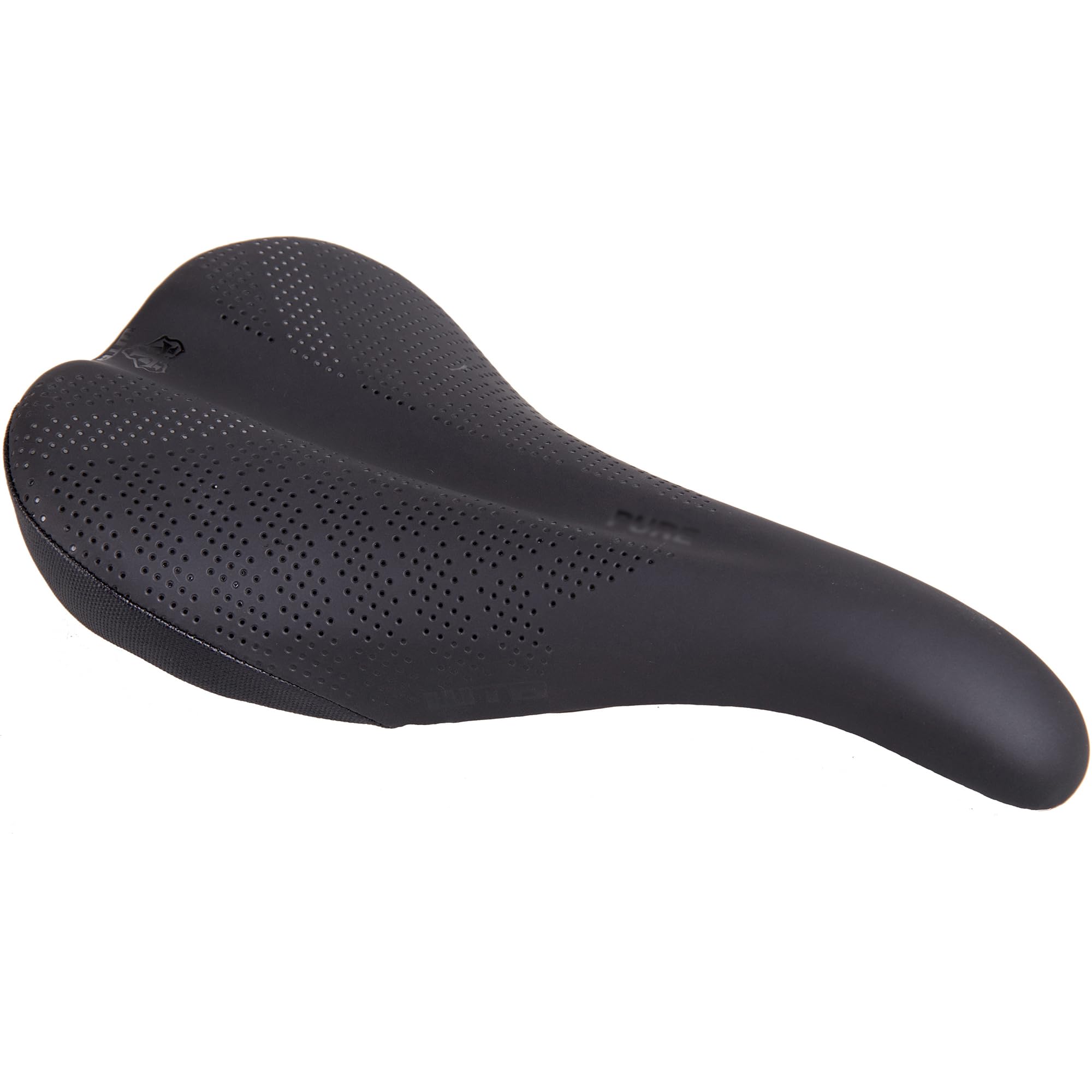
345 grams and extra-thick DNAx foam padding make the WTB Pure the top pick for mountain bikers who want a single saddle that handles everything from cross-country rides to loaded bikepacking trips without sacrificing all-day comfort.
The classic drop-nose design cradles your pelvis, while the Love Channel—a 50-millimeter (2-inch) groove running from the tip of the nose—prevents pressure on soft tissue to keep blood flow unrestricted during long climbs. One buyer summed it up: “This is the best seat I’ve had in the last 30 years of mountain bike riding.” The steel rails are durable, and the 15″ by 9″ platform gives you room to shift positions on technical terrain.
The catch is that riders on 20-plus-mile endurance rides have found the extra quarter-inch of padding can cause chafing after the two-hour mark, making a more minimal saddle like the WTB Volt a better choice for ultra-distance. For the vast majority of mountain bikers who want one saddle that does everything well, the WTB Pure is the unanimous choice.
Why it’s great
- Classic drop-nose shape proven over years
- Very light at 345 grams for all-day padding
- Love Channel channel relieves pressure and prevents numbness
Good to know
- Extra padding may cause chafing on rides over 2 hours
- Better suited for shorter to medium rides than ultra-endurance
2. Ergon Sm E-MTB Sport Mens
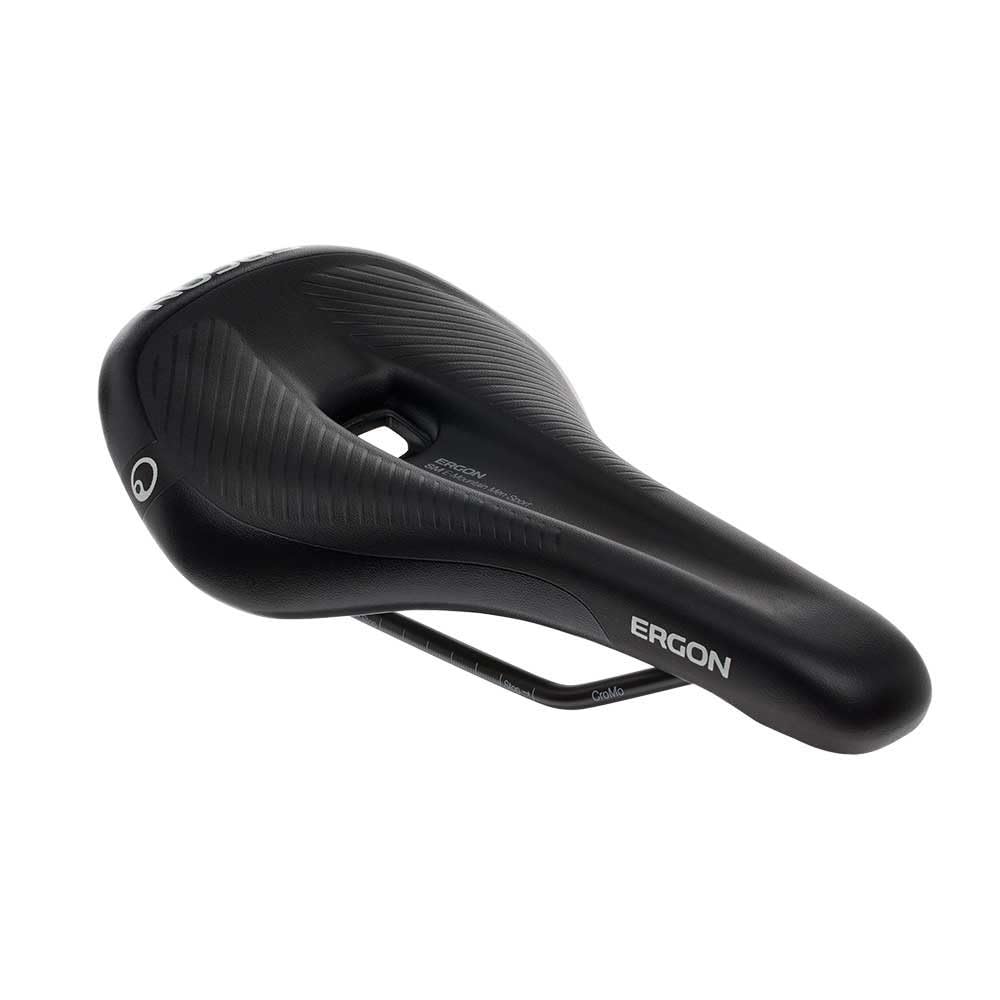
While the WTB Pure is the all-around workhorse, the Ergon Sm E-MTB Sport is the specialist for steep terrain — it is designed specifically for e-mountain bikes and prolonged seated climbing, with a ramping tail that gives you a flat surface to push against on steep ascents where you need every watt of power. At 350 grams it is only 5 grams heavier than the Pure, but the OrthoCell inlays (small pads embedded in the foam) distribute pressure more evenly across your sit bones, which is exactly what you need when you are grinding up a 20% grade.
One rider proved its durability by reporting: “Put 600 miles in this summer with this seat.” The dynamic comfort padding is firmer than the plush WTB options, which actually helps on e-bikes where the motor pushes you forward and you need a saddle that does not let you sink in. The flat circumference around the edges gives you great freedom of movement when you are leaning the bike through switchbacks.
If you ride a traditional mountain bike and mostly do long, flat singletrack, the Pure gives you a softer feel for the same weight and a wider size at 15″ by 9″ versus the Ergon’s 13.78″ by 7.48″. But if you own an e-MTB or regularly face steep climbs where you spend long minutes seated, the Ergon’s climbing-tailored geometry and pressure-distributing OrthoCell foam make it the better pick.
Where it shines
- OrthoCell inlays distribute pressure evenly across sit bones
- Ramping tail provides stable platform for steep seated climbs
- Flat edges allow freedom of movement on technical terrain
Worth noting
- Firmer padding may feel less plush on short rides
- Smaller platform than the WTB Pure
3. Ergon Men’s SM Pro Saddle

Imagine you have tried three different saddles and you still go numb in the soft tissue area after 10 miles, leaving you standing up on the pedals just to get blood flowing again. The Ergon SM Pro is built to solve exactly that problem — its orthopedic AirCell foam base combined with OrthoCell pads creates a custom-like support that matches your sit bone shape, and the friction-reducing side flanks prevent your inner thighs from rubbing raw on long climbs.
Riders who have struggled with numbness on 50-plus mile gravel and singletrack rides report that the SM Pro “eliminated butt soreness and groin numbness” in a way that no other saddle had. The TiNox rails shed weight without sacrificing strength, and the nylon composite shell flexes slightly to absorb trail vibrations before they reach your pelvis. The saddle is 13.78 inches long and 5.83 inches wide — noticeably narrower than the WTB Pure — but the smart cutout is positioned to align perfectly with your perineal area (the area between your sit bones).
The real standout here is the memory foam padding that does not collapse over time. A 70-year veteran cyclist reported buying extras for multiple bikes because the saddle remained “strangely comfortable and efficient” even after hundreds of miles. If persistent numbness or soreness has been a barrier to longer rides, the SM Pro is the solution you have been looking for — a saddle that stays as supportive at mile 500 as it did at mile one.
What stands out
- OrthoCell pads and memory foam eliminate numbness on long rides
- TiNox rails are lightweight and strong
- Friction-reducing side flanks prevent thigh rub
The trade-offs
- Narrower platform may feel less stable for wider riders
- Premium price is a step above mid-range options
4. Selle SMP TRK Gel Saddle Black – Medium

485 grams – the single number that matters most in this category – makes the Selle SMP TRK Gel Saddle the heaviest pick in this guide, a full 140 grams more than the 345-gram WTB Pure (a 41% increase in weight), but that mass comes from the dense gel body that many riders find unmatched for sit bone relief. The hand-made-in-Italy build quality is excellent, and the medium width of 160 mm fits a wide range of riders. The co-polymer polypropylene body is stiff, so the gel takes the full impact.
The downside is that heavy gel padding can create friction on rides over 20 miles (32 km). One reviewer noted that while the saddle “eliminated sit bone and perineal pain vs. cheap seats,” the thick padding caused saddle sores on longer distances. You need precise adjustment, including an 8-degree nose-down tilt, to get the best fit and avoid any pressure points.
For the rider who does short to intermediate rides (under 20 miles) and wants absolute maximum sit bone cushioning, the SMP TRK Gel delivers that specific benefit better than anything else on this list. Just be aware that the weight penalty and chafing risk make it a poor match for long days in the saddle – a price-to-value read that favors lighter alternatives like the WTB Pure or Ergon SM Pro for riders logging 30-plus-mile trails.
The upsides
- Dual-layer gel and polyurethane padding is unmatched for sit bone relief
- Hand made in Italy with high-quality materials
- Widely praised for eliminating perineal pain
Keep in mind
- Very heavy at 485 grams compared to lighter options
- Thick gel can cause chafing on rides over 20 miles
5. WTB Speed Bike Seat (Saddle) Comfortable Thick Padding
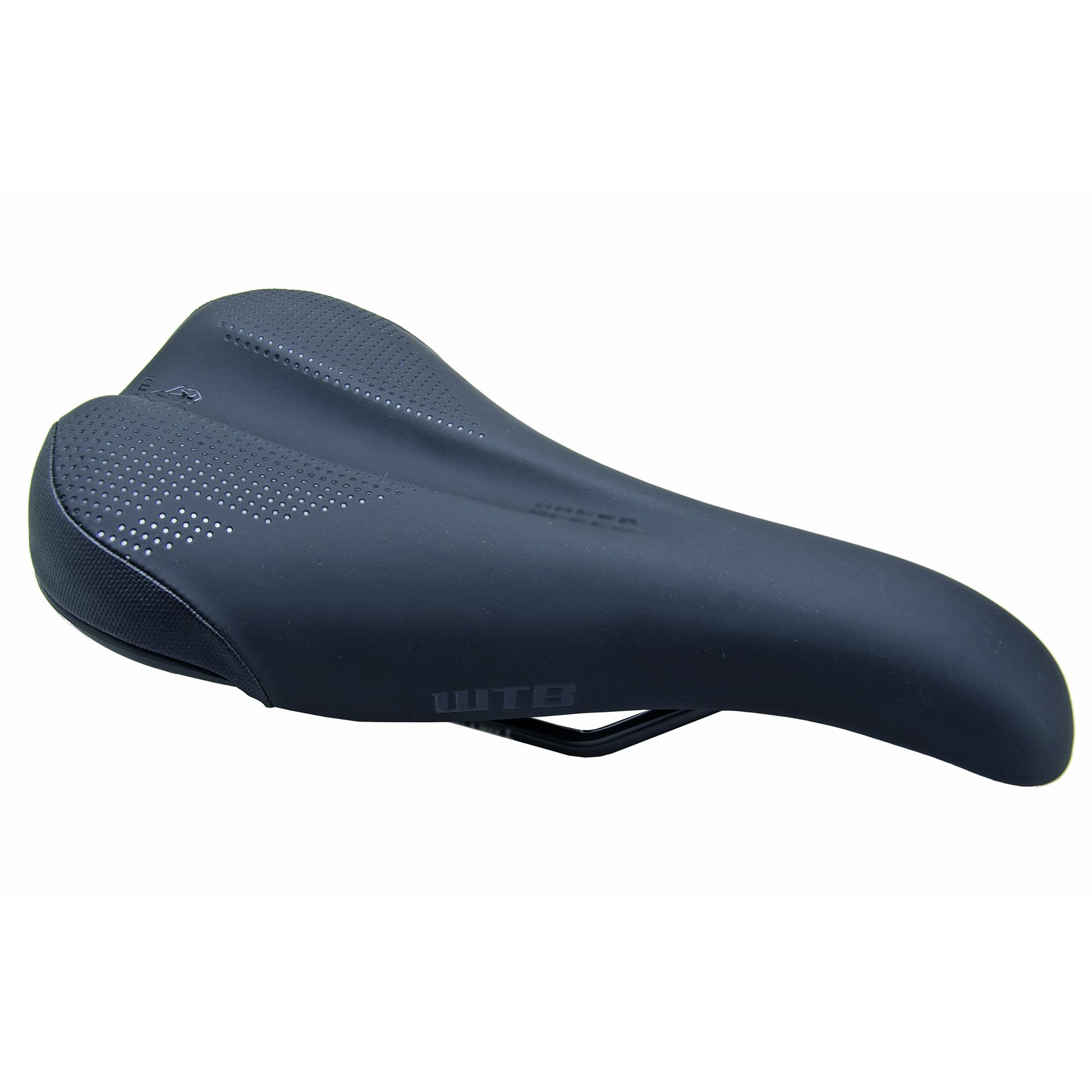
You get the same DNAx padding technology found on the more expensive Pure, plus a shock-absorbing dual compound Soft-Shell base that minimizes vibrations from rough trail surfaces — the same feature that keeps you from feeling every root and rock in your lower back. At a price that sits well below the premium options, the WTB Speed delivers real mid-range comfort without the mid-range cost. It weighs 379 grams, and the deeply contoured shape cradles your pelvis for extra stability.
What you give up is the refined drop-nose shape of the Pure and the all-day bikepacking pedigree. One buyer mentioned it was an excellent improvement over a stock race saddle and found no soreness after a 12-mile (19 km) ride, but another rider with a specific fit issue described it as a “torture device” and noted a poor customer service experience from WTB. The steel rails are durable but add weight compared to TiNox-equipped saddles.
If you are a casual weekend rider who does 12 miles (19 km) at a time and wants a noticeable upgrade from your bike’s stock seat without spending premium money, the WTB Speed is the exact budget-friendly solution you are looking for.
Why we’d pick it
- DNAx padding and shock-absorbing base provide real comfort
- Contoured shell supports pelvis well
- Excellent value for a mid-range-feel saddle at a budget price
A few caveats
- Not all riders find the fit comfortable
- Heavier than the WTB Pure at 379g vs 345g
6. WTB Comfort Bike Seat (Saddle) – Extra Wide – Plush Thick Padding
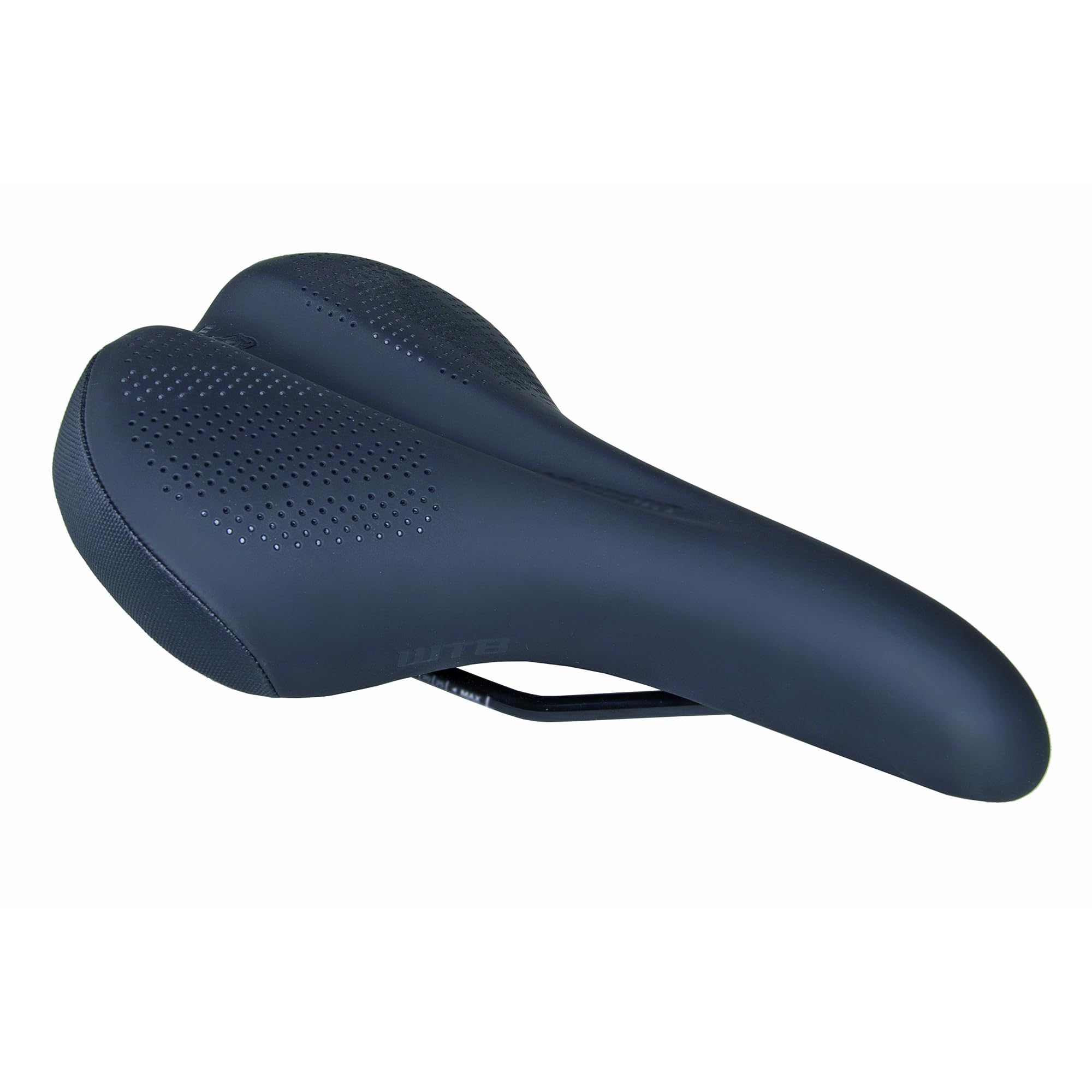
This saddle is perfect for the casual rider who wants maximum sit-bone support during relaxed, upright neighborhood cruises or quick errands without padded shorts. The 174 mm wide profile is the widest on this list, and the extra-thick DNAz padding provides a plush, deeply cushioned feel with a contoured shape that locks you into a stable position without constant shifting.
One rider described it perfectly: “The saddle is wide and very well padded, which makes a huge difference during rides.” The Love Channel runs down the middle for pressure relief, and the steel rails are simple to install. At 390 grams it is heavier than the 345-gram WTB Pure, but the difference is barely noticeable on casual rides where you are not racing.
If you mostly ride flat paved paths, use your bike on an indoor trainer where you sit more upright, or simply want the most forgiving, cloud-like seat for short trips, the WTB Comfort is your best bet. Just know that the extra width can occasionally catch your shorts when you drop the seat post with a dropper post, and it is not designed for aggressive trail riding or long-distance bikepacking.
Strong points
- 174 mm wide profile provides excellent sit bone support
- Plush DNAz padding is very comfortable for short, leisurely rides
- Love Channel reduces pressure
Before you buy
- Extra width may catch shorts when using a dropper post
- Not designed for long or aggressive mountain bike rides
Understanding the Specs
Sit Bone Width and Saddle Width
Your sit bones are the two hard knobs at the bottom of your pelvis. When you sit on a saddle, they should land directly on the widest part of the saddle’s platform. If the saddle is too narrow, your soft tissue supports the weight and you will go numb. If it is too wide, the saddle rubs your inner thighs. Most mountain bike saddles range from 140 mm to 174 mm wide. To find your ideal width, sit on a piece of corrugated cardboard on a hard surface for a minute, then measure the center-to-center distance of the two dimples. That measurement tells you exactly which saddle width to buy.
Padding Material and Density
The padding material determines how well the saddle supports you without caving in or creating pressure points. Three common types appear on this list: DNAx/DNAz foam (a lightweight, durable polyurethane foam used by WTB) is firm enough to support long rides without deforming. Gel padding (used in the Selle SMP) is very soft and conforms to your sit bones perfectly, but the weight of the gel (485 grams on that model) can cause chafing on rides over 20 miles. OrthoCell foam (used by Ergon) uses small inlays that distribute pressure like a memory foam mattress, making it ideal for riders who have specific numbness or pain issues.
FAQ
What size comfort mountain bike saddle do I need?
Is a cutout saddle always better for numbness?
How do I know if the saddle is properly adjusted?
Final Thoughts: The Verdict
For most riders, the best comfort mountain bike saddle winner is the WTB Pure Mountain Bike Seat because its proven drop-nose design, 345-gram weight, and Love Channel deliver all-day comfort for a wide range of backsides. If you want a saddle tailored for steep e-MTB climbs and maximum pressure distribution, grab the Ergon Sm E-MTB Sport. And for the rider who suffers from persistent numbness and wants a premium solution, the standout is the Ergon Men’s SM Pro Saddle.

Mo Maruf
I created WellFizz to bridge the gap between vague wellness advice and actionable solutions. My mission is simple: to decode the research and give you practical tools you can actually use.
Beyond the data, I am a passionate traveler. I believe that stepping away from the screen to explore new environments is essential for mental clarity and physical vitality.