Our readers keep the lights on and my smoothie glass nicely filled. As an Amazon Associate, I earn from qualifying purchases.
A cheap foam insole might feel soft for a week, then collapse into a pancake that leaves your arches aching by noon. Real comfort insoles are engineered structures—they use rigid TPU heel cups, dual-density foam layers, and targeted arch contours to keep your foot aligned shift after shift. The difference between a shoe insert that cushions and one that actually supports comes down to material science and anatomical design, not marketing claims.
I’m Mohammad Maruf — the founder and writer behind WellFizz. I’ve spent hundreds of hours analyzing the mechanical specs of footbeds, testing compression resistance claims, and cross-referencing thousands of real user footprints to separate the genuine orthotic solutions from the disposable pads.
This guide breaks down five performance-tested models so you can find best comfort insoles that deliver lasting relief and durable support for whatever your day demands.
How To Choose The Best Comfort Insoles
The right insole depends on your arch type, foot volume, primary activity, and the room available inside your shoes. A high-arch runner needs a different support profile than a flat-footed nurse standing on concrete. Focus on the structural components that actually absorb load and maintain alignment.
Arch Support Profile
Medium-to-high arch profiles are most common in performance insoles. They redistribute pressure away from the metatarsal heads and heel spur trigger points. If you have flat feet, look for a rigid TPU or polymer arch that resists deformation at 220+ pounds. For neutral arches, a flexible composite arch that adapts to foot shape provides better comfort without feeling intrusive.
Heel Cup Depth and Material
A deep, rigid heel cup made of TPU or similar hard plastic cradles the calcaneus and controls over-pronation. This is the single most important feature for plantar fasciitis relief because it prevents the heel pad from flattening under load. Shallow foam cups may feel comfortable at first but fail to stabilize the rearfoot during walking or standing.
Foam Layering and Compression Resistance
Dual-density construction is a hallmark of durable insoles. A firm base layer (often polyurethane or EVA with high rebound) provides structural support, while a softer top layer (Ortholite foam or gel) manages immediate pressure points. Avoid single-density foam pads if you weigh more than 180 pounds—they will bottom out within weeks.
Quick Comparison
On smaller screens, swipe sideways to see the full table.
| Model | Category | Best For | Key Spec | Amazon |
|---|---|---|---|---|
| Cloudflo Plantar Fasciitis Insoles | Mid-Range | All-day standing relief | Rigid TPU heel cup + Ortholite top layer | Amazon |
| Ariat Energy Max Work Insole | Mid-Range | Boot comfort during long shifts | Rebound foam + Agion antimicrobial | Amazon |
| Timberland PRO Insite AFT Footbed | Mid-Range | Construction work boot support | Inverted cone shock absorption + plastic arch | Amazon |
| Move Game Day Performance Insoles | Premium | High-impact athletics and basketball | Composite heel + molded forefoot fit | Amazon |
| Superfeet Hike Cushion Insoles | Premium | Hiking and heavy rucking | Adaptive Comfort Technology + moisture-wick top | Amazon |
In‑Depth Reviews
1. Cloudflo Plantar Fasciitis Insoles
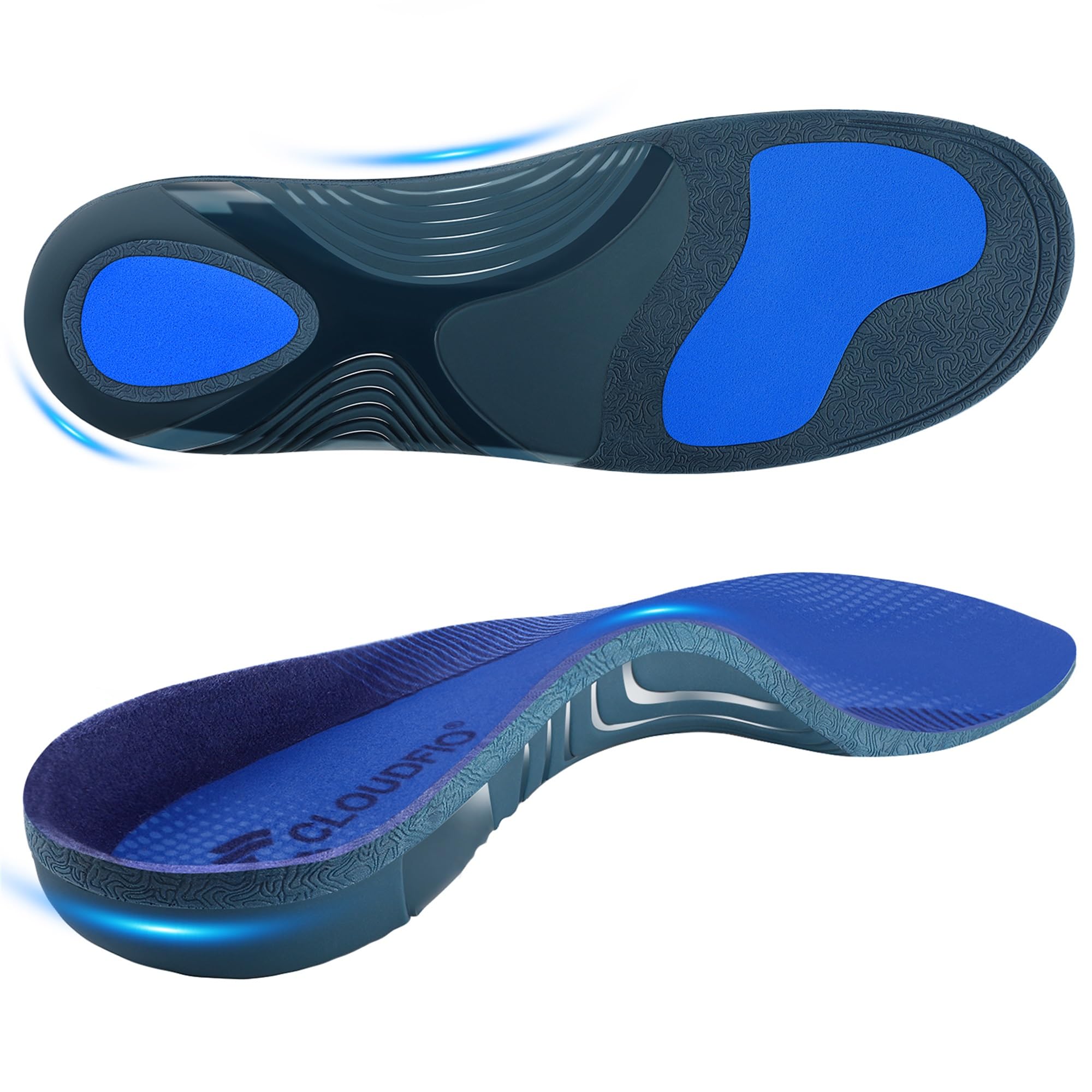
The Cloudflo insole stands out because it pairs a hard, rigid TPU heel cup with a thick Ortholite top layer—exactly the combination that controls over-pronation without sacrificing step-in softness. The heel cup is deep enough to cradle the calcaneus, which is critical for morning foot pain caused by plantar fasciitis. Multiple user reviews report complete elimination of heel pain after switching from factory insoles, and several mention using these in work boots for 10-hour shifts on concrete floors. The TPU arch reinforcement resists deformation at weights above 220 pounds, making this one of the more durable options in the mid-range tier.
The sizing runs true to shoe size and requires trimming along the marked lines, which takes about 30 seconds. The PU heel pad adds shock absorption without making the insole too thick to fit in sneakers or casual boots. Some users note that the arch support feels firmer than generic drugstore inserts, which is actually a benefit for anyone with flat feet or fallen arches. The breathable velvet top layer also includes anti-odor properties that hold up well after several months of daily use.
Where this insole really shines is value—you get the structural elements of a orthotic-grade footbed (rigid shell, dual-density foam, deep heel cup) at a price that competes with basic gel pads. If you suffer from plantar fasciitis or spend all day on your feet, this is the most cost-effective solution in the group.
Why it’s great
- Rigid TPU heel cup controls pronation effectively
- Ortholite top layer provides comfort without bottoming out
- Holds up well at 220+ lbs user weight
Good to know
- Arch support feels firm during first few wears
- May not fit low-volume or very narrow shoes
2. Ariat Men’s Energy Max Work Insole

The Ariat Energy Max is purpose-built for people who wear boots all day and prioritize immediate step-in comfort over aggressive correction. The rebound foam layer cradles the foot and dissipates pressure through an open-cell structure that also regulates temperature—a huge plus for workers in hot environments. The Agion antimicrobial technology attacks odor at the fiber level, which matters when you are logging 9-hour shifts in steel-toe boots without changing socks. Users consistently report that these insoles feel as comfortable as the original Ariat footbeds, and many buy a second pair for casual shoes.
Unlike insoles that require a break-in period, the Energy Max conforms quickly to foot shape. The fit matches standard shoe sizes exactly, so there is no trimming needed—just pull out the factory liner and drop these in. The foam density is middle-of-the-road compared to the rigid TPU options, which makes it ideal for people who want cushioning without feeling a hard plastic arch pressing into the midfoot. Open-cell foam helps wick moisture away from the foot, keeping the insole itself drier between uses.
This is not the best choice for severe plantar fasciitis or high-arch correction because the foam does not have a rigid heel cup. However, for general fatigue reduction during long standing shifts, the rebound foam provides noticeable relief.
Why it’s great
- No trimming required—true-to-size fit
- Antimicrobial Agion liner controls boot odor
- Temperature-regulating open-cell foam stays cool
Good to know
- Minimal arch correction for flat feet
- Foam compresses faster than TPU-based insoles
3. Timberland PRO Insite AFT Footbed

The Timberland PRO Insite AFT footbed is essentially the same anti-fatigue technology found in Timberland’s premium work boots, sold as a standalone insert. The key feature is the inverted cone design in the heel and forefoot—these tiny cones compress under load and spring back, creating a trampoline-like energy return that reduces leg fatigue. A molded plastic arch support runs underneath the foam to prevent the footbed from collapsing during heavy use. Workers in construction and trades who walk 6000+ steps a day report that these insoles make steel-toe boots feel like sneakers by the end of a shift.
The arch support is more pronounced than the Ariat Energy Max but less rigid than the Cloudflo TPU shell. It hits a sweet spot for people who need some correction but find hard plastic uncomfortable. The footbed is designed for unisex-adult sizing, which means the width accommodates both men’s and women’s work boots. The moisture-wicking top layer keeps feet dry during sweat-heavy days, and the overall construction is resilient enough to last through a full year of daily wear in construction environments.
The main downside is that the inverted cone cushioning works best in boots with removable liners. If your boots have glued-in insoles, you may not be able to fit these without some trimming. Some users received the wrong size in their order, so double-check the packaging when it arrives. For anyone who already wears Timberland boots and wants to refresh the support, these are a direct upgrade over the factory footbed.
Why it’s great
- Inverted cone design returns energy with each step
- Plastic arch support adds structure without excessive rigidity
- Moisture-wicking top keeps feet dry in hot conditions
Good to know
- May require trimming for non-Timberland boots
- Users have reported occasional sizing mix-ups
4. Move Game Day Performance Insoles

The Move Game Day insole is engineered for high-velocity sports—basketball, volleyball, sprinting—where landing forces exceed three times body weight. Instead of a single foam slab, Move uses a composite heel plate that absorbs shock at the rearfoot while a molded forefoot contour locks the foot in place during lateral cuts. Co-founded by NBA All-Pro Damian Lillard, the insole prioritizes reactive stability: the arch support is firm enough to prevent over-pronation during jumps but flexible enough to allow natural toe-off. Users report complete elimination of shin splints and significant reduction in knee pain from repetitive jumping.
The insole does not need trimming for most standard athletic shoes—the shape is pre-contoured to fit popular models like Air Force 1s and New Balance 1080s. The patented arch support system is taller than average, which provides excellent suspension for high-arched feet. Several reviewers with chronic shin splints say they ran a full mile pain-free on their first wear. The composite heel unit also protects the Achilles tendon by reducing strain during heel strike.
This insole is not ideal for users over 45 with existing ankle injuries or for those who need heavy cushion under the heel. The heel foam density is moderate compared to the Cloudflo PU pad, so users with severe heel spurs may want a thicker option. However, for anyone under 30 playing impact sports or doing high-intensity training, the Game Day provides the most responsive energy return of any insole in this lineup.
Why it’s great
- Composite heel absorbs high-impact landing forces
- Patented arch support eliminates shin splints for many users
- No trimming needed for most popular athletic shoes
Good to know
- Heel cushion is thinner than budget-friendly options
- Not recommended for users with pre-existing ankle instability
5. Superfeet Hike Cushion Insoles

The Superfeet Hike Cushion is purpose-designed for hikers, ruckers, and anyone who spends hours on uneven terrain carrying a heavy pack. The Adaptive Comfort Technology flexes with the foot during each stride, allowing a natural heel-to-toe transition rather than forcing a fixed posture. A medium-to-high arch profile provides enough support to prevent arch collapse under load—users rucking 30–60 pounds report that knee pain disappeared within five days of switching to these insoles. The moisture-wicking top cover also controls odor, which is crucial for multi-day backpacking trips.
These insoles are trim-to-fit, which means you need to cut them to match your boot’s exact shape. The thickness is about ¼ inch at the heel, which adds noticeable cushion but can make snug boots feel tight. Reviewers warn that the extra volume may cause heel rubbing or toe squish in low-cut shoes. For lace-up hiking boots with ample volume, the fit is comfortable and the support lasts through wet and dry conditions over six months of heavy use.
The heel cushion is thicker than the Move Game Day but not as firm as the Cloudflo TPU shell. This makes it ideal for long days on the trail where fatigue accumulates slowly rather than during explosive athletic bursts. The orange heel logo can peel off during extended use, but a simple tape fix resolves it. If you are a day hiker or weekend backpacker looking for a reliable upgrade over factory boot liners, the Superfeet Hike Cushion delivers consistent support over miles of varied terrain.
Why it’s great
- Adaptive arch flexes with natural heel-to-toe gait
- Thick heel cushion absorbs pack load on descents
- Moisture-wick top prevents odor during multi-day use
Good to know
- Thickness may cause tightness in low-volume boots
- Requires trimming to fit—can be tricky for first-timers
FAQ
How often should I replace comfort insoles for standing all day?
Can I use high-arch insoles in low-arch or flat shoes?
Do rigid TPU insoles cause pain during break-in?
Will thick cushion insoles make my boots too small?
Final Thoughts: The Verdict
For most users, the best comfort insoles winner is the Cloudflo Plantar Fasciitis Insoles because they combine a rigid TPU heel cup with Ortholite top foam at a value that outperforms anything in the mid-range. If you want premium athletic performance for jumping sports, grab the Move Game Day Performance Insoles. And for hiking and heavy rucking, nothing beats the trail-ready support of the Superfeet Hike Cushion Insoles.

Mo Maruf
I created WellFizz to bridge the gap between vague wellness advice and actionable solutions. My mission is simple: to decode the research and give you practical tools you can actually use.
Beyond the data, I am a passionate traveler. I believe that stepping away from the screen to explore new environments is essential for mental clarity and physical vitality.