Our readers keep the lights on and my smoothie glass nicely filled. As an Amazon Associate, I earn from qualifying purchases.
A combat belt that sags under the weight of a sidearm and spare magazines is not gear—it’s a liability. The difference between a belt that holds firm and one that rolls or droops comes down to webbing stiffness, buckle integrity, and the layering system. This guide cuts through the marketing so you can pick a belt that stays rigid when you need it most.
I’m Mohammad Maruf — the founder and writer behind WellFizz. I’ve spent hundreds of hours analyzing tactical gear specifications, studying user reviews from duty and competition environments, and comparing material science details like tensile strength and laminate construction to separate genuine performance from hype.
Whether you are lacing up for a three-gun match or kitting out for a shift on patrol, picking the right platform determines how your holster and pouches behave under load. This guide delivers a clear breakdown of the best combat belt options engineered to handle the weight without compromise.
How To Choose The Best Combat Belt
Choosing a combat belt is not about picking a color or a brand name—it is about matching the belt’s construction to the weight and type of gear you carry. A belt that works for a concealed carry pistol may fail under a full duty loadout with rifle mags, a med kit, and cuffs. You need to evaluate three core elements.
Webbing Stiffness and Thickness
The single most important physical property is how much the webbing resists vertical compression and horizontal rolling. Belts made from mil-spec nylon webbing in 1.5-inch or 1.75-inch widths with a stiffened core (often a laminate or internal polymer layer) prevent holster clips from twisting and pouches from flopping. Softer webbing that feels comfortable in the hand will not hold a loaded holster in place during a sprint or a crouch.
Buckle Type and Load Rating
Plastic quick-release buckles found on casual riggers belts can crack under the repetitive stress of a heavy duty belt and when supporting body weight during a rappel or rescue scenario. A cobra buckle made from hardened steel or aircraft-grade aluminum provides a positive locking mechanism that will not release under load. The buckle should also be easy to operate with gloved hands—a smooth side-push release matters in high-stress moments.
Layering System and Gear Attachment
Competition and tactical shooters benefit from a two-piece system: a thin inner belt that threads through pant loops and a stiff outer belt that attaches via full-coverage hook-and-loop. This design distributes the weight of holsters, magazine pouches, and shotgun caddies across the hips rather than pulling on the waistband. For duty use, a single-layer padded belt with MOLLE webbing or velcro paneling allows direct attachment of pouches and keeps the belt from shifting when you draw your sidearm.
Quick Comparison
On smaller screens, swipe sideways to see the full table.
| Model | Category | Best For | Key Spec | Amazon |
|---|---|---|---|---|
| Scorpion Outdoor Gear Pro Competition Belt | Two-Piece | Competition shooting | 9mm outer / 5mm inner laminate | Amazon |
| Elite Survival Systems CO Shooters Belt | Cobra Buckle | Concealed carry & duty | 1.5″ mil-spec nylon, cobra buckle | Amazon |
| Condor Men’s Rigger’s Belt | Riggers | Heavy outdoor & load bearing | 1.75″ webbing, steel buckle | Amazon |
| Raine Tactical Heavy Duty Duty Belt Buckle | Buckle Replacement | Upgrading existing duty belt | Metal cobra buckle, 2.25″ width | Amazon |
| Safariland Bianchi 99 Buckleless | Buckleless | Uniform & airline travel | 1.5″ SafariLaminate, leather | Amazon |
In‑Depth Reviews
1. Scorpion Outdoor Gear Pro Heavy-Duty Competition Gun Belt
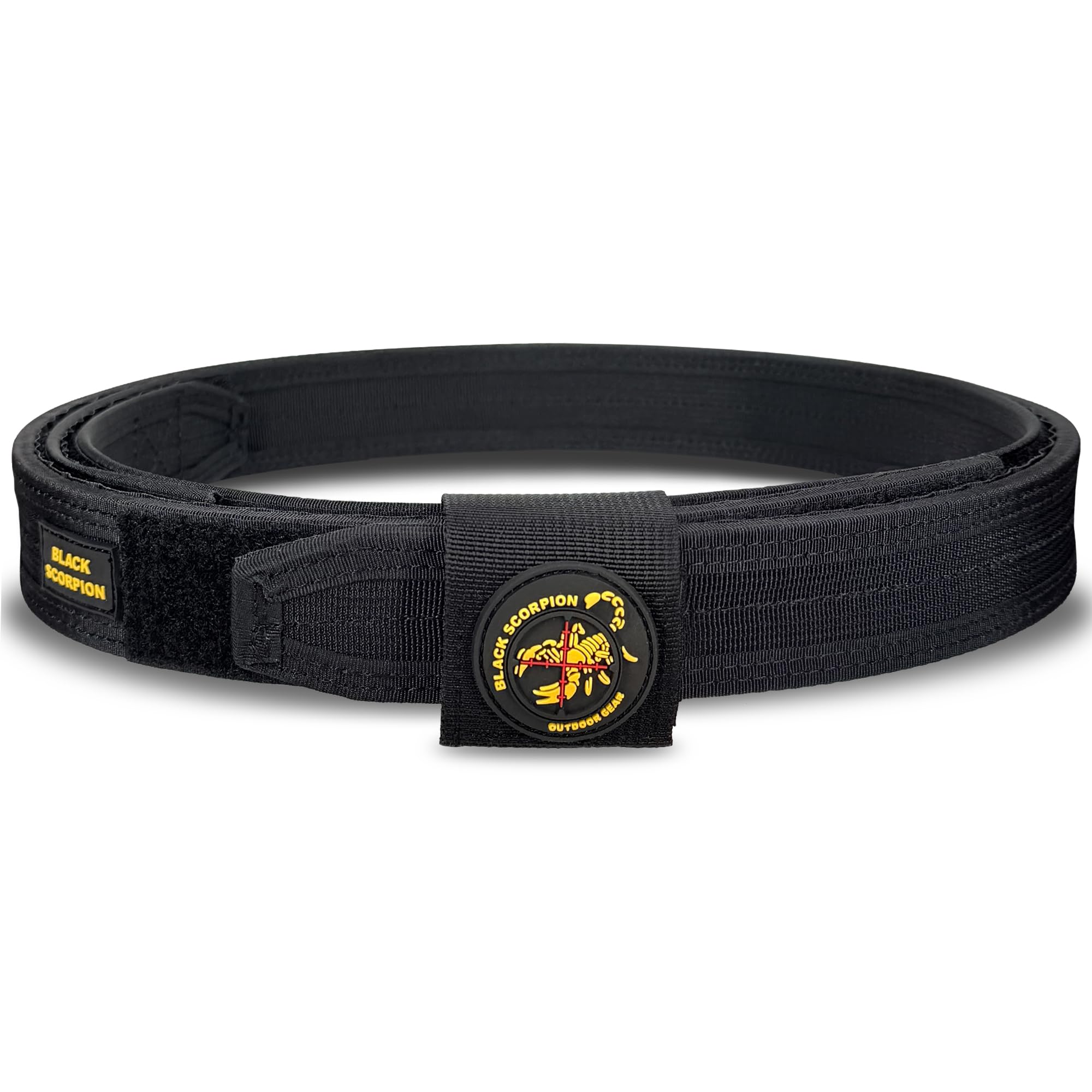
The Scorpion Pro belt uses a two-piece hook-and-loop system with a 9mm thick outer belt and a 5mm inner belt. This thickness differential is critical for competition shooters because it prevents holster clips and magazine pouches from sliding or rotating during rapid transitions. The outer belt is stiff enough to keep a fully loaded race holster vertical even after thousands of draw cycles.
Users report that after a full season of USPSA competition including around 20,000 rounds the belt retains most of its rigidity. It does soften slightly under heavy use, but it remains functional for practice and matches. The inner belt threads through standard pant loops without bunching, and the hook-and-loop interface covers the full circumference of the belt for maximum grip.
This is the strongest recommendation for anyone who competes in three-gun, IPSC, or USPSA. The stiffness is immediately noticeable compared to softer belts at higher price points. One minor note is that shipping can cause the belt to arrive rolled in a curl, but re-rolling it in the opposite direction for a day resolves the issue completely.
Why it’s great
- 9mm outer belt is stiffer than many more expensive competition belts.
- Full-coverage hook-and-loop keeps all gear locked in place.
- Inner belt is comfortable for all-day wear under outer clothing.
Good to know
- May arrive with a curl from packaging; requires re-rolling.
- Outer belt lacks a dedicated cloth cover for low-visibility use.
2. Elite Survival Systems CO Shooters Belt with Cobra Buckle

The Elite Survival Systems belt is built around a genuine cobra buckle made from hardened alloy, paired with mil-spec nylon webbing that has virtually no stretch. The webbing is stiff enough to support a Glock 19, spare magazines, handcuffs, and a knife for years without losing its shape. Users report it holding up under a 200-plus-pound load suspended from the cobra buckle during training scenarios.
The belt uses a full-length velcro panel that allows infinite micro-adjustments to the fit. This is a distinct advantage over belts with preset holes because you can dial in exactly the right tension for concealed carry without the belt shifting during a draw. The cobra buckle clicks audibly when locked and releases with a side-push motion that works smoothly with gloved hands.
One trade-off is that the belt tip has a basic finish that can show fraying after several months of daily use. Sizing also runs slightly large, so a 34-inch waist may require a size down for a snug fit. Despite these minor details, the combination of cobra buckle security and webbing stiffness makes this belt a strong contender for EDC and light duty use.
Why it’s great
- Cobra buckle is load-rated and will not release under tension.
- Velcro adjustment allows precise fit without presets.
- Extremely stiff webbing resists holster sag.
Good to know
- Belt tip finish can fray after a few months of hard use.
- Sizing runs large; measure carefully before ordering.
3. Condor Men’s Rigger’s Belt
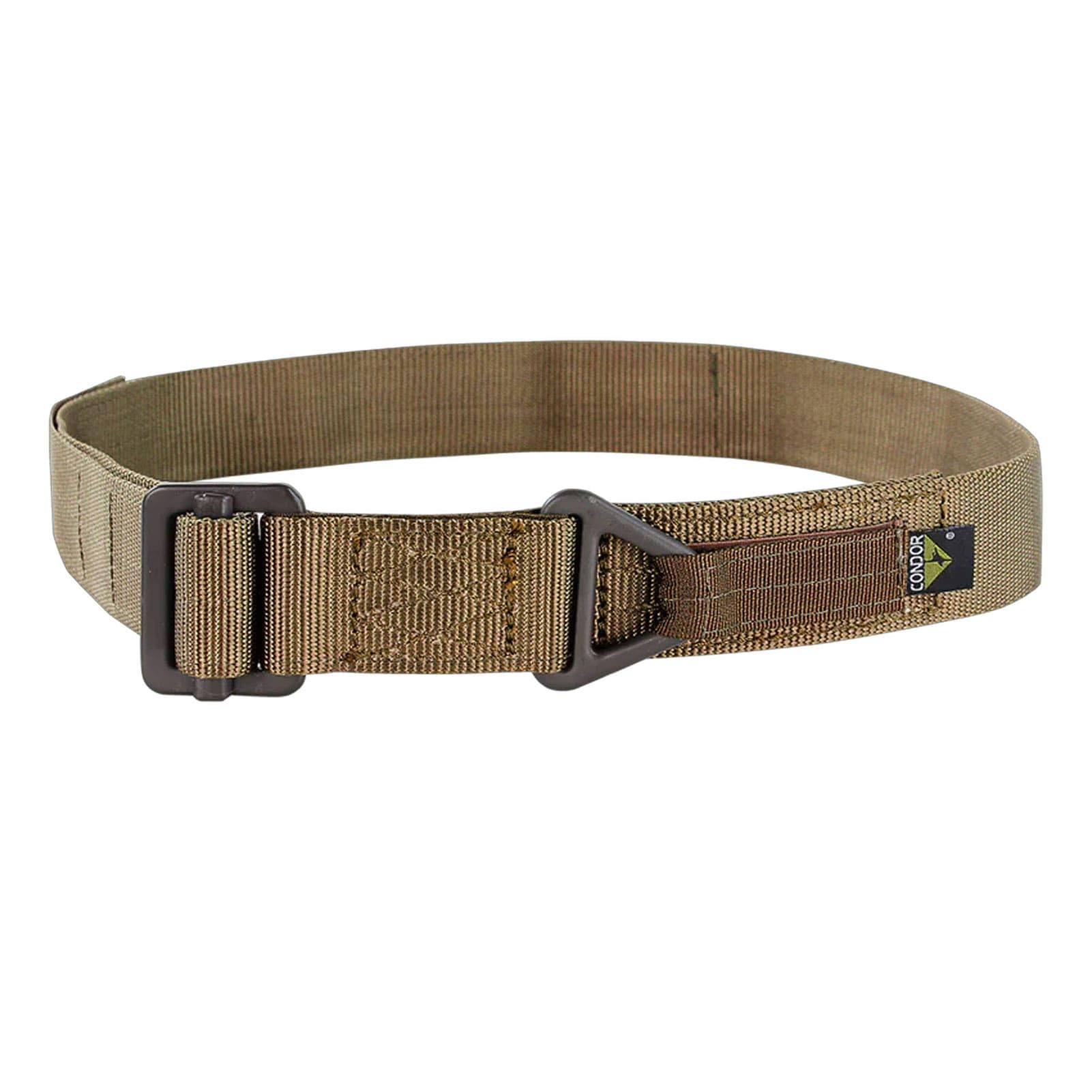
The Condor Rigger’s Belt is built from 1.75-inch thick nylon webbing with heavy steel buckles. It is designed for fall protection and load-bearing tasks, not as a concealed carry belt. The webbing is waterproof and quick-drying, making it suitable for outdoor environments where moisture and mud are factors. Users have rappelled short distances using this belt as a friction point without failure.
The steel buckles are large and robust, but they can be difficult to thread through standard BDU belt loops. The extra tail length when worn at a 36-inch waist can complicate securing the belt under pouches or gear. Condor bills this as a riggers belt, and it functions perfectly for that role—supporting heavy revolvers, machetes, or survival gear without sagging or stretching.
This belt is not a great choice for competition shooters who need a two-piece system or for concealed carriers who want a low-profile buckle. But for anyone who needs a rugged, load-bearing belt for outdoor work or tactical loadouts at a budget-friendly price point, the Condor delivers exceptional durability.
Why it’s great
- Steel buckle and thick webbing support body weight during rappelling.
- Waterproof and quick-drying for wet environments.
- Excellent value for heavy load-bearing applications.
Good to know
- Buckles are too large for some BDU belt loops.
- Tail length can be excessive and difficult to secure.
4. Raine Tactical Heavy Duty 2.25″ Duty Belt Buckle Cobra Buckle

The Raine Tactical buckle is not a full belt—it is a replacement cobra buckle designed to fit 2.25-inch duty belts. This distinction matters because many duty belts ship with plastic buckles that crack or fail under the weight of a full loadout. Swapping to this metal cobra buckle upgrades the entire belt without the cost of replacing the whole system.
Users who work in corrections and law enforcement report that the buckle is easier to operate than the original plastic hardware, and it stays securely latched during physical altercations. The buckle has a slim profile that does not add bulk to the belt, and the metal construction provides a professional, tactical appearance. It fits standard duty belt widths and attaches without requiring specialized tools.
This is the ideal solution for anyone who already owns a quality duty belt but wants to eliminate the failure point of a plastic buckle. The cobra buckle adds load-bearing capability and long-term durability. Just confirm your belt width before purchasing—this buckle is specifically designed for a 2.25-inch belt.
Why it’s great
- Metal cobra buckle replaces weak plastic buckles on duty belts.
- Easy to attach without tools and has a slimmer profile than most replacements.
- Load-rated to support full duty weight without releasing.
Good to know
- Only fits 2.25-inch duty belts; check width before ordering.
- Not a complete belt—requires an existing duty belt to attach to.
5. Safariland Bianchi 99-3-4: Duty Belt Buckleless, Basket Weave

The Safariland Bianchi 99 is a buckleless inner belt made from SafariLaminate with a 1.5-inch band of hook-and-loop sewn on one side. When the loop side faces outward, it serves as the foundation for Safariland’s buckleless duty system—a design that eliminates the bulk of a traditional buckle and creates a smooth surface for outer belt attachment. The leather is thick and stiff, measuring roughly 3mm, and it holds its shape even under heavy gear.
The basket weave texture on one side gives this belt a professional uniform appearance that meets many departmental appearance standards. The velcro on the opposite side is full-coverage, allowing the outer belt to stay firmly in place during long shifts. Users consistently report this belt lasting for years, with some noting it remains functional after a decade of service in corrections and law enforcement.
This belt is not designed for competition shooting or concealed carry. It is a purpose-built inner belt for the Safariland buckleless system, and it excels in that specific role. If you wear a uniform and need a buckleless setup that does not sag or shift, this is a proven solution that has been a gold standard in the duty gear world for years.
Why it’s great
- Thick leather construction holds shape and does not sag.
- Full-coverage velcro ensures secure outer belt attachment.
- Proven durability that lasts for years of daily uniform wear.
Good to know
- Only functions as an inner belt in a buckleless system.
- Basket weave texture may not match all uniform requirements.
FAQ
What webbing width is best for a combat belt?
Can a riggers belt be used for concealed carry?
How do I know if a belt is stiff enough for competition shooting?
Final Thoughts: The Verdict
For most users, the best combat belt winner is the Scorpion Outdoor Gear Pro Competition Belt because its 9mm outer belt provides the stiffness required for competition and heavy loadouts without reaching premium pricing. If you want the security of a cobra buckle for concealed carry or light duty, grab the Elite Survival Systems CO Shooters Belt. And for a budget-friendly riggers belt that can handle fall protection and outdoor load bearing, nothing beats the Condor Men’s Rigger’s Belt.

Mo Maruf
I created WellFizz to bridge the gap between vague wellness advice and actionable solutions. My mission is simple: to decode the research and give you practical tools you can actually use.
Beyond the data, I am a passionate traveler. I believe that stepping away from the screen to explore new environments is essential for mental clarity and physical vitality.