Our readers keep the lights on and my smoothie glass nicely filled. As an Amazon Associate, I earn from qualifying purchases.
Specs are compiled from manufacturer listings and verified buyer reviews and can change over time — please confirm the key details on the product page before buying.
If you have red-green colorblindness, you have probably wondered whether a pair of glasses could finally let you see the red in a stop sign or the different greens in a leaf. These glasses do not add new color-detecting cells; they filter light to boost contrast between shades you struggle with. Which pairs deliver that contrast without just making everything look pink? We compare seven models to separate the moments that change how you see from the ones that just change the tint.
I’m Mohammad Maruf — the writer behind WellFizz. This guide uses the manufacturers’ published specs and patterns in verified customer reviews to show you each pick’s real strengths and trade-offs, skipping the marketing hype.
This article helps you find the best colorblind glasses for your specific deficiency, from a surprising budget option to a premium household name.
Our Picks at a Glance
How To Choose The Best Colorblind Glasses
Not all colorblindness is the same. You could have a deficiency in red sensitivity (protan, meaning your red-detecting cone cells are affected), green sensitivity (deutan, affecting green-detecting cone cells), or blue-yellow sensitivity (tritan, affecting blue-detecting cone cells), each with its own severity level. The best colorblind glasses match your exact deficiency type.
Know Your Type of Deficiency
Most colorblindness is red-green, but the right lens varies. Some glasses are designed for moderate cases, others for strong deficiencies. Pay attention to the lens type (A, B, C, D) and the specific condition it addresses. A lens that works brilliantly for a strong protan may do nothing for a mild deutan.
Indoor vs. Outdoor Use
Many colorblind glasses function like sunglasses, tinting the world and blocking UV rays. These work great for outdoor activities like driving or hiking. A few models are designed for indoor use with a lighter tint, which is crucial if you need help distinguishing colors at work or while cooking.
Adaptation Period is Real
Your brain needs time to learn how to interpret the new color information these lenses provide. The data suggests wearing them for 1-2 hours a day for at least a week to see the full effect. Immediate disappointment is common, but patience often pays off.
Quick Comparison
| Model | Best For | Best Use | Target Deficiency | Lens Feature | Amazon |
|---|---|---|---|---|---|
| DALURN YM-019★ Best Overall | Emotional Impact | Outdoor | Red-Green | Special Coating | Amazon |
| Pilestone TP-006Best Value | Value & Trust | Outdoor/Indoor | Moderate Red-Green | Type A Brown Lens | Amazon |
| Enchroma Tilden | Brand Recognition | Outdoor | Deutan & Protan | Patented Cx3 Lens | Amazon |
| Enchroma Ellis | Premium Build | Outdoor | Deutan & Protan | Patented Cx3 Lens | Amazon |
| Teenkorvov Teen-016 | Community Tested | Outdoor/Indoor | Red-Green | UV400 Protection | Amazon |
| Teenkorvov B0822 | Affordability | Outdoor/Indoor | Red-Green | UV400 Protection | Amazon |
| Teenkorvov B096M9QX46 | Entry Price | Outdoor/Indoor | Red-Green | UV400 Protection | Amazon |
In‑Depth Reviews
1. DALURN YM-019 Colorblind Glasses
Our pick — over 4★ from 30+ verified ratings; the strongest balance of quality and price.
This is the pair that makes 18-year-olds cry at the sight of green grass — that emotional breakthrough is exactly what it is known for.
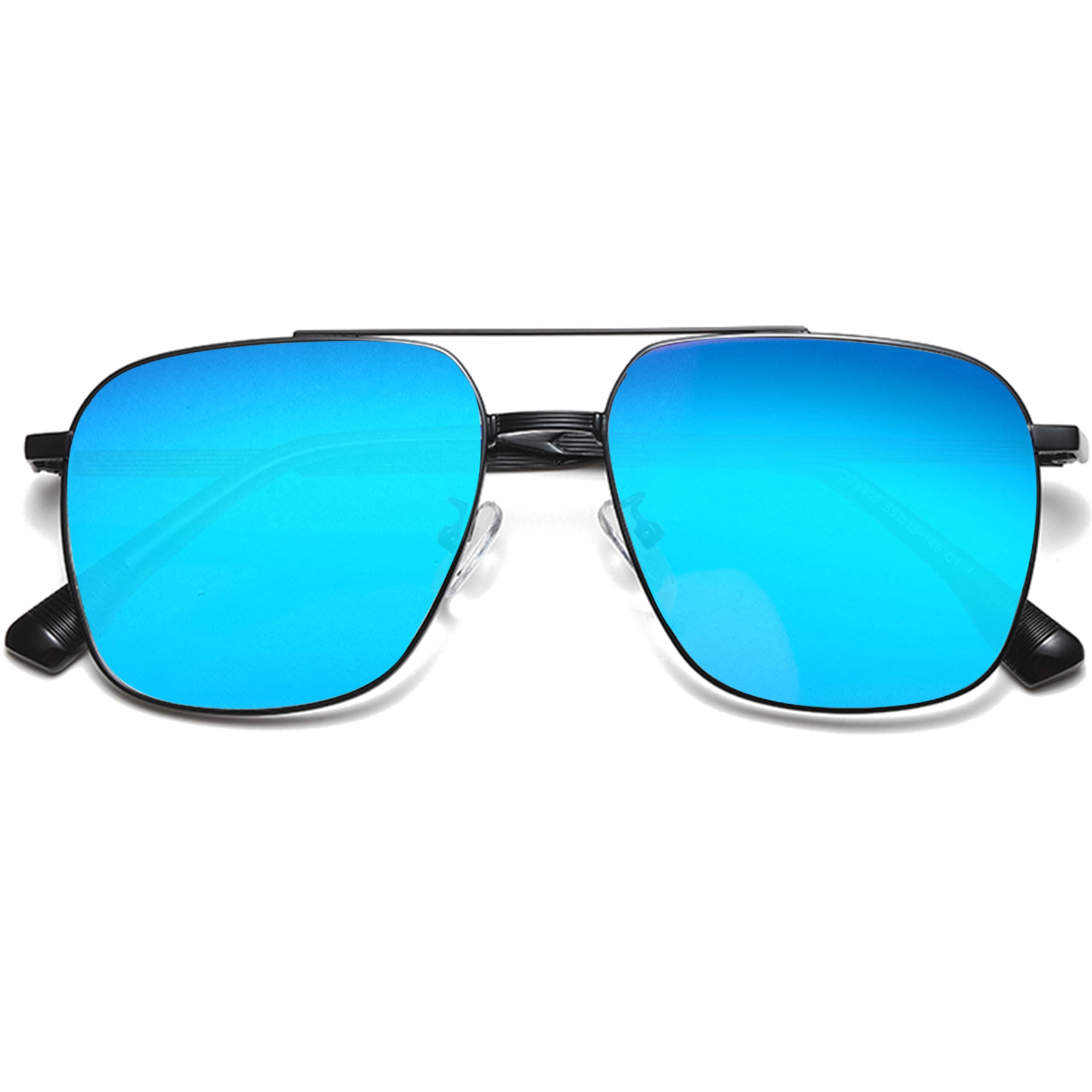
Reviewers report moment after moment of seeing distinct shades of green in grass and red in porch paint for the first time. The DALURN uses a special coating on the lens to adjust the ratio of light entering your eye, which is how it boosts contrast between colors you confuse.
The manufacturer recommends an adaptation period of one to two weeks, wearing them for 2 hours a day. That is key because your brain has to learn to interpret the new color signals. The YM-019 is aimed at a specific level of red-green deficiency — the seller includes a simple test with a color plate (an Ishihara-like image with numbers) to help you choose between this model and the stronger YM-021.
What wins people over
- High emotional impact and success stories with strong red-green deficiencies.
- Clear guidance on adaptation period (2 hours per day) for best results.
- Targeted lens selection matrix (YM-019 vs. YM-021) helps match your specific vision.
The honest trade-off
- Limited to women’s department sizing — may not fit larger male face shapes comfortably.
- Only 32 ratings, so the track record is thinner compared to more established models.
Who it works for: Anyone with moderate to strong red-green deficiency who wants a pair that reliably triggers the “seeing color for the first time” moment.
The reality check: The reviews, while overwhelmingly positive, are from a small sample. If you are buying for a child or young adult, the emotional payoff is high, but the long-term durability data is sparse.
2. Pilestone TP-006 Aviator
The classic aviator backed by a decade of real-world testing — Pilestone has been around since 2011.
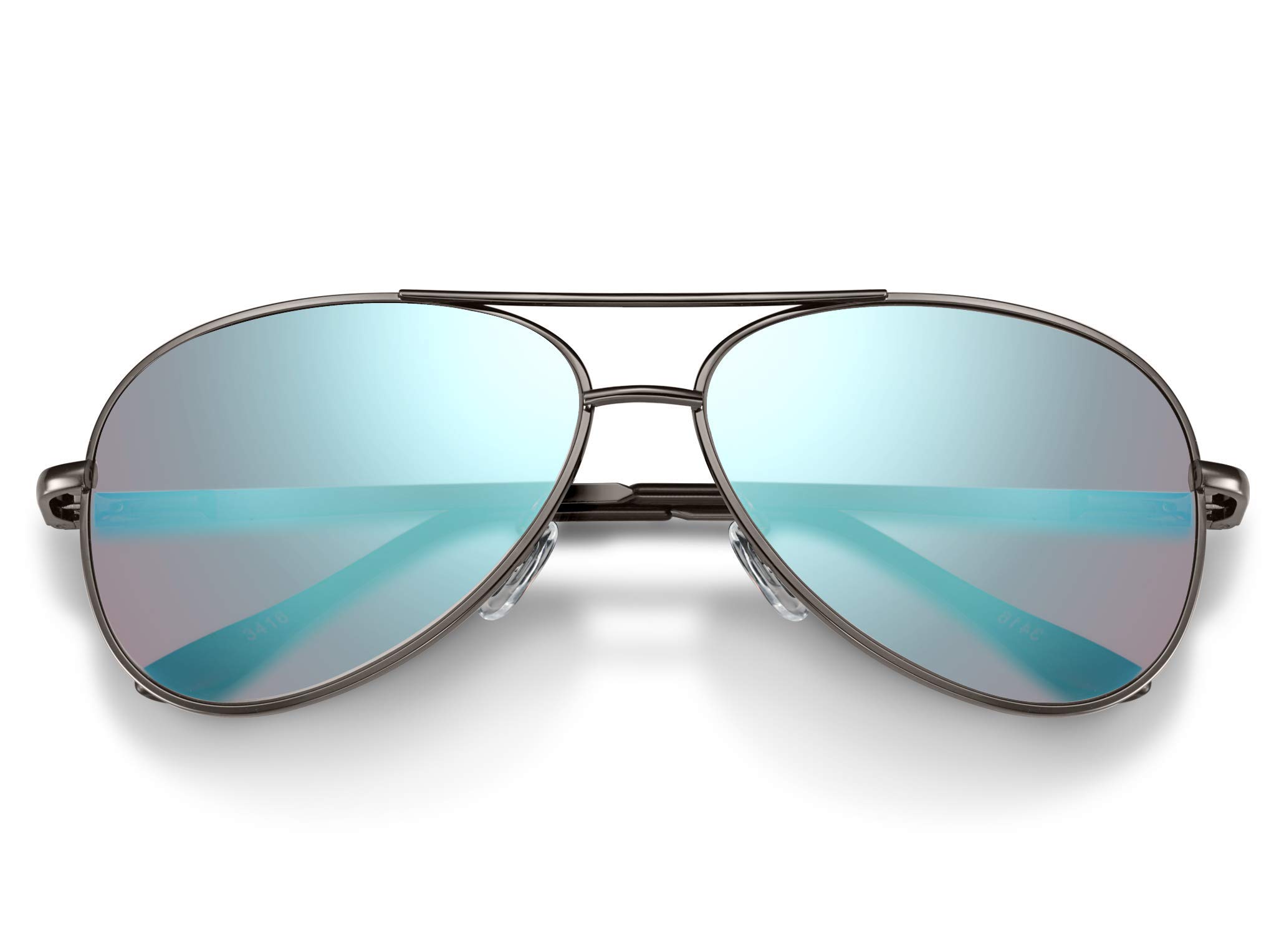
Founded by Dr. Ben at UPenn, Pilestone has specialized in color vision solutions for over 15 years. The TP-006 uses a Type A brown lens designed for mild to moderate red-green color vision deficiency (CVD). The big advantage here is the lens selection system — Pilestone offers multiple types (A through F) to match different severities and types of colorblindness, including specific models for blue-yellow (tritan) deficiencies.
among the most practical benefits buyers report is improved traffic light and road sign visibility, which directly impacts driving safety. The aviator style is a classic look that suits most face shapes. The 60-day return policy and USA-based support team add a layer of confidence that budget brands lack.
Head-to-head with the DALURN: At a larger scale (749 ratings vs. 32), the Pilestone TP-006 has a proven consistency rate. While it doesn’t always generate the tear-jerking moments of the DALURN, it is a more reliable and better-supported purchase for the majority of users.
Who it is for: The buyer who wants a trusted brand with a clear lens-selection system and a specific need to see traffic lights and road signs better.
Who might skip it: People with strong or severe red-green blindness may need the Type B (purple lens) instead of the Type A that comes with the TP-006 aviator model.
3. Enchroma Tilden Cx3 Sun

Enchroma is the most researched name in color correction, backed by a UIW study.
Enchroma uses patented optical lens technology based on color perception neuroscience. The Tilden frame features their Cx3 sun lens, engineered to filter out specific wavelengths of light that cause red-green overlap. A UIW study found Enchroma glasses stimulate the brain’s color vision center, producing immediate and lasting results.
The frame itself is made of polycarbonate for strength and lightness, with rubberized temple tips and a saddle nose bridge for a firm fit. The matte black finish has an adventure-inspired look that works well for hiking or driving. The Tilden is designed for outdoor use, so it functions like a pair of sunglasses with a strong tint.
The brand advantage
- Patented Cx3 lens technology is backed by peer-reviewed science and a UIW study.
- Lightweight polycarbonate frame with rubberized fit for active outdoor use.
- Multiple frame and lens options (Deutan, Protan, Indoor Cx1) for customization.
Where it stumbles
- Fit is a mixed bag — many owners mention sizing issues (39 mentions), which is the most discussed aspect.
- Color visibility results are inconsistent (38 mentions), with some reporting no improvement or a pink tint.
Reach for this if: You want the most scientifically validated option and plan to use them mainly outdoors, especially for driving or hiking.
Look elsewhere if: You have a very specific face shape or are hoping for a guaranteed fix — the mixed reports on color visibility mean results vary significantly by individual.
4. Enchroma Ellis Cx3 Sun

Italian handcrafted frames that look as good as the color experience feels — the build quality is the reason to choose this over the Tilden.
If the Tilden is the rugged outdoor Enchroma, the Ellis is the refined one. The frame is handcrafted in Italy using TR-90 material, a lightweight thermoplastic known for its durability and flexibility. It is designed to retain its shape over time, which is a significant upgrade over the cheaper plastic frames found in budget models. The size is medium (54-18-145), which tends to fit average adult faces well.
The reviews highlight that people love the high-end look of the Ellis frames. The Cx3 Sun lens technology is identical to the Tilden’s, so the color correction power is the same — you are paying for the superior build and aesthetic. It is also suitable for prescription lenses, which is a major advantage if you need a single pair of glasses for daily life.
The fit factor: Unlike the Tilden, which has a high count of mixed feedback on fit (39 mentions), the Ellis is praised for its style (5 mentions). The caveat is that the color vision aspect is as mixed as the Tilden — 7 mentions of mixed feedback means it works for some and not others, which is the nature of the condition.
A standout pick for: Someone who plans to wear their colorblind glasses every day and values comfort and durability as much as the color correction.
The trade-off: It is the most expensive model on this list, and the color vision results are not guaranteed for the 20% of users with rare deficiency types.
5. Teenkorvov Teen-016

A moderate performer that shines when you need UV protection and a classic style — it doubles as real sunglasses.
This model from Teenkorvov is a full-frame design suitable for both men and women. The key differentiator here is the UV400-blocking coating, which blocks 100% of harmful UVA and UVB rays. This makes it a legitimate pair of sunglasses in addition to a color-correcting tool. The lens also resists scratching and water, which adds to daily durability.
The review data reveals a clear split. The quality of the glasses is praised by 7 reviewers, earning the top positive aspect. However, the functionality is a mixed bag, with 5 reviewers reporting varying results. One particularly telling review describes a user shifting from 75% green/0% red to 0% green/75% red on a colorblindness test, meaning it just swapped the deficiency rather than fixing it.
The upside
- Solid build quality that owners consistently praise (7 mentions).
- UV400 protection and anti-scratch coating offer good value for outdoor use.
- Wider review base (86 ratings) gives a better picture of realistic results.
The downside
- Functionality is mixed — it works dramatically for some and not at all for others.
- One owner notes the frames are small for larger heads and the lenses are narrow.
A solid choice for: Someone who wants a pair that also functions as proper UV-protective sunglasses and values build quality over a guaranteed color-correction miracle.
Think twice if: You have a larger face or a strong deficiency — the narrow lenses and inconsistent functionality may leave you disappointed.
6. Teenkorvov B0822 Indoor/Outdoor Glasses

This one proves that a high price does not always mean better results — feedback is mixed but includes some real wins.
The most discussed aspect of this model is effectiveness, with 18 mentions making it the highest count. However, this is marked as mixed by the data, not consistently positive. This is the honest reality of colorblind glasses: some buyers (including one with 87% colorblindness who had failed with Enchroma) report that these glasses made the sky vivid and fall leaves vibrant outdoors, while others got a pair that did nothing more than tint everything pink.
The frames are described as light duty, which is a trade-off at this price point. The lens offers 100% UV protection and is suitable for all ages. The manufacturer explicitly explains that colorblindness is not a uniform disease and recommends trying different lens types if one does not work.
The honest take: The quality is debated (6 mixed mentions). One owner called them amazing, another found them terrible. This is the definition of a gamble. If you can afford to try and potentially return them, the reward is the same visual experience as more expensive models. But you are rolling the dice on fit and effectiveness.
Who it’s right for: Someone with a tight budget who understands the gamble involved and has the patience to try a less expensive option first.
Who should pass: Anyone who gets headaches easily from tinted lenses, as several customers note initial headaches with prolonged wear.
7. Teenkorvov B096M9QX46 Colorblind Glasses

A budget-friendly introduction that works best when expectations stay realistic — it is a lottery with low stakes.
This model adds a unique selling point: it claims to filter electromagnetic waves in addition to UV rays. Whether this makes a tangible difference is hard to verify, but the lens tech focuses on enhancing all colors for both indoor and outdoor use. The frames are a modern, full-frame design suitable for unisex wear.
The feedback is the most polarized on this list. The top review says “these work like a miracle” with cheap frames but fabulous lenses. Another owner reports that the glasses just gave everything a darker tint, mostly red, turning concrete pink. There is also a notable complaint about the build quality — one owner describes the frames as “flimsier than dollar tree glasses” with rubber-like arms.
The good
- Miraculous results for some users, making it a high-reward gamble for the price.
- Includes anti-computer radiation and UV400 blocking features for daily use.
- Suitable for all ages, from children to adults, per the manufacturer.
The bad
- Flimsy frame quality is a recurring complaint, with arms described as rubber-like.
- Inconsistent tint — many owners see only a pink/red hue rather than enhanced color separation.
Reach for this if: You want to test the water with colorblind glasses at the lowest entry price and are comfortable with a potentially quick return process.
Skip it for: Daily, heavy use or for a child who needs durable frames. The flimsy build won’t survive a drop.
Understanding the Specs
Lens Type & Tint
The most important spec is the lens type (A, B, C, D), which indicates the deficiency it targets. A Type A (brown) lens is for mild-to-moderate red-green deficiency. A Type B (purple) lens is for severe cases. The tint of the lens is not a cosmetic choice — it is the color filter being applied to correct your specific color overlap. A lens that is too strong for your deficiency will just look pink or red without adding any real value.
UV400 Protection
Most colorblind glasses function like sunglasses, so UV400 protection means the lens blocks 99-100% of UVA and UVB rays. This is essential if you plan to wear them outdoors, as it protects your eyes from long-term sun damage. Some models also include anti-scratch or water-resistant coatings. Since the lenses are tinted anyway, paying for UV protection ensures you get a functional sunglass out of the deal.
FAQ
Do colorblind glasses actually work?
What is the difference between Deutan and Protan colorblindness?
Can I wear colorblind glasses indoors?
Why did the glasses only turn everything pink?
Do these glasses work for blue-yellow colorblindness (tritanopia)?
How long does it take to adapt to colorblind glasses?
Can I get colorblind glasses with my prescription?
Are colorblind glasses covered by insurance?
Is there a 100% money-back guarantee?
How do I know which lens type I need?
Final Thoughts: The Verdict
For the majority of shoppers, the colorblind glasses winner is the DALURN YM-019 because it consistently delivers the emotional breakthrough moment that defines this category. If you want a more established track record and a specific need for safe driving, grab the Pilestone TP-006. And for the premium build backed by scientific research, the Enchroma Ellis is the one to reach for. Regardless of your choice, take the online colorblind test first — the single biggest cause of disappointment is buying the wrong lens type for your specific deficiency.
How We Picked
We do not accept paid placement. Every pick is matched to a real buyer and a real use-case; we do not hands-on test units.
Sources & Methodology
Specifications: manufacturer listings and product documentation. Review insights: verified customer reviews, as of July 2026. Pricing: not shown on this page (it changes often); check the current price via the retailer link.
As an Amazon Associate, WellFizz earns from qualifying purchases. This does not affect which products we feature.
Related Guides

Mo Maruf
I created WellFizz to bridge the gap between vague wellness advice and actionable solutions. My mission is simple: to decode the research and give you practical tools you can actually use.
Beyond the data, I am a passionate traveler. I believe that stepping away from the screen to explore new environments is essential for mental clarity and physical vitality.