Our readers keep the lights on and my smoothie glass nicely filled. As an Amazon Associate, I earn from qualifying purchases.
Specs are compiled from manufacturer listings and verified buyer reviews and can change over time — please confirm the key details on the product page before buying.
Sunlight hitting the water turns a lake into a mirror, hiding every rock, log, and fish below. You need color polarized glasses for fishing to cut through that reflection and see straight into the water where the action is. The right pair kills the glare so you spot structure and fish instead of your own squinting face.
I’m Mohammad Maruf — the founder and writer behind WellFizz. This guide is built by comparing the manufacturers’ published specifications and the patterns across verified customer reviews, so you get each pick’s real strengths and trade-offs instead of marketing spin.
These are the best color polarized glasses for fishing you can buy right now, whether you wade shallow flats, trace drop-offs in a bass boat, or just want to stop squinting at the surface.
Our Picks at a Glance

How To Choose The Best Color Polarized Glasses For Fishing
Picking fishing sunglasses is not just about shading your eyes. The wrong lens color can wash out the very thing you are trying to see, while the right one makes underwater structure and fish pop into view. Here is what matters most.
Lens Color and Its Effect on the Water
Different lens colors handle light and water conditions differently. Copper and amber tones boost contrast in variable light, making them a go-to for sight-fishing in shallow flats or rivers. Gray lenses preserve true color in bright sun, which helps when you are scanning deep water. Green or blue mirror lenses cut through intense glare on open water and keep the scene from looking artificially warm. Picking the right tint is the single most important spec for an angler.
Polarization Quality
Not all polarized lenses are equal. A good polarized filter eliminates the harsh horizontal glare that turns water into a mirror, letting you see below the surface. Lower-quality lenses can leave residual glare or create visual distortion. Look for lenses that block 100% of UVA and UVB rays (UV400 protection is the standard) and that maintain clarity all the way to the edge of the lens.
Frame Fit and Coverage
An all-day fishing session needs a frame that stays put. Wrap-around styles block wind and peripheral glare, and they often fit more securely during active casting. Frame material matters too — Grilamid and TR90 are lightweight, flexible, and resist heat, while nylon frames offer comfort for larger head sizes. Nose and temple grips (tacky rubber pads) prevent slipping when your hands are wet or sweaty.
Lens Material: Glass vs. Plastic
Glass lenses offer scratch resistance and optical purity that plastic cannot match, but they are heavier and more expensive. Polycarbonate lenses are lighter, impact-resistant, and much more affordable, but they scratch more easily over time. For fishing, where you might wipe lenses with a damp shirt or drop them on a boat deck, scratch resistance is a real trade-off to weigh.
Quick Comparison
| Model | Best For | Lens Material | Polarization | Frame Type | Amazon |
|---|---|---|---|---|---|
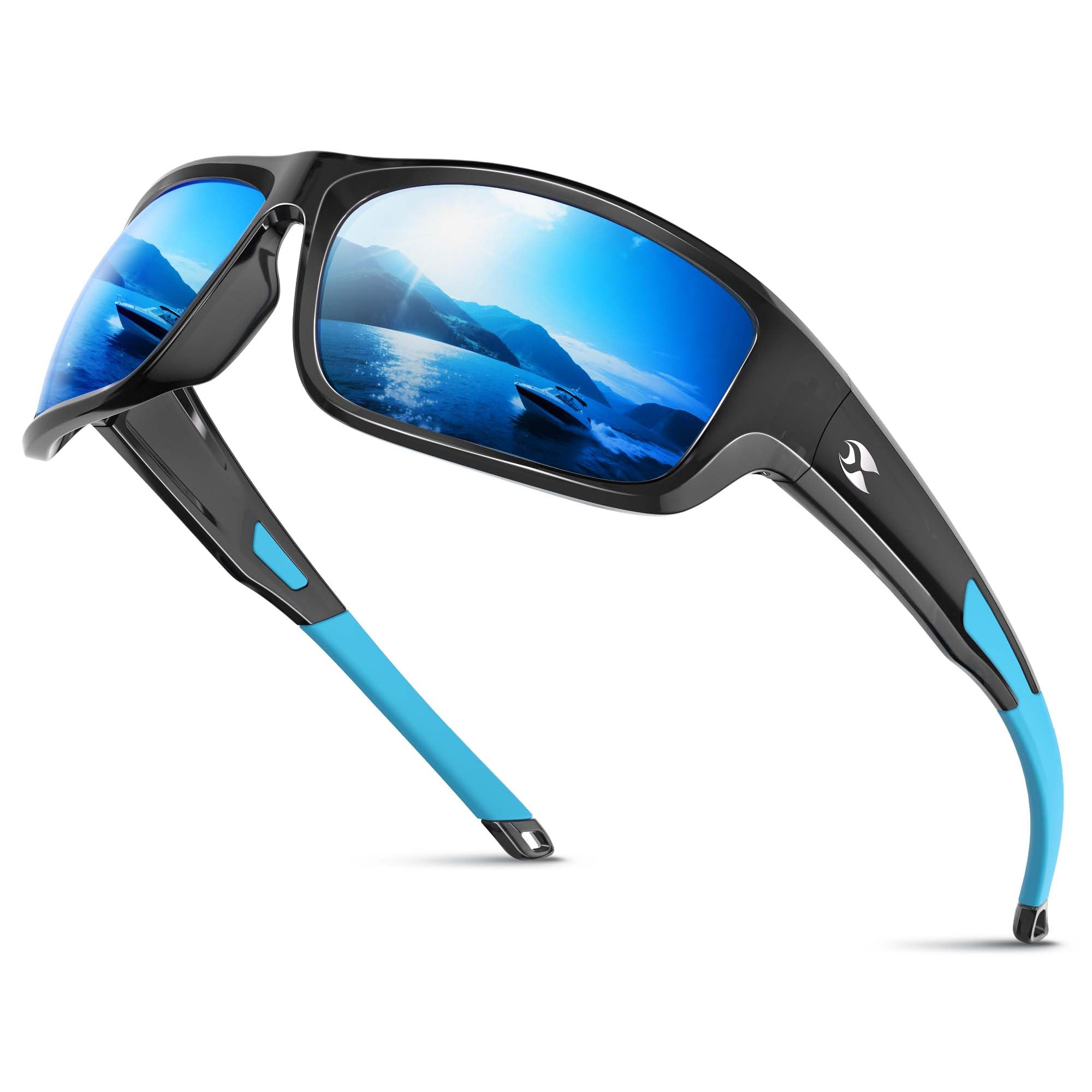
| Costa Del Mar Fantail★ Best Overall | Serious anglers on the water | 580G Glass | Premium | Co-molded Wrap | Amazon |
| suoso SportsValue Pick | Budget-friendly all-day wear | TAC | Yes | Wrap-around | Amazon |
| KastKing TarkioBig Head Hero | Big heads and wide coverage | Polycarbonate | Yes | Rimless Wrap | Amazon |
| Flying Fisherman Muriel | Lightweight budget pick | AcuTint Lens | Yes | Full Frame | Amazon |
| KastKing Ellijay Bifocal | Anglers who need reading help | Polycarbonate | Yes | Full Frame Plastic | Amazon |
| Fishoholic Bi-Focal | Kayak and wade fishing | Polycarbonate | Yes | Full Frame FlexTuff | Amazon |
| Pilotfish Ally | Versatile on-water and driving | CR39 | Yes | Spring Flex Frame | Amazon |
| BNUS Corning Glass | Scratch-resistant budget buy | Corning Glass | Yes | Wrap-around Matte | Amazon |
| Maui Jim Onshore | Maximum optical clarity | SuperThin Glass | Premium | Nylon Wrap | Amazon |
In‑Depth Reviews
1. Costa Del Mar Fantail Mens Polarized Sunglasses 580G 59
Our pick — over 4.5★ from 750+ verified ratings; the strongest balance of quality and price.
The 580G glass lens eliminates internal glare so you see the truth of the water, not a reflection of your own face.
Costa has been the name on serious anglers’ faces since 1983, and the Fantail carries that lineage in a slightly smaller package than the famous Blackfin. The defining spec here is the 580G glass lens — it uses a glass formula that Costa claims absorbs rather than reflects light, which cuts internal glare inside the lens itself. That means what you see through these is closer to the naked-eye truth than what most polarized lenses deliver.
On the water, the difference is immediate. Buyers report polarization that beats premium competitors they had worn for years, with one noting the Fantail was identical to a pair costing over from a brick-and-mortar store. The fit is intentionally snug — owners who prefer a locked-in feel love it, while those who want a loose drape should pay attention to the sizing notes. At 4.6 stars from a strong crowd of owners, the only recurring tension is that snug fit: you either want glasses that grip your head during a hookset or you do not.
For anyone who spends real time on a boat, wading a flat, or driving to the launch with the sun in their eyes, the Fantail’s 580G glass delivers a level of clarity and scratch resistance that cheaper polycarbonate simply cannot sustain. The trade-off is that this is a serious investment — but owners who have been using Costa all their lives call it a superior product for a reason.
Why the Water Community Swears by It
- 580G glass optics eliminate internal glare for cleaner underwater vision
- Co-molded frame stays put during active fishing — no slipping off on a hookset
- Outperforms other premium brands in polarization clarity, per multiple owner comparisons
The Fit Reality Check
- Snug fit bothers some — try before buying if you dislike a tight frame
- Premium price point puts it out of reach for casual or occasional anglers
Grab these for: The angler who wants the clearest possible view into the water, values scratch-resistant glass, and does not mind a snug, confidence-inspiring fit.
Think twice if: You prefer a loose, barely-there frame feel or you fish infrequently enough that a mid-range pair would serve you just as well.
2. suoso Sports Polarized Sunglasses for Men Women UV400 Protection
Punches far above its price with polarization that owners compare to frames costing ten times as much.
The suoso Sports sunglasses punch so far above their price that owners consistently compare the polarization quality to frames costing ten times as much. The TR90 frame is lightweight and flexible, and the wrap-around design keeps wind and side light from sneaking in while you are driving, casting, or pedaling. That full coverage is a practical edge for anyone who fishes in open water or bright, exposed banks.
What wins people over is the all-day comfort. Owners mention wearing these through sunny and overcast days alike, with one noting the view stayed perfectly clear even under a cloudy sky — something cheaper polarized lenses often fail to do. The package also includes a hard case, soft pouch, and sports band, which is an unusual amount of gear at this price. The only aesthetic trade-off is that the wrap style is bulky; as one owner put it, if nobody sees you, you will love them.
For the angler who wants genuine polarization, UV400 protection, and a frame that does not fatigue the face, this is the budget-friendly pick that simply works. The quality scores from over a hundred owners back that up as the most-praised feature by a wide margin.
Standout strength: crisp polarization that holds up in variable light, wrapped in a comfortable TR90 frame.
The honest caveat: The wrap design is large and not fashion-forward — function-first styling that some find unflattering.
Best for: Anglers on a budget who refuse to compromise on glare reduction and want all-day comfort without worrying about loss or damage.
Skip if: You want a low-profile, stylish frame for wearing off the water as well.
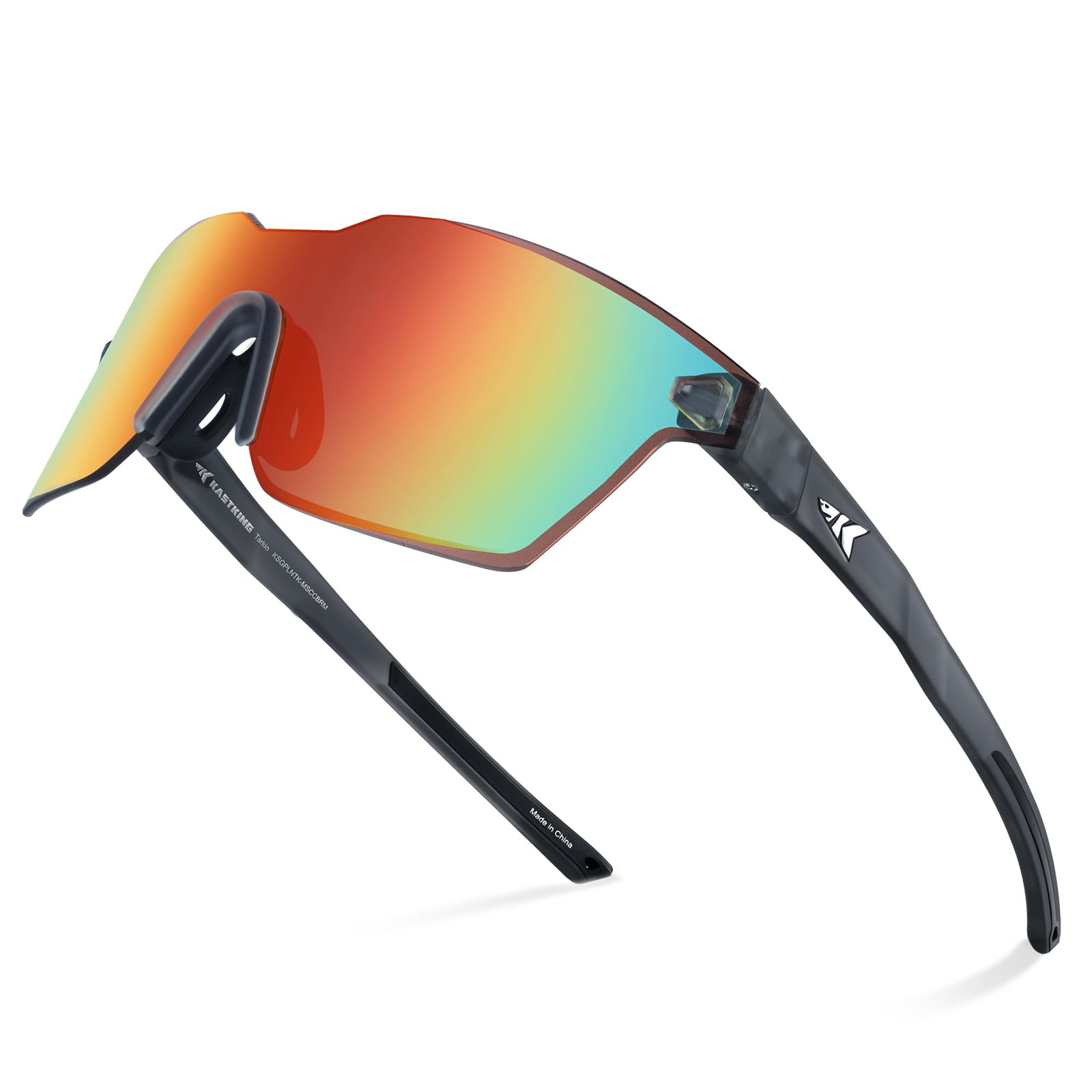
3. KastKing Tarkio Polarized Fishing Sunglasses
Its single-piece polycarbonate lens gives a wide, unobstructed view for larger faces.
KastKing designed the Tarkio specifically with larger face sizes in mind, and the feedback is unmistakable: buyers with big heads call these the perfect fishing glasses. The single PC lens (a single-piece polycarbonate shield) wraps around the face, covering a wide visual area that helps you spot fish and underwater structure without turning your head. The rimless design keeps the weight down — something owners consistently praise as a relief during long sessions.
Lens quality is the most-discussed feature here, with the polarized filter earning strong marks for glare reduction that lets you see into the water clearly. The tint hits a balance — not too dark, not too light — so you can wear them from bright noon into late afternoon without swapping pairs. A nice case is included, and the overall build feels more durable than the price suggests. The main frustration comes from the temple arms: the plastic is described as slippery, which can let the glasses slide off if you are leaning over the water.
If you have always struggled to find sport sunglasses that actually fit a wider face without pinching, the Tarkio solves that problem directly. It is a focused, practical tool for the angler who needs coverage and comfort more than style points.
Why it stands out: The single, wide polycarbonate lens gives you an uninterrupted field of view, purpose-built for larger heads.
The one trade-off: Slippery temple arms can cause sliding — a secondary retention strap would help.
Reach for these if: You need a wide fit and a broad, clear view into the water without frames blocking your periphery.
Look elsewhere if: You have a narrow face or you need tacky temple grips that lock onto your head.
4. Flying Fisherman Muriel Polarized Sunglasses
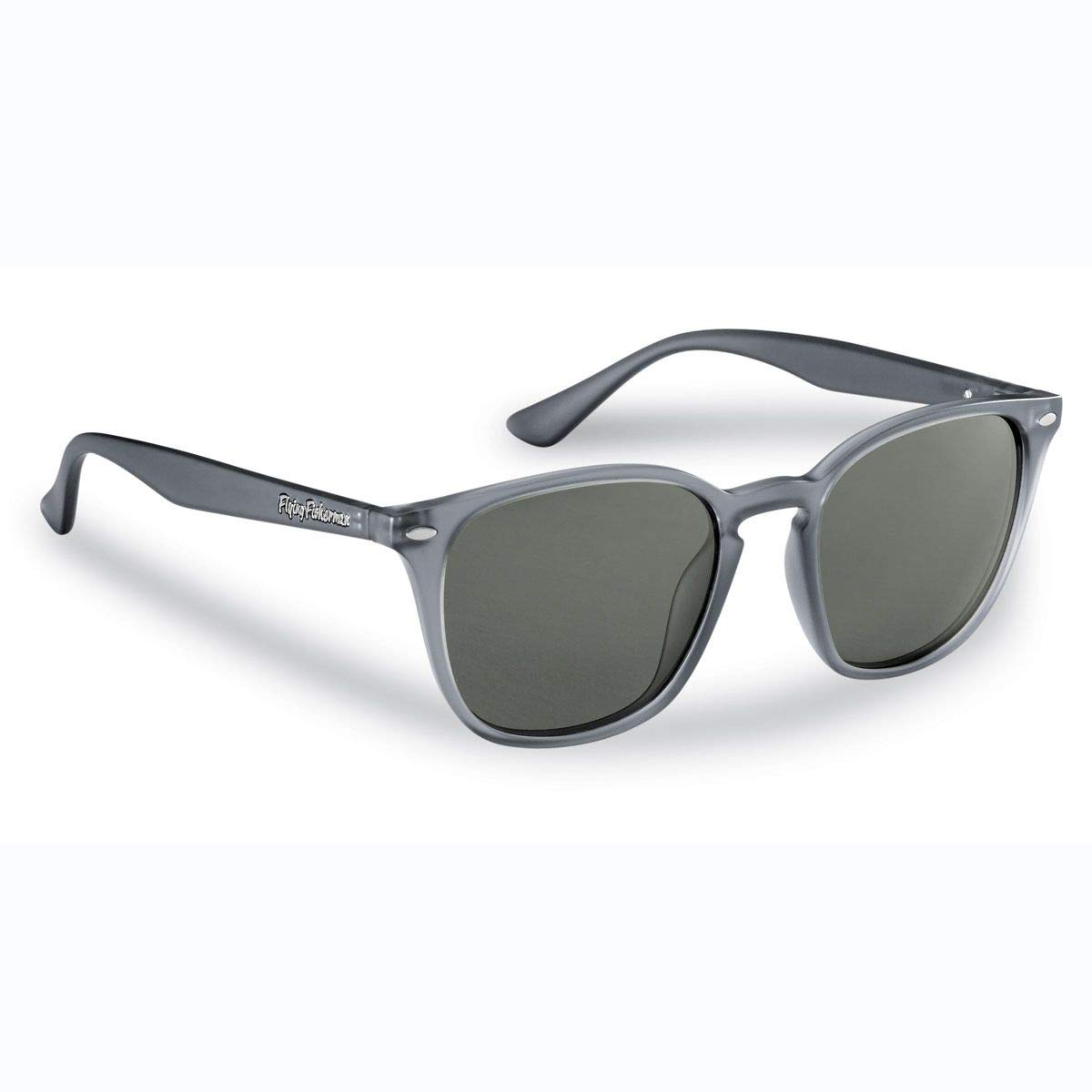
At just 0.9 ounces, this frame is almost impossible to feel after a few minutes of wear.
At just 0.9 ounces, the Flying Fisherman Muriel is almost impossible to feel after a few minutes of wear. The brand has been designing eyewear in the Florida Keys since 1985, so the AcuTint lens technology was developed in an environment that tests glare and UV exposure harder than most. The amber lens tint boosts contrast in variable light, making it a strong choice for sight-fishing in shallow water or reading current seams in a river.
The polarized filter here blocks 100% of UVA and UVB rays, and the medium tint is a deliberate design choice — it is not so dark that you lose detail in shadowy areas under trees or docks. The appearance wins the most praise by far, with many owners calling these cute or classy, especially on smaller faces. Multiple buyers are on their fourth or fifth pair, which speaks to consistent value at the price. However, the lens coating can scratch if you are careless, and a few customers note that the hinges feel fragile over time.
For the angler who wants an ultralight frame that delivers solid polarization without the bulk of a heavy sport wrap, the Muriel is a polished, proven choice. It is also a rare option that fits women and smaller faces well without looking oversized.
The standout feature: 0.9 ounces of weight and an amber AcuTint lens that keeps contrast high without darkening shadows.
The watch-out: Scratches come easier than on glass, and the hinges feel less sturdy than the lens promises.
Best for: The all-day kayaker or bank walker who wants a barely-there frame and good contrast in mixed light.
skip it if: You are hard on gear and need a frame that can take drops on gravel or boat decks.
5. KastKing Ellijay Bifocal Polarized Sunglasses

The bifocal segment sits flush with the lens surface so you never fumble for readers to tie a knot.
The KastKing Ellijay solves a specific fishing frustration: the constant swap between polarized sunglasses to see the water and reading glasses to tie a knot or check your phone. The bifocal segment sits flush with the lens surface at magnifications of 1.5x, 2.0x, or 2.5x, and reviewers point out the reading zone is positioned well — it does not interfere with your forward field of vision while you are scanning the surface.
The frame is made from Grilamid, a material used in military and medical applications. That means it is flexible, heat-resistant, and unusually light for a full-frame sunglass. The brown lens color (with a chartreuse mirror) increases contrast and depth perception, which is ideal for partly cloudy to sunny conditions on the water. An oleophobic coating repels saltwater, oil, and dirt, keeping the lenses clean longer between wipes. Quality and lens clarity are the two most-praised features, with owners using these for everything from fly fishing to driving and construction work.
If you need reading help and you spend time on the water, the Ellijay saves you the headache of carrying two pairs. The trade-off is that you are locked into a specific magnification — make sure you pick the right power for your typical reading distance.
The Real Win
- Integrated bifocal is flush with the lens — no bump or distortion in the main field of view
- Grilamid frame is flexible, heat-resistant, and light enough for all-day wear
- Oleophobic coating repels saltwater and oils, keeping lenses clearer longer
The Catch
- Fixed magnification must match your eyes — no adjustable or replaceable reader zone
- The brown/copper tint is specialized; not ideal for every light condition
Perfect for: The angler over 40 who needs reading help to tie knots, check a map, or handle bait without carrying separate glasses.
Not for: Those who do not need bifocal help or who prefer a rimless, ultra-wide field of view.
6. Fishoholic Polarized Bi-Focal Fishing Sunglasses
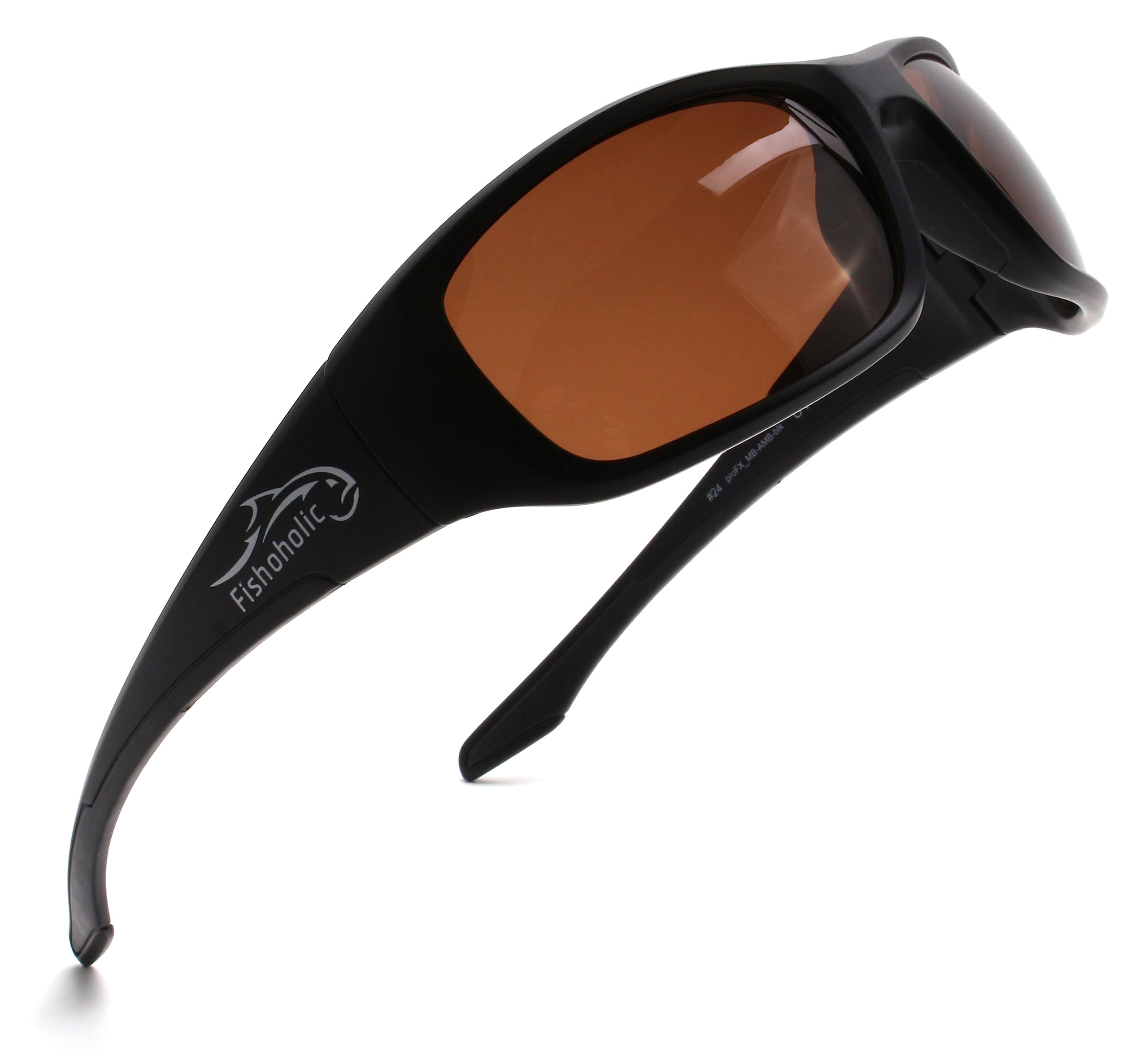
Thick 2.0 mm polycarbonate lenses with a 2.2 mm bifocal segment resist flex during active fishing.
The Fishoholic Bi-Focal uses a 2.0 mm thick polycarbonate polarized lens with an integrated 2.2 mm thick polarized bifocal segment. That extra thickness is not just marketing — it means the lens resists flex and holds its optical plane even when the frame twists during active use. Owners consistently call the optical clarity excellent for spotting freshwater fish, with the bifocal positioned well for tying on lures and dry flies.
The frame uses a FlexTuff Composite material, and the fit is described by many owners as hugging the head perfectly — staying put during kayak maneuvers or wading through current. The wide sides reduce side glare, which is a real advantage when the sun is low. The quality scores from over a hundred owners lead the praise, but the durability is the most mixed aspect: some shoppers say the frame holds up well over time, while a smaller group flags issues with long-term build robustness. A hard case and lens cleaning pouch are included.
For the kayak angler, wade fisherman, or anyone who needs to constantly switch between looking at the distance and reading close-up detail, the Fishoholic delivers a bifocal solution that actually works on the water. The thick lens construction is a meaningful differentiator from thinner, cheaper bifocal alternatives.
Key strength: 2.0 mm / 2.2 mm thick polycarbonate lenses give the bifocal real structural integrity, not flimsy plastic.
The honest note: Durability reviews are mixed — treat the frame with care and use the included hard case.
Reach for these if: You need a bifocal that stays optically true during active fishing, especially from a kayak or standing in current.
Think twice if: You need a scratch-proof lens or you tend to toss your sunglasses loose into a tackle box.
7. Pilotfish Ally Polarized Sunglasses for Fishing & Boating

CR39 optical-grade resin delivers clarity close to glass at half the weight and a lower cost.
Pilotfish positions the Ally as a premium alternative to the big-name brands, and the specs back that up. The CR39 lens material is an optical-grade resin that delivers clarity approaching glass but at half the weight. The spring flex frame adds durability at the temples, and the hydrophobic coating makes water bead off the lens surface instead of smearing. Owners consistently note that these look like expensive alternatives and that the polarization rivals their previous high-end pairs.
The value-for-money angle is the second most-praised feature, and a lifetime warranty adds confidence. The fit, however, draws mixed feedback: some find the frame slightly loose on the nose, while others appreciate the comfortable, non-pinching feel. The frame sits high on the face, which can interfere with a hat brim if you wear one tight. Buyers report these work well for fishing, driving, and general outdoor use, with one calling them the best investment for his eyes.
If you want genuine optical performance at a price that still feels reasonable if you lose a pair overboard, the Ally is the mid-point between budget polycarbonate and premium glass. The hesitancy comes from the uncertainty around lens material — some owners note there is no clear way to confirm you received CR39 versus TAC, so check the packaging carefully.
What Owners Rave About
- CR39 lens clarity approaches glass at a fraction of the weight and cost
- Spring flex frame resists bending damage and improves long-term durability
- Hydrophobic coating sheds water and makes cleaning easier
The Fit Fine-Print
- Frame sits high — may bump against a cap or hat brim
- Nose fit is slightly loose for some; not ideal if you rely on nose grip
Best for: The angler who wants premium lens performance and a flexible, durable frame without the price tag of a major brand.
Not for: Anyone who needs a low-profile frame that sits flush with a hat brim during active fishing.
8. BNUS Polarized Corning Glass Lens Sunglasses
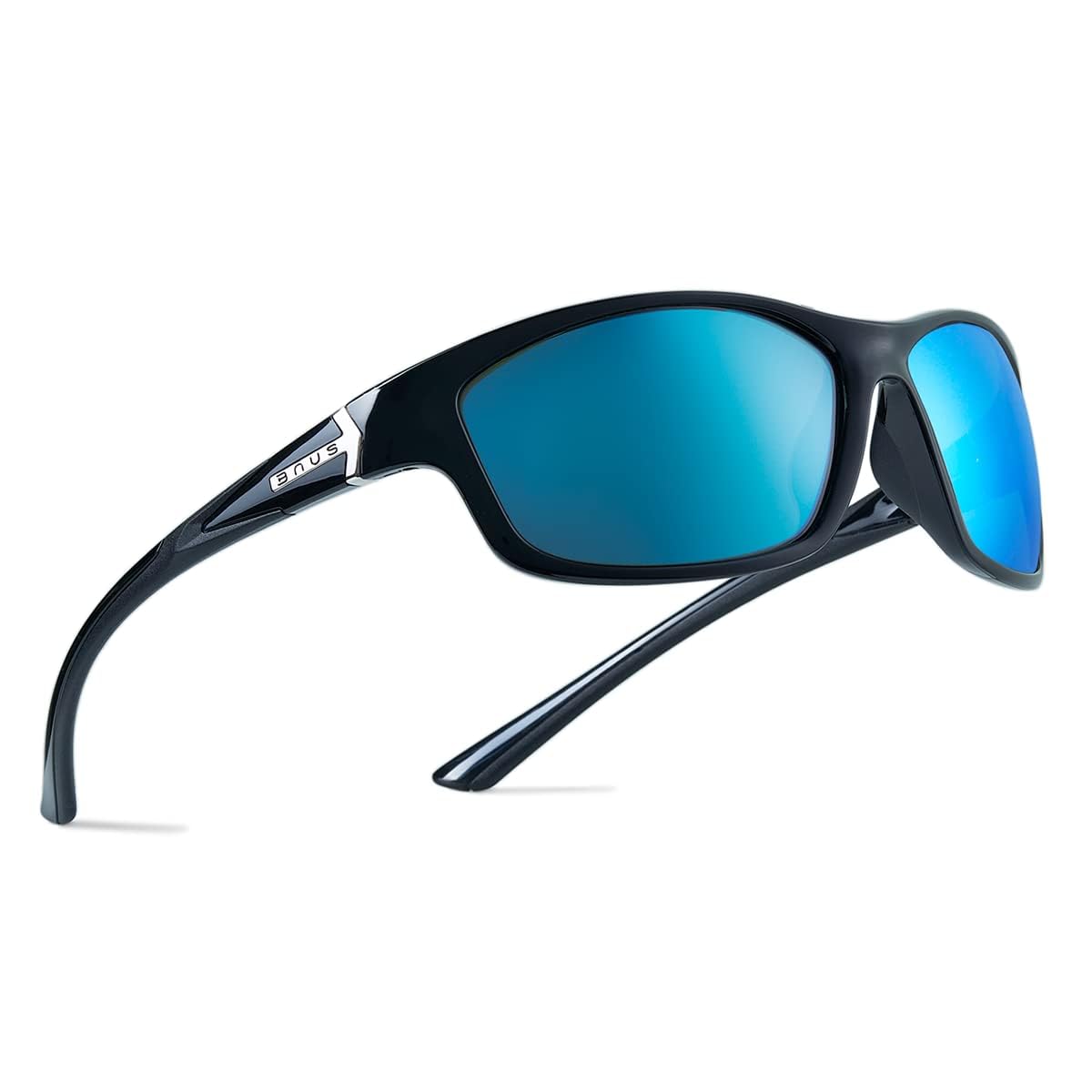
Real Corning glass lenses at a price that undercuts every major brand — handle the frame gently.
The BNUS sunglasses use actual Corning glass lenses, which deliver optical clarity and scratch resistance that polycarbonate cannot touch. Glass resists chemical damage and maintains its pristine surface far longer, and owners confirm the clarity improves vision even under overcast skies. The wrap-around design provides solid peripheral coverage, and the matte frame avoids the cheap painted finish that flakes off on budget pairs.
The polarization and value-for-money are both praised by a large number of owners, with many calling these a worthy substitute for much more expensive glasses. The Italian-made blue mirror shade earns particular compliments for style. However, the durability of the frame itself is the most mixed aspect: the plastic frame is described as very brittle by some, and the rubber nose pads and temple trim are prone to detaching after a few months of use. A few owners mention the lenses cracking, though others report years of service with no issues. The company does send free replacements when parts fail, which softens the frustration.
For the angler who values glass-like optical clarity above all and is willing to handle the frame gently, the BNUS offers an entry into glass-lens performance that is otherwise reserved for pairs costing three times as much. Just budget for the possibility of needing the warranty.
The big draw: Corning glass lenses deliver scratch resistance and clarity that outperform any polycarbonate at this price point.
The catch: The frame and rubber components are the weak link — treat them carefully or plan to use the replacement service.
Best for: The budget-conscious angler who refuses to wear plastic lenses and wants real glass without paying Costa or Maui Jim prices.
Skip if: You need a rugged frame that can handle drops, bumps, and regular abuse in a tackle bag.
9. Maui Jim Polarized Men’s Onshore Rectangular Sunglasses

SuperThin Glass lenses make colors pop and glare vanish — owners describe it as making the world look sharper.
Maui Jim’s Onshore is the gold standard for optical purity in fishing eyewear. The SuperThin Glass lenses are lighter than traditional glass but deliver the same distortion-free clarity that makes colors appear more vivid — owners describe it as making the world look sharper than they knew it could. The polarized filter blocks glare completely, letting you see from dusk straight into direct sunlight without swapping lenses. For the angler who stares at water all day, that single spec translates into less eye fatigue and more fish spotted.
The nylon frame with spring hinges is designed for larger face sizes, and the subtle wrap offers extra coverage without looking like a sport goggle. The build quality is made in Italy, and the included case is compact and folds flat. The most praised qualities are the lens clarity and the polarization, with owners calling this the best pair they have ever owned. The only recurring frustration is that some units ship without a case, which is a notable omission at this level. Replacement lenses cost approximately each, so the case matters.
If you want the absolute best optical experience on the water — where the surface glare disappears and the underwater world reveals itself in vivid detail — the Onshore earns every bit of its reputation. It is the final upgrade for the angler who has tried everything else.
The High-End Advantage
- SuperThin Glass lenses offer the clearest, most color-accurate view in any light
- Spring hinges and rubber grip pads keep a large frame comfortable and secure
- Italian-made build quality with a compact, folding case
The Luxury Trade-Offs
- Case is not always included — verify packaging if you rely on it for storage
- Lens replacement is costly at roughly per lens if scratched or damaged
Reach for these if: You demand the highest optical clarity and polarization on the market and your fishing days are long and frequent enough to justify the investment.
Look elsewhere if: You need a rugged, grab-and-go pair you can drop in a boat console without worry.
Understanding the Specs
Lens Color — What You See Matters
The tint of the lens directly shapes what you see under the water. Amber and copper tones boost contrast in shallow, variable light, making them a good fit for sight-fishing in rivers or flats. Gray lenses deliver the most natural color for bright, open-water days. Green or blue mirror lenses cut glare in intense sun while keeping the scene from looking artificially warm. Picking the wrong tint means losing detail in the very thing you are trying to spot.
Lens Material — Glass vs. Polycarbonate
Glass lenses provide the best optical clarity and scratch resistance, but they weigh more and cost more. Polycarbonate lenses are lighter, impact-resistant, and much more affordable, but they scratch more easily over time. CR39 resin sits in the middle — optical quality close to glass but at a lighter weight and lower cost. For fishing, where lenses face salt spray, sweat, and accidental drops, scratch resistance and clarity are the two factors most likely to affect your satisfaction over years of use.
FAQ
What is the best lens color for fishing in shallow water?
Can I wear polarized fishing glasses for driving?
How do I clean polarized fishing sunglasses without scratching them?
What does UV400 protection mean?
Are glass lenses worth the extra weight for fishing?
Do I need wrap-around sunglasses for fishing?
Can I get bifocal polarized sunglasses for fishing?
How often should I replace my fishing sunglasses?
Final Thoughts: The Verdict
For the majority of shoppers, the best color polarized glasses for fishing is the Costa Del Mar Fantail because its 580G glass lens delivers class-leading optical clarity and scratch resistance that serious anglers will appreciate season after season. If you want genuine polarization at a budget-friendly price, the suoso Sports is the surprise performer that punches far above its cost. And for those who need reading help on the water, the KastKing Ellijay Bifocal eliminates the nuisance of swapping glasses just to tie a knot.
How We Picked
We do not accept paid placement. Every pick is matched to a real buyer and a real use-case; we do not hands-on test units.
Sources & Methodology
Specifications: manufacturer listings and product documentation. Review insights: verified customer reviews, as of July 2026. Pricing: not shown on this page (it changes often); check the current price via the retailer link.
As an Amazon Associate, WellFizz earns from qualifying purchases. This does not affect which products we feature.
Related Guides

Mo Maruf
I created WellFizz to bridge the gap between vague wellness advice and actionable solutions. My mission is simple: to decode the research and give you practical tools you can actually use.
Beyond the data, I am a passionate traveler. I believe that stepping away from the screen to explore new environments is essential for mental clarity and physical vitality.