Our readers keep the lights on and my smoothie glass nicely filled. As an Amazon Associate, I earn from qualifying purchases.
The blinding assault of modern LED headlights, oncoming high beams, and wet-road glare turns a routine night drive into a squinting, eye-straining chore. The right lens tint acts as a selective filter, cutting the harsh blue wavelengths that cause discomfort while preserving the contrast you need to spot hazards and read road signs.
I’m Mohammad Maruf — the founder and writer behind WellFizz. This guide is built on hours of analyzing lens composition, polarization physics, blue-light transmission ratings, and real-world user feedback to separate marketing claims from genuine visibility gains.
Whether you wrestle with twilight glare, foggy commutes, or the tired eyes that follow long hauls, understanding the lens chemistry behind the best color lenses for driving is the single most effective upgrade you can make to your evening confidence behind the wheel.
How To Choose The Best Color Lenses For Driving
Picking the right lens color for driving means balancing three competing goals: blocking harmful blue light, preserving enough ambient light for safe seeing, and maintaining accurate color perception for traffic signals. Choosing blindly risks everything from washed-out road signs to dangerous glare recovery times.
Lens Tint and Visible Light Transmission (VLT)
VLT measures the percentage of light that reaches your eye. For night driving, a VLT above 70% is critical — anything darker reduces your ability to see pedestrians, animals, and road edges. Yellow and amber tints typically hover in the 75–85% range, making them the safest choice for low-light use. Grey and brown tints intended for full sun often drop below 40% VLT, which is hazardous after dusk.
Polarization vs. Blue-Light Blocking
Standard polarized lenses cut horizontally reflected glare (think wet pavement or a car hood) but can interfere with LCD dashboard displays and reduce overall light transmission. Yellow-tinted driving lenses prioritize blue-light filtration: they absorb the 460–495 nm wavelength that causes retinal stress and scatter, leaving the rest of the spectrum visible. The best driving lenses use a semi-polarized approach — enough polarization to soften scatter without darkening the scene.
Frame Fit and Coverage
Driving lenses must sit close enough to the eyes to block peripheral glare from side windows and mirror reflections. Look for wraparound or slightly curved frames that seal light gaps. Weight matters too — metal frames under 30 grams with spring hinges prevent pressure points on long drives and stay put during sudden head movements.
Quick Comparison
On smaller screens, swipe sideways to see the full table.
| Model | Category | Best For | Key Spec | Amazon |
|---|---|---|---|---|
| BLUPOND Set Of 2 Day & Night | Two-Lens Kit | Drivers who need both daytime polarization and yellow night lenses | Yellow VLT ~80% / Grey polarized VLT ~30% | Amazon |
| ATTCL Polarized Sunglasses | Polarized Day | Long daytime highway drives with strong sun | Al-Mg frame / 30.8 g weight | Amazon |
| BLUPOND Knight Visor Yellow | Semi-Polarized Night | Night driving on roads with bright LED streetlights and oncoming traffic | Al-Mg alloy / Spring hinges | Amazon |
| Bircen Night Vision Glasses | Night & Rain | Rain, snow, and evening commutes | Al-Mg metal / Spring hinge frame | Amazon |
| CAXMAN Fit-Over Night Glasses | Over-Prescription | Drivers who wear prescription glasses underneath | Fits frames up to 142 mm wide | Amazon |
| Classic Square Light Tint | Low-Light Day | Dawn, dusk, or overcast conditions | Grey tint / 2.82 oz total weight | Amazon |
| Columbia Fir Ridge | Polarized Sport | Casual day driving and outdoor activity | Polarized lens / Standard frame | Amazon |
In‑Depth Reviews
1. BLUPOND Set Of 2 Day & Night Driving Glasses

This kit solves the biggest compromise in driving eyewear: a single lens can’t handle both the midday sun and a moonless highway. BLUPOND pairs a polarized brown daytime lens with a yellow-tinted night frame, both built around the same semi-rimless AL-MG alloy chassis weighing just 26 grams. The yellow lens uses blue-light polarization to filter the 460 nm wavelength cluster that causes retinal scatter, while the daytime lens cuts horizontal glare with true polarization.
User feedback from cataract patients and commercial drivers confirms that the yellow lens restores legible road signs and sidewalk edges that modern LED headlights wash out. The set also includes a car visor clip, semi-hard EVA case, and a mini screwdriver — practical extras that eliminate the “where do I store the other pair” problem. The daytime polarized frame isn’t the darkest on the market (VLT around 30%), but that actually helps during transition periods between day and night.
The only real shortcoming is that the yellow night lens is semi-polarized rather than fully polarized, meaning it reduces glare by roughly 25–30% rather than eliminating it. Some users with deep-set eyes or astigmatism may need a few minutes of adaptation before the effect feels natural. For the driver who wants one definitive solution for both bright and dark hours, this set delivers the most complete package.
Why it’s great
- Two specialized lenses for day and night conditions
- Semi-polarized yellow lens reduces blue-light scatter without dangerous darkness
- Lightweight AL-MG frame stays comfortable on long hauls
Good to know
- Night lens is semi-polarized, not fully polarized
- Daytime lens VLT around 30% — not ideal for very bright desert conditions
2. ATTCL Polarized Sunglasses for Men

ATTCL builds a classic rectangular frame from aluminum-magnesium alloy that tips the scale at just 30.8 grams — lighter than many plastic competitors and far tougher. The high-definition polarized lens cuts reflected glare from wet asphalt, chrome, and windshield interiors, which is precisely the kind of chaotic light that causes squinting during day driving. The adjustable silicone nose pads let you dial in the exact bridge position, preventing the slide that happens when you look over your shoulder at a blind spot.
The polarized lens is very dark (VLT likely in the 15–20% range), so this is strictly a daytime tool. Users consistently note that the frame feels solid enough to survive being sat on or dropped — a common failure point with cheaper metal frames. The included leather case and test card reinforce the sense of a complete kit rather than a bare-bones pair.
On the downside, the dark black lens makes these unsuitable for evening, tunnel, or overcast driving. Some users with wider faces found the rectangular arms a touch narrow. If your primary driving hazard is searing midday glare on highways, this is a focused, durable solution.
Why it’s great
- Ultra-light AL-MG frame at 30.8 grams reduces fatigue
- Excellent polarization for daytime glare elimination
- Adjustable nose pads improve fit stability
Good to know
- Very dark lens — not safe for night or low-light driving
- Frame width may feel snug on broader faces
3. BLUPOND Knight Visor Night Driving Glasses

The Knight Visor is a pure night specialist — no daytime compromise. Its shatterproof polycarbonate yellow lens is semi-polarized to filter blue light while preserving the 75–80% VLT needed to spot hazards on unlit roads. The AL-MG alloy frame with spring-loaded hinges withstands the constant open-close cycling of frequent stops, and the rubberized temple grips keep the glasses in place during quick head checks.
User reports consistently highlight the reduction in eye strain around the cheekbone and brow area, a specific symptom of prolonged exposure to high-contrast LED headlights. The semi-rimless design opens up the lower visual field, making it easier to scan the dashboard without lifting the frame. The bundle includes an EVA case, a car visor clip, and a microfiber cloth — practical items that suggest the manufacturer understands daily driving habits.
The semi-polarized nature means this won’t deliver the dramatic glare-kill of a fully polarized lens, and some users with very sensitive eyes may still see residual halo effects around streetlights. However, for anyone whose primary concern is comfort on a 45-minute evening commute through mixed urban and highway lighting, this delivers a noticeable improvement without the disorienting tint shift of darker lenses.
Why it’s great
- Shatterproof polycarbonate lens adds safety margin
- Spring hinges improve durability against drops
- Light weight (26 g) reduces nose bridge pressure
Good to know
- Semi-polarized — some residual glare may remain
- Not designed for daytime use
4. Bircen Night Vision Glasses for Driving
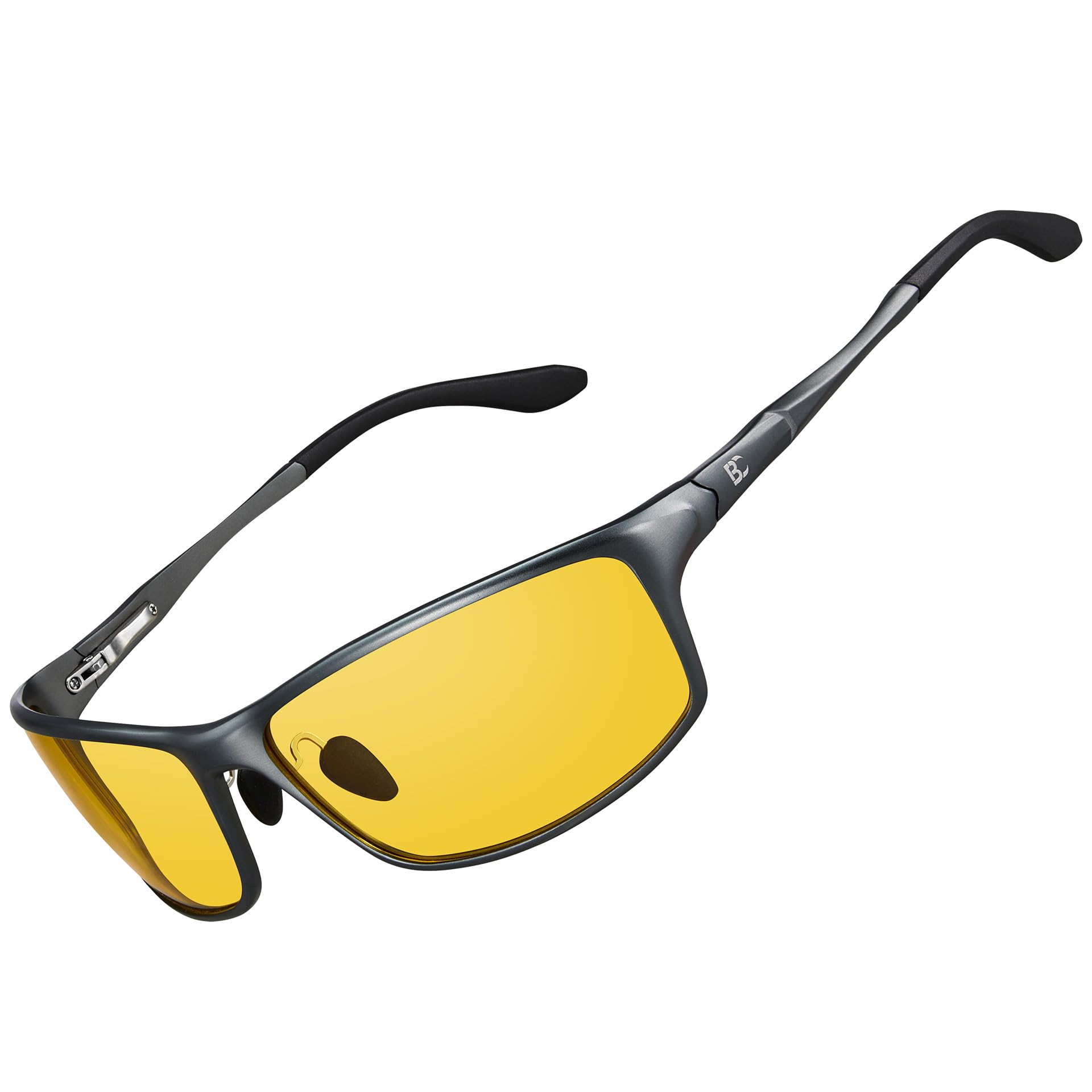
Bircen strikes a middle ground between entry-level yellow clip-ons and high-end night glasses. The AL-MG metal frame with spring hinges feels premium at this tier, and the non-slip nose pads prevent the constant push-up motion that drivers with oily skin or mild perspiration experience. The yellow tint effectively scatters harsh blue light from oncoming LEDs, and multiple user reviews specifically call out the reduction in the starburst effect around headlights.
The lens is described as having “low polarization,” which means it cuts enough horizontal glare to help in rain or wet-road conditions without significantly dimming the scene. Users report that after a 10-minute adaptation period, the yellow shift feels natural and reduces the urge to squint. The frame is designed for a standard male face size and sits close enough to block side glare from the driver’s window.
The trade-off is that these are not truly polarized, so they won’t eliminate the kind of reflection bounce you get off a wet dashboard or a chrome mirror. A few users also noted that the starburst effect around very high-intensity LEDs is reduced but not eliminated. For a solid, comfortable pair that handles the 80/20 of typical night driving conditions, Bircen delivers reliable performance at a fair price.
Why it’s great
- Metal frame with spring hinges offers premium feel
- Non-slip nose pads keep glasses stable during head turns
- Adaptation period ends with natural yellow-tinted vision
Good to know
- Low polarization — strong dash reflections may persist
- Not ideal for extreme high-intensity LED environments
5. CAXMAN Fit-Over Night Driving Glasses
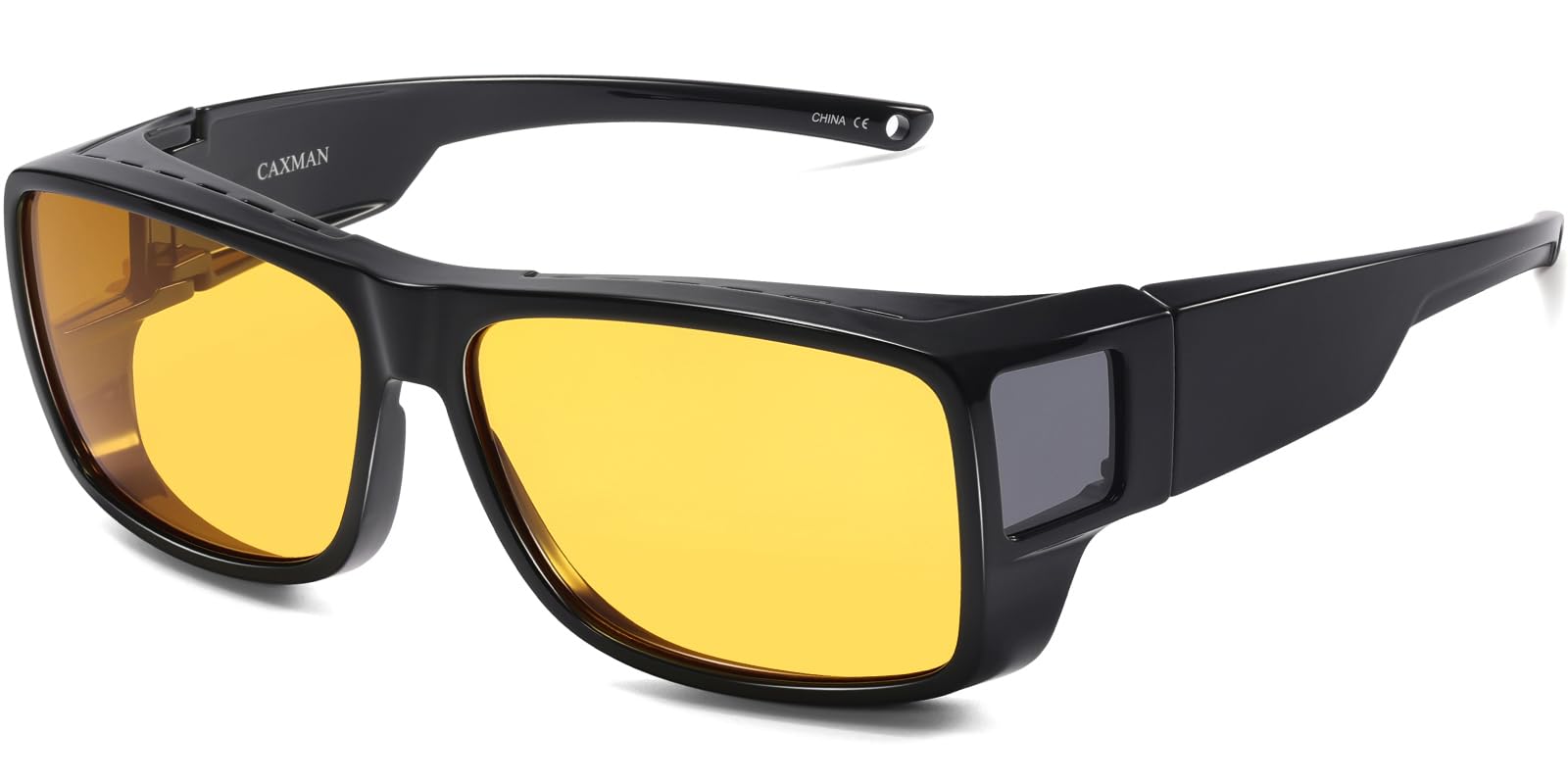
CAXMAN addresses the specific pain of prescription-wearers who can’t just swap to a dedicated driving lens. These fit-over frames accommodate prescription glasses up to 142 mm wide and 44 mm tall, with a wraparound design that seals peripheral light gaps. The yellow-tinted lens amplifies contrast in fog, rain, and dusk conditions, and the polarized side shields block stray light from side windows without restricting forward visibility.
An oleophobic coating repels fingerprints and smudges, a thoughtful feature for drivers who frequently adjust their glasses or have oily skin. Users with astigmatism and light sensitivity report clearer night vision after cataract surgery, with one reviewer noting that the yellow lens eliminated Tesla headlight glare that had previously made night driving impossible. The frame itself is lightweight at just 1.45 ounces.
The main limitation is fit: if your prescription frames exceed the width or height limits, these simply won’t work. Some users also note that the yellow tint turns all windshields a deep yellow, which can be disorienting during daytime use. For anyone who needs to wear their existing prescription glasses behind a driving lens, CAXMAN is the most practical solution on this list.
Why it’s great
- Fits over prescription frames up to 142 mm wide
- Oleophobic coating resists fingerprints and smudges
- Polarized side shields cut peripheral glare
Good to know
- Fit depends on exact size of existing prescription frames
- Yellow tint may be strong during daytime use
6. Classic Square Light Tinted Driving Glasses
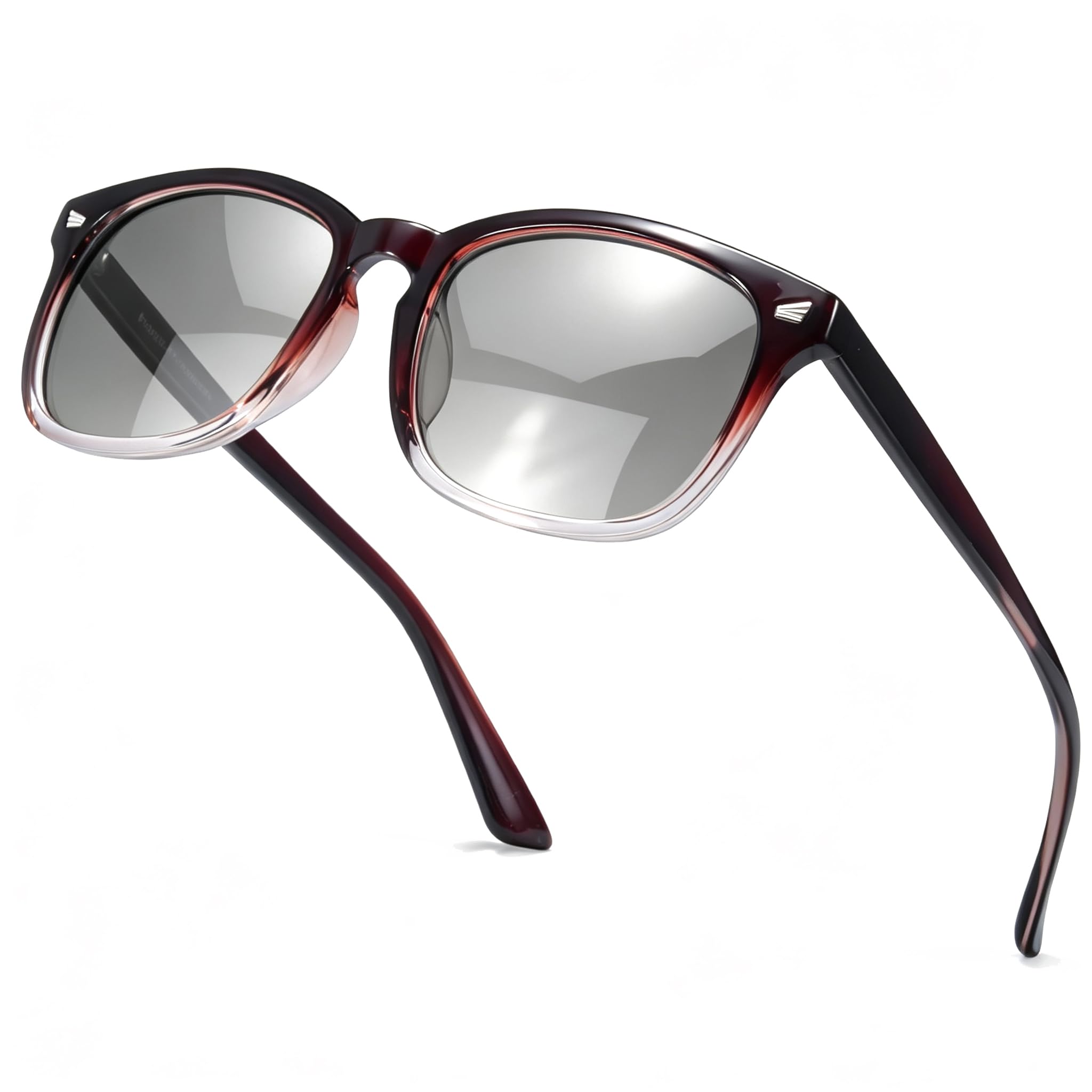
Most sunglasses for driving are too dark for the transitional light of dawn, dusk, or heavy overcast. This lightly-tinted grey lens is designed specifically for those in-between hours, providing just enough VLT reduction (likely around 60–65%) to take the edge off low-angle sun without making you feel like you’re wearing sunglasses at night. The square frame fits a unisex face shape and comes with a cleaning cloth and basic packaging.
Users with light sensitivity praise the moderate tint for reducing squint during evening commutes on west-facing roads. The polarized construction helps with wet-road reflection, and the clarity is rated as excellent by multiple reviewers. The frame is lightweight at under 3 ounces, making it easy to store in a glove box without adding bulk.
The main caveat is that this is a daytime-only tool for low-light conditions. Some buyers expected a very light tint and found it to be closer to standard sunglass darkness, while others noted that the reflective coating on the lens can bounce screen glare from the dash. If your driving window is the hour after sunrise or before sunset, this fills a real gap that neither dark polarized lenses nor yellow night glasses can cover.
Why it’s great
- Light grey tint ideal for dawn, dusk, and overcast
- Polarized lens reduces wet-road reflection
- Stylish square frame suits most face shapes
Good to know
- Some users found the tint darker than expected
- Reflective coating may show dash screen glare
7. Columbia Mens Fir Ridge Sunglasses
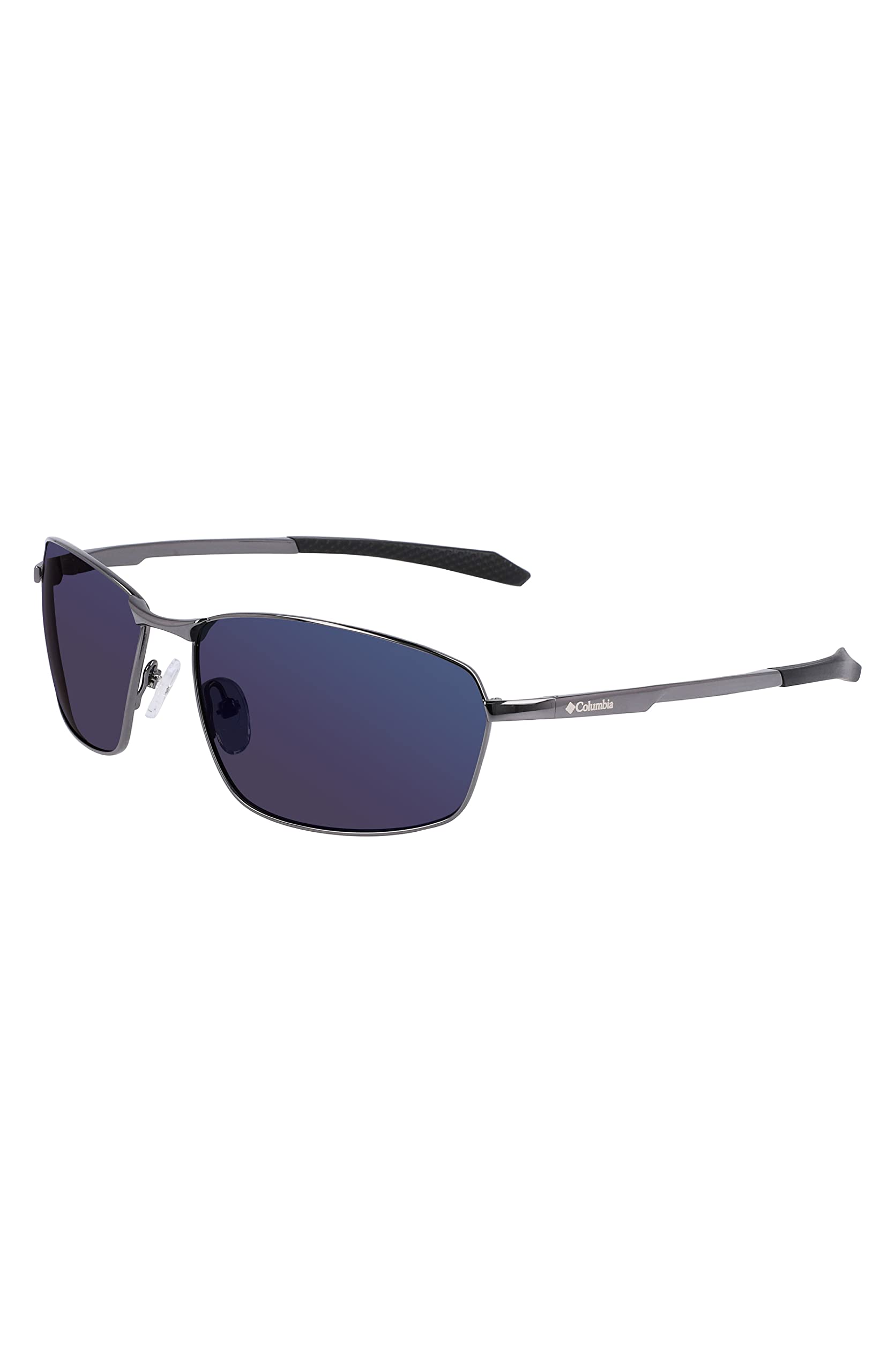
Columbia brings its outdoor heritage to the driving lane with the Fir Ridge polarized sunglasses. The lightweight construction — likely a plastic or composite frame — keeps fatigue low, and the polarized lens handles standard daytime glare from pavement, water, and chrome. The design is classic and understated, fitting easily into a casual or active lifestyle without screaming “performance eyewear.”
User feedback emphasizes build quality for the price bracket, with several noting that the frame feels more solid than similarly priced brands. The polarized effect is strong enough for fishing and water sports, which translates well to highway driving in open sun. The lens color is a standard grey-brown that preserves natural color balance better than extreme tints.
The limitation is that these are a pure daytime tool — no yellow, no blue-light filtering, no night capability. A few users with larger faces found the fit slightly small, with the arms sitting tight against the temples. For someone who needs a dependable, recognizable brand for sunny-day driving and basic outdoor use, the Columbia Fir Ridge is a no-nonsense choice.
Why it’s great
- Recognized brand with consistent build quality
- Strong polarization for water and road glare
- Light and comfortable for extended wear
Good to know
- Daytime-only — no low-light or night capability
- Fit may be tight for larger face shapes
FAQ
Can I use yellow-tinted night driving glasses during the day?
Do polarized lenses help with LED headlight glare at night?
Final Thoughts: The Verdict
For most users, the best color lenses for driving winner is the BLUPOND Set Of 2 Day & Night because it solves the day/night split with a purpose-built lens for each condition, backed by a lightweight AL-MG frame and complete accessory kit. If you want dedicated night-only performance without the bulk, grab the BLUPOND Knight Visor. And for prescription wearers who need to slip a yellow lens over their existing frames, nothing beats the CAXMAN Fit-Over Night Glasses.

Mo Maruf
I created WellFizz to bridge the gap between vague wellness advice and actionable solutions. My mission is simple: to decode the research and give you practical tools you can actually use.
Beyond the data, I am a passionate traveler. I believe that stepping away from the screen to explore new environments is essential for mental clarity and physical vitality.