Our readers keep the lights on and my smoothie glass nicely filled. As an Amazon Associate, I earn from qualifying purchases.
Specs are compiled from manufacturer listings and verified buyer reviews and can change over time — please confirm the key details on the product page before buying.
A winter boot that looks warm on the shelf but leaves your toes numb after an hour of shoveling is a common letdown. This guide sorts through the real insulation ratings, waterproofing methods, and traction patterns to find the ones that actually work.
I’m Mohammad Maruf — the founder and writer behind WellFizz. This guide is built by comparing the manufacturers’ published specifications and the patterns across verified customer reviews, so you get each pick’s real strengths and trade-offs instead of marketing spin.
To keep your feet warm and dry through deep snow, slush, or long hours outdoors, you need cold weather boots for women with a waterproof membrane, rated insulation, and a lugged outsole that grips ice without turning your feet cold.
Our Picks at a Glance

How To Choose The Best Cold Weather Boots For Women
Picking winter boots without checking the insulation rating and how they keep water out is a common mistake that leaves you with cold, wet feet. Focus on three things: how much warmth the boot traps, how it blocks moisture, and how the sole handles slick surfaces.
Insulation Type and Weight
Insulation weight (like 200g) tells you how much heat the boot holds. Look for materials like recycled P.E.T. (a polyester made from recycled plastic bottles) or synthetic fills that trap warmth without adding heavy bulk.
Waterproofing vs. Water Resistance
A fully waterproof boot uses a sealed membrane (like KEEN.DRY) that stops liquid from getting inside the entire boot. A DWR (durable water repellent) coating is only on the surface and wears off quickly. For standing in snow or slush, choose boots that say “waterproof” and have sealed seams — “water-resistant” will let moisture through in wet conditions.
Sole Traction on Ice and Snow
Deep, multi-directional lugs (5mm or more) dig into soft snow, but the rubber compound matters just as much. Look for outsoles designed for winter, like those with microscopic shards that grip icy surfaces — this is often branded as “Polar Traction” or similar technology.
Quick Comparison
| Model | Best For | Insulation | Waterproofing | Weight (per boot) | Amazon |
|---|---|---|---|---|---|
| Trudave Rubber Boots★ Best Overall | Wet farm & garden work | 6mm Neoprene | 100% Waterproof | 3.5 Pounds (pair) | Amazon |
| KEEN Revel 4 MidAlso Great | Extreme cold hiking | 200g KEEN.WARM | KEEN.DRY membrane | 20.32 oz / 576g | Amazon |
| Baffin FLARE Tall | Deep arctic conditions | Tundra Rated | Waterproof | — | Amazon |
| KEEN Greta 2 Chelsea | Everyday urban winter | 200g | Waterproof leather | — | Amazon |
| Columbia Moritza Shield | Wet slush & rain | Omni-Heat reflective | Waterproof-breathable | — | Amazon |
| Kamik Momentum 3 | All-day outdoor comfort | HEAT-MX | Seam-sealed | — | Amazon |
| WOVENPAK Rubber Boots | Wet farm & garden work | 5mm Neoprene | 100% Waterproof | — | Amazon |
In‑Depth Reviews
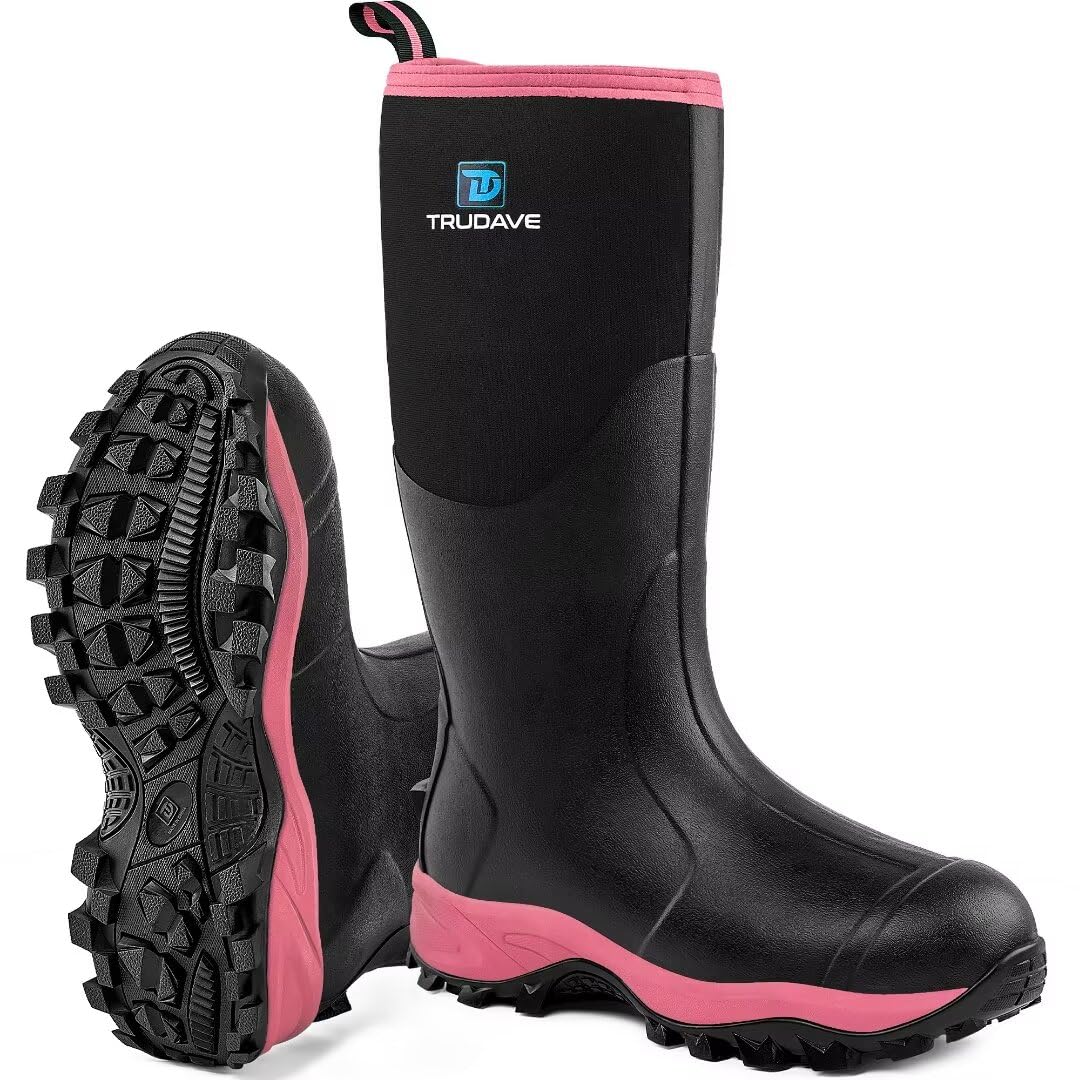
1. Trudave Rubber Boots for Women with Steel Shank, Waterproof Insulated Mud Rain Boots, 6mm Neoprene
Our pick — over 4.5★ from 400+ verified ratings; the strongest balance of quality and price.
A 6mm neoprene lining (synthetic rubber foam) wraps your feet in warmth inside a fully waterproof rubber shell.
Trudave is built for wet, messy work — garden mud, farm slop, rainy commutes — and the 6mm neoprene lining provides more insulation than the WOVENPAK’s 5mm neoprene (a 20% thicker layer for warmth and moisture wicking). The outer is 100% waterproof rubber that stops leaks, while the EVA midsole (ethylene-vinyl acetate, a lightweight foam) adds shock absorption so long hours on your feet do not leave your heels aching. A steel shank in the sole gives you stability on uneven ground, making these more than just a rain boot.
Pull-tabs make them easy to yank on, and the irregular tread anti-slip design is aggressive enough for muddy slopes and slick barn floors. At 3.5 pounds for the pair, they have some heft, but the neoprene lining breathes better than solid rubber alone. With a 4.7 rating from 418 reviews, buyers consistently report staying dry through full days in wet conditions, and the 60-day no-reason return policy adds confidence. The trade-off: the tall rubber shaft does not breathe as well as a fabric-and-leather boot, so your feet may feel warm but sweaty after hours of high activity.
Wet-Weather Champs
- 6mm neoprene insulates and wicks moisture better than 5mm options
- 100% waterproof rubber shell with steel shank support
- 4.7 stars from 418 reviews with 60-day returns
Room for Improvement
- Rubber shell can feel sweaty during extended active wear
For the wet-and-woolly worker: Grab these if you spend hours in rain, mud, or standing water and need a boot that keeps your feet warm and bone-dry.
Not for: Long hikes or deep cold — the insulation is neoprene-based, not rated for subzero air temperatures like the KEEN boots.
2. KEEN Women’s Revel 4 Mid Height Polar Insulated Waterproof Snow Boots
This boot keeps your feet warm down to -25°F while still feeling light enough for a hike.
At just 20.32 oz per boot (that is 576 grams, about the weight of a can of soup), the Revel 4 Mid moves with you instead of feeling clunky. Inside, you get 200g of KEEN.WARM Recycled P.E.T. insulation, which the manufacturer rates to -25°F/-32°C, so you have a real cold-weather certification. Three layers of Heat Trapolator technology sit underfoot to block the cold coming up from the ground, a design detail that matters when you stand on ice.
Waterproofing comes from the KEEN.DRY membrane (a breathable barrier that keeps wet snow out without trapping sweat). The outsole is the standout: KEEN.POLAR TRACTION rubber contains microscopic shards that dig into ice and packed snow, and the 5mm multi-directional lugs give you grip in soft terrain too. A stability shank (a stiff piece in the sole) adds support on uneven paths. Buyers report the generous toe box (KEEN’s Original Fit) is a lifesaver for wider feet — no pinching after three miles. The catch: the insulation is fixed, so this is a dedicated cold-weather boot, not for three-season use.
Where it Stands Out
- Rated to -25°F with verified 200g recycled insulation
- KEEN.POLAR TRACTION outsole with microscopic ice-grip shards
- Only 20.32 oz / 576g per boot for the warmth level
One Limitation
- Fixed insulation means it runs warm for milder winter days
Your best cold-weather companion: If you need a boot that handles deep snow, icy trails, and subzero wind chills without weighing you down, this is the one.
skip it if: You only face wet slush or temperatures above freezing — the insulation is overkill for warmer winters.
3. Baffin Women’s FLARE Tall Waterproof Insulated Lightweight Tundra-Rated Slip-Resistant Cold Weather Winter Snow Boots
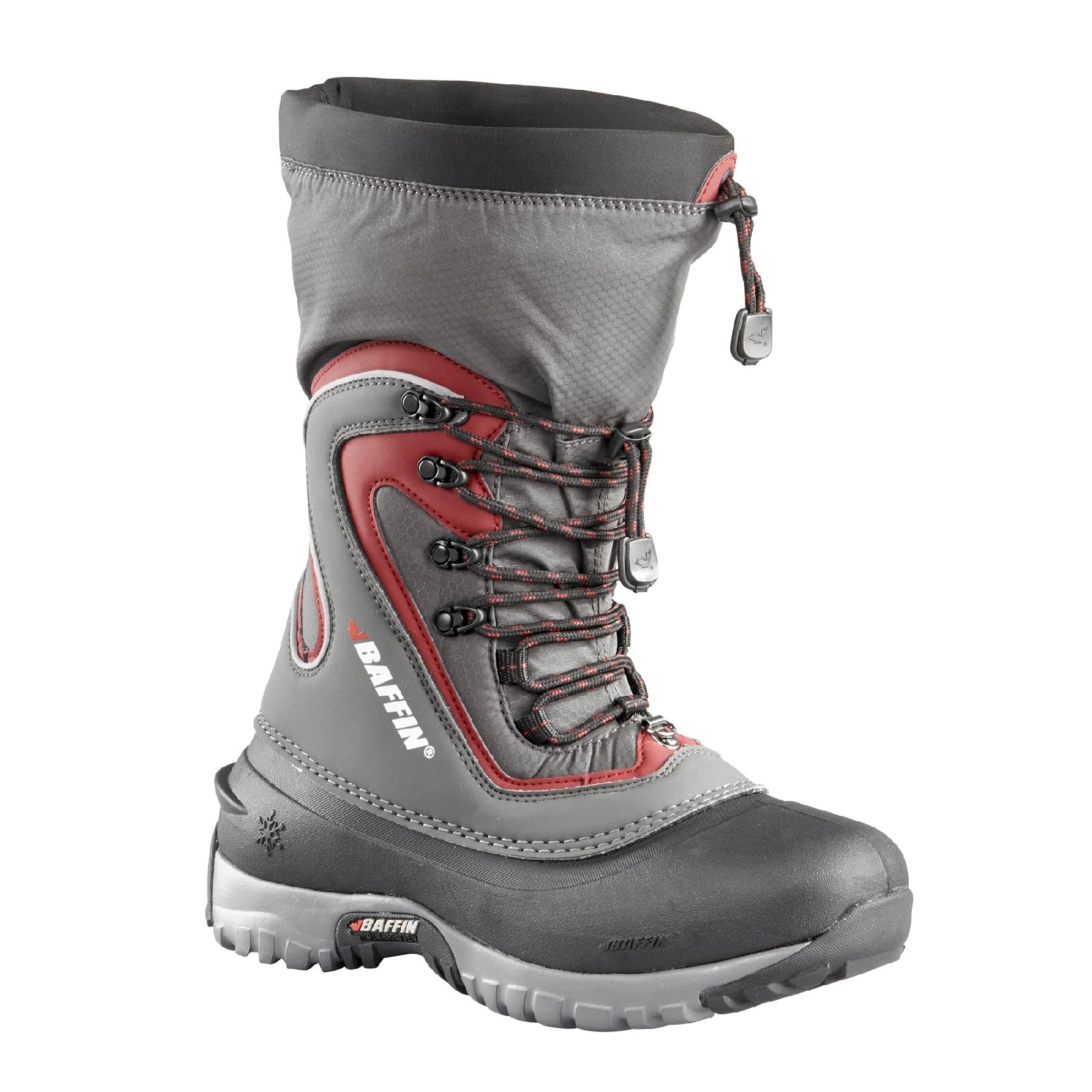
A boot built for the deepest cold with a Tundra rating that is Baffin’s highest insulation level.
Baffin’s FLARE Tall carries a “Tundra Rated” badge, the company’s top cold-comfort rating. The tall upper uses a polyurethane-coated artificial leather and nylon shell with a locking snow collar, so ice and powder have a hard time getting inside. A removable liner lets you pull the insulation out to dry between wears, a practical upgrade over fixed-liner boots if you wear them daily.
Underfoot, the GelFlex anti-fatigue midsole softens each step on hard-packed trails or frozen sidewalks, and the premium Polar Rubber outsole stays flexible in extreme cold rather than hardening into a slick slab. The synthetic upper with leather accents and a faux-fur collar adds a touch of style. Owners mention the tall height offers excellent calf coverage for deep snow drifts. The trade-off is that with 3.9 stars from 164 ratings, some owners found the sizing finicky — check the size chart carefully, as the tall shaft can feel snug on wider calves.
Arctic-Level Strengths
- Tundra Rated for the most extreme cold conditions
- Removable liner for drying and customizing warmth
- GelFlex anti-fatigue midsole for all-day comfort
Consider This
- Tall shaft may fit snugly on wider legs and calves
For the deep-freeze warrior: Choose this if you face sustained subzero temperatures and need a boot that seals snow out completely.
Not ideal if: You have wider calves or prefer a mid-height boot for lighter winter use.
4. KEEN Women’s Greta 2 Chelsea Waterproof Boots
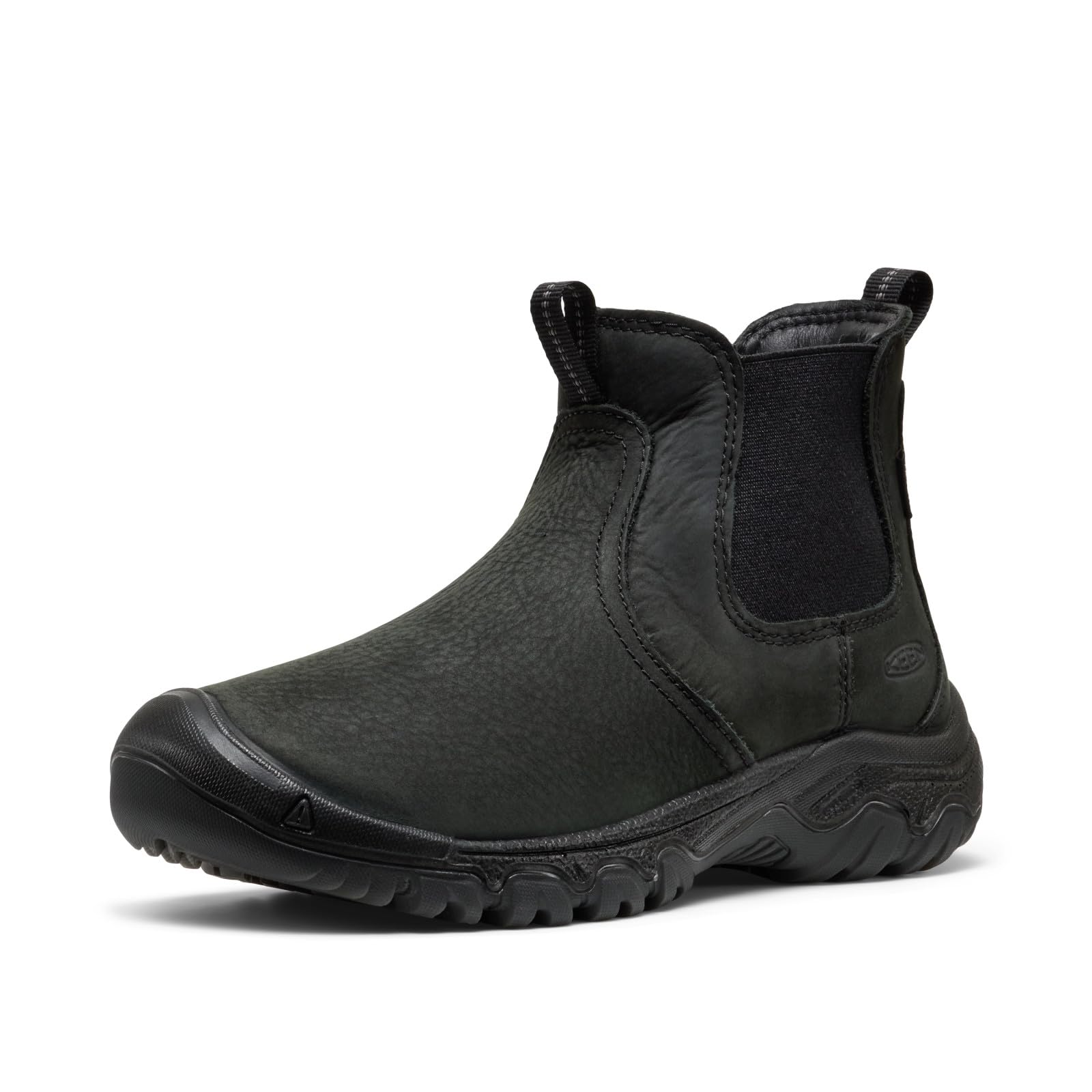
This Chelsea boot packs 200g of insulation — the same warmth as the Revel 4 — in a stylish, easy-on silhouette.
The Greta 2 Chelsea blends a waterproof leather upper with a quilted collar and a glue-free fused construction that the manufacturer says adds long-lasting durability. The 200g of insulation matches the Revel 4’s warmth rating, so your toes stay warm in serious cold, but the pull-on Chelsea shape makes it far easier to slip on and off than a lace-up hiker.
KEEN’s traditional wider fit carries over here, giving your toes room to spread inside a warmer boot, which helps circulation in the cold. The outsole is good for packed snow and light trails, though it lacks the Polar Traction shards of the Revel 4 for glare ice. Buyers specifically praise the ease of the pull-on design and the padded collar that seals in warmth without feeling tight. The honest catch: this is a mid-height boot, so expect some snow to top the collar in deep powder — it is a city boot, not a deep-snow expedition piece.
What It Does Well
- 200g insulation in a stylish Chelsea pull-on shape
- Glue-free fused construction for long-run durability
- Roomy KEEN fit for circulation in cold weather
Its Limit
- Mid shaft is prone to snow ingress in deep drifts
For the style-conscious commuter: Grab this when you need winter warmth that does not scream “hiking boot” at the office.
Pass on it if: You regularly face knee-deep snow — the shorter shaft is not designed for that.
5. Columbia Womens Moritza Shield Omni-Heat Insulated Snow Boot

A budget-friendly boot with a clever reflective lining that bounces your own heat back at you.
Columbia’s Omni-Heat thermal-reflective lining uses tiny metallic dots to bounce your body heat back instead of letting it escape — a passive warming trick that does not add weight. A fleece interior adds comfort from the start, and the waterproof-breathable membrane keeps slush and rain off your feet without trapping sweat.
These boots are designed for traction in rain and slush, and the lightweight cushioning avoids the clunky feel of heavier winter boots. At 4.3 stars from 450 ratings, buyers consistently note the comfort for all-day wear and the range of available colors. The Moritza Shield is a solid choice for milder winters and wet days, but it lacks the bulk insulation for deep subzero cold — unlike the 200g KEEN options, it relies on a reflective lining rather than thick synthetic fill.
Value Highlights
- Omni-Heat reflective lining for passive warmth
- Waterproof breathable membrane keeps feet dry
- Lightweight feel with fleece interior comfort
One Weakness
- Not enough bulk insulation for deep subzero cold
Smart buy for mild-to-moderate winters: Pick this if your winters hover around freezing and you want a reliable, comfortable boot that does not break the bank.
Look elsewhere for: Sustained temperatures below -10°F or deep snow hiking — the insulation is lighter than the KEEN offerings.
6. Kamik Momentum 3 Insulated Snow Boots – Extreme Cold Protection & Waterproof Winter Boots for Women
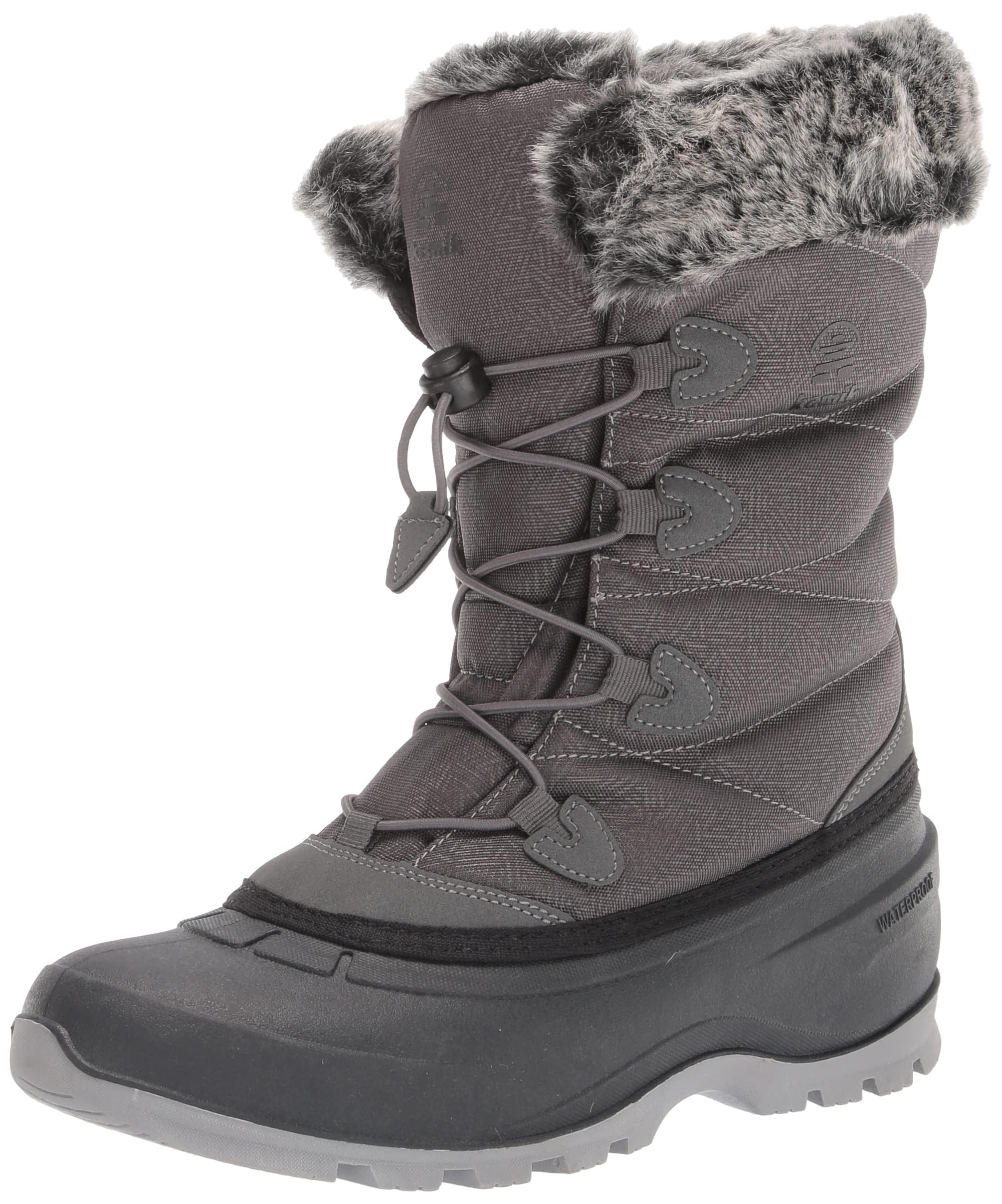
Seam-sealed waterproofing plus HEAT-MX technology for warmth that lasts through a full day outside.
Kamik’s Momentum 3 is made for people who need to stay comfortable through a full day outside, not just a quick trip. The waterproof, seam-sealed construction means every stitch line is taped shut so melting snow cannot seep in through the join points. HEAT-MX technology (the brand’s synthetic insulation) traps heat without the heavy feel of older methods.
The boot is designed to be both functional and comfortable for snowy trails and quick errands. With 915 ratings averaging 4.1 stars, the Momentum 3 has one of the largest review samples in this list. Buyers mention the traction holds up well on icy pavement and packed snow. The main trade-off: the insulation is best for temperatures around 0°F to 20°F, not for extreme subzero conditions like the KEEN Revel 4’s -25°F rating.
Daily Driver Strengths
- Seam-sealed waterproof construction for wet snow
- HEAT-MX technology delivers sustained warmth
- Large review base (915 ratings) for reliable feedback
Its Ceiling
- Best for moderate to cold winter, not arctic extremes
For the all-day outdoors person: Reach for these if you need a boot that stays warm and dry through hours of shoveling, walking, or standing outside.
Reconsider if: Your winter routine includes extended time below -20°F — you want a heavier insulation rating.
7. WOVENPAK Rubber Boots for Women, Waterproof Rain Boots Women with Steel Shank, Insulated Hunting Boots, 5mm Neoprene

A no-frills rubber boot that keeps your feet dry and decently warm at a lower cost than the Trudave.
The WOVENPAK is the lighter-insulation cousin to the Trudave in a similar form factor — built for gardening, farming, and wet-weather chores with 5mm neoprene lining (1mm thinner than the Trudave’s 6mm) and 100% waterproof rubber construction. It still has a steel shank for stability and deep tread soles designed for mud and farm terrain, so it is tougher than a basic rain boot.
Like the Trudave, this is a dedicated wet-work boot, not a winter hiking boot, but the 5mm neoprene provides enough insulation for chilly drizzle and puddle splashing above freezing. With a 4.5 rating from 231 reviews, buyers praise the reliable waterproofing and the secure fit of the steel shank. The honest difference from the Trudave is that the thinner neoprene layer means less warmth retention in truly cold conditions — so if your winters hover near freezing, you will feel the cold faster in the WOVENPAK than in the 6mm Trudave.
Budget Strengths
- 100% rubber and neoprene waterproof construction with steel shank
- Deep tread outsole for mud and farm traction
- Lower cost for solid wet-weather protection
The Clear Trade-Off
- 5mm neoprene offers less cold insulation than the 6mm Trudave option
For the occasional wet chore: This is your boot if you need a reliable waterproof boot for mud, puddles, and light cold — without spending for heavy insulation you will not use.
Pass on it if: You regularly work in subfreezing, wet conditions — the thinner neoprene will let the cold in faster than you want.
Understanding the Specs
Insulation Weight (grams)
This number (like 200g) tells you how much synthetic fill is packed into the boot to trap heat. Higher numbers mean more warmth, but also more bulk.
Neoprene Thickness
Found mostly in rubber work boots, neoprene thickness (measured in millimeters like 5mm or 6mm) indicates the insulation layer between your foot and the rubber shell. The thicker the neoprene, the more cold it blocks and the more moisture it wicks away from your skin — a 6mm layer offers 20% more insulation than a 5mm layer, making it noticeably warmer for standing in cold puddles.
Waterproof Membranes
Brands like KEEN use a dedicated waterproof membrane (KEEN.DRY) that is sandwiched between the outer material and the lining. Unlike a water-resistant coating that wears off, a membrane is a physical barrier that stops liquid from getting through while still letting vapor escape. Look for the words “waterproof” and “seam-sealed” together — that means every stitch line is also sealed, which is critical for wet snow.
Cold Comfort Rating
Some manufacturers test their boots to specific temperature thresholds (like -25°F or Tundra Rated) rather than just calling them “warm.” These ratings are based on how well the insulation and liner combo retains heat with moderate movement. A Tundra Rated boot is designed for sustained subzero conditions, while a general “insulated” boot is meant for everyday winter use above about 0°F.
Winter Traction Outsoles
Standard winter tread is about lug depth (5mm is good for snow), but the rubber compound matters more on ice. Outsoles labeled Polar Traction or Winter-Grip use a special rubber that stays flexible in the cold and may contain microscopic particles that literally dig into ice for grip. A boot with standard rubber will harden and lose traction below about 15°F, so this is a key spec for icy areas.
Stability Shank
A shank is a stiff piece of material (often steel or composite) built into the sole between the heel and the ball of your foot. It keeps the boot from twisting under load, which matters on uneven frozen ground, ladders, or farm terrain. Boots with a steel shank also provide better support for carrying weight or standing for long periods on hard surfaces.
FAQ
How much insulation do I really need in a women’s winter boot?
Can I wear neoprene rubber boots for subzero snow?
What is the difference between a waterproof membrane and a water-resistant coating?
How do I know if a boot will fit my wide feet or high arches?
How long should a pair of insulated winter boots last?
What does Tundra Rated mean on a winter boot?
Can I use rubber winter boots for hiking in snow?
How do I clean and store winter boots to make them last?
Is a steel shank necessary in a winter boot?
What socks should I wear with my insulated winter boots?
Final Thoughts: The Verdict
For the majority of shoppers, the cold weather boots for women winner is the KEEN Revel 4 Mid because it combines a verified -25°F insulation rating, a waterproof breathable membrane, and an ice-gripping Polar Traction outsole in a package that weighs just over 20 ounces per boot. If you want a stylish urban boot that still packs 200g of warmth, grab the KEEN Greta 2 Chelsea. And for wet, messy work where total waterproofing matters more than hiking agility, the Trudave Rubber Boots with their 6mm neoprene and steel shank are a solid choice.
How We Picked
We do not accept paid placement. Every pick is matched to a real buyer and a real use-case; we do not hands-on test units.
Sources & Methodology
Specifications: manufacturer listings and product documentation. Review insights: verified customer reviews, as of July 2026. Pricing: not shown on this page (it changes often); check the current price via the retailer link.
As an Amazon Associate, WellFizz earns from qualifying purchases. This does not affect which products we feature.
Related Guides

Mo Maruf
I created WellFizz to bridge the gap between vague wellness advice and actionable solutions. My mission is simple: to decode the research and give you practical tools you can actually use.
Beyond the data, I am a passionate traveler. I believe that stepping away from the screen to explore new environments is essential for mental clarity and physical vitality.