Our readers keep the lights on and my smoothie glass nicely filled. As an Amazon Associate, I earn from qualifying purchases.
Specs are compiled from manufacturer listings and verified buyer reviews and can change over time — please confirm the key details on the product page before buying.
Staying warm in cold water is not just about thickness — it is about how that thickness is cut, stitched, and sealed. A cold water wetsuit that lets in a trickle of icy water can ruin a session in minutes, no matter the millimeter rating on the tag. This guide cuts through the spec sheet noise to find the suits that actually trap heat so you can stay focused on the surf, dive, or paddle rather than counting down until you have to get out.
I’m Mohammad Maruf — the founder and writer behind WellFizz. This guide is built by comparing the manufacturers’ published specifications and the patterns across verified customer reviews, so you get each pick’s real strengths and trade-offs instead of marketing spin.
Every suit here is rated for cold water, meaning 5mm or thicker neoprene with construction details that matter. The right cold water wetsuit keeps you warm, flexible, and protected without making you wrestle with the zipper every time you suit up.
Our Picks at a Glance

How To Choose The Best Cold Water Wetsuit
Picking a cold water wetsuit depends on a few non-negotiable specs that determine whether you stay warm or cut your session short. Here is what to focus on.
Thickness and Temperature Rating
Most cold-water suits use a 5/4mm design — 5mm neoprene on the torso for core warmth and 4mm on the arms and legs for flexibility. Some manufacturers also provide a temperature rating in degrees Celsius or Fahrenheit, which tells you the coldest water the suit can handle.
Seam Construction
Glued and blind-stitched (GBS) seams are the gold standard for warmth. The neoprene is glued together, then stitched only halfway through, which reduces the number of holes in the suit. That means far less water seeps in compared to flatlock seams, which are common in warm-water suits but leak too much for cold conditions.
Entry System
Back-zip suits are traditional and often more affordable, but front-zip designs are gaining popularity because they are easier to put on and take off by yourself. Front zippers also tend to put less stress on the zipper over time, which can extend the life of the suit.
Additional Features
Reinforced knee pads, internal key pockets, and smooth-skin seals at the wrists and ankles all add real value. Knee pads protect the suit from wear when kneeling on a surfboard or rocky shore, while smooth-skin neoprene collars and cuffs create a better seal against water entry.
Quick Comparison
| Model | Best For | Thickness | Temp Rating | Seam Type | Amazon |
|---|---|---|---|---|---|
| Owntop 5mm Back Zip★ Best Overall | Cold-water budget | 5 mm | 10°C | Blind-stitched | Amazon |
| SCUBAPRO Definition Steamer 5 mmTop Performer | Diving performance | 5 mm | 50–64.5°F | GBS (double zippered) | Amazon |
| BARE 5MM RevelBest Fit | Anatomical fit | 5 mm | — | GBS | Amazon |
| ZCCO Men’s 5mm Front Zip | Quick changes | 5 mm | — | Blind-stitched | Amazon |
| Aunua 5mm Fullsuit | Coldest water warmth | 5/4 mm | 6°C (43°F) | GBS | Amazon |
| Lansru 5/4mm Front Zip | Comfort and UPF | 5/4 mm | — | Blind-stitched | Amazon |
| Ocealite 5/4mm Blind Stitch | Overall value | 5/4 mm | — | GBS | Amazon |
| Ocealite 5/4mm Back Zip | Budget-friendly warmth | 5/4 mm | — | Blind-stitched | Amazon |
In‑Depth Reviews
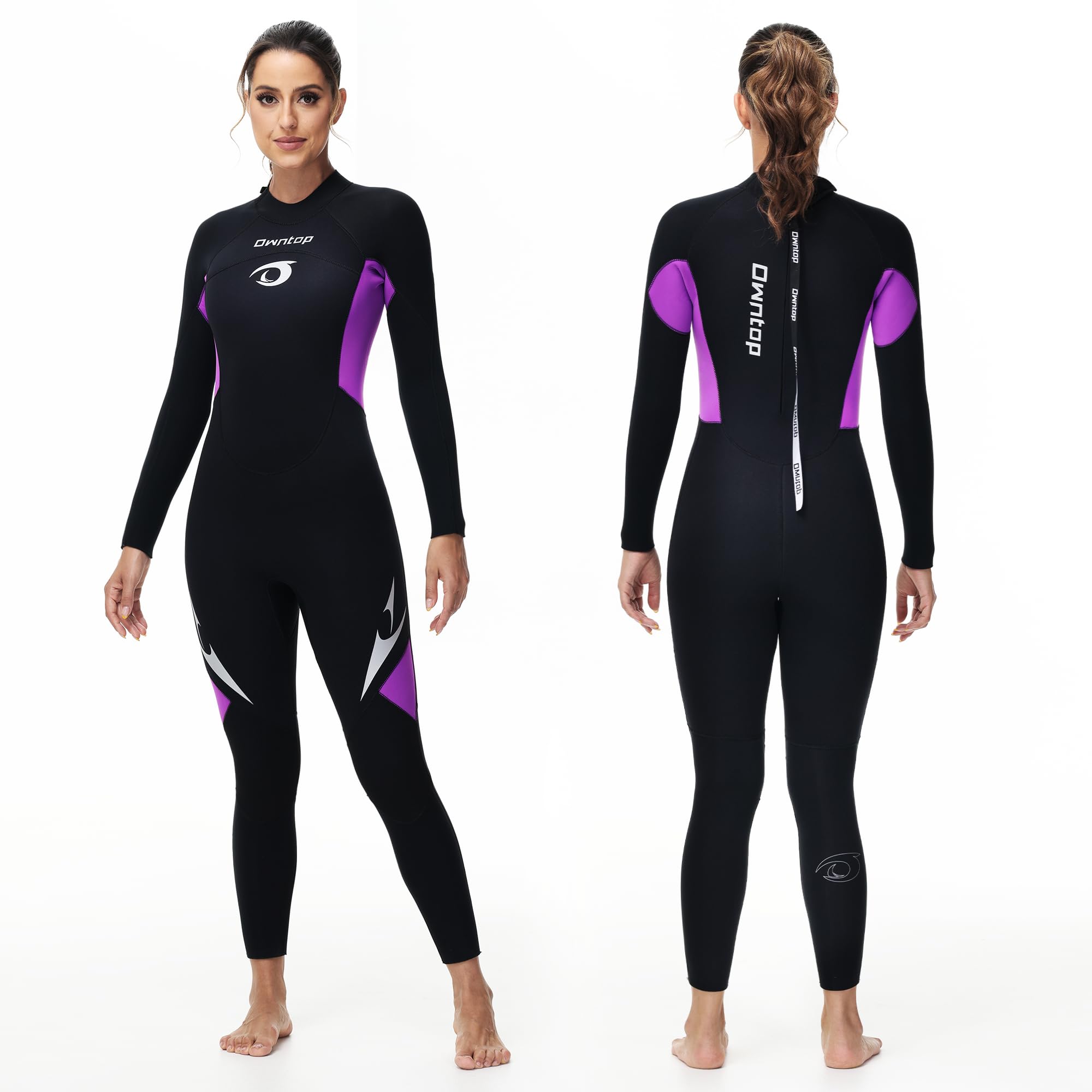
1. Owntop Wetsuit 5mm Neoprene Diving Suit for Mens Womens – Thicken Full Wet Suit, Back Zip Long Sleeve UPF50+ Keep Warm Swimwear for Scuba Surfing Swimming Diving Snorkeling Water Sports
Our pick — over 4★ from 200+ verified ratings; the strongest balance of quality and price.
A 5mm back-zip suit with 4mm CR neoprene cuffs that keeps the price within reach for cold-water beginners.
The Owntop is designed for the person who wants a 5mm cold-water suit without paying a premium. The body uses 5mm neoprene for core insulation, while the cuffs use 4mm CR neoprene — a smarter material for high-wear areas that also helps create a better seal at the wrists and ankles. The back smooth YKK zipper includes a pull rope to make solo entry easier, and the snug-fit design at the wrist and ankle is meant to prevent water infiltration during movement.
UPF 50+ sun protection is built into the nylon outer layer, and the fabric also provides a barrier against jellyfish and coral reef scratches. The temperature rating is 10 degrees Celsius (about 50 degrees Fahrenheit), which makes this suit suitable for moderately cold water rather than the freezing conditions the Aunua suit can handle. The 4.2 rating from 211 reviews reflects solid satisfaction for the price, though several shoppers say that the sizing chart should be your guide — order based on chest, waist, and hip measurements rather than your usual clothing size.
Compared to the Lansru, which uses CR neoprene in the entire limb section, the Owntop limits CR to the cuffs. That is a compromise that keeps the cost down, but it means the arms and legs are made from standard neoprene that is a bit stiffer. The back-zip design is also less convenient for solo dressing than a front zip.
What works
- Generous 5mm core thickness at an accessible price
- 4mm CR neoprene cuffs improve seal and durability
- UPF 50+ sun and marine-life protection
- Large review pool (211 ratings) gives a reliable read on quality
What to watch
- 10°C rating limits use to moderately cold water
- Back zip requires some flexibility to manage solo
Best suited for: beginners or occasional cold-water users who want a 5mm suit without spending mid-range money.
Better options exist if: you need a suit for sub-50°F water or prefer the convenience of a front-zip entry system.
2. SCUBAPRO Definition Steamer 5 mm Men’s Diving Wetsuit
A dive-grade suit that fits like a second skin and holds warmth in the 50 to 64.5°F zone.
SCUBAPRO does not mess around with cold water. This Definition Steamer is certified as a Class B dive suit, meaning it is officially rated for water temperatures from 50 to 64.5 degrees Fahrenheit (10 to 18 degrees Celsius) — a hard spec you can trust rather than a marketing claim. The 5mm neoprene body uses SCUBAPRO’s exclusive Body Map System, which combines a 3D cut with special tailoring and material inserts so the suit fits like a glove instead of a baggy sack.
Flexibility is where this suit surprises you. An Ultraspan chest panel and Stretchtec fabric on the body, sides, arms, and legs give you extra stretch where your body needs it most. That means you can reach, paddle, and kick without fighting the neoprene. Getting in and out is noticeably easier than most thick suits thanks to smooth single arm and leg stretch panels with double zippered seals. At 4 pounds, it is on the heavier side, but that weight comes from premium materials rather than excess bulk.
Unlike the Owntop’s 10-degree rating, the SCUBAPRO covers a wider temperature window with a certified rating, giving you confidence in truly cold waters. Buyers report the suit runs a bit snug, so careful sizing using the chest-waist-height chart rather than your usual t-shirt size is wise. The trade-off for this level of build quality is reflected in the premium-tier investment, making it one for divers and surfers who spend real time in cold water and cannot afford a suit that fails mid-session.
What makes it a top pick
- Certified Class B rating for 50–64.5°F water leaves no guesswork
- Body Map System with 3D cut for a tailored, non-restrictive fit
- Ultraspan chest and Stretchtec panels for maximum mobility
- smooth stretch panels make donning and doffing easier
A couple of trade-offs
- Premium price puts it beyond budget-minded buyers
- Fit is snug — sizing off the charts is a must
Reach for this if: you dive or surf in 50–64°F water and want a certified, durable suit that does not restrict movement.
Someone else if: you are on a tighter budget or only hit cold water a few times a year — the investment is harder to justify for occasional use.
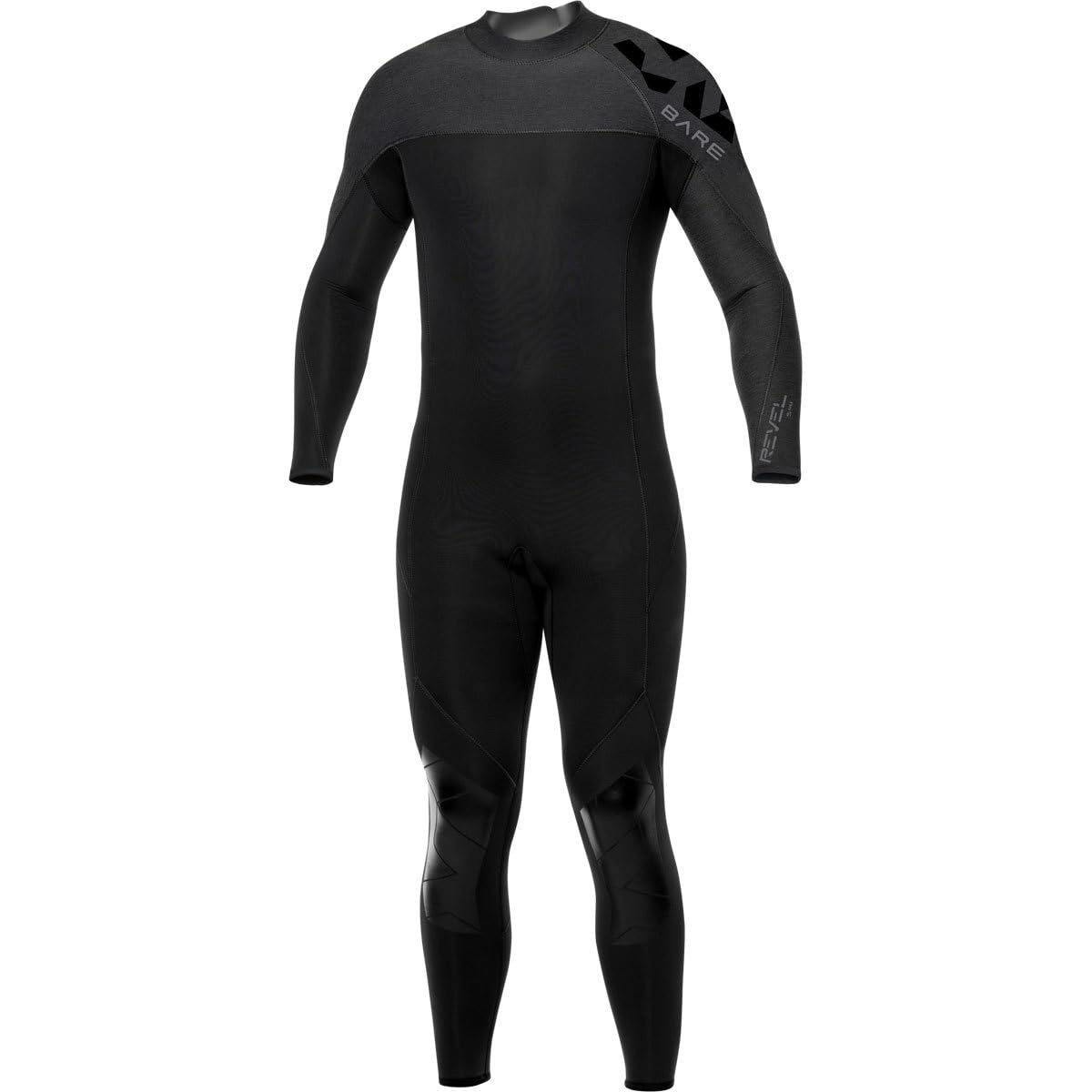
3. BARE 5MM Revel Men’s Full Wetsuit
An anatomically cut wetsuit from a brand that has been refining fit for five decades.
BARE has been making dive and watersport gear out of British Columbia for 50 years, and the Revel shows that kind of deep experience. The suit uses an anatomically correct pattern in the shoulder and neck area to create a three-dimensional fit that reduces pressure points. That means less strain on your shoulders when you are holding a dive position or paddling through surf, which translates to less fatigue over a long session.
The extra-long heavy-duty back zipper makes getting in and out far less of a wrestling match than many 5mm suits, and the low-profile collar with a velcro tab is designed to avoid snagging the neoprene. Armor-flex knee pads extend the life of the wetsuit in the high-wear knee area — a practical touch for divers who kneel on rocky bottoms or surfers who spend time on the board. At a 4.6 rating from a smaller pool of 31 reviews, owners consistently note the build quality and warmth, though finding the right size for your body shape is key.
Compared to the ZCCO front-zip, the BARE uses a back-zip entry, which some divers prefer for a cleaner chest panel. The trade-off is that you may need help zipping up. The Revel is a mid-premium option that rewards buyers who prioritize fit and long-term durability over low upfront cost.
What stands out
- Anatomically correct pattern reduces shoulder pressure
- Extra-long back zipper with low-profile collar for easier entry
- Armor-flex knee pads add serious durability
- 50-year brand reputation for fit and function
Things to consider
- Back-zip entry can be awkward without assistance
- Limited review pool means less widespread feedback
Designed for: divers and surfers who value a precise, pressure-free fit and want a suit that lasts many seasons.
Not ideal if: you prefer the ease of a front-zip entry system or need a suit in a hurry — sizing can be a consideration.
4. ZCCO Men’s 5mm Neoprene Wetsuit – Ultra Stretch Full Body Diving Suit with Front Zip

A front-zip suit with four additional ankle and wrist zippers for fast changes.
ZCCO’s approach to the cold-water wetsuit is built around convenience without cutting corners on warmth. The 5mm neoprene body (with a nylon outer layer that provides UPF 50+ sun protection) keeps you warm while protecting your skin from UV rays, jellyfish stings, and reef scrapes. The standout design feature here is the long front zipper combined with four smaller zippers at the arms and legs — you can dress and undress much faster than a standard back-zip suit, which makes a real difference when you are shivering on a beach after a session.
The smooth-skinned neoprene inner layer at the collar, wrists, and ankles creates a tight seal that reduces water entry. Strongly padded nylon knee pads add protection without adding a lot of extra weight. With a 4.3 rating from 78 reviews, buyers consistently mention the warmth and the ease of entry as the top reasons they chose this suit over others. The suit is designed for a wide range of water sports — surfing, diving, kayaking, and swimming — so it pulls double duty if you do a bit of everything.
Compared to the BARE Revel, the ZCCO is a front-zip suit with nearly double the zipper options, which makes it a better choice for solo dressing. The trade-off is that four extra zippers are four more potential failure points over time. Reviewers do not flag zipper issues in the data, but it is something to consider if you plan to put heavy miles on the suit.
Why it works
- Front zip plus four limb zippers for super-fast entry and exit
- Smooth-skin seals at collar, wrists, and ankles block water
- UPF 50+ sun and marine-life protection built in
- Versatile for multiple cold-water sports
Keep in mind
- Four small zippers add complexity over a standard single-zip suit
- The 5mm thickness can feel stiff until the neopreme warms to body temp
Choose this one when: you value fast, independent dressing and want versatile protection across multiple water activities.
Think twice if: you prefer a simpler, more conventional zipper system or are looking for a suit with the absolute lowest weight.
5. Wetsuits Men 5mm Fullsuit Superstretch Neoprene GBS Seams Keep Warm Surfing Diving Snorkeling Wetsuit
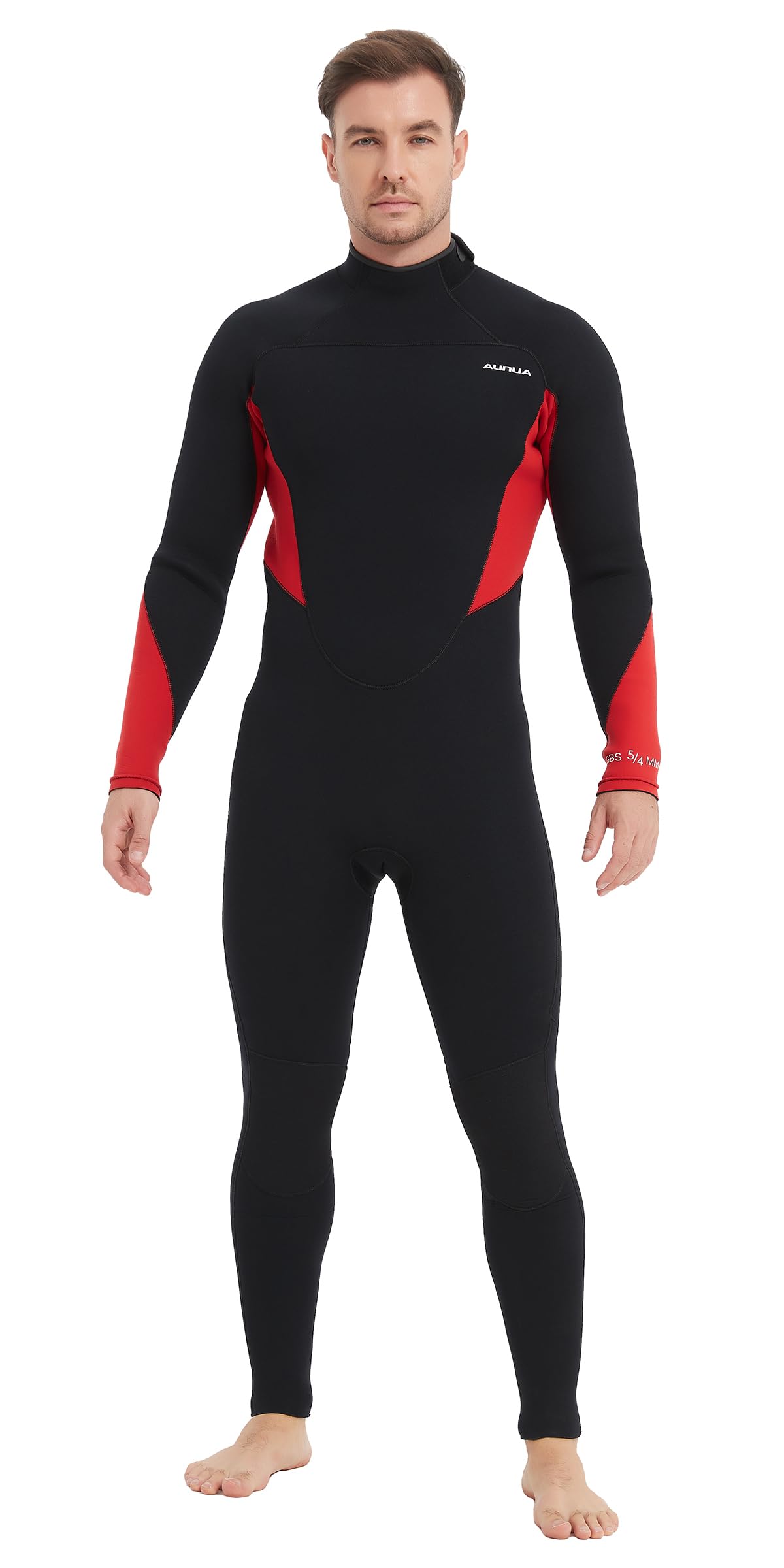
The coldest-water-rated suit in this lineup, with a 6°C (43°F) temperature rating and GBS seams.
This Aunua fullsuit is the one you grab when the water is truly frigid. Its temperature rating of 6 degrees Celsius (roughly 43 degrees Fahrenheit) — 6°C vs the Owntop’s 10°C rating — tells you it is built for serious cold. The 5/4mm thickness puts 5mm neoprene on the torso and 4mm on the limbs, and the GBS (glued and blind-stitched) seams are exactly what you want in a cold-water suit: the glue seals the neoprene, and the stitch only goes halfway through, which means far fewer holes for icy water to sneak through.
SuperStretch neoprene is used throughout, which is important because thick neoprene can feel restrictive. The manufacturer claims it reduces fatigue in your arms so you can surf longer, and the 4.7 rating from 75 reviews suggests owners agree. A key loop is built in for securing your keys while you are in the water — a small touch, but a practical one. Owners mention the suit runs slightly snug, which is typical for cold-water suits that rely on a tight fit to trap a layer of water against your skin for insulation.
The trade-off for the colder rating is that this suit is best for people who are regularly in sub-50°F water. If your idea of “cold” is 55–60°F, you may find it too warm. And like most cold-water suits, hand-washing and air-drying are required to maintain the neoprene and seam integrity over time.
Where it excels
- Rated for 6°C (43°F) water — the coldest in this guide
- GBS seams reduce water entry significantly
- SuperStretch neoprene keeps mobility high for a 5/4mm suit
- Strong 4.7 average rating from 75 buyers
What to weigh
- May be overkill for water above 50°F
- Requires careful hand-washing and flat drying
Your best bet if: you routinely dive or surf in near-freezing water and need a suit rated for the coldest temperatures.
Not the one if: you mostly hit moderate 55–65°F water — a 5mm suit with a higher temp rating will serve you better.
6. Men’s Front Zip Full Wetsuit, 3mm 4/3mm 5/4mm Neoprene Wetsuits for Surfing, Diving, Snorkeling, Swimming, Flatlock or Blind-Stitch, PU Knee Pads
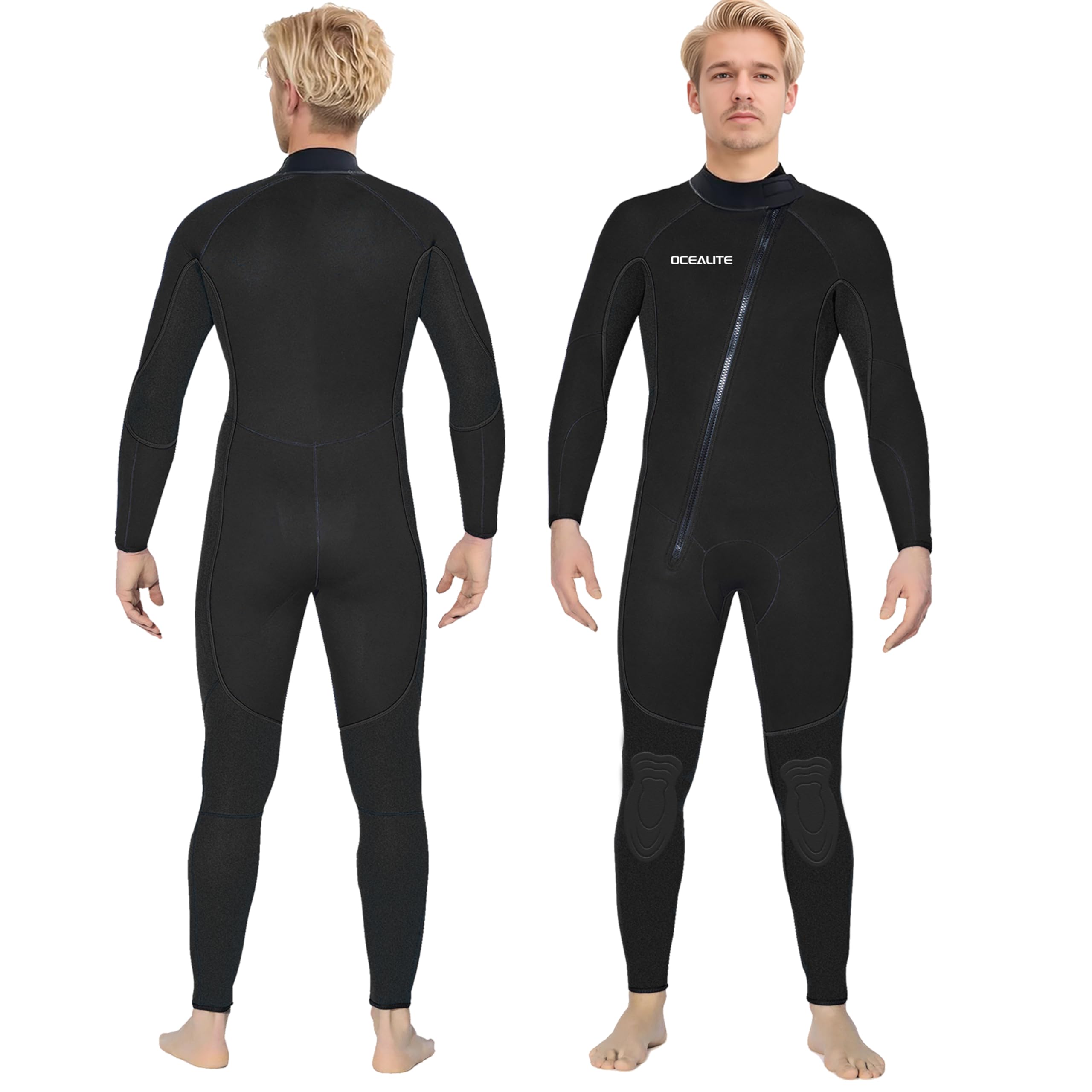
A front-zip 5/4mm suit with glued and blind-stitched seams that delivers real value for cold water.
The Ocealite 5/4mm suit hits the balance between warmth, mobility, and cost. It uses 5mm neoprene through the torso where you need insulation most, and 4mm in the arms and legs so you can paddle and kick without fighting the rubber. The glued and blind-stitched seams create a watertight seal — exactly the same seam technology you find on suits costing more — which keeps the cold out and the warmth in during long sessions.
The front-entry YKK zipper is a high-quality component that makes self-dressing straightforward, even when the suit is wet. Lycra seams at the wrists, ankles, and neckline reduce friction and prevent the chafing that can ruin a day in the water. Reinforced polyurethane (PU) foam knee pads provide extra protection for kneeling on boards or rocky shorelines, and a built-in internal pocket keeps a key or small item secure. With a 4.6 rating from 62 reviews, it is one of the better-reviewed suits in this guide.
Compared to the Lansru CR neoprene suit, the Ocealite uses a standard blind-stitch construction rather than CR (calcium rubber) neoprene, which means it is slightly less stretchy but also keeps the price at a more accessible level. Customers note the suit runs true to size, which simplifies ordering if you are between measurements.
What it delivers
- Front YKK zipper for easy self-dressing
- GBS seams block water effectively
- PU knee pads add real durability
- Lycra trim prevents chafing at wrists and neck
One caveat
- Standard neoprene is less stretchy than premium CR types
Ideal for: surfers and divers who want reliable cold-water performance with a front zip at a practical price point.
Maybe not if: you need the maximum possible stretch for high-mobility activities like competitive surfing.
7. Wetsuit, 5/4mm Upgrade CR Neoprene Wetsuits for Men and Women, Ideal Thermal Wet Suit in Cold Water, Front Zip for Surfing Snorkeling Diving Swimming

A front-zip suit upgraded with CR neoprene that stretches further and resists breakdown longer than standard rubber.
The Lansru suit stands out because it uses CR (calcium rubber) neoprene in the neck and limbs, which is a step up from the standard SCR neoprene most budget suits use. CR neoprene is more elastic and holds its shape longer, which means less bagging and sagging over time. The body uses 5mm SCR neoprene for warmth, while CR panels at the neck and limbs provide unrestricted movement and a smooth design that minimizes skin irritation.
Thickened knee pads protect your knees from injury during surfing, paddleboarding, and kayaking, and the front YKK zipper is built to endure repeated use without sticking or breaking. The suit also provides UPF 50+ sun protection for your entire body and guards against sea lice, jellyfish, and reef cuts. It carries an OEKO-TEX STANDARD 100 certification, meaning the materials have been tested for harmful substances — reassurance if you have sensitive skin. Reviewers point out that the suit feels snug initially, which is normal for neoprene, and that the slight smell from new neoprene dissipates after airing out.
Compared to the Owntop, which uses a standard neoprene blend and a back zip, the Lansru offers CR neoprene and a front zip at a similar tier, making it the better choice if comfort and stretch are your priorities. The 2.86-pound weight is lighter than many 5mm suits, which helps reduce fatigue during long days in the water.
The high points
- CR neoprene at neck and limbs for superior stretch and durability
- OEKO-TEX certified for skin safety
- Front YKK zipper and smooth limb design reduce chafing
- UPF 50+ protection built into the fabric
Points to ponder
- Snug initial fit may require careful sizing
- Slight new-neoprene smell needs airing out
A good match for: swimmers and surfers with sensitive skin who want a stretchy, certified-safe suit for moderate cold water.
Not ideal if: you need the warmest possible rating for sub-45°F water — this suit does not have a published temperature rating.
8. Full Wetsuits 5/4mm 4/3mm and 3mm Full Wetsuit for Mens Premium Neoprene Suits for Diving Snorkeling Surfing Swimming
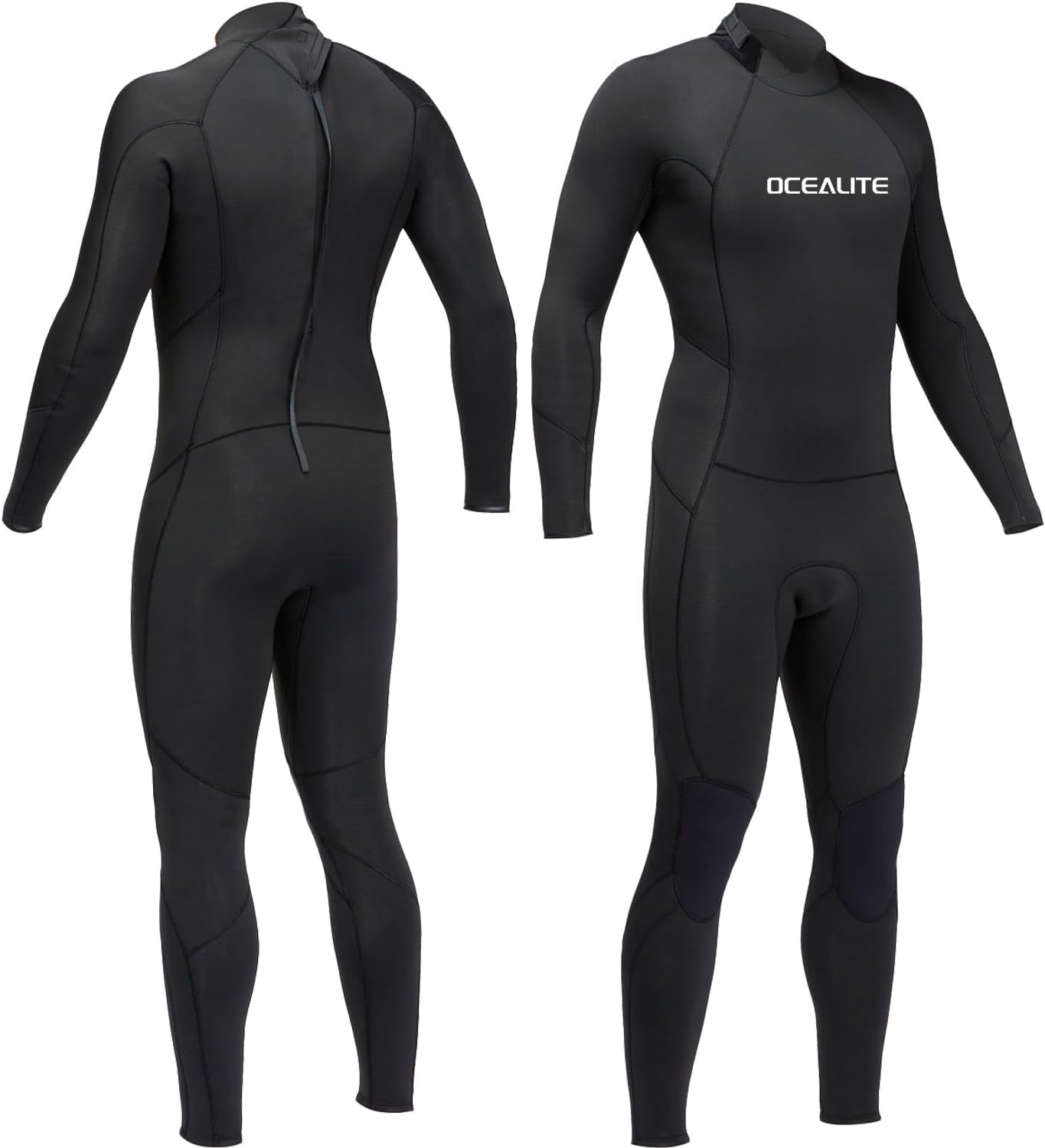
A no-frills 5/4mm back-zip wetsuit that covers the cold-water essentials at the lowest entry point.
This Ocealite suit keeps things simple. It uses 5mm neoprene on the body for warmth and 4mm on the sleeves and legs to maintain flexibility, with a YKK back zipper that includes an anti-slip velcro closure to keep the zipper from creeping down during activity. The glued and blind-stitched seams are the same basic construction used in more expensive suits, providing decent water resistance that helps keep the chill out.
Soft Lycra trimming at the cuffs, ankles, and collar is a nice touch at this tier — it reduces chafing and gives a smoother fit around the edges. An internal pocket provides a spot to stash keys or a small item so you are not leaving valuables on the beach. With a 4.2 rating from 96 reviews, buyers generally report solid warmth for the price, though the back-zip design can be a bit of a struggle to manage when you are cold and wet. The suit is available in multiple thickness options (3mm, 4/3mm, and 5/4mm), so you can buy the same model for different seasons if you want.
Compared to the Ocealite front-zip version (product 4), this one uses a back zip to keep the cost lower. The trade-off is that front-zip suits are generally easier to get in and out of on your own. The lack of a published temperature rating means you are relying on the user reviews and the 5/4mm thickness to judge suitability for your water temps.
Where it delivers
- 5/4mm thickness with blind-stitched seams for warmth
- YKK back zipper with anti-slip velcro
- Lycra trimming reduces chafing at common friction points
- Internal key pocket for secure storage
The limitations
- No temperature rating — harder to match to water conditions
- Back-zip entry is less convenient than front-zip alternatives
For the budget-minded: this is a practical cold-water suit that covers the basics without extra bells and whistles.
skip it if: you want a front-zip design or need a certified temperature rating for regular cold-water exposure.
Understanding the Specs
Neoprene Thickness (5mm / 5/4mm)
Thickness is the most direct measure of warmth in a wetsuit. A 5mm suit has a uniform layer of neoprene all over, while a 5/4mm suit has 5mm on the torso (your core needs the most insulation) and 4mm on the arms and legs (where you need flexibility to paddle, kick, and move). For cold water — typically below 55°F or about 12°C — 5mm or 5/4mm is the standard. Thicker suits retain more heat but are stiffer to move in, so the 5/4mm split is the preferred trade-off for most cold-water activities.
Temperature Rating (°C / °F)
Some manufacturers publish a temperature rating that tells you the coldest water the suit is designed for. A rating of 6 degrees Celsius (about 43°F) means the suit should keep you warm down to that temperature. Not all suits have this number, and among those that do, the rating can vary by 4 or more degrees between models. If ice on your zipper is a real possibility, a suit with a lower number is your safer bet. If the manufacturer does not provide a rating, rely on the thickness, seam type, and user reviews to gauge suitability for your local water.
FAQ
Can I wear a 3mm wetsuit in cold water?
What is the difference between GBS and flatlock seams?
How should I clean and store my cold water wetsuit?
Does a front-zip wetsuit last longer than a back-zip?
How tight should a cold water wetsuit fit?
What does UPF 50+ mean on a wetsuit?
Can I use a cold water wetsuit for warm water?
How long does a 5mm wetsuit typically last?
What size should I order if I am between sizes?
Related Guides

Mo Maruf
I created WellFizz to bridge the gap between vague wellness advice and actionable solutions. My mission is simple: to decode the research and give you practical tools you can actually use.
Beyond the data, I am a passionate traveler. I believe that stepping away from the screen to explore new environments is essential for mental clarity and physical vitality.