Our readers keep the lights on and my smoothie glass nicely filled. As an Amazon Associate, I earn from qualifying purchases.
Standing in a river or marsh when the water temperature drops near freezing is a real test of gear. Cold water waders are the only barrier between you and hypothermia, and choosing the wrong pair means a miserable, cut-short day in the field.
I’m Mohammad Maruf — the founder and writer behind WellFizz. I’ve spent hundreds of hours analyzing insulation materials, boot construction, seam sealing techniques, and neoprene thickness to separate the truly warm from the merely marketed.
This guide compiles the most durable, best-insulated options on the market to help you find the best cold water waders for freezing rivers, icy marshes, and long days in the blind.
How To Choose The Best Cold Water Waders
Selecting cold water waders involves more than picking a camo pattern. Real performance in near-freezing conditions depends on three core factors: the neoprene’s thickness and density, the insulation rating of the attached boots, and the quality of the seam-sealing process that keeps water out entirely.
Neoprene Thickness and Layering
Most cold-water models use 4.5mm to 5mm neoprene. That extra half-millimeter on 5mm versions like the TIDEWE translates to noticeably less heat loss when you are standing motionless in a 35-degree river. Thicker neoprene also adds stiffness, so a 4.5mm upper with a stretch liner offers a good compromise for walking long distances to a blind.
Boot Insulation Grams
Boot insulation is measured in grams of Thinsulate or similar synthetic material — 200g is suitable for early-season cool water, while 800g to 1600g is mandatory for ice fishing or late-season duck hunting. The Gator Waders Shield, with its 1600g boot, keeps feet warm even on submerged ice. If you plan to walk far, heavier insulation can feel cumbersome, so match the gram rating to your actual coldest water temperature.
Seam Construction and Waterproofing
The fastest route to leaking waders is a poor seam. Look for waders that combine stitched, glued, and taped seams — often described as “armor weld” or “triple-finished.” Both the HISEA 800G and Trudave models use this method. Polyurethane-coated leggings add another layer of defense against water intrusion at the lower leg, where waders are most stressed by submerged branches and rocks.
Quick Comparison
On smaller screens, swipe sideways to see the full table.
| Model | Category | Best For | Key Spec | Amazon |
|---|---|---|---|---|
| TIDEWE Hunting Wader | Bootfoot | Extreme Cold Duck Hunting | 1400/1600G Insulated Boots, 5mm Neoprene | Amazon |
| Simms Freestone Stockingfoot | Stockingfoot | River Fly Fishing | Breathable Shell, Zippered Design | Amazon |
| Gator Waders Shield Insulated | Bootfoot | All-Day Blind Sitting | 1600G Boot, Quilted Thermal Lining | Amazon |
| LaCrosse Mallard II 1000G | Bootfoot | Large Build & Heavy Cover | 1000G Insulation, Durable Rubber Boot | Amazon |
| HISEA 800G Neoprene Waders | Bootfoot | Mid-Winter Duck & Waterfowl | 800G Thinsulate Boots, LED Light System | Amazon |
| Striker Trekker Ice Fishing Bibs | Bibs | Ice Fishing on Frozen Lakes | Sureflote Flotation, Windproof Shell | Amazon |
| Simms Tributary Stockingfoot | Stockingfoot | Budget Fly Fishing Entry | Breathable Upper, Neoprene Stockingfoot | Amazon |
| HISEA 200G Camo Waders | Bootfoot | Cool Weather & Early Season | 200G 3M Thinsulate, 4.5mm Neoprene | Amazon |
| Trudave 600G Insulated Waders | Bootfoot | All-Around Trapping & Fishing | 600G Boots, 4.5mm Neoprene Upper | Amazon |
In‑Depth Reviews
1. TIDEWE Hunting Wader with 1400 & 1600G Insulation Rubber Boot

The TIDEWE delivers the thickest neoprene in this roundup at a full 5mm, paired with a 1400-gram boot insulated for the most frigid water scenarios. The extra millimeter over standard 4.5mm waders makes a measurable difference in heat retention when you are standing still on a flooded timber flat. The cross-hatch exterior facing resists abrasion from branches and submerged logs significantly better than smooth-faced neoprene.
The front-pocket system includes a fleece-lined handwarmer pocket with a dedicated heat-pack pouch that hangs freely at your fingertips — a small detail that keeps fingers functional during mid-December shoots. A quick-detach shell pouch with 12 loops keeps ammunition organized without needing a full outer vest. The rugged boot tread pattern provides reliable traction on slick mud and wet rock, though some shorter hunters report the shoulder straps can be too long for a five-foot-seven frame.
Leak reports are nearly nonexistent across verified owner feedback, with multiple reviewers confirming zero water intrusion after full days wading through flooded timber and hiking one to four miles into remote hunts. The 5mm neoprene does reduce flexibility, so hunters who walk extensively should weigh warmth against range of motion. For stationary cold-water hunting, this is the benchmark.
Why it’s great
- Thickest 5mm neoprene in its class for maximum warmth retention
- 1400/1600-gram boot insulation handles sub-freezing water immersion
- Armor weld double-stitched and sealed seams with polyurethane-coated leggings
Good to know
- Shoulder straps may cause sagging for hunters under 5’7″
- Boot insulation density reduces ankle flexibility during long walks
2. Simms Men’s Freestone Stockingfoot Chest-high Fishing Waders

The Freestone represents Simms’ mid-range stockingfoot entry, trading the bombproof neoprene of bootfoot waders for a breathable shell that vents perspiration during active river fishing. The zippered front design is a standout feature — it allows rapid on-and-off without the full-body struggle of traditional chest waders, and provides quick relief on long days. The 4-layer Toray fabric resists punctures while maintaining a lighter pack weight than neoprene alternatives.
Gravel guards integrated into the stockingfoot design keep debris from entering wading boots, and the neoprene stockingfoot itself is durable enough to handle miles of river rock without premature wear. The chest pocket layout is practical but notably lacks a waterproof zipper — owners report packing a dry bag for electronics. For fly anglers who value mobility over extreme insulation, the Freestone represents a balanced cold-water solution when paired with appropriate wading socks and booties.
Long-term durability data from the field is strong, with verified users reporting that Simms waders — including earlier generation Freestone models — have lasted through multiple seasons of heavy use. One reviewer documented a pair surviving 23 years of fishing before replacement. The breathable construction does mean you need quality insulating layers underneath for true cold-water ice fishing scenarios.
Why it’s great
- Breathable fabric prevents sweat buildup during active wading
- Zippered front design enables fast removal without unbuckling straps
- Proven Simms warranty and long-term durability track record
Good to know
- Chest pocket lacks a waterproof zipper for electronics storage
- Requires separate insulated wading boots and socks for cold water
3. Gator Waders Mens Shield Insulated Chest Duck Hunting Waders
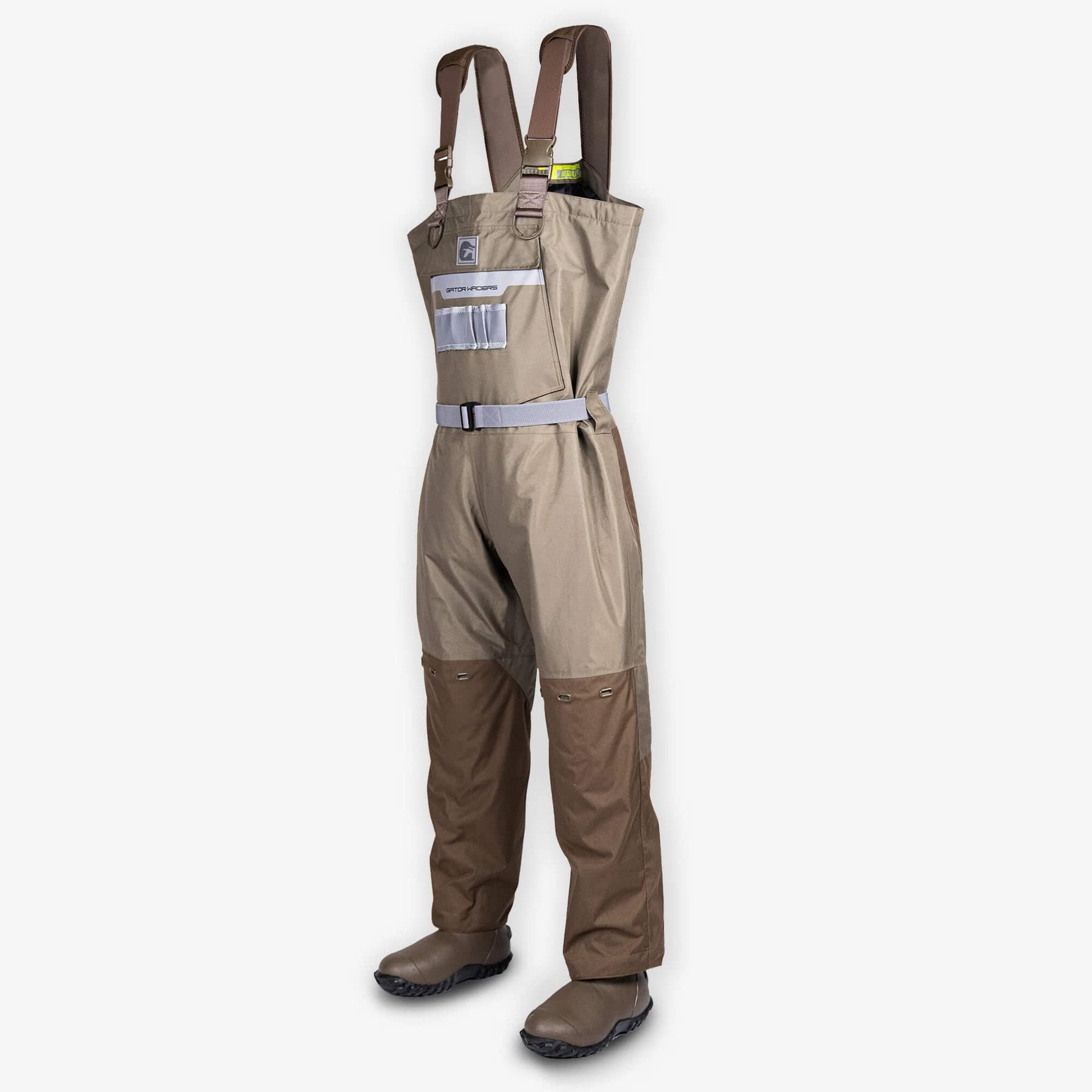
The Gator Waders Shield pairs a 1600-gram boot with a 4-layer polyester exterior that covers a waterproof membrane and quilted thermal cotton insulation. That quilted lining is unusual in this category — most brands rely on a simple foam or fleece layer, whereas the Shield’s cotton lining traps air pockets more evenly across the upper body. The result is noticeably warmer legs and torso during long stationary sits in a duck blind or boat.
The boot itself uses reinforced exterior rubber with an aggressive tread pattern that holds on soft mud better than many competitors. The boots are attached directly to the wader body, which eliminates the leak point that separate boot systems can create. Double stitching and two layers of seal tape reinforce the seat and leg gaiters — high-wear zones that fail first on most budget waders. Elastic shoulder straps prevent the tightness that occurs when you sit or crouch.
A potential long-term concern is crotch seam leakage after two seasons, though some owners report that applying a spray seam sealant resolves the issue. The boots run narrow, particularly for hunters with wide feet — ordering a full size up is recommended if you wear an E or wider shoe. For hunters who prioritize stationary warmth over long hikes, the Shield’s insulation package is extremely competitive.
Why it’s great
- Quilted thermal cotton lining provides even heat distribution across the body
- 1600-gram boot with reinforced rubber stands up to icy water immersion
- Double-stitched and dual-sealed taped seams at high-wear zones
Good to know
- Crotch seams may require maintenance with spray sealant after two seasons
- Boots run narrow; size up for wide feet (E or wider)
4. LaCrosse Mallard II 1000G Men’s Wader
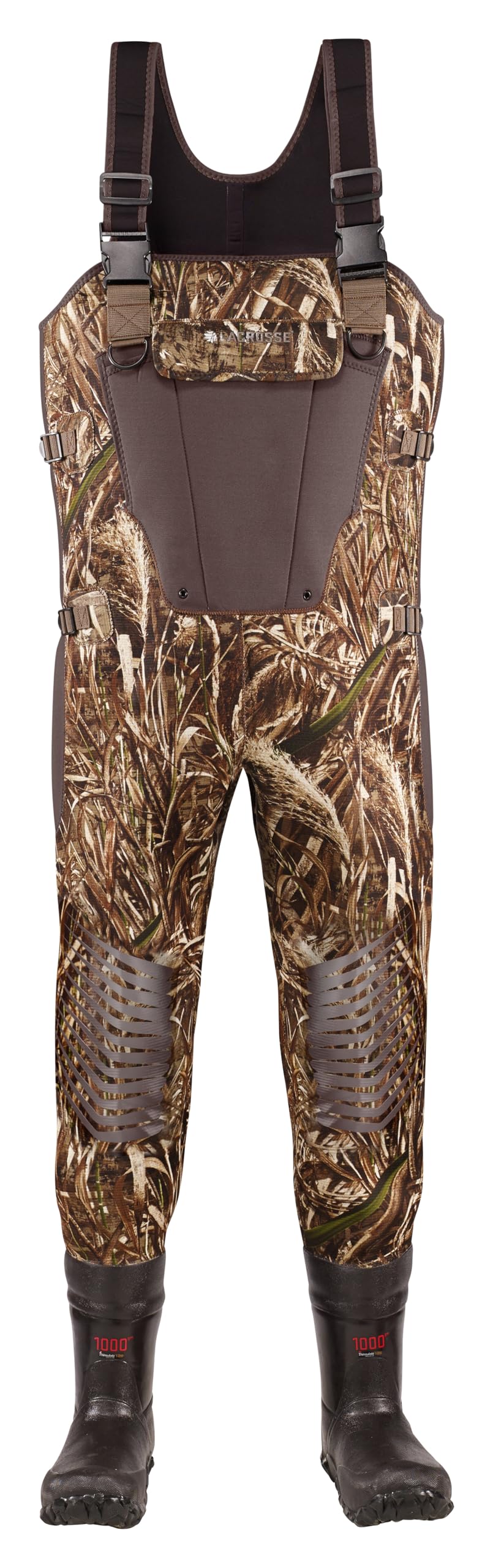
LaCrosse has built its reputation on durability, and the Mallard II continues that legacy with a 1000-gram insulated boot in a traditional bootfoot design. The rubber boot construction uses a vulcanized bonding process that resists delamination better than glued boot attachments seen on budget models. The 1000-gram Thinsulate insulation is appropriate for temperatures in the low 20s Fahrenheit, making it a versatile choice for both late-season duck hunting and early ice fishing expeditions.
The upper body is constructed from a durable PVC-coated nylon that provides a different feel from neoprene — it is less stretchy but more abrasion-resistant against cattails and brush. The sizing runs generous in the chest and torso area, which is excellent news for larger-built hunters who often feel compressed in standard waders. A five-foot-eleven, 285-pound reviewer reported a comfortable fit with size 12 boots, noting that the wader was less restrictive than other premium brands.
The main complaint is inconsistent sizing between different production runs — some owners report the size “Stout” fits differently than previous LaCrosse waders, with longer legs and a shorter crotch-to-top measurement. The boots also run narrow, which can make them difficult to put on with heavy socks. For hunters with average to slim builds or wide feet, careful size chart study is essential before purchasing.
Why it’s great
- Vulcanized rubber boot construction resists delamination over years of use
- Generous chest and torso sizing accommodates larger body types
- 1000-gram Thinsulate insulation handles below-freezing conditions well
Good to know
- Boots run narrow; difficult to pair with thick socks for wide feet
- Inconsistent sizing between production runs requires careful measurement
5. HISEA Chest Waders for Men with 800G Insulated Boots

HISEA’s 800-gram insulated bootfoot wader delivers a 4.5mm neoprene upper with a unique inclusion — an integrated LED light system hidden inside the flapped top-entry storage pouch. This provides hands-free illumination for early morning setup in a dark blind or loading gear before dawn. The 800-gram Thinsulate boot insulation is sufficient for stationary hunting in temperatures as low as 15 degrees Fahrenheit, as confirmed by multiple users who reported four-hour sits in near-freezing water without cold feet.
The wader uses bonded and taped seams that are wider than standard market offerings, paired with a Water Intrusion Resistance (WIR) treatment that reduces the chance of leak development at the seam edges. The reinforced knees add impact protection when kneeling on frozen ground or rocky banks. The fit runs large — a size M13 fits a six-foot-one, 260-pound reviewer with a size 12.5 foot, though the leg length barely accommodates a 31-inch inseam.
The integrated light bar has shown durability issues in some units, failing after two months in one reported case. The hanger also broke after three weeks of use. The boots generate a strong chemical smell from new manufacturing that requires airing out before first use. Despite these small failures, the wader has been reported leak-free after a full year of heavy duck hunting use, making the insulation-to-price ratio very strong.
Why it’s great
- Integrated LED light system provides hands-free illumination in a dark blind
- 800-gram Thinsulate boots keep feet warm in 15-degree water for hours
- Wider bonded and taped seams with WIR treatment reduce leak risk
Good to know
- Integrated light bar may fail after several months of use
- Initial chemical smell from manufacturing requires outdoor airing
6. Striker Men’s Trekker Durable Windproof Ice Fishing Bibs

The Striker Trekker Bibs are a different category from bootfoot waders — they are windproof, water-resistant bibs designed specifically for ice fishing, with integrated Sureflote flotation technology that provides buoyancy in the event of a breakthrough. This safety feature is unique among the products reviewed here and is critical for anyone walking on ice. The shell material blocks wind effectively, and the insulated interior retains body heat without the moisture-trapping issues of non-breathable neoprene.
The bib design allows unrestricted upper-body movement compared to full chest waders, which is an advantage when drilling holes or maneuvering an auger on the ice. The adjustable suspenders secure the fit without sagging, and the waterproof treatment sheds slush and meltwater effectively. Multiple owners report that pairing these bibs with a Striker ice jacket creates a fully sealed system that blocks wind at every joint.
The fit runs wide, particularly in the leg area, which can be a problem for slim or average builds who find the silhouette too baggy. The bib cut is optimized for seated positions on a bucket or sled, so standing and walking all day produces a different feel than waders designed for wading. These bibs are not intended for full immersion like chest waders, but for ice fishermen spending hours on frozen lakes, the warmth-to-mobility ratio is best in class.
Why it’s great
- Sureflote flotation provides critical safety backup on unpredictable ice
- Windproof shell blocks extreme lake wind better than standard waders
- Bib design allows full upper-body range of motion for auger work
Good to know
- Leg cut is very wide and may feel baggy on lean or average frames
- Not designed for full water immersion like chest waders
7. Simms Men’s Tributary Stockingfoot Fishing Waders
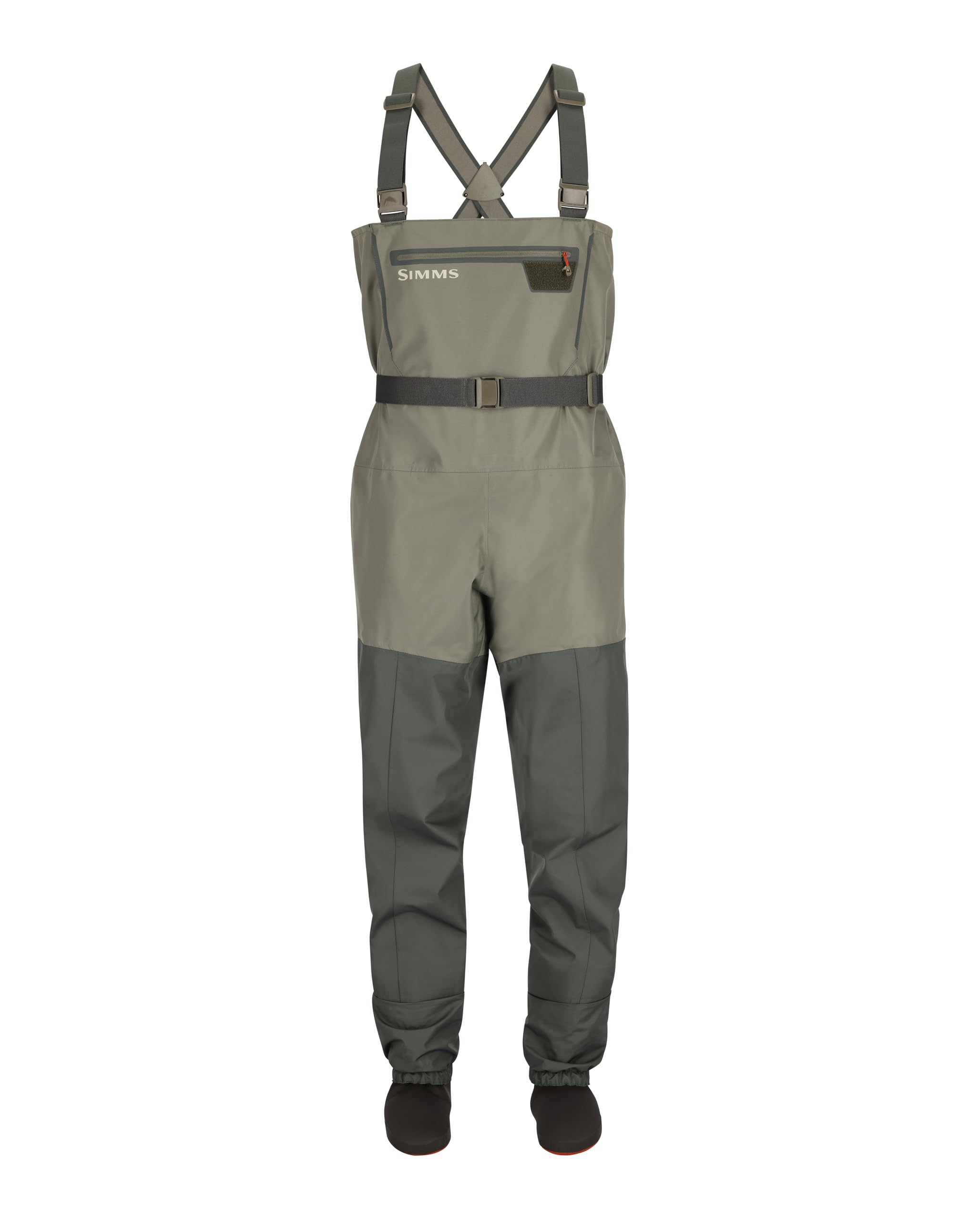
The Simms Tributary is the brand’s most accessible stockingfoot wader, carrying the same high-performance DNA found in the Freestone and G3 lines but at a reduced cost. The breathable upper wader fabric allows moisture vapor to escape during strenuous wading, which keeps you warmer in cold weather than a sealed neoprene suit that traps sweat. The neoprene stockingfoot is thick enough to protect against sharp rocks when paired with quality wading boots.
The fit runs slightly snug compared to other Simms models, which is something to consider for layered cold-weather fishing. The light weight and packability make it a strong option for bank fishing or kayak trips where storage space is limited. After ten uses, multiple users reported no leakage, with only minor interior condensation from body heat rather than actual water ingress. The chest pocket is not waterproof, so a dry bag is still necessary for electronics.
For anglers making the jump from budget waders or renting gear on guided trips, the Tributary provides a reliable platform that will not fail mid-season. The trade-off for the lower entry price is that the fabric is thinner than higher-end Simms models, meaning punctures from barbed hooks or sharp branches require prompt patching. The warranty and customer service from Simms add long-term value.
Why it’s great
- Breathable upper fabric reduces sweat buildup during active cold-weather wading
- Lightweight packable design fits well in kayak or backpack storage
- Simms brand reliability and customer support offer long-term peace of mind
Good to know
- Fabric thinner than premium Simms models; vulnerable to puncture
- Chest pocket is not waterproof; separate dry bag required for electronics
8. HISEA Chest Waders for Men with 200G Boots

The HISEA 200G bootfoot wader is an entry-level cold-water option that covers early-season hunting and moderate-temperature fishing without the bulk of high-insulation models. The 4.5mm neoprene upper is warm enough for fall conditions, and the 200-gram 3M Thinsulate boot liner handles cool water without overheating during hikes to the blind. The armor weld double-stitched seams and visible bonded tape provide reassurance against leaks at a budget-friendly price point.
The boot sole uses a rugged textured pattern that provides reliable traction on wet boat decks and muddy banks, though the sole is thin and lacks the ankle support of premium boot designs. This is noticeable when traversing uneven terrain with a heavy load of gear. The shell carrier layout includes eight shell holders on the front hand-warmer pocket and a built-in zippered pocket for small essentials like calls or a phone.
Performance in 30-degree water with 20 MPH wind has been validated by owners, who report no leaks even after 25-plus minutes of chest-deep immersion. The boots run small, so ordering a full size up is mandatory for thicker socks. The thin boot sole is the weakest link — aggressive terrain or long walks on gravel will be felt through the bottom. For the angler or hunter who only faces cool water a few weekends a year, the HISEA provides adequate warmth at a very low entry cost.
Why it’s great
- 200-gram 3M Thinsulate boots provide warmth without overheating during walks
- Armor weld double-stitched seams and bonded tape ensure reliable waterproofing
- Eight shell holders on front pocket and built-in zippered pocket add utility
Good to know
- Boots run small; order a full size up for comfortable sock fit
- Thin boot sole lacks ankle support and transmits surface texture
9. Trudave Fishing Waders for Men with 600G Insulation
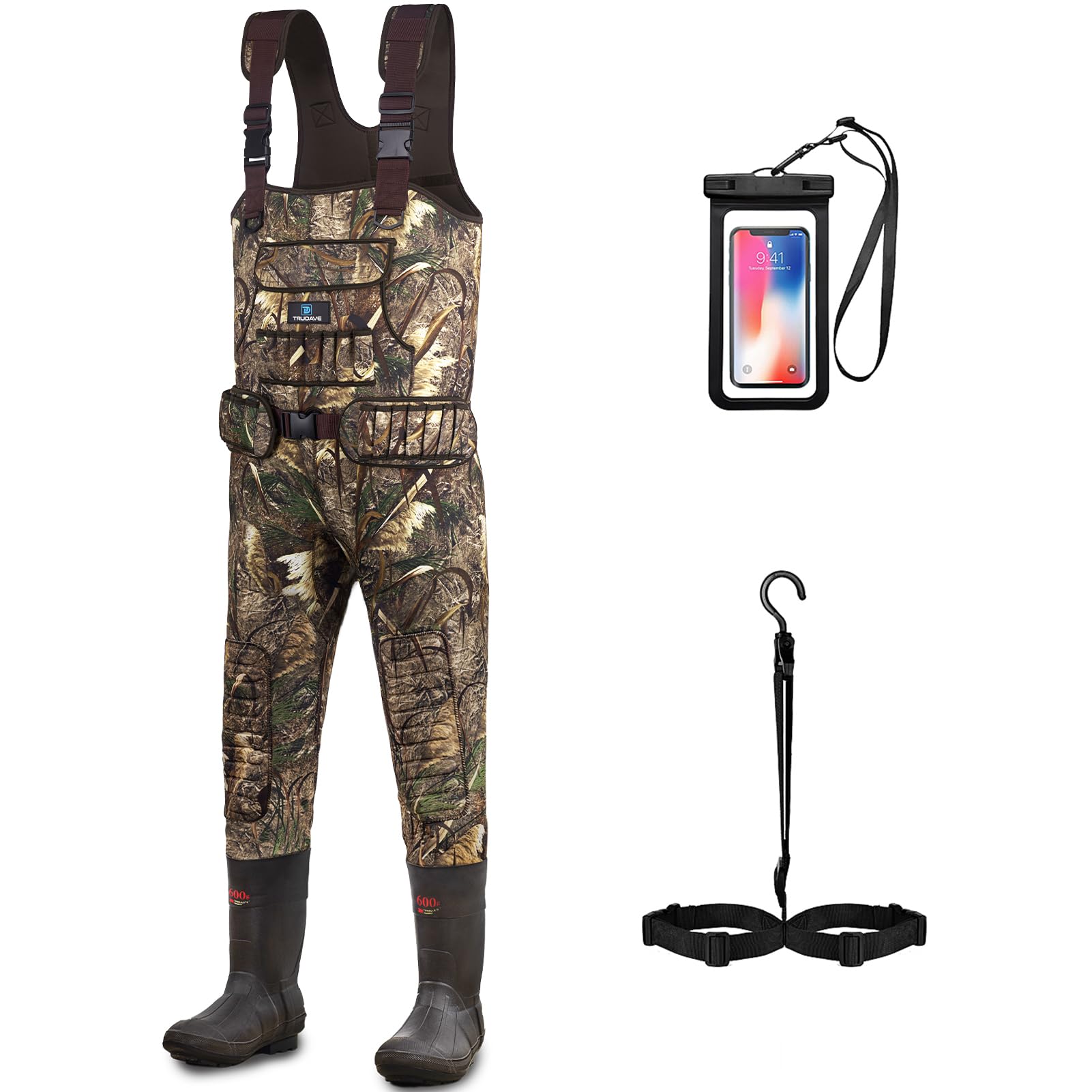
The Trudave 600G wader is a no-frills bootfoot option that focuses on the fundamentals: 4.5mm neoprene with a tough poly/jersey shell, triple-finished seams that are stitched, glued, and taped, and 600-gram boot insulation that is adequate for cold water in the upper 30s to low 40s Fahrenheit. The neoprene upper feels substantial — multiple owners describe it as thicker and more comfortable than other waders at a similar price point.
Double-layer knee pads add reinforced padding for kneeling on rocky banks or inside a boat, a feature typically reserved for more expensive models. The adjustable shoulder straps and flexible belt accommodate a range of body shapes, though the fit runs long in the legs with a tight midsection. A five-foot-eight, 170-pound reviewer reported excess leg bunching but still found the waders functional for fishing and trapping. The shell pockets on the chest provide quick access to shells or small tools.
Warmth is the primary strength — verified owners report using these waders for trapping, hunting, and fishing in consistently cold conditions without getting cold or wet. The 600-gram insulation level sits in the middle of the spectrum, making these waders versatile for both moderate and somewhat frigid conditions. The machine-washable care instruction is a practical bonus for muddy outings. The main limitation is sizing precision — careful adherence to the brand’s size chart is essential to avoid an awkward fit.
Why it’s great
- Triple-finished seams (stitched, glued, and taped) provide leak resistance
- Double-layer knee pads add durability for kneeling on rough surfaces
- 600-gram boot insulation handles cold water well for a budget-friendly option
Good to know
- Leg length runs long with a tight midsection; careful size chart use required
- Not suitable for extended immersion in sub-20-degree water
FAQ
Can I use 4.5mm neoprene waders in below-freezing water?
Why do some cold water waders have a strong chemical smell when new?
How do I properly care for cold water waders to extend their lifespan?
What is the difference between neoprene waders and breathable waders for cold water?
Final Thoughts: The Verdict
For most users, the best cold water waders winner is the TIDEWE Hunting Wader because its 5mm neoprene and 1400/1600-gram boot insulation provide unmatched warmth for the most frigid conditions without breaking the bank. If you want a breathable stockingfoot platform for active fly fishing in cold rivers, grab the Simms Freestone. And for ice fishing safety with integrated flotation, nothing beats the Striker Trekker Bibs.

Mo Maruf
I created WellFizz to bridge the gap between vague wellness advice and actionable solutions. My mission is simple: to decode the research and give you practical tools you can actually use.
Beyond the data, I am a passionate traveler. I believe that stepping away from the screen to explore new environments is essential for mental clarity and physical vitality.