Our readers keep the lights on and my smoothie glass nicely filled. As an Amazon Associate, I earn from qualifying purchases.
That tickle in your throat, the relentless sneezing, the pressure behind your eyes—when seasonal allergies or a fresh cold hits, you need more than hope. You need a medicine that targets your specific cluster of symptoms without causing unwanted drowsiness or jitters. The right choice depends on whether your primary complaint is sinus congestion, a runny nose, body aches, or a combination of all three.
I’m Mohammad Maruf — the founder and writer behind WellFizz. I spend my time reading clinical data, comparing active-ingredient profiles, and analyzing thousands of user reports to find which over-the-counter formulas actually deliver on their label promises.
This guide breaks down the five most reliable options to help you stop guessing and start feeling better. Whether you need daytime focus or nighttime rest, knowing the active ingredients makes all the difference when selecting the best cold and allergy medicine for your specific symptoms.
How To Choose The Best Cold And Allergy Medicine
Selecting the right medicine starts with identifying your dominant symptom. A cough with chest congestion requires a different active ingredient than a runny nose caused by pollen. Multi-symptom formulas combine several ingredients, which can be efficient but may include components you do not need. Understanding the three main drug categories—antihistamines, decongestants, and pain relievers—helps you avoid overmedicating or missing the mark entirely.
Match the Active Ingredient to Your Symptom
Diphenhydramine is a first-generation antihistamine that works quickly on sneezing, itchy eyes, and runny nose, but it causes significant drowsiness—making it better for nighttime or severe allergy attacks. Dextromethorphan suppresses cough, while guaifenesin loosens mucus. Phenylephrine shrinks blood vessels in nasal passages to relieve stuffiness. Acetaminophen handles fever and body aches. A formula that combines two or three of these can cover more ground, but a single-ingredient product is often the more precise tool.
Daytime vs. Nighttime Formulations
Daytime caplets typically avoid sedating antihistamines and rely on non-drowsy decongestants and pain relievers so you can work or drive. Nighttime formulas add a sleep-friendly antihistamine like doxylamine or chlorpheniramine to help you rest through coughing or nasal drip. Combo packs that offer separate day and night doses let you switch seamlessly without buying two boxes.
Check the Dosage and Age Guidelines
Adults and children over 12 can usually take the same caplets, but liquid formulations such as Children’s Dimetapp are dosed by weight for younger kids. Always read the Drug Facts label: the maximum daily acetaminophen limit for adults is 4,000 mg, and accidental double-dosing is common when people take separate pain relievers alongside a multi-symptom cold product. HSA and FSA eligibility makes many of these products a smart buy for those with health savings accounts.
Quick Comparison
On smaller screens, swipe sideways to see the full table.
| Model | Category | Best For | Key Spec | Amazon |
|---|---|---|---|---|
| Tylenol Sinus Congestion & Pain | Premium | Sinus pressure & headache | Triple combo: acetaminophen + phenylephrine + guaifenesin | Amazon |
| AXIV Day & Night | Mid-Range | All-day/night coverage | 48 softgels (36 day + 12 night) | Amazon |
| Tylenol Severe Cough & Sore Throat | Mid-Range | Cough + sore throat combo | 500 mg acetaminophen + dextromethorphan | Amazon |
| Children’s Dimetapp Cold & Allergy | Premium | Kids’ allergies & colds | 8 oz liquid, age-based dosing | Amazon |
| Benadryl Ultratablets | Budget | Fast allergy attack relief | 25 mg diphenhydramine, 100 count | Amazon |
In‑Depth Reviews
1. Tylenol Sinus Congestion & Pain, Severe Caplets

This three-blend caplet pairs 500 mg of acetaminophen with phenylephrine and guaifenesin, making it the strongest tool here for sinus pressure paired with headache and chest congestion. The non-drowsy profile means you can take it during work hours without losing focus, which explains why many users call it their allergy-season staple. The pack of three bottles gives you a substantial supply that will last through multiple cold cycles.
Phenylephrine works by constricting blood vessels in the nasal passages, while guaifenesin thins mucus so you can cough it up more easily. This combination is specifically suited for people whose main complaint is facial pressure rather than sneezing or watery eyes. The acetaminophen component handles the achiness that often accompanies sinus infections.
Because it lacks an antihistamine, this formula will not dry up a runny nose the way diphenhydramine would. If your primary symptom is profuse nasal drainage, you will want a product that includes an antihistamine. But for stuffiness, pressure, and body aches, this is the most targeted option in the lineup.
Why it’s great
- Triple-action covers sinus, pain, and congestion in one caplet
- Non-drowsy daytime formula lets you stay productive
- Pack of three provides long-lasting value
Good to know
- Not designed for sneezing or runny nose from allergies
- Child-proof packaging can be difficult to open
- Contains acetaminophen—watch total daily intake
2. AXIV Day & Night Cold & Flu Medicine Combo Pack
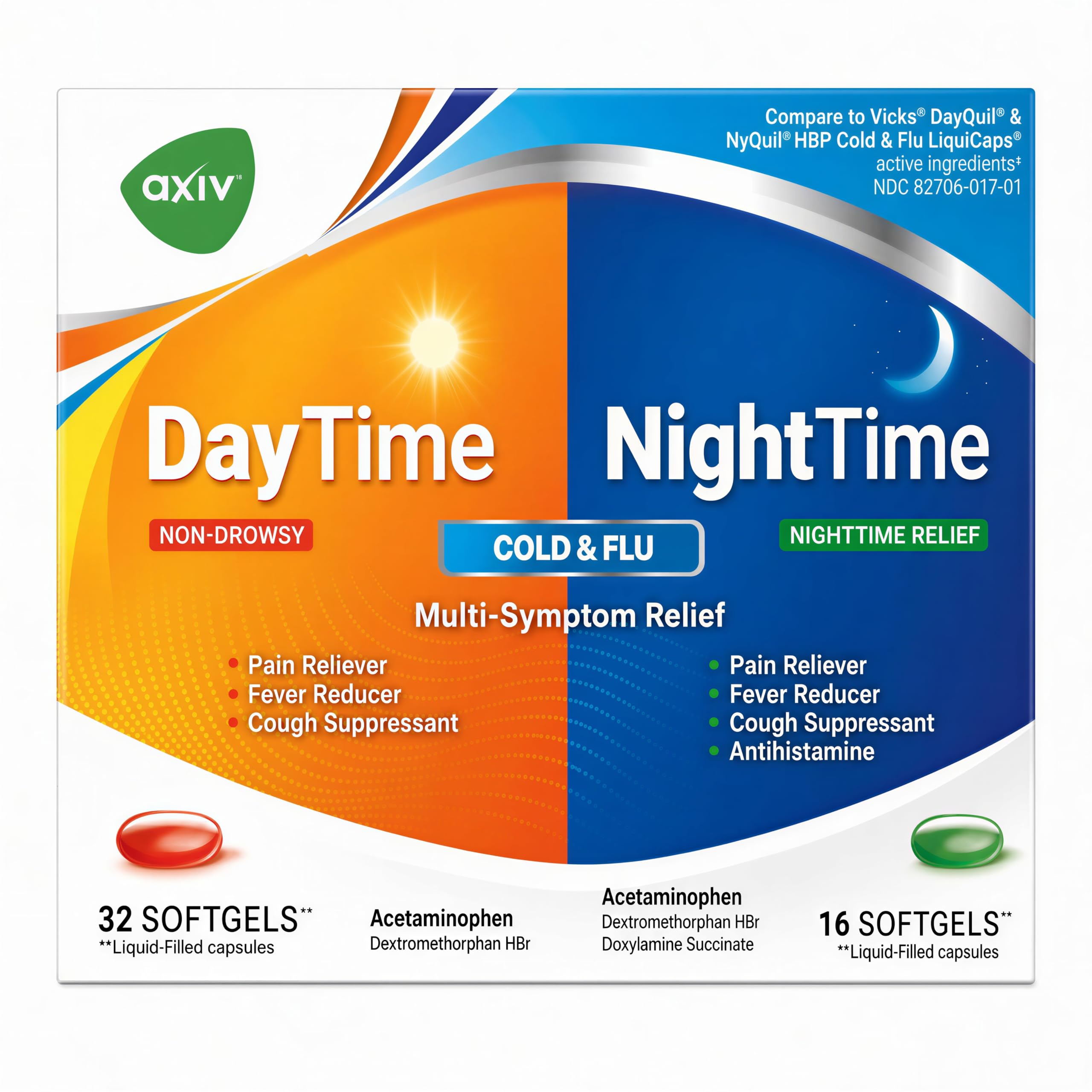
AXIV matches the ingredient profile of leading national brands at a lower price point, offering 36 non-drowsy daytime softgels and 12 nighttime capsules. The daytime dose uses acetaminophen without a sedating antihistamine, so you can function normally, while the nighttime version includes a sleep-friendly component to help you rest through coughing or congestion. Users consistently report that the non-drowsy pills truly keep energy levels steady.
The 48-count total makes this one of the highest-value entries, especially given HSA and FSA eligibility. Each softgel is easy to swallow, and the dual-bottle design keeps your day and night doses separate so you do not accidentally take the wrong one. The nighttime capsules include the antihistamine chlorpheniramine maleate, which is less sedating than diphenhydramine but still promotes rest.
If you are looking for an affordable alternative to the premium brands without sacrificing effectiveness, this is your best bet. The only trade-off is that you get fewer nighttime doses than daytime ones, which works fine for a typical cold but may run short if you need several nights of relief in a row.
Why it’s great
- Cost-effective alternative to name-brand combos
- True non-drowsy daytime formula preserves energy
- HSA and FSA eligible
Good to know
- Only 12 nighttime doses in the pack
- Not ideal for severe allergy symptoms like itchy eyes
3. Tylenol Extra Strength Severe Cough + Sore Throat Day & Night

This combo pack is engineered specifically for the person whose cold starts with a raw, painful throat and a hacking cough. The daytime caplets pair 500 mg of acetaminophen with 15 mg of dextromethorphan HBr, a cough suppressant that reduces the urge to cough without making you drowsy. The nighttime caplets add chlorpheniramine maleate, which dries up a runny nose and helps you sleep through the night.
The 16-day and 8-night split is practical for the average cold cycle—you typically need more symptom control during waking hours. Users note that the nighttime caplets kick in quickly and produce noticeably better sleep quality compared to taking daytime-only formulas before bed. The extra-strength acetaminophen dose also handles the fever and body aches that often accompany a severe cold.
This is not a broad allergy medicine—it lacks a decongestant, so it will not help much with sinus pressure or stuffy nose. If your main complaints are cough and sore throat, this is the most precise option. But if you also have significant nasal congestion, you may need to pair it with a separate decongestant.
Why it’s great
- Cough suppressant targets the specific cold symptom of persistent coughing
- Nighttime caplets include antihistamine for runny nose relief
- Doctor-recommended pain relief brand
Good to know
- No decongestant for sinus pressure relief
- Small total count means you may need to repurchase soon
4. Children’s Dimetapp Cold & Allergy 8oz

This liquid formulation has been a household staple since 2009, and for good reason—it handles both cold symptoms and allergy triggers in children with a single grape-flavored dose. The active ingredients target sneezing, runny nose, and itchy eyes while also addressing cough and nasal congestion. Parents report that visible improvement often appears after three doses, with coughing fits and sneezing spells subsiding noticeably.
What makes this product stand out is its cross-generational utility. Multiple adult users report taking a carefully adjusted dose themselves when they need fast sinus relief without the harsh side effects of some adult formulas. The liquid format is easier to swallow for children and adults who struggle with pills, and the 8-ounce bottle provides enough doses for a full cold cycle for one child.
The dosing must be calculated by weight rather than age alone, so you will need to check the label carefully. Also, because it is a liquid, it has a shorter shelf life than caplets once opened. But for families with young children who suffer from both colds and seasonal allergies, this is the most versatile single product available.
Why it’s great
- Liquid format works for children and adults alike
- Addresses both cold and allergy symptoms in one dose
- Proven track record with over a decade of positive reviews
Good to know
- Dosing requires careful weight measurement
- Shorter shelf life once opened compared to tablets
5. Benadryl Allergy Ultratablets, 25 mg
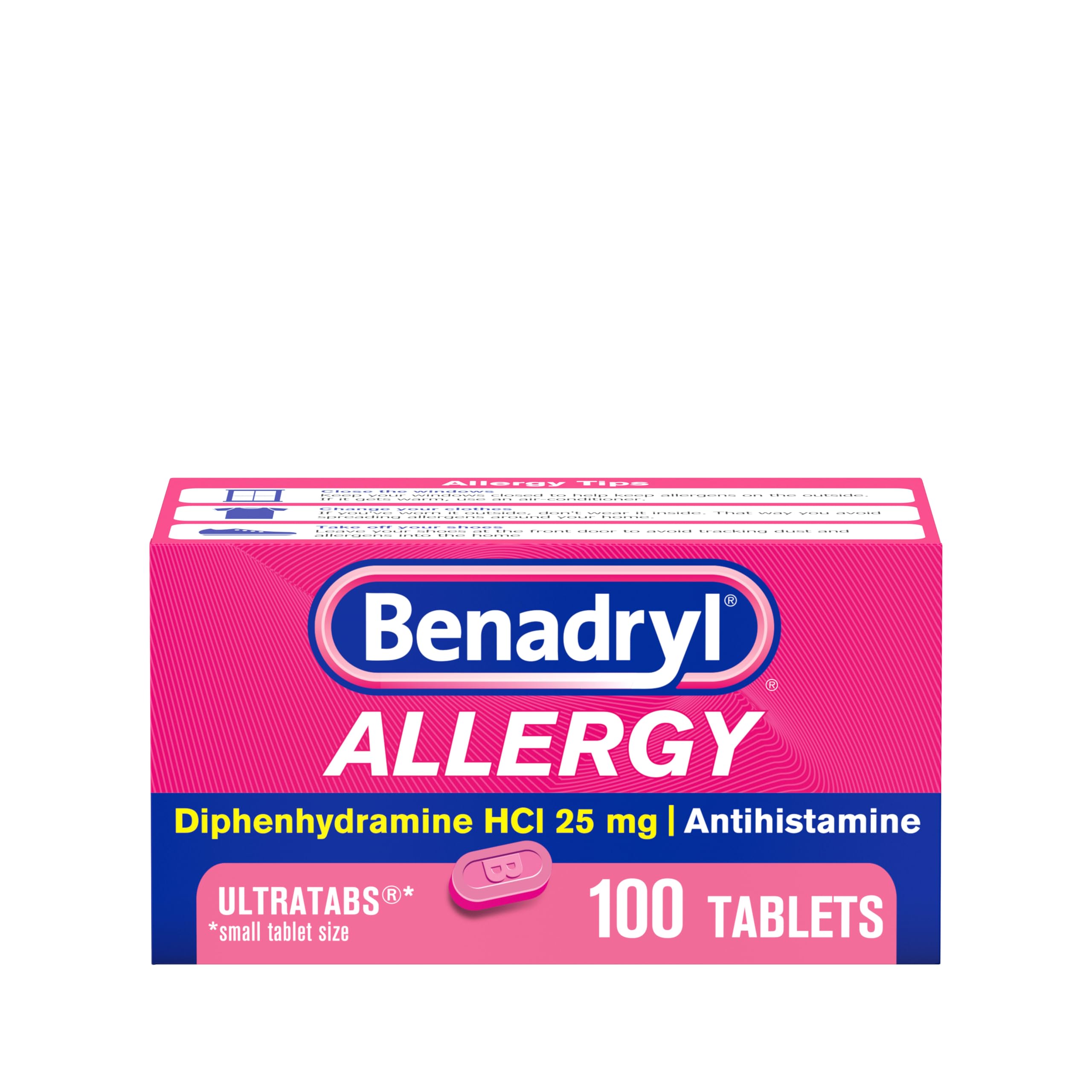
Benadryl remains the gold standard for acute allergic reactions—the moment your eyes start itching, your nose begins running uncontrollably, and sneezing takes over, 25 mg of diphenhydramine usually stops the symptoms within 30 minutes. The 100-count value size means you can stash bottles in your desk, car, and bag so you are never caught off guard. The tablets are small, easy to swallow, and dissolve quickly in the stomach.
The downside is well known: diphenhydramine causes significant drowsiness. Many users report feeling sleepy within an hour of taking it, which makes this a poor choice for daytime use unless you can afford to rest. Some reviewers note that the bright pink color of the tablets is off-putting, but the clear capsules that avoid the dye cost more for the same active ingredient. For nighttime allergy attacks or severe flare-ups, this trade-off is worth it.
The 25 mg dose is appropriate for adults and children over six, and the product is FSA- and HSA-eligible. If you need a portable, fast-acting emergency option for unexpected allergy symptoms, this is the most reliable. But for daily maintenance or mild cold symptoms, a non-drowsy formula would serve you better.
Why it’s great
- Fast-acting relief for sneezing, itching, and runny nose
- 100-count value size is economical for frequent use
- Doctor-recommended brand for allergy emergencies
Good to know
- Strong drowsiness effect limits daytime use
- Unnatural bright pink coloring in tablets
FAQ
Can I take cold and allergy medicine together with my daily blood pressure medication?
Why does diphenhydramine make me so sleepy but chlorpheniramine does not?
Is it safe to take a daytime and nighttime dose from different brands on the same day?
Final Thoughts: The Verdict
For most users, the best cold and allergy medicine winner is the Tylenol Sinus Congestion & Pain because it addresses the most common cold-plus-allergy crossover symptoms—sinus pressure, headache, and chest congestion—without causing drowsiness. If you want a budget-friendly day-and-night system that covers multiple symptoms, grab the AXIV Day & Night Combo. And for fast-acting emergency relief from sudden allergy attacks, nothing beats the Benadryl Ultratablets.

Mo Maruf
I created WellFizz to bridge the gap between vague wellness advice and actionable solutions. My mission is simple: to decode the research and give you practical tools you can actually use.
Beyond the data, I am a passionate traveler. I believe that stepping away from the screen to explore new environments is essential for mental clarity and physical vitality.