Our readers keep the lights on and my smoothie glass nicely filled. As an Amazon Associate, I earn from qualifying purchases.
Specs are compiled from manufacturer listings and verified buyer reviews and can change over time — please confirm the key details on the product page before buying.
You walk up to your front door with your hands full of groceries and no free hand for a key. If the lock picks that moment to gunk up, run out of batteries, or refuse your wet fingerprint, you are stuck outside. This guide cuts past the marketing to show you which code locks for external doors actually hold up on an exterior door, explaining the real specs that matter like weather resistance (the IP rating that tells you if rain will kill it), battery life (how often you change AAs), and fingerprint speed (how fast it opens when your hands are dirty) so you can buy with confidence.
I’m Mohammad Maruf — the founder and writer behind WellFizz. This guide is built by comparing the manufacturers’ published specifications and the patterns across verified customer reviews, so you get each pick’s real strengths and trade-offs instead of marketing spin.
After comparing seven leading models across weather sealing, battery life, and smart features, these are the code locks for external doors that genuinely balance security with daily convenience for your home. The best all-around pick is the Philips DDL240X-1HW because it gives you built-in Wi-Fi (no separate hub needed), a 0.3-second fingerprint reader, a door sensor that catches if you left the door ajar, and a 24-month warranty — the longest of the group.
Quick Picks
- Veise VE07-H Fingerprint Smart Lock with Handle — Complete Handle Set
- Philips DDL240X-1HW Built-in Wi-Fi Smart Lock — Smart Entry Done Right
- Tapo Smart Wi-Fi Door Lock DL110 — Rechargeable Battery
- Philips DDL242X-1HW Wi-Fi Door Lock — Budget Premium
- Wyze Auto-Lock Bolt v2 — AI Learning Scanner
- Veise VE017 Fingerprint Smart Door Lock — Value 8-in-1
- TEEHO TE012W WiFi Smart Lock — Budget Wi-Fi
How To Choose The Best Code Lock For External Doors
A code lock for your front, back, or side door faces rain, sun, freezing temperatures, and daily use. Focusing on a few key specs will steer you toward a lock that stays reliable for years rather than one that becomes a headache.
Weather Resistance: The IP Rating You Need
The most important spec for an exterior door is the IP (Ingress Protection) rating — a two-digit number that tells you how well the lock resists dust and water. The first digit (0-6) measures dust protection. The second digit (0-9) measures water protection. An IP53 rating, for example, means it handles some splashing water and dust, which is fine for a covered porch. An IP55 rating adds stronger water jets, making it a safer bet for doors fully exposed to rain. If the product data does not list an IP rating, assume the lock is built for indoor use only and may fail after a few months outside.
Battery Life and Backup Power
A smart lock that dies after a few weeks is worse than a regular keyed lock. Look for models that claim at least 8 to 12 months of battery life on standard AA batteries. For extra safety, a USB-C emergency power port is ideal — you can plug a power bank into it to open up if the batteries are completely dead. Some premium locks now come with a rechargeable battery pack that you can remove and charge, which cuts down on waste and long-term cost.
Fingerprint Speed and Accuracy
If you choose a lock with a fingerprint reader, pay close attention to the open up speed (measured in seconds) and the type of sensor. Good models open up in 0.3 to 0.5 seconds and use higher-quality sensors that still work when your hands are wet or slightly dirty. Avoid cheap readers that fail often — you will end up using the keypad anyway, defeating the purpose.
Smart Features vs. Simplicity
Decide how much connectivity you actually need. Built-in Wi-Fi (the lock connects directly to your home router) lets you check lock status and open up remotely without an extra hub, but it drains batteries faster. Bluetooth-only models last longer on batteries but cannot be controlled away from home unless you add a separate Wi-Fi bridge (a plug-in device that connects the lock to the internet). Also check for features like auto-lock timers, temporary codes for guests, and whether the lock works with Alexa or Google Assistant if voice control matters to you.
Quick Comparison
| Model | Best For | Fingerprint Speed | Battery Life | Weather Rating | Amazon |
|---|---|---|---|---|---|
| Veise VE07-H | Complete handle set | 0.3 seconds | 12 months (4 AA) | Weather resistant | Amazon |
| Philips DDL240X-1HW | Long warranty & app reliability | 0.3 seconds | 8 months (8 AA) | Splash-proof | Amazon |
| Tapo DL110 | One-year rechargeable battery | 0.42 seconds | 1 year (rechargeable) | Not specified | Amazon |
| Philips DDL242X-1HW | Budget-friendly premium | Instant (claimed) | Not specified (8 AA) | Not specified | Amazon |
| Wyze Auto-Lock Bolt v2 | AI learning scanner | 0.5 seconds | 8 months (8 AA) | IP53 | Amazon |
| Veise VE017 | Value-driven 8-in-1 lock | Under 0.2 seconds | 12 months (4 AA) | Weather resistant | Amazon |
| TEEHO TE012W | Built-in Wi-Fi at low cost | Supported (not timed) | Extended (8 AA) | IP55 | Amazon |
In‑Depth Reviews
1. Veise VE07-H Fingerprint Smart Lock with Handle
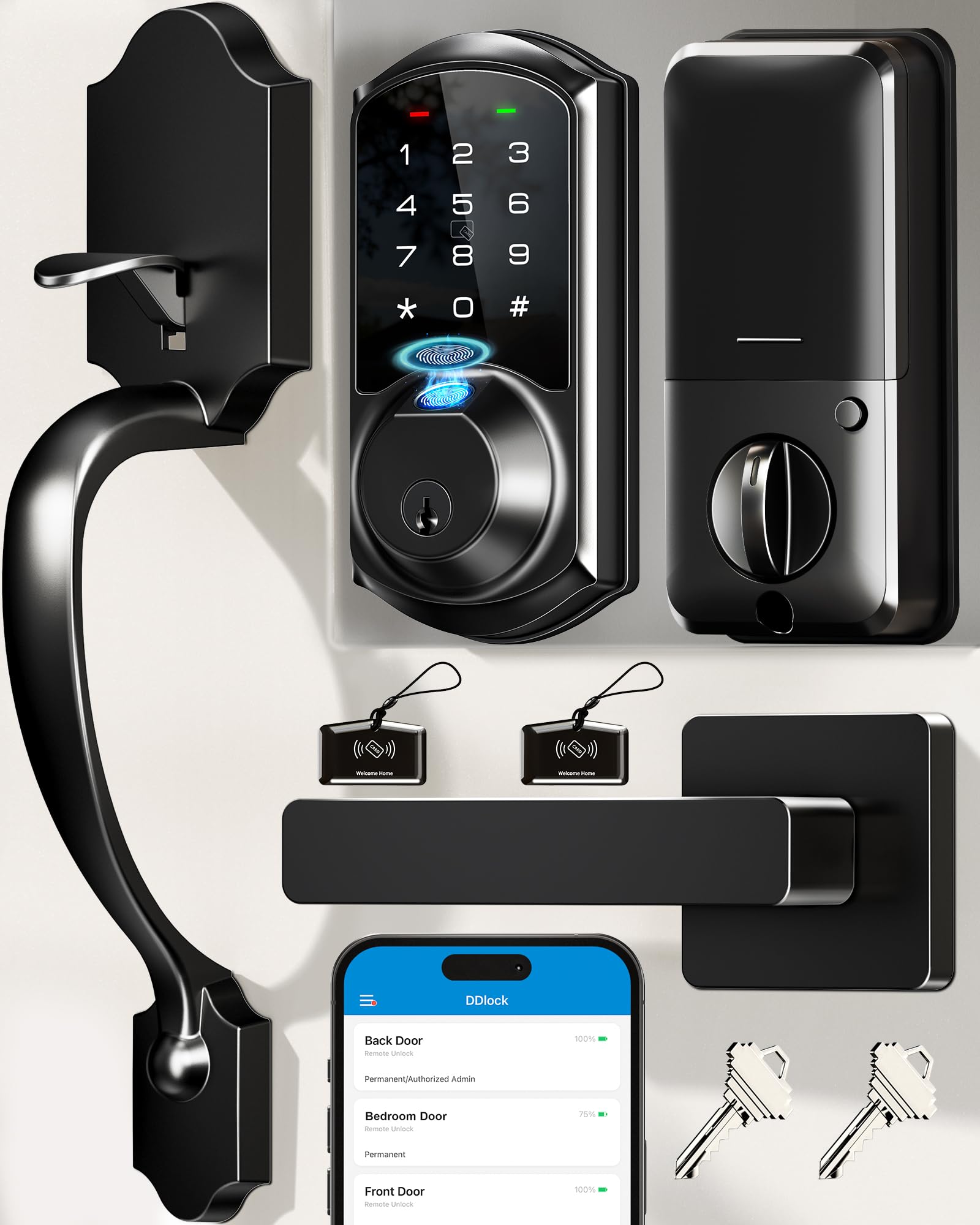
The complete handle and lock set that looks like a traditional door set but works like a smart lock — saving you from buying a separate handle.
Most smart locks only replace the deadbolt, but the Veise VE07-H includes the full handle set — a zinc alloy exterior lever and deadbolt combined — so your door still has a proper handle for pulling or closing. That matters because a handle-less deadbolt feels awkward on a heavy exterior door, especially when your hands are full. Behind that classic look lives an 8-in-1 open up system: fingerprint, app, Apple Watch, web portal, codes, eKeys (digital keys sent to others), fobs (small radio keychain tags), and a mechanical key. The fingerprint sensor reads in 0.3 seconds with 99.99% claimed accuracy by the manufacturer, and you can store up to 50 fingerprints for the whole family. This is the only pick on the list that gives you the entire exterior handle assembly, so you skip buying a separate handle for a new door.
Buyers report installation took some patience, especially on metal doors needing extra holes. One reviewer noted the manual keypad is actually a “digital” touchscreen that lights up only when you touch it, so do not think the dark screen is broken — it is supposed to be blank. The auto-lock timer is adjustable from 5 to 900 seconds, giving you flexibility from a quick latch for brief absences to a delayed lock for when you are stepping into the yard. The lock connects via Bluetooth, with remote control requiring the sold-separately G2 Gateway. At 6.1 x 2.7 x 1.4 inches, it is slightly more compact than the Veise VE017, and being a complete handle set means you skip buying a separate handle for a new door.
What stands out
- Includes the full handle set — no separate handle needed.
- Fingerprint reads in 0.3 seconds with up to 50 users supported.
- Auto-lock timer adjustable from 5 up to 900 seconds.
One trade-off to know
- Remote control needs the separate Veise G2 Gateway (sold separately).
- Requires precise door alignment — if your door is not flush, the lock may struggle to throw or retract smoothly.
Best for this one reason: If you need a complete handle-and-deadbolt set for a new exterior door, the VE07-H saves you from buying two separate pieces and gives you quick 0.3-second fingerprint entry.
But keep this in mind: For the price, the lack of built-in Wi-Fi (needing a separate gateway) means you cannot control it remotely without an extra purchase.
2. Philips DDL240X-1HW Built-in Wi-Fi Smart Lock
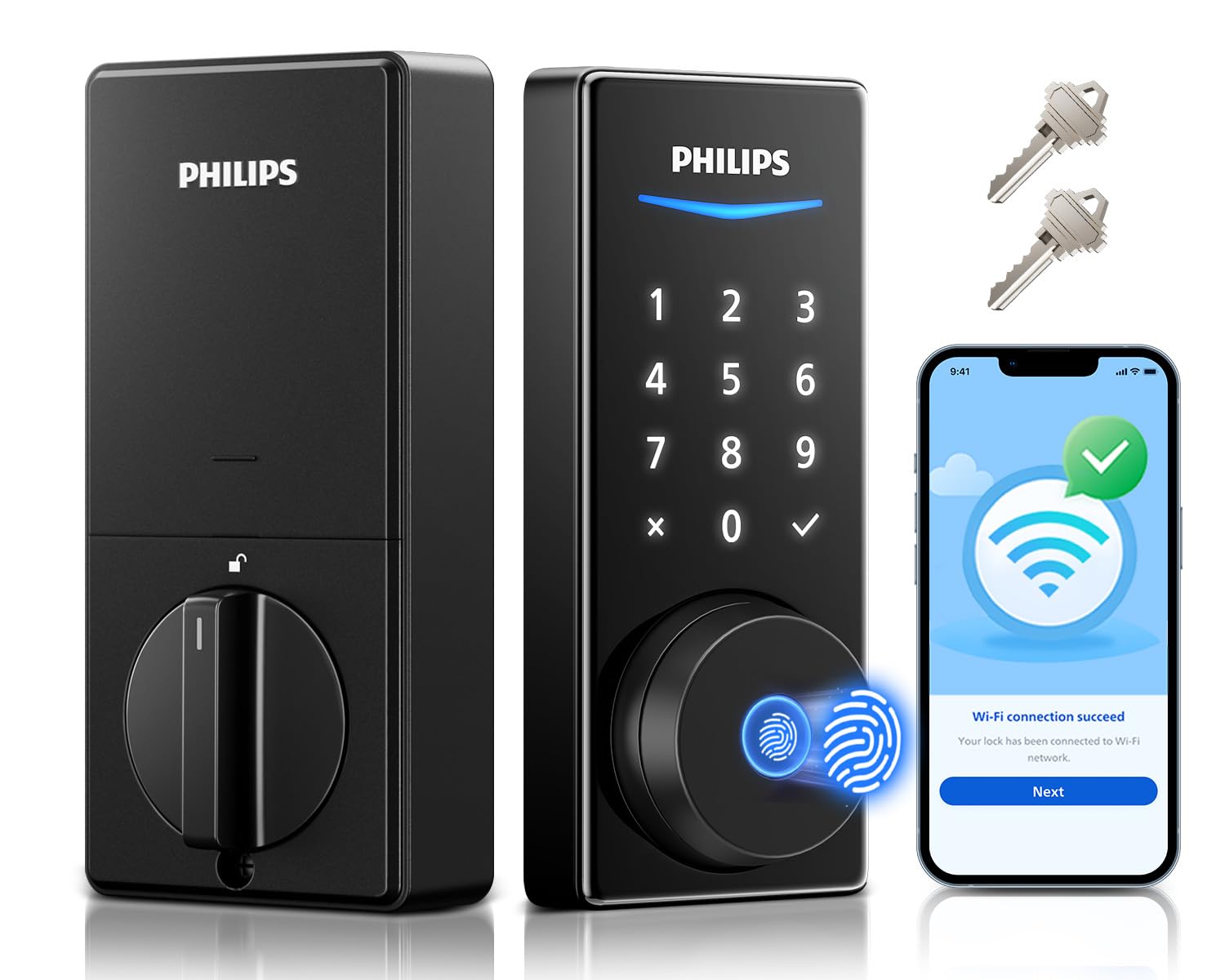
A premium smart lock with built-in Wi-Fi that does not require a separate hub for remote control — and it is the only one here with a 24-month warranty and a door ajar sensor.
The Philips DDL240X-1HW skips the extra gateway — its built-in Wi-Fi lets you lock, open up, and check status from wherever you are, right from your smartphone. The 360-degree fingerprint sensor reads in 0.3 seconds and, in the words of one buyer, “is absolutely excellent” and rarely misses unless your finger has paint or something on it. The lock is also splash-proof, meaning it handles rain on an exposed door better than non-rated models. One buyer mentioned a door sensor (a mechanism that detects if the door is physically closed, not just locked) actually tells you if the door is not fully closed — not just open up — which is a rare and genuinely useful feature for catching a door left ajar at night. This sensor is something the cheaper Philips DDL242X-1HW lacks entirely.
On the downside, early reviews flagged a connectivity issue with the app on a first unit, though the replacement lock worked perfectly. The lock uses 8 AA batteries (included with purchase), and buyers estimate the battery life is solid, with the app showing remaining charge. The auto-lock timer is adjustable between 30 and 180 seconds. The lock also comes with a 24-month warranty and US phone support, which is one of the longest warranties in this category. Unlike the Philips DDL242X-1HW which is priced as an entry-level model, this lock is positioned as the more sturdy, fully-featured sibling.
The top perks
- Built-in Wi-Fi for remote control — no extra hub required.
- Includes a door ajar sensor that detects if the door is not fully closed.
- 24-month warranty with US phone support.
A couple of cautions
- Fingerprint reader can be picky when fingers are wet.
- Uses 8 AA batteries, which is more than some competitors.
Who should reach for this: If you want a lock that handles rain, includes a door sensor for real safety, and gives you remote Wi-Fi control with a strong two-year warranty, this is a top choice.
One honest limit: The price is higher than entry-level models, and the reliance on 8 AA batteries means more frequent battery swaps than a rechargeable pack.
3. Tapo Smart Wi-Fi Door Lock DL110

A lock that lasts a full year on a single charge, removing the need for disposable batteries — a real money-saver over the Philips models that need 8 AAs every 8 months.
The Tapo DL110 sets itself apart with a removable and rechargeable battery pack that the maker says lasts a full year of continuous operation — no buying AA packs, no waste. One reviewer with six months of daily use reported they had not needed to recharge yet, which is a strong real-world sign. The fingerprint sensor open up the door in 0.42 seconds and can store up to 100 different fingerprints, covering large families — twice the capacity of the Veise VE07-H’s 50 prints. Buyers consistently praise the build quality and straightforward installation, with one noting it was “the easiest and most trouble-free installation and setup experience” they had across three smart locks. It also offers auto-lock and one-touch lock features.
However, a few buyers reported a visibility issue: if direct sunlight hits the touchscreen keypad, you cannot see the numbers clearly. The lock also does not have a published IP (Ingress Protection) rating, so if your door is fully exposed to rain, you may want the TEEHO TE012W (IP55 rated) instead. At 2.09 Kilograms, it is noticeably heavier than the TEEHO TE012W (0.92 Kilograms) and the Veise VE017 (1.02 Kilograms), which means the interior assembly is more substantial on your door. It works with both Bluetooth and Wi-Fi, and integrates smoothly with the Tapo ecosystem for those who already use Tapo smart home devices.
The biggest wins
- Rechargeable battery pack with a claimed one-year life — no disposable AA batteries needed.
- Fast 0.42-second fingerprint recognition that, according to buyers, still works even with wet or dirty hands.
- Integrates smoothly with Tapo smart home ecosystem.
Watch out for
- Keypad numbers are hard to see in direct sunlight.
- No official IP (Ingress Protection) weather rating listed, which raises concerns for fully exposed doors.
Best suited for: Anyone tired of buying AA batteries every few months — the rechargeable pack is a genuine convenience. Also great for homes already using Tapo cameras or plugs.
But be careful if: Your door gets blasted by direct sun for hours, or if it has no porch cover, because the missing IP rating is a small gamble on weather exposure.
4. Philips DDL242X-1HW Wi-Fi Door Lock

Philips quality and built-in Wi-Fi at a price that undercuts most comparable smart locks — but you lose the door sensor and battery life transparency of the pricier DDL240X-1HW.
The Philips DDL242X-1HW delivers the same brand reputation as its pricier sibling but at a more accessible entry point, with built-in Wi-Fi that does not need a separate hub. It supports five open up methods: app, passcode, fingerprint, physical key, and voice control via Alexa or Google Assistant. You can create up to 100 custom passcodes for family, friends, or renters, and easily share unlimited one-time or scheduled codes. The auto-lock timer is adjustable between 10 and 180 seconds. Buyers praise the easy installation — one reviewer, a 50-year-old with some DIY experience, installed it in about 20 minutes with only a screwdriver. Another reviewer who switched from an Ultraloq called this lock “far superior” with a better app and smooth operation. The fingerprint reader hides a physical key slot underneath, which you swing up to access — a clever design that keeps the exterior clean. However, unlike the DDL240X-1HW, this model has no door ajar sensor, so it won’t tell you if the door is half-closed.
The main trade-off is that the lock requires 8 AA batteries (not included), and the battery life is not specified in the official specs, so you may be changing batteries more often than with the Tapo DL110’s rechargeable pack. Also, the lock does not have a door sensor to detect if the door is ajar — it only knows if the deadbolt is thrown. At 6 x 2 x 1.5 inches and 1.4 Pounds, it is compact and lightweight compared to the Wyze Auto-Lock Bolt v2 (1.47 Kilograms), but the metal construction gives a solid feel according to reviews.
What works well
- Built-in Wi-Fi for remote control — no hub needed.
- Up to 100 passcodes with one-time, scheduled, and recurring options.
- Easy installation reported by buyers in about 20 minutes.
What holds it back
- No door ajar sensor — you won’t know if the door is only half-closed.
- 8 AA batteries not included, and battery life is not specified.
Grab this if: You want a well-known brand, built-in Wi-Fi, and the flexibility of 100 custom codes for guests and services, all without paying the premium for the higher-end Philips model.
One thing to note: The lack of a door sensor and unspecified battery life mean you have to be a bit more proactive about checking door closure and changing batteries.
5. Wyze Auto-Lock Bolt v2
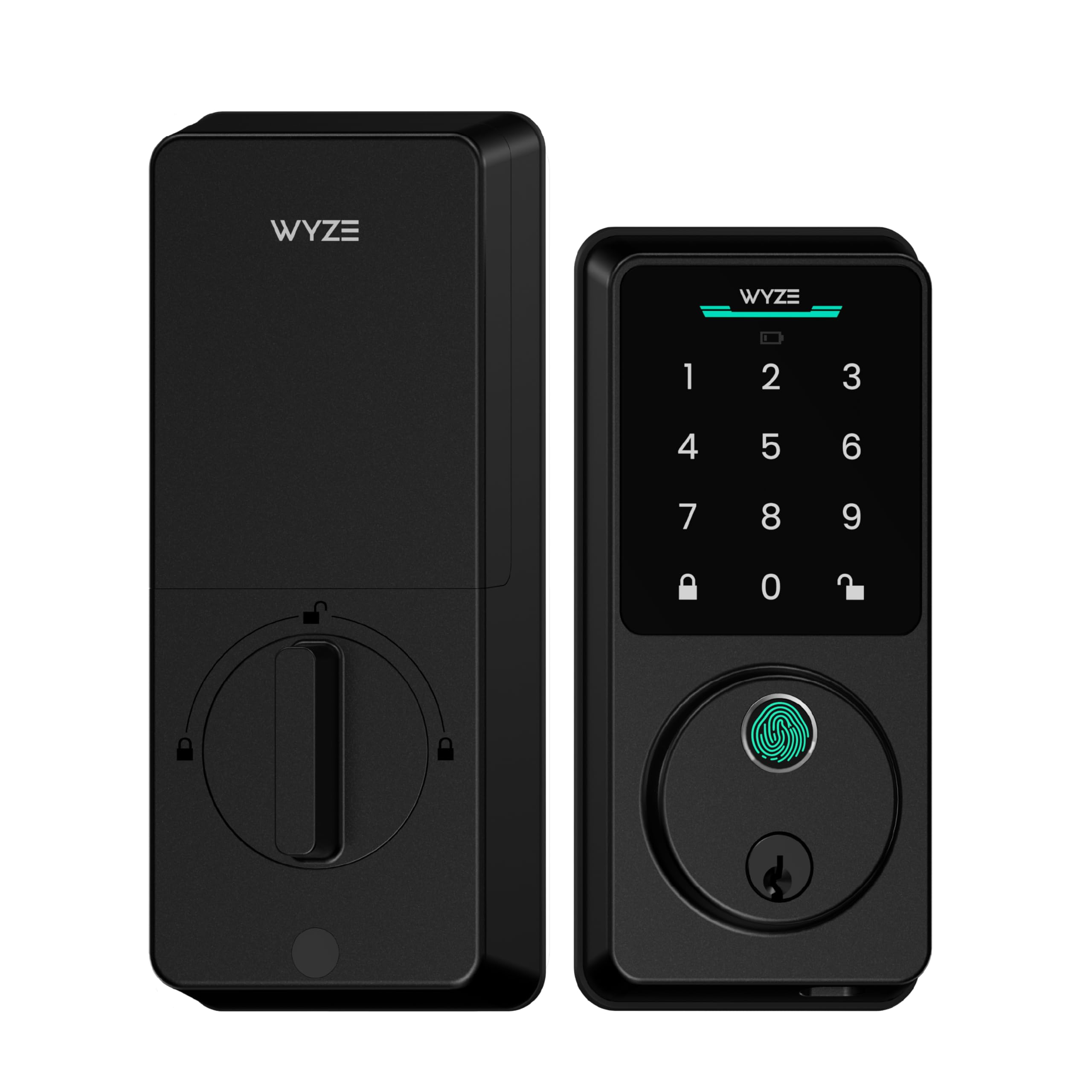
A lock that learns your fingerprint over time, getting faster and more accurate the more you use it — though its 0.5-second speed is a touch behind the 0.3-second Philips DDL240X.
The Wyze Auto-Lock Bolt v2 uses an AI (artificial intelligence) learning algorithm — meaning the manufacturer says the lock “constantly improving to deliver faster, more accurate recognition over time” as you use it. open up speed is 0.5 seconds, which is slightly slower than the Philips DDL240X-1HW’s 0.3 seconds, but owners mention the reader is “fast and accurate” in daily use. The lock includes a scratch and smudge-resistant tempered glass surface, and its IP53 rating (dust-protected and splash-proof) means it can handle some splashing water and dust — fine for a covered porch. One reviewer specifically switched to this Wyze lock after being locked out in 14-degree weather by a previous smart lock, praising the USB-C emergency power port that works with any common power bank, unlike older 9V-powered locks.
Battery life is claimed at 8 months on the included 8 AA batteries. The lock also features auto-lock, built-in Wi-Fi for remote control in the Wyze app, and when paired with a Wyze Video Doorbell, you can open up from the live feed. At 7.09 x 2.93 x 1.41 inches and 1.47 Kilograms, it is larger than most competitors — customers note “it is obviously much larger than the original deadbolt” but feel the trade-off is worth it for the features. A unique detail: the electrostatic keypad is very responsive with immediate beep feedback, so kids and guests do not hold the button wondering if it registered.
Key advantages
- AI (artificial intelligence) fingerprint learning that, according to the manufacturer, improves accuracy with every scan.
- IP53 weather rating (dust-protected and splash-proof) for covered exterior doors.
- USB-C emergency power — use any power bank to open up if batteries die.
But note these
- Larger and heavier than most deadbolts (1.47 kg), so may look bulky on slim doors.
- 0.5-second fingerprint speed is a hair slower than the 0.3-second competitors like the Philips DDL240X.
Who this fits best: Anyone already in the Wyze ecosystem who wants a lock that, according to the maker, improves over time, with the confidence that a USB-C power bank can always get you in.
Where it falls short: The sheer size and weight may put off buyers with thin metal doors or a preference for a more discreet lock profile.
6. Veise VE017 Fingerprint Smart Door Lock
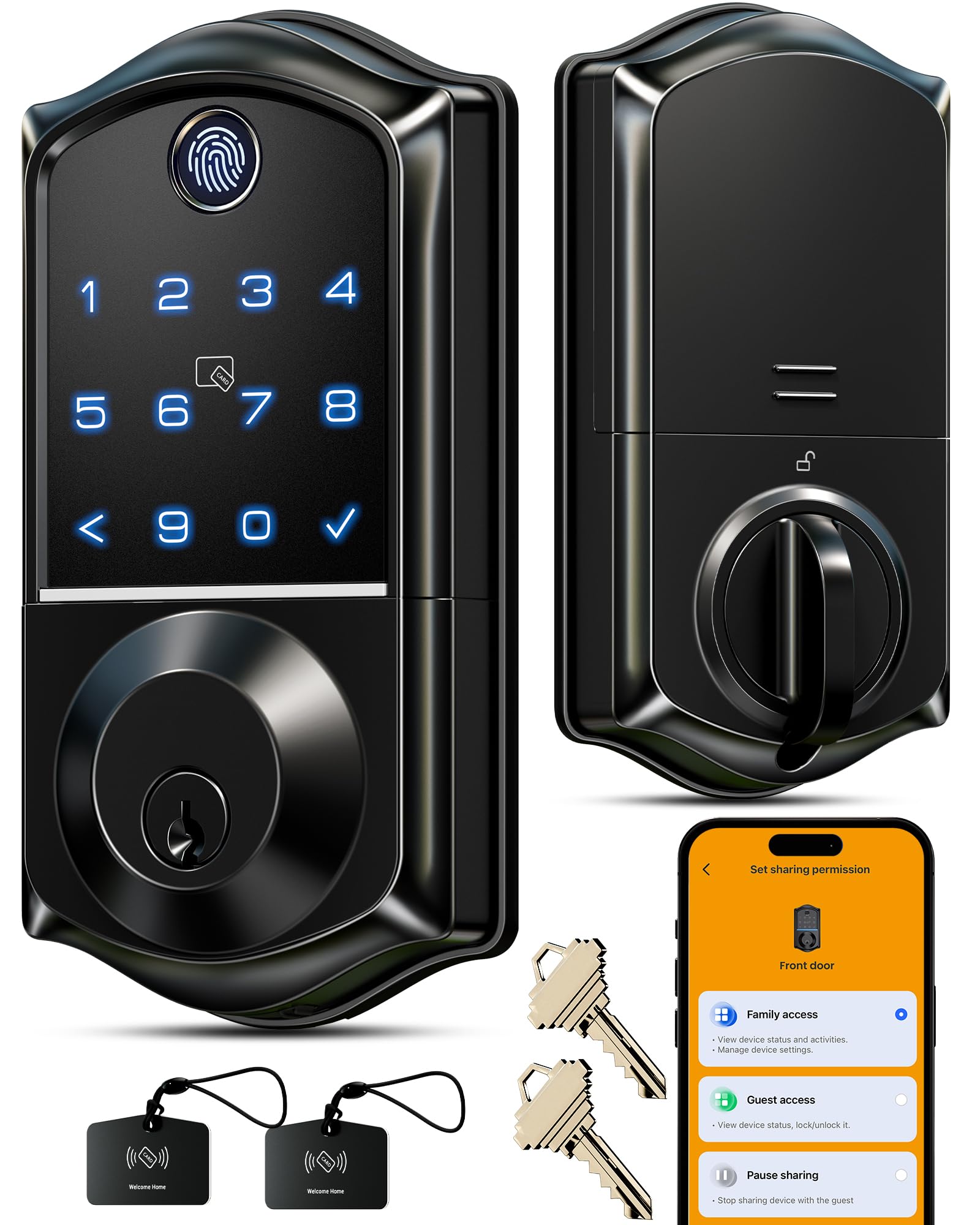
The fastest fingerprint reader on this list — in under 0.2 seconds — plus a huge 12-month battery on just 4 AAs, beating the Philips DDL240X’s 8-month life on twice the batteries.
The Veise VE017 packs an impressive spec sheet for its price: an on-device AI (artificial intelligence) chip that the manufacturer claims verifies fingerprints in under 0.2 seconds with 99.99% accuracy, a 12-month battery life on just 4 AA alkaline batteries, and 8-in-1 open up options including fingerprint, app, fob card (a radio keychain fob), code, and voice via Alexa/Google Assistant (with the optional G1 Gateway). Buyers consistently highlight the easy installation, with one stating “took me maybe 20 minutes tops to get it installed and another 10 minutes to get it programmed and working.” The same reviewer noted the lock feels like good quality materials and the phone app is simple to use. The lock includes four password modes (one-time, duration, permanent, and recurring codes) and an anti-peeping feature that lets you type random numbers before the correct code to hide your PIN from onlookers.
At 2.7 x 5.8 x 3 inches, the VE017 is one of the larger units in this lineup — a 90% gap in dimensions compared to the TEEHO TE012W (5.12 x 2.95 x 1.3 inches). The lock is weather resistant and ANSI Grade 3 (Builders Hardware Manufacturers Association standard for residential use) and BHMA certified (Builders Hardware Manufacturers Association), reassuring for exterior use. It does not have built-in Wi-Fi; remote control requires the separate Veise G1 Gateway. A small potential headache: the lock does not come with a handle, so you need to make sure your door already has a separate handle or plan to install one. Data is encrypted locally with AES-128 encryption (a strong encryption standard), which privacy-conscious buyers will appreciate.
Why it stands out
- Lightning-fast fingerprint recognition under 0.2 seconds.
- 12-month battery life on just 4 AA batteries.
- ANSI Grade 3 and BHMA certified for exterior use.
What to consider
- Larger than many competitors (2.7 x 5.8 x 3 inches).
- No handle included — requires a separate handle on your door.
- Remote control needs the separate G1 Gateway.
Best value for: Buyers who prioritize the absolute fastest fingerprint speed and longest battery life on minimal batteries. The 12-month life on 4 AAs is class-leading here.
One honest limit: The larger footprint and lack of a handle mean it is not a drop-in replacement for every door, and remote smart features cost extra with the gateway.
7. TEEHO TE012W WiFi Smart Lock
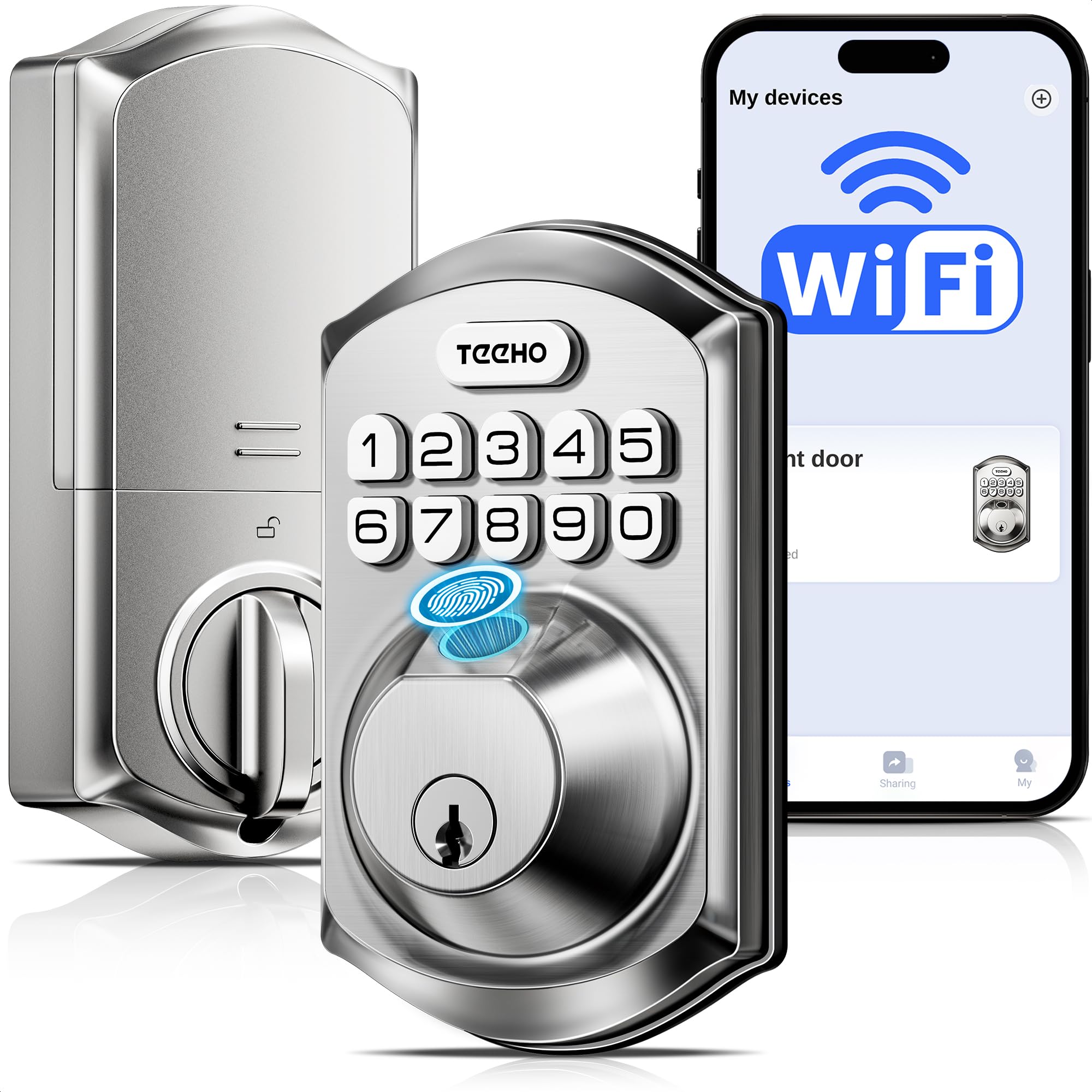
The lowest cost way to get built-in Wi-Fi on your door without needing a separate hub or gateway — and the only lock here with an IP55 rating for direct rain exposure.
The TEEHO TE012W cuts the price to the bone while still including built-in Wi-Fi, meaning you can lock, open up, and check status from anywhere using the KK Home App with zero extra hardware. It carries an IP55 rating for weather resistance — strong enough for direct rain (water jets from any direction) — and BHMA Grade 3 certification (Builders Hardware Manufacturers Association residential standard). The lock takes 8 AA batteries, which some reviewers point out is twice what many competitors need, but those same shoppers say good battery life in practice; one reviewer’s first set lasted “over 36 weeks, including a very cold winter.” One key difference from the Veise VE017: the TE012W weighs 0.92 Kilograms compared to the Veise’s 1.02 Kilograms and is significantly more compact at 5.12 x 2.95 x 1.3 inches. A dedicated reviewer switching from another brand wrote this lock “connected and setup in 10m without any issue” and that the fingerprint reader works well, though some mention the interior material feels more plastic than premium models.
Buyers should note the lock only supports 2.4GHz Wi-Fi (not the 5GHz band), and the Alexa routines may not work correctly according to one review, though basic voice control for locking/open up does function. The lock includes break-in detection (auto-locks for 3 minutes after 10 incorrect PIN attempts), anti-peeping password, and auto-lock set between 10 and 180 seconds. The installation took about 10–15 minutes with a screwdriver, and it fits standard door preparations. Unlike the premium Philips and Wyze options, the TEEHO app (KK Home) has a large 120MB file size and lacks some refined user experience (UX), but buyers consistently say it works well enough for daily use.
Best features for the price
- True built-in Wi-Fi with no hub required — the cheapest way to get it.
- IP55 weather rating (dust-protected and can handle water jets) handles rain, snow, and temperature swings.
- Break-in detection with 3-minute lockout after 10 failed attempts.
Where it cuts corners
- Uses 8 AA batteries — double the count of some rivals.
- Interior assembly has a more plastic feel than metal-bodied competitors.
Reach for this if: Your budget is tight but you absolutely need Wi-Fi remote control and IP55 weather protection. It delivers the core features that matter for exterior use at a fraction of the premium price.
Look elsewhere if: You want a premium metal finish, a more refined app experience, or you prefer a lock that uses fewer batteries.
Understanding the Specs
IP Rating Explained
The IP (Ingress Protection) rating tells you how well the lock resists dust and water. The first digit (0-6) measures dust protection; a 5 means dust-protected. The second digit (0-9) measures water protection; a 3 means sprayed water, and a 5 means water jets. For an exterior door without a porch, aim for at least IP53 (dust-protected and splash-proof). For a fully exposed door, IP55 (dust-protected and water jet resistant) or higher is safer. If no IP rating is listed, the lock is likely designed for indoor use only and may fail after a few months outside.
Fingerprint Sensor Speed
Measured in seconds, this is how fast the lock reads your fingerprint and open up. Premium locks claim 0.3 seconds or below. A 0.5-second lock still feels fast, but the difference matters when your hands are wet or cold — faster sensors often use better imaging chips. The Veise VE017 claims under 0.2 seconds, which is the fastest on this list. A lock that takes more than 0.5 seconds may leave you waiting awkwardly at the door on a rainy day.
Battery Life and Backup
Battery life is usually stated in months and depends on how many AA cells the lock uses and how often you use the Wi-Fi or Bluetooth radios. A lock using only 4 AA batteries with a claim of 12 months is more efficient than one using 8 AA batteries for the same period. Look for a USB-C emergency power port — this lets you use any power bank to open up if the batteries are completely dead. The Tapo DL110’s rechargeable pack removes the need for disposable batteries entirely.
BHMA Grade 2 vs. Grade 3
BHMA (Builders Hardware Manufacturers Association) grades measure a lock’s durability and security. Grade 3 is the standard for residential use and is fine for most homes. Grade 2 is more durable and typically used for light commercial or high-traffic residential doors. Grade 1 is the strongest commercial grade. For a standard front door, a BHMA Grade 3 certification (as found on the TEEHO TE012W and Veise VE017) is perfectly adequate, but if your door gets heavy daily use, seeking a Grade 2 lock (like the Wyze Bolt v2 or Tapo DL110) adds extra reliability for the latch mechanism.
FAQ
Can I install a code lock on a metal door?
Will a code lock work in freezing winter temperatures?
How long do the batteries really last in daily use?
What is the difference between built-in Wi‑Fi and needing a gateway?
Can I share temporary codes with guests or housekeepers?
What happens if the lock loses Wi‑Fi connection?
Does a code lock work with a smart home system like Alexa or Google Assistant?
How do I open up the door if the keypad or fingerprint reader is not responding?
Can I install a code lock myself or do I need a locksmith?
Are smart locks secure against being picked or drilled through?
Final Thoughts: The Verdict
For most people, the code locks for external doors winner is the Philips DDL240X-1HW because it combines built-in Wi-Fi remote control, a very fast 0.3-second fingerprint reader, a useful door ajar sensor, splash-proof design for exterior use, and the longest 24-month warranty in this group — all in a reliable package with solid app support. If you want a full handle set and do not mind using a separate gateway for remote access, grab the Veise VE07-H. And for a lock that costs less while still giving you built-in Wi-Fi and IP55 weather protection, the TEEHO TE012W is the smart budget choice.
How We Picked
We do not accept paid placement. Every pick is matched to a real buyer and a real use-case; we do not hands-on test units.
Sources & Methodology
Specifications: manufacturer listings and product documentation. Review insights: verified customer reviews, as of July 2026. Pricing: not shown on this page (it changes often); check the current price via the retailer link.
As an Amazon Associate, WellFizz earns from qualifying purchases. This does not affect which products we feature.
Related Guides

Mo Maruf
I created WellFizz to bridge the gap between vague wellness advice and actionable solutions. My mission is simple: to decode the research and give you practical tools you can actually use.
Beyond the data, I am a passionate traveler. I believe that stepping away from the screen to explore new environments is essential for mental clarity and physical vitality.