Our readers keep the lights on and my smoothie glass nicely filled. As an Amazon Associate, I earn from qualifying purchases.
Specs are compiled from manufacturer listings and verified buyer reviews and can change over time — please confirm the key details on the product page before buying.
The “code” in code inkjet printers is the real-world marker of value: which model keeps printing without forcing you into a costly ink subscription, constant Wi-Fi dropouts, or a paperweight after eight months. The best code inkjet printer delivers reliable printing, affordable ink, and low-maintenance setup.
I’m Mohammad Maruf — the founder and writer behind WellFizz. This guide is built by comparing the manufacturers’ published specifications and the patterns across verified customer reviews, so you get each pick’s real strengths and trade-offs instead of marketing spin.
After comparing print speeds, ink yields, feature sets, and real owner experiences across six models, these are the recommendations for anyone shopping for a code inkjet printer that will actually serve you well at home or in a small office.
Quick Picks
- Brother INKvestment 4355 Wireless Color Inkjet All-in-One Printer (MFC-J4355DW) — Best Overall
- Brother INKvestment 6560 Wireless Color Inkjet All-in-One Printer (MFC-J6560DW) — Professional Print
- Canon MegaTank G3270 All-in-One Wireless Inkjet Printer — Ink Cost Champion
- Brother Work Smart 1360 Wireless Color Inkjet All-in-One Printer (MFC-J1360DW) — Compact All-Rounder
- HP Envy 6155e Wireless All-in-One Color Inkjet Printer — Home & Photo Friendly
- HP DeskJet 4255e Wireless All-in-One Color Inkjet Printer — Budget Entry
How To Choose The Best Code Inkjet Printer
Choosing an inkjet printer requires balancing print speed, long-term ink costs, and ease of use. Here is what to focus on.
Print Speed: Pages Per Minute
Speed is measured in pages per minute (ppm) for both black-and-white and color documents. A printer that prints 20 ppm black will finish a ten-page report faster than one that does 8.5 ppm. If you regularly print multi-page documents, look for models with higher ppm numbers — the difference adds up fast.
Ink Costs: Cartridge vs. Tank
Standard cartridge printers have lower upfront costs but higher long-term ink expenses. Ink tank printers (like the Canon MegaTank) cost more at purchase but include enough ink for thousands of pages, which saves money over time. Some cartridge printers also offer subscription services that deliver ink before you run out, but you should check if the subscription is optional or mandatory.
Connectivity and Setup
Wi-Fi is the standard way to print from laptops and phones. Dual-band Wi-Fi (2.4 GHz and 5 GHz) gives you more reliable connections. Some printers also let you connect via Ethernet for a wired connection, which is more stable. A printer that requires a specific app or subscription during setup can add hassle — look for models with simple app-free setup options.
Quick Comparison
On smaller screens, swipe sideways to see the full table.
| Model | Best For | Print Speed (B&W) | Print Speed (Color) | Duplex Printing | Amazon |
|---|---|---|---|---|---|
| Brother INKvestment 4355 | Home Office Speed | 20 ppm | 19 ppm | Automatic | Amazon |
| Brother INKvestment 6560 | Small Business & 11×17 | 31 ppm | 30 ppm | Automatic | Amazon |
| Canon MegaTank G3270 | Low Ink Costs | 11 ppm | 6 ppm | No | Amazon |
| Brother Work Smart 1360 | Home Office Value | 16 ppm | 9 ppm | Automatic | Amazon |
| HP Envy 6155e | Home Use & Photos | 10 ppm | 7 ppm | Automatic | Amazon |
| HP DeskJet 4255e | Budget Home Use | 8.5 ppm | 5.5 ppm | Manual | Amazon |
In‑Depth Reviews
1. Brother INKvestment 4355 Wireless Color Inkjet All-in-One Printer (MFC-J4355DW)
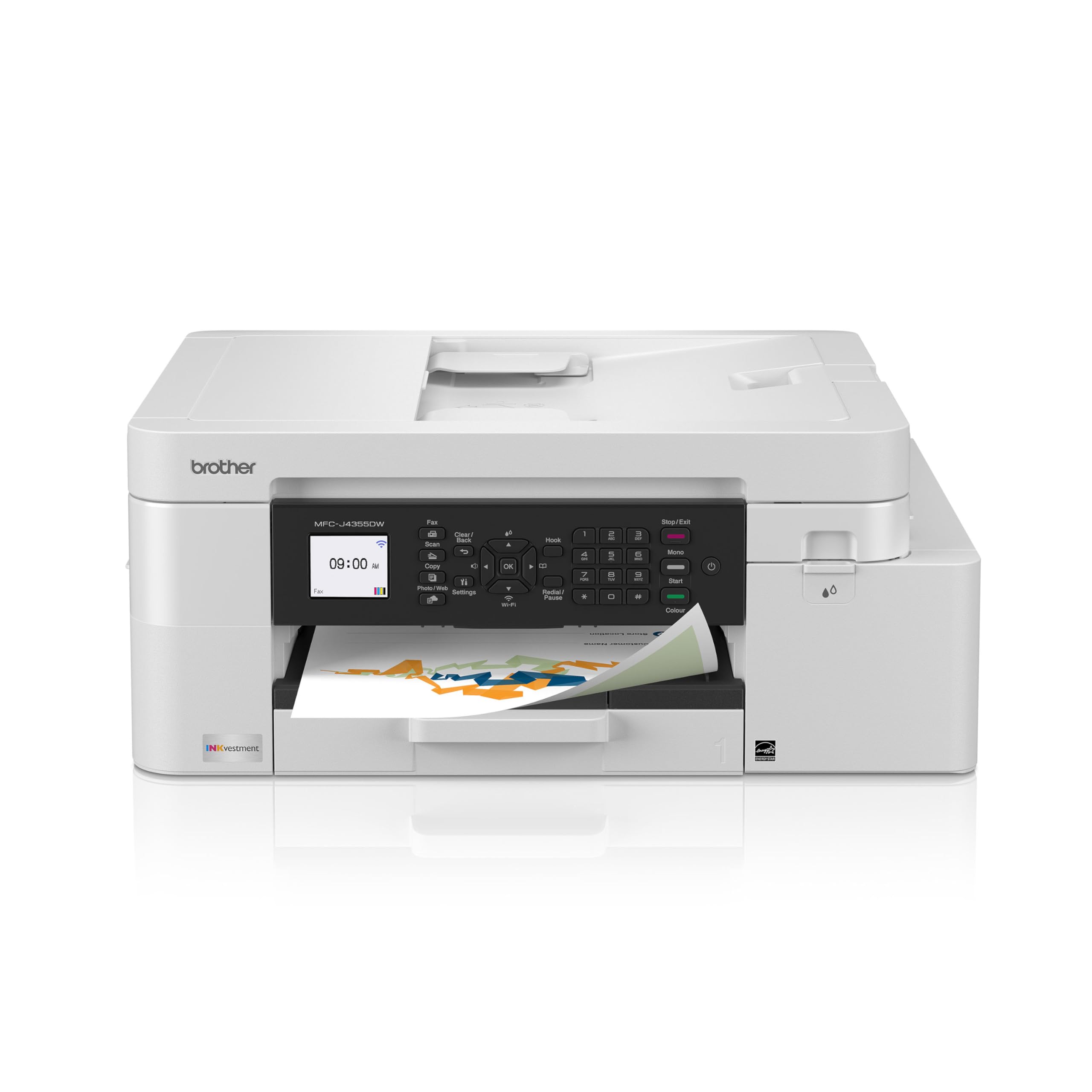
This printer delivers fast speeds and high-yield ink so you rarely think about refills.
Brother sets the pace here with a print speed that crushes the competition in its price bracket — 20 pages per minute for black-and-white and 19 ppm for color. That is a dramatic edge over entry-level models; the HP DeskJet 4255e delivers 8.5 ppm black and 5.5 ppm color, while the Brother INKvestment 4355 delivers 20 ppm black and 19 ppm color. You get a 20-page Automatic Document Feeder (ADF) (a tray that automatically feeds multi-page originals for copying or scanning), a 150-sheet paper tray, plus a 1-sheet manual feed slot for envelopes or specialty paper.
The “INKvestment” part matters: it ships with an 1,800-page yield black cartridge and 750-page yield color cartridges — so you can go months without buying ink. Buyers report that ink lasts long despite heavy photo/document use, and the wireless PDF scanning works smoothly. The 1.8″ color display is clear enough to navigate without hassle.
One caveat some owners mention is that photo colors are not professional-grade, and the small display feels a bit basic. But for a home office printer that prints fast, prints double-sided automatically, and does not demand a subscription, this is the strongest all-around pick.
Speed & Value Highlights
- Print speed of 20 ppm black / 19 ppm color
- Comes with high-yield ink cartridges (1,800-page black)
- Automatic duplex (two-sided) printing
- Reliable wireless connectivity with Wi-Fi Direct
Trade-Offs Worth Knowing
- Photo color quality is not top-tier
- Some owners mention the power cord is short
Best for: The home office user who needs fast, reliable printing without sky-high ink costs and wants automatic duplex and a document feeder.
skip it if: You need professional-grade photo printing or a large touchscreen display — this printer’s photo output and 1.8″ screen are basic.
2. Brother INKvestment 6560 Wireless Color Inkjet All-in-One Printer (MFC-J6560DW)
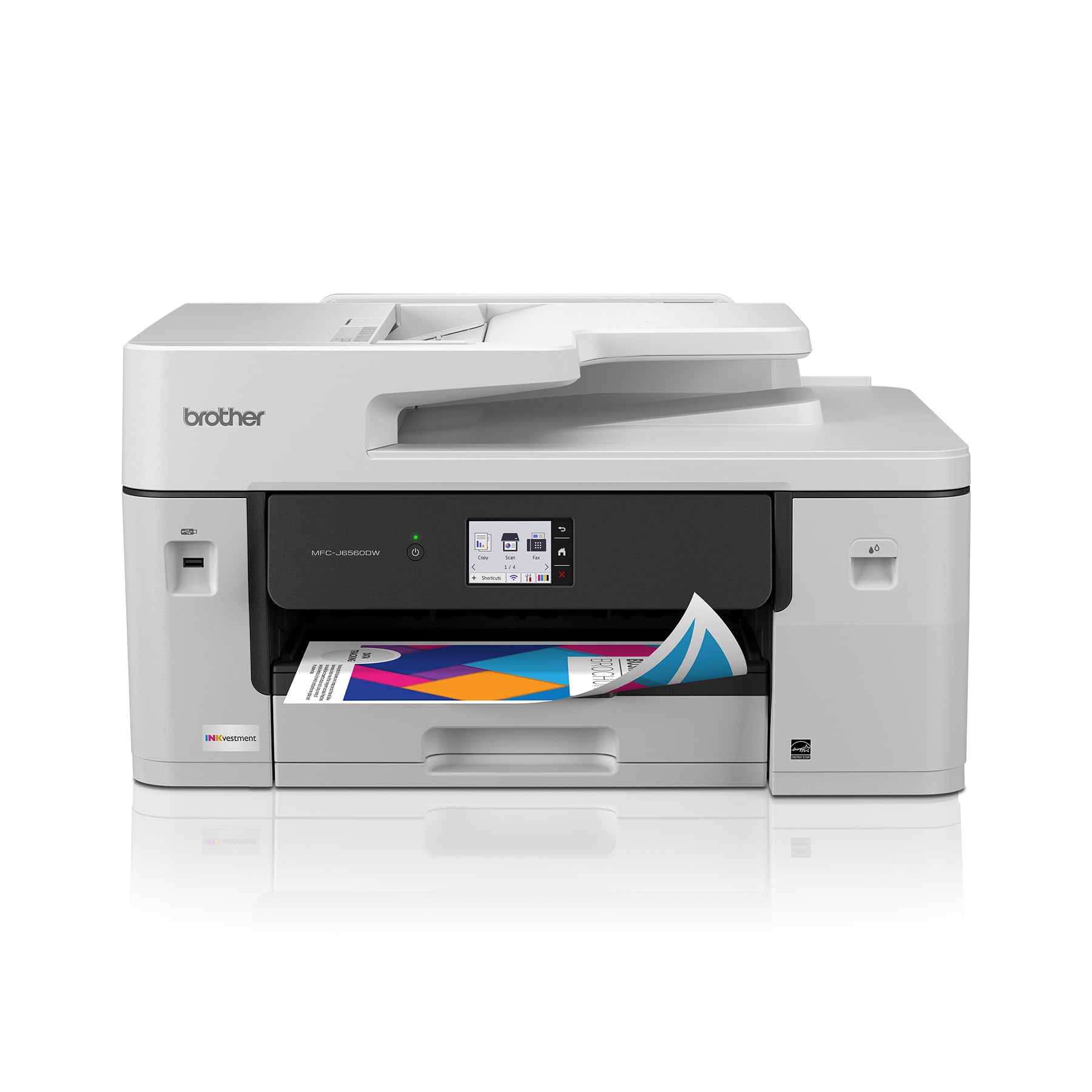
This model handles ledger-size prints at blistering speed for small businesses.
If your work involves larger documents — think 11×17 inch tabloid-size pages for blueprints, sewing patterns, or spreadsheets — this is the only model on this list that prints that size. It delivers print speeds of up to 31 ppm in black and 30 ppm in color, making it the fastest printer here. The 250-sheet paper tray and 50-page ADF (automatic document feeder) mean you can load a stack of work and walk away.
The 2.7-inch color touchscreen makes navigating settings and cloud apps like Google Drive or Dropbox much easier than using button-based menus. Buyers specifically chose this model for its 11×17 ADF and report crisp text and fast output. However, one buyer notes the printer, despite advertising automatic duplex, does not actually auto-duplex (print on both sides automatically) on large paper — you have to manually flip pages, which is a real letdown at this price point.
Ink costs are a consideration: the high-yield cartridges are pricey, though they seem to last longer than standard ones. Brother offers a Refresh Subscription Trial, but you are not forced into it — a big plus if you want control over your ink supply.
Large-Format Power
- Prints up to 11×17 inch paper (tabloid size)
- Top speed: 31 ppm black / 30 ppm color
- Large 250-sheet paper tray and 50-page ADF
- Wi-Fi Direct and Ethernet for flexible connectivity
Trade-Offs Worth Knowing
- Does not auto-duplex on 11×17 paper (manual flip required)
- High-yield ink cartridges are expensive upfront
Reach for this if: You run a small business that regularly prints on ledger-size (11×17) paper and needs a fast, reliable workhorse.
Consider something else if: Your printing needs are standard letter-size only — the extra cost and size of the 6560 are overkill for basic home use.
3. Canon MegaTank G3270 All-in-One Wireless Inkjet Printer

This ink-tank model prints thousands of pages before you need to refill, saving money over time.
Canon flips the ink-cost equation on its head. Instead of cartridges, you get a set of ink bottles that print up to 6,000 black-and-white pages and 7,700 color pages before you need more. The included ink bottles save a serious amount compared to traditional cartridge replacements. The speed is moderate — 11 ppm black and 6 ppm color — which is slower than Brother’s speedsters, but adequate for home use where you are not printing stacks of documents daily.
The 1.35-inch square LCD display is small but functional for basic navigation. A key limitation: this printer has no automatic duplex printing — you have to manually flip pages to print on both sides. Buyers highlight the long-lasting ink and great photo quality (some even use it for small sublimation projects), but a few customers note frustrating Wi-Fi connection issues where the printer constantly goes offline, and the lack of an Ethernet port means you cannot hardwire it for a more stable connection.
If your main goal is to minimize long-term ink costs and you mostly print standard-sized documents and photos, this is the most economical pick on the list.
Long-Term Savings
- Runs up to 6,000 B&W or 7,700 color pages per ink set
- Very low cost per page vs. cartridge printers
- Good print quality for photos and general documents
Trade-Offs Worth Knowing
- No automatic duplex printing (must manually flip pages)
- Wi-Fi connectivity can be unreliable; no Ethernet port
- Print speed is moderate (11 ppm B&W, 6 ppm color)
Pick this for: The budget-conscious home user who prints high volumes and wants to cut ink costs compared with cartridge printers.
Look elsewhere if: You need fast document printing, automatic two-sided printing, or a wired Ethernet connection — this printer lacks all three.
4. Brother Work Smart 1360 Wireless Color Inkjet All-in-One Printer (MFC-J1360DW)
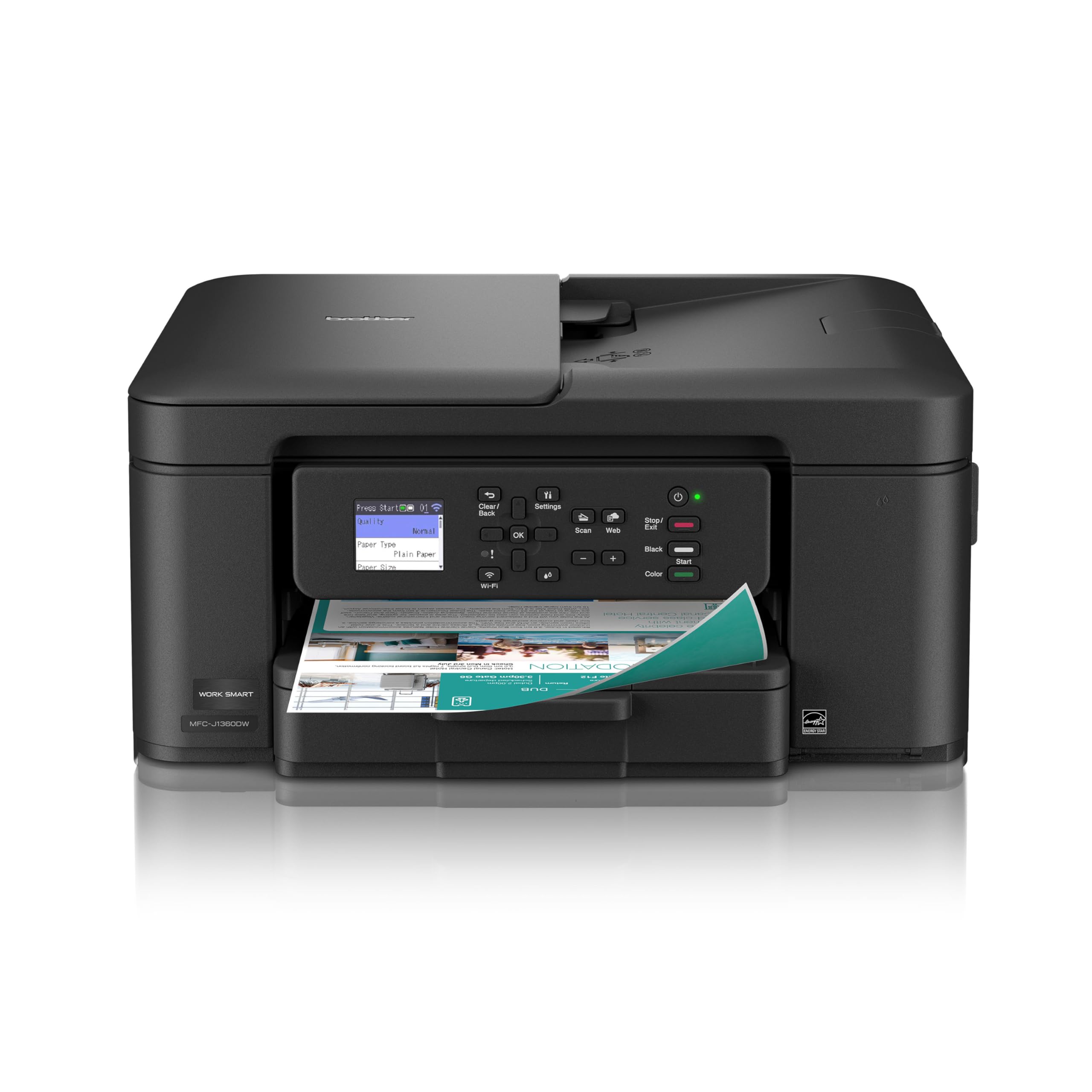
This printer offers crisp prints and a functional app for reliable home office use.
This Brother printer strikes a good balance between speed and price for home and home office use. It prints at up to 16 ppm black and 9 ppm color, and includes automatic duplex printing (print on both sides without flipping). The 20-sheet ADF makes multi-page scanning simple. Setup is generally smooth via the Brother Mobile Connect app, though some reviewers point out the “EasySetup” software can be finicky and requires downloading the full driver package.
The 1.8-inch color display is small but usable for navigating cloud apps like Google Drive and Dropbox. Buyers praise the crisp color and black-and-white output, and note it handles thick paper without issues. The main complaint across reviews is the cost of Brother’s brand-name ink cartridges, with one owner calling the prices “appalling” and recommending seeking cheaper third-party alternatives. That is a real factor if you print a lot.
Compared to the Brother INKvestment 4355, the Work Smart 1360 prints at 16 ppm black and 9 ppm color versus 20 ppm black and 19 ppm color, but it costs less upfront. It is a solid mid-range option if you want Brother reliability without the top-tier price.
Solid Home Office Pick
- Automatic duplex printing saves paper
- Fast enough speed for most home offices (16 ppm B&W)
- Crisp print quality on color and B&W documents
- Reliable wireless connectivity and mobile app
Trade-Offs Worth Knowing
- Standard ink cartridges are expensive to replace
- Cheaper plastic build; small 1.8″ display
Great choice if: You want a reliable, compact all-in-one with duplex printing for a home office and don’t print at high volume every day.
Think twice if: You print heavily — the ongoing ink costs could outweigh the lower upfront price, and the Brother INKvestment 4355’s included high-yield cartridges may save you more over time.
5. HP Envy 6155e Wireless All-in-One Color Inkjet Printer
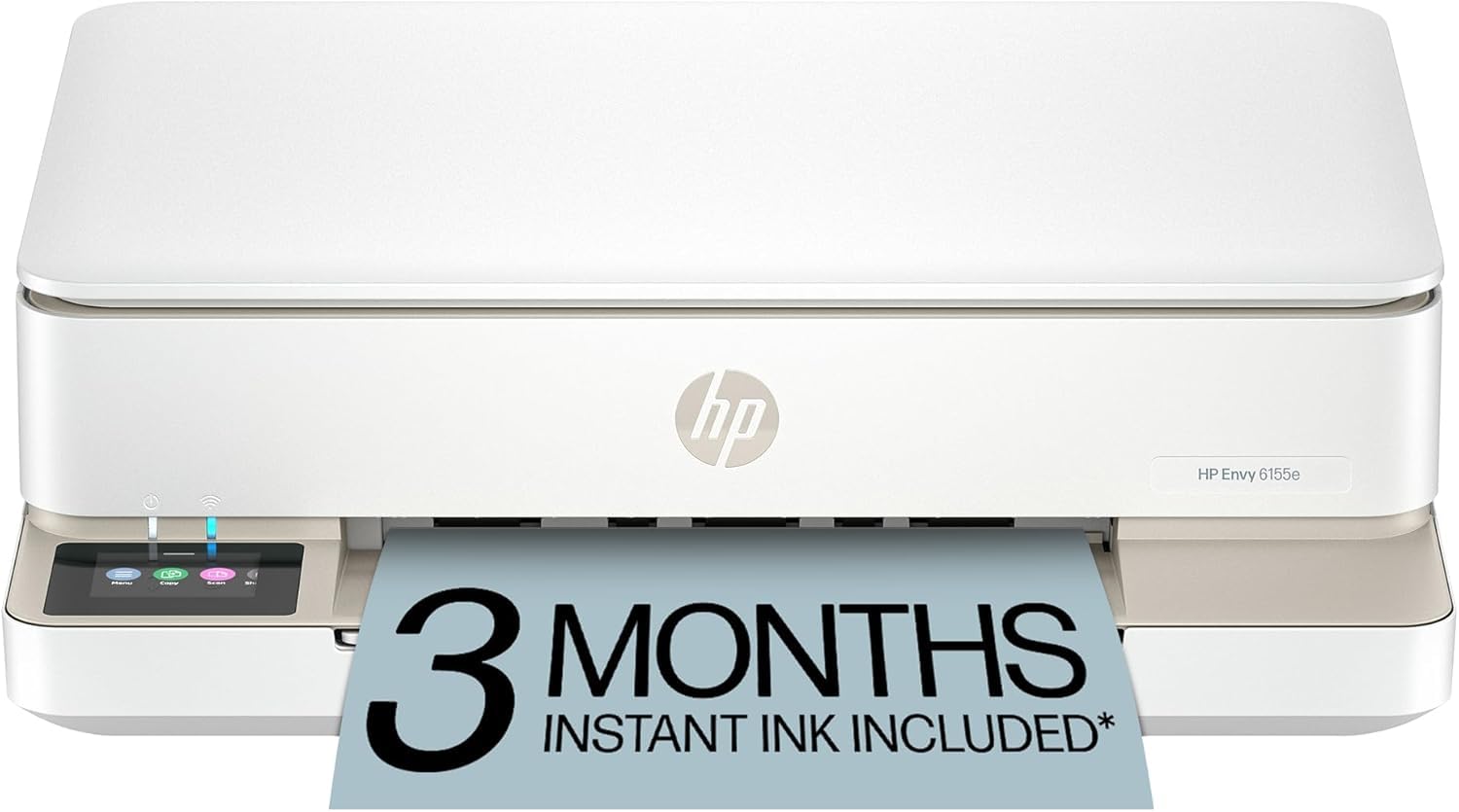
This touchscreen all-in-one prints borderless photos with HP’s AI-powered features.
HP wraps this printer in a sleek white design and a 2.4-inch color touchscreen that makes navigating settings feel modern. It prints at up to 10 ppm black and 7 ppm color, includes automatic duplex printing, and has a 100-sheet input tray. The built-in dual-band Wi-Fi is supposed to auto-detect and fix connection issues, though some shoppers say the opposite experience.
A standout feature here is HP’s AI-powered Perfectly Formatted Prints — it strips out ads and clutter from web pages and emails when you print, so you do not waste paper on weird layouts. HP also uses true-to-screen P3 technology to get colors closer to what you see on your monitor, which is nice for photo prints. The printer can handle borderless photos, making it a decent choice for home photo projects.
Where the Envy 6155e stumbles is reliability. Several buyers report constant printing issues: partial pages, single-page errors, and a print queue that gets stuck, requiring unplugging and clearing the queue for every single print job. One IT user said they needed to constantly reboot it to print. That is a dealbreaker if you need consistent, frustration-free operation.
Feature-First Design
- 2.4-inch color touchscreen for easy navigation
- HP AI cleans up web pages for better prints
- Borderless photo printing with P3 color tech
- Automatic duplex printing
Trade-Offs Worth Knowing
- Frequent reliability complaints: partial pages, print queue errors
- Some owners mention needing to reboot constantly
Consider this for: The home user who wants a good-looking printer with a touchscreen and AI features for the occasional photo and homework print — if you get a reliable unit, it is a solid home companion.
Avoid if: You cannot tolerate printer hiccups — the reliability complaints are too frequent and serious to ignore if you depend on it working every time.
6. HP DeskJet 4255e Wireless All-in-One Color Inkjet Printer
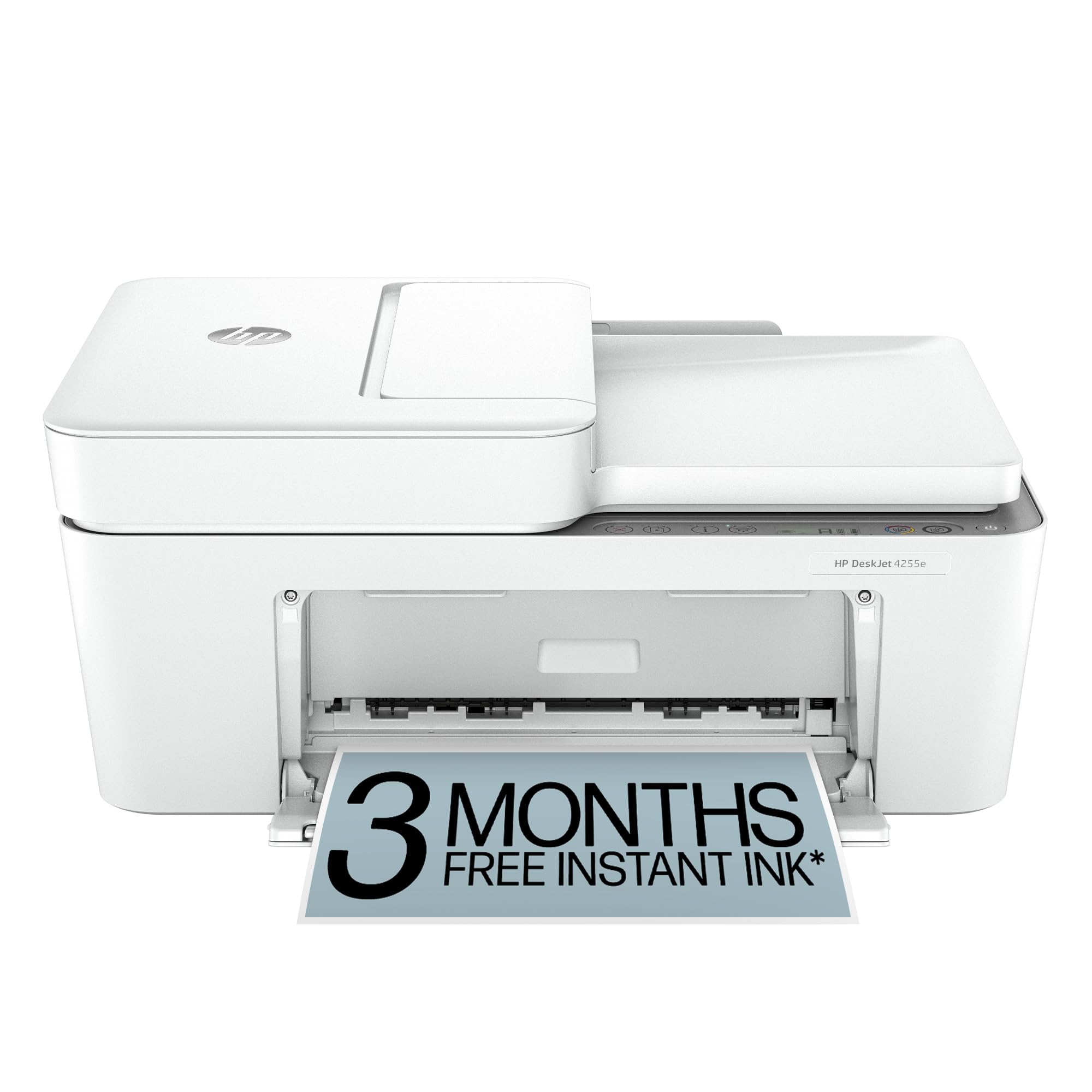
The cheapest ticket into printing that may cost you in frustration later.
The DeskJet 4255e is a basic all-in-one that keeps the upfront cost low. It prints at 8.5 ppm in black and 5.5 ppm in color — the slowest speeds on this list, versus 20 ppm black and 19 ppm color on the Brother INKvestment 4355. It has a 60-sheet input tray, an ADF (automatic document feeder), and manual duplex printing (you flip pages yourself for two-sided prints).
Its compact white design is made to fit any home, and HP uses at least 60% recycled plastic in the build. The AI print feature that cleans up web pages is included. The printer only works on 2.4 GHz Wi-Fi, which is slower and more congested than the 5 GHz band, so your connection may be less stable.
The biggest issue is HP’s ecosystem lock-in. The printer forces you to use HP ink cartridges with HP chips. Customers note it forces an HP ink subscription for initial setup. One review described it as the “most complicated printer to set up” they had ever owned, with constant WiFi dropouts and a malware infection they blamed on the setup process. If you want a printer that just works without nagging you for a subscription, this one is a hard sell at any price.
Lowest Entry Cost
- Affordable upfront price for basic home printing
- Includes 3-month Instant Ink trial
- Compact design that fits anywhere
- AI helps format web pages for printing
Trade-Offs Worth Knowing
- Locks you into HP cartridges and subscription push during setup
- Very slow print speed (8.5 ppm B&W, 5.5 ppm color)
- 2.4 GHz only Wi-Fi can be unreliable
Only consider if: You need the absolute lowest purchase price for a basic all-in-one and are comfortable with HP’s ink subscription system and 2.4 GHz Wi-Fi limitations.
Skip it entirely if: You want trouble-free setup, fast printing, or freedom to choose any ink brand — this printer delivers none of those, and the savings vanish the first time you need a cartridge.
Understanding the Specs
Pages Per Minute (ppm)
PPM tells you how many pages the printer can produce in one minute. A higher number means less time waiting at the printer. For home use, 10 ppm is adequate. For a home office, 16-20 ppm is more comfortable. The fastest models here (Brother INKvestment 6560) push 31 ppm — that is a full 31-page document in one minute.
Automatic Duplex Printing
This means the printer automatically flips the paper and prints on both sides. You don’t have to stand there and manually turn the pages. It saves paper and time. Some budget printers only offer manual duplex, which is fine for occasional use but tedious for multi-page documents.
FAQ
Is a faster ppm really worth the extra cost for a home printer?
What is the difference between an ink tank and a cartridge printer?
Can I use third-party ink in any of these printers?
Do I need an ink subscription to use these printers?
What does an Automatic Document Feeder do for me?
Why do some printers only connect to 2.4 GHz Wi-Fi?
Can I print from my phone without a computer?
What is the difference between manual and automatic duplex printing?
How long does ink last in these printers if I don’t use it often?
Which printer is best for printing sewing patterns or larger documents?
Final Thoughts: The Verdict
For the majority of shoppers, the code inkjet printer winner is the Brother INKvestment 4355 because it combines fast print speed (20 ppm black / 19 ppm color), automatic duplex printing, and high-yield ink cartridges that keep you printing for months without a refill. If you want the lowest long-term ink costs and print mainly for home use, grab the Canon MegaTank G3270. And for small businesses needing large-format prints at top speed, the standout is the Brother INKvestment 6560 with its 11×17 capability and lightning-fast 31 ppm print speed.
How We Picked
We do not accept paid placement, and we did not hands-on test every unit. Instead, we match each pick to a real buyer and use-case by comparing the manufacturers’ published specifications against the patterns in verified customer reviews — so you get each pick’s real strengths and trade-offs instead of marketing copy.
Sources & Methodology
Specifications: manufacturer listings and product documentation. Review insights: verified customer reviews, as of July 2026. Pricing: not shown on this page (it changes often); check the current price via the retailer link.
As an Amazon Associate, WellFizz earns from qualifying purchases. This does not affect which products we feature.

Mo Maruf
I created WellFizz to bridge the gap between vague wellness advice and actionable solutions. My mission is simple: to decode the research and give you practical tools you can actually use.
Beyond the data, I am a passionate traveler. I believe that stepping away from the screen to explore new environments is essential for mental clarity and physical vitality.