Our readers keep the lights on and my smoothie glass nicely filled. As an Amazon Associate, I earn from qualifying purchases.
A Thai curry lives or dies by its coconut milk. Too watery and the sauce splits, too thin and it never coats the chicken or vegetables, loaded with stabilizers and the finish turns gummy. The right can delivers a velvet-smooth, rich emulsion that lets lemongrass, galangal, and chile paste shine without a chalky aftertaste. Finding that can among dozens on the shelf is the difference between a takeout-level red curry and a bowl you’re proud to serve guests.
I’m Mohammad Maruf — the founder and writer behind WellFizz. I’ve spent hundreds of hours cross-referencing fat percentages, ingredient labels, and user reports to isolate the cans that actually perform in a hot wok with curry paste and fish sauce.
This guide breaks down the five most reliable cans on the market today, ranked by creaminess, purity, and cooking behavior. Whether you’re simmering a weeknight green curry or building layers in a slow-cooked massaman, you’ll find the coconut milk for thai curry that won’t let you down.
How To Choose The Best Coconut Milk For Thai Curry
Not every can labeled “coconut milk” belongs in a Thai curry. The difference between a silky, emulsified sauce and a watery, separated mess comes down to four key factors. Understand these before you buy, and you’ll never reach for the wrong can again.
Fat Content — The Non‑Negotiable Spec
Thai curries rely on the coconut cream that rises to the top of full-fat milk. Look for cans that list 17–19% fat by weight. Anything below 15% yields a thin, brothy sauce that never develops that signature velvety mouthfeel. Premium cans in this guide sit at 18%, the sweet spot where the cream separates cleanly and re‑emulsifies with curry paste.
Ingredient Purity — The Only Two Words That Matter
The best cans list exactly two ingredients: coconut and water. Avoid guar gum, carrageenan, xanthan gum, or any “emulsifiers” and “stabilizers.” These additives mask thin milk and leave a slimy finish that dulls the flavor of lemongrass, galangal, and chiles. If you see a third ingredient, keep looking.
Can Lining — The Hidden Flavor Shield
Acidic ingredients like lime juice, tamarind, and tomato paste can react with unlined cans, leaching a metallic taste into your curry. BPA-free linings prevent this. Every can in this guide uses BPA-free interior coating, but always confirm on the label if you simmer for longer than 20 minutes.
Sourcing and Ethical Practices
The coconut industry has a history of forced monkey labor in some harvest regions, particularly Thailand. Several brands now explicitly label “monkey labour free.” If ethical sourcing matters to you, prioritize cans that make that statement or are certified organic from Sri Lanka farms where the practice is not used.
Quick Comparison
On smaller screens, swipe sideways to see the full table.
| Model | Category | Best For | Key Spec | Amazon |
|---|---|---|---|---|
| Natural Value Coconut Milk | Pure | Traditional texture & flavor | No stabilizers, thick cream layer | Amazon |
| True Organic Unsweetened | Organic | Clean-label cooking | 18% fat, USDA Organic | Amazon |
| Jiva Organics | Organic | Keto & additive-free | 18% fat, no guar gum | Amazon |
| Nature’s Greatest Foods | Mid-Range | Hot dishes & economical bulk | 17-19% fat, two ingredients | Amazon |
| Chaokoh | Conventional | Classic Thai restaurant style | Creamy, traditional brand | Amazon |
In‑Depth Reviews
1. Natural Value Coconut Milk
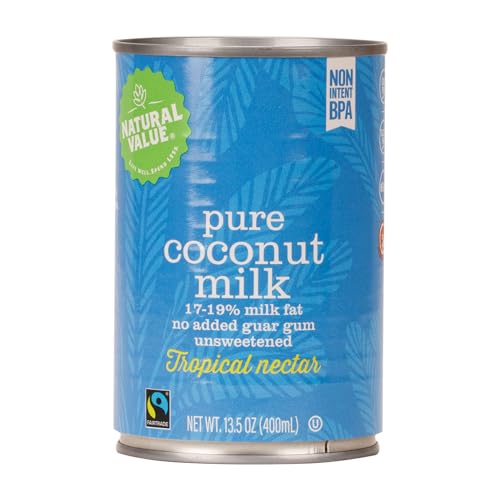
Natural Value hits the bullseye for anyone who wants the closest thing to fresh‑pressed coconut milk out of a can. It contains zero preservatives and zero stabilizers — the ingredient list is literally coconut and water. That lack of gums means the cream separates aggressively; expect nearly three‑quarters of the can to be thick, white solid that you can spoon straight into a curry paste to bloom the spices before adding the thin liquid. Multiple reviewers describe it as the “best coconut milk” they’ve purchased after trying many brands, praising its pure, full flavor.
The trade‑off is visual: because no emulsifiers hold the fat and water together, the texture can appear slightly grainy when shaken by hand. An immersion blender or vigorous whisking for ten seconds solves the issue completely and the graininess never affects taste. The cans are BPA‑free lined, so you can simmer acidic tamarind or lime juice for extended periods without metallic notes creeping in. For a curry that mimics what you’d get from a scratch‑made coconut cream in Thailand, this is the can to buy.
Shipping quality is the weak point — several buyers report dented cans due to insufficient packaging. The product inside is intact every time, but the outer box may arrive beat up. If aesthetics matter, inspect the case on arrival and contact Amazon for a replacement if more than one can is compromised.
Why it’s great
- Only two ingredients — no hidden gums or preservatives
- Ultra‑thick cream layer ideal for curry paste blooming
- BPA‑free cans safe for acidic, long‑simmer curries
Good to know
- Requires vigorous shaking or blending to re‑emulsify
- Frequent reports of dented cans during shipping
- Grainy look when shaken by hand (not a flavor issue)
2. True Organic Unsweetened Coconut Milk
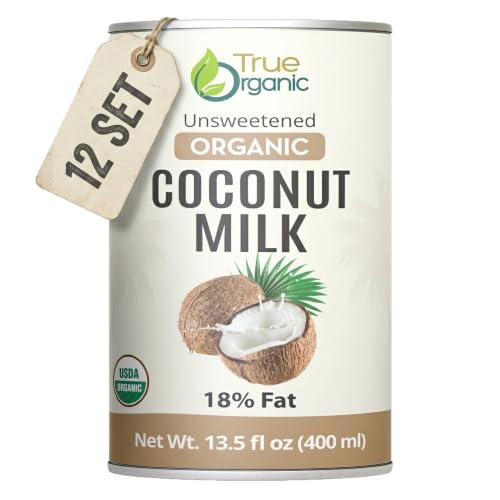
True Organic delivers a consistent 18% fat content with USDA Organic and Kosher certifications, making it a reliable choice for health‑conscious cooks. The cream separates naturally but re‑incorporates more easily than some pure‑ingredient brands — several users report using it as a half‑and‑half substitute in coffee with just a milk frother. In a Thai curry, that easy emulsification means you can ladle it straight into the pan without pre‑blending.
The flavor profile leans clean and neutral, letting your curry paste, fish sauce, and aromatics take center stage. It’s certified monkey‑labour‑free and packed in BPA‑free cans, which addresses the two biggest ethical and safety concerns in the coconut category. The 12‑pack format is economical for frequent curry cooks, though one reviewer noted the lack of a larger institutional size.
The most critical review describes a watery, greyish can with brown sediment — a clear quality‑control miss. This seems rare, but the inconsistency is worth flagging. For most buyers, the cans arrive creamy and vibrant, but the occasional bad batch means you might want to order a single pack before committing to a case subscription.
Why it’s great
- 18% fat with USDA Organic certification
- Easy to re-emulsify — works with a milk frother
- Ethically sourced with monkey‑labour‑free guarantee
Good to know
- Rare quality‑control reports of watery, grey cans
- No bulk size above 13.5 oz available
- Price has climbed recently
3. Jiva Organics Organic Coconut Milk

Jiva Organics stakes its reputation on two ingredients — organic coconut and water — with an assured 18% fat content that places it firmly in the full‑fat category. Keto and paleo cooks love it because the fat percentage is high enough to support ketogenic macros while the absence of guar gum avoids the stomach bloat some sensitive eaters experience. The cans are BPA‑free and sourced from Sri Lanka, a region not associated with forced monkey labor.
The consistency is smooth rather than solid; it doesn’t form the hard, butter‑like plug that some pure brands create. That makes it easier to shake and pour directly into the pan. For a green or red curry where you want a homogeneous sauce without a separate blooming step, Jiva performs beautifully. Reviewers consistently praise the coconut taste as “not overpowering” — a sign that the natural sweetness of the fruit remains balanced.
The biggest downside is pricing volatility. Several long‑time buyers report the per‑case price jumped by roughly a third in a short period. The product itself remains excellent, but the value proposition has weakened. If you find it at its lower price point, stock up; at the higher end, consider it a premium‑level purchase.
Why it’s great
- Honest 18% fat with no stabilizers or additives
- Smooth consistency — easy to shake and pour
- Keto, paleo, and vegan friendly with organic certification
Good to know
- Price has risen significantly; value varies by timing
- One review reported unusable chunks that wouldn’t blend
- Not as thick as ultra‑pure brands like Natural Value
4. Nature’s Greatest Foods Pure Coconut Milk

Nature’s Greatest Foods promises a clean two‑ingredient recipe with fat content that fluctuates between 17 and 19 percent depending on the batch. That range still qualifies as full‑fat and delivers a creamy body that works well in curries, soups, and desserts. Multiple buyers call it more “rich and creamy” than the widely available Thai Kitchen brand, which often includes guar gum.
One reviewer discovered an important nuance: this milk is best used hot. When cold, the fat can take on a slightly grainy mouthfeel, but once heated in a curry or soup, it smooths out completely. If you’re making a cold coconut dessert or a smoothie, another option may serve you better. For a simmering Thai curry, however, the graininess disappears within minutes of hitting the heat.
The main complaints revolve around packaging and consistency. Several dented‑can reports appear, and one reviewer detected a synthetic aftertaste that they attributed to a recent ingredient change — though the ingredient list on the label remains the same. Check the batch date when you receive yours and return any can that smells or tastes off.
Why it’s great
- Two‑ingredient purity with no additives
- Richer and creamier than mass‑market brands
- Ideal for hot dishes — graininess disappears when heated
Good to know
- Grainy texture when used cold or at room temperature
- Occasional reports of synthetic aftertaste
- Cans arrive dented with some frequency
5. Chaokoh Coconut Milk

Chaokoh is a Thai‑origin brand that has long been a staple in restaurant kitchens for its creamy, well‑blended consistency. It’s affordable, widely available, and reliable in both sweet and savory applications — users report excellent results in cakes, candies, ice cream, and, of course, curries. The fat content is high enough to produce a rich sauce that coats ingredients well.
The elephant in the room is labor ethics. Multiple reviews mention that Chaokoh’s supply chain has been linked to the use of enslaved monkeys for coconut harvesting, a practice that has drawn international condemnation. If you prioritize cruelty‑free sourcing, this brand is not compatible with your values. Several ethical consumers state plainly that they will not repurchase for this reason.
Shipping damage is also a recurring theme — nearly every batch arrives with dented cans. The product inside remains usable, but the outer packaging can be unsightly. If you don’t care about can aesthetics and want a classic, creamy coconut milk at a friendly price point, Chaokoh delivers. If provenance and can condition matter to you, the organic entries above are better choices.
Why it’s great
- Creamy, well‑blended texture — traditional Thai brand
- Very affordable per‑can cost
- Versatile for both savory curries and sweet desserts
Good to know
- Linked to forced monkey labor in coconut harvesting
- Cans frequently arrive dented
- Not organic and may contain stabilizers
FAQ
Should I buy coconut milk or coconut cream for Thai curry?
Why does my coconut milk separate into a solid layer and water?
Is guar gum really that bad for curry?
Does BPA‑free lining matter for curry?
Final Thoughts: The Verdict
For most users, the coconut milk for thai curry winner is the Natural Value Coconut Milk because it offers pure two‑ingredient simplicity with a thick cream layer that mimics scratch‑pressed coconut milk, all in a BPA‑free can. If you want organic certification and easier shaking, grab the True Organic Unsweetened. And for a budget‑conscious stapple with classic Thai restaurant flavor (and if you can accept the labor‑ethics trade‑off), nothing beats the Chaokoh Coconut Milk.

Mo Maruf
I created WellFizz to bridge the gap between vague wellness advice and actionable solutions. My mission is simple: to decode the research and give you practical tools you can actually use.
Beyond the data, I am a passionate traveler. I believe that stepping away from the screen to explore new environments is essential for mental clarity and physical vitality.