Our readers keep the lights on and my smoothie glass nicely filled. As an Amazon Associate, I earn from qualifying purchases.
That split, watery coconut milk at the bottom of the can ruins the body of a carefully built curry. The difference between a thin, chalky sauce and a luxuriously thick one comes down to the solids content and the absence of stabilizers that mask low-quality pressing. Real cooking coconut milk separates naturally into a thick cream cap and a clear liquid — and that separation is actually the sign you are buying something honest.
I’m Mohammad Maruf — the founder and writer behind WellFizz. My research process for this guide involved cross-referencing fat-content claims against third-party lab reports, examining ingredient labels for hidden emulsifiers, and reading through hundreds of verified buyer experiences to separate the brands that deliver cooking-grade consistency from those that do not.
This guide breaks down the top five canned coconut milks for savory cooking, focusing on fat percentage, additive policies, and can liner safety. You will learn which options produce the best coconut milk for cooking without the artificial gums that leave a gluey aftertaste on your palate.
How To Choose The Best Coconut Milk For Cooking
Not every can labeled “coconut milk” is built for the stove. The best cooking coconut milk holds its emulsion under heat, resists curdling in acidic tomato-based sauces, and leaves a silky coat on the spoon without tasting of cardboard or tin. You need to evaluate three things before you buy: the fat content, the additive list, and the can lining.
Fat Content
Cooking coconut milk is graded by its fat percentage. The standard full-fat range is 17 to 19 percent. Anything below that is technically “lite” and will break down into a watery sauce when simmered. The fat globules carry the flavor compounds and provide the body that clings to rice and bread. For curries, soups, and braises, you want a product that lists its fat content on the label or, at minimum, feels thick when you open the can.
Additives and Stabilizers
Many mass-market brands add guar gum, xanthan gum, or carrageenan to prevent separation and create a uniform pour. The problem is that these gums can produce a slimy or glue-like texture once the milk is heated, and some consumers report digestive discomfort. Premium cooking milks use only coconut and water — no gums, no preservatives. The visible separation of cream and liquid is natural and easy to re-emulsify with a whisk or immersion blender.
Can Liner Safety
Bisphenol A (BPA) is a synthetic compound used in the epoxy resin that lines food cans. Prolonged exposure has been linked to hormonal disruption. Most premium coconut milk brands now use BPA-free linings, but older stock or low-cost alternatives may still contain BPA. For anyone cooking frequently from cans, choosing BPA-free packaging is a straightforward health precaution.
Quick Comparison
On smaller screens, swipe sideways to see the full table.
| Model | Category | Best For | Key Spec | Amazon |
|---|---|---|---|---|
| Jiva Organics | Organic, No Gum | Creamy curries and sauces | 18% Fat, BPA-Free | Amazon |
| True Organic | USDA Organic | Dairy replacement in coffee and baking | 18% Fat, Kosher | Amazon |
| Natural Value | Pure & Minimal | Authentic Southeast Asian recipes | No Preservatives, No Stabilizers | Amazon |
| Nature’s Greatest Foods | Mid-Range | Budget-friendly clean label | 17-19% Fat, Kosher | Amazon |
| Thai Kitchen Lite | Entry-Level | Low-fat shakes and smoothies | 60% Less Fat | Amazon |
In‑Depth Reviews
1. Organic Coconut Milk by Jiva Organics

Jiva Organics hits the sweet spot for cooking because it delivers a verified 18 percent fat content with only two ingredients: organic coconut and water. The absence of guar gum means the milk does not turn slimy when simmered in a red curry or a lentil dal. Users consistently report a rich, creamy texture that holds its body even after the sauce reduces, and the natural separation — a thick cream layer on top — stirs back together without forming gummy clumps.
The BPA-free cans and Sri Lankan sourcing add another layer of confidence for anyone concerned about chemical leaching during pantry storage. Some buyers noted that the price has increased over the past year, but the quality of the fat profile remains consistent batch to batch. The milk works equally well in savory braises and in sweet applications like coconut rice or baked goods.
One drawback is that the coconut solids can form hard chunks that do not dissolve easily in a blender unless the milk is warmed first. A quick microwave or stovetop warm-up resolves this completely. For home cooks who prioritize a pure, additive-free ingredient that behaves predictably under heat, this is the most reliable option on the shelf.
Why it’s great
- Full 18% fat yields a thick, stable curry base
- Only two ingredients — no gums or thickeners
- BPA-free cans from organic Sri Lankan farms
Good to know
- Hard fat chunks may need gentle heating before blending
- Price has risen noticeably since initial release
2. True Organic Unsweetened Coconut Milk
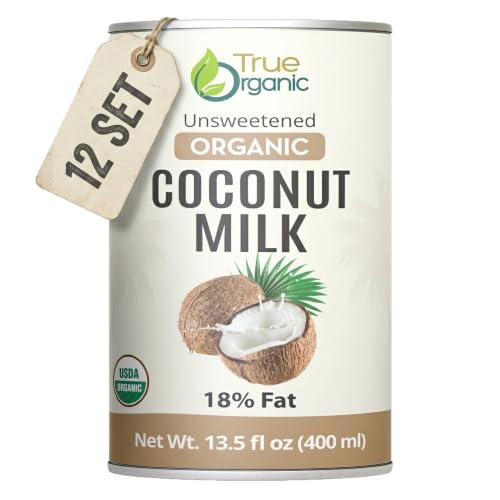
True Organic stands out for its dual certification — USDA Organic and Kosher — which appeals to cooks who need to accommodate both dietary and religious food laws. With a declared 18 percent fat content and no guar gum, it competes directly with Jiva on purity. Where it differentiates itself is in the fine texture of the cream: users report that it froths smoothly in coffee and integrates into sauces with minimal whisking effort.
The can size is standard 13.5 ounces, but several experienced buyers expressed a desire for a larger bulk format. The milk clumps slightly when added cold to hot liquid, so a fast whisk or a milk frother is helpful for smooth incorporation. The flavor profile is clean and coconut-forward without being overly sweet, making it appropriate for both savory stews and dessert applications like coconut panna cotta.
The main complaint is inconsistency in the cream-to-water ratio across different shipping batches. A few cans arrived with a grayish, watery appearance that lacked the expected richness. This variability suggests that quality control may not be as stringent as the price point implies. For the cook who wants a single can for versatile use, it is a strong choice, but not quite as bulletproof as the top recommendation.
Why it’s great
- Silky frothing ability ideal for coffee creamer use
- Dual USDA Organic and Kosher certifications
- No added sugars or preservatives
Good to know
- Some cans arrive watery with low cream separation
- Lacks a larger bulk can size for heavy users
3. Natural Value Coconut Milk
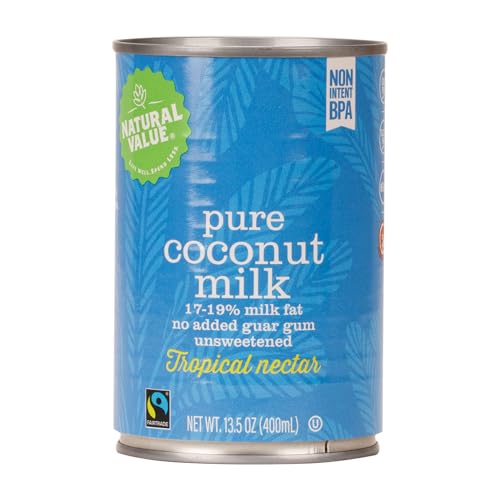
Natural Value is the choice for purists who want the closest canned approximation of freshly pressed coconut milk. The ingredient list is exactly two items: coconut and water. There are no preservatives, no stabilizers, and no emulsifiers. This absolute minimalism means that the cream separates aggressively — over three-quarters of the can can be solid white fat — and the liquid beneath is clear, not milky. That is exactly how real coconut milk behaves.
The taste is the strongest positive signal across buyer reviews. Multiple customers who tried dozens of brands settled on Natural Value as the most authentic, describing the flavor as “grayish, full flavor” reminiscent of the milk they drank as children in coconut-growing regions. The can is BPA-free, which matters for long-term storage, and the best-by dates are consistently over a year out.
The trade-off is that this milk is not convenient for direct use. You must shake vigorously, whisk, or blend the contents to re-emulsify the cream and water. If you simply pour from the can, you will get mostly thin liquid. It also does not work well in cold preparations because the fat solidifies into a grainy texture. For hot curries, soups, and braises where you control the emulsion, this is the most honest option available.
Why it’s great
- Only coconut and water — zero fillers or gums
- Intense, authentic coconut flavor favored by veterans
- BPA-free lining with generous expiration windows
Good to know
- Requires vigorous whisking or blending before each use
- Grainy texture when used cold without mixing
4. Nature’s Greatest Foods Pure Coconut Milk

Nature’s Greatest Foods positions itself in the middle of the market with a stated fat range of 17 to 19 percent and a clean label that excludes guar gum, carrageenan, and added sugar. The price per can in the 12-pack falls notably below the premium options, making it the most accessible entry point for cooks who want additive-free coconut milk without paying top-tier prices.
Buyers praise its creamy texture and minimal greasiness, especially in hot dishes like Thai green curry and lentil soups. One experienced reviewer noted that it is “richer and creamier than Thai Kitchen,” which is a common benchmark for American home cooks. The milk retains its flavor even when diluted, so you can stretch a single can across a larger volume of sauce without losing the coconut character.
The main concern is a reported aftertaste that some users attribute to a formula change that may have introduced a synthetic ingredient despite the label claims. A small but vocal subset of buyers detected a “bad aftertaste” and stopped purchasing. Additionally, shipping damage is common — dented cans appear in multiple reviews — though the contents typically remain intact. If you are sensitive to off-flavors, buy a single can first before committing to the case.
Why it’s great
- Lowest per-can cost among clean-label options
- Rich, creamy texture ideal for curries and soups
- Star-K Kosher certified and Non-GMO verified
Good to know
- Reports of a chemical aftertaste in recent batches
- Cans frequently arrive dented during shipping
5. Thai Kitchen Unsweetened Lite Coconut Milk

Thai Kitchen Lite is the entry-level option for cooks who want coconut flavor without the heavy caloric load. At 60 percent less fat than the regular version, this milk is thin and pours like 2 percent dairy milk. It is sweetened only by the natural sugars in the coconut and contains no artificial colors or preservatives. The Non-GMO certification adds a basic quality assurance for budget-conscious shoppers.
Users reach for this can primarily in smoothies, protein shakes, and breakfast bowls where a thick coconut cream would overwhelm the texture. It also works in soups that benefit from a light coconut note — think a simple coconut-lime broth or a vegetable soup — but it should not be used for thick curries, sauces, or baked custards. Multiple reviews confirm that the thin consistency fails to provide the body needed for traditional Thai or Indian dishes.
The pack of 12 is convenient for high-frequency blender users, and the expiration dates are generous. The lite formula means it contains stabilizers to prevent separation, so the texture is uniformly pourable straight from the can. If your cooking rarely demands full-fat coconut milk, this is a practical pantry staple, but it is not a substitute for the real thing where fat is the functional core of the recipe.
Why it’s great
- Low-fat formula ideal for smoothies and light soups
- Uniform pourable texture without lumps or separation
- Long shelf life and reliable packaging
Good to know
- Too thin for thick curries or rich sauces
- Contains stabilizing agents unlike pure brands
FAQ
What fat percentage should I look for in a cooking coconut milk?
Why does my canned coconut milk have a solid white layer on top?
Does guar gum ruin the taste of coconut milk in hot dishes?
Final Thoughts: The Verdict
For most users, the coconut milk for cooking winner is the Jiva Organics because it combines a verified 18 percent fat content, a two-ingredient clean label, and BPA-free cans at a mid-range price. If you want the most authentic coconut flavor for Southeast Asian recipes, grab the Natural Value. And for a budget-friendly entry point into additive-free cooking, nothing beats the value of Nature’s Greatest Foods.

Mo Maruf
I created WellFizz to bridge the gap between vague wellness advice and actionable solutions. My mission is simple: to decode the research and give you practical tools you can actually use.
Beyond the data, I am a passionate traveler. I believe that stepping away from the screen to explore new environments is essential for mental clarity and physical vitality.