Our readers keep the lights on and my smoothie glass nicely filled. As an Amazon Associate, I earn from qualifying purchases.
Specs are compiled from manufacturer listings and verified buyer reviews and can change over time — please confirm the key details on the product page before buying.
A winter coat must balance warmth, weather resistance, and everyday style. With so many coat types, it is easy to choose one that is either too bulky or not warm enough. This guide focuses on fill power, waterproofing, length, and verified buyer feedback.
I’m Mohammad Maruf — the founder and writer behind WellFizz. This guide is built by comparing the manufacturers’ published specifications and the patterns across verified customer reviews, so you get each pick’s real strengths and trade-offs instead of marketing spin.
Whether you are navigating city sidewalks, commuting through a wet winter, or heading somewhere cold enough that a regular jacket won’t cut it, here is what to look for to find the best coats for women that actually match your climate and daily routine.
Quick Picks
- Fitouch Women’s Waukee Long Down Coat Parka Jacket — Warmest Pick
- Calvin Klein Women’s Zipper Hooded Puffer Coat — Best Value
- Eddie Bauer womens Girl on the Go Trench — Rain-Ready Classic
- LONDON FOG womens Single Breasted Long Trench Coat With Epaulettes and Belt — Style-First Trench
How To Choose The Best Coats For Women
A coat for a mild, rainy city differs greatly from one for sub-freezing commutes. Fill power, length, and weather protection determine if you stay warm and dry.
Fill Power: The Warmth Measure
Fill power measures how much loft, or fluffiness, a down filling has. A higher number means more air trapped per ounce, which translates to more warmth without extra weight. For cold winters, look for 550 fill power as a baseline; premium options go to 750-plus fill power for maximum warmth with less bulk.
Coat Length: Coverage vs Mobility
A hip-length coat gives you easy movement and works for driving. A coat that hits at the knee or mid-calf traps more body heat and blocks wind from below. The trade-off: longer coats can feel restrictive when you sit down or walk up stairs.
Weather Sealing: Waterproof vs Water-Resistant
If you deal with rain or wet snow, look for a coat that is labeled waterproof with sealed seams. Water-resistant finishes shed light mist but soak through in a steady downpour. A hood is also a practical addition if you commute on foot or wait for public transport.
Quick Comparison
| Model | Best For | Fill / Insulation | Length | Weather Protection | Amazon |
|---|---|---|---|---|---|
| Fitouch Waukee Long Down Parka | Extreme cold commutes | 750+ Fill Power Duck Down | Mid-calf | Water-repellent, windproof | Amazon |
| Calvin Klein Puffer Coat | Everyday casual warmth | Puffer (unspecified fill) | Cold weather long sleeve | Hooded zip front | Amazon |
| Eddie Bauer Girl on the Go Trench | Rainy city days | Unlined shell | Trench length | Waterproof, windproof, sealed seams | Amazon |
| London Fog Long Trench Coat | Classic polished style | Unlined shell | 3/4 Length | Light trench (no waterproof claim) | Amazon |
In‑Depth Reviews
1. Fitouch Women’s Waukee Long Down Coat Parka Jacket

A full-length down parka built for the coldest commutes without the Michelin Man bulk.
The standout spec here is the 750+ fill power duck down, which gives you serious warmth without a heavy, stiff shell. That fill power — a measure of how much loft each ounce creates — means it traps more body heat than a standard 550-fill coat while staying lighter. The coat hits at mid-calf, so cold air has a long way to go before sneaking under the hem. A 20D polyester woven fabric with a non-PFC water-repellent coating sheds light snow and rain, and the coat is also described as windproof. At 3.2 pounds, it has some heft to it, but that weight comes from real insulation rather than empty shell.
The warmth range the manufacturer suggests is 32°F to 5°F, so this is not a jacket for a mild winter day — it is for the weeks when the temperature does not get above freezing. If you walk to a train stop or wait for a bus in real cold, you will be glad to have that extra coverage down past your knees.
What You Get
- 750+ fill power down delivers serious warmth without extra weight
- Mid-calf length blocks wind and cold from below
- Water-repellent and windproof finish for wet, blustery conditions
What to Consider
- At 3.2 lbs it is noticeably heavier than a packable puffer
- The warmth range (32°F to 5°F) is overkill for mild climates
- Unsure if down persists well when wet without a DWR refresher
Reach for it if: you live somewhere that a 32°F to 5°F temperature range is your real winter — meaning real cold, not a chilly morning.
Think again if: you need a coat for mild rain, light drizzle, or a warmer climate; this is built for cold first, not wet weather.
2. Calvin Klein Women’s Zipper Hooded Puffer Coat
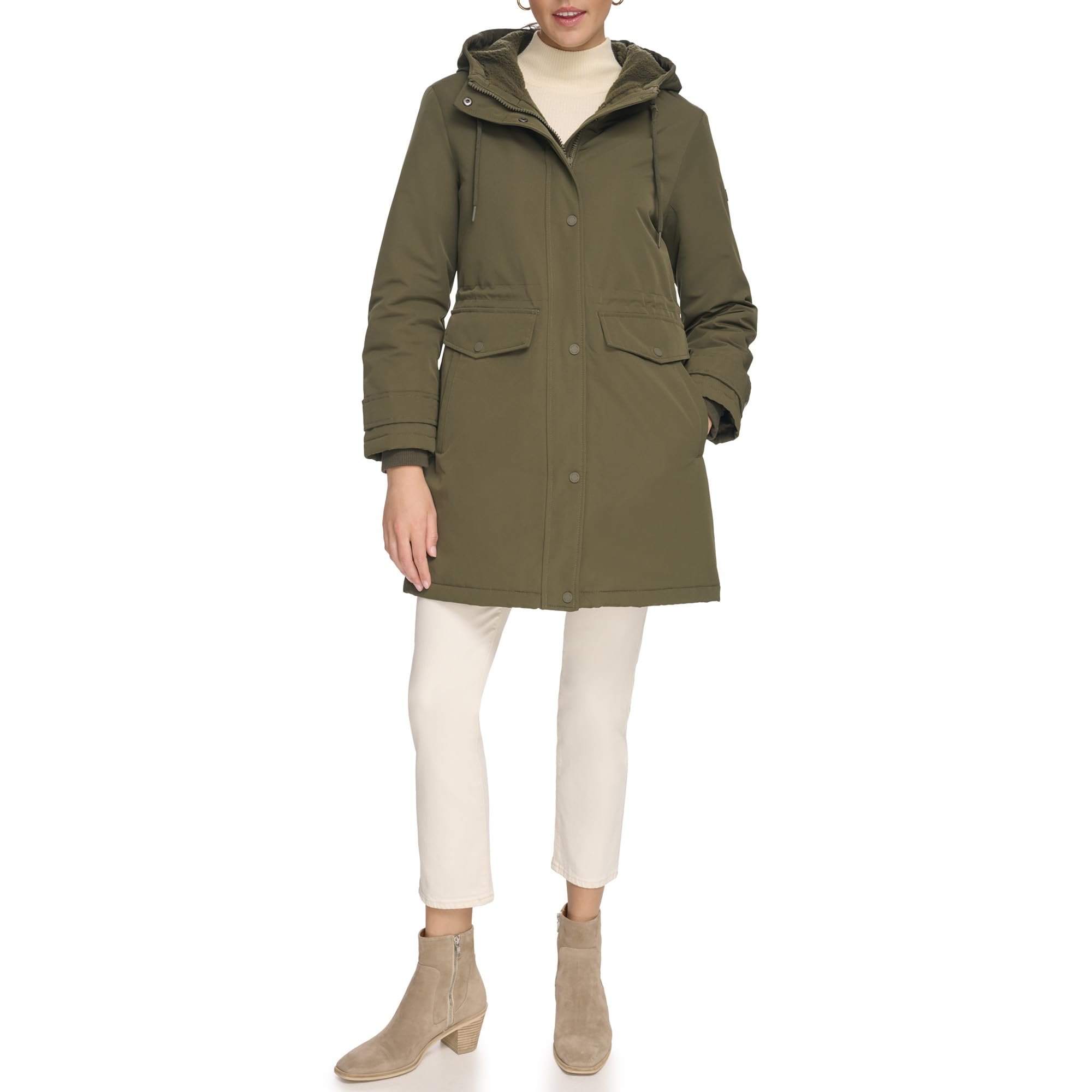
A brand-name puffer that brings everyday warmth and a clean look without a premium price tag.
This Calvin Klein coat skips the deep-spec details — there is no fill power number or fill weight listed — so you are buying the brand, the style, and the basic puffer design. It is a cold weather long sleeve hooded zip front puffer, meaning you get the classic puffer silhouette plus a hood for extra coverage. Unlike the trench coats below, this one is built for warmth first, not rain.
Buyers report that this coat fills a specific niche: a simple, affordable cold-weather layer that looks put-together for daily errands, work, or walking around town. Compared to the Fitouch parka above, it lacks the extreme-warmth specs and full-length coverage, so it is better suited for winter highs in the 20s and 30s rather than single-digit days.
Why It Works
- Brand-name quality from Calvin Klein at an accessible price point
- Hooded design adds coverage for wet or windy days
- Puffer construction packs warmth in a lighter, everyday silhouette
The Trade-Offs
- No official fill power or fill weight stated for the insulation
- Not as warm as the 750+ fill power Fitouch for deep cold
- Less coverage than a full-length parka
Best for: the buyer who wants a reliable, stylish winter coat for normal cold — not extreme polar vortex conditions — and who values brand name and a clean look.
Maybe not for: anyone who needs a specific fill power number, a waterproof rating, or a coat rated for sub-zero temps.
3. Eddie Bauer womens Girl on the Go Trench
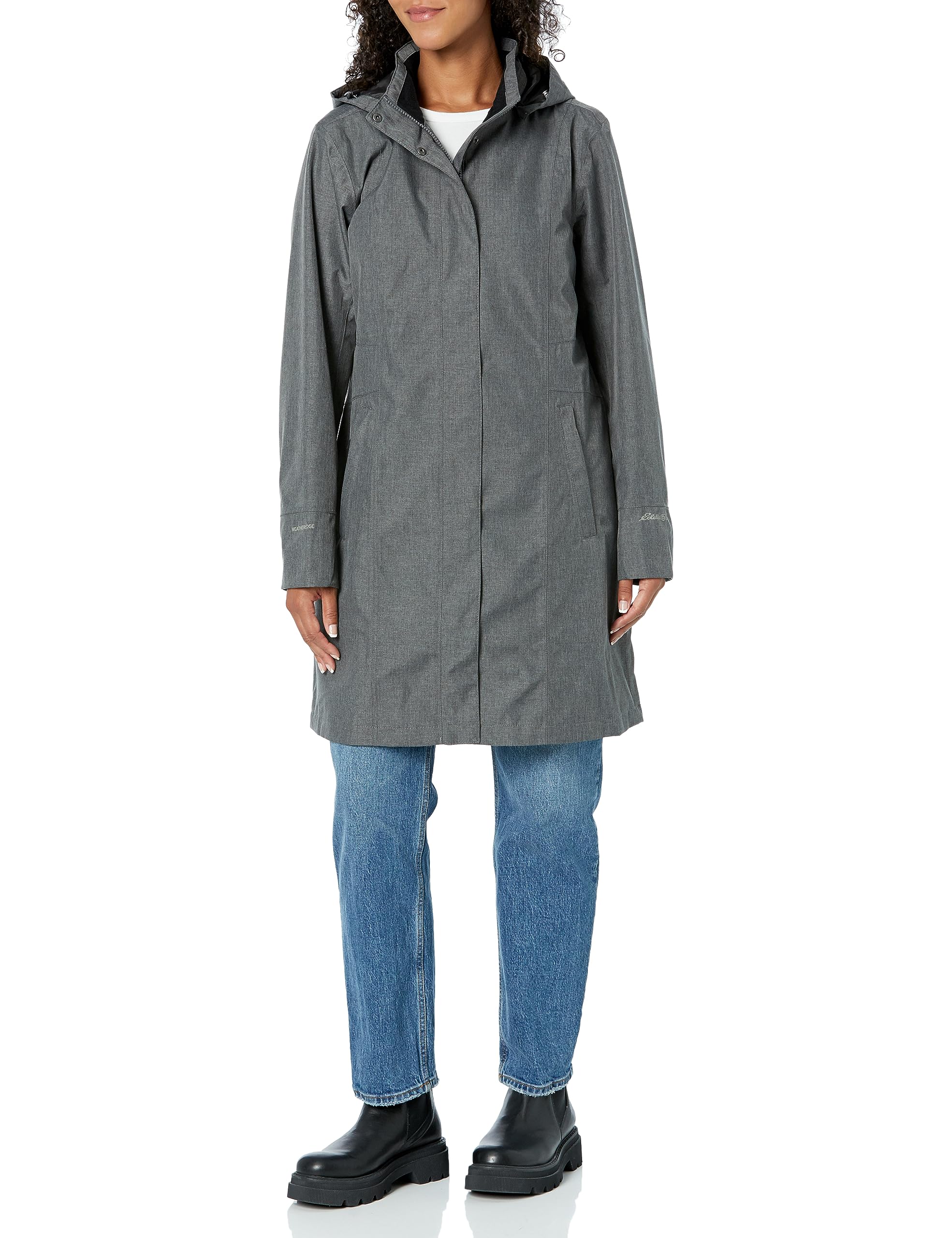
The trench coat that actually handles a real downpour without looking like technical gear.
This coat replaces the old rule that a trench is for light mist only. Eddie Bauer uses its WeatherEdge technology — a windproof, fully seam-sealed membrane that is also fully waterproof and breathable. That sealed seam construction is the detail that matters: it means water cannot sneak in through the stitch holes, which is exactly what happens with a basic water-resistant jacket. The shell is also windproof, so that cold gust that cuts through a regular coat does not make it past this one.
Since there is no insulation listed, this trench performs best as a rain shell rather than a winter coat. Pair it with a sweater underneath when the temperature drops. Compared to the London Fog trench below, this one is the better choice if wet weather is your real concern — the WeatherEdge waterproofing is a real step up.
What Stands Out
- Fully seam-sealed construction makes it truly waterproof, not just resistant
- Windproof membrane blocks cold gusts on blustery days
- Sleek trench silhouette that works for work and weekends
What It Is Not
- No insulation — it is a shell coat, not a warm winter parka
- Not meant for sub-freezing temps without layers underneath
- Limited to wet-weather and mild-cold use cases
Ideal for: the commuter in a rainy city who wants a polished, waterproof layer that keeps them dry without the look of a hiking jacket.
skip it if: you need insulation — grab a puffer or down coat instead.
4. LONDON FOG womens Single Breasted Long Trench Coat With Epaulettes and Belt
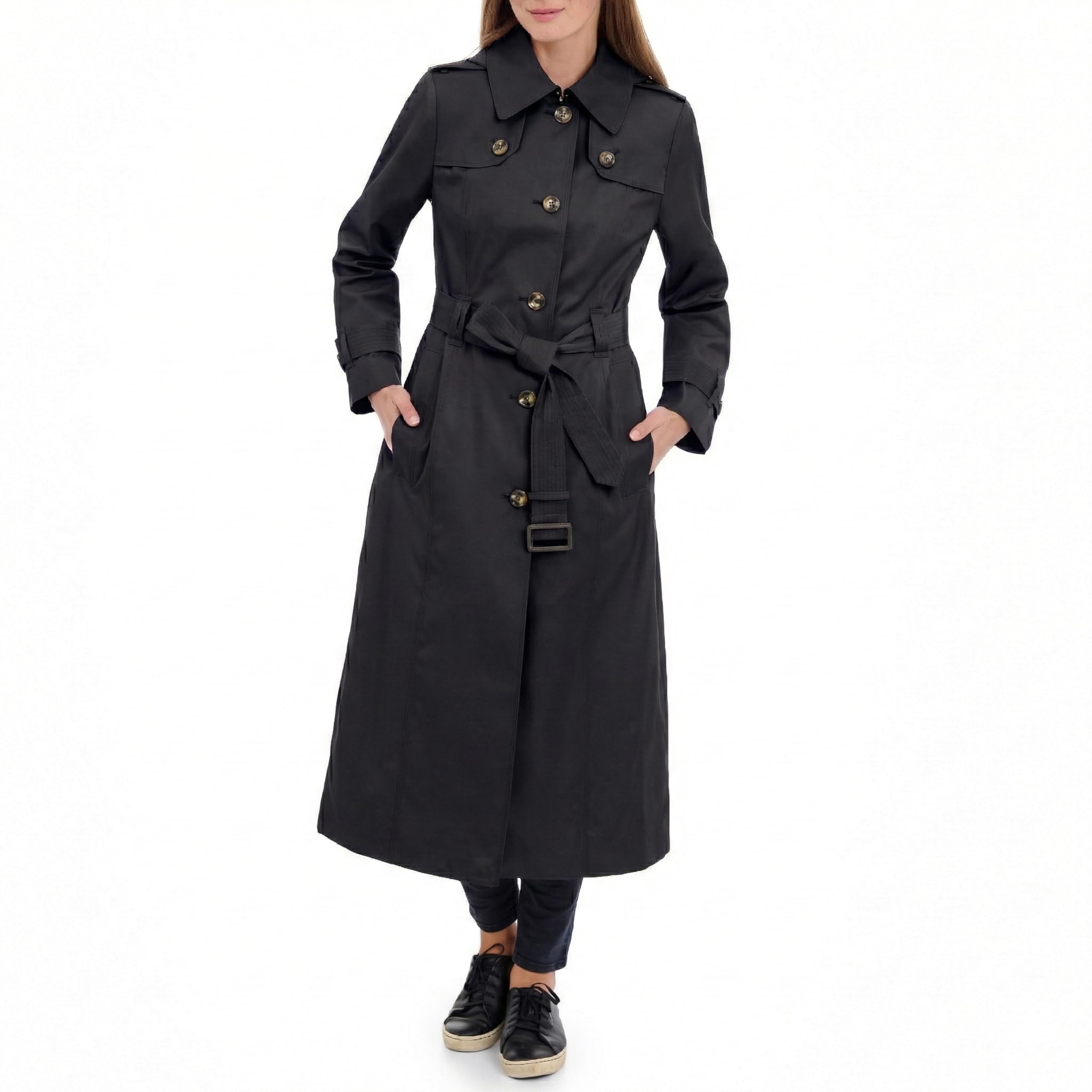
A classic 3/4 length trench with epaulettes and a belt for a polished, timeless silhouette.
This London Fog coat leans fully into the classic trench aesthetic: single breasted, epaulettes on the shoulders, a matching belt, and a 3/4 length that falls below the hip. It comes in both Missy and Plus sizes and a handful of color options. The manufacturer shows this trench alongside quilted down coats and wool coats in their lineup, so it is clearly positioned as a classic rain-layer rather than a warm winter coat.
Machine washable care is a practical plus for a light-colored trench that picks up city grime. There is no waterproof membrane or seam-sealing mentioned, so this is best for drizzle and dry days rather than a steady downpour. Compared to the Eddie Bauer trench above, this one wins on style and the belt detail, but loses on weather protection — the Eddie Bauer is the better choice if getting soaked is the worry.
Why Buy It
- Classic trench details — epaulettes, belt, 3/4 length — for a polished look
- Available in Missy and Plus sizes for more fit options
- Machine washable for easy care
The Catch
- No waterproof or seam-sealed rating for heavy rain
- Unlined shell offers no insulation for cold weather
- Style-first coat, not a winter-weather coat
Best for: the fashion-conscious buyer who wants a classic trench for mild, dry days and is not worried about a downpour.
Look elsewhere for: warmth, waterproofing, or any real winter performance — this is a style piece, not a cold-weather coat.
Understanding the Specs
Fill Power
Fill power is the number that tells you how much warmth a down jacket packs per ounce. A rating of 750 fill power means the down clusters are larger and trap more air, so you stay warmer with less material. Lower numbers like 550 still work for mild cold, but you need a thicker coat to reach the same warmth. Unless the fill power is listed, you are guessing at the coat’s actual insulation quality.
Weather Technology
Waterproof with seam-sealed construction means the coat keeps water from seeping through stitch holes or fabric layers. Water-resistant is a lighter treatment that beads off light rain but soaks through in a steady shower. Windproof block, like Eddie Bauer’s WeatherEdge, keeps cold gusts from penetrating the material. For rainy commutes, seam-sealed waterproofing matters more than the fabric’s water-repellent coating alone.
FAQ
What does 750 fill power actually mean for warmth?
How long is a mid-calf coat compared to a hip-length coat?
Can I wear a trench coat in the snow?
What is the difference between waterproof and water-resistant?
Is a down coat too warm for a 40°F day?
How do I wash a trench coat?
What is a seam-sealed coat?
Should I get a hooded or hoodless coat?
Final Thoughts: The Verdict
Across the board, the best coats for women winner is the Fitouch Waukee Long Down Parka because its 750+ fill power and mid-calf length deliver real warmth for the coldest days without the bulk of a cheaper coat. For everyday style with reliable warmth, choose the Calvin Klein Zipper Hooded Puffer Coat. For rainy city commutes, the Eddie Bauer Girl on the Go Trench with its fully seam-sealed waterproof shell is the top pick.
How We Picked
We do not accept paid placement. Every pick is matched to a real buyer and a real use-case; we do not hands-on test units.
Sources & Methodology
Specifications: manufacturer listings and product documentation. Review insights: verified customer reviews, as of July 2026. Pricing: not shown on this page (it changes often); check the current price via the retailer link.
As an Amazon Associate, WellFizz earns from qualifying purchases. This does not affect which products we feature.

Mo Maruf
I created WellFizz to bridge the gap between vague wellness advice and actionable solutions. My mission is simple: to decode the research and give you practical tools you can actually use.
Beyond the data, I am a passionate traveler. I believe that stepping away from the screen to explore new environments is essential for mental clarity and physical vitality.