You need a winter coat that keeps you warm without making you feel like you are wrestling a sleeping bag. You want something that blocks freezing wind, resists snow and rain, and still lets you move freely. This guide shows you which coats actually deliver on those promises — not just on paper, but in real winter days. It cuts through the talk about insulation types, shell fabrics, and fit claims to give you the honest picture.
I’m Mohammad Maruf — the co-founder and writer behind WellFizz. This guide is built by comparing the manufacturers’ published specifications and the patterns across verified customer reviews, so you get each pick’s real strengths and trade-offs instead of marketing spin.
You will find six cold-weather contenders here, from a budget-friendly corduroy jacket to a premium subzero work coat, all ranked by real-world warmth and durability. Whether you need a parka for the commute or a rugged shell for outdoor work, this roundup of the best coats for men gives you the honest pros and cons for each option.
How To Choose The Best Coats For Men
Picking the right winter coat comes down to three main decisions: what fills the coat for warmth, what fabric wraps around you to block the elements, and how the fit lets you layer underneath. Each choice trades off something — weight for warmth, breathability for wind protection, price for longevity. Here is how to decide what matters most for your winter.
Insulation: Down vs. Synthetic Fill
Down insulation — made from goose or duck feathers — gives you the best warmth-to-weight ratio and packs down small for travel. Its weakness is moisture: wet down clumps into cold lumps and loses nearly all its insulating ability. Synthetic insulation (like 3M Thinsulate or polyester fills) keeps you warm even when damp, dries faster, and costs less, but it is heavier and bulkier for the same warmth level. If you face wet snow or sweat heavily during activity, choose synthetic. If you want the lightest, warmest coat for dry cold, choose down.
Shell Fabric: Denier and Durability
The shell fabric is measured in denier (D) — a 500-denier nylon shell like the Carhartt Yukon Extremes uses is far tougher against snags and abrasion than a standard 70-denier shell. A higher denier number means a thicker, stronger fabric that resists tears from brush, tools, or daily wear. For work sites or rugged outdoor use, look for 300D or higher. For casual commuting and light errands, a standard nylon or polyester shell with a DWR (Durable Water Repellent) finish is plenty.
Fit: Room for Layers vs. Trim Profile
A coat should fit snugly enough to trap body heat but leave enough room for a mid-layer fleece or sweater underneath. “Loose fit” coats like work-oriented models give you that extra space but can feel baggy when worn alone. “Regular fit” or “tailored fit” coats look cleaner but may restrict movement if you wear thick layers. Try your coat on over the layers you plan to wear — if the shoulders or arms feel tight when you reach forward, size up.
Quick Comparison
On smaller screens, swipe sideways to see the full table.
| Model | Category | Best For | Key Spec | Amazon |
|---|---|---|---|---|
| Levi’s Arctic Cloth Extra Long Parka | Premium Parka | Extreme cold & full coverage | Extra-long length + faux down insulation | Amazon |
| Carhartt Yukon Extremes Insulated Coat | Work Grade | Subzero worksites & wind | 150g Thinsulate + 500-denier shell | Amazon |
| THE NORTH FACE Aconcagua 3 Hooded Jacket | Insulated Midweight | Active winter wear & travel | Down insulation + water-resistant shell | Amazon |
| Eddie Bauer Boundary Pass Down Parka | Down Parka | Subzero warmth with light weight | Premium down, removable fur hood | Amazon |
| Military-Style Fleece Lined Cargo Coat | Value Work Coat | Budget winter & outdoor work | 100% cotton shell + fleece lining | Amazon |
| MAGCOMSEN Corduroy Sherpa Jacket | Casual Style | Everyday fall & mild winter | Corduroy shell + sherpa fleece lining | Amazon |
In‑Depth Reviews
1. Levi’s Men’s Arctic Cloth Extra Long Parka Jacket
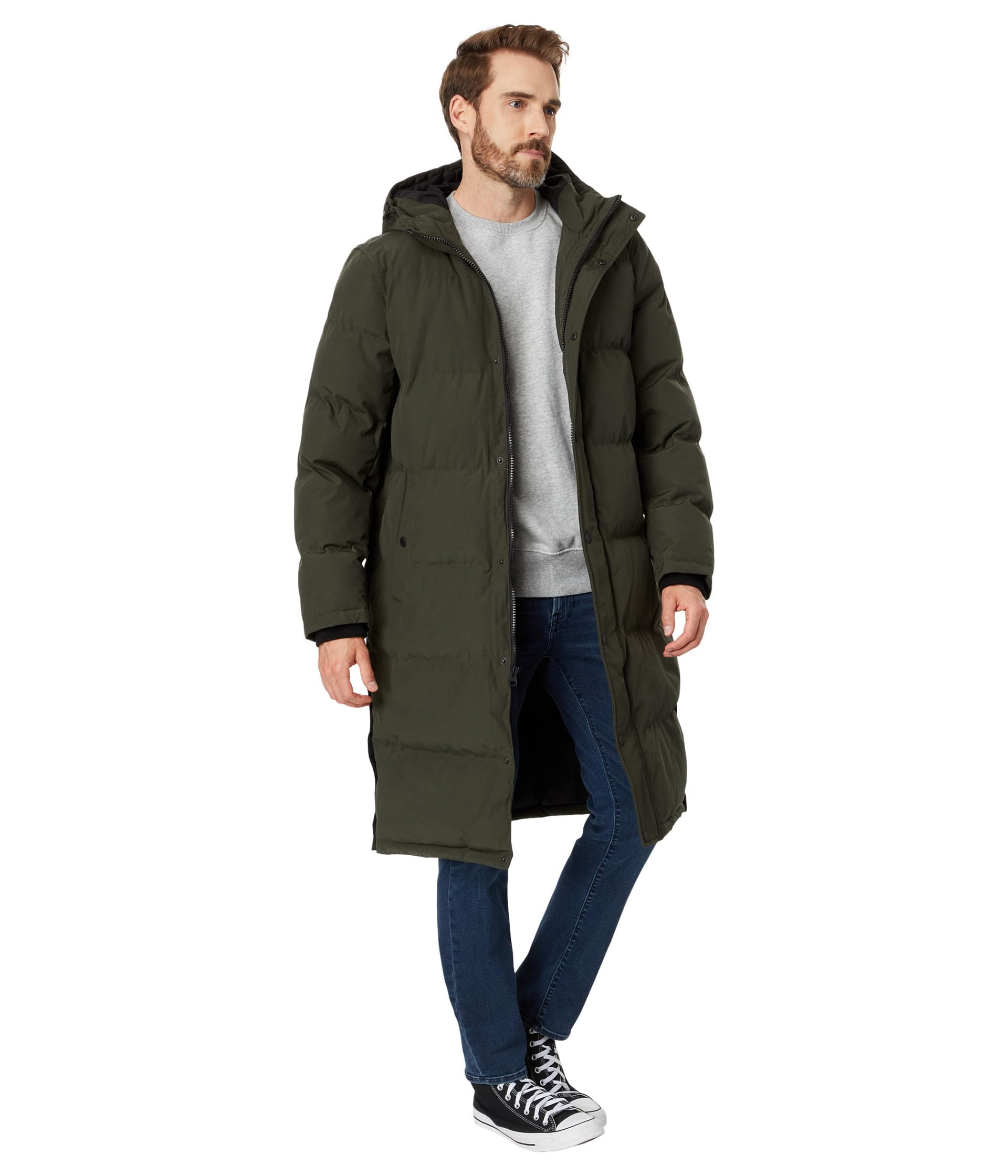
This coat covers you from head to mid-thigh, trapping body heat where most jackets stop — at your waist. The extra-long length (buyers report it reaches “shin length depending on your height”) keeps your lower back and upper legs warm, which makes a massive difference when you are standing still in freezing wind. It uses faux down insulation (synthetic fill that mimics the warmth of feathers without the moisture problems) wrapped in an arctic cloth shell that repels water.
Owners mention “exceptional insulation and wind resistance” and say the quilted lining keeps them warm in extreme cold. The center front zipper has a snap-button overlay (a second layer of security so wind does not sneak through the zipper teeth), and the attached hood has adjustable drawstrings to cinch it tight. Deep pockets sit at a functional height — one reviewer noted they are easy to access even when sitting in a truck.
The honest trade-off is that the tailored fit can feel snug if you plan to wear a thick sweater underneath; size up if you want serious layering room. But for anyone facing harsh winter commutes or long outdoor stretches, this parka delivers warmth, length, and durability that mid-range options like the Carhartt Yukon cannot match for full-coverage cold protection.
Why it’s great
- Extra-long silhouette protects thighs and lower back
- Faux down insulation traps heat even in extreme cold
- Sturdy zipper with snap overlay blocks wind effectively
Good to know
- Tailored fit may need size up for heavy layering
- Black fabric shows smudges, though they brush off easily
2. Carhartt Men’s Yukon Extremes Loose Fit Insulated Coat

Where the Levi’s parka focuses on coverage length, the Carhartt Yukon Extremes focuses on brute-force warmth and durability for the harshest conditions. It uses 150g of 3M Thinsulate insulation (a synthetic fill that traps heat without puffiness) inside a 500-denier Cordura nylon shell — that is the same fabric used in heavy-duty luggage and military gear, so this coat shrugs off snags, brush, and daily abuse that would tear a lighter shell. Customers note it blocks “brutal Ohio winter winds” and keeps them warm even before the truck heats up.
The Wind Fighter technology (a built-in wind barrier sewn into the shell) tames gusts, while the Rain Defender DWR coating makes light snow and drizzle bead off the surface. Triple-stitched main seams mean this coat will outlast several winters of hard use. One buyer mentioned that at -25°F with insulated bibs underneath, it was “warm and windproof” — a level of subzero protection that the Levi’s parka, with its lighter shell, cannot quite match.
Choose the Carhartt over the Levi’s if your winter involves standing still outside for hours — on a job site, at a wind-blasted bus stop, or in a frigid warehouse. The loose fit leaves room for heavy base layers, and the lack of a hood (it has a corduroy-trimmed collar with hood snaps instead) is actually a bonus if you wear a hard hat or prefer a separate hood.
Where it shines
- 500-denier Cordura shell resists tears and abrasion
- 150g Thinsulate provides reliable warmth to -20°F
- Wind Fighter and Rain Defender block wind and moisture
Worth noting
- Fabric is stiff and can ride up when sitting
- Outer hand pockets lack closures, items can fall out
3. THE NORTH FACE Men’s Aconcagua 3 Hooded Jacket
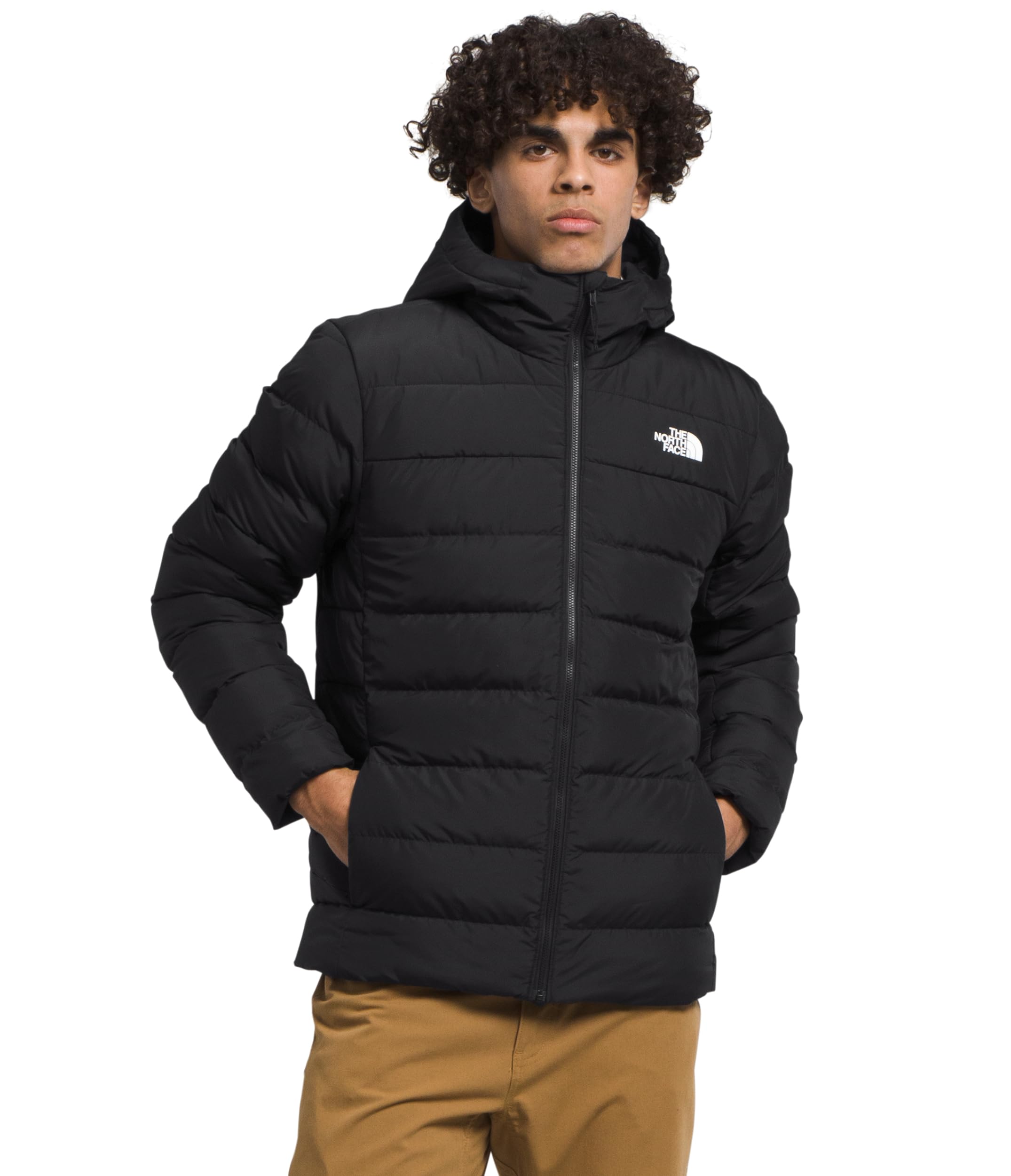
If your winter involves walking briskly between subway stops, traveling to cold cities, or hiking on chilly trails, the Aconcagua 3 is built for motion, not standing still. It uses real down insulation (goose or duck feathers that trap heat in tiny air pockets) wrapped in a water-resistant shell treated with a non-PFC DWR finish — a coating that repels moisture without the environmentally persistent chemicals used in older treatments. At a feather-light weight, it packs down small enough to stuff into a backpack or carry-on.
The attached three-piece hood cinches tight with a cord so it stays put in wind, and the water-resistant shell handles light snow and drizzle without letting the down get wet. Reviewers point out it is “super warm and comfortable without being heavy” and that the pearl grey color “looks beautiful in person.” Its down insulation gives it a warmth-to-weight ratio that the synthetic-fill options in this list cannot touch — it is significantly lighter than the Carhartt (which uses a denser synthetic fill and a thick shell) while still keeping you warm in active cold.
The one catch, as multiple shoppers say, is that “many feathers leak out, which is disappointing.” Down leakage is common in lightweight jackets that use thin shell fabric — the quills work their way through the seams over time. If you are okay occasionally plucking a feather or two, this is the most packable, active-friendly coat here for everyday winter wear.
What stands out
- Down insulation offers excellent warmth without bulk
- Water-resistant shell handles light snow and drizzle
- Lightweight and packable for travel and hiking
The trade-offs
- Feathers may leak through the shell over time
- Not suitable for standing still in extreme subzero cold
4. Eddie Bauer Men’s Boundary Pass Down Hooded Parka
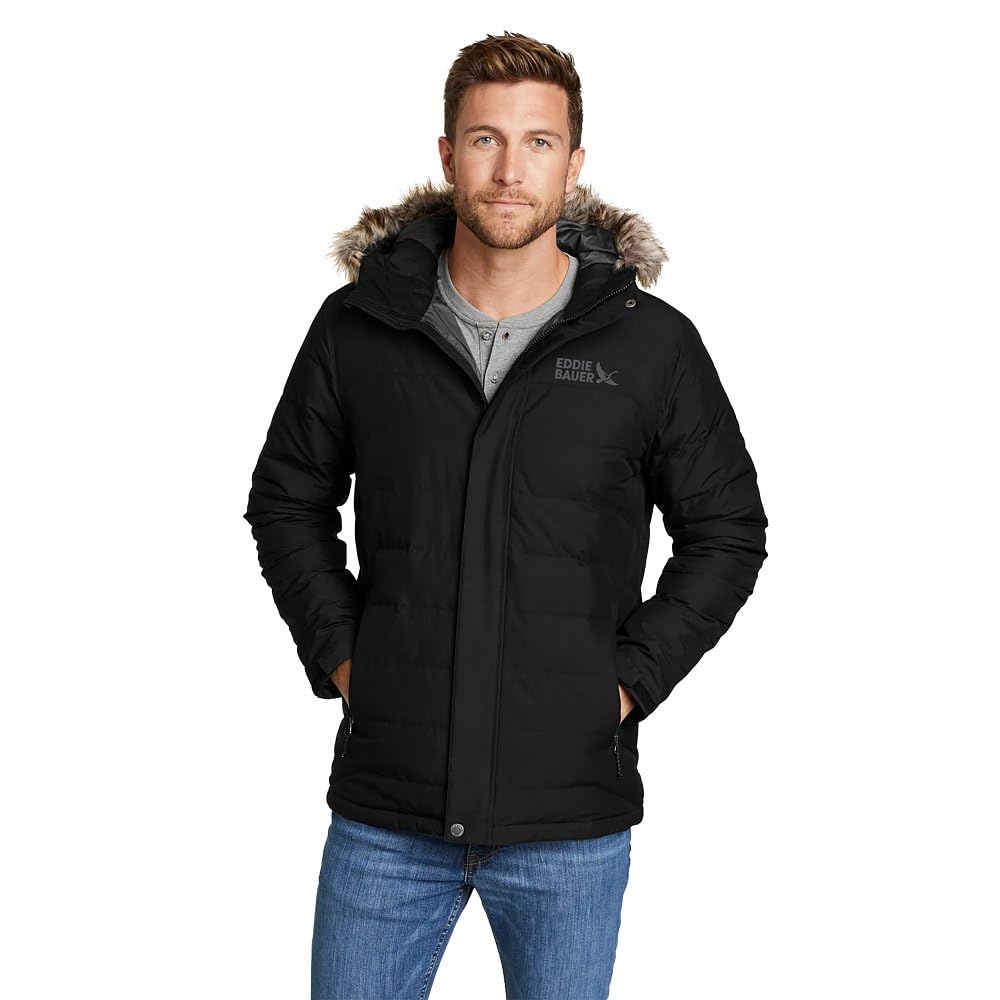
The single number that matters most in this category is how low a coat can go before you feel the cold, and this parka delivers: buyers report it “keeps me warm down to 15 degrees, if I layer, even warmer.” It achieves that with premium down insulation (feathers that trap heat more efficiently than most synthetic fills) packed into a durable shell. The adjustable, insulated hood has a removable faux fur ruff — the fur blocks wind from hitting your face, and you can pop it off when you want a cleaner look.
The catch you accept with this parka is that it is designed for dry cold — down loses its insulating power when wet, and the StormRepel DWR finish only handles light moisture, not heavy rain or wet snow. One owner reported the arms have great insulation but wished for “a little more down in the body,” suggesting the torso could be warmer in extreme cold. Still, for subzero commutes and standing at outdoor events, buyers call it the “warmest, lightest coat ever” at a reasonable price for a premium down jacket.
At its price point, this parka competes directly on warmth with the North Face Aconcagua but wins on coverage — the Boundary Pass extends longer and has a more substantial hood. It is the right pick if you want premium down warmth for dry, frigid days without paying full high-end retail.
The upsides
- Premium down insulation keeps you warm to 15°F and below
- Removable fur ruff blocks wind from the face
- Lightweight feel compared to synthetic coats of equal warmth
Keep in mind
- Down loses insulating power when wet; not for heavy rain
- Some reviewers felt the torso could use more down fill
5. Men’s Winter Jacket Military Jacket Fleece Lined Warm Cargo Jacket
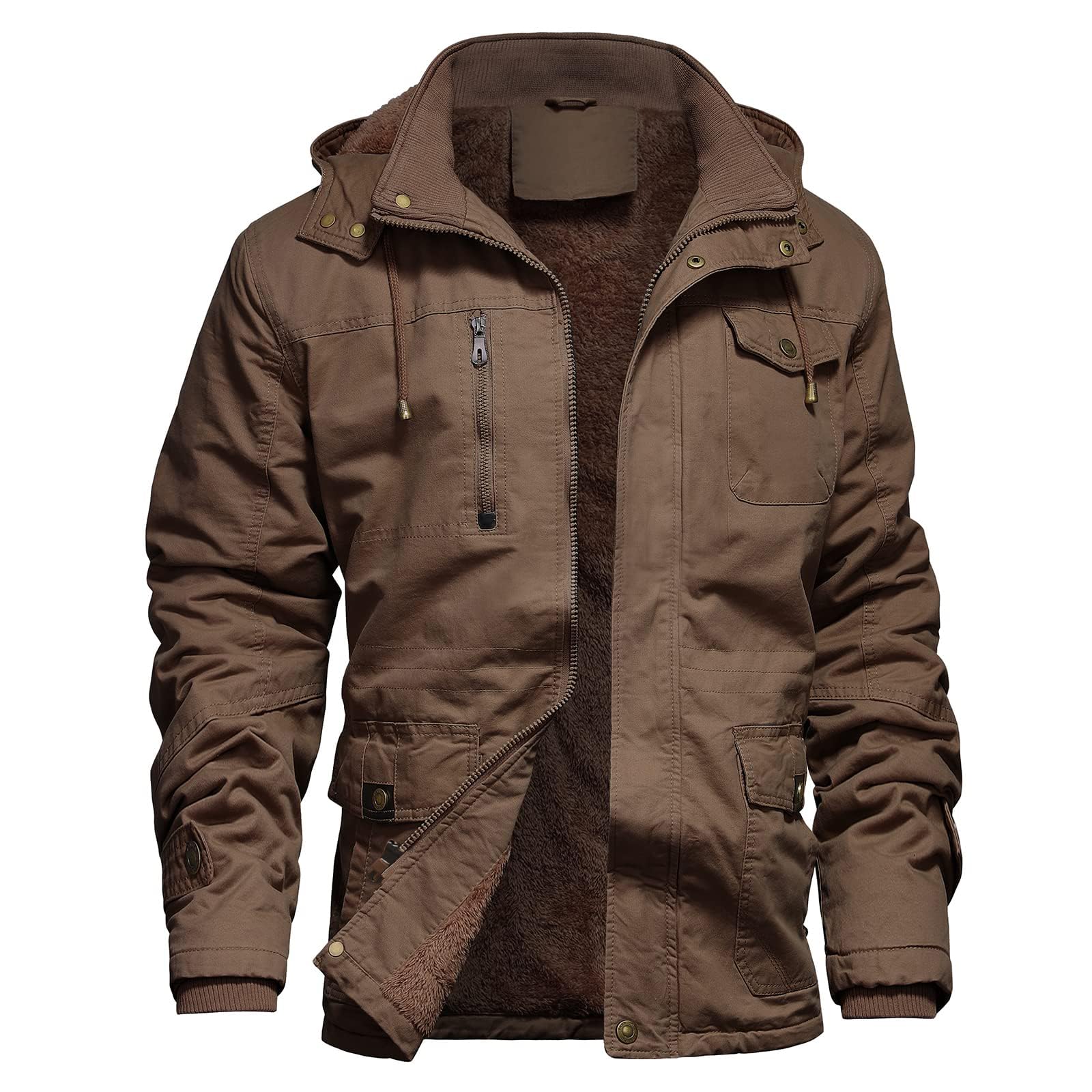
What you actually get at this lower price is a 100% cotton shell with a thick fleece lining, a removable hood, and five utility pockets (two chest pockets, one zippered, and two side hand pockets plus an inner pocket). That is a lot of storage and warmth for the money — owners mention it is “comfy and keeps you warm during the winter” with just a light sweater underneath. The stand collar buttons up high to block wind from your neck, and the adjustable cuffs seal out drafts at the wrists.
What you give up compared to the more expensive Carhartt or Eddie Bauer is the shell material: cotton is breathable and quiet but lacks the abrasion resistance and waterproofing of a nylon or Cordura shell. It absorbs moisture rather than beading it off, so this is not a coat for heavy rain or wet snow. The zipper is standard plastic, and one customer observed they plan to upgrade to a brass zipper for longevity. The arms also have “fashion flaps” of fabric that one buyer called a “safety hazard” around machinery and cut off.
This is the right coat for the buyer who needs a warm, durable shell for dry winter work — splitting wood, barn chores, or commuting in a cold but not wet climate. Buyers confirm it delivers “good value for the money” and fits true to size with room for a sweater, making it the exact budget buyer it is perfect for.
Why we’d pick it
- Fleece lining provides reliable warmth for dry winter days
- 100% cotton shell is breathable and feels quiet and soft
- Generous pocket layout with a removable hood
A few caveats
- Cotton shell absorbs moisture; not waterproof
- Plastic zipper feels less durable than metal alternatives
6. MAGCOMSEN Men’s Corduroy Jacket Winter Sherpa Lined Thick Trucker Coat

This jacket is perfect for the budget-conscious shopper who wants a classic fall or mild-winter style piece that pulls double duty as a warm coat for running errands, casual outings, or layering under a heavier shell. It uses a thick corduroy shell lined with sherpa fleece (a plush, wool-like synthetic fabric) that customers note “handles below-freezing temps well” — impressive for a jacket at this price. Five pockets (two chest snap-pockets, two hand pockets, one inner pocket) give you plenty of storage, and the snap-button front secures easily.
The corduroy shell is also not waterproof — it handles a light dusting of snow but will soak through in rain. If you want a coat for wet weather, the military-style cargo coat above is a better bet with its cotton shell that at least dries faster than corduroy.
It is the budget-friendly pick that punches above its weight on warmth, as long as you do not need serious cold-weather protection or waterproofing.
Strong points
- Sherpa fleece lining keeps you warm below freezing
- Corduroy shell looks stylish and resists light wind
- Five pockets offer convenient storage on the go
Before you buy
- Tailored fit is snug; size up if you want to layer
- Corduroy is not waterproof; avoid heavy rain
Understanding the Specs
Insulation Type: Down vs. Synthetic
Down insulation — natural goose or duck feathers — traps heat in small air pockets, giving you the best warmth for the least weight. Its weakness is that it clumps when wet and loses nearly all insulating power. Synthetic insulation (like 3M Thinsulate or fleece) traps heat using polyester fibers; it keeps working when damp, dries fast, and costs less, but it is heavier and bulkier for the same warmth. Choose down for dry, frigid conditions and synthetic for wet climates or high-activity use.
Shell Fabric Denier
Denier (D) measures the thickness of the fabric threads. A 500-denier shell like the Carhartt uses is woven from thick, heavy threads that resist snags, punctures, and abrasion from tools or brush. A 70-denier shell is lighter and more flexible but tears more easily. For work sites and rough outdoor use, aim for 200D or higher. For casual wear, a standard nylon or polyester shell with a DWR (Durable Water Repellent) coating is sufficient for light rain and snow.
Water Repellency vs. Waterproofing
A DWR coating on the shell fabric makes water bead up and roll off the surface — this is “water repellent.” It handles light drizzle and snow, but it wears off over time and eventually needs reapplication with a spray-on treatment. A fully waterproof coat uses a sealed membrane (like Gore-Tex) that physically blocks water from passing through, even under pressure. For most winter use, DWR is enough; you only need a fully waterproof membrane for heavy rain or wet snow.
Fit: Regular vs. Loose vs. Tailored
“Regular fit” coats have a standard amount of room for a mid-layer. “Loose fit” coats (like the Carhartt Yukon) give you extra space for thick base layers or sweaters, but they can feel baggy when worn alone. “Tailored fit” coats (like the Levi’s parka) follow your body more closely for a sleeker look but may restrict movement if you try to layer heavily underneath. Always try the coat on over the layers you plan to wear — if the shoulders or arms feel tight, size up.
FAQ
What is the warmest coat for extreme subzero temperatures?
Should I choose a down or synthetic insulated coat?
How do I know if a coat is waterproof or just water resistant?
What does “denier” mean and why does it matter for my coat?
Final Thoughts: The Verdict
When it comes down to it, the best coats for men is the Levi’s Arctic Cloth Extra Long Parka because it combines full-coverage length, substantial warmth, and a solid brand at a reasonable price — making it the most balanced option for harsh winter commutes. If you want serious subzero protection for worksites or outdoor labor, grab the Carhartt Yukon Extremes. And for a lightweight, packable travel coat that keeps you warm on the move, the THE NORTH FACE Aconcagua 3 is the clear choice.

Mo Maruf
I created WellFizz to bridge the gap between vague wellness advice and actionable solutions. My mission is simple: to decode the research and give you practical tools you can actually use.
Beyond the data, I am a passionate traveler. I believe that stepping away from the screen to explore new environments is essential for mental clarity and physical vitality.